

Introduction
Three years ago, picking an AI assistant meant picking one. Now most heavy users have accounts with all three — ChatGPT for its breadth, Claude for its writing and coding, Gemini for its reach into Google’s ecosystem — and a stack of separate logins, separate context windows, and separate monthly charges to show for it.
That’s the real reason so many people search for a way to compare Gemini vs Claude vs ChatGPT in one app: not out of curiosity about which model is “best” in the abstract, but because they want a practical, cost-effective workflow.
Instead of switching between multiple interfaces, users want to run the same prompt across all three models, compare the differences side by side, and identify the strongest response in seconds.
Platforms like Aizolo are built around this growing need by bringing multiple leading AI models into a single workspace.
Rather than paying for three separate subscriptions that often overlap, users can access, compare, and switch between models more efficiently, making it easier to choose the right AI for coding, writing, research, document analysis, or everyday productivity tasks.
This guide covers what each model is actually good at, what the three headline plans cost in 2026, and what “one app” access looks like in practice — so you can decide whether you need one subscription, two, or a single workspace that covers all three.
Table of Contents
Why People Compare These Three Models Now

Each lab has doubled down on a different strength. OpenAI has pushed breadth — ChatGPT now spans image generation, voice, and a large plugin-like tool ecosystem.
Anthropic has focused Claude on reasoning quality, coding, and long-form writing, positioning Claude Code as a serious developer tool.
Google has leaned on integration, wiring Gemini directly into Search, Docs, Sheets, and Android so it shows up where people already work.
The result is that no single model wins every task. A developer debugging a tricky function, a marketer drafting a campaign, and a student summarizing a 40-page PDF genuinely get better results from different models.
That’s exactly why more users now search to compare Gemini vs Claude vs ChatGPT in one app instead of switching between separate platforms or paying for multiple subscriptions.
The growing demand to compare Gemini vs Claude vs ChatGPT in one app comes from a simple reality: each model has unique strengths.
ChatGPT may excel at structured conversations and coding assistance, Claude often performs well with long documents and nuanced writing, while Gemini integrates deeply with Google’s ecosystem and multimodal capabilities.
Having all three available in a single workspace makes it easier to compare responses side by side, choose the best output for each task, and build a more efficient AI-powered workflow without constantly changing apps.
Why Multiple AI Subscriptions Add Up Fast
The standard paid tier from each major AI provider now costs almost the same, making price alone a poor reason to choose one model over another. As of mid-2026, ChatGPT Plus is $20/month, Claude Pro is $20/month (or $17/month when billed annually), and Google AI Pro (the rebranded Gemini Advanced) is $19.99/month.
Because the monthly costs are so similar, many users now prefer to compare Gemini vs Claude vs ChatGPT in one app rather than paying for separate subscriptions and switching between different interfaces.
A single platform that brings these leading AI models together can make it easier to compare responses side by side, choose the best model for each task, and get more value from one streamlined workflow instead of managing multiple subscriptions.
Add Grok’s SuperGrok tier at $30/month or Perplexity Pro at $20/month, and a power user easily clears $100/month before touching any of the higher “Max,” “Pro,” or “Ultra” tiers, which run $100–$300/month per platform.
That math is exactly why “is claude cheaper than chatgpt” and similar single-plan comparisons miss the bigger picture — the real cost isn’t one subscription, it’s the sum of however many a person ends up keeping active out of habit.
What “One App” Actually Means

“One app” doesn’t mean one AI model pretending to be three. Instead, it refers to a single workspace that connects directly to the underlying APIs of ChatGPT, Claude, and Gemini—often alongside other leading models like Grok and Perplexity.
This approach allows users to compare Gemini vs Claude vs ChatGPT in one app without opening multiple browser tabs, managing separate subscriptions, or copying prompts between different platforms.
The ability to compare Gemini vs Claude vs ChatGPT in one app is valuable because it preserves each model’s unique strengths rather than replacing them with a single AI.
You can send the same prompt to multiple models, evaluate their responses side by side, and select the best answer based on your specific task. Whether you’re writing content, debugging code, analyzing research, or summarizing lengthy documents, a unified interface makes it faster and easier to choose the right AI for the job.
A modern multi-model AI platform typically lets users:
Choose the best model for coding, writing, research, data analysis, or brainstorming without juggling multiple applications.
Send the same prompt to ChatGPT, Claude, and Gemini simultaneously.
Compare answers side by side in a single interface.
Switch between AI models without leaving the workspace.
Save conversations and prompts in one centralized location.
- Send one prompt to multiple models at once and compare the answers side by side
- Switch models mid-conversation depending on the task
- Keep one login, one billing relationship, and one place to store prompts and project context
- Bring their own API keys for models they already pay for separately, if they prefer
This is the category AiZolo and similar platforms occupy — an all-in-one AI workspace built around access all ai models in one place rather than forcing a choice between them.
ChatGPT vs Claude vs Gemini: Core Differences

| ChatGPT | Claude | Gemini | |
|---|---|---|---|
| Best known for | Breadth of tools, voice, image generation | Writing quality, coding, long-context reasoning | Google ecosystem integration, real-time information |
| Flagship model (2026) | GPT-5.5 | Opus 4.8 / Sonnet 5 | Gemini 3.1 Pro |
| Standout feature | Sora video, Advanced Voice, custom GPTs | Claude Code, Projects, artifacts | Deep Research, Workspace add-ons |
| Free tier | Message-capped GPT-5.5 access | Session and weekly caps | Compute-based limits, generous for casual use |
None of these are weaknesses so much as different bets on what users need most. That’s also why prompt comparison across the three — running one input through all of them — tends to be more useful than trusting a single benchmark leaderboard.
Coding Comparison
Claude has become a common default for coding work, largely because of Claude Code and its handling of large, multi-file codebases without losing track of context. Sonnet and Opus models are frequently cited in developer benchmarks for accurate refactors and fewer hallucinated APIs.
ChatGPT remains strong for coding too, particularly for quick scripts, explaining unfamiliar code, and multimodal debugging (pasting a screenshot of an error, for instance). Gemini’s advantage shows up inside Google’s own developer tools and Colab, where it has direct access to the notebook environment.
For a single “best” answer: Claude for sustained, multi-file coding work; ChatGPT for quick iteration and multimodal debugging; Gemini when already working inside Google’s developer tools.
Writing Comparison
Claude is widely regarded as the strongest of the three for long-form writing — essays, reports, business documents — because it tends to avoid the repetitive phrasing and over-hedging that shows up in other models over long outputs. ChatGPT is competitive and offers more built-in formatting and voice options. Gemini writes well but is most useful when the output needs to live directly inside Docs or Gmail.
Research Comparison
This is where the three diverge most. ChatGPT and Gemini both offer deep-research modes that browse the web and compile sourced reports; Gemini’s is tightly linked to Google Search and tends to surface the most current results. Claude’s research strength is less about live browsing and more about reasoning carefully over long documents already provided to it — PDFs, transcripts, spreadsheets — without losing the thread partway through.
Context Windows and Long Documents
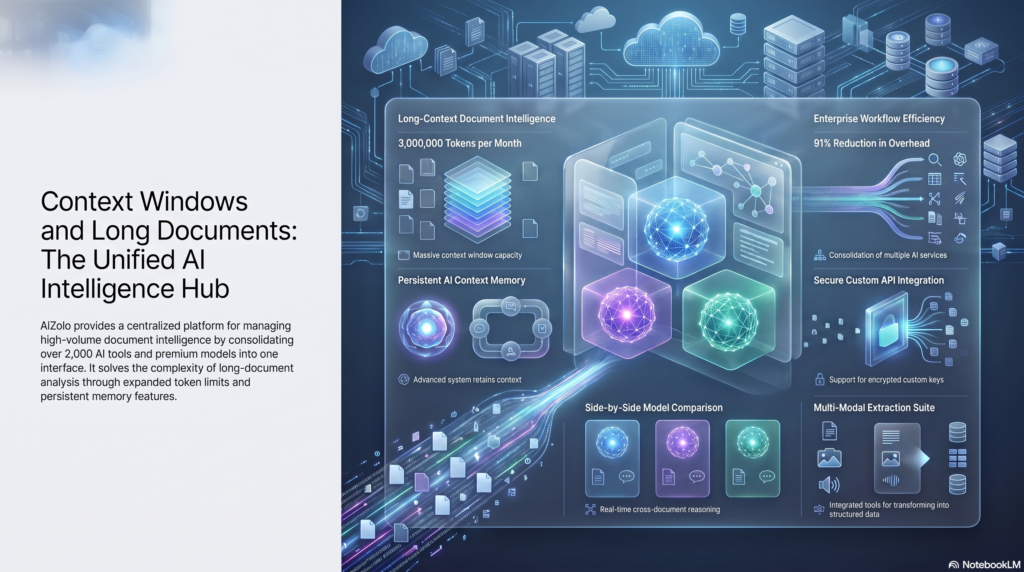
Long context has become table stakes. Gemini 3.1 Pro ships with a 1-million-token context window, the largest of the three, which matters for feeding in entire codebases or lengthy document sets at once. Claude and ChatGPT’s flagship models both handle long documents well but with smaller windows, which is generally still enough for most PDF analysis, contract review, or transcript summarization tasks.
Multimodal Capabilities
ChatGPT leads on breadth of multimodal output — image generation, video via Sora, and Advanced Voice Mode are all built in. Gemini is close behind and has the advantage of native integration with Google Photos and YouTube. Claude is comparatively text-focused; it reads images and PDFs well but doesn’t generate images or video natively.
Pricing Comparison (2026)
| Plan | Price | Notes |
|---|---|---|
| ChatGPT Plus | $20/month | GPT-5.5, image and voice tools included |
| ChatGPT Pro | $200/month | Unlimited advanced reasoning access |
| Claude Pro | $20/month ($17/mo annual) | Opus and Sonnet access, Claude Code |
| Claude Max | $100–$200/month | 5x–20x usage over Pro |
| Google AI Pro | $19.99/month | Gemini 3.1 Pro, 1M-token context |
| Google AI Ultra | $99.99–$200/month | Higher limits, Veo video, large storage |
Buying the standard tier of all three (ChatGPT Plus + Claude Pro + Google AI Pro) runs close to $60/month before any add-ons — a cost worth weighing against a best value ai subscription 2026 that bundles access instead.
Privacy Considerations
Each provider handles data differently: whether free-tier conversations are used for training, how long data is retained, and what enterprise-grade controls exist. Anyone comparing platforms for business use should check each provider’s current data-usage policy directly (linked in the references below) rather than assume defaults, since these settings have changed more than once across all three companies.
Team and Business Use
Team plans exist across all three providers, generally priced per seat with admin controls, shared workspaces, and usage dashboards. For small teams juggling more than one model, a best all in one ai platform with per-project workspaces and shared prompt libraries can be simpler to administer than three separate team accounts.
Best Workflows for Comparing Models

A few patterns show up repeatedly among people who use more than one model regularly:
- Draft in one, edit in another — write a first draft in Claude, then have ChatGPT restructure it for a different audience.
- Cross-check factual claims — run the same research question through Gemini (for current information) and Claude (for careful reasoning over provided sources), then compare.
- Route by task type — default to Claude for code and long documents, ChatGPT for quick multimodal tasks, Gemini for anything already living inside Google Workspace.
This kind of routing is exactly what platforms where multiple ai models answer the same question are built for — it turns model choice into a per-task decision instead of a single annual bet.
Who Should Buy Individual Subscriptions
Buying one model’s subscription directly still makes sense for people who use a single tool constantly and want first-party support, the fastest access to new features, and no dependency on a third party’s API relationship. A developer living inside Claude Code all day, for instance, may prefer Anthropic’s direct plan over a bundled workspace.
Who Benefits from a Multi-Model Workspace

A single subscription multiple ai models setup tends to fit people who need more than one model but don’t use any single one heavily enough to justify $20–$60+ per month for each — freelancers, students, small agencies, and founders comparing outputs before committing budget to one provider.
Final Verdict
There’s no universal winner among ChatGPT, Claude, and Gemini — the honest answer depends on whether the priority is coding depth (Claude), tool breadth (ChatGPT), or ecosystem integration (Gemini). For anyone who values two or more of those strengths and doesn’t want to manage three separate bills, a workspace like AiZolo that puts compare gemini vs claude vs chatgpt in one app functionality behind a single subscription is worth trying before committing to any one provider long-term.
FAQ
1. Can I use Gemini, Claude, and ChatGPT together in one app? Yes — multi-model platforms connect to each provider’s API and let you send the same prompt to all three from one interface.
2. Is it worth paying for ChatGPT Plus, Claude Pro, and Gemini Advanced separately? Only if you use each one heavily enough to justify roughly $20/month per platform; most casual-to-moderate users get more value from a bundled workspace.
3. Which AI model is best for coding? Claude is generally considered strongest for sustained, multi-file coding work, though ChatGPT and Gemini are both capable for quicker tasks.
4. Which AI model is best for writing? Claude tends to produce the most natural long-form writing; ChatGPT offers more built-in formatting and voice options.
5. Which AI model is best for research? Gemini’s research mode benefits from direct Google Search integration; Claude is strongest at reasoning carefully over long documents you provide.
6. Is Claude cheaper than ChatGPT? They’re priced almost identically — both $20/month at the standard tier, though Claude Pro drops to about $17/month on annual billing.
7. What does “one app” mean for AI models? It means a single subscription and interface that gives access to multiple underlying AI models, instead of separate logins and bills for each.
8. Do multi-model platforms use the official APIs? Legitimate ones do — they connect to each provider’s official API rather than reverse-engineering the consumer apps.
9. Can I bring my own API key to a multi-model platform? Many platforms, including AiZolo, support this for users who already pay for a provider’s API separately.
10. Which model has the largest context window in 2026? Gemini 3.1 Pro currently ships the largest context window among the three at 1 million tokens.
11. Is there a free way to compare all three models? Each provider offers a free tier, so it’s possible to compare manually, though switching tabs and re-pasting prompts is slower than a side-by-side tool.
12. What’s the cheapest way to access all three AI models? A bundled multi-model subscription is typically far cheaper than paying for each provider’s standard plan separately.
13. Are multi-model AI platforms good for businesses? Yes, particularly for small teams that need flexibility across models without managing multiple vendor relationships.
14. Does using a third-party platform affect data privacy? It depends on the platform’s own policy in addition to each model provider’s — always check both before sending sensitive data.
15. Which AI model is best for image generation? ChatGPT and Gemini both generate images natively; Claude does not currently offer native image generation.
Author Bio
Jeevesh Tripathi AI Researcher & SEO Content Strategist jeevesh@aizolo.com
Jeevesh Tripathi writes about AI model evaluation and the practical economics of AI subscriptions, focusing on how ChatGPT, Claude, and Gemini compare for real workflows rather than isolated benchmark scores. His work centers on comparative analysis — reading provider documentation and public benchmark data directly rather than relying on secondhand summaries — to help readers choose tools based on how they actually work, not on marketing claims.

Pingback: 7 Proven AI for Rewriting Low Conversion Product Pages That Instantly Boost Sales | Aizolo
Pingback: Step by Step AI SEO Audit for Beginners: Powerful Guide with Hidden Mistakes (2026)
Pingback: How to Use AI for Generating Technical Product Docs: 7 Powerful Tips You Can’t Ignore
Pingback: Compare Grok 4.1 and Claude 4.5 for Logic Puzzles (2026): Surprising Strengths and Shocking Weaknesses Revealed
Pingback: Compare Grok 4.1 EQ Bench and GPT 5.1 Benchmarks: Clear Strengths and Notable Weaknesses – Full Comparison
Pingback: cheapest way to access gpt 5.1 thinking model api
Pingback: Compare Gemini 3 and Claude 4.5 for Large PDFs: Efficient or Overwhelming? (2026 Guide)
Pingback: Best ai platforms like chat gpt in 2026 | AiZolo