
Picking a frontier AI model in 2026 is no longer a side decision. It shapes engineering costs, product quality, and how much control a company keeps over its own data.
This anthropic vs Mistral AI comparison 2026 guide exists because these two companies keep showing up on the same shortlist, for very different reasons. Anthropic sells safety-first frontier intelligence. Mistral sells European sovereignty and open weights.
By the end, you’ll know exactly which one—or whether Aizolo gives you the best combination—fits your coding workflow, your budget, and your compliance requirements.
Table of Contents
What Is Anthropic?
Anthropic is a San Francisco AI safety and research company founded in 2021 by Dario Amodei and a team of former OpenAI researchers. Its stated mission is to build reliable, interpretable, and steerable AI systems.
The company trains models using a method it calls Constitutional AI, where the model is guided by a written set of principles rather than relying purely on human feedback. This underpins Anthropic’s broader AI safety positioning.
Anthropic’s current model family is the Claude lineup. As of mid-2026, this includes Claude Haiku 4.5 (fast, low-cost), Claude Sonnet 5 (the new balanced default), Claude Opus 4.8 (flagship reasoning and agentic coding), and the higher Mythos tier — Claude Fable 5 and Claude Mythos 5 — for the most demanding, long-running agent work.
Fable 5 and Mythos 5 briefly had access suspended between June 12 and June 30, 2026, to comply with U.S. Department of Commerce export controls; access was restored July 1, 2026, after the controls were lifted. That’s a rare disruption for a frontier lab and worth knowing if you’re building around the top tier.
Anthropic’s core strength is coding and agentic reasoning. On SWE-bench Verified, independent trackers put Claude Opus 4.8 around 88.6%, with Fable 5 scoring higher still — both well ahead of most open-weight competitors on complex, multi-step engineering tasks.
Enterprise adoption is heavy in software engineering, financial services, and regulated industries that need long context windows (Claude’s current-generation models support up to 1 million tokens) and predictable, cache-friendly pricing.
Anthropic also ships developer-facing tooling beyond raw API access, including Claude Code for agentic software development and connectors that let Claude interact with existing enterprise systems. This tooling layer is a big part of why Claude shows up so often in AI coding assistant shortlists.
On governance, Anthropic publishes model cards, safety evaluations, and responsible scaling commitments for each new release. That transparency is part of why the company is frequently cited in discussions of AI governance and frontier AI models policy, even by people who don’t use Claude day to day.
Anthropic homepage, Claude documentation, Anthropic API documentation
What Is Mistral AI?
Mistral AI is a Paris-based company founded in April 2023 by Arthur Mensch (CEO, formerly Google DeepMind), Guillaume Lample (Chief Science Officer, formerly Meta AI), and Timothée Lacroix (CTO, formerly Meta AI).
Mistral’s pitch is different from Anthropic’s from day one: open weights, European compute, enterprise distribution. It positions itself as the sovereign AI alternative to US and Chinese labs.
The company has raised roughly $4 billion in equity plus $830 million in debt financing for data centers near Paris and in Sweden, reaching a $13.7 billion valuation after a September 2025 round led by chipmaker ASML.
Mistral’s model family spans closed and open releases.
Mistral Large 3 is the closed-weight flagship for general reasoning and multilingual work.
Mistral Medium 3.5 is recommended for coding.
Mistral Small 4 is an efficient open-weight model for high-volume production. Specialized models include
Codestral (code generation across 80+ languages),
Devstral (agentic coding),
Pixtral (vision), and
Voxtral (audio).
A major differentiator: many Mistral models ship under Apache 2.0 or similar permissive licenses, meaning businesses can self-host them and eliminate per-token API costs entirely — something Anthropic does not offer.
Mistral’s consumer assistant, formerly Le Chat, was rebranded Vibe in May 2026. Enterprise tools include Forge (custom model training on proprietary data) and Workflows (agent orchestration).
Mistral has also been building out its own compute layer. Mistral Compute, a European AI infrastructure initiative powered by Nvidia processors, was announced in 2025 to reduce the company’s dependence on US and Asian cloud providers for training and inference.
Commercially, Mistral disclosed annual recurring revenue above $400 million in early 2026, up sharply from roughly $20 million a year earlier, with a public target of surpassing $1 billion in ARR by the end of the year.
Much of that growth comes from enterprise licensing rather than consumer subscriptions, reflecting Mistral’s forward-deployed-engineer approach to landing large accounts in government and industry.
Anthropic vs Mistral AI Comparison 2026: Quick Overview
| Category | Anthropic (Claude) | Mistral AI |
|---|---|---|
| Headquarters | San Francisco, USA | Paris, France |
| Founded | 2021 | 2023 |
| Flagship models | Opus 4.8, Sonnet 5, Fable 5, Mythos 5 | Large 3, Medium 3.5, Small 4 |
| Context window | Up to 1M tokens (current tier) | Up to 256K tokens (Large 3) |
| Open-weight support | None | Extensive (Apache 2.0 / research license) |
| Coding ability | Frontier-leading (SWE-bench) | Strong via Codestral/Devstral, trails frontier |
| Reasoning | Frontier-leading | Competitive, gap on hardest benchmarks |
| AI safety approach | Constitutional AI, safety-first branding | EU AI Act-aligned, sovereignty-first |
| Enterprise readiness | Deep enterprise adoption, custom deployments | Growing fast via Forge, Accenture, IBM |
| Starting API price | $1/$5 per MTok (Haiku 4.5) | ~$0.10–$0.15/MTok (Small tier) |
| Multilingual support | Strong, especially English-centric domains | Strong, EU-language depth |
Model Lineup Comparison
Claude Haiku 4.5 — cheapest, fastest current Claude model. Best for classification, extraction, and high-volume routing. Weakness: 200K context, well below Claude’s flagship ceiling.
Claude Sonnet 5 — Anthropic’s new default as of June 30, 2026. Strong at agentic coding, tool use, and everyday production work at a fraction of Opus pricing.
Claude Opus 4.8 — flagship reasoning and coding model with adaptive thinking and effort controls. Best for the most demanding engineering and analysis tasks.
Claude Fable 5 / Mythos 5 — the top Mythos tier, aimed at long-running autonomous agents. Expensive per token, but the highest ceiling Anthropic currently publishes.
Mistral Large 3 — general-purpose flagship, multilingual, multimodal. Best for reasoning-heavy assistants and document-based workflows where EU hosting matters.
Mistral Medium 3.5 — Mistral’s recommended coding model, positioned between Small and Large on cost and capability.
Mistral Small 4 and open-weight models — cost-sensitive, self-hostable options ideal for edge deployments, air-gapped environments, and startups watching burn rate.
Codestral and Devstral — Mistral’s dedicated coding line. Codestral focuses on fill-in-the-middle code completion across 80-plus languages, while Devstral targets agentic coding tasks like automated pull requests and CI-integrated fixes, both priced well below Mistral Large.
Pixtral and Voxtral — Mistral’s multimodal specialists, covering vision-and-document understanding and audio transcription or voice-agent workloads respectively. Anthropic doesn’t offer a comparably specialized standalone audio model, though Claude handles document and image understanding natively across its main model line.
Choosing between these lineups usually comes down to a simple question: do you need one model that’s excellent at everything (Claude), or a set of smaller specialized models you can mix, self-host, and swap out (Mistral)? Neither answer is wrong — they reflect different product philosophies.
Performance Benchmark Comparison
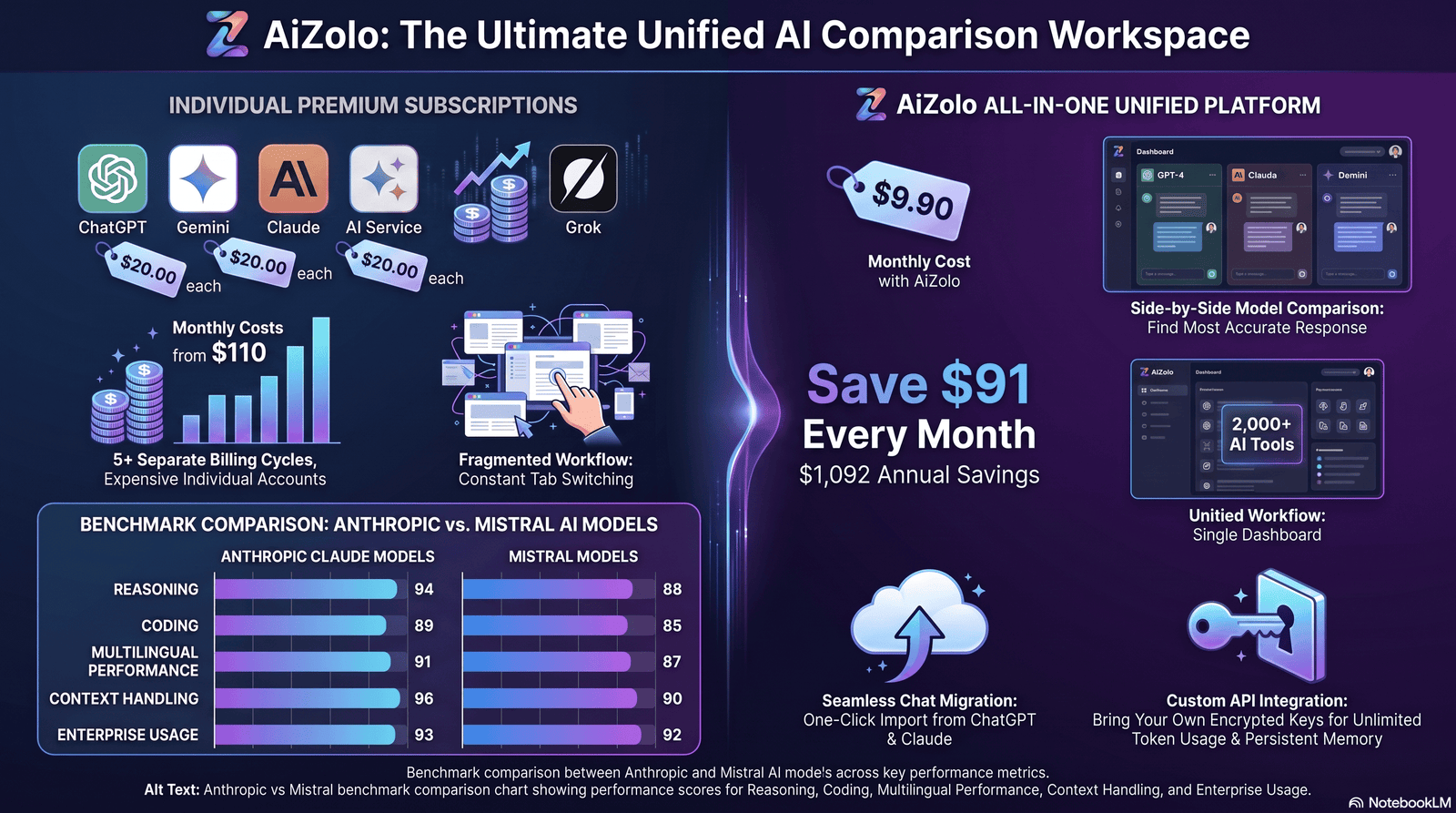
| Capability | Anthropic Claude | Mistral AI |
|---|---|---|
| Reasoning | Frontier-tier, strongest at Opus/Fable level | Solid mid-tier, gap vs top frontier labs |
| Coding (SWE-bench class) | Opus 4.8 ~88.6%, Fable 5 higher | Competitive via Devstral, below Anthropic flagships |
| Math | Strong, improves further with extended thinking | Improved via Magistral reasoning line |
| Long-context handling | Up to 1M tokens, flat-rate pricing | Up to 256K tokens on Large 3 |
| Tool use / agent workflows | Mature agentic tooling, Claude Code | Growing via Workflows and Devstral agents |
| Cost efficiency per token | Higher absolute cost, offset by caching | Lower absolute cost across most tiers |
Independent analysts have flagged that Mistral Large 3’s benchmark performance against GPT-5.5, Claude Opus 4.7-class models, and Gemini 3 remains an open question industry watchers are still tracking through 2026.
Coding Performance Comparison
For software development, Claude models remain the reference point most engineering teams benchmark against, particularly for multi-file refactors and agentic debugging loops.
Claude Sonnet 5 and Opus 4.8 handle long-horizon coding sessions well, thanks to the 1M-token context window and prompt caching that keeps repeated system prompts cheap.
Mistral’s coding stack — Codestral for generation and Devstral for agentic tasks — is priced far below Claude’s flagship tiers and covers 80+ programming languages, making it attractive for high-volume, lower-complexity coding work.
Practical takeaway: use Mistral’s Codestral/Devstral for bulk code generation and CI automation; reserve Claude Opus 4.8 or Sonnet 5 for architecture decisions, hard bugs, and agentic tasks where failure is costly.
Writing and Content Creation Comparison
Claude models are widely regarded for nuanced, well-structured long-form writing — blog posts, research summaries, and business communication that need a natural, non-robotic tone.
Mistral Large 3 produces competent marketing copy and summaries, and its lower output token cost makes it economical for high-volume content pipelines like SEO drafts or product descriptions.
Strength/weakness snapshot: Claude tends to win on nuance and instruction-following for complex briefs; Mistral wins on cost-per-word for simpler, high-volume content tasks.
Multilingual Performance Comparison
Mistral’s European roots show clearly here — the company has invested heavily in French, German, Spanish, Italian, and other EU-language quality, plus dedicated audio models (Voxtral) for transcription and voice agents.
Claude models are strong multilingual performers too, particularly for English-adjacent European and major Asian languages, but Anthropic has not marketed EU-language depth as a specific differentiator the way Mistral has.
Takeaway: for EU-language-heavy customer support or localization, evaluate Mistral first. For English-centric global content with occasional multilingual needs, Claude is a safe default.
Enterprise Features Comparison
Anthropic emphasizes AI governance and safety controls, structured system prompts, and deep integration into existing enterprise stacks like AWS Bedrock and Google Cloud.
Mistral’s enterprise pitch centers on data sovereignty: on-premises deployment, EU data residency, and partnerships with Accenture, IBM, Orange, and Stellantis for large-scale rollouts.
Both platforms support SSO, audit logging, and dedicated enterprise support — but the deployment philosophy differs: Anthropic favors managed API access, Mistral actively promotes self-hosting and custom model training via Forge.
Team collaboration features also diverge slightly. Anthropic’s Claude.ai Team and Enterprise plans focus on shared projects, centralized billing, and admin controls across a managed workspace.
Mistral’s Vibe Team plan follows a similar shared-workspace model, while its enterprise motion leans more heavily on custom deployments negotiated directly with Mistral’s sales and forward-deployed engineering teams.
For enterprise AI adoption at scale, the practical difference is procurement speed: Anthropic’s managed API is usually faster to pilot, while Mistral’s on-premises and custom-training options take longer to stand up but can offer more control once deployed.
API and Developer Experience
Anthropic’s API documentation is detailed, with clear guidance on prompt caching, batch processing, and model routing strategies that materially cut costs at scale.
Mistral’s API is OpenAI-compatible, which lowers the migration barrier for teams already using the OpenAI SDK format, and its La Plateforme dashboard offers granular usage tracking.
Both providers offer a 50% batch-processing discount. Anthropic’s prompt caching can cut cached input costs by up to 90%; Mistral offers a comparable discount on cached input tokens for its Large-tier models.
Pricing Comparison 2026
| Model | Input ($/MTok) | Output ($/MTok) | Context |
|---|---|---|---|
| Claude Haiku 4.5 | $1.00 | $5.00 | 200K |
| Claude Sonnet 5 (intro, through Aug 31, 2026) | $2.00 | $10.00 | 1M |
| Claude Sonnet 5 (standard, from Sept 1, 2026) | $3.00 | $15.00 | 1M |
| Claude Opus 4.8 | $5.00 | $25.00 | 1M |
| Claude Fable 5 | $10.00 | $50.00 | 1M |
| Mistral Small (tier) | ~$0.10–$0.15 | ~$0.30–$0.60 | 128K |
| Mistral Medium 3.5 | ~$0.40 | ~$2.00 | 128K |
| Mistral Large 3 | ~$0.50–$2.00* | ~$1.50–$6.00* | 256K |
*Mistral’s official pricing page and third-party trackers show different figures for Mistral Large depending on which model version is quoted — always confirm current rates at mistral.ai/pricing before budgeting.
On Claude AI pricing, the consumer side is separate from API billing: Claude.ai offers a free tier, Pro at $20/month, and Max plans from $100–$200/month, plus Team and Enterprise tiers.
On Mistral AI pricing, the Vibe (formerly Le Chat) consumer assistant runs Free, Pro around $14.99/month, and Team around $24.99/user/month, separate from API token billing.
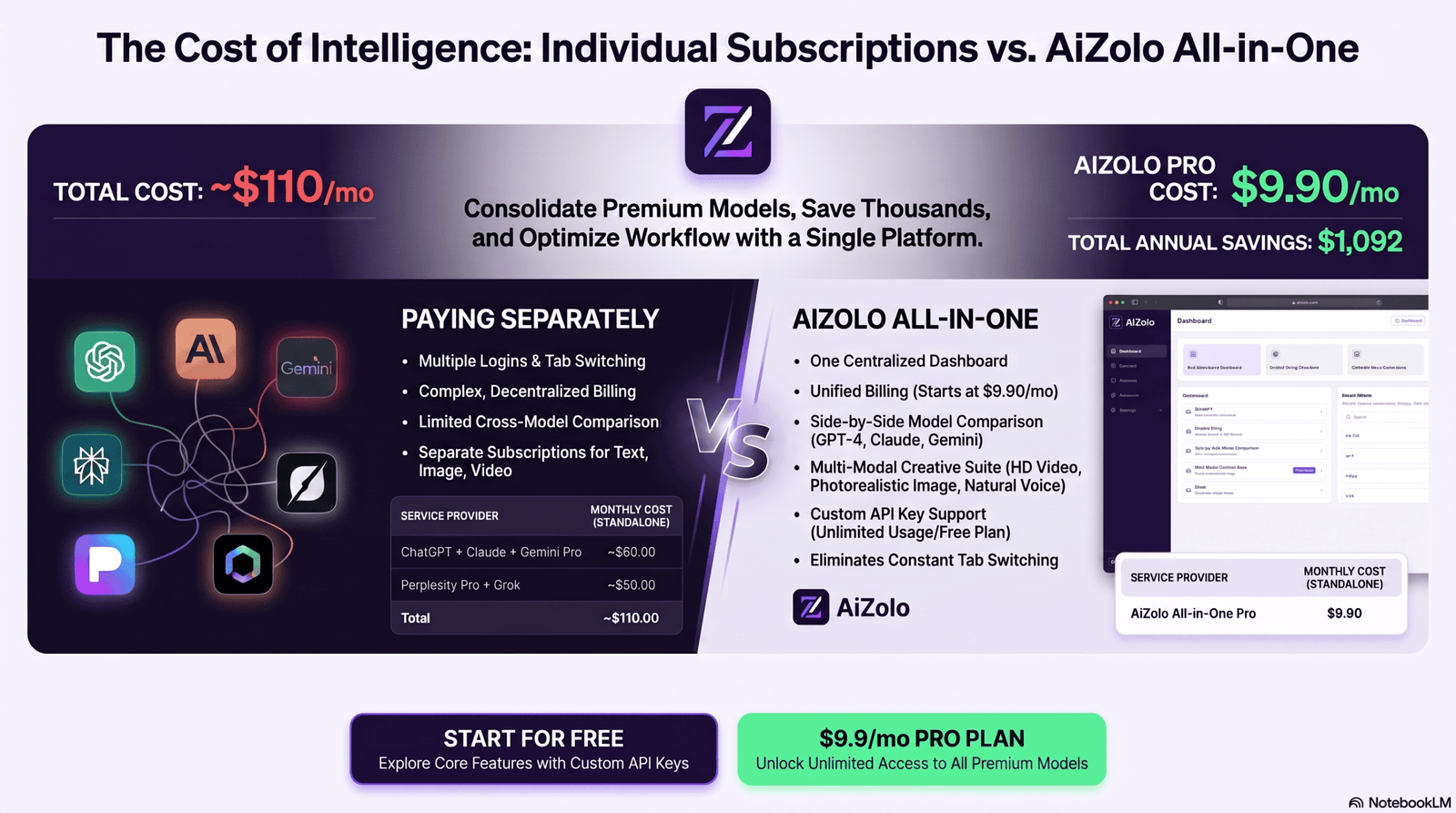
Value-for-money takeaway: Mistral is meaningfully cheaper per token across nearly every tier. Anthropic’s value case rests on doing more useful work per request, especially on hard coding and reasoning tasks, plus aggressive caching discounts.
Open Source vs Closed Ecosystem
Mistral’s biggest structural advantage is openness. Models like Small 4, Devstral Small, and the Ministral family ship under permissive licenses, meaning teams can self-host and cut per-token costs to zero beyond compute.
Anthropic keeps its entire Claude lineup closed. That trade-off buys tighter quality control and safety guarantees, but it also means full vendor dependency for every request.
For regulated industries evaluating open-source AI alternatives, Mistral’s open-weight tier is the more flexible starting point; for teams prioritizing frontier capability over control, Anthropic’s closed models remain ahead.
Privacy and Security Comparison
Anthropic offers enterprise data controls, does not train on API business data by default, and maintains a public constitutional AI safety framework guiding model behavior.
Mistral leans on European data residency and GDPR-native infrastructure, positioning itself as the sovereign choice for companies that must legally keep data inside the EU.
Bottom line: if EU data sovereignty is a hard legal requirement, Mistral has the structural edge. If your priority is proven AI safety research and governance depth, Anthropic has the longer track record.
Regulated sectors — finance, government, defense, healthcare — tend to weigh this differently depending on jurisdiction. A European public-sector buyer will often default to Mistral for private AI deployment on sovereign infrastructure, while a US-based financial firm may lean toward Anthropic’s established enterprise agreements and audit history.
It’s also worth noting that both companies are still young by enterprise-software standards. Neither has the multi-decade compliance track record of legacy enterprise vendors, so due diligence on data processing agreements, retention policies, and regional hosting options is worth doing directly with each vendor rather than assuming either default is automatically compliant for your industry.
Real-World Use Cases
Best for startups: Mistral’s low per-token pricing and open-weight options reduce burn rate while a product is still finding fit.
Best for enterprises: Anthropic’s Claude Opus/Sonnet tiers plus deep AWS/Google Cloud integration suit large, complex enterprise deployments.
Best for developers: Anthropic for hard, agentic coding tasks; Mistral’s Codestral/Devstral for high-volume, lower-cost code generation.
Best for researchers: Anthropic’s transparency around Constitutional AI and safety research gives researchers more to work with; Mistral’s open weights allow direct model inspection.
Best for content teams: Claude for nuanced long-form writing; Mistral Large for high-volume, cost-sensitive drafting.
Best for multilingual businesses: Mistral, given its EU-language depth and dedicated audio models for European markets.
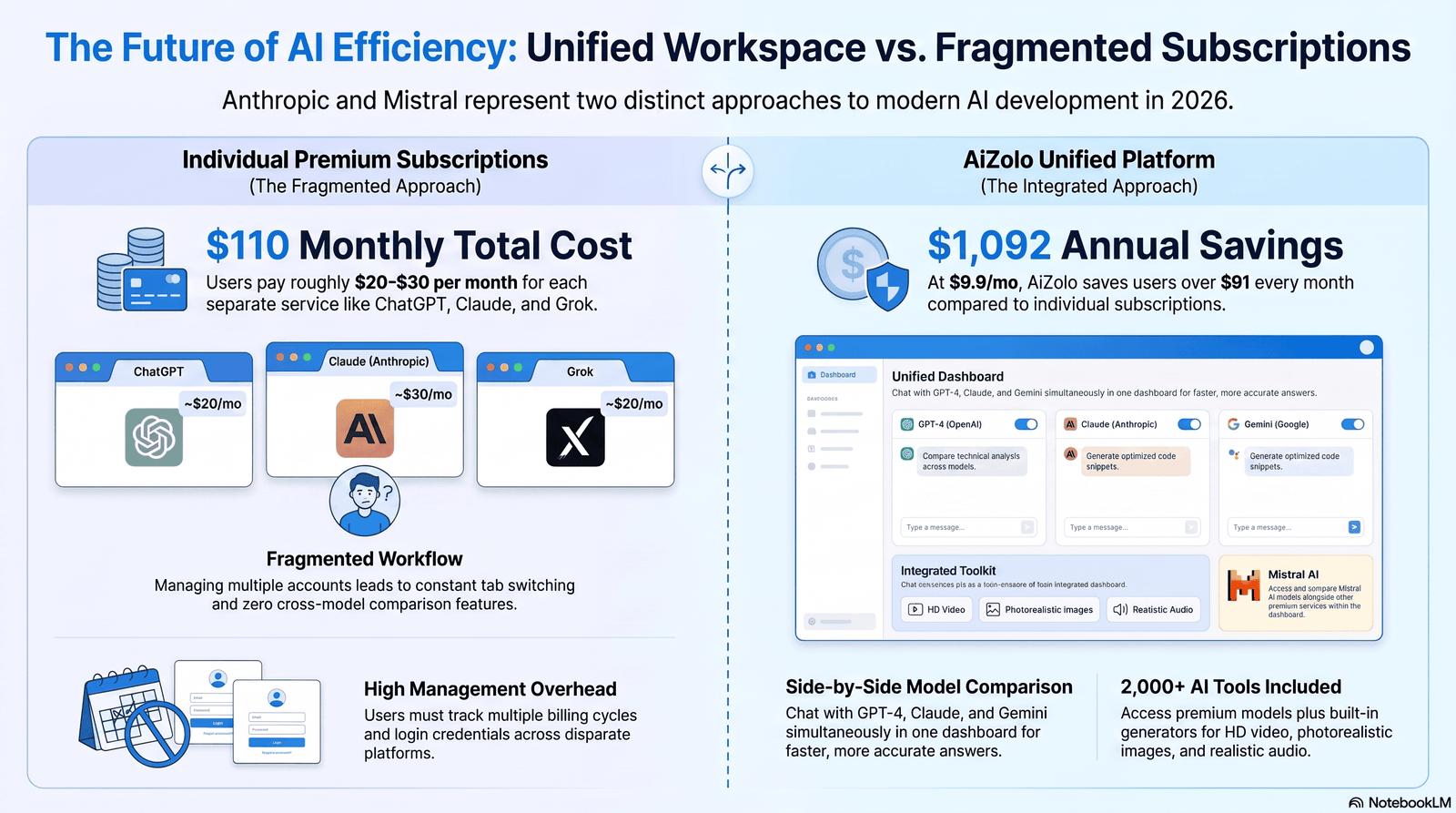
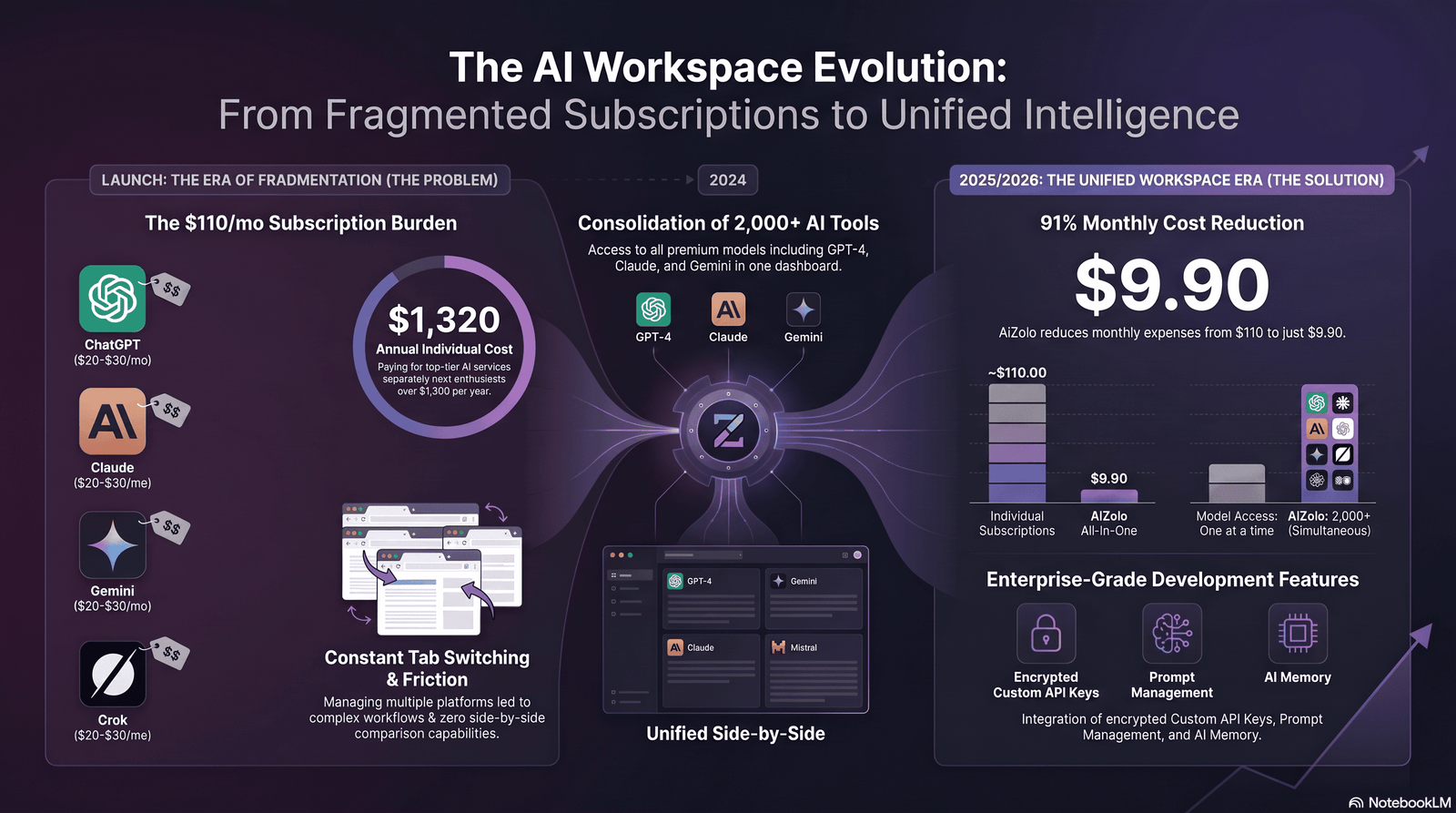
If you’re regularly weighing calls like these, it’s often easier to test prompts across platforms where multiple AI models answer the same question side by side, rather than switching between separate dashboards for every comparison.
Pros and Cons
Anthropic Pros and Cons
| Pros | Cons |
|---|---|
| Frontier-leading coding and reasoning | Higher per-token pricing |
| 1M-token context on current models | No open-weight or self-hosting option |
| Strong AI safety and governance track record | Recent access disruption on top-tier models (export controls) |
| Aggressive prompt-caching discounts | US-only company; less EU sovereignty appeal |
Mistral Pros and Cons
| Pros | Cons |
|---|---|
| Lowest per-token pricing across most tiers | Trails frontier labs on hardest reasoning benchmarks |
| Extensive open-weight model family | Smaller ecosystem and brand recognition |
| Strong EU data residency and sovereignty story | Smaller context windows on flagship models |
| OpenAI-compatible API, easy migration | Enterprise track record shorter than Anthropic’s |
Which AI Model Should You Choose in 2026?
| Decision factor | Recommended pick |
|---|---|
| Best overall | Anthropic (Claude Sonnet 5 / Opus 4.8) |
| Best for coding | Anthropic for hard problems, Mistral for volume |
| Best for enterprises | Anthropic, unless EU sovereignty is mandatory |
| Best for privacy | Mistral (EU residency) or Anthropic (governance depth) |
| Best for multilingual work | Mistral |
| Best value for money | Mistral |
If you regularly need to sanity-check which model actually performs better on your own prompts, running the same question through several models via one subscription for all ai models saves time versus juggling separate accounts.
How This Fits Into the Broader AI Market
Anthropic and Mistral don’t operate in a vacuum. Both compete against OpenAI, Google DeepMind, and a fast-growing set of open-weight Chinese labs on AI benchmark scores and pricing at the same time.
Anthropic’s positioning is closer to OpenAI and Google — frontier capability at a premium, sold primarily through managed APIs and consumer subscriptions. Mistral’s positioning is closer to Meta’s Llama family and DeepSeek — open weights and aggressive pricing, but with a distinctly European sovereignty angle neither of those competitors offers.
For AI workflow automation at scale, this competitive backdrop matters because pricing and benchmark leadership shift every few months in 2026. A comparison snapshot like this one is a starting point, not a permanent ranking — re-check current pricing pages and benchmark trackers before locking in a long-term vendor decision.
Final Verdict
Anthropic is the stronger choice when your work depends on frontier coding ability, long-context reasoning, and a mature safety track record — and you’re comfortable paying a premium for it.
Mistral is the stronger choice when cost efficiency, open-weight flexibility, and EU data sovereignty matter more than squeezing out the last few points of benchmark performance.
Many teams don’t have to pick just one. A common pattern in 2026 is routing simple, high-volume tasks to Mistral’s cheaper tiers and escalating complex reasoning or coding work to Claude — a setup that’s much easier to manage from a best multi ai platform than from two separate vendor dashboards.
Frequently Asked Questions
Is Anthropic better than Mistral?
For frontier coding and reasoning, Anthropic generally leads. For cost efficiency and open-weight flexibility, Mistral leads. “Better” depends on the workload.
Which is cheaper, Claude or Mistral?
Mistral is cheaper per token across almost every comparable tier, though Anthropic’s prompt caching narrows the real-world gap for repetitive workloads.
Which is best for coding, Claude or Mistral?
Claude Opus 4.8 and Sonnet 5 lead on complex, agentic coding tasks. Mistral’s Codestral and Devstral are strong, lower-cost options for high-volume code generation.
Which is safer, Anthropic or Mistral?
Anthropic has the longer public track record in AI safety research via Constitutional AI. Mistral emphasizes EU AI Act alignment and data sovereignty as its safety angle.
Which supports more languages?
Mistral has invested heavily in European-language depth and audio models. Claude is also strong multilingually but doesn’t market EU-language coverage as a specific differentiator.
Which is better for enterprises?
Anthropic has deeper enterprise adoption in regulated software and finance. Mistral is growing fast via Forge and partnerships like Accenture and IBM, especially where EU hosting is required.
Which offers open models?
Mistral. Its Small, Devstral Small, and Ministral lines ship under permissive open-weight licenses. Anthropic does not offer open-weight Claude models.
Which has better APIs?
Both are solid. Mistral’s API is OpenAI-compatible for easy migration. Anthropic’s API has deeper documentation around caching and cost optimization for high-volume production use.
Which has stronger reasoning?
Anthropic’s Opus and Fable tiers generally lead on the hardest reasoning benchmarks as of mid-2026, though the gap has been narrowing.
Which should startups choose?
Startups on tight budgets often start with Mistral for cost control, then add Claude for the specific tasks where quality directly affects revenue.
Does Mistral offer a free tier?
Yes, both Vibe (Mistral’s consumer assistant) and La Plateforme offer free, rate-limited access for experimentation.
Does Anthropic offer a free tier?
Claude.ai has a free tier with usage limits; the API itself is pay-as-you-go with no free ongoing allowance beyond initial credits.
Can I self-host Claude models like I can with Mistral?
No. Anthropic’s Claude models are closed and API-only. Several Mistral models can be self-hosted under open licenses.
Is Mistral AI review 2026 positive for enterprise use?
Mistral AI review 2026 coverage is broadly positive on cost and sovereignty, with the main caveat being it still trails top US labs on the hardest benchmarks.
What’s the best AI model for business in 2026?
There’s no single answer — it depends on whether cost control (Mistral) or peak capability (Anthropic) matters more for your specific business workload.
Actionable Takeaways
- Route simple, high-volume tasks to Mistral’s cheaper tiers; escalate complex reasoning and coding to Claude.
- Turn on prompt caching and batch processing on both platforms before comparing real-world costs.
- If EU data residency is a legal requirement, shortlist Mistral first.
- If agentic coding quality directly affects revenue, budget for Claude Opus 4.8 or Sonnet 5.
- Re-check current pricing pages before committing — both providers update rates frequently in 2026.
Author Bio
Jeevesh Tripathi is an AI industry researcher and technology writer specializing in artificial intelligence platforms, large language models, AI subscriptions, productivity tools, and enterprise AI adoption. He focuses on creating evidence-based comparisons and practical buying guides that help businesses and professionals make informed AI decisions.
Contact: jeevesh@aizolo.com

Pingback: Best AI Model in the World 2026 (Honest Guide)
Pingback: Claude Haiku 4.5 vs Gemini 3 Flash: Surprising Winner
Pingback: Best AI Models for Coding May 2026 | Full Guide