Quick Answer
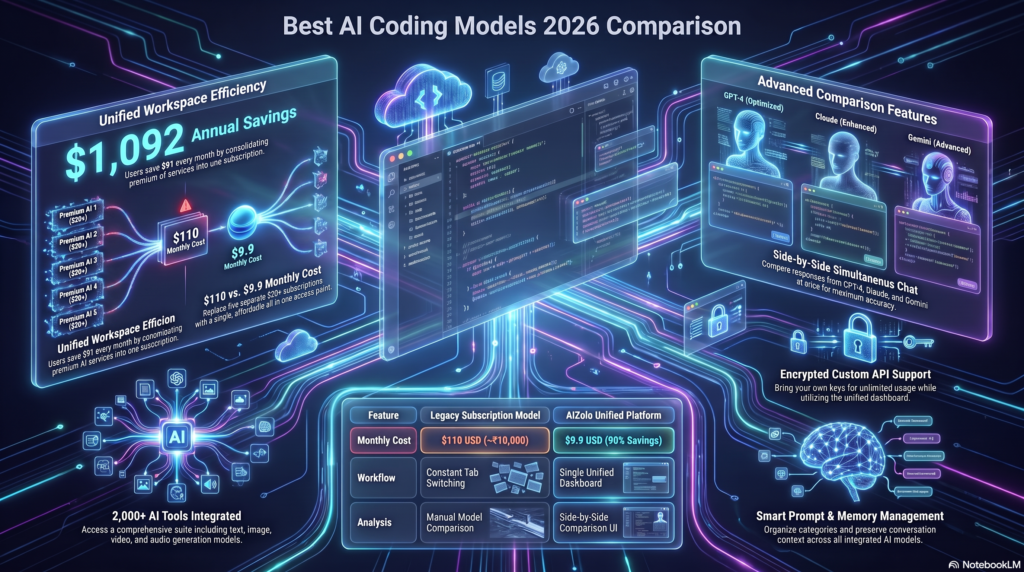
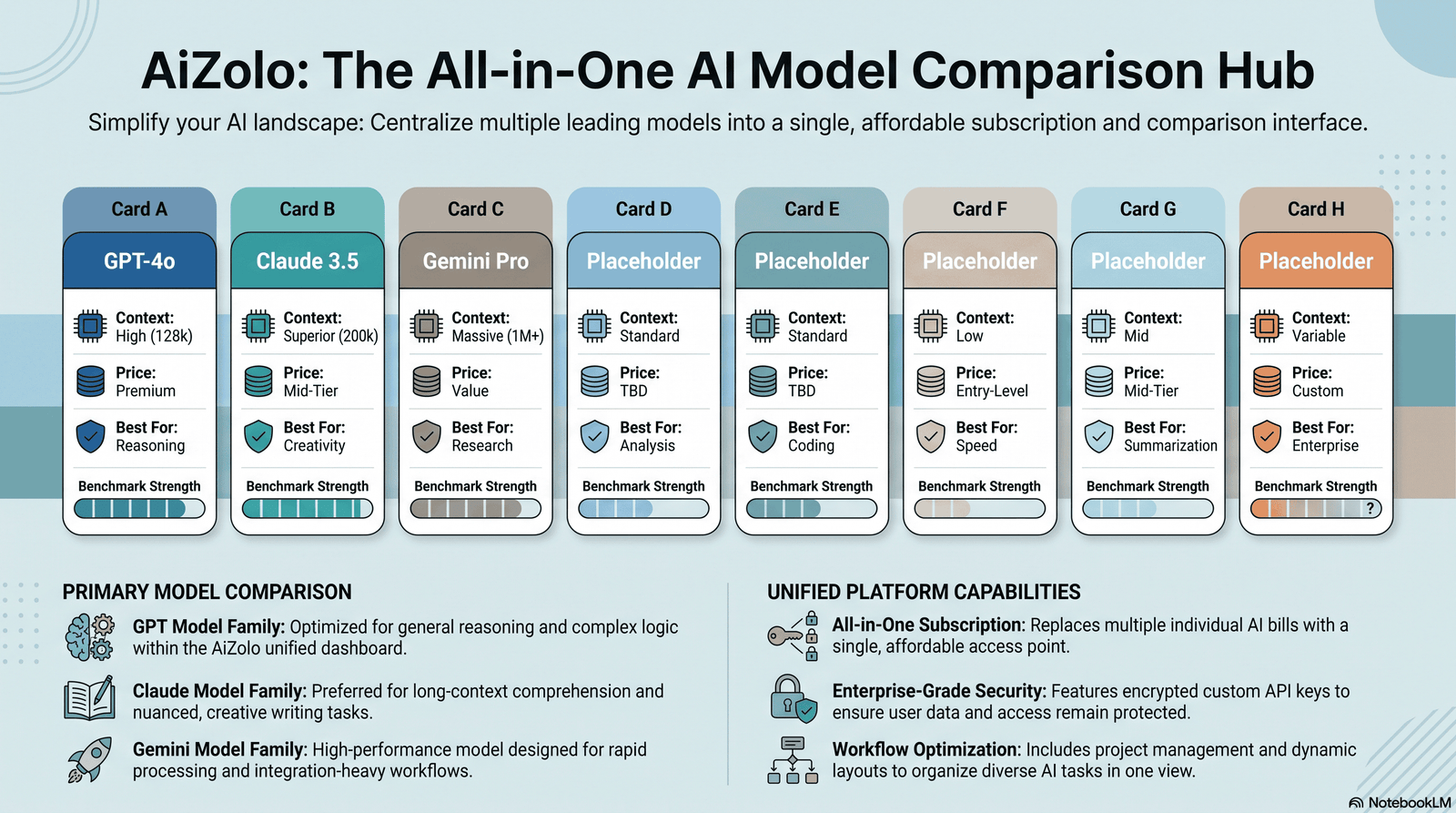
There is no single “best” AI coding model in 2026 — the frontier has split into specialists. Claude’s Opus and Sonnet lines lead most agentic coding benchmarks and power Cursor, Windsurf, and Claude Code. GPT-5.x is the strongest all-rounder with the widest tool ecosystem. Gemini 3.1 Pro wins on context window and price-to-performance. DeepSeek V4 and Qwen3-Coder lead the open-weight tier. Platforms like Aizolo make it easier to compare and access multiple leading AI models from one place. Your best pick depends on whether you value raw benchmark accuracy, cost, context length, or self-hosting control.
Table of Contents
Why AI Coding Models Matter in 2026
Two years ago, developers treated AI coding models as autocomplete with better manners. That framing is dead.
In 2026, coding LLMs plan multi-file refactors, open pull requests, run their own test suites, and operate for hours with minimal human supervision inside agents like Claude Code, Cursor, Windsurf, and Codex-based tools.
That shift changes the stakes of picking the wrong best ai coding models 2026 comparison search result and running with it.
A model that’s cheap but weak at multi-step reasoning will quietly introduce regressions into a production codebase. A model that’s powerful but priced for enterprise budgets will blow through a startup’s API spend in a week of heavy agentic use.
Benchmark movement has also accelerated to a pace that makes most “best of 2026” roundups stale within a month.
New flagship releases from Anthropic, OpenAI, Google, xAI, DeepSeek, and Alibaba have landed in overlapping waves throughout the year, and top SWE-bench Verified scores have climbed from the high-60s to the high-80s in that window.
Choosing a model today means choosing a moving target — especially if you’re using an all in one ai platform that lets you compare multiple models as they evolve. This guide helps you evaluate long-term patterns and real-world performance, not just memorize a single leaderboard snapshot that will look dated by autumn.
For the full picture across every category — not just coding — see our AI comparison chart 2026, which ranks the same models on speed, cost, and general-purpose performance.
This guide compares closed frontier models, open-weight alternatives, and local deployment options across coding accuracy, context window, pricing, agentic reliability, and developer experience — with the limitations of every model stated plainly, because no vendor’s marketing page will do that for you.
How We Evaluated Every Coding Model
Our methodology weighs eleven factors rather than a single leaderboard number, because SWE-bench-style scores alone can mislead buyers.
- Benchmark testing — SWE-bench Verified, HumanEval, and LiveCodeBench scores, cross-checked against multiple independent leaderboards rather than vendor self-reporting alone.
- Coding speed — time-to-first-token and full completion latency for typical inline suggestions.
- Bug fixing — real GitHub issue resolution in multi-turn, tool-using agent loops.
- Reasoning depth — performance on multi-step logic that resembles debugging race conditions or planning a refactor.
- Long-context handling — whether the model stays coherent across large repositories rather than just accepting a big token count.
- Documentation quality — clarity of generated comments, docstrings, and explanatory output.
- Framework support — breadth of tested performance across React, Django, Spring, Node, and similar stacks.
- IDE integration — availability inside Cursor, Windsurf, VS Code, JetBrains, and terminal agents.
- Pricing — published API rates, consumer subscription tiers, and effective cost per completed task.
- Enterprise readiness — SOC 2 status, data retention controls, and admin tooling.
- API capabilities — tool calling, structured output, prompt caching, and context-window ceilings.
We deliberately separate marketing claims from measured performance. Vendors report benchmark numbers under conditions that favor their own model — different scaffolding, multiple retry attempts, or cherry-picked task subsets.
Independent analyses have repeatedly found that scaffold choice alone can shift SWE-bench results by several points, which means small leaderboard gaps between top models are frequently noise rather than a meaningful capability difference.
Expert Note: If two models are within roughly two points of each other on SWE-bench Verified, treat them as tied for practical purposes and let price, latency, or ecosystem fit break the tie.
We ran these tests the same way we recommend you validate any shortlist — head-to-head, not one tab at a time. See the world’s smartest AI side by side and our guide to comparing AI models side by side in 2026 for the workflow.
Quick Comparison Table
If you want the broader picture beyond coding — writing, reasoning, multimodal — see our top 5 AI models 2026 ranking.
| Model | Best For | Strengths | Weaknesses | Context Window | API | Open Source | Overall Rating |
|---|---|---|---|---|---|---|---|
| Claude Opus (4.x) | Complex agentic coding, large refactors | Highest agentic SWE-bench scores, powers Cursor/Windsurf/Claude Code, strong extended reasoning | Expensive, slower on long prompts (8–15s) | 200K (1M in beta on some tiers) | Yes | No | 9.5/10 |
| Claude Sonnet (4.x/5) | Best value at near-Opus quality | ~80% of Opus coding performance at a fraction of the cost, fast, reliable for daily dev work | Less headroom than Opus on the hardest multi-file tasks | 200K–1M (varies by version) | Yes | No | 9.3/10 |
| GPT‑5.x | Instruction-following, tool use, all-round default | Strong ecosystem, Codex-class terminal agents, competitive SWE-bench, large output length | Pricing can vary by variant; premium “Thinking” tier is costly | 200K–400K depending on variant | Yes | No | 9.2/10 |
| Gemini 3.1 Pro | Huge codebases, best price-to-performance | 1M-token context window, leads several reasoning benchmarks, multimodal (video/audio input) | Trails specialist coding models on some terminal-agent benchmarks | 1M (200K standard tier, higher pricing beyond) | Yes | No | 9.0/10 |
| DeepSeek V4 (Pro/Flash) | Best value / self-hosted frontier-class coding | MIT license, near-frontier SWE-bench scores, dramatically cheaper API pricing | Newer, smaller ecosystem, self-hosting needs serious GPU budget | 1M | Yes | Yes (MIT) | 8.8/10 |
| Qwen3-Coder / Qwen3.x-Max | Multilingual + local deployment flexibility | Strong SWE-bench for its class, dense small variants run on consumer GPUs | Flagship “Max” tier is closed/API-only, architecture undisclosed | 256K–1M (Yarn-extended) | Yes | Partial (Coder variants Apache-2.0; Max closed) | 8.6/10 |
| Mistral Codestral | Best-in-class fill-in-the-middle / autocomplete | Leading FIM pass@1 scores, fast, excellent IDE inline completion | Non-Production License restricts commercial use without a separate agreement | 256K | Yes | Partial (license-restricted) | 8.3/10 |
| Llama coding variants (Scout/Maverick) | Massive context, open ecosystem | Enormous context windows, huge fine-tune/tool ecosystem | Coding benchmarks trail specialist coder models | Up to several million (extended) | Yes | Yes (Llama license, usage caps apply) | 7.8/10 |
| Open-source alternatives (GLM, Kimi K2, MiniMax) | Agentic coding on a budget, data residency | Competitive SWE-bench under multi-attempt settings, MIT/modified-MIT licenses | Benchmark gaps widen on single-attempt, harder tasks | 128K–200K typical | Yes (via hosts) | Yes (mostly) | 7.7/10 |
Ratings reflect a blended view of coding accuracy, cost efficiency, and real-world developer experience — not a single benchmark. Scores across all vendors shift every few weeks; treat this table as directional, not a permanent leaderboard.
Consumer subscription pricing (ChatGPT Plus, Claude Pro, etc.) is covered in our AI comparison chart 2026 — the table below is API pricing only, since that’s what actually drives cost for agentic coding workloads.
Detailed Review of Each Model
Claude (Opus and Sonnet lines)
Overview: Anthropic’s Claude models consistently top independent agentic coding benchmarks and are the default engine behind Cursor, Windsurf, and Anthropic’s own Claude Code terminal agent.
Strengths: Extended thinking for step-by-step debugging, strong performance on legacy-codebase refactors and multi-file edits, and the most reliable tool-use loop for long-running autonomous coding sessions.
Weaknesses: Opus-tier pricing is the highest of the major closed models, and response latency on long prompts can stretch into double-digit seconds.
Benchmarks: Anthropic’s Opus line has repeatedly led SWE-bench Verified among publicly available, standard-pricing frontier models, with Sonnet-tier models delivering a large share of that performance at a much lower price point.
Pricing: Opus-class pricing runs in the mid-teens per million input tokens and multiples of that for output; Sonnet-class pricing is dramatically lower while retaining most of the coding capability.
Best use cases: Autonomous coding agents, complex multi-step refactors, and teams where correctness matters more than raw speed or lowest cost.
Enterprise suitability: Strong — widely deployed inside enterprise developer tooling with mature admin and retention controls.
Developer experience: Rated highly for natural, well-structured code and documentation output; consistently the top pick in blind developer evaluations for debugging complex logic.
Limitations: Cost adds up quickly on high-volume, low-complexity tasks where a cheaper model performs just as well.
GPT‑5.x (OpenAI)
Overview: OpenAI’s GPT‑5 family remains the broadest all-rounder, with dedicated Codex-class variants tuned for terminal-based agentic coding.
Strengths: Strong instruction-following, competitive SWE-bench scores, a large output-length ceiling, and the widest third-party integration ecosystem of any model family.
Weaknesses: Pricing across variants (standard vs. “Thinking”/reasoning tiers) varies enough that teams need to model cost carefully before scaling usage.
Benchmarks: GPT‑5.x variants have posted SWE-bench Verified scores in the high-70s to low-80s range across different releases, generally within a few points of Claude and Gemini at the frontier.
Pricing: Standard tiers sit in a moderate mid-range; premium reasoning variants cost substantially more per output token.
Best use cases: General-purpose development work, agentic tool use, and teams already standardized on the OpenAI/Codex ecosystem.
Enterprise suitability: Strong, with broad platform support across major cloud and IDE integrations.
Developer experience: Particularly strong at technical accuracy in documentation and structured output.
Limitations: Reasoning-tier pricing can be the most expensive option in the entire comparison for high-token workloads.
Gemini 3.1 Pro (Google)
Overview: Google’s Gemini 3.1 Pro pairs a 1-million-token context window with leading scores on several published reasoning benchmarks, and it accepts text, image, audio, video, and code in a single request.
Strengths: Best-in-class context length for whole-repository analysis, strong price-to-performance ratio, and native multimodal input that’s useful for reviewing design mocks alongside code.
Weaknesses: On terminal-agent-style coding benchmarks it trails the most specialized coding-tuned models, and pricing roughly doubles once prompts exceed the 200K-token threshold.
For a deeper head-to-head on pricing and reasoning outside of coding specifically, see our Google vs Anthropic AI model comparison.
Benchmarks: Gemini 3.1 Pro has scored in the 63–81% range on SWE-bench Verified depending on the evaluation setup, alongside leading results on GPQA Diamond and ARC-AGI-2 reasoning benchmarks.
Pricing: Roughly $2 input / $12 output per million tokens under 200K tokens, rising for longer prompts.
Best use cases: Full-codebase analysis, monorepo refactors, and multimodal research workflows that combine code with documents or video.
Enterprise suitability: Strong, with deep Google Workspace and Vertex AI integration.
Developer experience: Praised for eliminating manual chunking and retrieval when working across very large codebases.
Limitations: Not the first choice for the hardest, most autonomous multi-step coding-agent tasks.
DeepSeek (V4 Pro / V4 Flash)
Overview: DeepSeek’s V4 generation ships as genuinely open, MIT-licensed weights, and its API pricing undercuts every closed frontier model by a wide margin.
Strengths: Near-frontier SWE-bench scores at a fraction of the cost, a 1M-token context window, and full self-hosting rights with weights published on Hugging Face.
Weaknesses: Smaller developer-tooling ecosystem than Claude, GPT, or Gemini, and self-hosting at frontier quality requires multiple high-end GPUs.
Benchmarks: Independent and vendor-reported scores place DeepSeek V4 Pro in the 80%+ range on SWE-bench Verified, with the lighter V4 Flash variant close behind at a dramatically lower price.
Pricing: Among the cheapest frontier-class options available, often quoted under $2 per million tokens combined input/output for the Pro tier and well under $1 for Flash.
Best use cases: Cost-sensitive, high-volume coding pipelines, and teams that want the option to self-host for data-residency reasons.
Enterprise suitability: Growing, but data-governance teams should evaluate hosting jurisdiction carefully before regulated deployments.
Developer experience: Increasingly popular in community-built agent setups that pair DeepSeek’s backend with Claude Code-style front-end tooling.
Limitations: Model naming and pricing tiers change frequently; always verify the current model ID on the provider’s own documentation before shipping to production.
Qwen (Qwen3-Coder / Qwen3.x-Max)
Overview: Alibaba’s Qwen line splits into an open, Apache-2.0-licensed “Coder” series and a closed, API-only “Max” flagship whose architecture Alibaba has not disclosed.
Strengths: Strong SWE-bench performance relative to model size, excellent multilingual and Chinese-language coding support, and dense variants small enough to run on a single consumer GPU.
Weaknesses: The flagship Max tier offers no self-hosting option, and Alibaba has not published parameter counts or architecture details for it.
Benchmarks: Community and vendor benchmarks place various Qwen3-Coder releases in the high-60s to high-70s range on SWE-bench Verified, competitive with much larger models.
Pricing: Coder-tier models are inexpensive to run, either hosted or self-managed; Max-tier API pricing is comparable to other closed mid-tier models.
Best use cases: Local development workflows, GDPR-sensitive coding tasks kept entirely on-premises, and multilingual codebases.
Enterprise suitability: Reasonable for teams comfortable with a mixed open/closed licensing model.
Developer experience: Strong for autocomplete and chat-based coding help; less proven than Claude or GPT-5 on the longest autonomous agent runs.
Limitations: Fragmented licensing across the product line means teams must check each variant’s terms individually.
Mistral (Codestral)
Overview: Mistral’s Codestral line specializes in fill-in-the-middle (FIM) completion — the exact task IDE autocomplete relies on — and consistently tops FIM-specific leaderboards.
Strengths: Industry-leading FIM pass@1 scores, a lightweight footprint that runs fast even at moderate parameter counts, and a 256K context window.
Weaknesses: The Mistral Non-Production License restricts commercial deployment without a separate paid agreement, which trips up teams expecting an open-source-style license.
Benchmarks: Codestral has posted FIM pass@1 scores above 95%, ahead of larger general-purpose coding models on that specific task.
Pricing: Competitive low-cost tiers for both hosted API and self-managed deployment (where licensing permits).
Best use cases: In-editor autocomplete and inline suggestion features inside VS Code, JetBrains, and Continue.dev-style integrations.
Enterprise suitability: Requires a commercial license conversation before production deployment at scale.
Developer experience: Frequently cited as the best “feel” for real-time inline suggestions among all models compared here.
Limitations: Not built or benchmarked as a full agentic coding model — it excels at completion, not autonomous multi-step tasks.
Llama coding variants (Meta)
Overview: Meta’s Llama 4 family (Scout, Maverick) trades top-tier coding benchmark scores for enormous context windows and the largest open fine-tuning ecosystem in the industry.
Strengths: Context windows extending into the millions of tokens, a mature self-hosting and fine-tuning community, and permissive-enough licensing for most commercial use cases.
Weaknesses: Coding-specific benchmarks trail dedicated coder models like Qwen3-Coder or DeepSeek, and the Llama license imposes a monthly-active-user cap plus EU-specific restrictions that matter for larger deployments.
Benchmarks: Strong on general knowledge benchmarks like MMLU, but consistently behind specialist coding models on SWE-bench Verified.
Pricing: Free to self-host within license terms; hosted API pricing varies by provider.
Best use cases: Extremely large document- or codebase-context tasks where sheer window size matters more than peak coding accuracy.
Enterprise suitability: Good, provided the user-cap and geographic license terms are reviewed by legal.
Developer experience: Benefits from the largest number of community fine-tunes and third-party tools of any model family in this guide.
Limitations: Not the first choice when coding accuracy is the primary requirement.
Open-source alternatives (GLM, Kimi K2, MiniMax, and similar)
Overview: A fast-moving second tier of Chinese open-weight labs — Zhipu’s GLM series, Moonshot’s Kimi K2, and MiniMax — regularly posts SWE-bench scores that rival top closed models under multi-attempt agentic settings.
Strengths: MIT or modified-MIT licensing, strong price-to-performance, and rapid iteration cycles that sometimes leapfrog closed-model releases for weeks at a time.
Weaknesses: Single-attempt (non-agentic) scores trail the multi-attempt numbers vendors like to headline, so real-world single-pass performance can undersell the marketing.
Benchmarks: Multi-attempt agentic SWE-bench Verified scores in the high-60s to low-70s are common across this tier, with some releases briefly topping the open-model leaderboard entirely.
Pricing: Generally the lowest-cost tier available, especially via third-party hosts.
Best use cases: Budget-constrained teams, competitive research and evaluation, and organizations wanting a diversified multi-model routing strategy.
Enterprise suitability: Case-by-case — data residency and long-term support commitments vary widely by lab.
Developer experience: Improving quickly, but tooling and IDE integration lag the top three closed vendors.
Limitations: The fastest-changing tier in this entire comparison; verify current benchmark numbers before any procurement decision.
Benchmark Comparison Explained
Numbers without context mislead more than they inform. Here’s what each major benchmark actually measures.
HumanEval tests whether a model can generate a correct, self-contained function from a docstring. It’s a useful sanity check but increasingly saturated — most frontier models now score in the high 80s to mid 90s, so it no longer meaningfully differentiates top models.
SWE-bench Verified is the most cited benchmark for real-world coding capability. It uses a human-filtered set of roughly 500 genuine GitHub issues and checks whether a model’s patch actually makes the associated test suite pass. Because it requires multi-file understanding and tool use, it correlates far better with autonomous-agent performance than HumanEval does.
LiveCodeBench continuously refreshes its problem set from recent competitive-programming sources specifically to avoid training-data contamination — a persistent risk with any static, publicly available benchmark.
Repo-level evaluation measures a model’s ability to reason across an entire codebase rather than an isolated function, testing whether it can trace a bug through multiple files and modules the way a human engineer would.
Agent benchmarks (Terminal-Bench-style tests, multi-turn tool-use evaluations) assess whether a model can operate a shell, run tests, read error output, and iterate — the actual workflow of a coding agent rather than a single completion.
Expert Note: Independent benchmark analysis has found that scaffold and harness choice — the surrounding code that feeds a model its context and executes its actions — can move SWE-bench results by several points on its own. A two-point gap between two models on a vendor’s landing page is frequently within that noise margin.
This mirrors a broader pattern across the whole market — see our breakdown of the gap between top AI models in 2026 for why small leaderboard gaps rarely mean much in practice.
Open Source vs Closed Models
| Factor | Open-Weight Models | Closed Models |
|---|---|---|
| Pros | Full self-hosting control, no per-token vendor lock-in, fine-tunable on private data, often dramatically cheaper at scale | Best absolute benchmark scores, mature tooling and IDE integration, managed infrastructure, predictable support |
| Cons | Smaller ecosystems, self-hosting at frontier scale needs serious GPU budget, licenses vary in real permissiveness | Ongoing per-token cost, data leaves your infrastructure unless enterprise contracts specify otherwise, vendor roadmap risk |
| Privacy | Code never has to leave your infrastructure if self-hosted | Depends entirely on the vendor’s data retention and training-use policies |
| Security | You control patching and access, but you also own that responsibility | Vendor-managed security, generally SOC 2 / ISO-certified at the enterprise tier |
| Customization | Full fine-tuning rights under permissive licenses (MIT, Apache 2.0) | Limited to prompt engineering, system prompts, and vendor-exposed fine-tuning APIs |
| Infrastructure cost | High upfront (GPUs) if self-hosted; low if using a third-party host | Zero infrastructure cost, but variable and potentially higher long-run token spend |
Decision framework: If your organization handles regulated or highly sensitive source code, weight the decision toward open-weight, self-hostable models like DeepSeek V4 or Qwen3-Coder. If your priority is squeezing out the last few points of coding accuracy on the hardest tasks, a closed frontier model like Claude Opus or GPT‑5.x is still the safer default.
Local AI Coding Models
Running a coding model entirely on your own hardware eliminates per-token cost and keeps proprietary code off third-party servers — but it comes with real hardware requirements.
Hardware requirements by tier:
- 8–12GB VRAM (consumer GPU, e.g., RTX 4070): Small dense models such as Qwen coder variants around 14B parameters, or quantized Codestral 22B builds, run comfortably here.
- 16–24GB VRAM (RTX 4090, RTX 4080, or similar): Mid-size dense models (roughly 27B parameters) at 4-bit quantization run well, including Qwen 3.x 27B-class coder models.
- 48GB+ VRAM (dual-GPU or workstation cards): Enables running two mid-size models simultaneously — for example, a reasoning-focused model alongside a fast autocomplete model — or a single larger MoE model at reduced quantization.
- Apple Silicon (64–128GB unified memory): M-series Macs with high memory bandwidth can run 27B-class models at usable token-per-second speeds via MLX, and top-spec configurations can run two models concurrently.
- Multi-GPU server tier (8x high-end GPUs): Required for full-precision self-hosting of trillion-parameter-class models like DeepSeek V4 Pro; quantized deployments cut this requirement roughly in half.
RAM matters as much as VRAM for CPU-offloaded layers — budget at least 1.2–1.5x the model’s on-disk size in system RAM if you plan to offload any layers.
Best local options in 2026: Qwen3-Coder variants and Codestral for consumer-hardware autocomplete; DeepSeek V4 Flash or Devstral-class models for mid-tier agentic coding; and quantized Gemma or Llama Scout variants where a smaller footprint matters more than peak accuracy.
Developer Tip: Ollama, LM Studio, and vLLM remain the three most common local-serving tools in 2026. Start with a 4-bit quantized build before assuming you need more VRAM — quality loss at Q4 is usually smaller than developers expect for coding-specific tasks.
Coding Agents vs Coding Models
These terms get used interchangeably, which causes real confusion when comparing tools.
A coding model is the underlying LLM — Claude, GPT‑5, Gemini, DeepSeek — that generates code, completions, or explanations when prompted.
A coding agent is the surrounding system: the tool that gives a model access to a file system, a terminal, a test runner, and a loop that lets it read output and decide its next action. Claude Code, Cursor, Windsurf, and Codex-based CLI tools are agents; they all wrap one or more underlying coding models.
The practical implication: two teams using the same underlying model (say, Claude Sonnet) can get meaningfully different results depending on the agent’s scaffolding — how it chunks context, what tools it exposes, and how it handles error recovery.
When evaluating a coding agent, always ask which model (and which version) it’s actually calling underneath, and don’t assume the agent’s marketing benchmark reflects the raw model’s capability, or vice versa.
Real Workflow Comparisons
Building a React app: Claude and GPT‑5-class models both handle component scaffolding well; Claude’s agentic loop is generally more reliable at wiring state management across multiple files without losing track of prior decisions in a long session.
Python automation scripts: Nearly every model in this guide handles short, self-contained Python scripts competently — this is where the gap between a $0.14/M open model and a $15/M frontier model narrows the most.
Java backend development: Larger, more verbose codebases benefit from Gemini’s context window or Claude’s multi-file reasoning; smaller open models tend to lose track of Spring or Hibernate configuration conventions across many files.
Debugging: Extended-reasoning models (Claude with extended thinking, GPT‑5 Thinking-tier variants) consistently outperform faster, cheaper models on race conditions and intermittent bugs that require holding multiple hypotheses in mind.
Refactoring: Repo-level context matters most here — Gemini’s 1M-token window or Claude’s long-context tiers avoid the “forgot what the code looked like three files ago” failure mode common to smaller-context models.
Code review: Models fine-tuned or prompted for review tend to flag more nuanced issues (security implications, edge cases) than pure code-generation runs; Claude and GPT‑5 both perform well here, with DeepSeek and Qwen closing the gap at a fraction of the cost.
Writing tests: Async and edge-case test generation still separates top models from budget ones — this is a task where “good enough” open models most visibly fall short of frontier accuracy.
Documentation: Claude’s output is frequently rated the most naturally written; GPT‑5 tends to be more literally technical and precise. If writing quality matters as much as code quality to you, see our AI language tools side by side 2026 comparison.
API generation: Most current-generation models handle standard REST/OpenAPI scaffolding reliably; differentiation shows up mainly in edge-case validation logic.
SQL optimization: Reasoning-heavy models outperform pure generation models here, since query optimization benefits from the same step-by-step evaluation used in debugging.
Common Mistake: Using the same model for every task in this list, rather than routing high-stakes debugging and refactoring to a frontier model while sending routine boilerplate to a cheaper one, is the single most common way teams overspend on AI coding tools in 2026.
Which Model Fits Your Coding Workflow
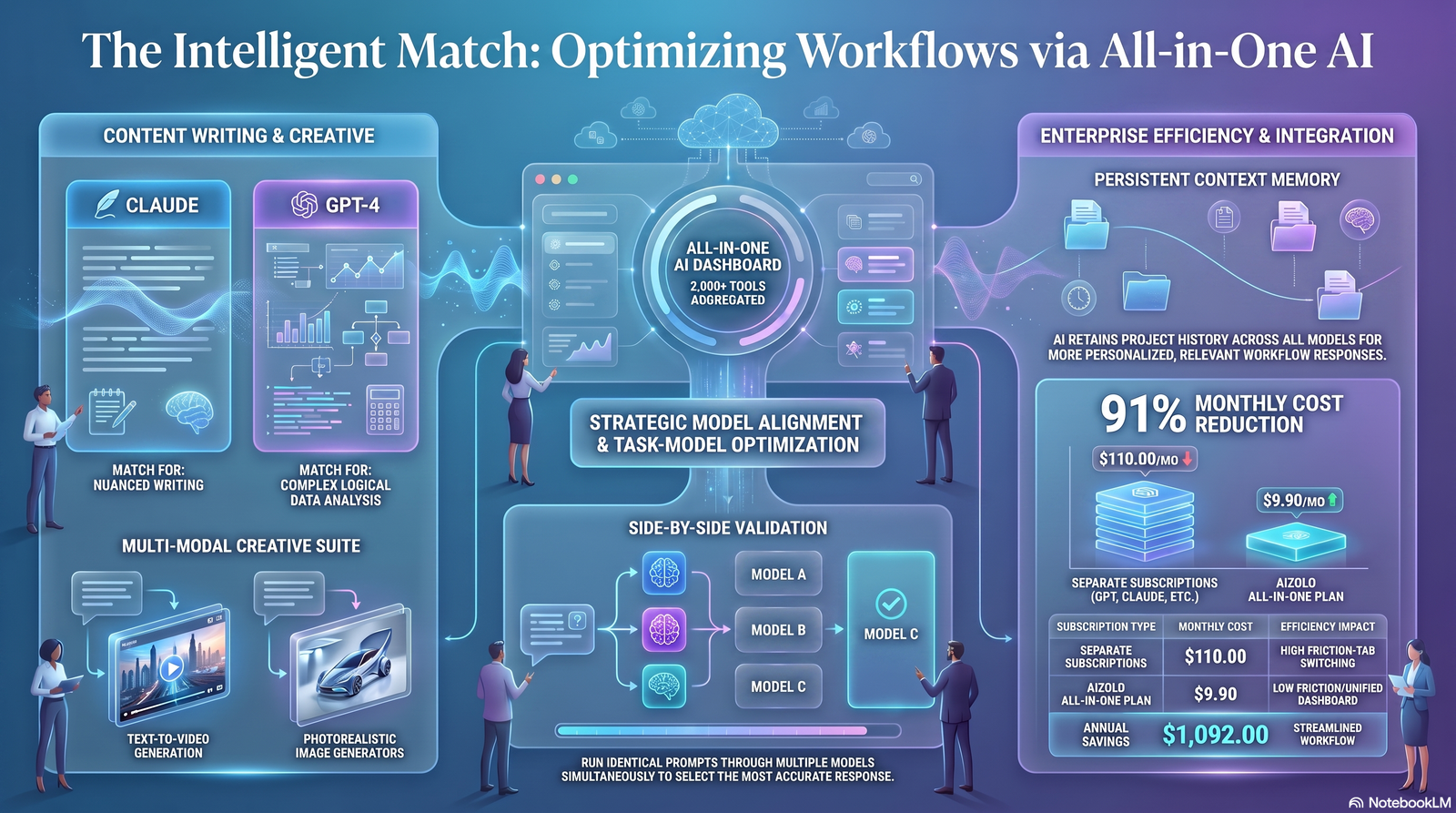
Coding-specific picks below. If you’re weighing AI tools for reasons beyond coding, our guides on the benefits of comparing AI models and how to pick the best AI tool in 2026 cover the general decision framework — this list stays focused on developer use cases only.
Which Model Fits Your Coding Workflow
- Learning to code / tutorials: A free or low-cost tier (Gemini’s consumer plan, a hosted Qwen or DeepSeek endpoint) is enough — you don’t need frontier pricing to learn fundamentals.
- In-editor autocomplete / inline suggestions: Codestral or Qwen3-Coder — optimized for fill-in-the-middle completion, not autonomous agent work.
- Autonomous multi-file refactors and long agent sessions: Claude Opus for the hardest cases, Sonnet for daily driving — this is the one category where paying for accuracy clearly pays for itself.
- High-volume CI/CD and routine boilerplate: Gemini Flash-tier or DeepSeek Flash — cost and latency matter more than peak reasoning here.
- Self-hosted or regulated codebases: DeepSeek V4 or Qwen3-Coder under MIT/Apache-2.0 licenses — code never leaves your infrastructure.
- Client-facing agency delivery on variable margins: Route by task — frontier model for deliverables, cheaper model for internal tooling — rather than standardizing on one model for everything.
- Compliance-critical enterprise engineering: Claude Opus or GPT‑5.x, for admin controls and SLA coverage as much as raw benchmark scores.
- Notebooks mixing code, charts, and written analysis: Gemini’s long context and multimodal input handle this better than a pure-code model.
Pricing Comparison
| Model Tier | Consumer Plan | API Pricing (per 1M tokens, in/out, approx.) | Best Value For |
|---|---|---|---|
| Claude Opus | ~$20/mo (Pro plan access) | ~$15 / $75 | Complex agentic coding where accuracy justifies cost |
| Claude Sonnet | Included in Pro plan | ~$3 / $15 | Daily development work at near-Opus quality |
| GPT‑5.x standard | ~$20/mo (Plus) | ~$2.50 / $15 | General-purpose coding and tool use |
| GPT‑5.x Thinking/reasoning tier | Higher-tier subscription | Substantially higher per output token | Deep multi-step reasoning tasks only |
| Gemini 3.1 Pro | ~$20/mo (Advanced) | ~$2 / $12 (under 200K tokens) | Large-codebase analysis at strong value |
| DeepSeek V4 Pro | N/A (API/self-host) | ~$1.74 / $3.48 | Frontier-adjacent coding at low cost |
| DeepSeek V4 Flash | N/A (API/self-host) | ~$0.14–$0.44 / $0.28–$0.87 | High-volume, cost-sensitive pipelines |
| Qwen3-Coder | Free tier varies by host | Low-cost, host-dependent | Local and multilingual development |
| Mistral Codestral | Free tier for individual use | Low-cost tiers | In-editor autocomplete |
Enterprise pricing for all major vendors is typically negotiated directly and not published; expect volume discounts, dedicated support SLAs, and custom data-retention terms starting in the tens of thousands of dollars annually for mid-size engineering organizations.
Best value overall: For teams without a compliance mandate favoring one specific vendor, Claude Sonnet and Gemini 3.1 Pro currently offer the strongest ratio of coding accuracy to price among closed models, while DeepSeek V4 offers the strongest ratio among all models including open-weight options.
Security and Privacy Considerations
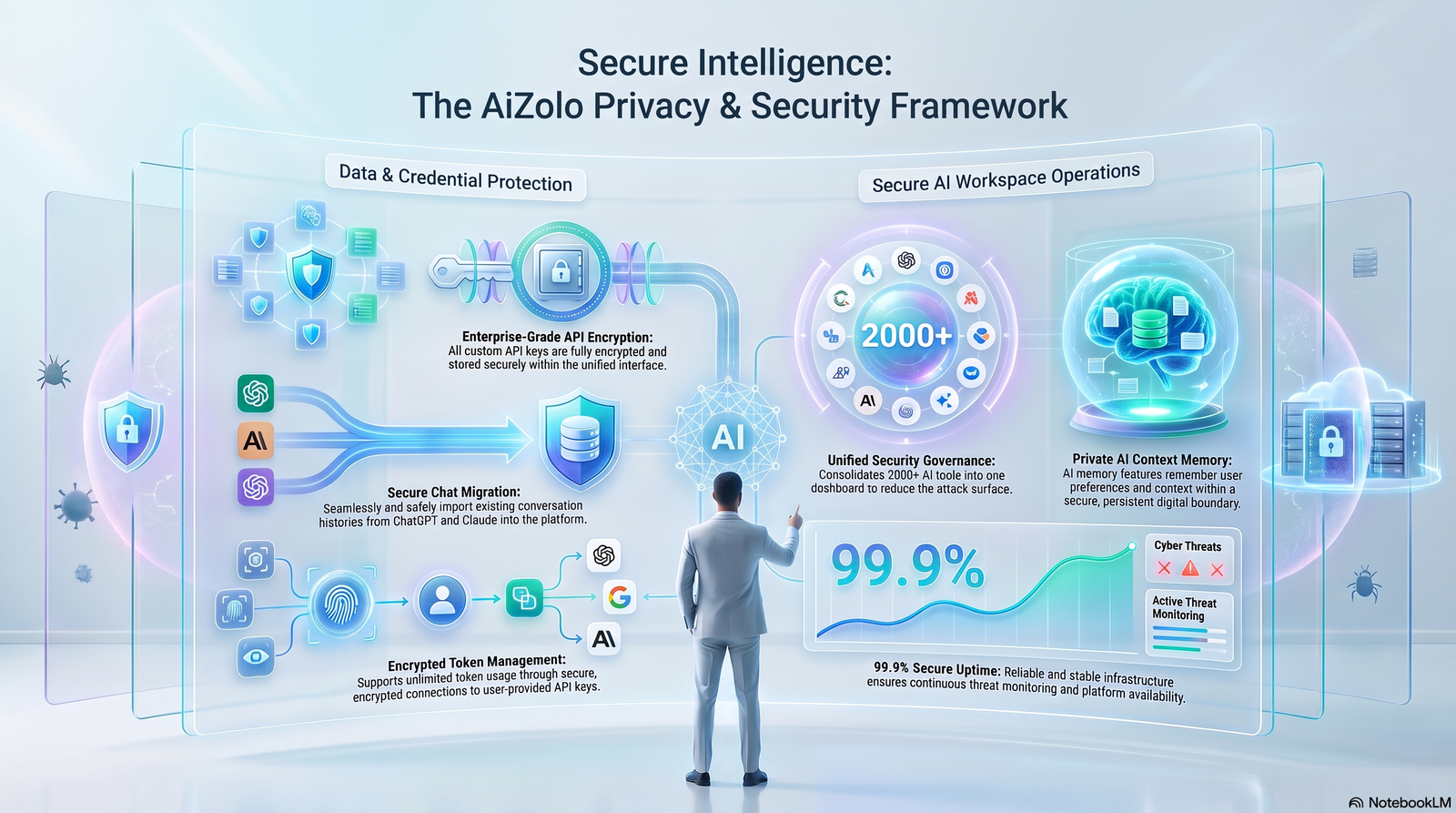
Code is sensitive intellectual property, and API-based coding models introduce a data-handling question every engineering leader should answer before rollout.
Closed-model vendors generally offer enterprise-tier agreements that exclude submitted code from training data and specify retention windows — but the default consumer-tier terms often differ meaningfully from the enterprise terms, so always verify the specific plan’s data policy rather than assuming.
Self-hosted open-weight models remove this question entirely for code that never leaves your infrastructure, at the cost of taking on your own patching and access-control responsibilities.
For regulated industries (finance, healthcare, government contracting), data residency requirements frequently rule out certain jurisdictions’ hosted APIs regardless of benchmark performance — this is where self-hosted DeepSeek, Qwen, or Llama deployments most commonly win the procurement decision over a closed frontier API.
Best Practice: Treat “does this model train on our code” as a contractual question to verify in writing, not a default assumption based on a vendor’s general privacy page.
Common Mistakes When Choosing AI Coding Models
- Chasing a single leaderboard number instead of testing the model against your team’s actual codebase and workflow.
- Ignoring latency — a marginally more accurate model that takes 10x longer per completion can cost more in developer waiting time than it saves in review time.
- Assuming “open source” means unrestricted — many open-weight models carry usage caps, geographic restrictions, or non-commercial clauses that only surface when you read the license text closely.
- Standardizing on one model for every task rather than routing routine work to cheaper models and reserving frontier models for genuinely hard problems.
- Skipping a re-evaluation cadence — given how fast rankings shift in 2026, a model chosen in January can be meaningfully behind the frontier by summer.
- Overlooking context-window pricing cliffs — several providers charge sharply more once a prompt crosses a threshold like 200K tokens, which can silently double a bill on large-codebase tasks.
Future Trends Beyond 2026
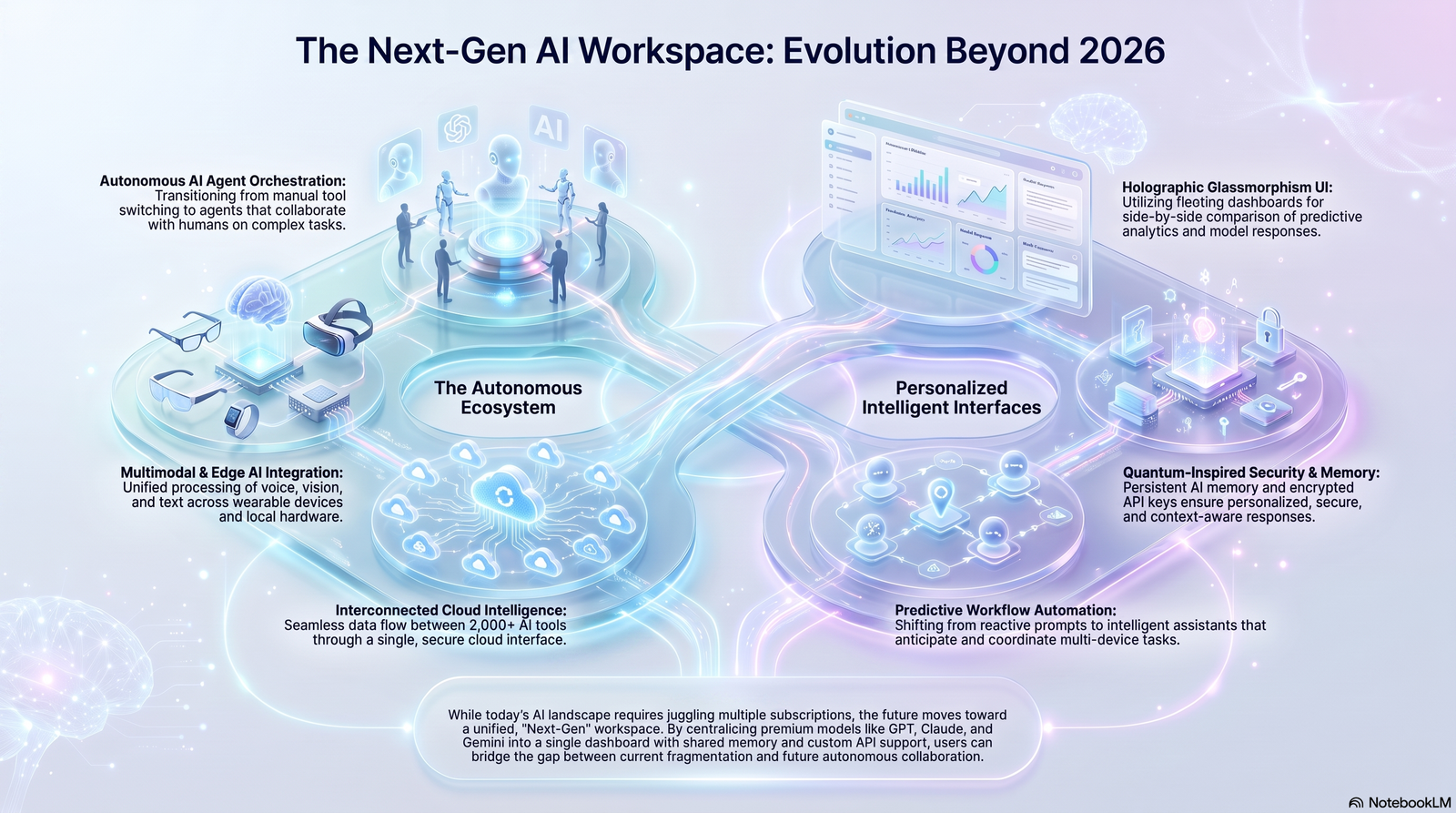
Expect three structural shifts to continue accelerating past this year. First, specialization deepens — rather than one model trying to win every category, expect purpose-built variants (autocomplete-optimized, agent-optimized, review-optimized) from each major lab.
Second, the open-weight tier keeps closing the gap on agentic coding benchmarks, following the trajectory already visible in DeepSeek’s and Qwen’s 2026 releases, which puts sustained downward pressure on closed-model API pricing.
Third, multi-model routing becomes standard infrastructure rather than a manual workaround — expect more teams to adopt orchestration layers that automatically send each task to whichever model currently offers the best accuracy-per-dollar, rather than hardcoding a single vendor.
Frequently Asked Questions
1. What is the best AI coding model in 2026? There isn’t a single universal winner. Claude leads most agentic coding benchmarks, GPT‑5.x is the strongest all-rounder, and Gemini 3.1 Pro offers the best context-to-price ratio.
2. Is Claude better than GPT‑5 for coding? On most independent agentic SWE-bench evaluations, Claude’s Opus and Sonnet models score at or near the top, but GPT‑5.x is frequently within a few points — close enough that ecosystem fit and pricing often matter more than the raw score gap.
3. What is SWE-bench Verified and why does it matter? It’s a benchmark of roughly 500 real, human-filtered GitHub issues that tests whether a model’s proposed code change actually makes the relevant test suite pass, making it a stronger real-world signal than simpler function-generation tests.
4. Are open-source coding models good enough for production use? Yes, for a growing share of workloads. DeepSeek V4 and Qwen3-Coder post SWE-bench scores within striking distance of closed frontier models, though closed models still generally lead on the hardest multi-step agentic tasks.
5. How much VRAM do I need to run a coding model locally? Small dense models run on 8–12GB consumer GPUs; mid-size 27B-class models need 16–24GB; frontier-scale open models require multi-GPU server setups unless heavily quantized.
6. What’s the difference between a coding model and a coding agent? A coding model generates code from a prompt; a coding agent (like Claude Code or Cursor) wraps a model with file-system access, terminal tools, and a multi-step loop that lets it act and iterate autonomously.
7. Is Gemini or Claude better for large codebases? Gemini’s 1M-token context window is the more direct fit for loading entire large repositories in a single request; Claude’s multi-file reasoning is often rated stronger for actually acting correctly on that context.
8. Which AI coding model is cheapest? Among frontier-adjacent models, DeepSeek V4 Flash is currently one of the least expensive options per token, with pricing well under $1 per million tokens combined.
9. Can AI coding models replace human developers in 2026? No — they meaningfully accelerate routine and even complex tasks, but human review remains essential for architecture decisions, security-critical code, and judgment calls the benchmarks don’t measure.
10. What is LiveCodeBench used for? It continuously refreshes its problem set from recent sources to reduce the risk that a model has simply memorized the answers during training, making it a useful contamination check alongside static benchmarks.
11. Do coding benchmarks reflect real-world performance? Partially. They’re a reasonable proxy but can be skewed by scaffold choice, multiple retry attempts, and vendor-selected task subsets — always validate against your own codebase before committing.
12. Which model is best for beginners learning to code? Free or low-cost consumer tiers of any major model are sufficient for learning; the differences that matter most at the frontier (agentic reliability, huge context) are largely irrelevant for foundational learning tasks.
13. What’s the best AI model for debugging complex bugs? Models with extended or “thinking” reasoning modes — Claude’s extended thinking and GPT‑5’s Thinking tier — consistently outperform faster models on intermittent and multi-hypothesis bugs.
14. Is Mistral Codestral good for full agentic coding, or just autocomplete? Codestral is optimized specifically for fill-in-the-middle completion and inline suggestions; it isn’t built or benchmarked as a full autonomous coding agent the way Claude or GPT‑5 are.
15. How often do AI coding model rankings change? Frequently enough that rankings from even a few months earlier can be outdated — 2026 has seen multiple leaderboard changes within single-month windows across several major benchmarks.
16. What license should I look for in an open-source coding model? MIT and Apache 2.0 are the most permissive and commercially safe; always check for usage caps, geographic restrictions, or non-production clauses before deploying any “open” model commercially.
Final Verdict
If you need one default recommendation with no further context: Claude’s Sonnet tier is the safest all-around choice for most developers in 2026, balancing near-Opus coding accuracy against a price point sustainable for daily use.
If your workload centers on very large codebases or you want the best price-to-performance among closed models, Gemini 3.1 Pro is the stronger fit.
If cost or data residency is the binding constraint, DeepSeek V4 delivers the closest thing to frontier-class coding performance at open-weight pricing.
No model in this comparison wins every category, and any article claiming otherwise is oversimplifying a genuinely specialized landscape. Match the model to the task — and revisit the decision more often than you’d expect to, because in 2026, “best” has a shelf life measured in weeks, not years.
Author Bio
Jeevesh Tripathi AI Researcher & Technical Content Specialist at Aizolo Email: jeevesh@aizolo.com
Jeevesh Tripathi researches and evaluates AI platforms and developer tools at Aizolo, with a focus on benchmark analysis, coding-model performance, and practical software workflows.
His work centers on separating vendor marketing claims from independently verified performance data, drawing on hands-on testing across closed frontier models, open-weight alternatives, and self-hosted deployments.
He has covered the rapid evolution of coding LLMs throughout 2026, tracking benchmark shifts across SWE-bench, HumanEval, and LiveCodeBench as new model generations from Anthropic, OpenAI, Google, DeepSeek, Alibaba, and Mistral have reshaped the competitive landscape.
Jeevesh writes for engineering leaders, freelance developers, and technical buyers who need evidence-based guidance rather than recycled vendor comparisons.