

Most teams pick an AI model the way they pick a coffee order — habit, brand recall, whatever a colleague mentioned in Slack. That approach is expensive at SaaS scale.
The honest answer to “which AI model is best” is: best at what, for whom, at what cost? A model that writes flawless TypeScript can still write mediocre sales emails.
This guide exists because most comparisons online are either vendor marketing or single-benchmark screenshots. Neither tells you how a model performs inside your actual workflows with Aizolo.
Aizolo helps you compare AI models in one place, making it easier to evaluate real-world performance instead of relying solely on marketing claims or isolated benchmarks.
Below, we compare AI model performance for B2B SaaS workflows across coding, product management, support, marketing, sales, operations, analytics, documentation, research, and internal knowledge — using an evaluation framework you can run yourself, not just our opinion.
If you only remember one thing: the question isn’t “which model is smartest.” It’s “which model, at which price, wins the specific task sitting in front of my team this week.”
Table of Contents
Why Comparing AI Model Performance Matters for B2B SaaS
B2B software buying itself has become AI-mediated. Roughly half of buyers now start vendor research inside an AI chatbot rather than a search engine, and buying committees increasingly expect the vendors they evaluate to use AI competently internally too.
That shift raises the stakes on model choice. A support team on the wrong model burns tokens on tickets it should resolve in one pass.
A product team using a shallow-context model rewrites the same PRD three times because the model forgot earlier decisions. These aren’t edge cases — they’re the default outcome of picking a model without a framework.
When teams compare AI model performance for B2B SaaS workflows properly, they’re really comparing three things at once: capability on the specific task, cost at production volume, and reliability under real (messy) inputs. Get any one wrong and the “cheap” model becomes expensive, or the “smart” model becomes unaffordable.
This is also a moving target. Model releases now arrive roughly every six to ten weeks across the major labs, and pricing tiers shift alongside them — so any comparison, including this one, should be treated as a snapshot, not a permanent ranking.
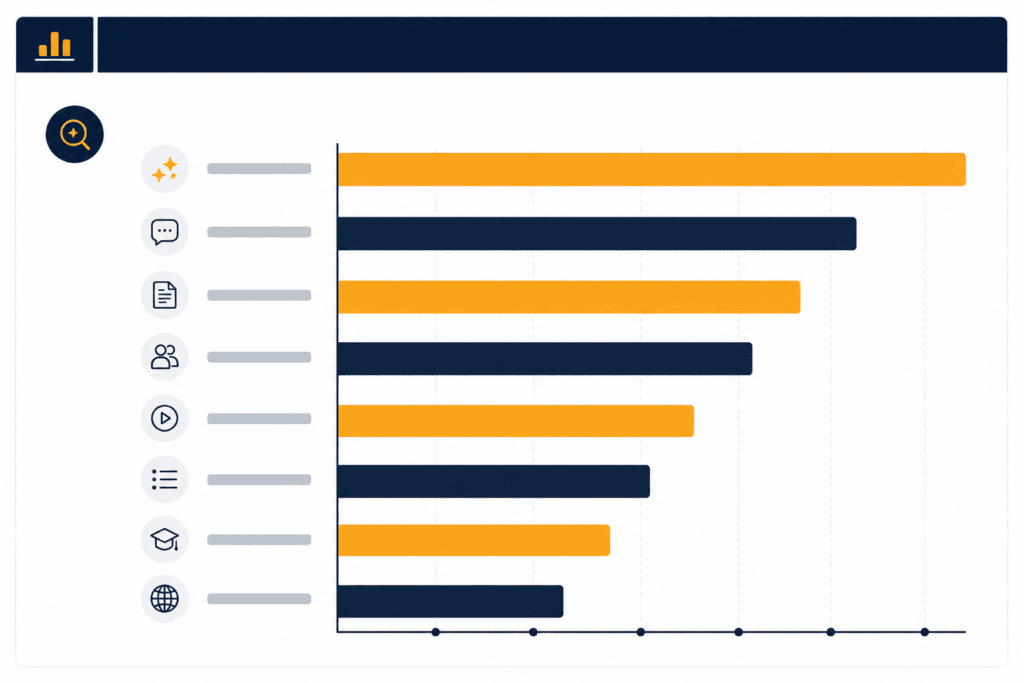
The Common SaaS Workflows Where Model Choice Changes Outcomes
Not every workflow stresses a model the same way. Some reward raw reasoning depth; others reward speed, tone, or tool-calling reliability.
Here’s the working map we use across the rest of this guide:
| Workflow | Primary Stress Test | Secondary Stress Test |
|---|---|---|
| Coding | Multi-file reasoning, agentic tool use | Regression avoidance |
| Product Management | Long-context memory, synthesis | Structured output consistency |
| Customer Support | Latency, tone accuracy | Tool calling to CRM/helpdesk |
| Marketing | Brand voice consistency | Volume without quality decay |
| Sales | Personalization at scale | Factual grounding (no invented claims) |
| Operations | Multi-step automation | Error recovery |
| Analytics | Numerical accuracy | Chart/data interpretation |
| Documentation | Structural consistency | Technical precision |
| Research | Source synthesis | Citation discipline |
| Internal Knowledge | Retrieval accuracy | Context window depth |
Treat this table as your starting rubric, not gospel — your own workflows will have quirks this generic map won’t catch.
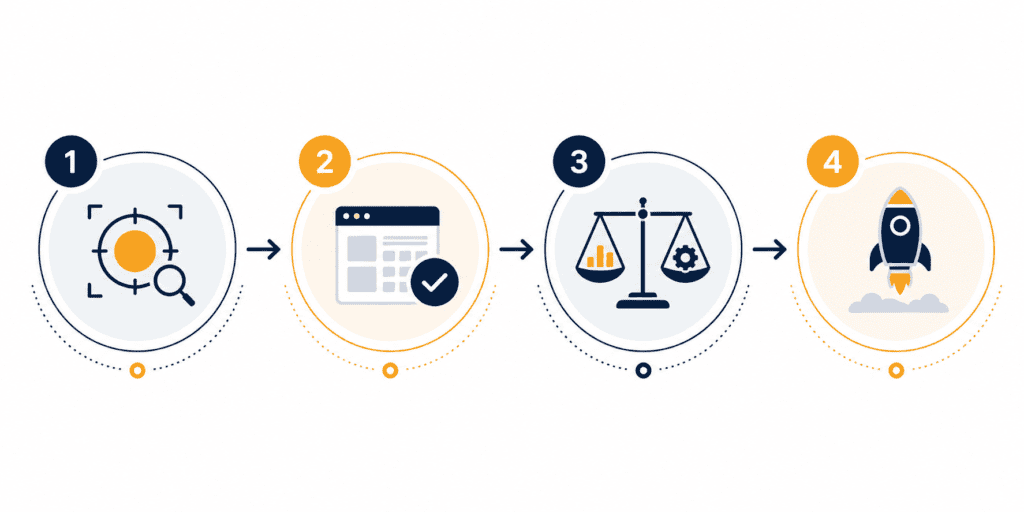
A Practical AI Evaluation Framework
Public benchmarks are a starting filter, not a purchase decision. Here’s the four-layer framework we recommend before any B2B SaaS team commits budget to a model.
Layer 1 — Public benchmark screening. Use published benchmark results (coding, reasoning, tool-use suites) to shortlist three to five candidate models. This eliminates obviously mismatched options fast.
Layer 2 — Task-specific replay testing. Pull 15–20 real historical inputs from your own workflow — actual support tickets, actual PRDs, actual sales emails. Run every shortlisted model against the same inputs.
Layer 3 — Blind human scoring. Have the actual practitioners (support agents, PMs, marketers) score outputs blind, without knowing which model produced which answer. Brand bias is real and it skews results.
Layer 4 — Cost-per-successful-outcome. Divide total token cost by the number of outputs that required zero human rework. A cheaper-per-token model that needs constant editing often loses to a pricier one that doesn’t.
This is where an AI evaluation framework earns its keep: it converts “which model feels smarter” into a number your finance team will accept.
Reasoning Quality: What It Actually Predicts
“Reasoning” gets used loosely, so it’s worth being precise. Reasoning benchmarks test whether a model can hold a multi-step problem in working memory without losing the thread.
That matters more for some SaaS workflows than others. A model with strong reasoning scores will typically handle multi-condition pricing logic, nested if/then support policies, or multi-step campaign attribution better than a fast-but-shallow model.
It matters less for high-volume, low-complexity tasks — tagging support tickets, drafting short social captions — where a lighter, faster model usually wins on cost-adjusted output.
The practical takeaway: don’t pay reasoning-model prices for tasks that don’t require reasoning-model depth. This single mistake accounts for a large share of avoidable AI spend in SaaS teams.
Coding Performance Compared
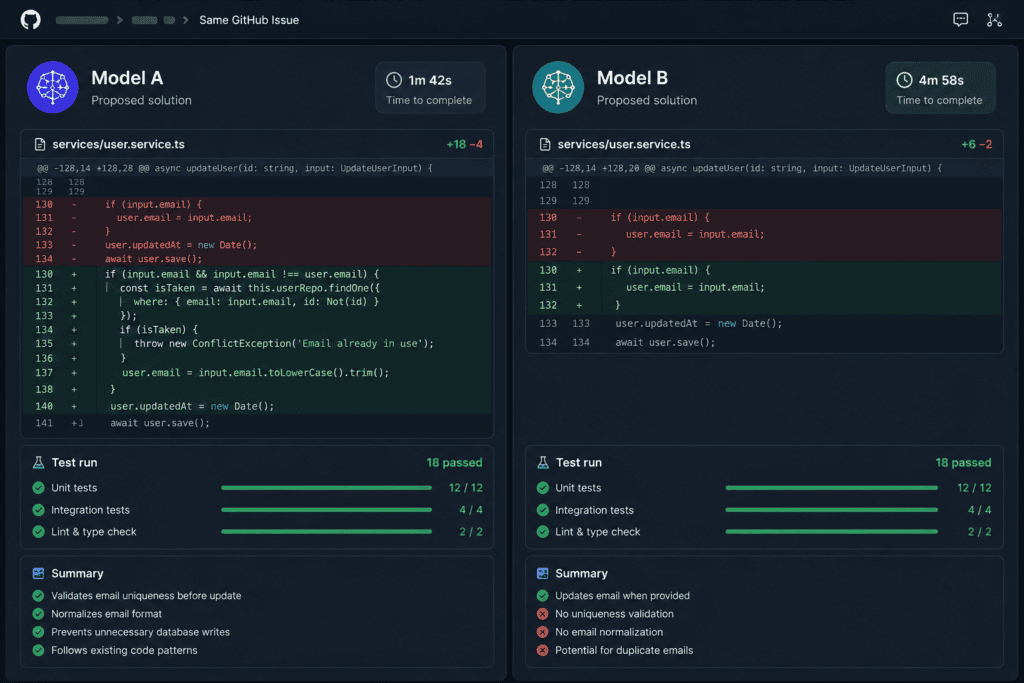
Coding is the most heavily benchmarked category, largely through SWE-bench-style tests that measure whether a model can resolve real GitHub issues end-to-end.
As of mid-2026, the frontier coding models cluster tightly, with different labs trading the lead every few months rather than one model holding a durable advantage. What separates them in practice is less the headline score and more behavior in long agentic sessions — whether the model reads existing code carefully before editing it, avoids duplicating logic, and doesn’t quietly break adjacent functionality.
Coding Comparison Table
| Factor | What to Check | Why It Matters for SaaS Teams |
|---|---|---|
| SWE-bench-style score | Resolves real issues end-to-end | Predicts autonomous PR success rate |
| Multi-file context handling | Reads dependencies before editing | Reduces regression bugs |
| Tool/agent reliability | Uses terminal, file, and test tools correctly | Determines how “hands-off” agentic coding can be |
| Token efficiency | Output tokens per completed task | Directly affects cost at scale |
| Prompt injection resistance | Behavior on untrusted repo content | Security risk in agentic coding setups |
For engineering leaders, the practical move is running your own repo’s real issues through candidate models rather than trusting a single leaderboard number — public benchmarks are trained-toward and can overstate real-world performance.
Marketing Workflow Performance
Marketing teams stress-test models differently than engineers do: volume, brand-voice consistency, and factual restraint matter more than raw reasoning depth.
Independent reporting on AI-hours-saved by task type consistently shows content drafting and repurposing among the highest time-recovery categories for SaaS marketing teams, though exact hour figures vary widely by study methodology and shouldn’t be treated as universal.
Where models diverge most is voice drift over long sessions — some models stay on-brand for a 20-asset content sprint, others gradually revert to generic AI phrasing by asset twelve. This is one of the more useful, underreported dimensions of AI model benchmarking for marketing specifically.
| Marketing Task | What Separates Strong Models | Common Failure Mode |
|---|---|---|
| Long-form SEO content | Structural planning, semantic SEO awareness | Generic intros, keyword stuffing |
| Ad copy at volume | Voice consistency across variants | Voice drift after 10+ variants |
| Repurposing (blog → social) | Preserving core claims accurately | Fact drift / invented statistics |
| Competitive positioning copy | Factual restraint | Overclaiming without evidence |
If a model can’t hold your brand voice past output ten in a single session, it’s not ready for unsupervised marketing production work — regardless of its benchmark scores elsewhere.
Sales Workflow Performance
Sales workflows reward personalization that’s actually grounded in real prospect data, not personalization that sounds specific but is fabricated.
The models best suited for sales tasks — prospecting emails, call summaries, objection-handling drafts — tend to be the ones with strong tool-calling reliability into CRM data, not necessarily the highest raw-reasoning scorers.
A model that writes a beautifully specific email referencing a prospect’s “recent funding round” that didn’t happen is a liability, not a feature. Grounding beats fluency every time in sales contexts.
What to test specifically: feed the model real (anonymized) CRM records and see whether generated outreach sticks strictly to verifiable facts, or invents plausible-sounding details to fill gaps.
Customer Support Performance
Support is the workflow most sensitive to latency. A model that’s marginally smarter but two seconds slower per response measurably hurts CSAT in live chat.
Recent model releases have reported strong results on customer-service-style benchmarks — one recent frontier release cited high accuracy on insurance-industry support scenarios specifically — but these figures come from vendor-published benchmarks and should be validated against your own ticket categories before you trust them at face value.
The bigger differentiator in practice is tool-calling reliability: can the model correctly pull order status, correctly escalate when confidence is low, and correctly avoid promising refunds it has no authority to promise?
| Support Factor | Why It’s the Real Bottleneck |
|---|---|
| Time-to-first-token | Directly affects perceived responsiveness in live chat |
| Escalation judgment | Wrong escalation calls erode trust faster than slow answers |
| Tool-call accuracy (CRM/helpdesk) | Determines whether resolution actually happens vs. just sounds resolved |
| Tone calibration | Support tone errors are highly visible and screenshot-able |
Documentation & Technical Writing
Documentation rewards structural consistency above all else — the same heading patterns, the same code-block formatting, the same level of assumed reader knowledge, held across dozens of pages.
Long-context models have a real edge here: a model that can hold your entire existing docs set in context produces more consistent new pages than one working page-by-page from a style guide alone.
Recent enterprise document benchmarks show flagship and mid-tier models from the same lab converging on similar scores for structured office-document tasks — suggesting documentation work is increasingly a place where a cheaper mid-tier model can match a flagship model’s output quality.
Internal Knowledge Management
This is where context window and retrieval accuracy matter more than raw intelligence. A model connected to your internal wiki, but with weak retrieval discipline, will confidently answer using stale or wrong source documents.
The core test: does the model cite which internal document it pulled an answer from, and does it flag when no matching source exists — rather than filling the gap with a plausible-sounding guess?
Teams comparing multiple AI models side by side for internal knowledge search often find the gap isn’t in “intelligence” at all — it’s in how conservatively each model behaves when it isn’t sure. Platforms like Aizolo, which let teams test the same internal-knowledge prompt across several models at once, make this specific failure mode easy to catch before it reaches employees.
Analytics & Reporting Performance
Analytics workflows are unforgiving of a specific failure mode: confident numerical errors. A model can write a beautifully structured executive summary built on a miscalculated percentage.
The practical test isn’t “can it read a chart” — most frontier models can now. It’s whether the model shows its arithmetic and flags uncertainty when the underlying data is ambiguous or incomplete.
For SaaS teams building AI into dashboards or reporting pipelines, we recommend a hard rule: any AI-generated numerical claim in a customer-facing report gets a human spot-check before it ships, regardless of which model produced it.
Workflow Automation & Tool Calling
Tool calling — a model’s ability to correctly invoke external functions, APIs, and integrations — has become the real differentiator for operations workflows, arguably more than raw reasoning.
What to evaluate: does the model call the right tool with the right parameters on the first attempt, and does it recover gracefully when a tool call fails rather than hallucinating a fake success?
This is also where AI workflow automation projects most often stall in production — not because the model can’t reason about the task, but because it mishandles a malformed API response and the whole chain breaks silently.
Context Windows Compared
Context window size gets marketed heavily, but “advertised” and “usable” context are different things — quality often degrades well before the stated token limit.
As of mid-2026, most frontier models from the major labs advertise context windows in the 200K–1M token range, with some providers now offering 1M-token windows at standard (non-premium) pricing rather than as a paid add-on.
| Context Window Tier | Best Fit For | Watch Out For |
|---|---|---|
| Under 200K tokens | Single-document tasks, short chats | Multi-document synthesis will require chunking |
| 200K–500K tokens | Most SaaS support/marketing workflows | Usable quality often narrower than advertised |
| 1M tokens | Full codebase review, large knowledge bases | Cost and latency scale with tokens actually sent |
The reliable way to test usable context: feed a model a document near its stated limit and ask it to retrieve a specific detail buried in the middle, not the start or end. Retrieval accuracy at the middle of long documents is a known weak spot across most models.
Latency Compared
Latency comparisons are workflow-dependent, not universal. A five-second delay is invisible in an overnight batch report job and painful in live chat support.
Lighter, smaller-parameter models (often marketed as “fast” or “flash” tiers) consistently post lower time-to-first-token than flagship reasoning models — frequently under a second and a half versus two-plus seconds for heavier models handling comparable requests.
For latency-sensitive workflows, the right move is often routing: fast tier for real-time chat, flagship tier for anything asynchronous where accuracy matters more than speed.
Pricing Compared
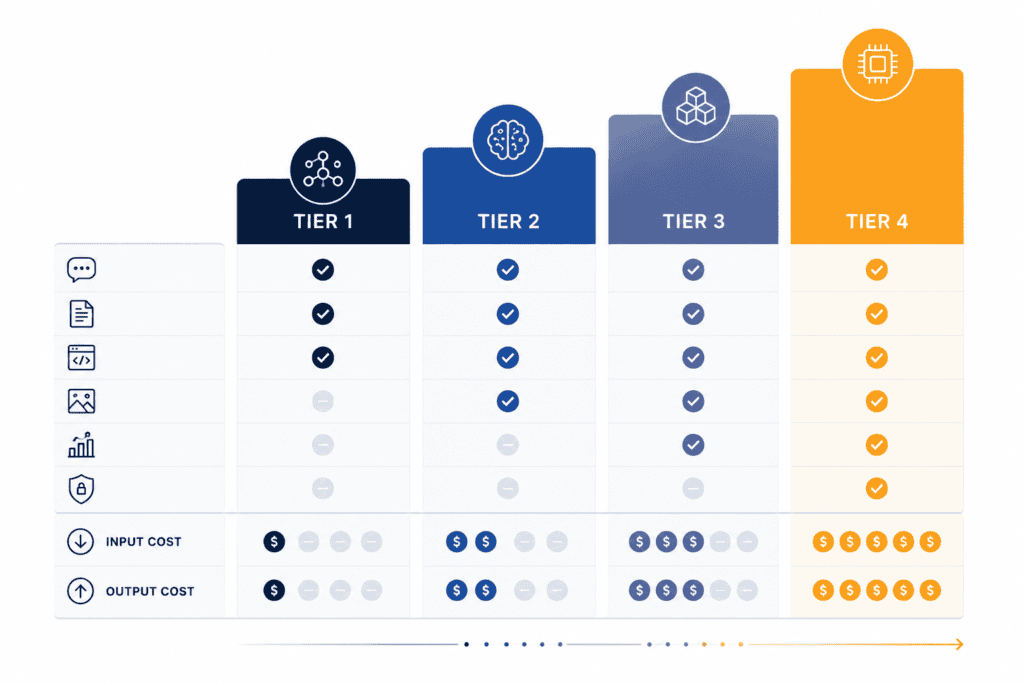
AI pricing comparison is genuinely difficult right now because token pricing, tiered “thinking mode” surcharges, and tokenizer efficiency all shifted meaningfully across 2026 model releases — sometimes multiple times within a single quarter.
The table below reflects publicly reported per-million-token API pricing as of mid-2026. Treat these as directional, not final — confirm current rates directly with each vendor before budgeting, since list pricing changes frequently and provider-specific discounts (e.g., cloud marketplace pricing) can differ from headline rates.
Illustrative Pricing Snapshot (Mid-2026, Per Million Tokens)
| Model Tier | Approx. Input | Approx. Output | Context Window | Best Fit |
|---|---|---|---|---|
| Fast/light tier (e.g., Haiku-class) | ~$1 | ~$5 | 200K+ | High-volume, latency-sensitive tasks |
| Balanced mid-tier (e.g., Sonnet-class) | ~$2–3 | ~$10–15 | Up to 1M | Default for most production SaaS workflows |
| Flagship/reasoning tier (e.g., Opus-class, GPT Pro-class) | ~$5 | ~$25–30 | 200K–1M | Complex reasoning, high-stakes outputs |
| Long-context specialist (e.g., Gemini Pro-class) | ~$2–4 | ~$12–18 | Up to 1M–2M | Large document/codebase synthesis |
Publicly available benchmark and pricing data changes fast in this market; the ranges above are a snapshot, and some finer-grained figures (e.g., exact “thinking token” surcharges per vendor) are not consistently disclosed across labs, so we’ve deliberately kept this directional rather than exact.
A pattern worth internalizing: most SaaS teams overpay by defaulting every task to their flagship tier. A blended routing strategy — sending the bulk of volume to a fast/mid tier and reserving flagship tier for genuinely hard tasks — commonly cuts blended spend by 30–40% without a measurable quality drop.
Accuracy, Hallucination & Reliability
Hallucination rates are one of the most-cited but least-standardized metrics in AI model benchmarking — different labs measure it against different question sets, so cross-model comparisons should be read cautiously.
What’s more actionable for SaaS buyers than a single hallucination percentage is behavioral: does the model say “I don’t know” or “I’m not certain” when appropriate, or does it fill every gap with a confident guess?
Run this test directly: ask each shortlisted model a question about your product that has no correct answer in its context, and see which ones admit uncertainty versus fabricate a plausible response.
Integrations Compared
Model quality is only half the equation — integration depth with your existing stack (CRM, helpdesk, data warehouse, project tools) often determines real-world adoption more than benchmark scores do.
Native connector ecosystems now vary meaningfully by provider, with some labs investing heavily in first-party connectors to common business tools and others leaning on broader open protocol support instead.
For enterprise buyers, the practical question isn’t “which model is smartest” but “which model can actually reach the systems my team works in, without a six-week custom integration project.”
Security & Compliance
Security posture varies by deployment method more than by model itself. Enterprise-tier API access, VPC/region-pinned deployment options, and formal compliance certifications (SOC 2, ISO 27001, HIPAA eligibility where relevant) are now table stakes among major providers, but availability differs by plan tier.
For regulated industries, confirm three things before any pilot: whether the vendor trains on your data by default (and how to opt out), where data is processed geographically, and whether the specific model version is explicitly named in your data processing agreement.
Prompt injection resistance is also increasingly relevant for agentic workflows that process untrusted documents or emails — ask vendors directly for their latest adversarial testing results rather than assuming parity across models.
ROI: What “Good” Actually Looks Like
ROI conversations often go wrong by measuring the wrong thing — hours “saved” instead of outcomes changed. A model that drafts content twice as fast, but that content needs heavy editing, hasn’t actually saved much.
The more reliable ROI signal is the cost-per-successful-outcome metric from our evaluation framework above: total spend divided by outputs that shipped without human rework.
Reported adoption numbers back the acceleration but not the assumption that adoption alone equals ROI — SaaS marketing teams’ generative AI usage climbed from roughly four in five teams to nearly universal in just two years, yet retention data on AI-native products has been notably mixed, a reminder that usage and value aren’t the same thing.
Enterprise Deployment Considerations
Enterprise deployment introduces constraints pilots don’t surface: seat-based vs. usage-based billing, admin controls, audit logging, SSO requirements, and internal AI governance policy.
A notable and underreported risk: a meaningful share of IT leaders report discovering AI tools already in use across their organization that they weren’t aware of — meaning shadow AI adoption is outpacing formal model comparison efforts at many companies.
Before scaling any model choice company-wide, run a governance check alongside the performance check: who can approve new model access, how is spend tracked per team, and what’s the process when a better model ships six weeks later?
Real-World Scenarios
Scenario 1 — Support ticket triage at volume. A 40-person support team routes incoming tickets through a fast-tier model for classification and only escalates ambiguous cases to a flagship-tier model for drafting. Result: lower blended cost, no CSAT drop, because the split matches task complexity to model tier.
Scenario 2 — Agentic coding on a legacy codebase. An engineering team runs the same 20 historical GitHub issues through three shortlisted coding models before committing. The model with the best public benchmark score actually underperforms on their specific legacy patterns — a result they’d have missed without task-specific replay testing.
Scenario 3 — Marketing content at scale. A growth team testing prompts across models for a 30-post content sprint finds one model’s voice drifts noticeably after post 12, while another holds brand voice consistently to post 30 — despite near-identical benchmark scores. Voice consistency, not raw capability, decides their vendor choice.
Decision Matrix
| If Your Priority Is… | Lean Toward | Because |
|---|---|---|
| Lowest cost at high volume | Fast/light tier models | Priced 3–5x cheaper per token than flagship tiers |
| Deepest reasoning on complex tasks | Flagship/reasoning-tier models | Strongest performance on multi-step, ambiguous problems |
| Largest documents/codebases | Long-context specialist models | Highest advertised and usable context windows |
| Real-time customer-facing chat | Fast tier with strong tone calibration | Latency directly affects CSAT |
| Regulated industry deployment | Whichever model has your required certification today | Compliance requirements override capability preferences |
| Uncertain / mixed workloads | Multi-model routing strategy | No single model wins every workflow category |
Multi-Model Workflows
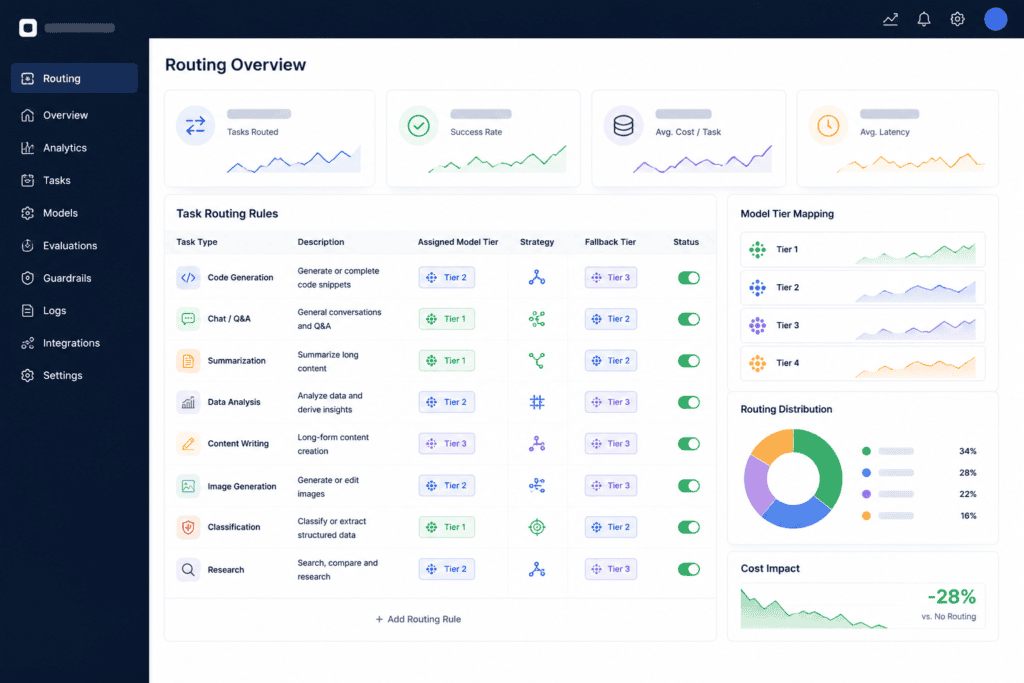
The most mature SaaS teams in 2026 aren’t choosing one model — they’re routing tasks to whichever model performs best per workflow, and switching between models as new releases prove out.
This is the practical endpoint of everything above: a multi-model platform lets you compare AI model performance for B2B SaaS workflows continuously, rather than making one big annual bet and living with it.
Tools built for this — including Aizolo — exist specifically so teams can test prompts side by side across models before committing production traffic, and switch models per workflow without re-architecting their stack each time. Used well, that’s an evaluation habit, not a one-time purchase decision.
Future Trends in AI Model Comparison
Release cadence is accelerating, not slowing. Expect meaningful model updates every six to ten weeks across major labs through the rest of 2026, each shifting the pricing and capability map slightly.
Tokenizer changes are an underappreciated trend — a newer model can quietly cost more per task even at an unchanged headline price, simply by encoding the same text into more tokens. Watch real invoiced spend, not just the rate card.
Expect continued convergence on tool-calling reliability and agentic task completion as the primary competitive battleground, more than raw reasoning benchmark scores, as most frontier models now score within a few points of each other on classic reasoning tests.
Final Verdict
There is no single best AI model for B2B SaaS workflows in 2026 — and any article claiming otherwise is oversimplifying a genuinely workflow-dependent decision.
What we can say with confidence: fast/light-tier models are underused for high-volume, low-complexity work, flagship-tier models are overused for tasks that don’t need their depth, and the teams getting the best ROI are the ones testing continuously rather than deciding once.
Build the habit of running your own task-specific replay tests every time a meaningful new model ships. That habit will outperform any static ranking, including this one, within two quarters.
Frequently Asked Questions
How do I compare AI model performance for B2B SaaS workflows without a data science team? Start with the four-layer framework in this guide: benchmark screening, task-specific replay testing with 15–20 real historical inputs, blind human scoring, and cost-per-successful-outcome math. No specialized ML expertise required — just discipline and real workflow data.
Is the most expensive AI model always the best choice for enterprise SaaS? No. Flagship-tier models win on complex, ambiguous, high-stakes reasoning tasks, but they’re frequently overkill — and overpriced — for high-volume, low-complexity work like ticket tagging or short-form content drafting.
How often should we re-evaluate our AI model choice? Given a release cadence of roughly every six to ten weeks among major labs in 2026, a quarterly re-evaluation is a reasonable minimum for any workflow where AI spend is material.
What’s the biggest mistake SaaS teams make when comparing AI models? Trusting public leaderboard scores over task-specific testing on their own real inputs. Benchmark performance and your-workflow performance frequently diverge.
Do multi-model platforms add meaningful complexity for a small team? Not necessarily — tools designed for testing prompts across models side by side (like Aizolo) are built specifically to lower that overhead, letting a small team compare options without building custom evaluation infrastructure.
Should context window size be a primary buying factor? Only if your workflows genuinely require it — full codebase reviews or large knowledge-base search benefit from 1M-token windows, but most support, marketing, and sales tasks don’t need anywhere close to that.
Content Production Notes
Additional Visual Recommendations
Visual 6 — Screenshot Recommendation What It Should Capture: An anonymized dashboard view of a model-routing setup (task type on one axis, assigned model tier on the other). Caption: Routing tasks to the right model tier, not the biggest model, is where most of the cost savings live. Alt Text: Dashboard mockup showing tasks routed to different AI model tiers Placement: Inside the “Multi-Model Workflows” section Purpose: Makes an abstract routing concept concrete; strong LinkedIn/social share candidate
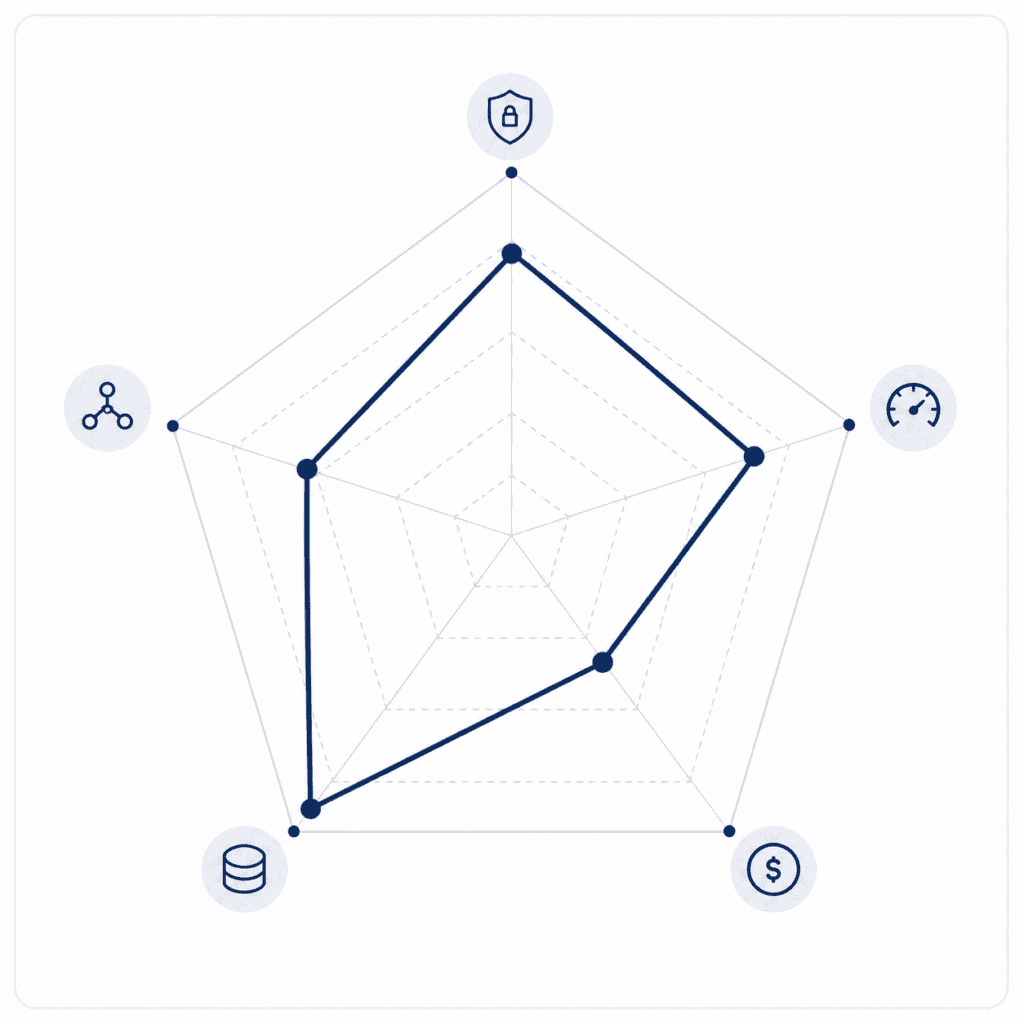
Visual 7 — Enterprise Readiness Chart Image Type: Comparison matrix (radar/spider chart mockup) AI Image Prompt: “Minimalist radar chart mockup with five generic axes (Security, Latency, Cost, Context, Integrations), navy line on light background, flat enterprise SaaS dashboard style, no text labels baked in, clean vector lines” Caption: No model wins on every axis — the radar shape should match your workflow priorities, not a vendor’s marketing. Alt Text: Radar chart mockup comparing AI models across five enterprise readiness dimensions Placement: Inside “Enterprise Deployment Considerations” Purpose: Visualizes trade-off thinking; reduces bounce on a text-dense section
Author Bio
Author: Jeevesh Tripathi Email: jeevesh@aizolo.com
Jeevesh Tripathi works at the intersection of enterprise AI adoption and B2B SaaS operations, with a focus on AI platform evaluation, prompt engineering, and model benchmarking for production workflows. His work centers on helping SaaS teams move past marketing claims and build repeatable, evidence-based processes for choosing and switching between AI models — including hands-on testing methodology of the kind outlined in this guide. He also writes on technical SEO for AI-driven content strategy.
Conclusion
Comparing AI models isn’t a one-time decision — it’s an ongoing practice, and the teams that treat it that way consistently outperform the ones that pick once and stop looking.
For engineering leaders: run your own historical issues through candidate models before trusting a leaderboard.
For marketing and growth teams: test brand-voice consistency across a real content sprint, not a single sample output.
For support and CS leaders: weight latency and tool-calling reliability as heavily as raw intelligence scores.
For founders and enterprise buyers: build a quarterly re-evaluation habit, because the model that’s best today likely won’t be in six months.
The teams winning with AI in 2026 aren’t the ones with the smartest model. They’re the ones with the best process for finding out which model is smartest for the task in front of them — and switching without friction when a better one ships. Start with the four-layer framework above, test your own real workflows this week, and let the data — not the marketing page — make the call.
Pingback: Affordable AI Video Subscription Built for Cinematic Creators in 2026
Pingback: Chat GPT Claude Gemini All in One: 7 Powerful Benefits
Pingback: 5 Proven Ways: How to Make ChatGPT and Gemini Talk to Each Other
Pingback: Best AI Model in the World 2026 (Honest Guide)
Pingback: Does Claude Sonnet 4.5 Have a Limit? Full Guide
Pingback: Top 5 AI Models in the World 2026 (Honest Breakdown)
Pingback: How to Chat with Multiple AI Models: Proven Guide 2026
Pingback: Cheap AI Subscription for Multiple Models: Switch Multiple AI Models Mid Conversation Tool in 2026
Pingback: Top AI Trends in 2026 — 7 Shifts Smart Teams Can’t Ignore
Pingback: Best Value AI Subscription 2026: What Is The Best Value AI Subscription
1