If you’ve researched chatbots for your business, you’ve probably run into a wall of confusing terms: AI chatbot, rule-based chatbot, conversational AI, AI agent, and now, hybrid chatbot. Platforms like Aizolo are making these technologies more accessible, but understanding the differences is still essential before choosing the right solution.
A hybrid chatbot is the answer to a problem most businesses run into eventually. Pure rule-based bots feel rigid and frustrate customers. Pure AI chatbots feel powerful but unpredictable, and they sometimes say things you never approved.
A hybrid chatbot combines both approaches. It uses structured rules for the parts of a conversation that must be accurate and predictable, and it uses an AI language model for the parts that need flexibility and natural conversation.
This guide breaks down exactly what a hybrid chatbot is, how it works under the hood, where it fits compared to other chatbot types, and how to plan, build, and improve one. We’ll also cover the mistakes teams make most often, and where this technology is heading next.
This is a long, detailed guide because “what is a hybrid chatbot” deserves more than a two-paragraph answer. Use the table of contents below to jump to what matters most to you.
Table of Contents
What Is a Hybrid Chatbot?
Quick answer: A hybrid chatbot is a conversational system that combines rule-based logic (decision trees, if-then flows) with AI language models (like an LLM) to handle conversations. Rules manage predictable, high-stakes steps. The AI handles open-ended questions, natural language understanding, and free-flowing dialogue.
Simple Explanation
Think of a hybrid chatbot as a conversation with two drivers. One driver follows a fixed map for known roads — password resets, order status, appointment booking. The other driver improvises when the road isn’t on the map — general questions, complaints, or anything conversational.
The chatbot switches between these two drivers depending on what the user needs at that moment.
Technical Explanation
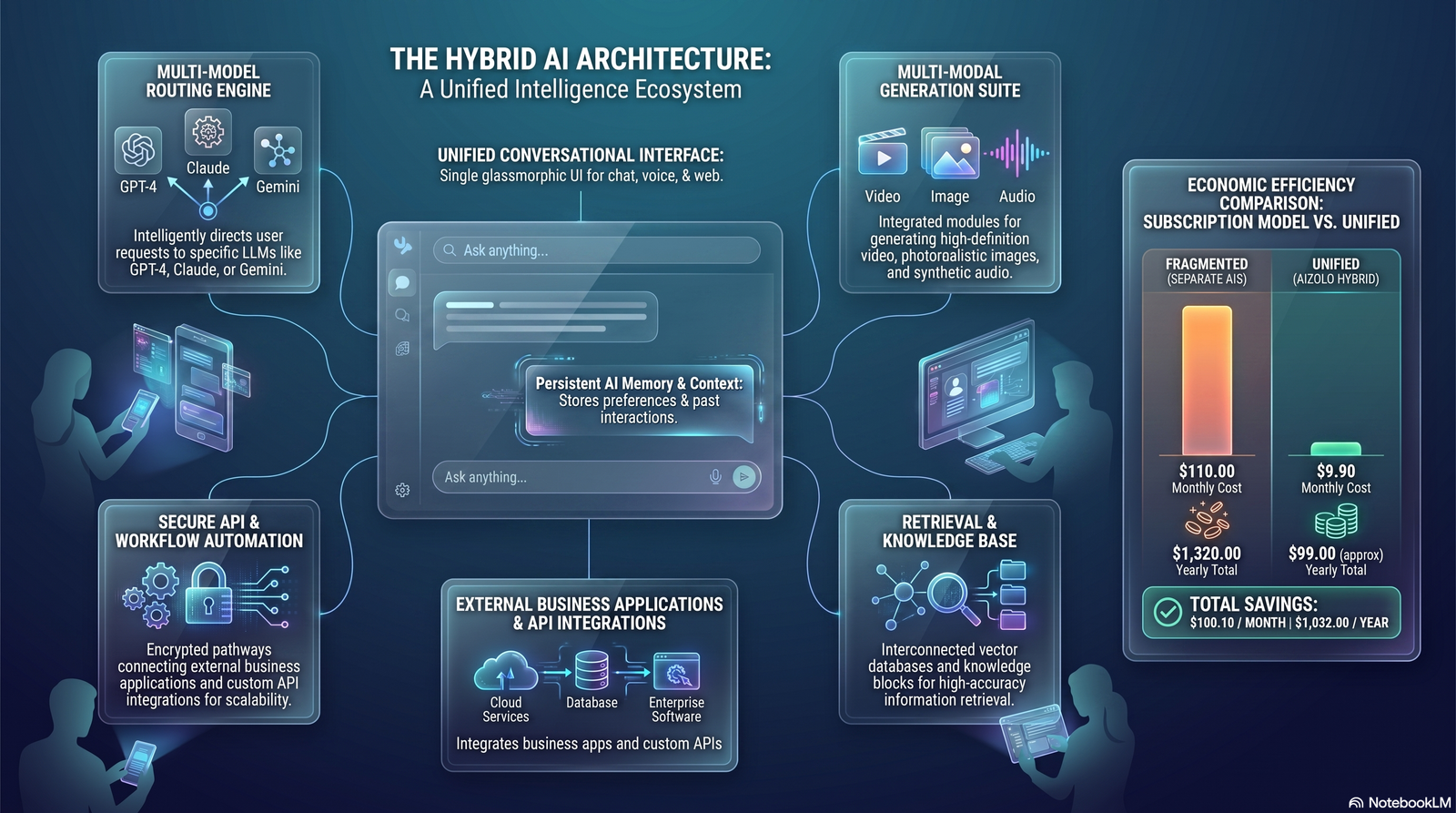
Under the hood, a hybrid chatbot typically includes an intent classification layer, a rules or workflow engine, and an LLM component connected to a knowledge base. A routing or decision layer decides, turn by turn, whether the rules engine or the language model should generate the response.
This routing decision can be based on confidence scores, detected intent, conversation stage, or explicit business logic (for example, always use rules for payment steps).
Business Explanation
From a business standpoint, a hybrid chatbot exists to solve a trust problem. Businesses want the flexibility of AI, but they can’t risk an AI model improvising during a refund, a medical intake form, or a compliance-sensitive process.
A hybrid setup lets a company keep tight control over regulated or high-risk steps, while still giving customers the natural, helpful experience that a pure rule-based bot could never deliver.
How Does a Hybrid Chatbot Work?
A hybrid chatbot works through a layered flow. Each layer has a specific job, and together they decide how to respond to every single message.
Step 1: Message Intake
The user sends a message through a website widget, app, WhatsApp, or another channel. This raw text is passed into the system for processing.
Step 2: Intent Detection
A natural language understanding (NLU) layer looks at the message and tries to classify what the user wants. This could be a known intent like “track my order,” or an unclear, open-ended message.
Step 3: The Decision Engine
This is the heart of a hybrid chatbot. The decision engine checks the detected intent against a set of rules. If the intent matches a known, structured flow, the rule engine takes over.
If the intent is unclear, conversational, or outside the defined flows, the request is routed to the AI model instead.
Step 4: Rule Engine Execution
For matched intents, the rule engine runs a predefined flow. This might involve asking for an order number, calling an API, or presenting a menu of button options. Every step here is scripted and predictable.
Step 5: AI Model Generation
For open-ended messages, the LLM generates a response. It often pulls supporting information from a knowledge base through retrieval, so its answer stays grounded in accurate, approved content instead of relying purely on what it was trained on.
Step 6: Human Handoff
If the AI’s confidence is low, the topic is sensitive, or the user asks for a person, the conversation escalates to a live agent. A good hybrid chatbot hands off with full context, so the customer never has to repeat themselves.
Components of a Hybrid Chatbot
A hybrid chatbot is not one piece of software. It’s a stack of components working together. Here’s what each one does.
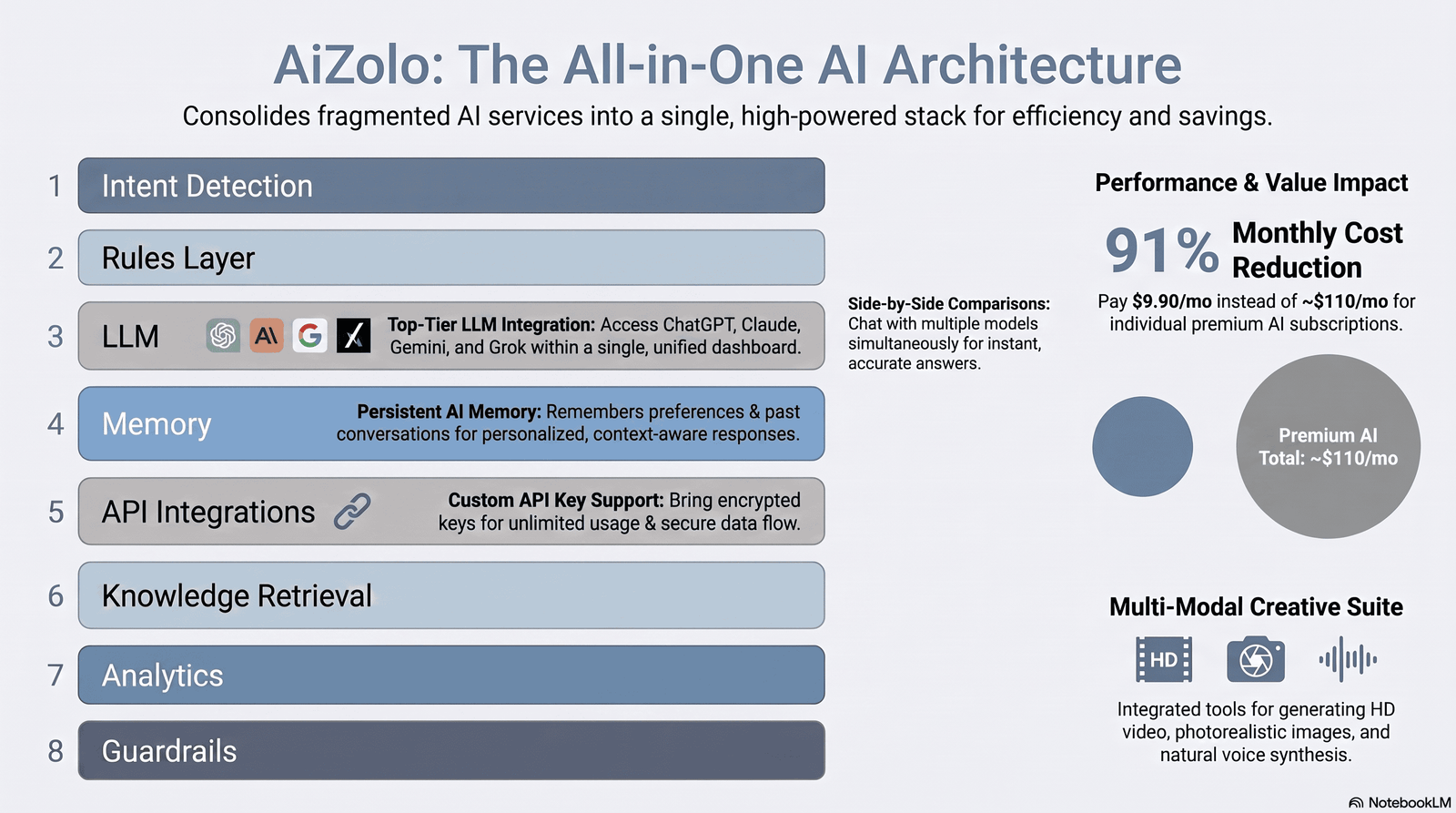
Intent Detection
This layer classifies incoming messages into categories the system understands, like “billing question” or “product inquiry.” Most hybrid chatbots use a lightweight NLU model for this step, separate from the main LLM.
Rules Layer
The rules layer stores every scripted flow: onboarding steps, forms, payment collection, appointment scheduling. These flows are usually built visually, without code, using a flow builder.
LLM (Large Language Model)
The LLM handles natural conversation, rephrasing, summarizing, and answering questions that don’t fit a scripted flow. It’s the component that makes the chatbot feel human rather than robotic.
Memory
Memory lets the chatbot remember details across a conversation, and sometimes across sessions. Short-term memory tracks the current conversation. Long-term memory can recall a returning customer’s past orders or preferences, when permitted.
API Integrations
APIs connect the chatbot to real business systems: CRM, order management, payment gateways, ticketing tools. Without integrations, a chatbot can only talk. With them, it can actually take action.
Knowledge Retrieval
Retrieval-augmented generation (RAG) lets the AI model pull facts from a company’s documents, FAQs, or product catalog before answering. This keeps responses accurate and reduces the chance of the AI making things up.
Analytics
Analytics track conversation volume, resolution rates, drop-off points, and escalation rates. This data tells a team where the bot is succeeding and where it’s failing customers.
Monitoring and Guardrails
Monitoring tools watch live conversations for policy violations, off-topic responses, or signs the AI is struggling. Guardrails can block certain topics entirely or force a handoff when risk is detected.
Table 1: Hybrid Chatbot Components at a Glance
| Component | Primary Job | Powered By |
|---|---|---|
| Intent Detection | Classify what the user wants | NLU / lightweight ML model |
| Rules Layer | Run scripted, predictable flows | Decision trees / flow builder |
| LLM | Handle open-ended conversation | Large language model |
| Memory | Track conversation and user context | Session storage / vector database |
| API Integrations | Connect to business systems | REST APIs / webhooks |
| Knowledge Retrieval | Ground AI answers in real content | RAG / vector search |
| Analytics | Measure performance | Dashboards / reporting tools |
| Monitoring & Guardrails | Catch risky or off-policy responses | Rules + classifiers |
Hybrid Chatbot Architecture
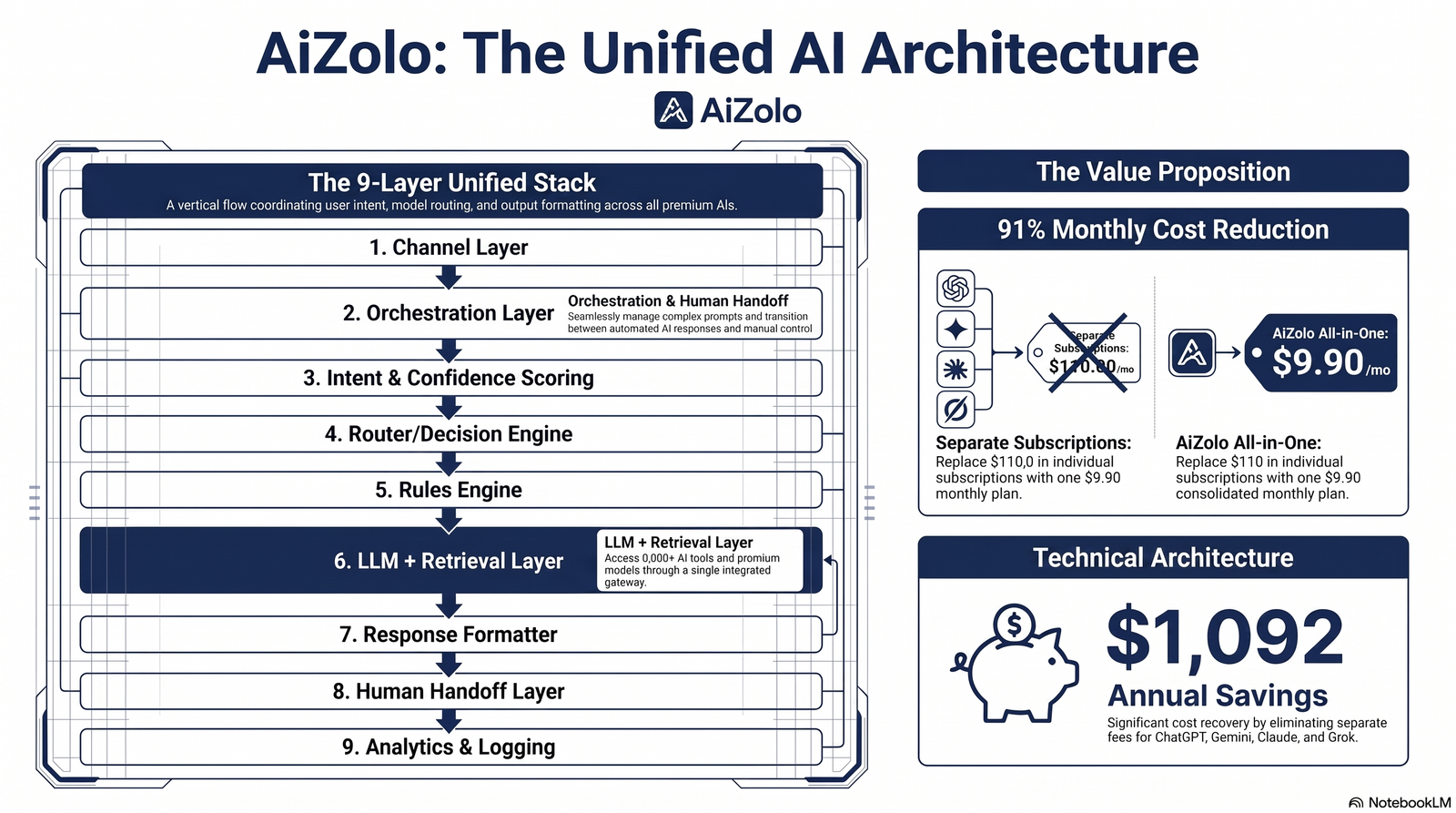
At an architectural level, a hybrid chatbot follows a fairly consistent pattern across most platforms, whether you build with Dialogflow CX, Copilot Studio, Rasa, or a custom stack.
Described architecture flow (diagram description, not an actual image):
- Channel Layer — the entry point: website widget, WhatsApp, mobile app, or voice.
- Orchestration Layer — receives the message and passes it to intent detection.
- Intent & Confidence Scoring — determines what the user wants and how confident the system is.
- Router / Decision Engine — sends the message to either the rules engine or the LLM based on confidence and business logic.
- Rules Engine — executes scripted flows, calls APIs, collects structured data.
- LLM + Retrieval Layer — generates natural responses, pulling facts from the knowledge base.
- Response Formatter — turns the output into the right format for the channel (buttons, cards, plain text).
- Human Handoff Layer — escalates to a live agent with full context when needed.
- Analytics & Logging — records every interaction for reporting and improvement.
This layered design is what separates a hybrid chatbot from a simple chatbot. Each layer can be improved, replaced, or monitored independently, without breaking the whole system.
Most enterprise-grade hybrid chatbots also add a guardrail layer that sits between the LLM and the user, filtering unsafe, off-brand, or non-compliant responses before they’re ever sent.
Hybrid Chatbot vs Traditional Chatbot
A traditional chatbot, often called a rule-based chatbot, only follows scripted decision trees. It cannot understand language it wasn’t explicitly trained to recognize.
A hybrid chatbot keeps those same scripted flows for structured tasks, but adds an AI layer that can understand and respond to anything outside the script.
Table 2: Hybrid Chatbot vs Traditional Chatbot
| Factor | Traditional Chatbot | Hybrid Chatbot |
|---|---|---|
| Understands free-text input | Limited, keyword-based | Yes, via NLU and LLM |
| Handles unexpected questions | Poorly, often fails | Well, AI generates a response |
| Predictability | Very high | High for scripted parts, moderate for AI parts |
| Setup effort | Lower | Moderate to high |
| Best for | Simple, repetitive tasks | Mixed simple and complex conversations |
| Risk of incorrect answers | Low, but rigid | Managed through guardrails and retrieval |
| Maintenance | Manual flow updates only | Flow updates plus AI monitoring |
Traditional chatbots still make sense for narrow, high-volume, repetitive tasks like FAQ menus. But most businesses now find that customer expectations have moved past button-only interactions, which is why hybrid setups are becoming the default.
Hybrid Chatbot vs AI Chatbot
An AI chatbot, in the pure sense, relies almost entirely on a language model to generate every response. It has no fixed rule structure guiding it through specific processes.
A hybrid chatbot uses AI too, but it wraps that AI in structure. This distinction matters a lot for businesses with compliance needs.
Table 3: Hybrid Chatbot vs Pure AI Chatbot
| Factor | Pure AI Chatbot | Hybrid Chatbot |
|---|---|---|
| Response generation | Always AI-generated | Rules for structured steps, AI for the rest |
| Control over sensitive steps | Limited | High, since rules govern critical flows |
| Consistency | Can vary between responses | More consistent for known scenarios |
| Flexibility | Very high | High, but scoped intentionally |
| Compliance suitability | Requires heavy guardrails | Easier to enforce compliance by design |
| Ideal use case | Open-ended assistance, research, brainstorming | Customer support, transactions, regulated workflows |
Pure AI chatbots are excellent for creative or exploratory tasks. Hybrid chatbots are usually the better fit for customer-facing business processes where predictability and accuracy carry real consequences.
Rule-Based vs Hybrid Chatbot
This comparison comes up constantly during planning conversations. Should you build a simple rule-based bot, or invest in a hybrid setup?
Rule-Based Chatbot: Pros
- Fast and cheap to build.
- Completely predictable responses.
- Easy to test and audit.
- No risk of AI hallucination.
Rule-Based Chatbot: Cons
- Breaks down with unexpected phrasing.
- Feels robotic and frustrating for users.
- Requires constant manual updates as new questions appear.
- Cannot handle nuanced or emotional conversations well.
Hybrid Chatbot: Pros
- Understands natural language, not just keywords.
- Handles both structured tasks and open conversation.
- Scales support without scaling headcount at the same rate.
- Learns from data to improve over time (with proper retraining or retrieval updates).
Hybrid Chatbot: Cons
- More complex to build and maintain.
- Requires ongoing monitoring of AI-generated responses.
- Higher initial cost and technical skill requirement.
Best Use Cases
A pure rule-based chatbot still works well for extremely narrow tasks: a single FAQ menu, a store locator, or a basic lead capture form.
A hybrid chatbot is the better choice whenever a business expects varied questions, wants natural conversation, or needs to combine strict processes (like refunds) with flexible support (like general product questions).
Table 4: Rule-Based vs Hybrid Chatbot Decision Matrix
| Business Need | Recommended Approach |
|---|---|
| Single, narrow FAQ | Rule-based chatbot |
| Appointment booking only | Rule-based chatbot |
| Mixed support: FAQs plus complex questions | Hybrid chatbot |
| Regulated industry with strict compliance steps | Hybrid chatbot |
| High-volume customer support with varied topics | Hybrid chatbot |
| Simple internal tool with fixed steps | Rule-based chatbot |
Hybrid Chatbot vs AI Agents
This is one of the most common points of confusion in 2026, as “AI agent” has become a popular buzzword.
A hybrid chatbot mostly reacts. It responds to a message with either a scripted flow or an AI-generated answer. Its actions are usually limited to a defined set of integrations.
An AI agent goes further. It can plan multi-step tasks, decide which tools to use, and take autonomous actions across systems without a human specifying every step in advance.
Table 5: Hybrid Chatbot vs AI Agent
| Factor | Hybrid Chatbot | AI Agent |
|---|---|---|
| Primary behavior | Responds to messages | Plans and executes multi-step tasks |
| Autonomy | Low to moderate | Moderate to high |
| Tool usage | Predefined integrations only | Can dynamically choose tools |
| Predictability | High | Lower, by design |
| Typical use case | Customer support conversations | Complex workflow automation |
| Human oversight needed | Moderate | Usually higher, due to autonomy |
When to Choose Each
Choose a hybrid chatbot when the goal is reliable, controlled conversation with customers or employees, especially where compliance and predictability matter.
Choose an AI agent when the goal is automating a multi-step business process that requires judgment across several systems, and where some autonomy is acceptable in exchange for efficiency.
Many modern platforms are now blending the two, using hybrid chatbot principles as the conversational front end for what is, underneath, an agentic system.
Benefits of Hybrid Chatbots
Business Benefits
Hybrid chatbots reduce the cost of scaling support, since routine questions are handled automatically while complex cases still reach a human. This frees teams to focus on higher-value work.
Technical Benefits
Because the architecture is modular, teams can update the rules layer without retraining the AI model, and vice versa. This makes long-term maintenance far more manageable than an all-in-one AI system.
Customer Support Benefits
Customers get instant answers for common issues, and a smoother handoff for anything complicated. Wait times drop, and satisfaction generally improves when the handoff feels seamless.
Sales Benefits
A hybrid chatbot can qualify leads through structured questions, then use AI to answer product questions naturally, keeping prospects engaged instead of losing them to a slow response time.
Healthcare Benefits
In healthcare, rules can strictly control intake and scheduling steps, while AI helps explain general information in plain language. Sensitive medical advice should still always route to a qualified professional.
Education Benefits
Hybrid chatbots can guide students through structured enrollment steps and then use AI to answer general questions about courses, deadlines, or campus resources.
Finance Benefits
Financial institutions can enforce strict rule-based flows for identity verification and transactions, while letting AI handle general account questions, all within compliance boundaries.
Retail Benefits
Retail hybrid chatbots handle order tracking and returns through rules, while AI assists with product recommendations and general shopping questions.
Table 6: Benefits by Industry
| Industry | Rule-Based Strength | AI-Powered Strength |
|---|---|---|
| Customer Support | Ticket routing, order status | Natural troubleshooting conversation |
| Sales | Lead qualification forms | Product Q&A, objection handling |
| Healthcare | Appointment scheduling, intake forms | General health information, FAQs |
| Education | Enrollment steps, deadline reminders | Course guidance, general questions |
| Finance | Identity verification, transactions | Account explanations, general queries |
| Retail | Order tracking, returns | Product recommendations |
Limitations of Hybrid Chatbots
No technology solves every problem, and hybrid chatbots come with real trade-offs businesses need to plan for honestly.
Hallucinations
The AI portion can still generate incorrect or fabricated information, especially when retrieval isn’t well configured. Grounding responses in a verified knowledge base reduces this risk but doesn’t eliminate it entirely.
Maintenance
A hybrid system has more moving parts than a simple rule-based bot. Rules need updating as processes change, and the AI’s knowledge base needs regular review to stay accurate.
Integration Complexity
Connecting a hybrid chatbot to CRMs, payment systems, and internal tools takes real engineering effort. Poorly built integrations create broken experiences that frustrate users.
Security
Any system connected to customer data and business systems introduces security considerations, including how conversation data is stored, who can access it, and how API keys are protected.
Compliance
Regulated industries need to carefully audit what the AI portion is allowed to say, and log conversations for review. This adds process overhead that a purely manual team might not have needed before.
Cost
Building and running a hybrid chatbot, including LLM usage costs, integration development, and ongoing monitoring, is more expensive than a basic rule-based bot, though usually far cheaper than scaling a human team to match volume.
Table 7: Common Limitations and Mitigations
| Limitation | Why It Happens | Mitigation |
|---|---|---|
| Hallucinations | AI generates unsupported claims | Use retrieval, restrict AI scope, add guardrails |
| Maintenance burden | Multiple components need updates | Assign clear ownership, schedule regular reviews |
| Integration complexity | Many systems must connect reliably | Use well-tested APIs, monitor failures |
| Security risk | Sensitive data flows through the system | Encrypt data, limit access, follow data retention rules |
| Compliance gaps | AI responses aren’t automatically compliant | Add guardrails, log conversations, involve legal review |
| Higher cost | More infrastructure and expertise required | Start small, scale based on measured ROI |
Real-World Use Cases
E-commerce
Hybrid chatbots handle order tracking, returns, and shipping questions through rules, while AI answers product comparison questions and styling advice.
Healthcare
Patient intake, appointment scheduling, and prescription refill requests run through rules, while AI explains general health topics and clinic policies.
SaaS
SaaS companies use hybrid chatbots for onboarding flows, billing questions, and troubleshooting, with AI stepping in for technical questions that don’t fit a script.
Banking
Banks rely on rules for identity verification, balance checks, and transaction disputes, while AI helps explain account terms or general banking concepts.
Insurance
Claims intake and policy lookup run through structured flows, while AI helps explain coverage details in plain language.
Travel
Booking changes, cancellations, and itinerary lookups use rules, while AI helps with destination questions and travel recommendations.
Education
Enrollment, deadline tracking, and document submission use rules, while AI answers general questions about programs and campus life.
HR
Employee onboarding, leave requests, and policy lookups run through rules, while AI answers general workplace questions.
IT Helpdesk
Password resets and ticket creation follow scripted flows, while AI helps troubleshoot technical issues conversationally before escalating.
Government
Citizen services like form submissions and status checks use rules for accuracy, while AI helps explain government processes in simpler language.
Table 8: Real-World Use Case Summary
| Industry | Rule-Based Task Example | AI-Powered Task Example |
|---|---|---|
| E-commerce | Order tracking | Product comparisons |
| Healthcare | Appointment scheduling | General health FAQs |
| SaaS | Billing lookup | Technical troubleshooting |
| Banking | Identity verification | Explaining account terms |
| Insurance | Claims intake | Explaining coverage |
| Travel | Booking changes | Destination recommendations |
| Education | Enrollment steps | Program questions |
| HR | Leave requests | Policy explanations |
| IT Helpdesk | Password reset | Conversational troubleshooting |
| Government | Form status checks | Process explanations |
Best Hybrid Chatbot Examples
Several well-known platforms illustrate hybrid chatbot principles in production, even if they don’t always use the word “hybrid” publicly.
Bank and Telecom Virtual Assistants
Many large banks and telecom providers use rule-based flows for account verification and billing, paired with AI for general customer questions. This combination lets them maintain regulatory control while still offering conversational support.
Enterprise Helpdesk Bots
Enterprise IT helpdesk bots often use rules to log tickets and route requests, with AI layered on top to help employees describe their issue in natural language before the rule engine takes over.
E-commerce Shopping Assistants
Retail platforms frequently combine a rules-driven checkout and order-tracking experience with an AI layer for personalized product recommendations and comparisons.
Why These Work
Each of these examples succeeds because the rules protect the steps that must never go wrong, while the AI layer improves the parts of the experience that benefit from flexibility. Neither approach alone would deliver the same balance of trust and usefulness.
Hybrid Chatbot Implementation Guide
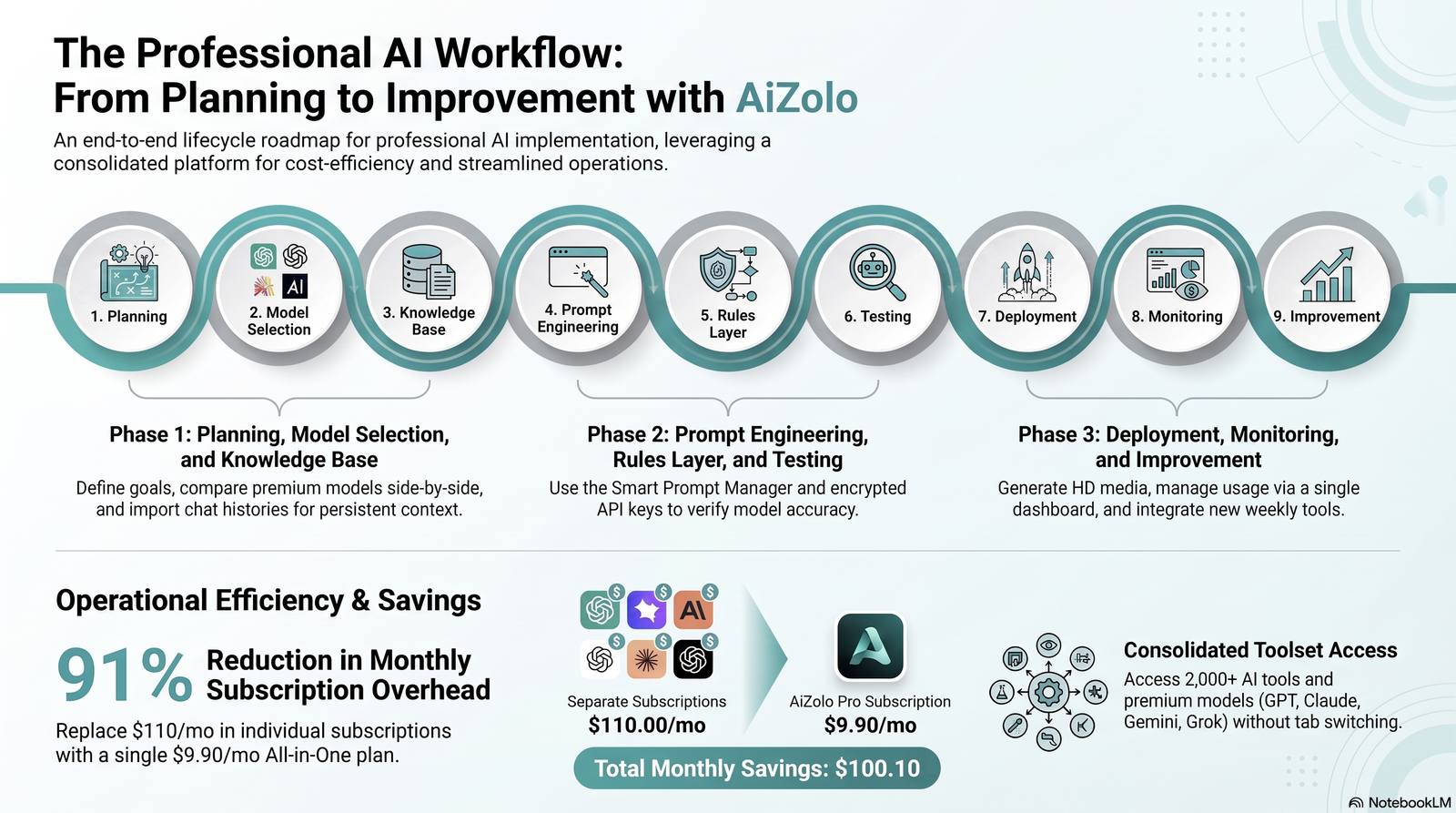
Step 1: Planning
Start by mapping every conversation type your business handles today. Sort them into “predictable and scripted” versus “varied and open-ended.” This split becomes the foundation for your rules layer and AI layer.
Step 2: Choosing Models
Select an LLM based on accuracy needs, latency requirements, and budget. Larger models tend to be more accurate but cost more per conversation, so many teams start with a mid-sized model and adjust based on results.
Step 3: Building the Knowledge Base
Gather your FAQs, product documentation, and policy documents into a structured, searchable format. This becomes the source the AI retrieves from, instead of relying only on its general training.
Step 4: Prompt Engineering
Write clear system instructions that define the chatbot’s tone, boundaries, and escalation rules. Test prompts against edge cases, not just the easy, obvious questions.
Step 5: Building the Rules Layer
Map out each scripted flow using a visual builder. Keep each flow focused on one task, and always include a fallback path for when the user goes off-script.
Step 6: Testing
Run structured test conversations covering common questions, edge cases, and adversarial inputs designed to break the bot. Fix gaps before launch, not after.
Step 7: Deployment
Launch to a small percentage of traffic first, if possible. Monitor closely during the first two to four weeks before rolling out to all users.
Step 8: Monitoring
Track resolution rates, escalation rates, and flagged responses daily during the early weeks, then move to weekly reviews once the system stabilizes.
Step 9: Continuous Improvement
Review conversation logs regularly to find gaps in the knowledge base or rules layer. Update both based on real user behavior, not assumptions.
Table 9: Implementation Checklist
| Stage | Key Task | Owner |
|---|---|---|
| Planning | Map scripted vs open-ended conversations | Product / Ops team |
| Model Selection | Choose LLM based on accuracy and cost | Technical team |
| Knowledge Base | Organize FAQs and documentation | Content / Support team |
| Prompt Engineering | Define tone, boundaries, escalation rules | AI / Product team |
| Rules Layer | Build scripted flows | Bot builder / Developer |
| Testing | Run edge-case and adversarial tests | QA team |
| Deployment | Phased rollout | Engineering team |
| Monitoring | Track resolution and escalation rates | Support / Analytics team |
| Improvement | Update knowledge base and flows | Cross-functional team |
Common Mistakes to Avoid
1. Letting the AI handle everything. Giving the AI too much scope defeats the purpose of a hybrid design and increases the risk of inconsistent answers.
Solution: Clearly define which tasks stay rule-based and enforce that boundary in the routing logic.
2. Skipping the knowledge base. Without a structured knowledge base, the AI relies purely on general training and is far more likely to hallucinate.
Solution: Invest in organizing accurate, current documentation before launch.
3. No fallback path. Many teams build rule flows without planning for what happens when a user doesn’t fit any expected option.
Solution: Always design an explicit fallback that routes to the AI or a human.
4. Ignoring escalation design. A bot that can’t hand off cleanly frustrates users and damages trust.
Solution: Build handoff flows that pass full context to the human agent.
5. Overcomplicating early flows. Teams often try to automate every possible scenario on day one, which delays launch and increases risk.
Solution: Start with the highest-volume, most predictable conversations first.
6. Not testing edge cases. Testing only the “happy path” leaves major gaps exposed once real users arrive.
Solution: Dedicate real testing time to adversarial and unusual inputs.
7. Weak guardrails. Without guardrails, the AI can drift into off-brand, inaccurate, or inappropriate responses.
Solution: Add content filters and topic restrictions before launch.
8. Treating launch as the finish line. Some teams stop improving the bot right after it goes live.
Solution: Schedule ongoing review cycles from day one.
9. Poor intent coverage. If the intent detection layer only recognizes a narrow set of phrases, many valid user messages get misrouted.
Solution: Train and test intent detection against real customer language, not assumptions.
10. No analytics setup. Without proper tracking, teams can’t tell if the chatbot is actually helping or quietly frustrating users.
Solution: Set up analytics before launch, not after problems appear.
11. Overpromising AI capability to users. Marketing the bot as “understands anything” sets expectations the system can’t meet.
Solution: Be transparent with users about what the bot can and can’t do.
12. Ignoring data privacy. Collecting sensitive data without clear policies creates legal and trust risks.
Solution: Define data retention and privacy rules before collecting any user information.
13. Underestimating maintenance. Some teams assume a hybrid chatbot runs itself after launch.
Solution: Assign a dedicated owner responsible for ongoing updates.
14. Not involving support teams early. Building a chatbot without input from the people who handle these conversations daily leads to gaps.
Solution: Involve frontline support staff in the planning and testing phases.
15. No clear success metrics. Launching without defined goals makes it impossible to judge whether the project worked.
Solution: Set specific, measurable goals like resolution rate or average handling time before building anything.
Best Practices
Security
Encrypt conversation data in transit and at rest. Limit API access with the principle of least privilege, and rotate credentials regularly.
Prompting
Write specific, scoped system prompts rather than broad, general instructions. Include clear rules for what the AI should never do or say.
Evaluation
Run regular evaluations comparing AI responses against a set of approved answers. This catches drift before it reaches real customers.
Fallback
Design fallback responses that are honest and helpful, not vague. “I’m not sure, let me connect you with someone who can help” works better than a generic error message.
Escalation
Make escalation to a human effortless. Pass the full conversation history so customers never repeat themselves.
Monitoring
Set up daily monitoring in the first weeks after launch, then shift to a sustainable weekly or monthly cadence once patterns stabilize.
Analytics
Track resolution rate, escalation rate, average response time, and customer satisfaction score together, not in isolation.
Human Review
Have a person periodically review a sample of AI-generated conversations, especially in regulated industries, to catch issues automated monitoring might miss.
Table 10: Best Practices Checklist
| Area | Best Practice |
|---|---|
| Security | Encrypt data, limit access, rotate credentials |
| Prompting | Use scoped, specific instructions |
| Evaluation | Run regular automated evaluations |
| Fallback | Design honest, helpful fallback messages |
| Escalation | Pass full context to human agents |
| Monitoring | Monitor daily post-launch, then adjust cadence |
| Analytics | Track multiple metrics together |
| Human Review | Periodically audit real conversations |
The Future of Hybrid Chatbots
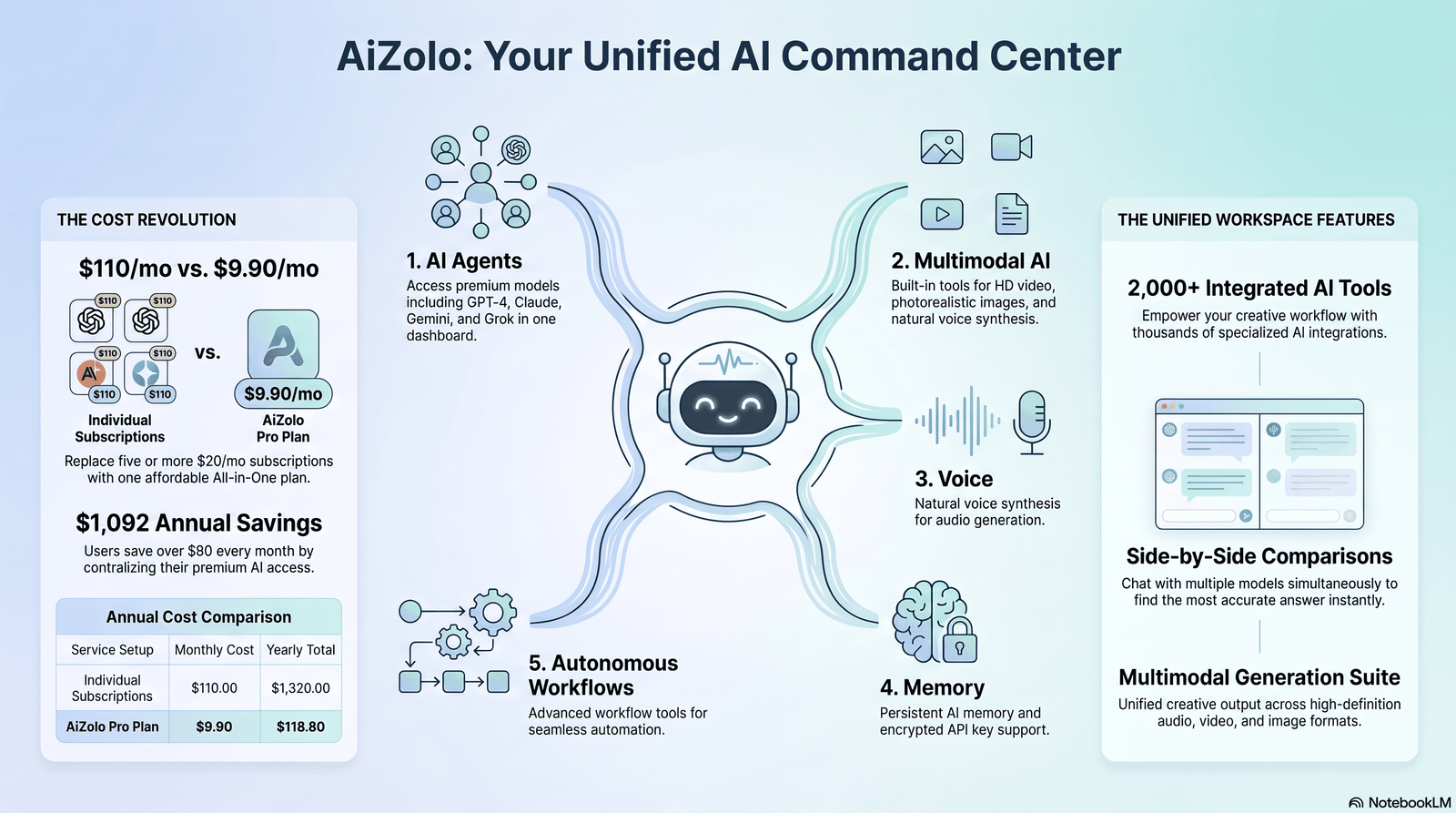
AI Agents
Hybrid chatbots are increasingly becoming the conversational layer on top of more autonomous AI agents, which can plan and execute multi-step tasks across systems.
Multimodal AI
Future hybrid chatbots will handle text, images, voice, and documents within the same conversation, letting users share a photo of a broken product instead of describing it in words.
Voice
Voice-based hybrid assistants are expanding beyond simple IVR replacement, combining structured call-routing logic with natural, AI-driven conversation.
Memory
Longer, more persistent memory will let hybrid chatbots recall past interactions across sessions, creating more personalized support without requiring users to repeat information.
Autonomous Workflows
As guardrails improve, hybrid chatbots will safely take on more autonomous actions, like automatically processing routine refunds within predefined limits.
Enterprise Adoption
Enterprise adoption is accelerating as compliance-friendly hybrid designs make it easier for regulated industries to justify AI investment without giving up control.
Frequently Asked Questions
1. What is a hybrid chatbot in simple terms? A hybrid chatbot is a chatbot that uses fixed rules for predictable tasks and an AI language model for open-ended conversation, combining both in one system.
2. How is a hybrid chatbot different from a regular chatbot? A regular, rule-based chatbot can only follow scripted paths. A hybrid chatbot adds AI so it can also understand and respond to unscripted, natural language questions.
3. Is a hybrid chatbot the same as ChatGPT? No. Tools like ChatGPT are general-purpose AI chatbots without built-in business rules. A hybrid chatbot combines an AI model like this with structured, business-specific rules and integrations.
4. Do hybrid chatbots use large language models? Yes, most modern hybrid chatbots use an LLM for the AI-driven portion of conversations, often paired with retrieval from a company’s own knowledge base.
5. Are hybrid chatbots more accurate than pure AI chatbots? For structured, high-stakes tasks, yes, because rules remove ambiguity. For open-ended questions, accuracy still depends on how well the AI is grounded in reliable data.
6. What industries use hybrid chatbots the most? Banking, healthcare, insurance, e-commerce, SaaS, and telecom are among the heaviest adopters, largely because these industries mix routine tasks with complex customer questions.
7. How much does it cost to build a hybrid chatbot? Costs vary widely based on complexity, integrations, and AI usage volume. Simple hybrid setups can start relatively affordably, while enterprise-grade systems with many integrations cost significantly more.
8. Can a hybrid chatbot replace human customer support entirely? No. Hybrid chatbots are designed to handle routine and predictable conversations, while complex, sensitive, or emotional situations should still reach a human.
9. What is the difference between a hybrid chatbot and an AI agent? A hybrid chatbot mainly responds to conversation using rules and AI together. An AI agent can plan and execute multi-step tasks with more autonomy across systems.
10. Do hybrid chatbots need a knowledge base? Yes, a well-organized knowledge base is essential for grounding AI responses in accurate, approved information rather than relying only on general AI training.
11. Can hybrid chatbots integrate with CRM and helpdesk tools? Yes, integrations with CRMs, ticketing systems, and payment platforms are common and are usually handled through APIs or webhooks.
12. What is retrieval-augmented generation in a hybrid chatbot? Retrieval-augmented generation, or RAG, lets the AI pull relevant facts from a knowledge base before generating a response, improving accuracy and reducing hallucinations.
13. How do hybrid chatbots handle sensitive or regulated conversations? Sensitive steps are usually locked into the rules layer, with strict guardrails around what the AI is permitted to say, and clear escalation paths to compliance-trained staff.
14. What happens when a hybrid chatbot doesn’t understand a question? A well-designed hybrid chatbot falls back to either an AI-generated best-effort response or a clear handoff to a human agent, rather than failing silently.
15. Can small businesses use hybrid chatbots? Yes, though smaller businesses often start with a simpler hybrid setup and expand the AI and integration layers as needs grow and budgets allow.
16. Do hybrid chatbots require ongoing maintenance? Yes. Rules need updates as processes change, and the knowledge base needs regular review to stay accurate and current.
17. What is the biggest risk with hybrid chatbots? The biggest risk is usually AI hallucination or scope creep, where the AI is allowed to handle tasks it isn’t reliable enough for. Guardrails and clear boundaries reduce this risk.
18. How long does it take to build a hybrid chatbot? Timelines vary based on scope, but a focused first version covering a handful of key workflows often takes several weeks to a few months, including testing.
19. What platforms are commonly used to build hybrid chatbots? Common platforms include visual bot builders combined with LLM providers, along with custom stacks built using frameworks designed for conversational AI development.
20. Will hybrid chatbots become fully autonomous in the future? Some hybrid chatbots are gradually taking on more autonomous capabilities, but full autonomy for high-stakes decisions is likely to remain limited by design, in favor of human oversight.
Conclusion
A hybrid chatbot isn’t just a marketing term. It’s a practical answer to a real business problem: how do you get the flexibility of AI without losing control over the conversations that matter most?
By combining rules for predictable, high-stakes tasks with AI for natural, open-ended conversation, a hybrid chatbot gives businesses the best of both approaches. It’s more work to build than a simple bot, but for most businesses handling real customer volume, it’s worth the investment.
If you’re evaluating whether a hybrid chatbot fits your business, start small. Map your most common conversations, decide what should stay rule-based, and let AI handle the rest.
At AiZolo, we work with teams building conversational AI systems like this every day, from planning the architecture to setting up guardrails that keep AI-generated responses accurate and on-brand. If you’re exploring what a hybrid chatbot could look like for your business, we’re happy to talk through the options.
Author Bio
Jeevesh Tripathi AI Researcher & Technical Content Writer Email: jeevesh@aizolo.com
Jeevesh Tripathi is an AI researcher and technical content writer at AiZolo, focused on conversational AI, large language models, and enterprise SaaS technology. His work centers on translating complex AI architecture into clear, practical guidance for business decision-makers, developers, and support teams.
With hands-on experience evaluating chatbot platforms, LLM integrations, and knowledge-retrieval systems, Jeevesh writes content grounded in real implementation challenges rather than surface-level trends. He follows Google’s Search Central documentation and EEAT principles closely, aiming to produce accurate, balanced, and genuinely useful technical content for readers researching AI-driven customer experience solutions.