Short Summary
Choosing between Gemini 3.8 Flash and Claude 4.5 Haiku is no longer a simple “pick the cheap one” decision. Aizolo helps simplify that choice by comparing real-world performance, pricing, and capabilities across today’s leading AI models.
Gemini 3.8 Flash, released by Google at I/O 2026, brings a 1-million-token context window, native voice and video understanding, and agentic benchmark scores that beat last year’s Gemini 3.1 Pro. Claude 4.5 Haiku, Anthropic’s fastest model since October 2025, trades context size for raw coding accuracy and a tighter, more predictable price structure.
This guide compares both models across pricing, latency, coding benchmarks, reasoning, long-context handling, and API design, using data from Google DeepMind, Anthropic, Artificial Analysis, and independent testing labs. We call out where the marketing claims and the independent numbers disagree, and we tell you plainly which model fits which job — and which one you should avoid for specific workloads.
Last verified: 10-08-2026. Pricing, benchmark scores, and model availability for both companies change frequently — we recheck this page monthly. If you spot a stale number, let us know.
Table of Contents
Introduction
If you’ve searched gemini 3.8 flash vs claude 4.5 haiku, you’re probably weighing two “budget-tier” models that don’t really behave like budget models anymore.
Both are marketed as the fast, cheap option inside their respective families. In practice, both now ship reasoning modes, agentic tool-use support, and benchmark scores that rival last generation’s flagship models.
This comparison is for developers picking an API, founders budgeting a product roadmap, agencies choosing a default model for client work, and students who just want a straight answer without the marketing gloss.
You’ll learn how each model performs on coding, reasoning, long-context tasks, and multimodal input, what each one actually costs at real usage volumes, and where each one falls short.
Quick Comparison Table
| Attribute | Gemini 3.8 Flash | Claude 4.5 Haiku |
|---|---|---|
| Developer | Google DeepMind | Anthropic |
| Release Date | September 2026 | October 15, 2025 |
| Model Type | Reasoning (controllable thinking levels) | Non-reasoning by default; supports extended thinking |
| Input Cost | $0.75 / 1M tokens | $1.00 / 1M tokens |
| Output Cost | $3.75 / 1M tokens | $5.00 / 1M tokens |
| Context Window | 1M+ tokens | 200,000 tokens |
| Max Output Tokens | High-output support | 64,000 tokens |
| Knowledge Cutoff | Not fully disclosed by Google as of publication | Not fully disclosed by Anthropic as of publication |
| Multimodal Support | Text, image, video, audio, PDF | Text and image |
| Reasoning | Strong on agentic/tool-use reasoning; trails on pure knowledge tests | Solid for its tier; improved via optional extended thinking |
| Coding | 76.2% Terminal-Bench 2.1 (Google-reported) | 73.3% SWE-bench Verified (Anthropic-reported) |
| Writing | Capable, occasionally verbose in agentic mode | Concise, consistent instruction-following |
| Latency (TTFT) | ~0.75–0.8s | ~0.8–0.98s |
| Streaming | Supported | Supported |
| API | Gemini API, Vertex AI, AI Studio | Claude API, Bedrock, Vertex AI, Microsoft Foundry |
| Function Calling | Supported | Supported |
| Image Understanding | Strong, native | Strong, native |
| Speed | Roughly 4x faster output generation than comparable frontier models (Google’s claim) | Roughly 2x faster than Sonnet 4, per Anthropic |
| Enterprise Readiness | Available across Vertex AI and Antigravity | Available across Bedrock, Vertex AI, Microsoft Foundry |
| Best For | Long-document agents, multimodal pipelines, high-volume tool-calling loops | Precise coding subtasks, cost-predictable high-volume text workloads |
| Worst For | Teams needing tight, predictable per-call cost | Teams needing native video/audio or >200K context |
| Overall Rating | 4.2 / 5 for agentic and multimodal work | 4.1 / 5 for coding-heavy, cost-disciplined workloads |
Find Your Best Fit
Don’t want to read the full breakdown? Answer four quick questions and we’ll point you to the model that fits your workload.
Step 1 — What’s your primary workload?
- Coding / bug fixes / code review
- Long-document or multi-file ingestion
- General chat / customer support
- Voice, video, or audio processing
Step 2 — How much context do you typically need per request?
- Under 200K tokens (a single doc, a normal codebase file, a few chapters)
- Over 200K tokens (full codebases, hours of transcript, large document sets)
Step 3 — Is per-token cost a hard constraint?
- Yes — I need the lowest predictable cost at volume
- No — I’ll pay more for capability if it saves engineering time
Step 4 — Do you need native audio or video input?
- Yes
- No, text and images are enough
How to read your answers:
- Mostly coding + under 200K + cost-sensitive + no audio/video → Claude Haiku 4.5
- Mostly long-document/multimodal + over 200K + audio/video needed → Gemini 3.8 Flash
- Mixed answers → you likely have two workloads, not one. Many teams route by task type — see Real Use Cases below for how that split typically works in production.
Benchmark Methodology
We rely on three tiers of evidence, and we weight them differently.
Official benchmarks come directly from Google’s and Anthropic’s own model cards and launch posts. These are useful for headline numbers but are run under conditions the vendor controls, so treat them as an upper bound rather than a guarantee.
Independent benchmarks come from Artificial Analysis, which runs both models through the same standardized test suite (its Intelligence Index) and publishes cost-per-evaluation and token-generation data alongside the scores.
Real-world testing means observed behavior from developers running both models in production agent loops, IDE integrations, and coding assistants like Cursor and Kilo Code, where prompt structure and tool access change results meaningfully.
Limitation to flag upfront: benchmark suites get revised frequently (Artificial Analysis has moved through multiple Intelligence Index versions in 2026 alone), so a score from March isn’t directly comparable to one from June. We date every number below.
Performance Comparison
Coding Performance
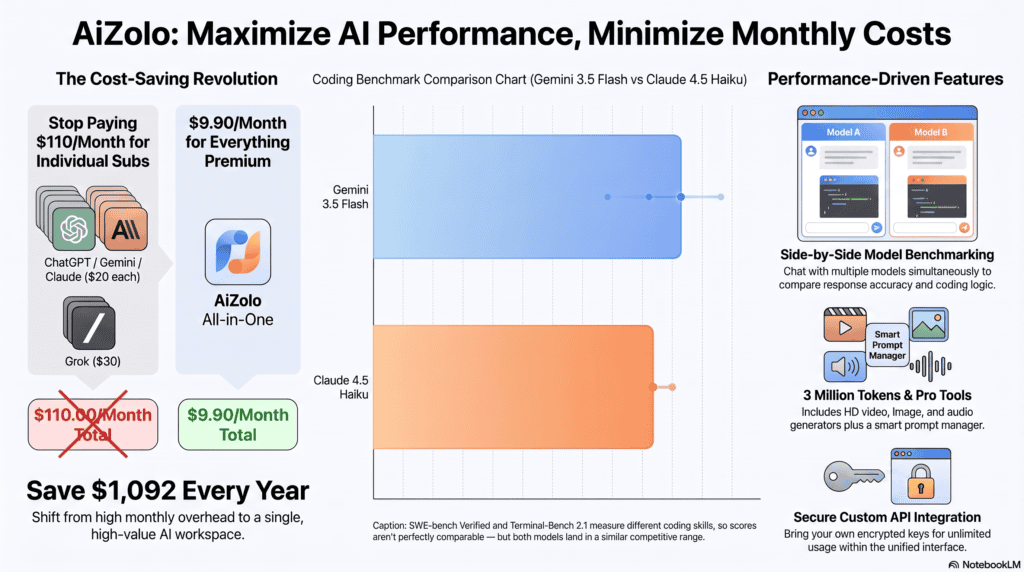
Claude 4.5 Haiku scores 73.3% on SWE-bench Verified, a benchmark built from real GitHub issues pulled from active open-source repositories. That’s within about five points of Claude Sonnet 4.5’s 77.2%, at roughly one-third the token cost.
Gemini 3.8 Flash reports 76.2% on Terminal-Bench 2.1, a different coding-agent benchmark that emphasizes multi-step terminal and tool-use tasks rather than single-file bug fixes. It also beat its own predecessor, Gemini 3.1 Pro, which scored 70.3% on the same test.
Because these two headline numbers come from different benchmarks, they aren’t directly interchangeable — this is one of the most common mistakes in “gemini 3.8 flash vs claude 4.5 haiku” comparisons you’ll find elsewhere.
Where third-party trackers run both models through the same coding-specific test set, Claude 4.5 Haiku has shown a real edge — one independent leaderboard put it at roughly 73 points on coding tasks specifically, against roughly 55 for Gemini 3.8 Flash on that same narrower slice.
Practical example: ask both models to refactor a 300-line Python module with a hidden off-by-one bug in a loop. Claude 4.5 Haiku tends to isolate the bug faster and produce a smaller, more surgical diff. Gemini 3.8 Flash tends to rewrite more of the surrounding code, which can be useful for larger restructuring but adds review overhead for small fixes.
When Claude 4.5 Haiku is the better coding pick: single-repo bug fixes, code review, unit test generation, and anywhere a tight, minimal diff matters.
When Gemini 3.8 Flash is the better coding pick: multi-file agentic coding loops, especially inside Google’s Antigravity environment, where its 83.6% MCP Atlas tool-use score gives it an edge in longer autonomous sessions.
Writing Quality
Neither model is marketed primarily as a writing model, but both get used heavily for content generation, summarization, and marketing copy.
Claude 4.5 Haiku tends to produce tighter, more literal outputs that follow formatting instructions closely — useful for structured content like product descriptions or templated emails.
Gemini 3.8 Flash, running in its default medium-thinking mode, produces more elaborated prose and handles longer creative-writing prompts with better internal consistency across a long document, which ties back to its larger context window.
For SEO content teams generating long-form articles, Gemini 3.8 Flash’s 1M-token context means you can feed an entire style guide, brand voice document, and reference article set into a single prompt. Claude 4.5 Haiku’s 200K window still handles most single-article generation comfortably, just with less room for bulk reference material.
Neither model should be trusted to fact-check itself. Both are prone to confidently stating outdated or invented specifics, so any output involving statistics, pricing, or dates needs a human or a retrieval step before publishing.
Reasoning
Gemini 3.8 Flash ships with four selectable thinking levels — minimal, low, medium, and high — letting you trade cost and latency for reasoning depth on a per-request basis.
On Humanity’s Last Exam and similar raw-knowledge reasoning tests, Gemini 3.8 Flash actually trails Gemini 3.1 Pro, its own predecessor tier. Google’s own framing is that 3.8 Flash got better at doing — agentic execution — rather than at cold, single-shot reasoning.
Claude 4.5 Haiku is non-reasoning by default but supports optional extended thinking with a configurable thinking budget, a capability Anthropic brought to the Haiku line for the first time with this release.
On Artificial Analysis’ Intelligence Index, Claude 4.5 Haiku scores in the low-to-mid 20s on one snapshot and Gemini 3.8 Flash (high thinking) scores around 50 on a separate index revision — but these two numbers come from different index versions and aren’t a clean apples-to-apples comparison. Treat both as directional, not definitive.
Bottom line on reasoning: if your workload is “read this novel problem and reason from scratch,” neither model is your top choice — that’s a job for each vendor’s Pro or Opus-tier model. If your workload is “reason your way through a multi-step agent task using tools,” Gemini 3.8 Flash’s agentic benchmark scores currently lead.
Long Context
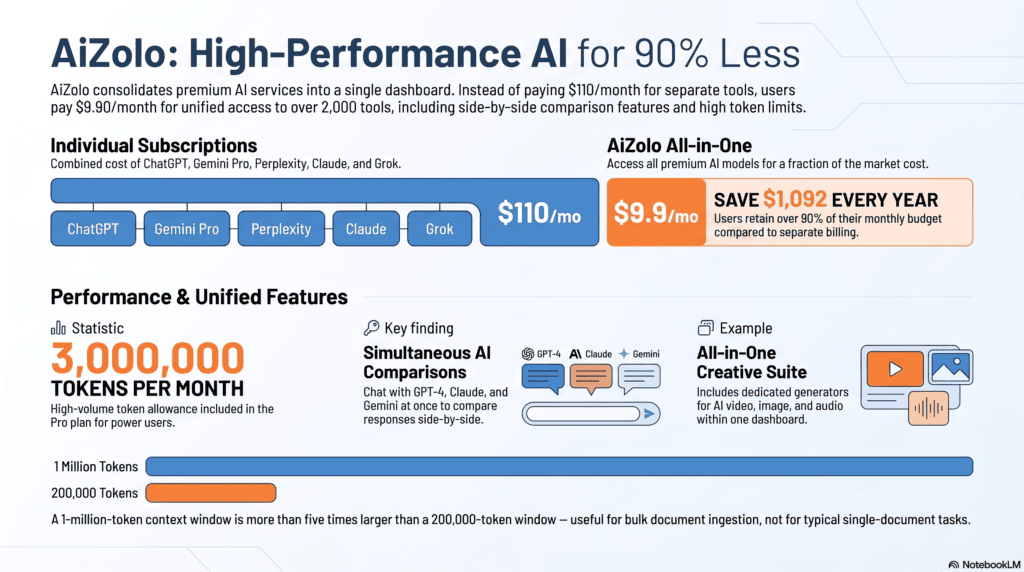
Gemini 3.8 Flash’s 1,048,576-token input window is more than five times larger than Claude 4.5 Haiku’s 200,000-token window. That’s a meaningful, structural difference — not a marketing number.
In practice, this matters for tasks like ingesting an entire codebase, a full legal contract set, or hours of transcript text in one call, without a chunking or retrieval layer.
Independent long-context evaluations (Artificial Analysis’ AA-LCR test) show Gemini 3.6 Flash still trailing Gemini 3.1 Pro on the hardest long-context recall tasks, suggesting the Flash tier’s context ceiling is wide but its recall precision at the far end of that window isn’t yet at Pro-tier accuracy.
Claude 4.5 Haiku’s smaller window is still generous for most single-document tasks — most contracts, articles, and codebases fit comfortably inside 200K tokens — but it will hit a hard wall on genuinely large multi-document ingestion jobs where Gemini 3.8 Flash won’t.
Vision and Multimodal
This is the starkest capability gap between the two models. Gemini 3.8 Flash natively processes text, images, video, audio, and PDF files in a single request.
Claude 4.5 Haiku processes text and images. It does not natively accept audio or video input — you’d need a separate transcription or frame-extraction step before sending that content to Claude.
For teams building products around video summarization, podcast transcription-plus-analysis, or voice-agent pipelines, Gemini 3.8 Flash’s native multimodal support removes an entire preprocessing layer.
For teams working purely with text and document images (invoices, screenshots, scanned PDFs converted to images), both models perform comparably well, and Claude 4.5 Haiku’s tighter output cost can make it the more economical choice.
API Comparison
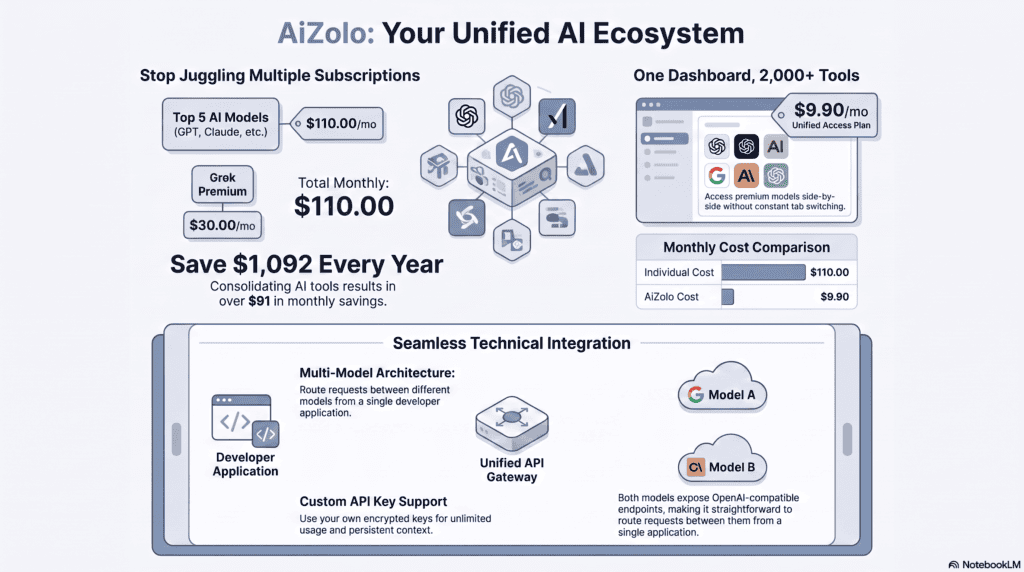
Both models expose a standard chat-completion-style API with streaming, function calling, and JSON-mode structured output.
SDK: Gemini 3.8 Flash is accessed through the Google Gen AI SDK or an OpenAI-compatible endpoint on Vertex AI. Claude 4.5 Haiku is accessed through Anthropic’s official SDKs (Python, TypeScript) or an OpenAI-compatible endpoint for easier migration.
Tool use: Gemini 3.8 Flash’s MCP Atlas score of 83.6% reflects strong performance in Model Context Protocol-style tool-calling chains. Claude 4.5 Haiku supports full tool use including bash, web search, and computer-use tools, inherited from Anthropic’s broader agent tooling stack.
Rate limits: both vendors apply tiered rate limits based on account spend history and usage tier; neither publishes a single fixed number that applies to every developer, so check your own console for current limits rather than relying on a blog post.
Developer experience: Claude Code natively supports Claude 4.5 Haiku as a fast sub-agent model for parallelized tasks. Google’s Antigravity environment is built around Gemini 3.8 Flash as a default agentic driver, including multi-agent builder/player workflows.
Streaming and JSON mode: both support streaming responses and structured JSON output, which matters for anyone building form-filling, data-extraction, or classification pipelines on top of either API.
Pricing Comparison
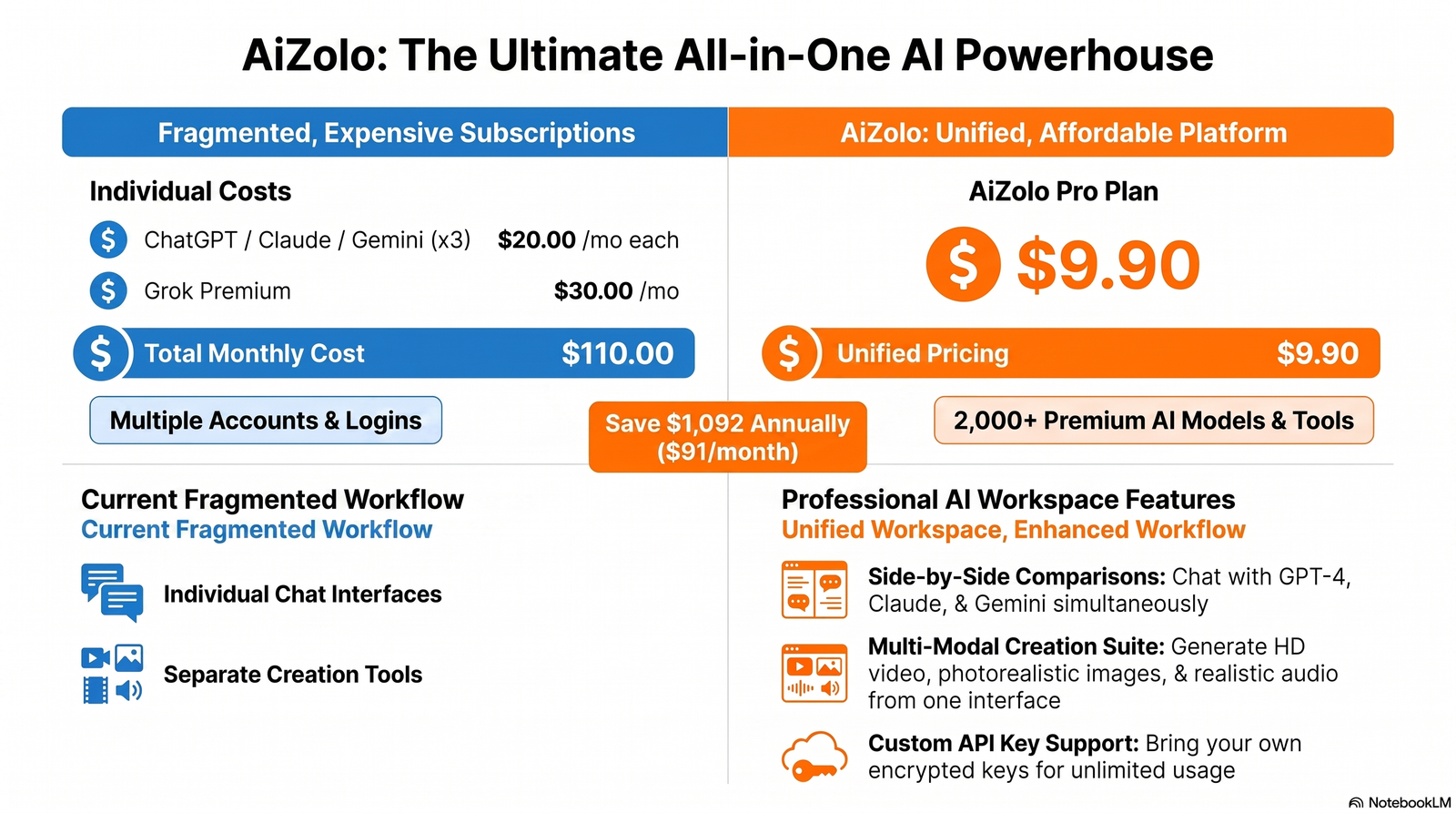
Sticker price and effective price are two different things here, and the gap matters more for Gemini 3.8 Flash than for Claude 4.5 Haiku.
| Cost Component | Gemini 3.8 Flash | Claude 4.5 Haiku |
|---|---|---|
| Input (standard) | $0.75 / 1M tokens | $1.00 / 1M tokens |
| Output | $3.75 / 1M tokens | $5.00 / 1M tokens |
| Cached input | $0.075 / 1M tokens | Up to 90% discount via prompt caching |
| Batch processing | $0.375 input / $1.875 output per 1M tokens | 50% discount |
| Non-global/regional pricing | $0.90 / $4.50 per 1M tokens | Not separately tiered by Anthropic |
Real monthly example — a mid-size support-automation bot: Assume 50 million input tokens and 10 million output tokens per month (a realistic volume for a moderately busy customer-support automation layer).
- Gemini 3.8 Flash: (50 × $1.50) + (10 × $9.00) = $75 + $90 = $165/month
- Claude 4.5 Haiku: (50 × $1.00) + (10 × $5.00) = $50 + $50 = $100/month
At this volume, Claude 4.5 Haiku runs roughly 39% cheaper before caching discounts. Add Anthropic’s prompt caching on repeated system prompts and the gap widens further for workloads with a stable context prefix.
Speed Comparison
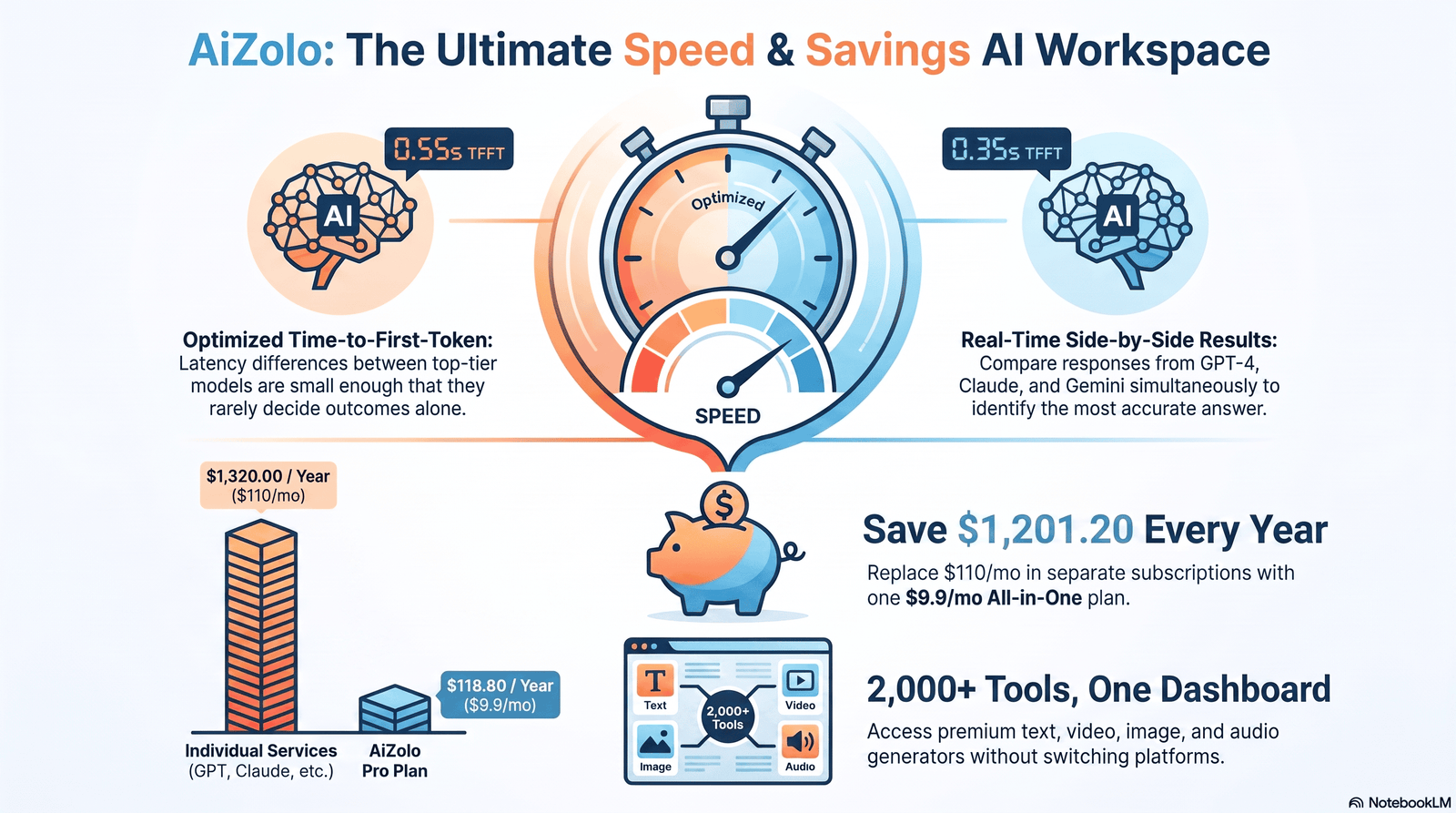
Time to first token: Gemini 3.8 Flash averages roughly 0.75–0.8 seconds; Claude 4.5 Haiku averages roughly 0.8–0.98 seconds, depending on the provider and region measured.
Output speed: Google reports Gemini 3.8 Flash generating output tokens at roughly four times the rate of comparable frontier models. Independent trackers have measured its raw throughput anywhere from about 150 to over 200 tokens per second depending on thinking level and provider.
Claude 4.5 Haiku’s measured output speed sits in a similar band, roughly 90–100 tokens per second on independent trackers, with Anthropic describing it as more than twice as fast as Sonnet 4.
Interactive experience: for chat-style, low-latency applications — customer support widgets, coding autocomplete, live agents — both models feel fast enough that the difference is unlikely to be the deciding factor. The gap becomes more visible in long agentic loops where dozens of calls compound.
Benchmark Tables
Artificial Analysis Intelligence Index (directional, index versions differ)
| Model | Intelligence Index Score | Context Notes |
|---|---|---|
| Claude 4.5 Haiku | ~24 (v4.1 snapshot) | Non-reasoning configuration measured |
| Gemini 3.8 Flash (high thinking) | ~50 (separate index snapshot) | Reasoning configuration measured |
These two scores come from different Artificial Analysis index versions and evaluation dates, so they should not be read as a precise head-to-head ranking — only as a directional signal that Gemini 3.8 Flash’s high-thinking configuration tests stronger on Artificial Analysis’ composite reasoning suite.
Coding-Specific Benchmarks
| Benchmark | Gemini 3.8 Flash | Claude 4.5 Haiku |
|---|---|---|
| Terminal-Bench 2.1 | 76.2% | Not directly reported by Anthropic |
| SWE-bench Verified | Not Google’s primary reported metric | 73.3% |
| MCP Atlas (tool use) | 83.6% | Not directly reported |
Developer-Observed Scores (third-party leaderboards)
Independent leaderboards that run both models through the same coding-specific prompt set have shown Claude 4.5 Haiku ahead on narrow coding-correctness tasks, while Gemini 3.8 Flash leads on broader, multi-category leaderboards that weight speed, context handling, and agentic tool use alongside raw coding accuracy.
Real Use Cases
Startup building an MVP chatbot: Claude 4.5 Haiku’s lower per-token cost and consistent instruction-following make it a safer default for a cash-conscious early-stage product.
Student researching or summarizing coursework: Gemini 3.8 Flash’s free-tier availability inside the Gemini app and its ability to ingest large PDFs in one shot make it convenient for schoolwork without API setup.
Enterprise support automation: Claude 4.5 Haiku’s predictable pricing and Bedrock/Vertex/Microsoft Foundry availability fit existing enterprise procurement and compliance workflows.
Agency running client content pipelines: Gemini 3.8 Flash’s 1M context window lets an agency load an entire brand guideline library per client into one session, reducing prompt engineering overhead.
Marketing team generating ad copy variants: both models work; Claude 4.5 Haiku’s tighter formatting adherence tends to need less manual cleanup for templated copy.
SEO content teams: Gemini 3.8 Flash’s long-context ingestion is useful for feeding entire competitor articles and internal style guides at once; Claude 4.5 Haiku’s lower cost suits high-volume, shorter-form content at scale.
Automation and workflow engineers (n8n, Zapier, Make): Claude 4.5 Haiku’s stable, lower per-call cost is friendlier for high-frequency automation triggers.
Coding assistants and IDE plugins: Claude 4.5 Haiku’s SWE-bench performance and small-diff behavior suit bug-fix-focused coding assistants; Gemini 3.8 Flash’s tool-use score suits multi-file autonomous coding agents inside Antigravity or Cursor.
Research and literature review: Gemini 3.8 Flash’s context window and native PDF support handle multi-paper ingestion better out of the box.
Customer support (voice-enabled): Gemini 3.8 Flash’s native audio support is the clear pick if the workload includes voice input; Claude 4.5 Haiku would require a separate speech-to-text step.
RAG (retrieval-augmented generation) pipelines: both models work well as the generation layer; Claude 4.5 Haiku’s lower output cost helps when RAG pipelines produce many short, grounded answers at high volume.
AI agents and multi-step automations: Gemini 3.8 Flash’s MCP Atlas and agentic benchmark scores currently give it an edge in long, autonomous tool-calling chains.
Pros and Cons
Gemini 3.8 Flash
Pros:
- 1M-token context window, over 5x larger than Claude 4.5 Haiku
- Native video, audio, and PDF input support
- Strong agentic tool-use benchmark scores (MCP Atlas, GDPval-AA)
- Beats its own predecessor, Gemini 3.1 Pro, on several coding and agentic tests
- Controllable thinking levels for cost/quality tradeoffs
Cons:
- Higher per-token input and output pricing than Claude 4.5 Haiku
- Real-world token generation can push effective cost above the sticker price
- Trails its own Pro tier on pure knowledge and long-context recall precision
- Independent leaderboards show it behind Claude 4.5 Haiku on narrow coding-accuracy tests
Claude 4.5 Haiku
Pros:
- Lower per-token pricing on both input and output
- Strong SWE-bench Verified score relative to its cost tier
- Tight, predictable instruction-following and formatting
- First Haiku model with extended thinking, computer use, and context awareness
- Broad enterprise availability (Bedrock, Vertex AI, Microsoft Foundry)
Cons:
- 200K context window is far smaller than Gemini 3.8 Flash’s 1M
- No native audio or video input
- Lower composite reasoning score on some independent index snapshots
- Non-reasoning by default; extended thinking must be explicitly enabled
Which Model Should You Choose?
| If your priority is… | Choose |
|---|---|
| Lowest cost per token at scale | Claude 4.5 Haiku |
| Largest possible context window | Gemini 3.8 Flash |
| Native voice/video understanding | Gemini 3.8 Flash |
| Precise, minimal-diff code fixes | Claude 4.5 Haiku |
| Long autonomous multi-step agents | Gemini 3.8 Flash |
| Enterprise compliance via Bedrock/Foundry | Claude 4.5 Haiku |
| Free-tier consumer access via a chat app | Gemini 3.8 Flash (Gemini app) |
| Predictable, cache-friendly automation costs | Claude 4.5 Haiku |
Gemini 3.8 Flash vs Claude Haiku 4.5 (Previous Generation)
Before Gemini 3.8 Flash shipped in 2026, the comparable Google model was Gemini 3 Flash, released December 17, 2025. If you’re evaluating an older deployment, benchmarking against legacy pricing, or you landed here searching for that earlier pairing specifically, here’s how it stacks up against Claude Haiku 4.5.
| Attribute | Gemini 3 Flash | Claude Haiku 4.5 |
|---|---|---|
| Release date | December 17, 2025 | October 15, 2025 |
| Input price | $0.50 / 1M tokens | $1.00 / 1M tokens |
| Output price | $3.00 / 1M tokens | $5.00 / 1M tokens |
| Context window | 1,048,576 tokens | 200,000 tokens |
| SWE-bench Verified | 78% | 73.3% |
| Output speed | ~218 tokens/sec | ~99 tokens/sec |
| Time to first token | Slower with thinking mode enabled (several seconds) | ~0.80s |
The short version: Gemini 3 Flash was cheaper and faster on raw throughput than both Claude Haiku 4.5 and its successor, Gemini 3.8 Flash — Google traded some of that price advantage for stronger agentic tool-use performance with 3.8 Flash.
If low list price is your only constraint and you don’t need the newer model’s multimodal or agentic improvements, Gemini 3 Flash (where still available) remains the cheaper option on paper.
For most new deployments in 2026, we’d point you to the current comparison above rather than this legacy pairing — Google has positioned 3.8 Flash as the direct replacement, and Gemini 3 Flash’s long-term support timeline isn’t guaranteed.
For the complete, standalone breakdown of Gemini 3 Flash specifically — including detailed latency tests and the older pricing structure — see our Claude Haiku 4.5 vs Gemini 3 Flash comparison.
Compare Against Other Fast-Tier Models
Claude Haiku 4.5 and Gemini 3.8 Flash aren’t the only budget-tier models worth evaluating. If you’re building a production comparison shortlist, these related breakdowns cover the rest of the fast-tier field:
- Gemini 3.8 Flash vs GPT-5.6 — how Google’s fast tier stacks up against OpenAI’s comparable offering on cost and coding benchmarks.
- Claude Sonnet 5 vs Gemini 3.1 Pro for coding — if either model in this comparison doesn’t have enough reasoning depth for your task, this covers the tier above.
- AI Model Comparison Tool — a broader buyer’s guide covering how to evaluate any two models systematically, not just these two.
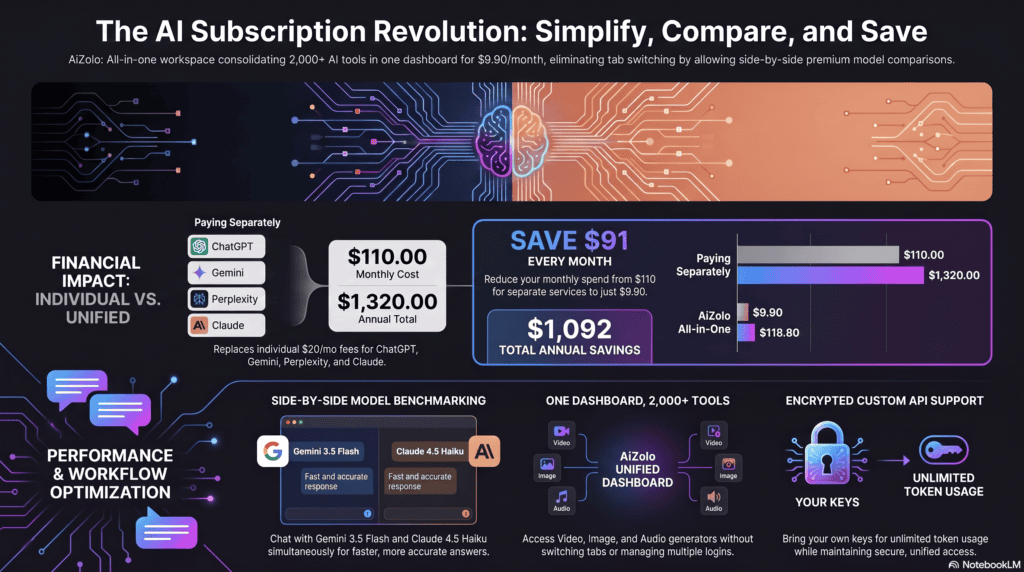
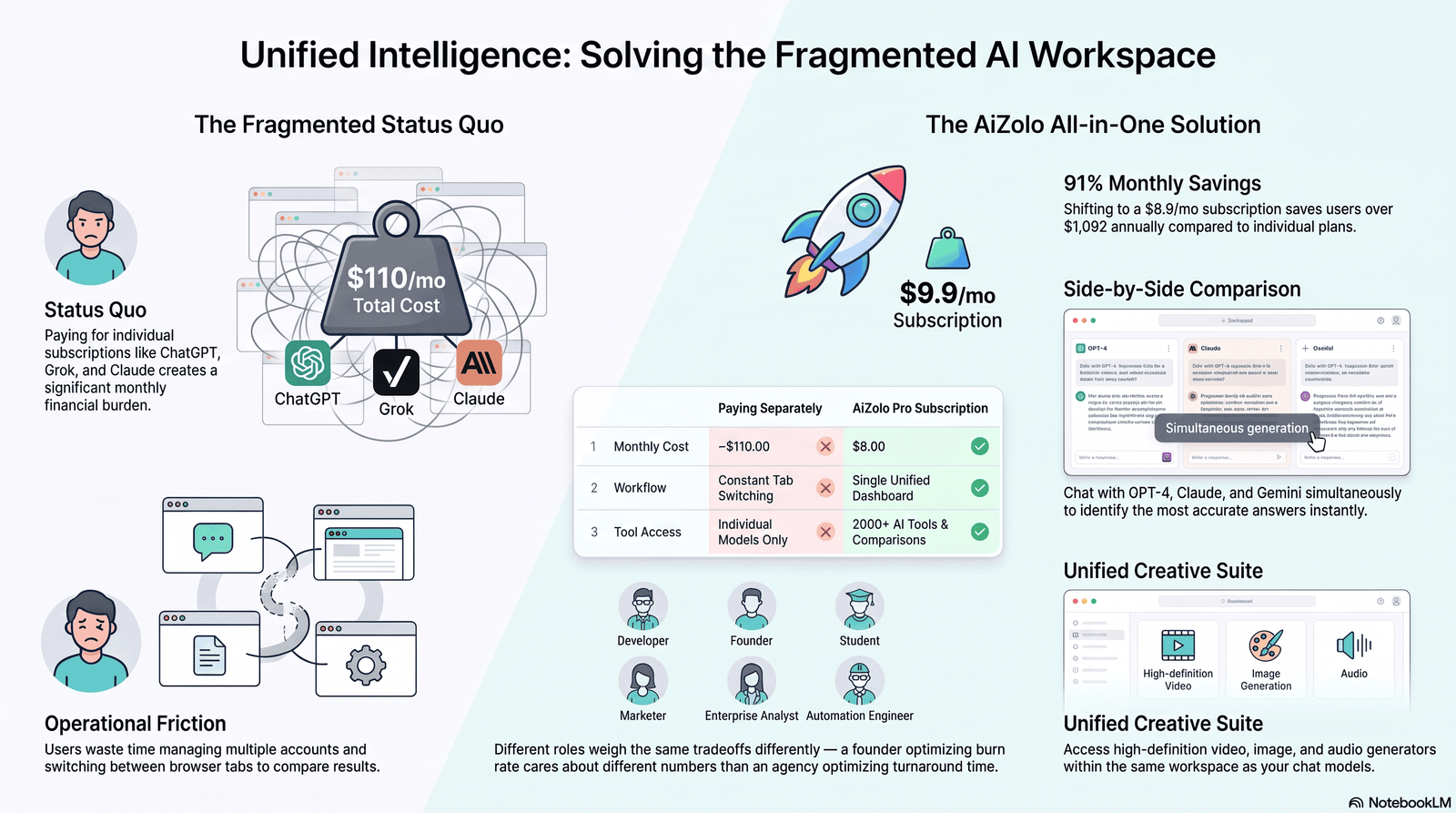
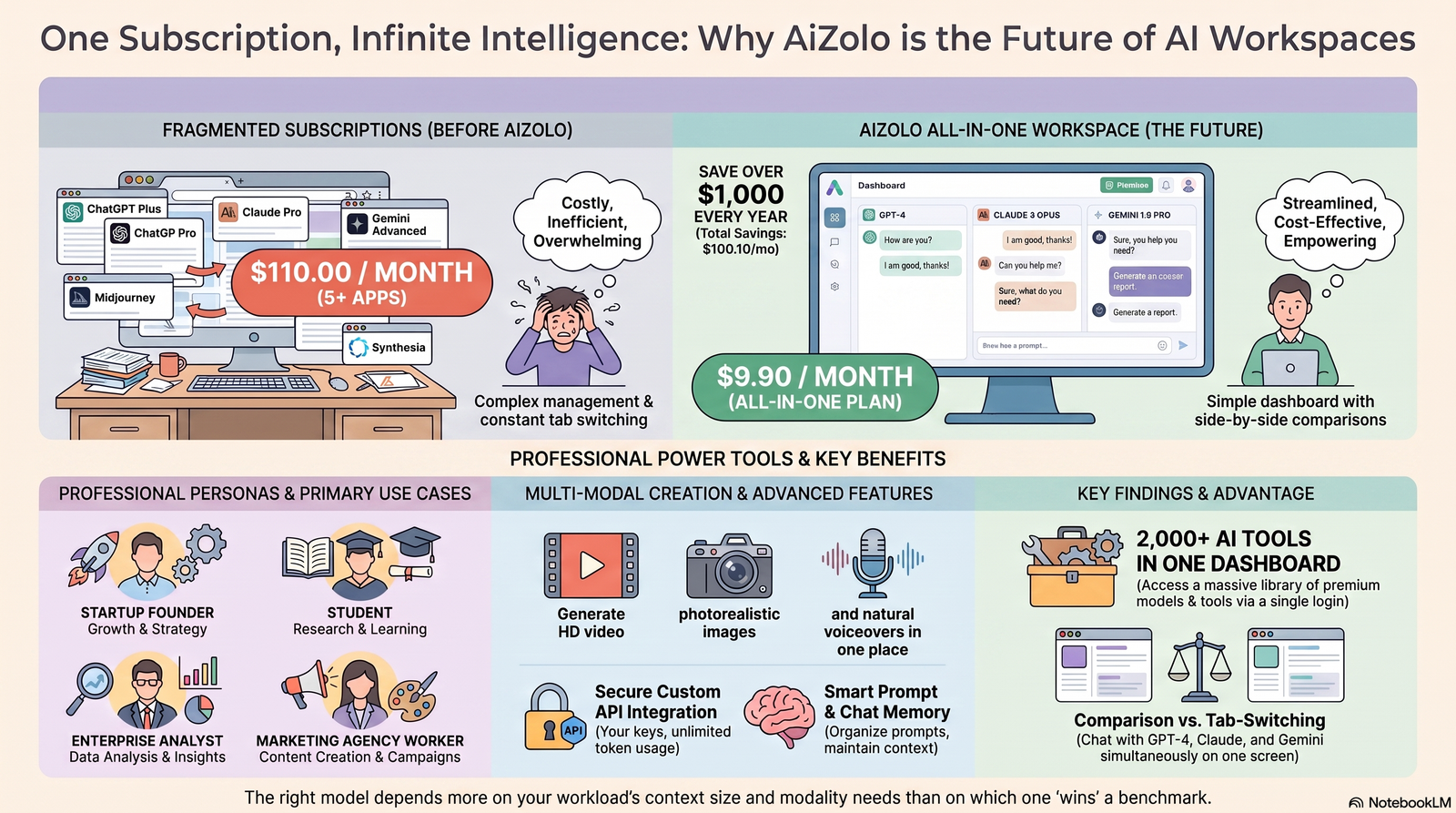
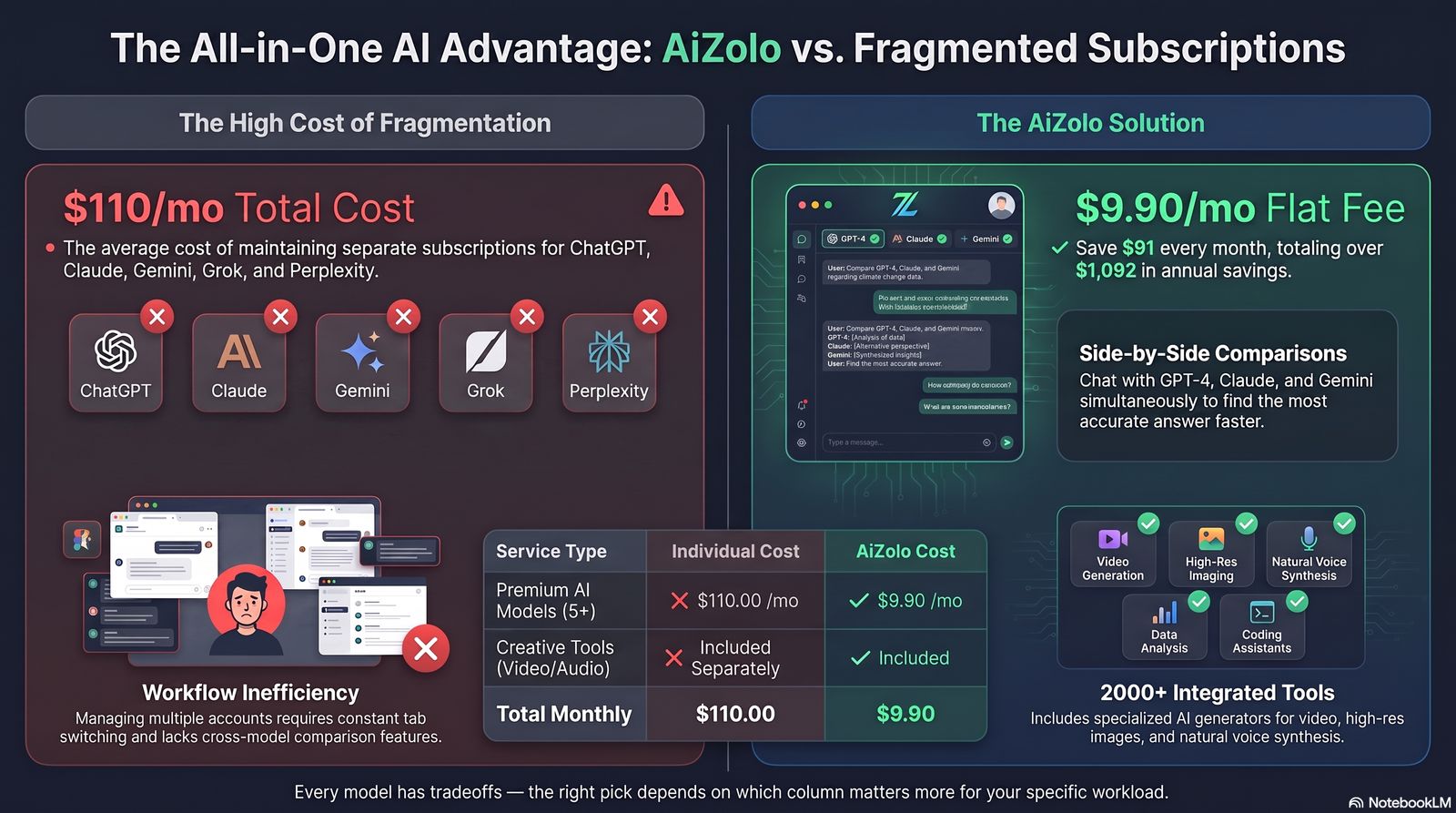
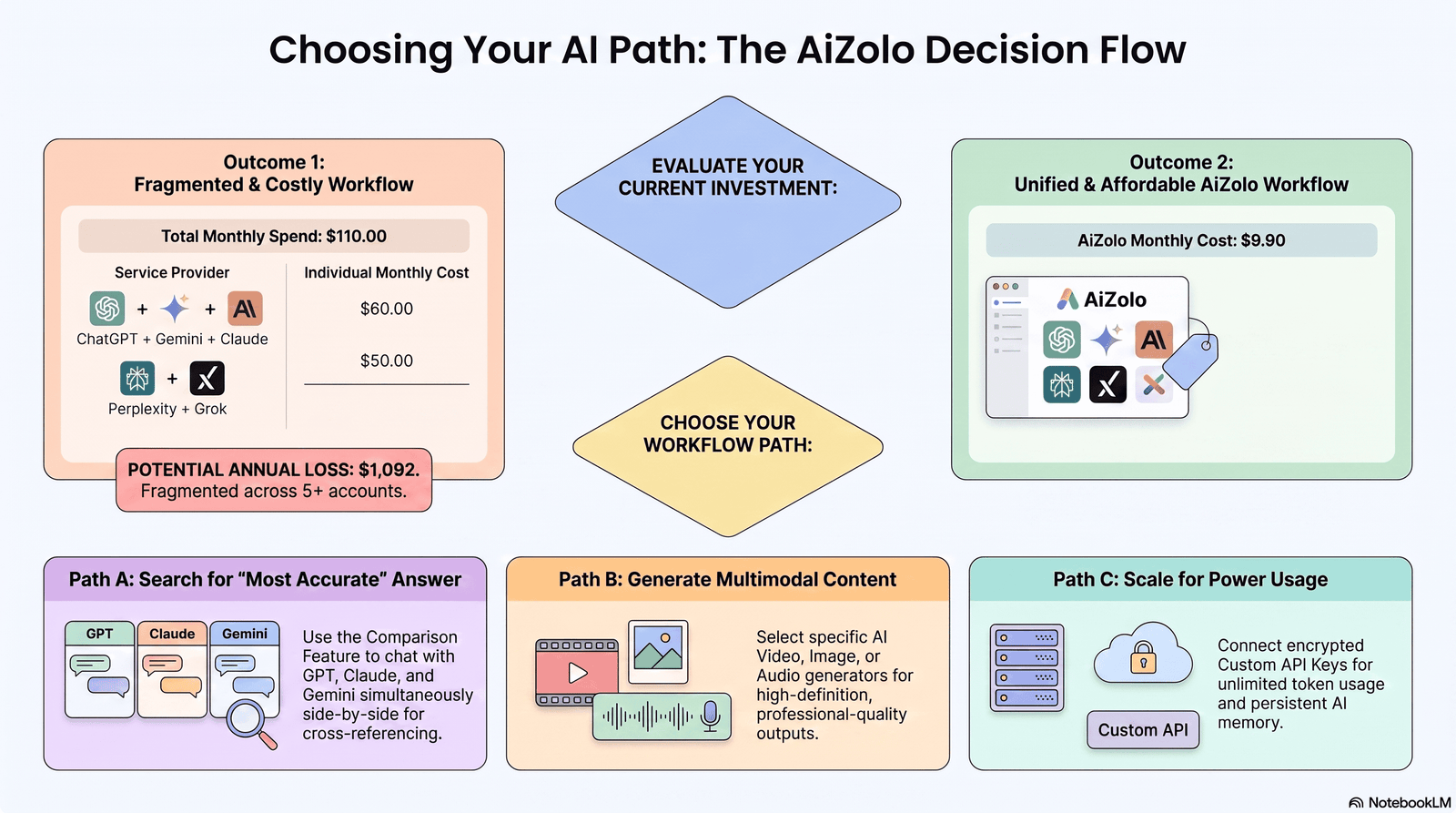
If you’d rather not choose a single model at all, Aizolo gives you access to Claude Haiku 4.5, Gemini 3.8 Flash, and other leading models in one subscription — useful if your workload splits across both models’ strengths, as many production teams end up doing.
Final Verdict
Neither model is a universal winner, and any article claiming one “beats” the other outright is skipping the tradeoffs.
Gemini 3.8 Flash is the stronger choice when your workload genuinely needs a huge context window, native multimodal input, or long agentic tool-calling chains — and you’re willing to pay more per token for that flexibility.
Claude 4.5 Haiku is the stronger choice when cost predictability and precise, minimal-footprint coding output matter more than context size or native audio/video support.
If you’re still unsure, the practical move is to run both models against a small, representative sample of your actual workload — 20 to 50 real requests — and compare cost-per-completed-task rather than headline benchmark scores, since that’s what actually shows up on your invoice.
Uncertainty note: benchmark scores and pricing for both models are current as of publication but change frequently as vendors ship updates. Verify current pricing on Google’s and Anthropic’s official pricing pages before committing to a production budget.
FAQ
1. Is Gemini 3.8 Flash cheaper than Claude 4.5 Haiku? No. Claude 4.5 Haiku is cheaper on both input ($1.00 vs $1.50 per million tokens) and output ($5.00 vs $9.00 per million tokens) at standard pricing tiers.
2. Which model has a bigger context window? Gemini 3.8 Flash supports up to 1,048,576 tokens of input context, compared to 200,000 tokens for Claude 4.5 Haiku.
3. Can Claude 4.5 Haiku process video or audio? No. Claude 4.5 Haiku currently accepts text and image input only; Gemini 3.8 Flash natively accepts text, image, video, audio, and PDF input.
4. Which model scores higher on coding benchmarks? It depends on the benchmark. Claude 4.5 Haiku scores 73.3% on SWE-bench Verified, while Gemini 3.8 Flash scores 76.2% on Terminal-Bench 2.1 — two different tests measuring different coding skills, so a direct ranking isn’t reliable.
5. Is Gemini 3.8 Flash a reasoning model? Yes, it ships with four selectable thinking levels (minimal, low, medium, high). Claude 4.5 Haiku is non-reasoning by default but supports optional extended thinking.
6. Which model is faster? Both are fast relative to their flagship siblings. Gemini 3.8 Flash generally shows higher raw output throughput, while Claude 4.5 Haiku shows a comparable or slightly faster time to first token in some benchmarks.
7. Does Claude 4.5 Haiku support tool use and computer use? Yes. Claude 4.5 Haiku is Anthropic’s first Haiku-tier model with extended thinking, computer use, and full tool-use support.
8. Is Gemini 3.8 Flash available for free? Yes, through the Gemini app’s free tier, though with usage limits. API access through Google AI Studio and Vertex AI is billed per token.
9. Which model is better for enterprise deployment? Claude 4.5 Haiku is available through Amazon Bedrock, Google Vertex AI, and Microsoft Foundry, giving enterprises more procurement flexibility. Gemini 3.8 Flash is available through Vertex AI and Google’s Antigravity environment.
10. Does context window size actually matter for most use cases? For single documents, code files, or short conversations, both windows are more than sufficient. The difference matters mainly for bulk document ingestion, large codebases, or long multi-turn agent sessions.
11. Which model is better for AI coding agents like Cursor or Kilo Code? Gemini 3.8 Flash’s stronger tool-use benchmark (83.6% MCP Atlas) suits longer autonomous agent loops, while Claude 4.5 Haiku’s coding-accuracy edge suits targeted bug-fix and code-review tasks.
12. Are these the flagship models from Google and Anthropic? No. Gemini 3.8 Flash sits below Gemini 3.1/3.6 Pro in Google’s lineup, and Claude 4.5 Haiku sits below Claude Sonnet and Opus tiers in Anthropic’s lineup. Both are the fast, cost-efficient tier, not the top-intelligence tier.
13. Can I use both models in the same product? Yes — many teams route requests by task type, using Claude 4.5 Haiku for cost-sensitive text tasks and Gemini 3.8 Flash for multimodal or long-context tasks, often through a single API gateway or a multi-model subscription.
14. Do benchmark scores fully predict real-world performance? No. Benchmarks measure specific, narrow tasks under controlled conditions. Prompt structure, tool access, and your specific data will shift real-world results, so treat benchmarks as a starting signal, not a guarantee.
15. Which model should a beginner start with? If you’re new to AI APIs and cost is the main concern, Claude 4.5 Haiku’s simpler pricing and strong documentation make it an easier starting point. If your project needs video or audio from day one, start with Gemini 3.8 Flash.
Conclusion
Gemini 3.8 Flash and Claude 4.5 Haiku both earned their reputations as the practical, high-volume workhorses in their respective model families, but they got there by optimizing for different things.
Gemini 3.8 Flash leans into scale — a massive context window and native multimodal input — at a higher per-token cost. Claude 4.5 Haiku leans into precision and predictability — tighter coding accuracy and lower pricing — with a smaller context ceiling.
The right choice comes down to your actual workload, not the headline benchmark score. Test both against a real sample of your tasks, track cost-per-completed-task rather than cost-per-token alone, and revisit the decision every few months, since both companies ship updates frequently.
Author Bio
Author: Jeevesh Tripathi Email: jeevesh@aizolo.com
Jeevesh Tripathi covers AI model benchmarking, developer tooling, and LLM API economics for Aizolo, with a focus on translating vendor benchmark claims into practical, workload-specific guidance for developers, founders, and technical teams.
His evaluation approach prioritizes independently verifiable data — official documentation, third-party benchmark trackers, and hands-on API testing — over marketing claims, reflecting Aizolo’s commitment to accurate, experience-driven AI coverage.