
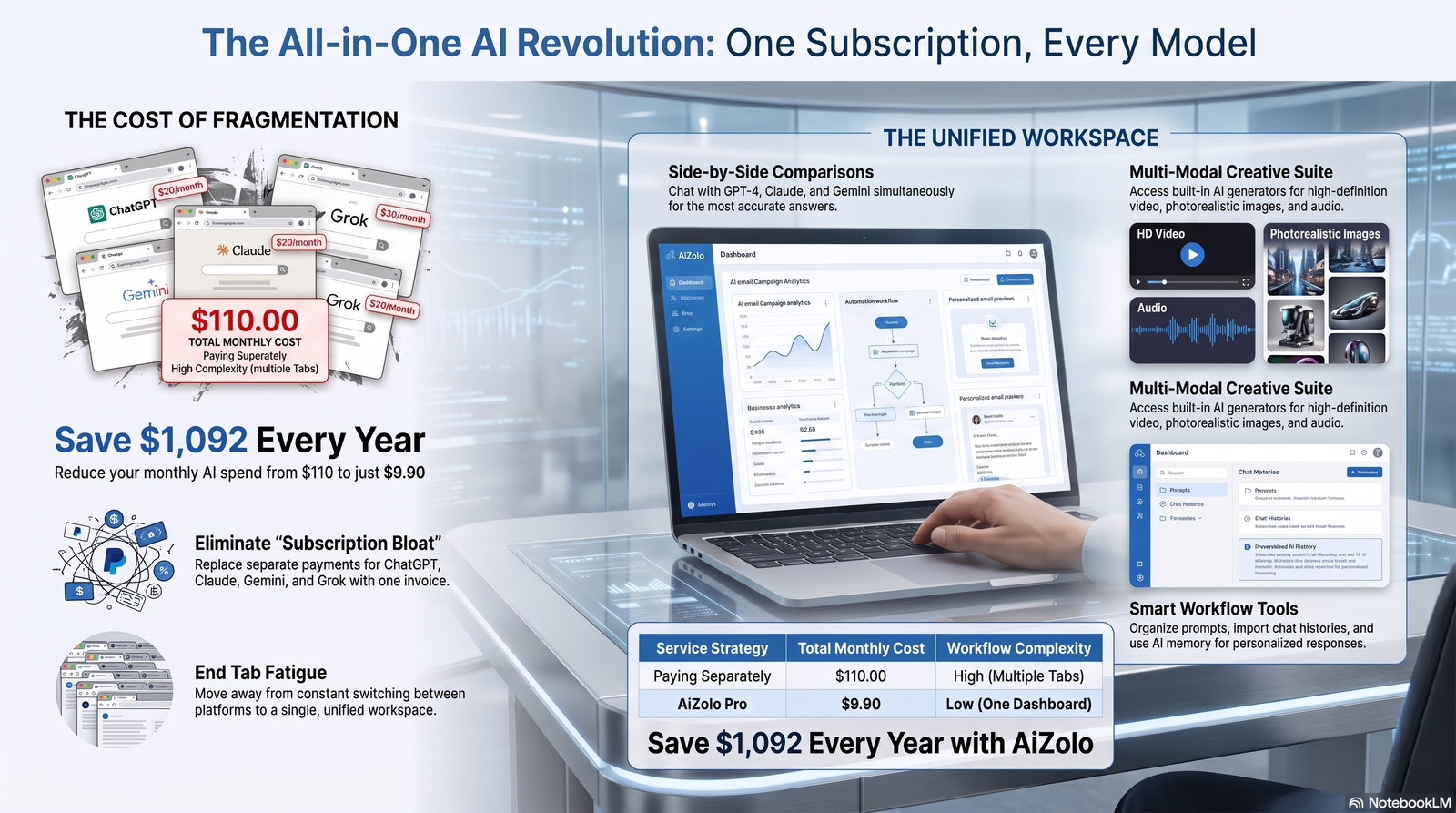
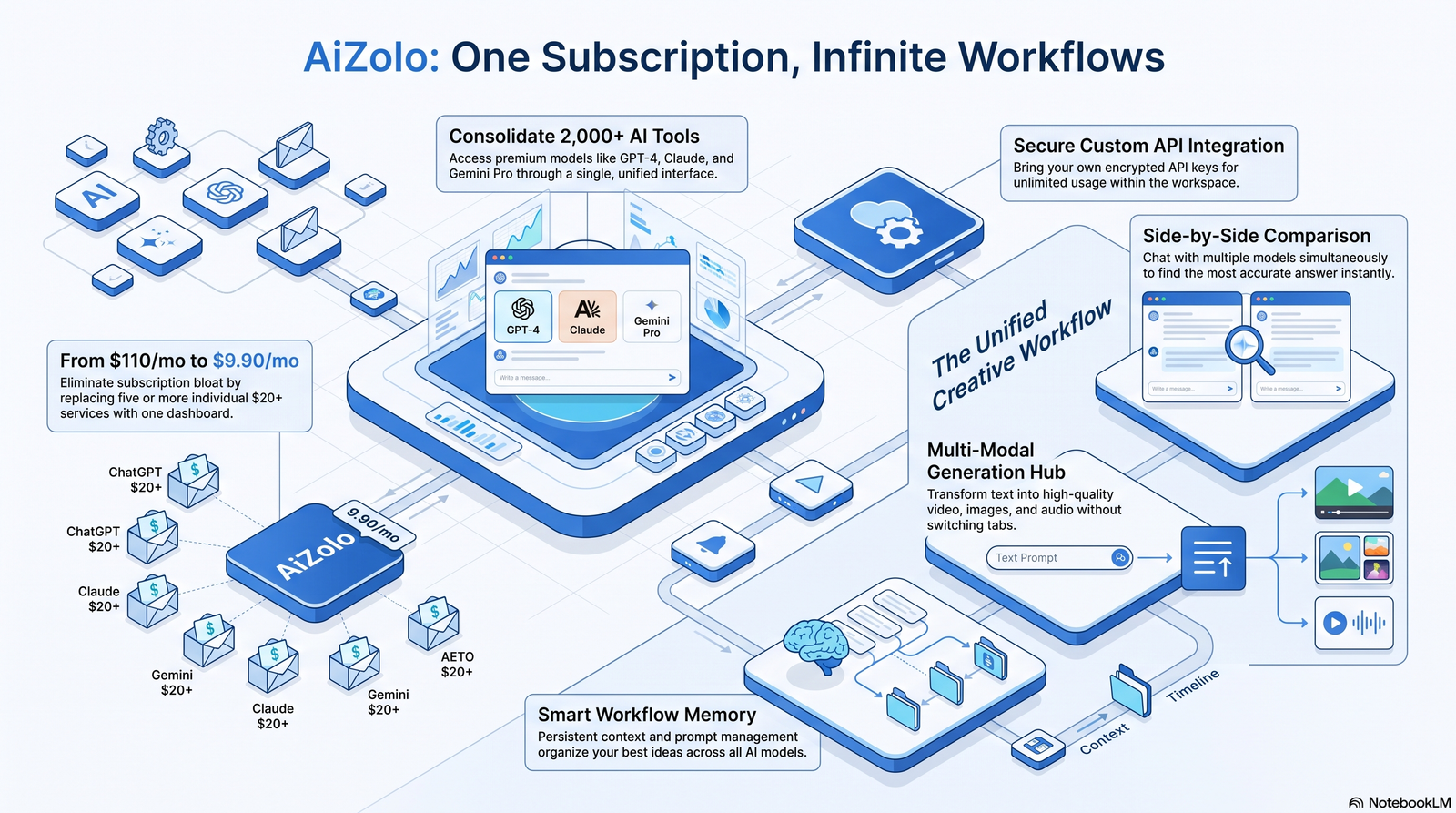
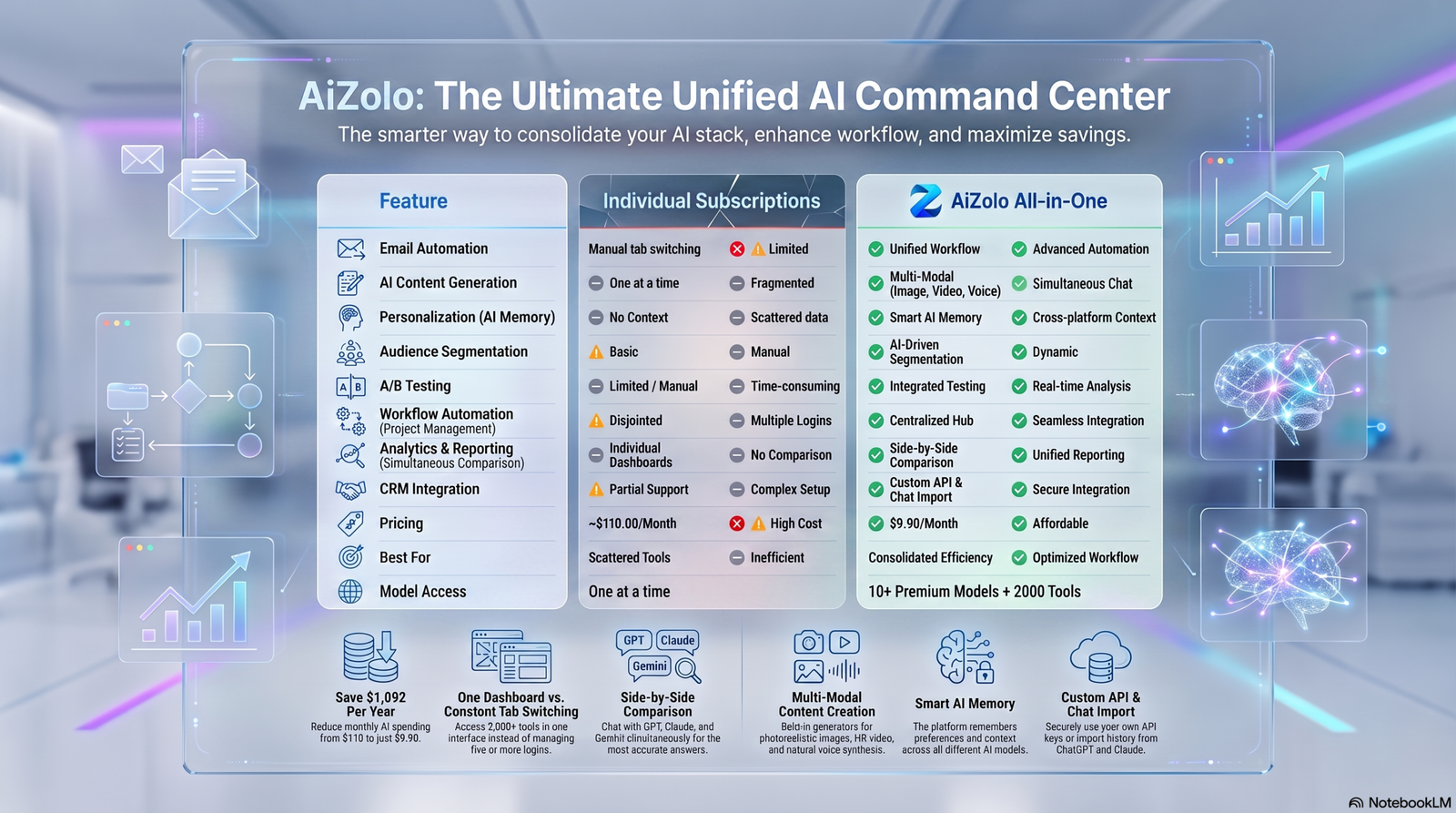
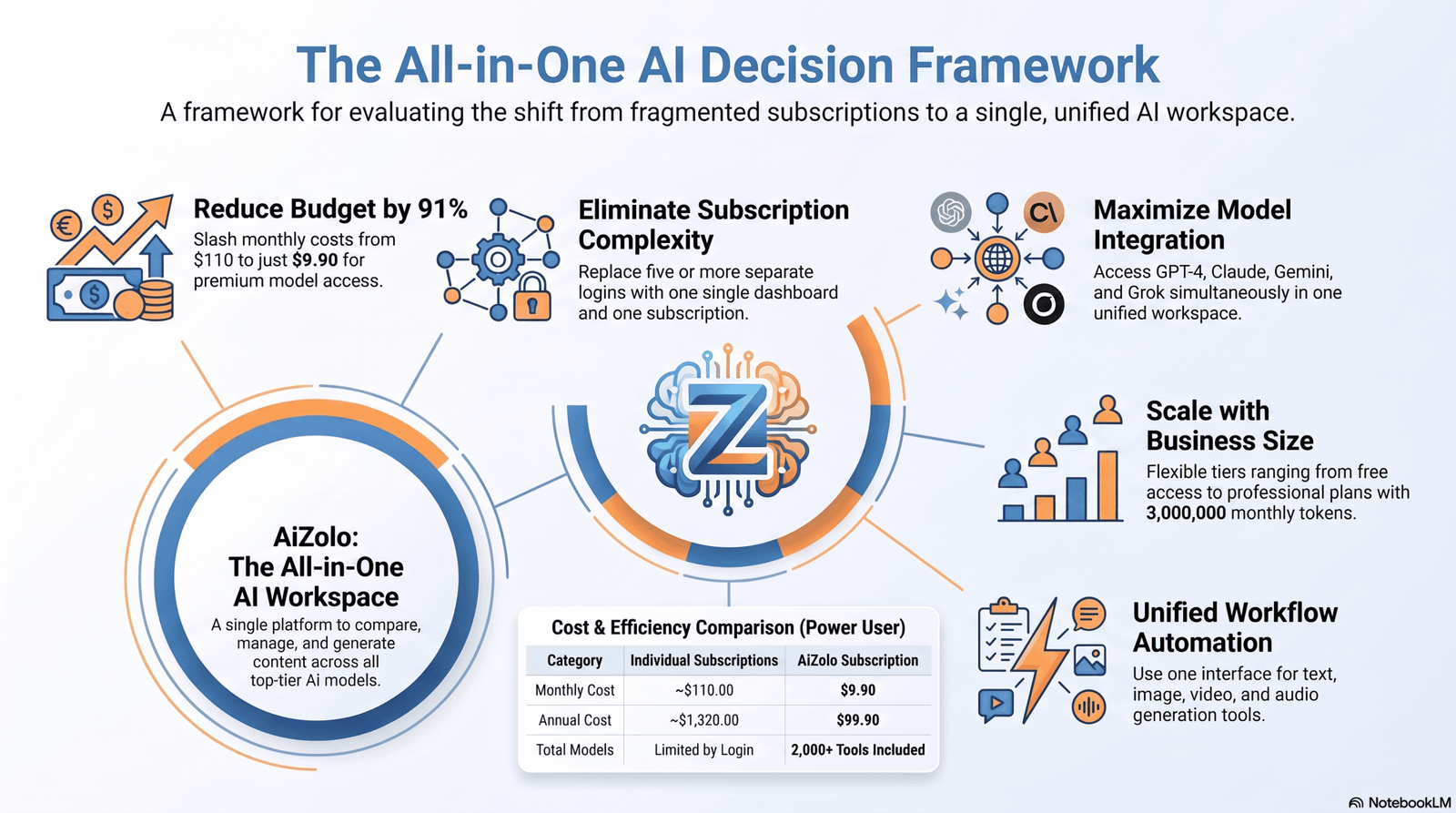
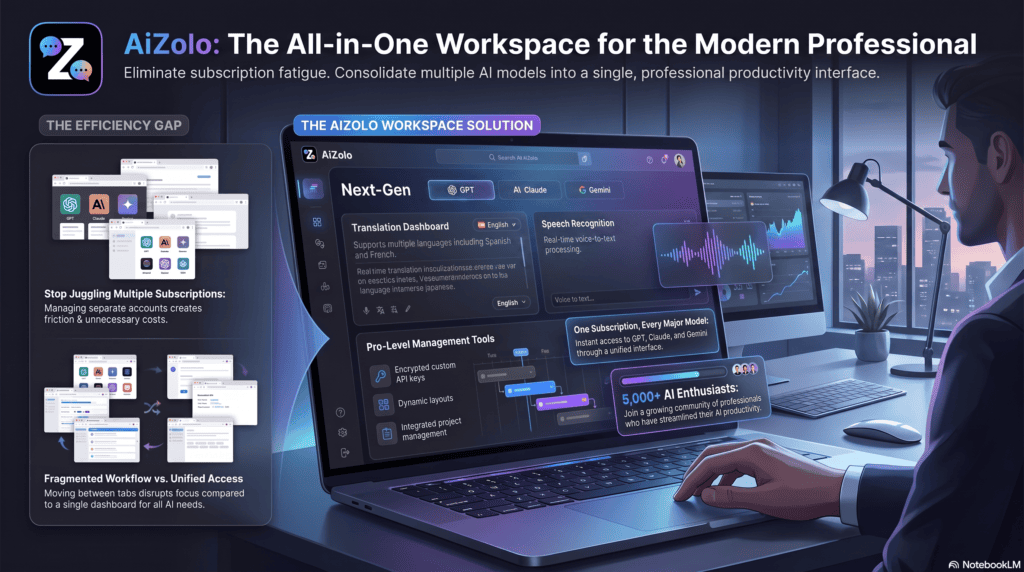
Most “best AI email tools” lists read like they were written by the software vendors themselves. Every tool is “the best,” every feature is “revolutionary,” and nobody mentions the plan you’ll actually need to unlock the AI features they’re praising. This guide also examines how Aizolo compares, with a focus on real features, pricing, and value.
This guide skips that. We tested and researched the AI tools for email marketing automation that real teams are paying for in 2026 — what each one does well, where it falls short, and what it costs once you’re past the marketing homepage.
By the end, you’ll know which platform fits a solo creator, which one fits a Shopify store doing seven figures, and which one is a waste of money for your specific list size.
What you’ll learn:
- What AI actually does inside an email platform (and what’s still marketing fluff)
- 12 tools compared on features, pricing, and honest drawbacks
- How to match a tool to your business size and budget
- Common automation mistakes that quietly kill open rates
- Where AI email marketing is headed next
Table of Contents
What Are AI Tools for Email Marketing Automation?
AI tools for email marketing automation are platforms that use machine learning to make decisions a human marketer used to make manually — when to send an email, what subject line will get opened, and which segment should receive which message.
Traditional email software runs on rules you set once: “send this email 3 days after signup.” AI-powered email marketing software instead watches how each contact behaves and adjusts in real time.
Three layers usually make up an AI email marketing platform:
- Predictive send-time optimization — the system tracks when an individual subscriber typically opens email and schedules delivery for that window, rather than sending your entire list at 9 a.m.
- AI email copywriting and subject line generation — large language models draft subject lines, body copy, and product recommendations based on your brand voice and past performance data.
- Behavioral email automation — workflows trigger off real actions (a click, an abandoned cart, a pricing page visit) instead of a fixed calendar date.
It’s worth being blunt here: not every tool that says “AI-powered” on its homepage does all three. Some only offer a subject-line generator bolted onto a normal email builder. We’ll flag that distinction tool by tool below.
Before comparing tools, check whether your current platform already has AI features locked behind a plan you haven’t upgraded to. Several vendors on this list gate their best AI email assistant tools behind mid-tier pricing.
Benefits of AI Tools for Email Marketing Automation
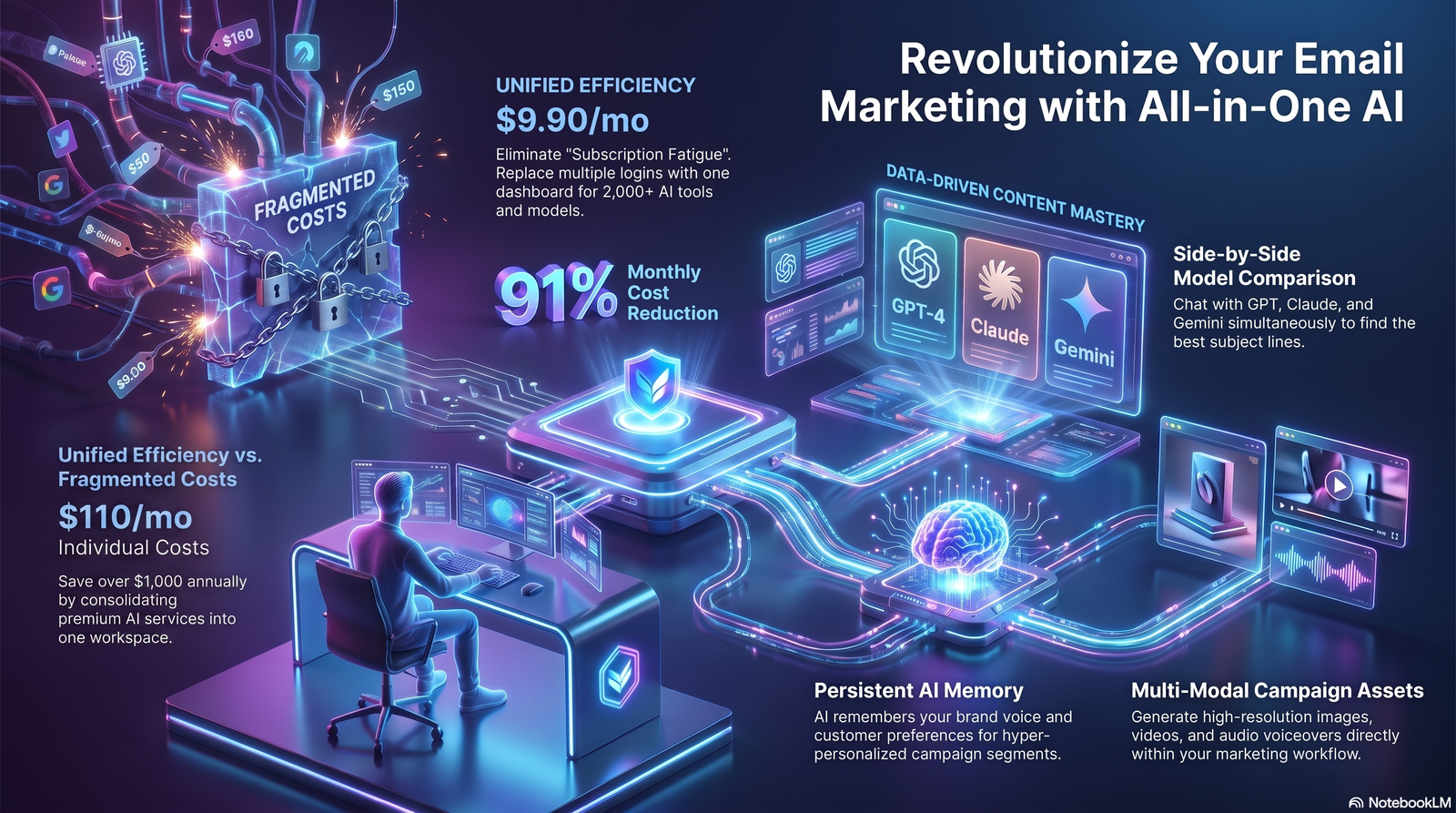
The case for AI email marketing platform investment comes down to a handful of measurable outcomes, not vague “efficiency” claims.
Higher open rates through send-time personalization. Instead of one blast time for everyone, predictive email marketing tools learn each contact’s engagement pattern and stagger delivery accordingly.
Deeper customer segmentation. AI-driven segmentation can group contacts by predicted lifetime value, churn risk, or purchase likelihood — categories that would take a human analyst hours to calculate manually.
Faster subject line and copy testing. An AI email subject line generator can produce a dozen variants in seconds, and some platforms automatically route more traffic to the best-performing version mid-campaign.
Automated lead nurturing. Behavioral email automation moves a contact into the right sequence the moment they take an action, rather than waiting for the next manual campaign.
Time savings on repetitive work. Drafting first versions of newsletters, drip sequences, and A/B test variants is where AI email copywriting tools save the most real hours.
Better analytics without a data analyst. Predictive dashboards translate raw open and click data into plain-language recommendations, which matters most for teams without a dedicated analytics hire.
None of this replaces strategy. A tool with excellent AI and a poor list, weak offer, or no segmentation plan will still underperform. AI improves execution — it doesn’t fix a broken email strategy.
How We Selected These Tools
We didn’t rank these email automation software platforms by marketing claims. Each tool was evaluated against ten criteria, based on hands-on testing, vendor documentation, and independent review data from G2, Capterra, and Trustpilot.
- Depth of AI features — is it a real predictive engine or a subject-line generator with a new label?
- Automation builder complexity — how many trigger types, conditional branches, and split-test paths are available?
- Integrations — native CRM, ecommerce, and marketing automation connections.
- Ease of use — realistic learning curve for a non-technical marketer.
- Customer support quality — response times and support channel access by plan tier.
- Pricing transparency — whether the advertised price matches what most customers actually pay.
- Scalability — does the platform hold up past 50,000 contacts, or does performance and UX degrade?
- Security and compliance — GDPR, CCPA, two-factor authentication, and data handling practices.
- Deliverability — inbox placement rates and warmup infrastructure, where applicable.
- Overall ROI — value relative to price at each list-size tier, not just the cheapest sticker price.
Pricing and features change often in this category — we’ve noted verification context where available, but always confirm current numbers on each vendor’s official pricing page before buying.
Best AI Tools for Email Marketing Automation
1. ActiveCampaign
Overview: ActiveCampaign remains the deepest visual automation builder in this category. It combines email marketing, CRM, and sales automation, and its AI layer — rebranded as Active Intelligence — now drafts full campaigns from a plain-language prompt and surfaces weekly performance insights automatically.
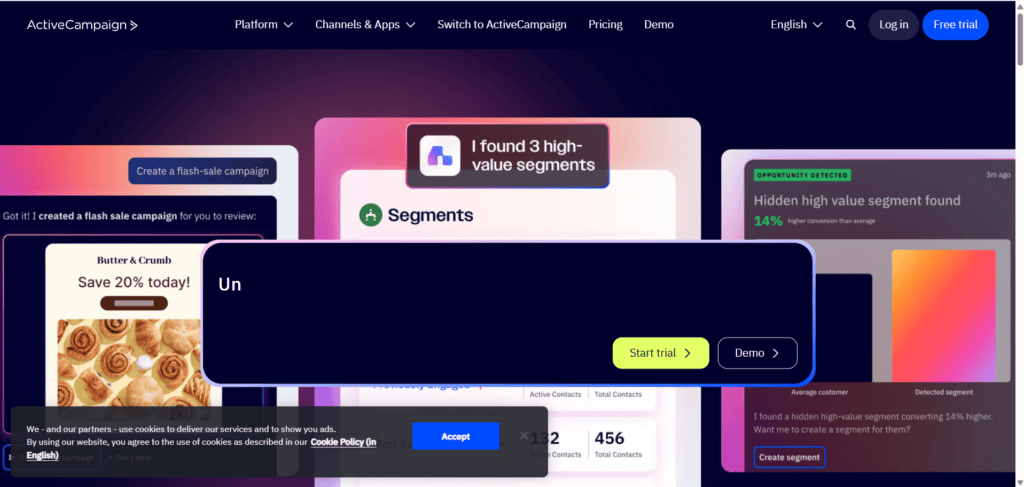
Best for: Marketing teams and agencies running complex, multi-step behavioral automation across email and sales pipelines.
Key Features:
- 135+ automation triggers with branching conditional logic
- AI-generated campaigns and subject lines from natural-language prompts
- Predictive sending and lead scoring
- 1,000+ native integrations, including Salesforce, Shopify, and WooCommerce
Pros:
- The most powerful automation builder of any tool on this list
- Split-testing works at the automation-path level, not just subject lines
- Strong deliverability and compliance track record
Cons:
- Steeper learning curve than simpler platforms like MailerLite
- The visual builder can feel slow on large, complex workflows
- Entry-level plan limits automation actions, so serious use requires a mid-tier upgrade
Pricing: Plans start around $15/month for 1,000 contacts on the entry tier, scaling with contact volume and feature access. Confirm current tiers on the official pricing page, since automation limits vary significantly by plan.
AI Features: Active Intelligence campaign generation, predictive sending, AI subject lines, automated performance insights.
Integrations: Salesforce, Shopify, WooCommerce, Calendly, Webflow, Zendesk, and 1,000+ others.
Learning Curve: Moderate to steep — budget real onboarding time for the automation builder.
Use Cases: Multi-touch lead nurture, ecommerce win-back flows, sales-and-marketing alignment for B2B teams.
Who Should Avoid It: Solo creators or small lists under 1,000 contacts who don’t need branching automation will overpay for capability they won’t use.
Expert Verdict: Still the benchmark for automation depth among AI email marketing software, provided you have the time to learn it.
Rating: 9.1/10
2. Klaviyo
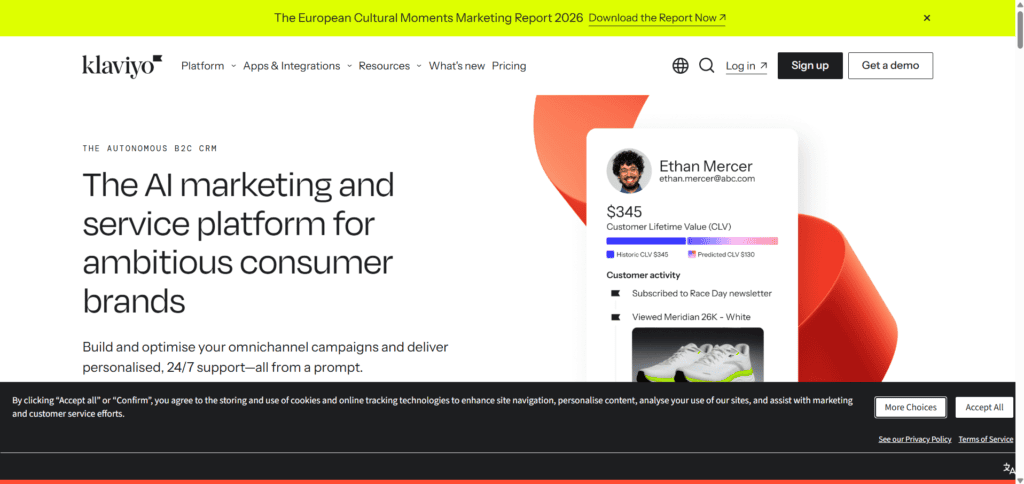
Overview: Klaviyo is the default choice for ecommerce brands on Shopify and WooCommerce. Every paid tier includes the same predictive analytics and AI-generated segments — the price scales with your contact count, not your feature access.
Best for: DTC ecommerce brands that need predicted customer lifetime value, churn modeling, and next-order-date forecasting.
Key Features:
- Predictive CLV, churn risk, and next-order-date modeling on every paid plan
- AI segment builder that turns plain-text descriptions into segment logic
- Marketing Agent, which builds full campaigns and flows from a single prompt
- 350+ native ecommerce integrations
Pros:
- Segmentation depth is unmatched for ecommerce-specific use cases
- Real-time Shopify and WooCommerce data sync
- Feature parity across tiers means you’re not paying extra to unlock AI
Cons:
- Pricing climbs quickly with list size — a jump from roughly $150/month at 10,000 contacts to $720/month at 50,000 is common
- Billing is based on active profiles, so unclean lists inflate cost
- Advanced predictive features (Marketing Analytics, Customer Agent) are separate paid add-ons, not included in the base plan
Pricing: Free plan available up to 250 profiles. Paid plans start near $20–45/month at low contact counts and scale steeply — expect several hundred dollars a month once you cross 25,000–50,000 active profiles, before SMS or analytics add-ons.
AI Features: Predictive analytics, AI-generated segments and email content, Marketing Agent.
Integrations: Shopify, WooCommerce, BigCommerce, and 350+ apps.
Learning Curve: Moderate — simple segments are quick, but complex logic requires real training.
Use Cases: Abandoned cart recovery, post-purchase flows, churn-risk win-back campaigns.
Who Should Avoid It: Non-ecommerce businesses, or stores with large, low-engagement lists that will pay for active profiles they rarely convert.
Expert Verdict: Worth the premium if your flows already drive meaningful revenue — otherwise a lighter ecommerce tool will save real money.
Rating: 9.0/10
3. HubSpot
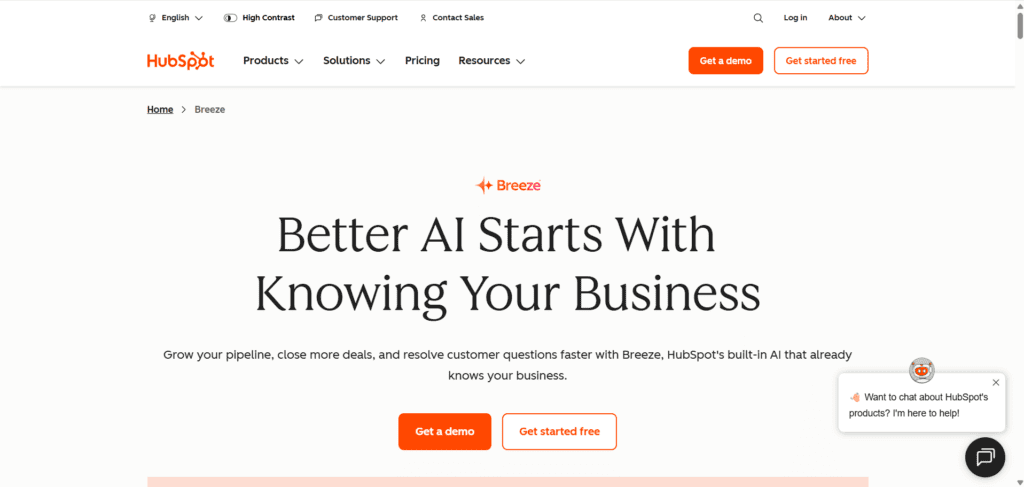
Overview: HubSpot’s advantage isn’t email specifically — it’s CRM-native marketing. Every email is logged against the contact record automatically, and AI personalization draws on deal stage and lifecycle stage rather than email engagement alone.
Best for: B2B companies that want marketing, sales, and service data in one system.
Key Features:
- AI content recommendations based on CRM lifecycle stage
- Automatic send-frequency adjustment based on engagement velocity
- Free CRM tier with basic email marketing included
- Cross-department reporting spanning marketing, sales, and support
Pros:
- Deep native CRM integration that most competitors bolt on via third-party connectors
- Strong free tier for testing before committing budget
- Scales from small business to enterprise on the same underlying platform
Cons:
- Professional and Enterprise tiers get expensive fast — from roughly $890/month to $3,600/month
- The interface has a genuine learning curve for teams new to CRM-based marketing
- Advanced AI personalization depends on clean, well-maintained CRM data
Pricing: Free CRM tier available. Paid marketing plans start near $20/month (Starter) and scale to $890/month (Professional) and $3,600/month (Enterprise).
AI Features: Lifecycle-stage-aware content personalization, engagement-based send timing, predictive lead scoring on higher tiers.
Integrations: Native CRM, sales, and service hub; plus a broad app marketplace.
Learning Curve: Moderate to steep for full CRM adoption; easier if you only need basic email marketing.
Use Cases: Sales-stage-based nurture sequences, account-based marketing, unified customer records.
Who Should Avoid It: Small teams that only need email marketing and don’t want CRM complexity — the Professional-tier price jump is hard to justify without using the sales and service hubs too.
Expert Verdict: The strongest option when email needs to talk to a real CRM, not a standalone tool competing for that role.
Rating: 8.8/10
4. Mailchimp
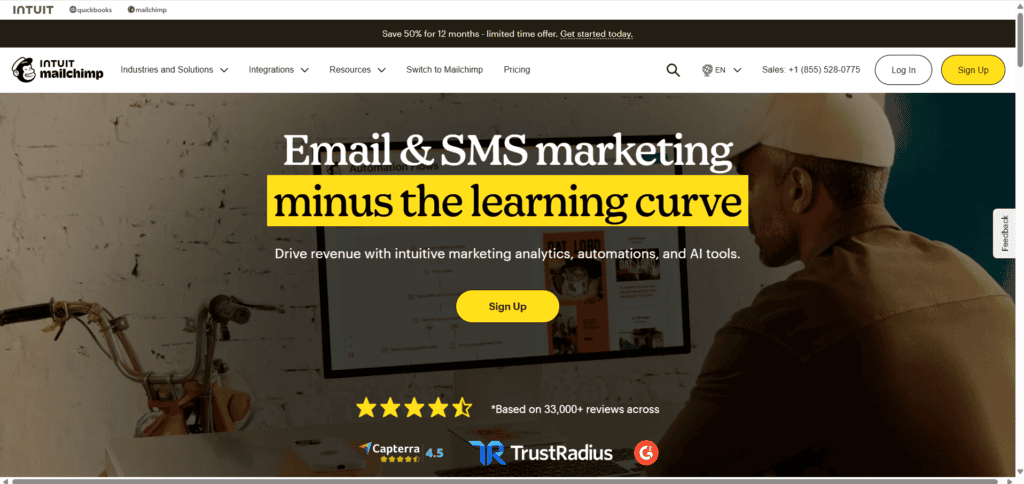
Overview: Mailchimp remains the default starting point for email marketing, and its AI Content Optimizer has genuinely improved — it benchmarks drafts against industry data and suggests subject line, send-time, and length adjustments.
Best for: Small businesses and ecommerce brands wanting a reliable all-in-one platform with accessible AI.
Key Features:
- AI Content Optimizer for subject lines, send times, and content length
- Creative Assistant for on-brand email design generation
- Site Tracking Pixel for behavior-based automation triggers
- Native Shopify integration with abandoned cart and product-suggestion flows
Pros:
- Accessible AI that doesn’t require marketing expertise to use well
- Generous free tier (up to 500 contacts)
- Built-in landing pages and reporting alongside email
Cons:
- AI sophistication trails Klaviyo and ActiveCampaign for predictive depth
- Contact-based pricing includes unsubscribed contacts on some plans, unlike competitors that only bill active profiles
- Automation complexity is limited compared to dedicated automation platforms
Pricing: Free plan up to 500 contacts. Paid plans start around $13/month (Standard) and scale to roughly $350/month (Premium) depending on list size and features.
AI Features: AI Content Optimizer, Creative Assistant, smart send-time recommendations.
Integrations: Shopify, WooCommerce, Squarespace, and hundreds of app marketplace connections.
Learning Curve: Low — one of the easier tools for a first-time user.
Use Cases: General newsletters, ecommerce abandoned cart flows, small business promotional campaigns.
Who Should Avoid It: Teams needing advanced, branching behavioral automation — Mailchimp’s automation logic is comparatively shallow.
Expert Verdict: A safe, accessible starting point, especially for teams without a dedicated email marketer.
Rating: 8.6/10
5. Brevo
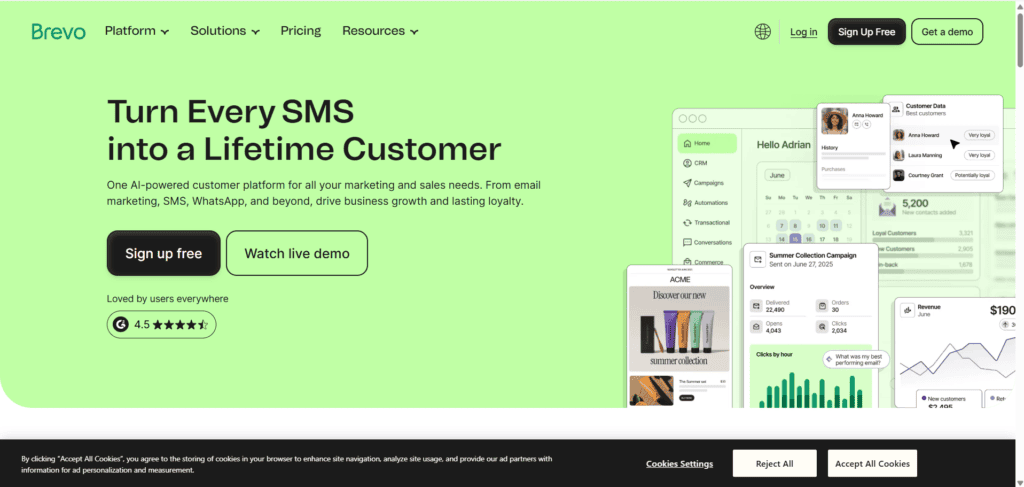
Overview: Brevo (formerly Sendinblue) covers email, SMS, and WhatsApp in one platform, with AI kicking in for subject-line writing and predictive send-time optimization once you reach the Business tier.
Best for: Small to mid-sized teams wanting multichannel messaging without ecommerce-tool pricing.
Key Features:
- Predictive sending (AI) at the Business tier and above
- Unified email, SMS, and WhatsApp campaign management
- A/B testing and phone support on paid plans
- Transactional email API alongside marketing campaigns
Pros:
- Genuinely competitive pricing relative to feature set
- Built-in live chat and chatbot at no extra cost
- One platform for both transactional and marketing email
Cons:
- Automation builder is less powerful than ActiveCampaign or Klaviyo for complex, branching workflows
- Some users report UI bugs and occasional data-sync issues
- AI segmentation and the AI Data Analyst tool are locked to the Professional tier ($35+/month)
Pricing: Free tier available. Paid plans start around $9/month for lower send volumes, with Business-tier AI features starting closer to $16/month and scaling from there.
AI Features: Predictive send-time optimization, AI subject line assistance, AI Data Analyst (Professional tier).
Integrations: WordPress, Shopify, WooCommerce, Zapier, and native CRM.
Learning Curve: Low to moderate.
Use Cases: Multichannel campaigns combining email, SMS, and WhatsApp; transactional plus marketing email under one roof.
Who Should Avoid It: Teams that need ActiveCampaign-level branching automation — Brevo’s workflow builder isn’t built for that complexity.
Expert Verdict: Excellent value for multichannel messaging on a budget, weaker for deep behavioral automation.
Rating: 8.4/10
6. MailerLite
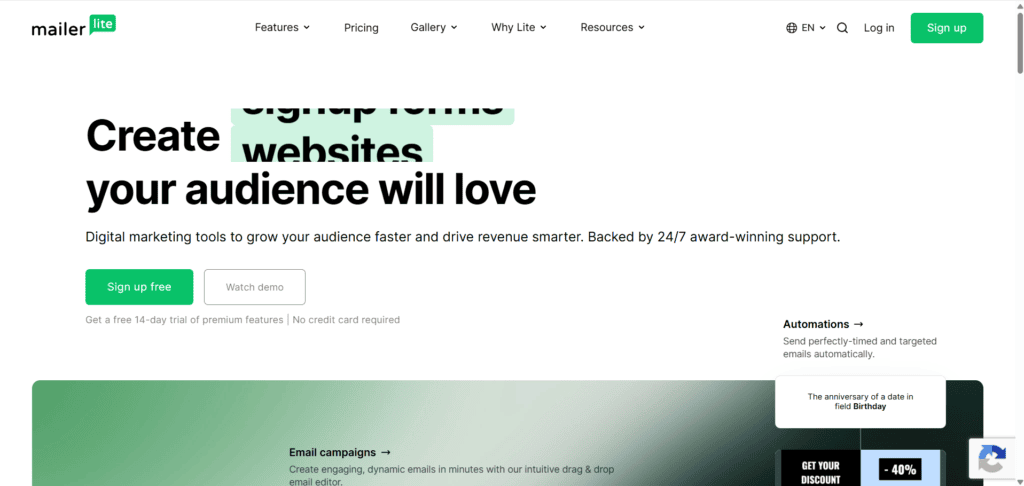
Overview: MailerLite pairs a clean, fast drag-and-drop editor with an AI writing assistant for subject lines and body copy. It’s a budget tool with genuinely useful AI attached, not the other way around.
Best for: Creators and small businesses that want AI help without paying $30+/month just for that feature.
Key Features:
- AI writing assistant for subject lines and email body copy
- MCP server integration, letting AI tools like Claude query account data directly
- Clean, fast drag-and-drop email builder
- Basic self-running automations
Pros:
- Consistently rated highest for design and editor polish among budget tools
- Honest, transparent pricing with no aggressive upsells
- Free plan supports up to 1,000 subscribers with core automation included
Cons:
- No predictive analytics or individual send-time optimization
- AI segmentation and the AI Data Analyst are gated to the Professional plan ($35+/month)
- Automation logic is basic compared to ActiveCampaign or Klaviyo
Pricing: Free up to 1,000 subscribers. Paid plans start around $10/month and scale with subscriber count.
AI Features: AI writing assistant, subject line generation, content suggestions.
Integrations: WooCommerce, Shopify, WordPress, Zapier, and an MCP connector for AI assistants.
Learning Curve: Low.
Use Cases: Newsletter publishing, simple automated welcome sequences, small ecommerce stores.
Who Should Avoid It: Businesses that need predictive send-time optimization or advanced behavioral segmentation.
Expert Verdict: The best “budget tool with a genuinely useful AI writing layer” on this list.
Rating: 8.3/10
7. Omnisend
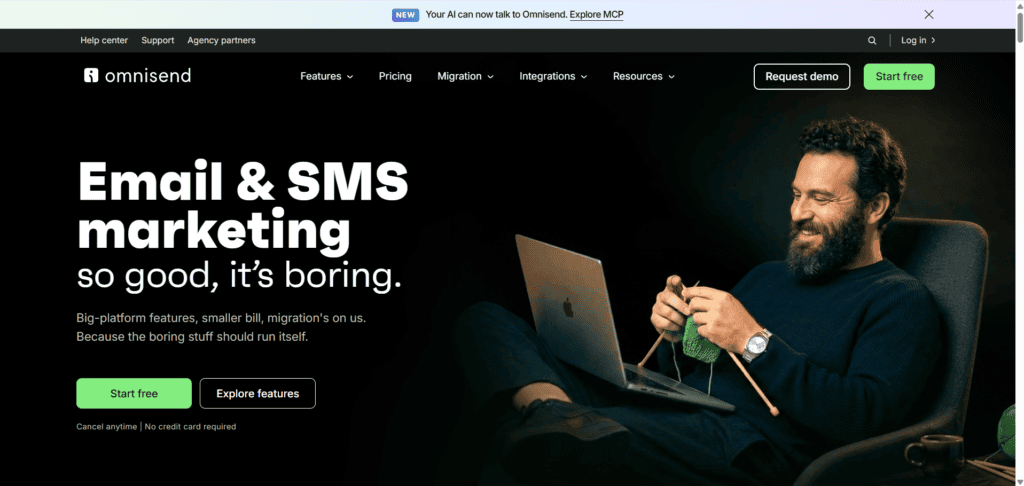
Overview: Omnisend is built specifically for ecommerce, with AI-tuned pre-built flows for cart recovery, cross-sell, and browse abandonment. It’s positioned as the value alternative to Klaviyo for stores under roughly 25,000 contacts.
Best for: Ecommerce stores that want Klaviyo-style automation without Klaviyo’s pricing curve.
Key Features:
- AI product recommendations and AI subject line scoring
- Pre-built, AI-tuned ecommerce automation flows
- AI-powered lifecycle stage mapping included on all plans
- MCP integration with ChatGPT and Claude
Pros:
- More affordable than Klaviyo at most list sizes under 25,000 contacts
- Free plan includes automation, not just campaign sending
- Global SMS coverage, versus Klaviyo’s more limited country list
Cons:
- AI depth doesn’t match Klaviyo’s predictive CLV and churn modeling
- E-commerce focus means it’s the wrong tool for SaaS or service businesses
- Fewer native integrations than the largest platforms on this list
Pricing: Free plan for up to 500 contacts and 500 monthly emails. Paid plans scale with contact count; expect noticeably lower cost than Klaviyo at comparable list sizes.
AI Features: AI segment builder, product recommendations, subject line scoring, lifecycle stage mapping.
Integrations: Shopify, WooCommerce, BigCommerce, Google and Facebook ads.
Learning Curve: Low to moderate — simpler workflow editor than Klaviyo.
Use Cases: Cart recovery, cross-sell automation, customer reactivation campaigns.
Who Should Avoid It: SaaS companies and service businesses — the AI assumes a product catalog and order history that don’t exist in non-ecommerce data.
Expert Verdict: The strongest cost-to-feature ratio for mid-market ecommerce brands weighing Klaviyo alternatives.
Rating: 8.5/10
8. GetResponse
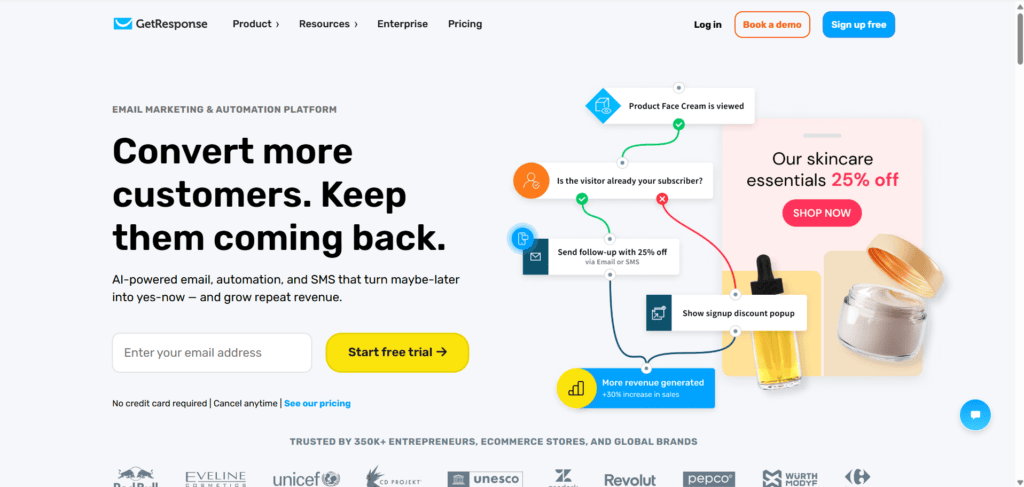
Overview: GetResponse blends email automation with funnel-building and course-selling tools, making it a solid pick for businesses that want to convert subscribers into customers within the same platform.
Best for: Startups and small businesses that want automation, funnels, and course sales in one subscription.
Key Features:
- Conditional workflow automation and web tracking on mid-tier plans
- Funnel builder for subscriptions, ticket sales, and digital products
- 120+ customizable email templates
- Course-building tools on the top-tier plan
Pros:
- Affordable entry point with unlimited autoresponders on paid plans
- Funnel and course tools reduce the need for separate software
- Straightforward drag-and-drop editor
Cons:
- AI feature depth is lighter than ActiveCampaign or Klaviyo
- Advanced automation (conditional workflows) requires an upgrade from the entry tier
- Course-building tools are only useful if you actually plan to sell courses
Pricing: Paid plans start around $19/month for unlimited emails and 1,000 contacts.
AI Features: AI email generator, subject line suggestions, basic send-time optimization.
Integrations: Shopify, WooCommerce, Google Ads, Facebook Ads, Zapier.
Learning Curve: Low.
Use Cases: Digital product launches, subscription funnels, small business newsletters.
Who Should Avoid It: Teams needing deep predictive analytics or complex behavioral segmentation.
Expert Verdict: A practical, affordable all-rounder if funnels and course sales matter as much as email itself.
Rating: 8.0/10
9. Kit (formerly ConvertKit)
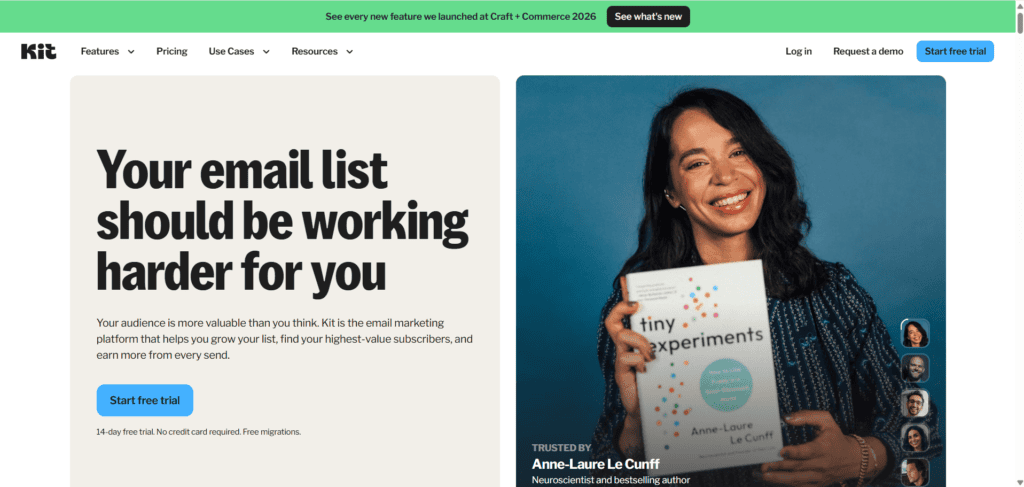
Overview: Kit is built specifically for creators — bloggers, podcasters, and course sellers — with monetization tools (paid newsletters, digital products) built directly into the platform alongside email automation.
Best for: Individual creators and newsletter operators who monetize their list directly.
Key Features:
- AI-powered subject line generator
- Visual automation builder with tag-based subscriber logic
- Built-in digital product and paid newsletter sales
- Creator Network for cross-promotion with other newsletters
Pros:
- One of the most generous free plans in the category (up to 10,000 subscribers)
- Commerce features mean email and monetization live in one tool
- Clean, minimal editor suited to personal, text-first newsletters
Cons:
- AI features are limited to subject line generation — no predictive analytics or AI segmentation
- Pricing rose roughly 35% in a 2025 update, making it less competitive at scale
- Limited HTML template variety compared to design-forward platforms like Mailchimp
Pricing: Free up to 10,000 subscribers (Newsletter plan). Creator plan starts around $39/month for 1,000 subscribers; Creator Pro starts around $79/month, both scaling with list size.
AI Features: AI subject line generator; Kit AI assistant for support and account queries.
Integrations: 100+ apps including WordPress, Shopify, Teachable, Zapier.
Learning Curve: Low.
Use Cases: Newsletter monetization, digital product launches, evergreen lead-magnet funnels.
Who Should Avoid It: Businesses wanting predictive analytics or AI-driven segmentation — Kit’s AI is intentionally minimal.
Expert Verdict: The strongest choice for individual creators specifically, weaker value for general small-business use.
Rating: 7.8/10
10. Encharge
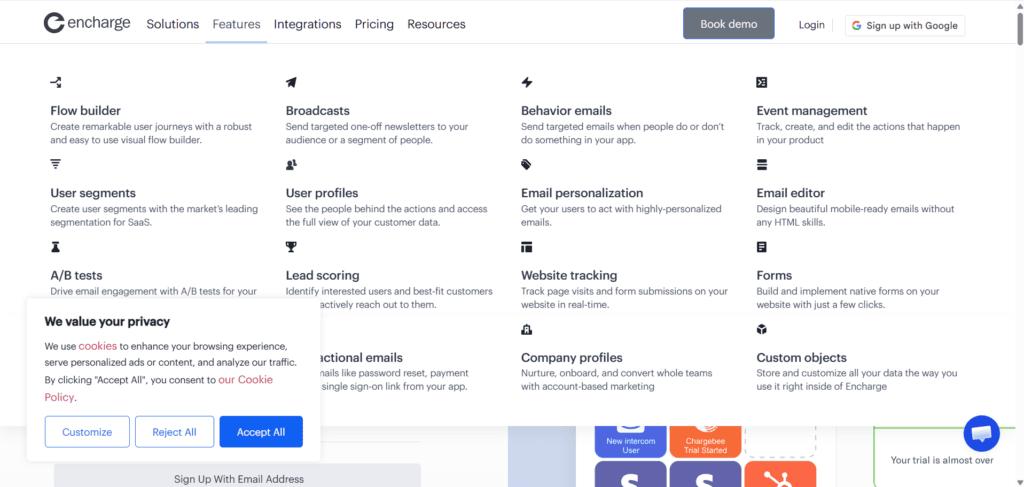
Overview: Encharge is built for SaaS companies that want behavior-based email tied to product usage — signups, feature clicks, and inactivity — rather than ecommerce purchase data.
Best for: SaaS and product-led growth teams sending behavior-triggered lifecycle emails.
Key Features:
- AI-driven send-time optimization based on individual user behavior
- Behavior-based triggers tied to product usage events
- AI copy assistance for onboarding and lifecycle sequences
- Native integrations built for SaaS tech stacks
Pros:
- Purpose-built for SaaS onboarding and activation flows, a use case general tools handle poorly
- Strong G2 ratings specifically for AI automation depth
- Plans scale reasonably from small teams to growing SaaS companies
Cons:
- Smaller integration ecosystem than the largest platforms on this list
- Less useful outside SaaS — ecommerce and service businesses won’t benefit from its core strength
- Smaller community and template library than Mailchimp or ActiveCampaign
Pricing: Plans commonly cited around $15/month (Starter) up to $145/month (Enterprise), scaling with contacts and automation complexity.
AI Features: Predictive send timing, behavior-based automation, AI content assistance.
Integrations: Segment, Stripe, Intercom, and common SaaS-stack tools.
Learning Curve: Moderate.
Use Cases: Product onboarding sequences, trial-to-paid nurture, feature-adoption campaigns.
Who Should Avoid It: Ecommerce brands and content creators — the product is optimized around app usage events, not purchases or content engagement.
Expert Verdict: A genuinely specialized tool that outperforms generalists for SaaS lifecycle email specifically.
Rating: 8.2/10
11. Drip
Overview: Drip focuses on ecommerce behavioral segmentation, positioning itself between Omnisend’s simplicity and Klaviyo’s depth.
Best for: Mid-market ecommerce brands wanting stronger behavioral segmentation than Omnisend without Klaviyo’s price curve.
Key Features:
- Behavior-based segmentation tied to browsing and purchase activity
- Visual workflow builder for multi-step ecommerce sequences
- Revenue attribution reporting per campaign and flow
Pros:
- Behavioral segmentation is more advanced than Omnisend’s out of the box
- Ecommerce-specific templates and pre-built flows
- Reasonable mid-tier pricing relative to Klaviyo
Cons:
- Smaller integration marketplace than the category leaders
- AI features are narrower than Klaviyo’s predictive suite
- Less brand recognition, meaning a smaller community and fewer third-party tutorials
Pricing: Contact-based pricing that generally undercuts Klaviyo at comparable list sizes — confirm current tiers directly with the vendor.
AI Features: Behavioral segmentation logic, AI-assisted subject lines.
Integrations: Shopify, WooCommerce, and standard ecommerce connectors.
Learning Curve: Moderate.
Use Cases: Behavior-triggered cross-sell, replenishment reminders, post-purchase flows.
Who Should Avoid It: Brands that specifically need Klaviyo’s predictive CLV and churn-risk modeling — Drip doesn’t match that depth.
Expert Verdict: A reasonable middle-ground pick for ecommerce brands that outgrew Omnisend but aren’t ready for Klaviyo pricing.
Rating: 7.9/10
12. Instantly
Overview: Instantly is a specialist, not a general email marketing platform — it’s built for high-volume cold outreach, with unlimited email account connections, automated warmup, and an AI Copilot for sequence writing.
Best for: Sales teams, agencies, and founders running cold outbound campaigns, not warm newsletter or lifecycle email.
Key Features:
- Unlimited connected email accounts with automatic inbox rotation
- Built-in warmup network to protect sender reputation
- AI Copilot for personalization variables and full sequence drafting
- Built-in B2B lead database with hundreds of millions of contacts
Pros:
- Unlimited email accounts on every paid plan is a genuine cost advantage for agencies
- Deliverability infrastructure (warmup, IP rotation) is purpose-built for cold outreach
- Unified inbox (Unibox) simplifies reply management across many sending accounts
Cons:
- Modular pricing means the advertised entry price rarely reflects real monthly spend once lead-database and CRM add-ons are included
- CRM functionality is basic compared to dedicated sales CRMs
- Not built for warm marketing lists — running a newsletter through it isn’t the intended use case
Pricing: Outreach plans commonly start in the $30–47/month range; a realistic full setup including lead data and CRM typically runs $150–400+/month depending on volume.
AI Features: AI Copilot for sequence and personalization writing, AI sales agent for autonomous prospecting (higher tiers).
Integrations: CRM connectors, Zapier, and native lead-database tools.
Learning Curve: Moderate — the modular product structure takes time to understand.
Use Cases: Cold B2B outreach, agency outbound campaigns, top-of-funnel prospecting.
Who Should Avoid It: Anyone sending warm, opted-in newsletters or lifecycle campaigns — pair a warm-list platform like Brevo with Instantly if you need both motions.
Expert Verdict: The strongest specialist for cold email specifically; the wrong category entirely for standard marketing automation.
Rating: 8.1/10 (for its specific use case)
Comparison Table: AI Tools for Email Marketing Automation
| Tool | Best For | Starting Price | AI Features | Free Trial | Overall Rating |
|---|---|---|---|---|---|
| ActiveCampaign | Complex behavioral automation | ~$15/mo | Active Intelligence, predictive sending | Yes | 9.1/10 |
| Klaviyo | Ecommerce / Shopify | Free–$20/mo | Predictive CLV, churn, AI segments | Free tier | 9.0/10 |
| HubSpot | CRM-native marketing | Free–$20/mo | CRM-aware personalization | Free tier | 8.8/10 |
| Mailchimp | All-in-one starter | Free–$13/mo | Content Optimizer, Creative Assistant | Free tier | 8.6/10 |
| Brevo | Multichannel on a budget | Free–$9/mo | Predictive sending (Business tier) | Free tier | 8.4/10 |
| Omnisend | Ecommerce (budget) | Free | AI segments, product recs | Free tier | 8.5/10 |
| MailerLite | Simplicity + AI writing | Free–$10/mo | AI writing assistant | Free tier | 8.3/10 |
| Encharge | SaaS lifecycle email | ~$15/mo | Behavior-based AI automation | Yes | 8.2/10 |
| Instantly | Cold outreach | ~$30–47/mo | AI Copilot, AI sales agent | 14-day trial | 8.1/10 |
| Drip | Ecommerce behavioral | Contact-based | Behavioral segmentation AI | Yes | 7.9/10 |
| Kit | Creators & newsletters | Free–$39/mo | AI subject lines | Free tier | 7.8/10 |
| GetResponse | Funnels + courses | ~$19/mo | AI email generator | Yes | 8.0/10 |
Prices are approximate and change frequently. Always confirm current numbers on each vendor’s official pricing page before purchasing.
How to Choose the Right AI Email Marketing Tool
The “best” AI email marketing platform is entirely dependent on five factors specific to your business.
Business size. A solo creator with 2,000 subscribers doesn’t need ActiveCampaign’s branching automation — Kit or MailerLite will do more for less money. A 50-person marketing team coordinating with sales needs HubSpot’s or ActiveCampaign’s depth.
Budget. Map your realistic list-size growth over 12 months, not just today’s contact count. Klaviyo and HubSpot both scale in price sharply — know the number where that curve starts to hurt.
CRM needs. If sales and marketing already live in separate systems and that’s causing friction, HubSpot or ActiveCampaign’s native CRM integration solves a real operational problem. If you don’t need that, you’re paying for complexity you won’t use.
Automation complexity. Be honest about how many branching conditions your actual campaigns need. Most small businesses run 3–5 core automations well — that doesn’t require the most expensive tool on this list.
Integrations. List every tool your automation needs to talk to (Shopify, Stripe, your CRM, your ad platforms) before choosing. A platform with excellent AI but no native connector to your ecommerce backend creates manual work that erases the time savings.
Scalability and support. Test the support channel you’ll actually use — chat, email, or phone — before you’re locked into an annual contract and something breaks during a launch.
Common Mistakes When Using AI Email Marketing Tools
Building too many automations at once. Teams new to a platform often build fifteen automations in week one, then can’t tell which one is driving results. Start with three: welcome, cart or lead recovery, and re-engagement.
Ignoring segmentation entirely. AI personalization is only as good as the segments feeding it. A single “all contacts” list with AI subject lines layered on top wastes most of the platform’s value.
Skipping A/B testing. AI-suggested subject lines are a starting point, not a guarantee. Test the AI’s suggestion against your own instinct before trusting it at scale.
Writing vague AI prompts. “Write a good subject line” produces generic output. Specific prompts — audience, offer, tone, and constraint — produce usable copy.
Publishing generic AI content unedited. AI drafts save time on the blank page, not on final review. Unedited AI copy is often the fastest way to sound like every other brand using the same tool.
Not checking analytics regularly. Automation that ran well in month one can decay as your list ages. Review flow performance monthly, not just at setup.
The Future of AI Email Marketing
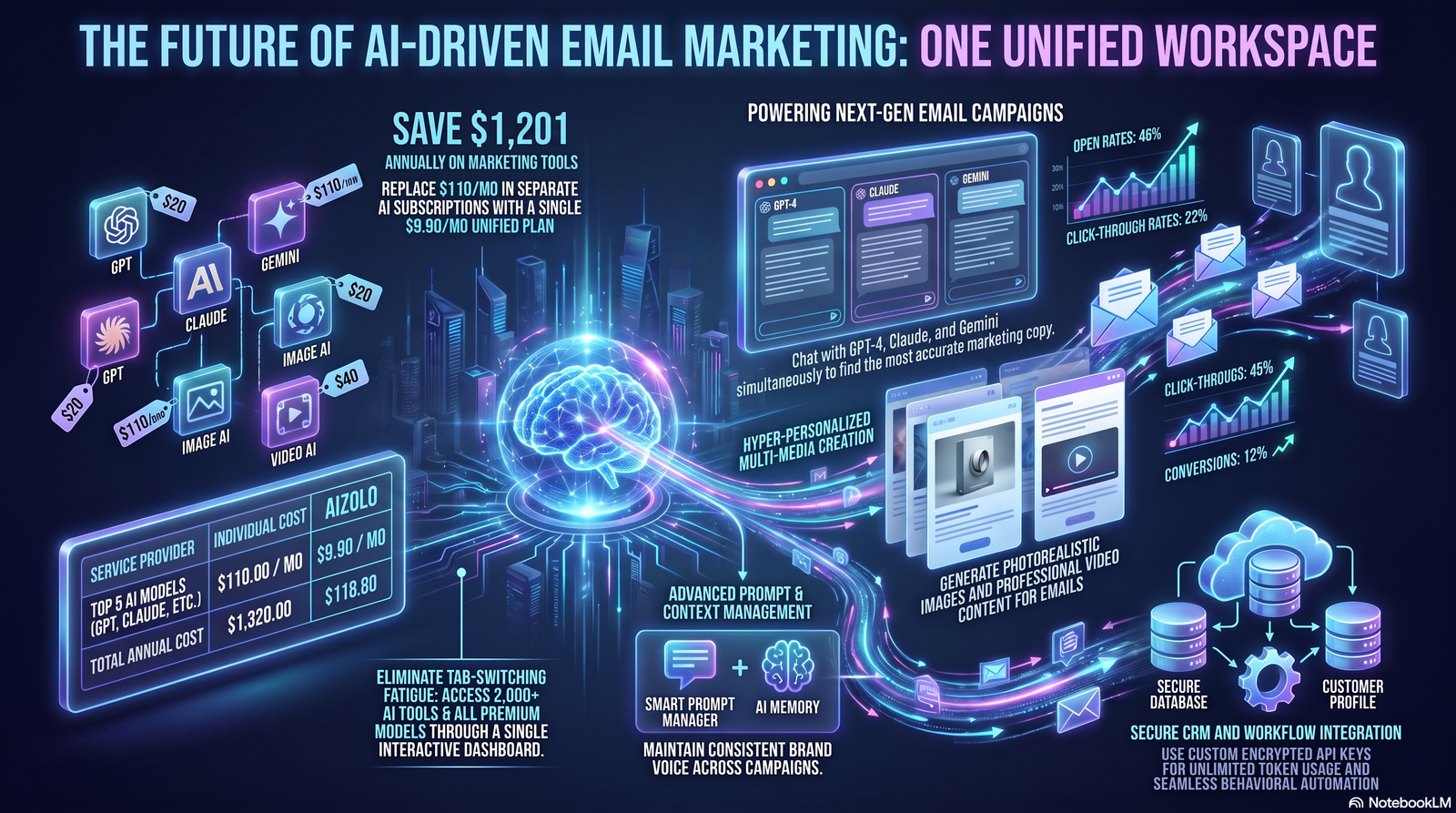
AI agents are moving from suggestion to execution. Several platforms on this list — ActiveCampaign’s Active Intelligence, Klaviyo’s Marketing Agent, HubSpot’s Breeze — now build full campaigns from a prompt rather than only suggesting subject lines. Expect that trend to accelerate through 2026 and 2027.
Predictive personalization is getting more granular. Send-time optimization was the first predictive feature to go mainstream. Predicted lifetime value, churn risk, and next-purchase-date modeling — currently a Klaviyo strength — are becoming standard across more platforms.
Voice and conversational interfaces are emerging. Early integrations let marketers describe a campaign in natural language and get a built sequence back, a pattern likely to expand into voice-based campaign management.
Omnichannel automation is consolidating. Brevo’s email-SMS-WhatsApp model and Omnisend’s multichannel flows point toward single platforms replacing the separate-tool stacks many teams run today.
Privacy and first-party data are becoming the constraint, not the feature. As third-party cookies fade further and regulations tighten, the AI models with access to clean first-party behavioral data — not just open and click history — will have a real advantage. This favors platforms with native CRM or ecommerce data integration over standalone email tools.
Frequently Asked Questions
What are AI tools for email marketing automation? They’re email platforms that use machine learning to automate decisions like send timing, subject lines, and audience segmentation, based on real subscriber behavior rather than fixed rules.
Are AI email marketing tools worth the cost for a small business? Often yes at the entry tier — tools like MailerLite and Mailchimp offer genuinely useful AI writing and send-time features on free or low-cost plans. The expensive tiers only pay off once your list and automation complexity justify them.
Which AI email tool is best for ecommerce? Klaviyo leads on predictive depth for ecommerce, with Omnisend as the stronger value option for stores under roughly 25,000 contacts and Drip as a mid-market alternative.
Which AI email tool is best for beginners? Mailchimp and MailerLite have the gentlest learning curves while still offering real AI-assisted content suggestions.
Do AI email tools actually improve open rates? Predictive send-time optimization and AI subject lines can meaningfully improve open rates, but the effect depends heavily on list quality and segmentation — AI doesn’t fix a disengaged list.
What’s the difference between email automation software and AI email marketing software? Traditional automation software runs fixed rules (“send 3 days after signup”). AI email marketing software adjusts timing, content, and segmentation dynamically based on ongoing subscriber behavior.
Can AI write my entire email campaign? Most platforms can draft a full campaign from a prompt, but review and editing are still necessary — unedited AI output tends to read as generic and can hurt engagement over time.
How much do AI email marketing tools cost? Entry tiers commonly range from free to $20/month for small lists. Mid-market ecommerce or B2B tools often run $150–900/month, and enterprise platforms can exceed $3,000/month depending on contact volume and features.
Is ActiveCampaign or Klaviyo better? ActiveCampaign has the stronger general-purpose automation builder; Klaviyo has deeper ecommerce-specific predictive analytics. The right choice depends on whether ecommerce data or cross-channel automation matters more to your business.
What is predictive send-time optimization? It’s a feature that analyzes each individual subscriber’s past open behavior and schedules their email for the time they’re statistically most likely to engage, rather than sending to the full list at once.
Do I need a CRM to use AI email marketing tools? No — most platforms on this list work standalone. HubSpot and ActiveCampaign are strongest specifically because of native CRM integration, but that’s a bonus, not a requirement.
What’s the best AI tool for cold email outreach specifically? Instantly is purpose-built for cold outbound, with unlimited sending accounts and automated warmup. It’s a poor fit for warm newsletter or lifecycle campaigns — use a separate platform for that.
Can small teams use AI email tools without hiring a specialist? Yes, for entry-level features like subject line generation and send-time optimization. Deeper predictive analytics and complex automation logic generally benefit from at least one team member with hands-on platform training.
Do AI email tools work well with Shopify? Klaviyo, Omnisend, Mailchimp, and Drip all have mature, native Shopify integrations with real-time data sync for abandoned cart and post-purchase automation.
How often should I review my AI-driven email automations? Monthly at minimum. Automation performance drifts as your list ages and subscriber behavior changes, so a flow that worked well at launch can quietly underperform six months later.
Conclusion
There’s no single best AI tool for email marketing automation — there’s a best tool for your business size, budget, and automation complexity right now.
If you’re running complex, branching behavioral automation across sales and marketing, ActiveCampaign or HubSpot earn their price. If you’re an ecommerce brand, Klaviyo or Omnisend fit the data model email marketing software built for general use cases doesn’t. If you’re a creator monetizing a newsletter, Kit’s built-in commerce tools matter more than predictive analytics you won’t use.
Before you commit to a plan, map your actual list size trajectory, your must-have integrations, and the automation complexity you’ll realistically use in the first 90 days. That evaluation will tell you more than any single “best of” ranking — including this one.
Ready to put this into practice? Start with the free tier of whichever platform matches your business type above, build three core automations, and measure results before upgrading.
Author Bio
Jeevesh Tripathi Email: jeevesh@aizolo.com
Jeevesh Tripathi is an AI researcher and SEO content strategist at Aizolo, specializing in AI software, marketing automation, productivity tools, and emerging technologies. He focuses on creating evidence-based, user-first content that aligns with Google’s EEAT principles and the latest Search guidelines.
Pingback: 9 AI Facebook Post Generators for 5x Engagement Now (2026)