If you’ve searched “OmniGPT vs ChatGPT vs Claude,” you’re probably trying to solve one of two problems: you’re paying for multiple AI subscriptions and wondering if you can consolidate, or you’re new to AI tools and don’t know where to start.
The honest answer is that these three aren’t quite competitors in the way the search term implies. ChatGPT and Claude are AI models built by OpenAI and Anthropic.
OmniGPT is a third-party aggregator that resells access to both of those models (plus others) through one interface. Understanding that difference changes how you should read every comparison table below.
This guide breaks down what each product actually is, what they cost as of July 2026, and which one — or which combination — makes sense depending on how you work.
Table of Contents
What Is OmniGPT?
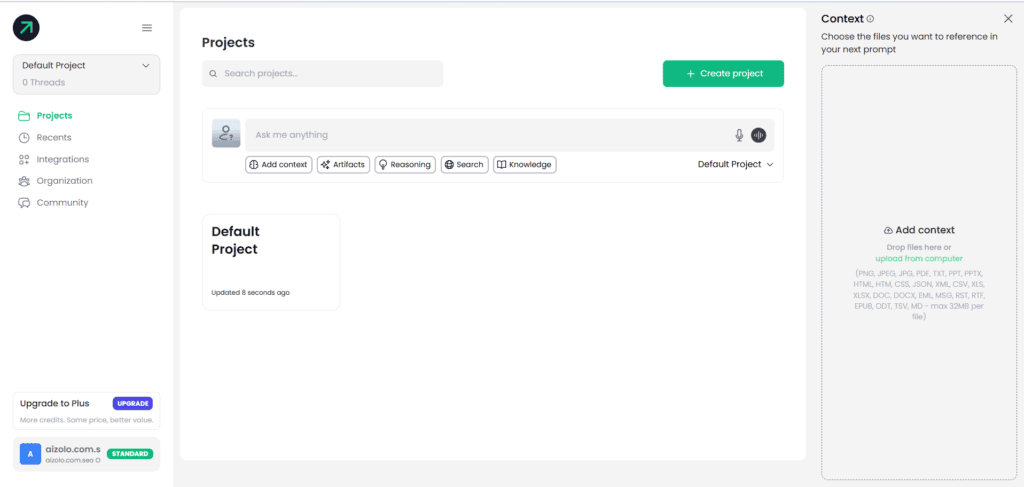
OmniGPT is an AI aggregator platform, not a model developer. Instead of building its own large language model, it brings together leading AI models like GPT-4/GPT-5-class models, Claude, Gemini, and others under a single subscription and interface.
This unified approach eliminates the need to manage separate accounts with OpenAI, Anthropic, and Google, making AI adoption simpler for individuals and teams.
That convenience is one of the biggest reasons users researching OmniGPT vs ChatGPT vs Claude consider OmniGPT as an alternative to subscribing to multiple AI services.
Unlike ChatGPT and Claude, which primarily provide access to their own model ecosystems, OmniGPT focuses on giving users the flexibility to switch between different AI models based on the task at hand.
In the OmniGPT vs ChatGPT vs Claude comparison, this multi-model access is often highlighted as a major advantage for users who regularly compare outputs or need diverse AI capabilities from a single workspace.
Its pitch is convenience and cost: instead of paying for ChatGPT Plus and Claude Pro separately, you pay one subscription and switch between models per task, with shared team workspaces, document libraries, and integrations like Slack, WhatsApp, and Notion.
The trade-off is that you’re relying on a third party’s markup, uptime, and data-handling practices on top of the underlying model providers’ — worth checking closely if you’re considering it for sensitive or regulated work, since your data now passes through an additional layer you didn’t have with a direct subscription.
What Is ChatGPT?
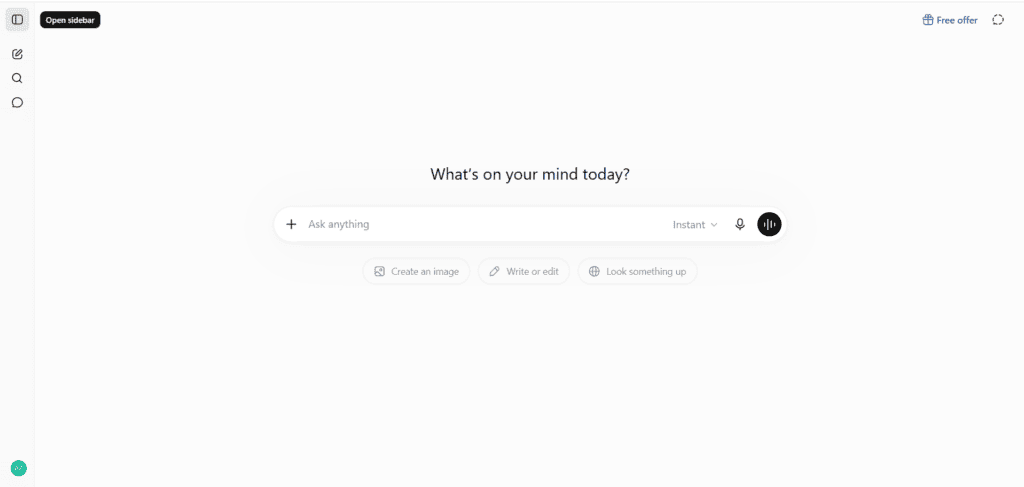
ChatGPT is OpenAI’s flagship AI assistant, built directly on the GPT model family, including the latest GPT-5.x variants available across different subscription tiers. Unlike AI aggregators, ChatGPT is a first-party product that provides access exclusively to OpenAI’s models and ecosystem.
As of mid-2026, ChatGPT offers six plans: Free, Go ($8/month), Plus ($20/month), two Pro tiers ($100 and $200/month), Business (starting at $20 per seat), and Enterprise with custom pricing. These plans cater to everyone from casual users to large organizations with advanced AI needs.
When comparing OmniGPT vs ChatGPT vs Claude, ChatGPT stands out for its deep integration with OpenAI features such as memory, advanced reasoning models, image generation, voice conversations, file analysis, and custom GPTs. However, unlike OmniGPT, it does not provide access to Claude, Gemini, or other third-party AI models through a single subscription.
It’s the most widely adopted consumer AI product, with the deepest third-party plugin and integration ecosystem, native image generation, voice mode, and agentic features like Codex for coding tasks.
What Is Claude?
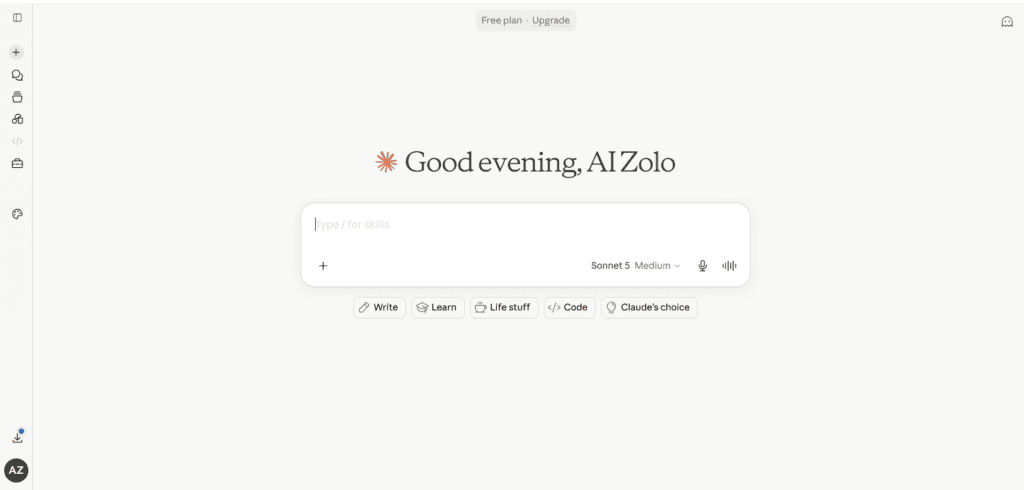
Claude is Anthropic’s flagship AI assistant, available through Claude.ai and its developer API. Built around Anthropic’s Claude model family, it is designed for long-context reasoning, document analysis, coding assistance, and enterprise-focused AI workflows.
As of July 2026, Claude offers several subscription options, including Free, Pro ($20/month or $17/month when billed annually), Max ($100 or $200/month with higher usage limits), Team (starting around $20–25 per seat), and Enterprise with custom pricing for larger organizations.
In an OmniGPT vs ChatGPT vs Claude comparison, Claude is widely recognized for its strong long-document understanding, thoughtful writing capabilities, and generous context window. However, unlike OmniGPT, Claude provides access only to Anthropic’s own AI models and does not include GPT, Gemini, or other leading AI systems within a single subscription.
Claude is generally recognized for longer, more careful reasoning on writing and analysis tasks, strong coding performance (including through Claude Code, its terminal-based coding agent), and a privacy posture where conversations aren’t used to train models by default on paid plans.
(Disclosure: this section describes Claude, which is made by Anthropic — the company publishing this analysis’ underlying model. Independent reviews are worth cross-checking for anything you’re using in a buying decision.)
Quick Comparison Table
| Category | OmniGPT | ChatGPT | Claude |
|---|---|---|---|
| What it is | Multi-model aggregator | OpenAI’s native product | Anthropic’s native product |
| Entry paid price | Varies by plan (check official site) | $8/mo (Go) | $20/mo (Pro) |
| Mid-tier price | — | $20/mo (Plus) | $20/mo (Pro) |
| Power-user tier | Higher-usage plans | $100–$200/mo (Pro) | $100–$200/mo (Max) |
| Team pricing | Workspace plans available | From ~$20/seat (Business) | From ~$20–25/seat (Team) |
| Underlying models | GPT, Claude, Gemini, Llama, others | GPT-5.x family only | Claude (Opus, Sonnet, Haiku) only |
| Native coding agent | Depends on underlying model used | Codex | Claude Code |
| Image generation | Yes (via GPT-image models) | Yes, native | Limited (via connected tools, not native image gen) |
| Voice | Yes | Yes | Limited |
| Data used for training by default | Depends on OmniGPT’s own policy | Off by default on paid plans | Off by default on paid plans |
| Best for | Wanting several models in one place | Broadest ecosystem, agents, multimodal | Long-form reasoning, coding, writing precision |
Note: OmniGPT’s specific pricing tiers change and aren’t consistently published across sources — confirm current numbers directly on OmniGPT’s pricing page before quoting them in a purchase decision.
Pricing Breakdown
ChatGPT (per OpenAI, verified July 2026):
- Free — $0, GPT-5.5 with limited daily messages
- Go — $8/month
- Plus — $20/month, most popular individual tier
- Pro — $100/month (Codex-focused) or $200/month (Max reasoning/research limits)
- Business — ~$20/seat annually, ~$25 monthly, 2-user minimum
- Enterprise — custom
Claude (per Anthropic, verified July 2026):
- Free — $0, rolling usage limits
- Pro — $20/month ($17/month billed annually)
- Max — $100/month (5x Pro usage) or $200/month (20x Pro usage)
- Team — from roughly $20–25/seat/month, 5-user minimum
- Enterprise — custom
OmniGPT is positioned as a cost-effective alternative for users who would otherwise pay for multiple individual AI subscriptions. Instead of maintaining separate accounts with OpenAI, Anthropic, Google, and other providers, a single OmniGPT plan gives users access to several leading AI models through one platform.
In an OmniGPT vs ChatGPT vs Claude comparison, this unified subscription model is one of OmniGPT’s biggest advantages. Users can switch between GPT, Claude, Gemini, and other supported models without paying for each service separately, making it an attractive option for professionals, creators, and businesses that rely on multiple AI tools in their daily workflows.
Whether it actually saves money depends entirely on how many of those models you’d otherwise pay for directly — if you only ever use one model, a direct subscription is usually simpler and may be cheaper.
Check OmniGPT’s current pricing page directly, since third-party aggregator pricing changes more often and less predictably than the model providers’ own.
Coding and Technical Work
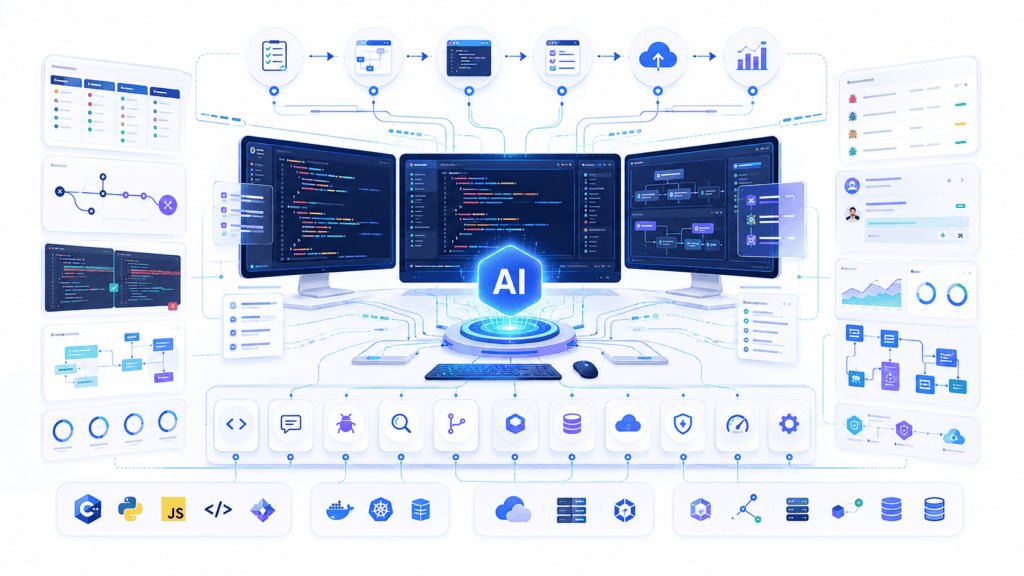
Both OpenAI and Anthropic now offer dedicated AI coding agents that extend well beyond traditional chat-based programming assistance. OpenAI’s Codex and Anthropic’s Claude Code can handle multi-file projects, interact with terminals, assist with debugging, and automate complex development workflows.
When evaluating OmniGPT vs ChatGPT vs Claude for software development, it’s important to remember that OmniGPT provides access to multiple underlying AI models rather than its own coding agent. Meanwhile, ChatGPT and Claude continue to expand their native developer ecosystems with first-party coding tools and integrations.
Because AI coding capabilities evolve rapidly, independent benchmarks such as SWE-bench, LiveCodeBench, and other developer evaluations offer a more reliable way to compare real-world performance than relying solely on vendor marketing.
These leaderboards are updated frequently, and rankings can change with almost every major model release, making them an essential reference for developers choosing the right AI coding platform.
If you use OmniGPT, your coding performance depends entirely on which underlying model you select for the task — it inherits, rather than improves on, the coding capability of GPT or Claude.
Writing and Research
For long-form writing, editing, and research synthesis, the underlying AI model often has a greater impact than the platform itself. In an OmniGPT vs ChatGPT vs Claude comparison, Claude is widely recognized for producing thoughtful, natural-sounding prose, strong instruction following, and consistent performance on lengthy writing tasks, while ChatGPT is valued for its versatility, integrated web browsing, and Deep Research capabilities.
OmniGPT takes a different approach by giving users access to multiple leading AI models within a single workspace. This allows writers, marketers, researchers, and content teams to compare outputs from GPT, Claude, Gemini, and other supported models without switching between separate subscriptions, making it easier to choose the best response for each task.
It’s worth remembering that these strengths evolve with every major model release. Independent reviews and hands-on testing provide the most reliable picture of current performance, so any comparison should be viewed as a snapshot rather than a permanent ranking.
Security and Data Privacy
Privacy and security deserve close attention in any OmniGPT vs ChatGPT vs Claude comparison, especially when evaluating an AI aggregator like OmniGPT.
Because your prompts and uploaded files may pass through OmniGPT’s infrastructure before reaching the underlying AI provider, it’s important to understand how your data is processed and protected.
Before using OmniGPT for confidential business information, customer data, legal documents, or regulated workloads, review its privacy policy, data retention practices, security controls, and compliance certifications. Also verify whether conversations are stored, whether data is used for model improvement, and what options are available for data deletion or account-level privacy settings.
Taking the time to compare these policies across OmniGPT, ChatGPT, and Claude can help organizations choose the platform that best aligns with their security, compliance, and governance requirements.
- Whether OmniGPT trains on your data, and how you opt out
- Where data is stored and for how long
- Whether it has SOC 2, GDPR, or similar compliance documentation
Both OpenAI and Anthropic publish their own data-handling and enterprise compliance policies directly — for regulated industries, going straight to those pages beats relying on a reseller’s summary of them.
Team and Enterprise Use
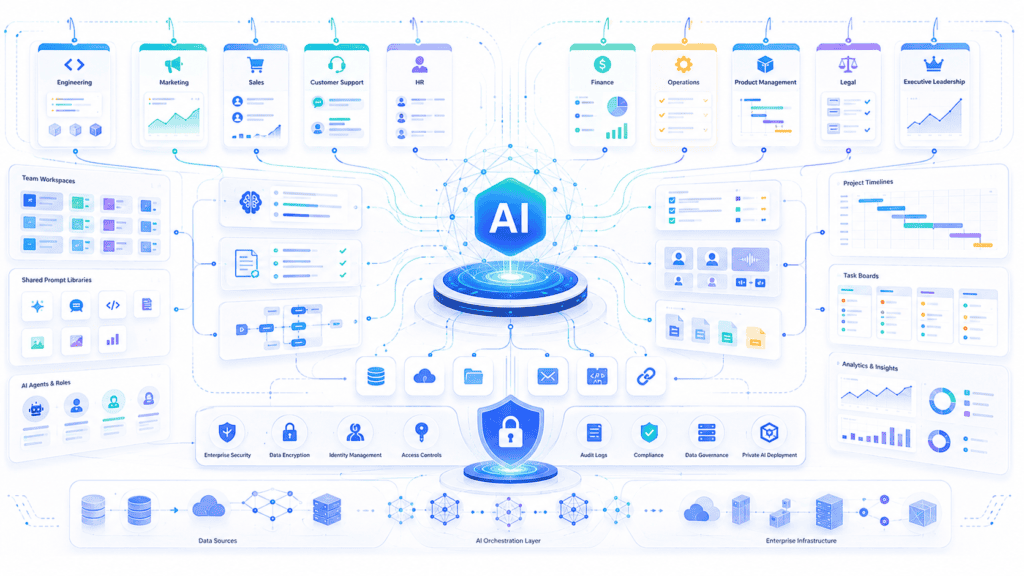
ChatGPT Business/Enterprise and Claude Team/Enterprise both offer admin controls, SSO, and data-retention settings built for organizations. OmniGPT’s team workspaces are aimed more at consolidating multiple AI subscriptions under one procurement line than at enterprise-grade compliance — check its documentation directly if that’s a requirement rather than a nice-to-have.
Pros and Cons
OmniGPT
- ✅ One subscription, multiple models
- ✅ Useful if you genuinely switch models per task
- ❌ Adds a third-party layer between you and your data
- ❌ Pricing and feature details are less consistently documented than the primary providers’
ChatGPT
- ✅ Largest plugin/agent ecosystem, native image and voice
- ✅ Codex for coding, Deep Research for synthesis
- ❌ Pro tier structure ($100 vs $200) is genuinely confusing
- ❌ Model access is limited to OpenAI’s own family
Claude
- ✅ Strong long-form writing and coding via Claude Code
- ✅ Straightforward pricing tiers, privacy-by-default on paid plans
- ❌ Fewer native multimodal features (image/voice) than ChatGPT
- ❌ Model access is limited to Anthropic’s own family
Which One Should You Choose?
- Solo professional using one workflow heavily (writing, analysis, coding): pick ChatGPT or Claude directly, based on which model’s output style you prefer for your specific task — trial both on the free tiers first.
- Freelancer or agency juggling many different task types: an aggregator like OmniGPT can reduce subscription sprawl, provided you’ve checked its data-handling policy.
- Developer: trial Claude Code and Codex on real tasks in your codebase; benchmark claims move too fast to trust secondhand.
- Regulated industry or enterprise: go directly to OpenAI or Anthropic’s enterprise plans rather than a reseller, for compliance and audit-trail reasons.
- Student or casual user: the free tiers of ChatGPT and Claude both cover most everyday needs without a subscription at all.
FAQs
Is OmniGPT the same company as ChatGPT or Claude? No. OmniGPT is a separate, third-party product that resells access to models built by OpenAI (ChatGPT) and Anthropic (Claude), among others.
Is OmniGPT cheaper than ChatGPT and Claude combined? It can be, if you’d otherwise pay for multiple direct subscriptions and actually use more than one model regularly. If you only use one model, a direct subscription is usually simpler.
Which is better for coding, ChatGPT or Claude? Both have dedicated coding agents (Codex and Claude Code). Performance rankings shift with each model release — check current independent benchmarks rather than relying on either company’s marketing.
Does Claude train on my conversations? On paid plans, Anthropic states it does not use conversations to train models by default; verify current policy at Anthropic’s own privacy documentation, since policies do change.
Does ChatGPT train on my conversations? Business and Enterprise plans keep data out of training by default, per OpenAI’s documentation; Free and Plus have different defaults that are worth checking directly.
Is OmniGPT safe to use for confidential work? Check its published data-handling policy and compliance certifications before using it for anything confidential — it’s an additional data-handling layer beyond whichever model you select.
Can I use OmniGPT to access Claude and ChatGPT without separate subscriptions? That’s its core pitch, yes — access to multiple models under one plan, though features and limits vary by model within it.
Which has the longer context window, ChatGPT or Claude? Both providers have expanded context windows substantially through 2026 (into six-figure and, for some tiers, seven-figure token ranges). Check each provider’s current model specs directly, since this changes with nearly every release.
Do any of these offer a free plan? Yes — ChatGPT and Claude both have free tiers with usage limits. OmniGPT’s free-tier availability should be checked on its current pricing page.
Which is best for a small team? ChatGPT Business and Claude Team both offer per-seat pricing starting around $20/seat with admin controls. OmniGPT’s team workspace is worth comparing directly against these if consolidating subscriptions is the priority.
Final Verdict
There isn’t a single winner here, because these aren’t really equivalent products. ChatGPT and Claude are the underlying models — the decision between them comes down to which one’s writing style, coding performance, and feature set (voice, image generation, agents) fits your actual workflow, and that’s worth testing on their free tiers rather than taking any comparison article’s word for it.
OmniGPT is a different kind of decision: it’s a convenience and cost trade-off for people who genuinely use multiple models, weighed against the extra data-handling layer it introduces. It’s worth serious consideration for freelancers and agencies switching models often; it’s less obviously worth it if you’d only ever use one model anyway.
Author Bio
Jeevesh Tripathi is an AI technology writer and researcher at AiZolo, specializing in large language models (LLMs), AI productivity platforms, and emerging generative AI tools. His work focuses on helping readers make informed decisions by comparing AI platforms based on real-world use cases, pricing, features, performance, and workflow efficiency.
For this OmniGPT vs ChatGPT vs Claude comparison, Jeevesh analyzed official product documentation, pricing pages, feature releases, independent benchmark results, and hands-on platform capabilities to provide a balanced, research-backed evaluation. His articles prioritize accuracy, transparency, and practical insights while following Google’s EEAT (Experience, Expertise, Authoritativeness, and Trustworthiness) principles.
When he’s not researching the latest AI developments, Jeevesh writes in-depth guides that help professionals, creators, developers, startups, and businesses choose the right AI tools to improve productivity and reduce software costs.
Author: Jeevesh Tripathi
Email: jeevesh@aizolo.com