Table of Contents
The Cold Email That Almost Ended His Startup
Arjun had spent three weeks building a prospect list. 400 names. Each one hand-picked. He sat down on a Sunday night, copy-pasted a template he found on Reddit, swapped out the first names, and hit send. But results were disappointing—open rates were low, responses almost nonexistent.
This is where how to use AI for generating personalized cold emails can completely change the game. By leveraging AI, Arjun could craft highly tailored messages for each prospect in seconds, making every email feel personal and increasing the chances of a reply.
Monday morning: two replies. Both said “unsubscribe.”
He wasn’t doing anything wrong in theory — cold email is still one of the highest-ROI outreach channels in B2B sales. But Arjun was doing what most people do: treating personalization like a checkbox rather than a strategy. And in 2026, that’s the fastest way to get ignored.
If you’ve ever wondered how to use AI for generating personalized cold emails that go beyond first-name swaps and actually land in real conversations — this guide is for you.
Whether you’re a founder, marketer, freelancer, SaaS builder, or student trying to break into a new industry, there’s a smarter way to approach outreach. And AI, used correctly, is the engine that makes it work at scale.
Why Most Cold Emails Fail (And It’s Not What You Think)

The problem isn’t the channel. Cold email works. But according to Hunter’s State of Cold Email 2025 research, the reason most campaigns underperform comes down to one root issue: irrelevance. This is exactly why how to use AI for generating personalized cold emails has become essential.
With AI, marketers can tailor each message to the recipient’s interests, behavior, and needs, turning generic outreach into highly relevant communication. Leveraging AI ensures every cold email resonates, boosting open rates, replies, and overall campaign success.
People don’t dislike AI-assisted emails. They dislike robotic, generic ones. There’s an important distinction. When recipients feel like they’re one of ten thousand people who got the exact same message, the psychological effect is immediate — they close the tab, hit delete, or worse, mark it as spam.
Most people struggle with cold email personalization for three very real reasons:
- Time: Researching each prospect manually takes 20–30 minutes per person. You can’t do that at scale.
- Tools: Most people are jumping between ChatGPT, a CRM, a spreadsheet, and an email client — losing context at every tab switch.
- Strategy: There’s a difference between surface-level personalization (“I loved your LinkedIn post!”) and deep personalization based on actual signals — hiring activity, recent news, content they’ve published, or pain points specific to their industry.
That’s where knowing how to use AI for generating personalized cold emails changes everything. Not because AI replaces the human element — it doesn’t. But because AI dramatically lowers the cost of doing the research and writing that make personalization actually work.
What “AI Personalization” Actually Means
Before diving into tactics, let’s clear up a misconception. AI personalization isn’t:
- Spinning templates with
{{first_name}}variables - Using ChatGPT to generate a generic pitch and blasting it
- Adding a fake compliment at the beginning of an otherwise identical email
Real AI-powered personalization means using AI models to analyze publicly available data about your prospect — their LinkedIn activity, recent blog posts, company news, job description signals, tech stack — and craft a message that genuinely speaks to their current situation.
It’s the difference between “I help SaaS companies grow” and “I noticed your team just doubled the engineering headcount — I’d love to show you how we helped [similar company] reduce onboarding time by 40% during a similar phase.”
The second email isn’t longer. It’s just smarter.
How to Use AI for Generating Personalized Cold Emails: A Step-by-Step Framework
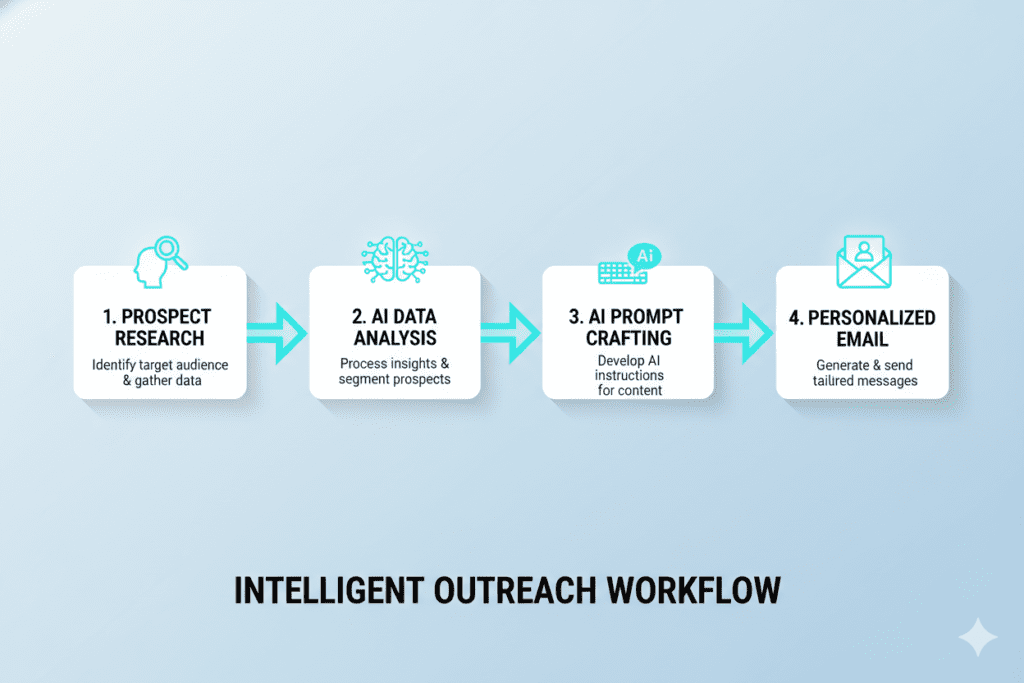
Step 1: Define Your ICP Before You Touch Any AI Tool
The biggest mistake people make is opening ChatGPT before they know who they’re writing to. AI is a multiplier — it multiplies whatever input you give it. Fuzzy ICP in, fuzzy emails out. That’s why understanding how to use AI for generating personalized cold emails is crucial.
By clearly defining your audience and feeding AI precise data, you can create messages that truly resonate, turning generic outreach into highly effective, personalized campaigns.
Your Ideal Customer Profile (ICP) should cover:
- Job title and seniority level
- Industry and company size
- The specific problem they face that your offer solves
- Where they spend time online (LinkedIn? Niche communities? Substack?)
- What kind of language they use to describe their own pain points
Once you’re clear on this, AI can generate emails that feel written for a real person — because in a meaningful sense, they were.
Step 2: Gather Real Prospect Signals
Good AI personalization is only as strong as the data behind it. Before generating your email, collect a few quick data points for each prospect. Understanding how to use AI for generating personalized cold emails means knowing exactly what information to feed the AI—like name, company, role, interests, and recent activity—so your messages feel relevant, thoughtful, and tailored to each recipient.
- A recent LinkedIn post or comment they made
- A recent piece of content they published or were featured in
- Any recent company news (funding, product launch, hiring spike, award)
- Their stated priorities in their bio, job description, or About page
You don’t need all of these — even one strong signal is enough for a compelling opener. This is where tools with web research capabilities become powerful, and where a platform like AiZolo gives you a distinct edge: instead of toggling between browser tabs, you can query multiple AI models simultaneously to research, draft, and refine your emails — all in one workspace.
Step 3: Craft the Right AI Prompt
This is where most people go wrong. They write a vague prompt like: “Write a cold email to a SaaS founder.”
A strong prompt for AI personalization looks more like this:
“Write a cold email to [Name], the founder of [Company], a B2B SaaS tool for HR teams. They recently posted on LinkedIn about the challenge of remote onboarding. My offer is [X]. Keep it under 80 words, no fluff, end with a soft CTA. Tone: conversational, not salesy.”
Notice what’s in that prompt: the recipient’s role, a specific signal you found, your offer framed as relevant to their pain, word count, tone, and CTA type.
The more structured your prompt, the more usable the output.
Step 4: Personalize the Hook, Keep the Rest Efficient
The most powerful part of your cold email is the first sentence — the hook. This is where deep personalization matters most.
The body and CTA can be templated to be efficient; the hook should be unique. Knowing how to use AI for generating personalized cold emails can help you craft hooks that immediately capture attention, using insights about each prospect to make the opening feel highly relevant and engaging.
A good AI-generated hook structure:
- Reference something specific about them (signal)
- Connect it naturally to why you’re reaching out (relevance)
- Do it in 1–2 sentences max
Example: “Saw your post about the difficulty of scaling SDR teams without burning out reps — we just helped [similar company] automate that layer and get back 8 hours a week per rep. Worth a quick look?” This is a perfect illustration of how to use AI for generating personalized cold emails, as AI can help craft examples like this at scale, ensuring each message is tailored to the recipient’s specific challenges and context.
Step 5: Compare and Refine Across AI Models
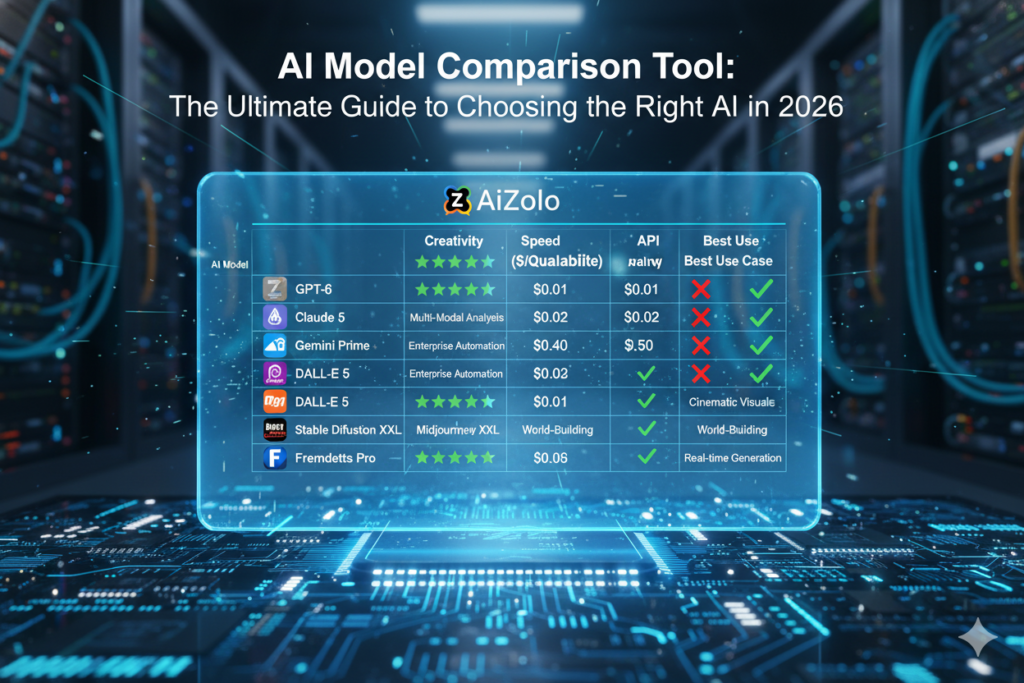
Here’s a professional-level tactic that most guides skip: don’t settle for the first AI-generated draft. Different AI models have different strengths. GPT-4 tends to write tighter copy. Claude often produces more empathetic, nuanced language. Gemini can pull in fresher context.
Instead of guessing which one will work, you can compare outputs side-by-side — which is exactly what AiZolo’s comparison workspace is built for. Run your email prompt through GPT-4, Claude, and Gemini simultaneously. Pick the version with the best opening line.
Frankenstein the best elements. Your final email will be stronger than any single model could produce alone. Mastering how to use AI for generating personalized cold emails allows you to combine the strengths of multiple AI tools, crafting emails that are more engaging, relevant, and effective than anything generated by one model in isolation.
This matters more than it sounds. Small wording differences in cold emails can swing reply rates by 15–20%. A/B testing at the model level gives you a real edge. Understanding how to use AI for generating personalized cold emails lets you experiment with different phrasing and approaches quickly, ensuring every message is optimized for maximum engagement and higher response rates.
Step 6: Scale With Segments, Not Blasts
Once you have a working email formula per ICP segment, AI lets you scale without sacrificing quality. Instead of writing 200 individual emails, you can leverage how to use AI for generating personalized cold emails to create highly tailored messages in bulk, maintaining relevance and impact for each prospect while saving hours of manual work.
- Build a segment (e.g., “Series A SaaS founders in fintech”)
- Gather 3–5 signals per prospect (automated via tools or manual research)
- Feed the signals + ICP template into your AI prompt
- Generate personalized drafts in batch
- Do a quick human review before sending
This hybrid workflow — AI for speed, human for judgment — is where the real magic happens.
Real-World Use Cases: Who Benefits and How
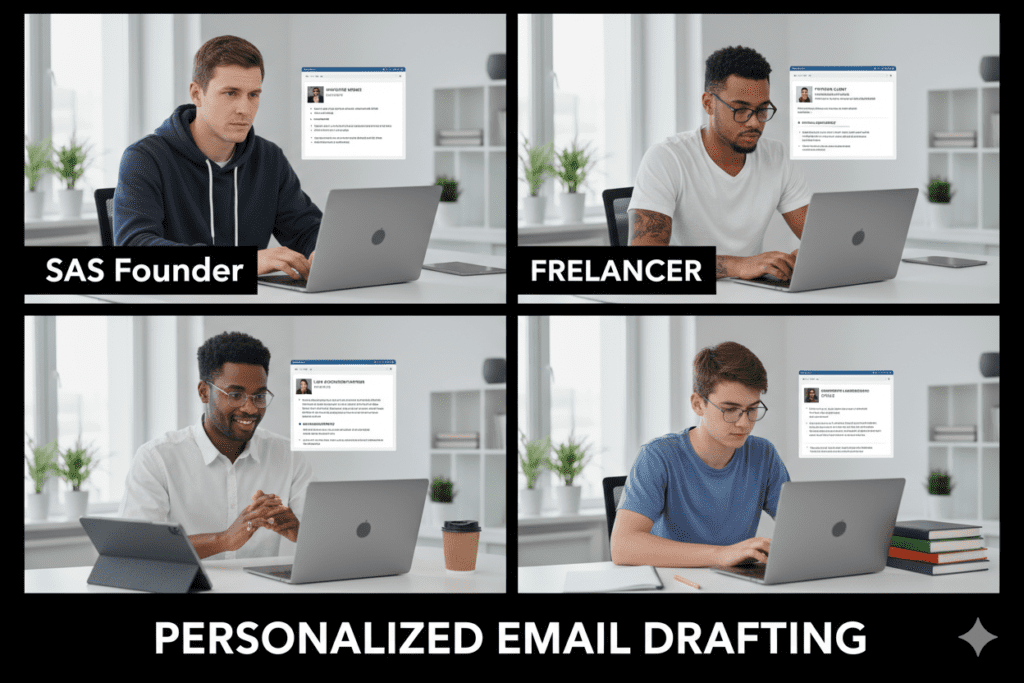
For SaaS Founders
You’re wearing 12 hats and you don’t have an SDR. AI lets you run a focused outbound campaign targeting 20–30 high-fit accounts per week without hiring.
By understanding how to use AI for generating personalized cold emails, you can create highly relevant outreach at scale, ensuring each prospect feels like the email was written just for them—even without a full sales team.
Use AI to research each account, identify a pain signal, and generate a short, direct pitch. Focus on companies in a specific growth stage — Series A or recently funded — where timing is everything.
For Freelancers
You’re not selling a product; you’re selling trust. Cold emails from freelancers fail when they sound transactional. Learning how to use AI for generating personalized cold emails helps craft messages that feel genuine and tailored, building trust with each prospect while avoiding generic, salesy language.
AI helps you write emails that lead with curiosity about the prospect’s work — their portfolio, their recent projects, their aesthetic — before mentioning what you do. This is harder to fake at scale without AI assistance.
For Marketers
You’re running outreach for partnerships, PR, link-building, or influencer collaborations. The volume is high, but each recipient expects to feel like they were specifically chosen.
AI lets you personalize every outreach email based on a piece of content they recently published, making the ask feel earned rather than cold.
For Developers and Indie Builders
You’re building something useful but you’re not a natural salesperson. Cold email is one of the most effective ways to find your first customers — but only if it doesn’t sound like it was written by someone who hates selling.
AI can help you translate technical value into plain language that resonates with non-technical buyers. Use Claude or GPT-4 through AiZolo to get multiple tones and pick the one that feels most like you.
Knowing how to use AI for generating personalized cold emails ensures each message speaks directly to the prospect, balancing clarity, tone, and personalization for maximum engagement.
For Students
You’re reaching out to professionals for informational interviews, mentorship, internships, or collaborations. The problem is that your emails tend to be too long, too formal, or too vague about what you’re asking. AI helps you get to the point faster while still sounding human.
Keep it under 60 words, lead with something specific about their work, and ask for one small thing. That’s a formula AI can help you nail every time. Learning how to use AI for generating personalized cold emails ensures each short, targeted message is relevant, compelling, and more likely to get a response.
Common Mistakes to Avoid When Using AI for Cold Email
Sending without reviewing. AI-generated emails can be good — but they need a human pass. Look for anything that sounds stiff, overly formal, or factually off. Recipients will notice.
Over-personalizing. Yes, this is real. If your email references too many specific details, it can feel surveillance-like rather than thoughtful. One strong, specific hook is enough.
Ignoring deliverability. The best email in the world doesn’t matter if it lands in spam. Keep sending volumes reasonable per inbox, warm up new domains, and don’t use spammy language even if AI generates it.
Forgetting the follow-up. Most replies in cold email come from follow-up sequences, not the first message. Use AI to write two or three follow-ups that add value rather than just bumping the thread. Understanding how to use AI for generating personalized cold emails ensures each follow-up is relevant, thoughtful, and increases your chances of getting a response.
Using one model for everything. As mentioned, different models have different strengths. Locking yourself into a single AI tool when you’re crafting outreach at scale leaves real quality on the table.
Learning how to use AI for generating personalized cold emails lets you combine the best features of multiple models, creating emails that are more engaging, relevant, and effective than relying on just one tool.
Why AiZolo Is the Smart Workspace for Cold Email Personalization

Most cold emailers today are doing something inefficient: they have one tab for ChatGPT, another for Claude, another for their CRM, and a spreadsheet somewhere in between. Context gets lost. Quality dips. Fatigue sets in.
Knowing how to use AI for generating personalized cold emails helps streamline the process, keeping all data, templates, and AI outputs in sync so your outreach stays high-quality and efficient.
AiZolo was built to fix exactly this. It’s an all-in-one AI workspace that gives you access to GPT-4, Claude, Gemini, Grok, and more — in a single dashboard, with side-by-side comparison so you can actually see which model produces better email copy for your specific ICP.
The Prompt Manager feature is particularly valuable for cold email workflows. You can save your best-performing prompts — the ICP definitions, the hook formulas, the refinement instructions — and reuse them across campaigns without rebuilding from scratch each time.
Knowing how to use AI for generating personalized cold emails ensures these prompts consistently produce highly relevant, tailored messages that resonate with each prospect.
AI Memory lets the platform remember your preferences and context, so you don’t re-explain your offer in every session. Mastering how to use AI for generating personalized cold emails ensures that each message reflects your style, maintains consistency, and saves you time while crafting highly relevant outreach.
For anyone running outreach at any scale — from a freelancer sending 20 emails a week to an agency managing multiple client campaigns — AiZolo replaces the messy multi-tab workflow with something clean, fast, and genuinely more effective.
Learning how to use AI for generating personalized cold emails through AiZolo ensures every message is tailored, consistent, and optimized for maximum engagement without the chaos of switching between tools.
At $9.90/month for the Pro plan (versus $110+ per month juggling individual subscriptions to GPT-4, Claude, Gemini, and Grok separately), the math is straightforward. Explore more insights on AiZolo to see how others are building smarter AI workflows.
Quick Reference: The AI Cold Email Checklist
Before you hit send on any AI-generated cold email, run through this:
- Is the hook specific to this person, not just their job title?
- Does the email get to the point within the first two sentences?
- Is the CTA one single, low-friction ask?
- Does it sound like a human wrote it?
- Have you reviewed it — not just AI-generated it?
- Is it under 100 words? (Often, shorter is better)
- Have you queued a follow-up sequence?
If you can answer yes to all of these, you’re ahead of 90% of people using AI for cold email.
Conclusion: Personalization at Scale Is No Longer Optional

The spray-and-pray era of cold email is over. Recipients have seen every template. They can smell a generic pitch from the subject line. And with inboxes more competitive than ever, relevance isn’t just a nice-to-have — it’s the entire game.
Understanding how to use AI for generating personalized cold emails allows you to craft messages that stand out, feel truly relevant, and increase the chances of getting a response in today’s crowded inbox.
Learning how to use AI for generating personalized cold emails isn’t about automating your way to volume. It’s about using AI to do the research, writing, and refinement that make personalization scalable. The human judgment still matters — but AI handles the heavy lifting that used to make genuine personalization impossible at any real scale.
The professionals getting results right now are the ones who’ve figured out this balance: strong ICP clarity, real prospect signals, multi-model comparison for better copy, and a workflow that doesn’t rely on a dozen different tools stitched together with tab-switching and hope.
Mastering how to use AI for generating personalized cold emails lets you achieve this balance efficiently, creating high-quality, relevant outreach at scale without the chaos of multiple disconnected tools.
That’s what AiZolo was built to support. If you want to start building smarter with Aizolo — using multiple frontier AI models in one place to power outreach, research, content, and more — try it free today.
And if you’re looking to sharpen more of your AI workflows, read more expert guides on Aizolo’s blog — from content strategy to developer tools to real-world AI use cases for every kind of builder.
Suggested Internal Links
- How to Use AI for Rewriting Low Conversion Product Pages — relevant for marketers using AI for persuasive copy
- How to Compare Gemini vs Claude vs ChatGPT in One App — directly relevant to multi-model email comparison workflow
- The Ultimate AI Workspace for Long Form Content with Multiple Models — relevant for content-heavy outreach workflows
Suggested External Links
- Hunter.io AI Cold Email Guide — survey-backed data on AI cold email performance
- Reply.io Blog: ChatGPT Cold Emails — practical AI cold email structure and tactics
- OpenAI GPT-4 Documentation — for readers building custom AI email workflows via API