Quick Summary
Generative AI for content creation uses machine learning models to produce text, images, video, audio, and code from simple prompts. Aizolo makes this process more efficient by providing access to multiple leading AI models in one platform for faster, higher-quality content creation.
In 2026, 85% of marketers use AI for content creation, up from 61% in 2023, and businesses report 62% faster content production with 3.8x higher output.
This guide covers how the technology works, the best tools in 2026, real risks, EEAT-safe workflows, and where the industry is heading next. If you’re specifically choosing a platform, our tested Best AI Tools for Content Creation guide covers 20+ tools with pricing, strengths, and use-case recommendations.
Table of Contents
What Is Generative AI for Content Creation?
Generative AI for content creation is the use of machine learning models that produce original text, images, video, audio, or code from natural-language prompts.
Instead of starting from a blank page, creators describe what they want. The AI model then generates a first draft, visual, or asset in seconds.
This differs from older “AI writing” tools that relied on templates and rules. Modern generative AI creates genuinely new combinations of words and pixels it was never explicitly shown.
Key takeaway: Generative AI for content creation is not a single tool. It’s a category of technology spanning writing, design, video, audio, and code.
The content creation segment is projected to hold the largest application share of the generative AI market in 2026, at roughly 35.7%, ahead of coding, customer service, and research use cases.
How Generative AI Works
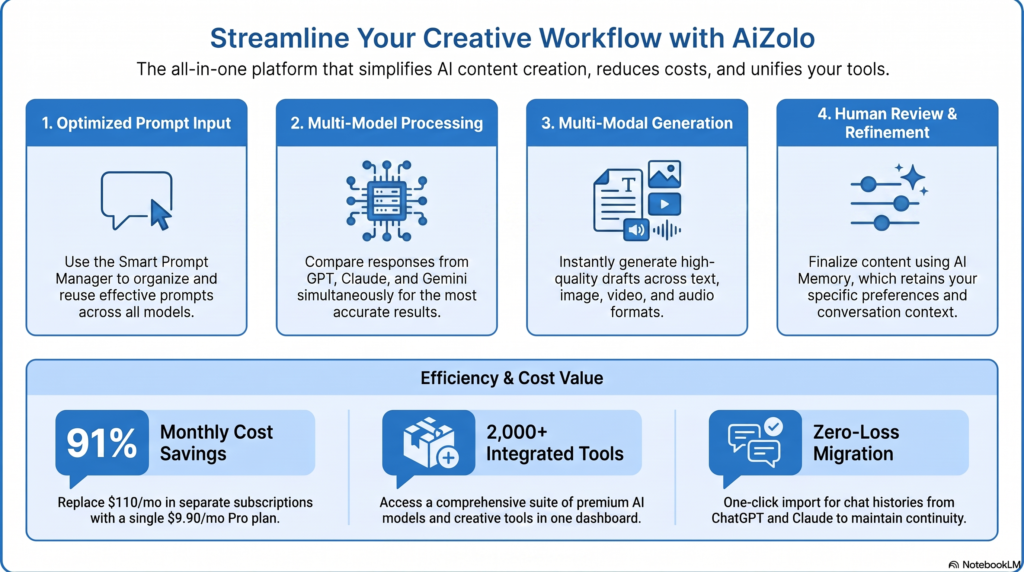
At a basic level, generative AI models learn statistical patterns from massive datasets of text, images, or audio.
When you enter a prompt, the model predicts the most likely next word, pixel, or sound based on everything it learned during training.
Simplified process:
- You provide a prompt (instructions, context, examples)
- The model interprets intent using its trained neural network
- It generates output token-by-token or pixel-by-pixel
- You review, edit, and refine the result
Pro Tip
Treat the first AI output as a draft, not a final product. The best content teams edit, fact-check, and add original insight before publishing.
Evolution of AI Content Creation
AI-assisted writing didn’t start with ChatGPT. It moved through several distinct phases.
Early stage (2015–2019): Rule-based grammar checkers and simple template generators dominated. Output was rigid and repetitive.
Transformer breakthrough (2017–2020): The transformer architecture introduced attention mechanisms, enabling models to understand long-range context in language.
Mainstream adoption (2022–2023): ChatGPT‘s public launch in late 2022 brought conversational generative AI to hundreds of millions of everyday users.
Multimodal era (2024–2026): Models now generate text, images, video, and audio within a single system, and can reason over documents, spreadsheets, and code simultaneously.
GPT-4, Claude, and Gemini collectively generate an estimated 100+ billion words per day, and industry estimates suggest a substantial share of newly published web content now involves some AI assistance.
Types of AI-Generated Content

Generative AI now touches nearly every content format used in marketing, product, and operations teams.
| Content Type | Common Use Case | Typical Tools |
|---|---|---|
| Blogs & Articles | SEO content, thought leadership | ChatGPT, Claude, Jasper |
| Emails | Newsletters, drip campaigns | Copy.ai, HubSpot AI |
| Landing Pages | Conversion copy | Jasper, Writesonic |
| Ads | Social and search ad copy | AdCreative.ai, Copy.ai |
| Social Media | Captions, threads, posts | Buffer AI, Copy.ai |
| Images | Graphics, product mockups | Midjourney, DALL·E, Canva AI |
| Video | Explainer, marketing video | Synthesia, Runway |
| Audio | Voiceovers, jingles | ElevenLabs, Adobe Podcast |
| Podcasts | Show notes, editing, clips | Descript, Podcastle |
| Presentations | Pitch decks, reports | Gamma, Canva AI, Beautiful.ai |
| Product Descriptions | E-commerce catalogs | Jasper, Copy.ai |
| Technical Documentation | Manuals, API docs | Claude, ChatGPT |
| Code | App features, scripts | GitHub Copilot, Claude Code |
| Reports | Business summaries, research | ChatGPT, Claude, Gemini |
Featured Snippet Box
Q: What types of content can generative AI create? Generative AI can create blogs, emails, ad copy, social posts, images, videos, voiceovers, podcasts, presentations, product descriptions, technical docs, code, and business reports — all from text prompts.
Core Technologies Behind Generative AI
Understanding the underlying technology helps content teams pick the right tool for the right job.
Large Language Models (LLMs): Neural networks trained on massive text corpora that predict and generate human-like language. They power chatbots, writing assistants, and summarization tools.
Transformers: The architecture underneath most modern LLMs. Transformers use “attention” to weigh which words in a prompt matter most for generating the next word.
Diffusion Models: Used for image and video generation. They start with random noise and gradually refine it into a coherent image based on the prompt.
Retrieval-Augmented Generation (RAG): Combines an LLM with a live search or database lookup, so answers are grounded in current, verifiable information rather than only training data.
Embeddings: Numerical representations of words, sentences, or images that let AI systems measure similarity and meaning — the backbone of semantic search and recommendation engines.
Fine-Tuning: The process of further training a general-purpose model on a narrower dataset (like a brand’s past content) to match tone, style, and domain knowledge.
Expert Insight: Enterprises increasingly combine RAG with fine-tuning — RAG for factual accuracy, fine-tuning for consistent brand voice. Neither alone solves both problems.
Benefits of Generative AI for Content Creation
Q: What are the benefits of generative AI for content creation? Generative AI speeds up production, lowers costs, supports ideation, enables content personalization at scale, and helps small teams compete with larger publishing operations.
- Speed: First drafts in seconds instead of hours
- Cost efficiency: AI video production costs have dropped roughly 91% compared to traditional methods
- Scale: One marketer can now support the output of a small team
- Ideation: Instant brainstorming for headlines, angles, and outlines
- Personalization: Dynamic content variants for different audience segments
- Multilingual reach: Faster translation and localization workflows
- Consistency: Style guides can be encoded into prompts or fine-tuned models
Companies deploying generative AI across multiple business functions report an average return of $3.70 for every dollar invested, with content creation tools delivering the highest ROI among specific applications at around 420%.
Challenges, Risks, and Limitations
Generative AI is powerful, but it is not a replacement for judgment, expertise, or original reporting.
Accuracy risk: Models can generate confident-sounding but incorrect information, known as hallucination.
Generic output: Without strong prompts and editing, AI drafts often read as bland or repetitive.
Brand voice drift: Off-the-shelf models default to a neutral tone that may not match a brand’s identity.
Copyright uncertainty: Training data and output ownership remain legally contested in several jurisdictions.
SEO risk: Publishing unedited AI content at scale can trigger Google’s scaled content abuse penalties.
Over-reliance: Teams that stop developing original research or firsthand expertise lose competitive differentiation.
⚠️ Warning Box
Never publish AI-generated content without human fact-checking. Hallucinated statistics, broken citations, and outdated claims are the most common causes of credibility damage.
Real-World Use Cases
Marketing teams use generative AI to draft first versions of blog posts, then have subject-matter experts add data, quotes, and original analysis.
E-commerce brands generate thousands of product descriptions from structured spec sheets, cutting manual writing time dramatically.
Customer support teams use AI to draft help-center articles and troubleshooting guides from ticket data.
Agencies use AI for rapid client concepting — generating ten headline directions in minutes instead of a full brainstorm session.
Publishers use AI-assisted research summarization to speed up background reporting, while keeping bylines and analysis human-led.
Industry-Wise Applications
| Industry | Primary Use Case | Example Output |
|---|---|---|
| E-commerce | Product catalog content | Descriptions, ad variants |
| SaaS | Documentation & onboarding | Help docs, release notes |
| Healthcare | Patient education (reviewed) | Plain-language explainers |
| Finance | Market summaries | Reports, newsletters |
| Media & Publishing | Research assistance | Story background, summaries |
| Education | Course material drafts | Lesson outlines, quizzes |
| Real Estate | Listing descriptions | Property copy |
| Travel | Destination guides | Itinerary drafts |
Best Generative AI Tools in 2026
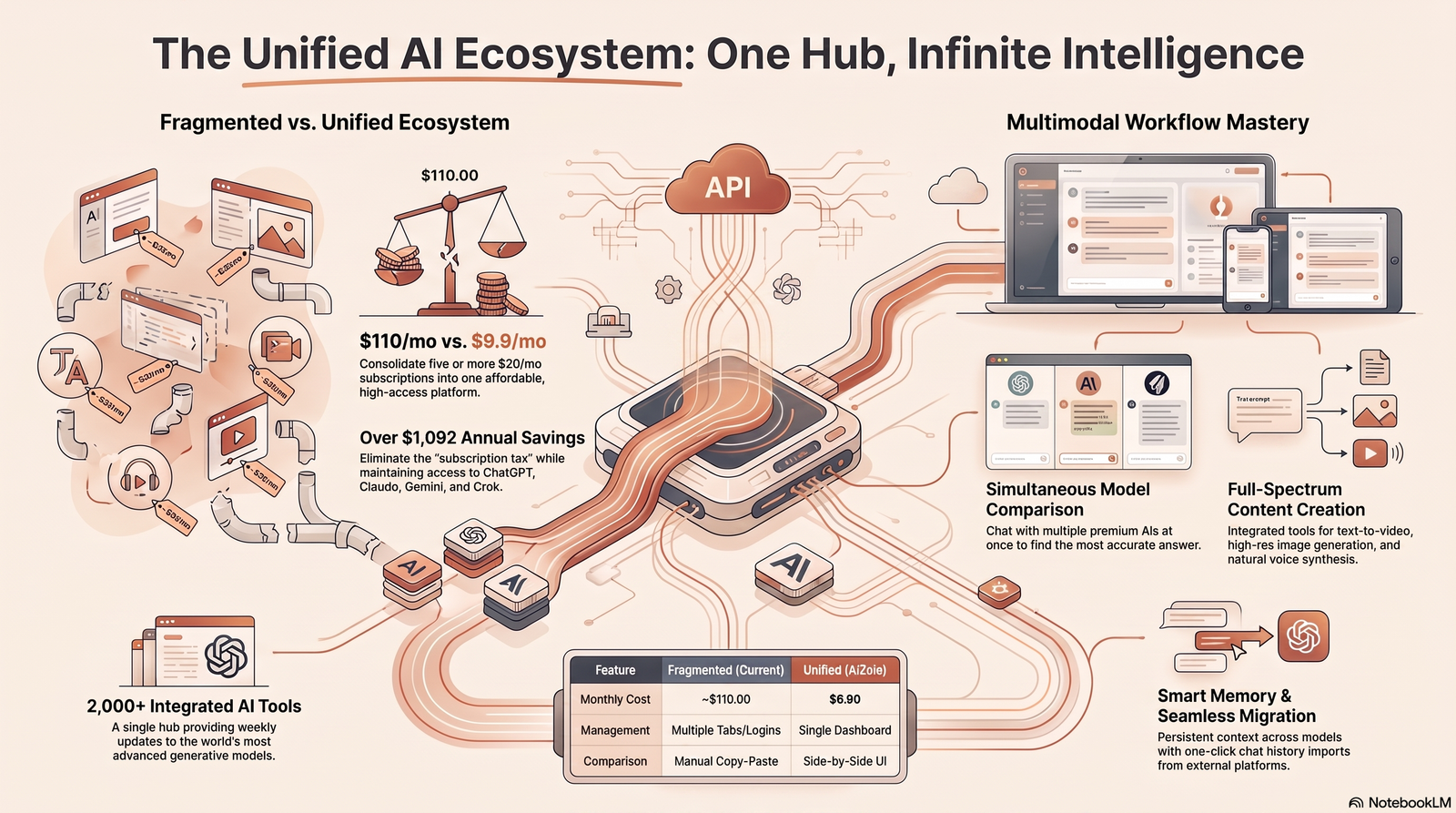
Dozens of platforms now compete in this space, spanning general-purpose assistants (ChatGPT, Claude, Gemini), marketing-specific writers (Jasper, Copy.ai), image generators (Midjourney, Canva AI), and video/audio tools (Synthesia, ElevenLabs, Descript).
Rather than duplicate that comparison here, we tested 20 platforms head-to-head against the same briefs and built a full breakdown — pricing, strengths, watch-outs, and which tool fits which use case. See our complete Best AI Tools for Content Creation guide for the detailed reviews and comparison table.
The short version: general assistants like ChatGPT and Claude are the best starting point for most creators due to low cost and flexibility, while specialized tools earn their price once you need brand-voice governance, live SEO scoring, or multi-seat team workflows.
Content creation is just one use case for generative AI. For a broader look at platforms that bring multiple AI capabilities together, explore our guide to generative AI platforms.
Generative AI vs. Traditional Content Creation
| Factor | Traditional Content Creation | Generative AI Content Creation |
|---|---|---|
| Speed | Days to weeks per asset | Minutes to hours per draft |
| Cost per piece | Higher (writer/designer time) | Lower (tool subscription + editing time) |
| Originality | High, fully human-authored | Requires human editing for originality |
| Scalability | Limited by headcount | Near-unlimited with oversight |
| Firsthand experience | Naturally present | Must be added by a human expert |
| SEO risk | Lower if well-written | Higher if unedited and mass-produced |
Human Writers vs. AI: Where Each Wins
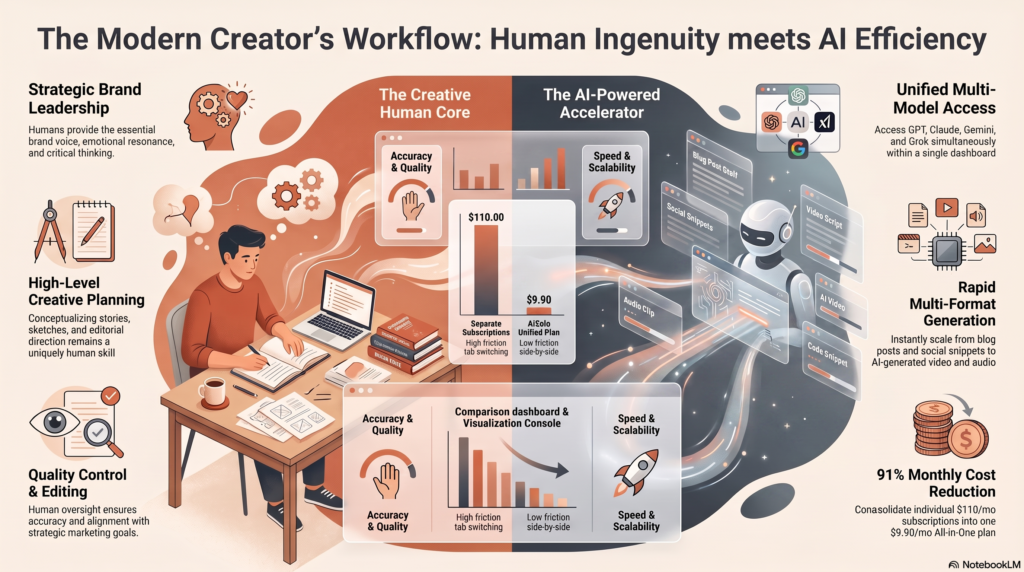
AI wins at: speed, first drafts, brainstorming, repetitive formats, translation, and summarization.
Humans win at: original reporting, firsthand experience, emotional nuance, ethical judgment, and building genuine authority.
Expert Insight: The strongest content strategy in 2026 isn’t “AI vs. human.” It’s AI for velocity, human for judgment. Teams that treat it as either/or tend to lose quality or lose speed.
How Businesses Should Use AI Responsibly
- Start with strategy, not tools. Define what content actually needs to scale before choosing software.
- Keep a human in the loop. Every AI draft should pass through an editor with subject-matter knowledge.
- Disclose where relevant. Some industries and platforms require AI-use disclosure.
- Add original data. Interviews, proprietary research, and firsthand testing separate ranking content from generic content.
- Audit output regularly. Spot-check for factual accuracy, bias, and brand-voice drift.
Prompt Engineering Tips
Better prompts produce better first drafts and reduce editing time.
- Be specific about audience and goal: “Write for busy small-business owners who want practical steps” beats “write a blog post.”
- Provide examples: Paste a paragraph of your best-performing content as a style reference.
- Set constraints: Word count, tone, reading level, and structure should all be stated upfront.
- Ask for reasoning: Requesting “explain your structure choice” often surfaces gaps early.
- Iterate in layers: Draft outline first, then sections, then polish — don’t ask for a finished 3,000-word article in one shot.
Pro Tip
Keep a shared prompt library. Teams that reuse tested prompts see far more consistent output than teams starting from scratch each time.
Brand Voice Preservation
AI models default to a generic, neutral tone unless explicitly guided.
Ways to preserve brand voice:
- Build a short brand-voice guide (3–5 example paragraphs, tone words, banned phrases)
- Fine-tune or use custom instructions where the tool supports it
- Always edit the first and last paragraphs manually — these carry the most voice signal
- Run a “voice check” pass separate from the “fact check” pass
SEO Best Practices for AI Content
- Write for the reader first, then optimize structure for search
- Use one primary keyword naturally, plus supporting semantic terms
- Break content into short paragraphs, subheadings, and scannable lists
- Add original data, screenshots, or quotes AI cannot fabricate
- Include a named author with real credentials
- Keep content updated — freshness signals matter for time-sensitive topics
- Structure key sections to directly answer common questions (snippet-ready)
Common Generative AI Pitfalls
These are workflow and content-quality mistakes, distinct from tool-selection mistakes — see our Best AI Tools for Content Creation guide if you’re deciding which platform to use.
- Publishing raw AI output without editing or fact-checking
- Using AI to mass-produce near-duplicate pages purely for rankings
- Ignoring brand voice guidelines
- Failing to verify statistics and sources
- Treating AI content as a strategy instead of a production tool
- Skipping author attribution and expertise signals
Ethical Concerns and Copyright Issues
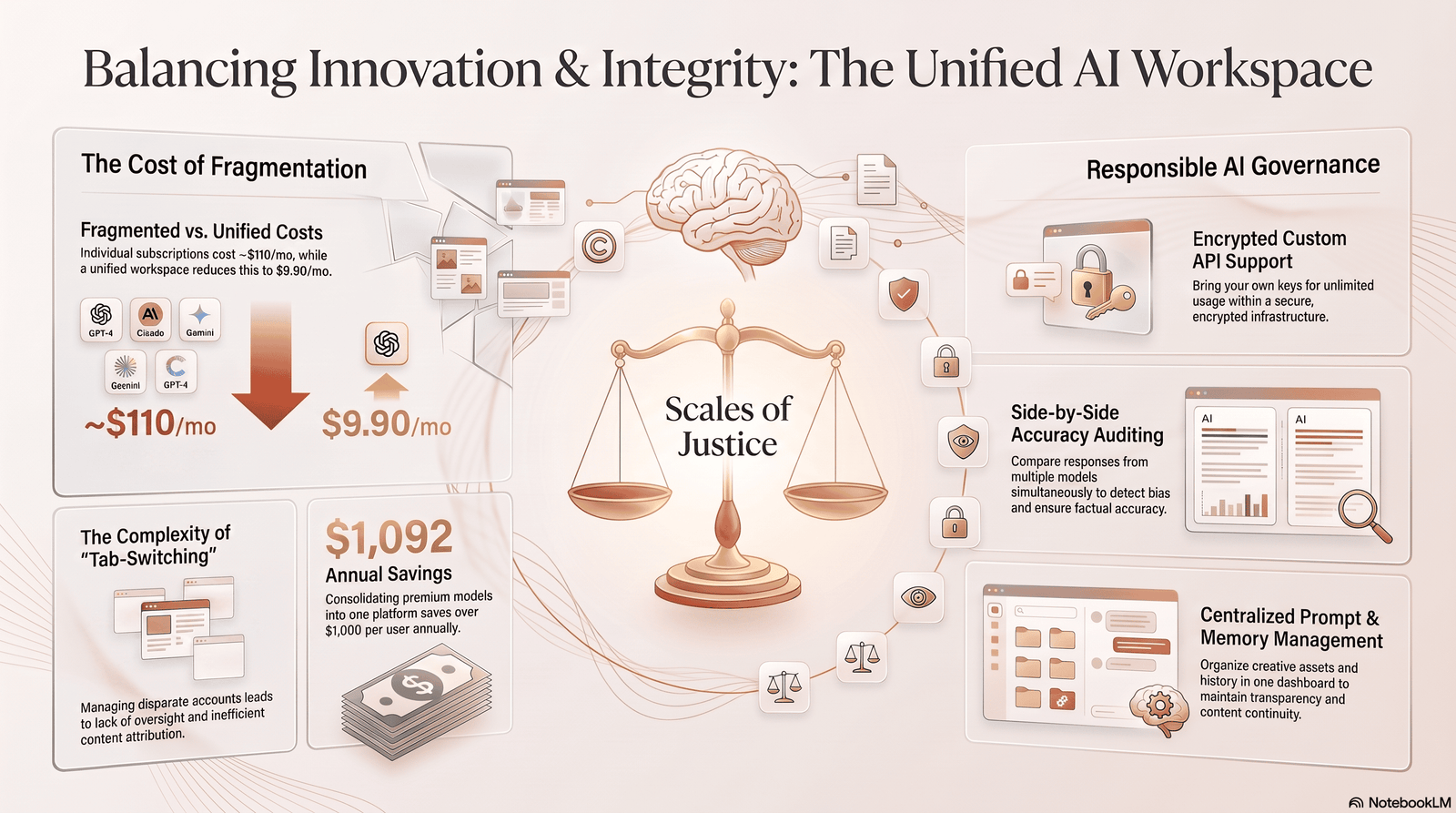
Generative AI raises real questions about training data, authorship, and disclosure that content teams should not ignore.
Training data provenance: Some models were trained on copyrighted text and images without explicit permission, which remains the subject of ongoing legal disputes.
Output ownership: Copyright law in most countries currently protects works with meaningful human authorship, not purely machine-generated output.
Disclosure expectations: Some publishers, platforms, and regulators expect clear labeling when content is substantially AI-generated.
Misinformation risk: Fabricated statistics or fake quotes can spread quickly if not fact-checked before publishing.
Expert Insight: Treat AI like a very fast intern — useful, fast, but not yet a source of truth on its own.
Google’s View on AI Content
Q: Does Google penalize AI-generated content? No — Google’s guidance focuses on accuracy, quality, and relevance regardless of how content is produced. The risk is not AI itself but low-value content published at scale.
Google’s scaled content abuse policy is method-agnostic: whether pages are written by humans, AI, or scraped, the issue is ranking-manipulation intent and low value for users.
Google’s Search Quality Rater Guidelines evaluate both scaled content abuse and main content created with little effort, originality, or added value, though rater guidelines don’t directly set rankings themselves.
The safest path: use AI for drafting speed, and rely on human expertise, original data, and editorial review for everything that gets published.Google’s View on AI Content
Q: Does Google penalize AI-generated content? No — Google’s guidance focuses on accuracy, quality, and relevance regardless of how content is produced. The risk isn’t AI itself; it’s low-value content published at scale.
Google’s scaled content abuse policy is method-agnostic: whether pages are written by humans, AI, or scraped, the issue is ranking-manipulation intent and low value for users. The safest path is using AI for drafting speed while relying on human expertise, original data, and editorial review for anything that gets published.
For the buying and workflow implications of this — including where editorial risk shows up most often across different tool categories — see our Best AI Tools for Content Creation guide.
Future Trends
- Multimodal-first workflows: One prompt generating matched text, image, and video assets together
- Agentic content pipelines: AI systems that research, draft, fact-check, and format with minimal human steps in between
- Real-time personalization: Content that adapts per visitor rather than existing as one static page
- Stronger provenance tools: Watermarking and content-credentials standards for AI-generated media
- Industry-specific models: More than half of generative AI models are expected to be industry- or function-specific by 2027
Expert Recommendations
- Build a documented AI content workflow with clear editorial checkpoints
- Invest in prompt libraries and brand-voice fine-tuning before scaling volume
- Pair every AI draft with at least one original, human-sourced element
- Track content performance, not just publishing volume
- Reassess your tool stack quarterly — this space moves fast
Final Verdict
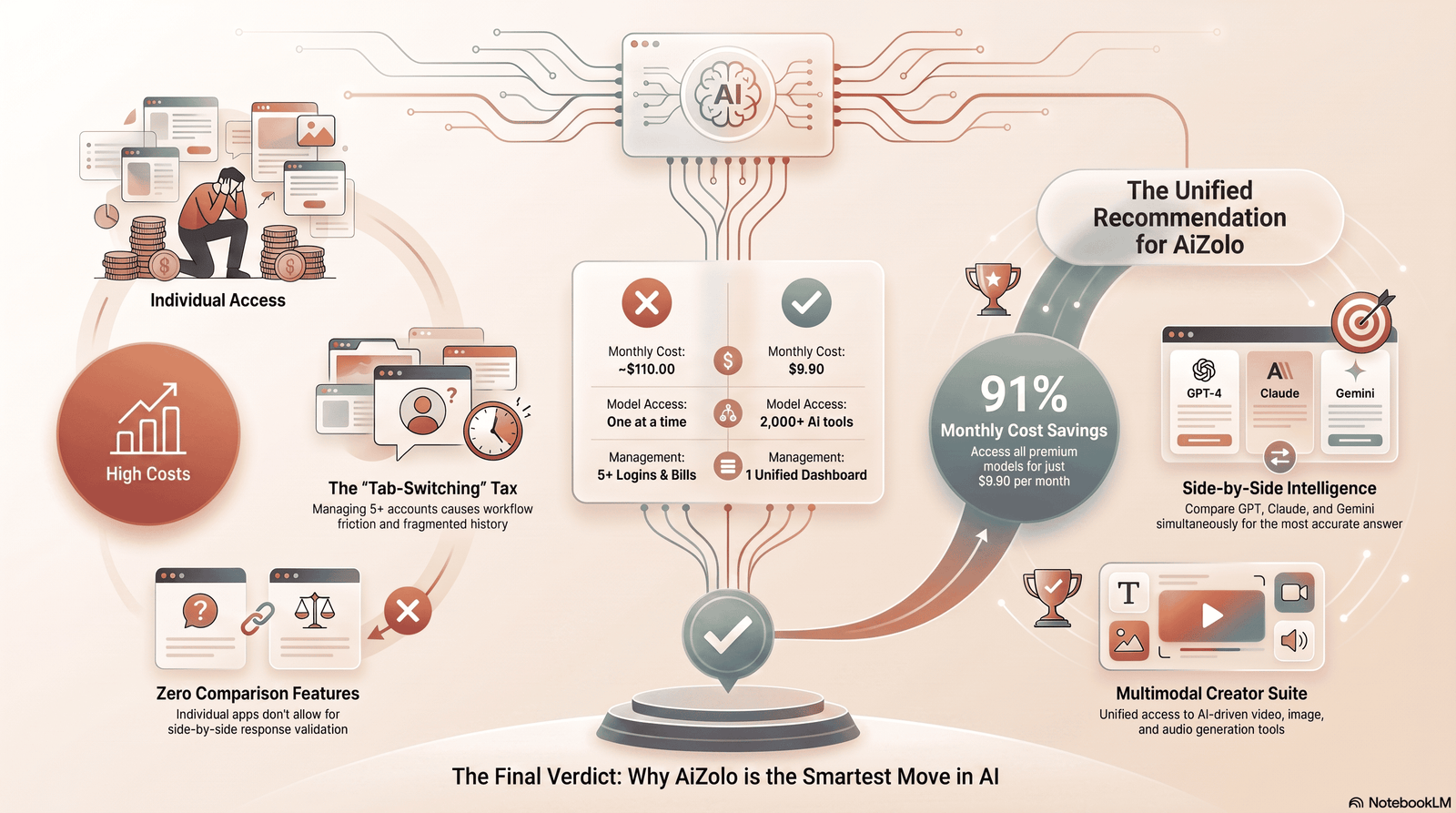
Generative AI for content creation is no longer optional infrastructure for competitive marketing teams — it’s the default starting point for drafts, ideation, and production speed.
But the businesses winning with it treat AI as an accelerator for human expertise, not a replacement for it.
The teams combining AI speed with original research, real editorial review, and genuine brand voice are the ones building lasting search visibility and reader trust.
FAQs
1. What is generative AI for content creation? Generative AI for content creation is technology that produces original text, images, video, or audio from prompts, using models trained on large datasets to generate new, contextually relevant output.
2. Is AI-generated content bad for SEO? Not inherently. Google evaluates helpfulness and quality, not production method. Risk comes from publishing thin, unedited, or mass-produced AI content purely to manipulate rankings.
3. Can generative AI replace human writers? No. AI accelerates drafting and ideation, but human writers add firsthand experience, judgment, fact-checking, and original reporting that AI cannot generate independently.
4. What is the best generative AI tool for content creation? There’s no single best tool — ChatGPT and Claude suit long-form writing, Midjourney suits images, Synthesia suits AI video, and the right choice depends on format and workflow.
5. Does Google penalize AI content? No, not automatically — see Google’s View on AI Content above for the full policy breakdown.
6. How much does generative AI content creation cost? Costs range from free tiers to $20–$50+ per month per tool for individuals, with enterprise API pricing scaling based on usage volume and features.
7. What is prompt engineering? Prompt engineering is the practice of crafting clear, detailed instructions for AI models to produce more accurate, relevant, and on-brand output.
8. Can AI-generated content rank on Google? Yes, when it is genuinely helpful, well-edited, fact-checked, and demonstrates real expertise — AI assistance alone does not block ranking ability.
9. What industries use generative AI most for content? Marketing, e-commerce, SaaS, media, and finance are among the heaviest adopters, using AI for product copy, documentation, reports, and campaign content.
10. Is generative AI content copyrighted? Copyright protection generally requires meaningful human authorship, so purely AI-generated output may not qualify for full copyright protection in several jurisdictions.
11. What are diffusion models? Diffusion models are AI systems used for image and video generation that build a coherent output by gradually refining random noise based on a text prompt.
12. How is generative AI different from traditional AI? Traditional AI typically classifies or predicts based on existing data, while generative AI creates new content — text, images, audio — that didn’t exist before.
13. What is RAG in generative AI? Retrieval-Augmented Generation (RAG) combines a language model with real-time data retrieval, improving factual accuracy over relying on training data alone.
14. How do I preserve brand voice with AI content? Provide the AI with a documented style guide, real examples of past content, and specific tone instructions, then manually edit the opening and closing sections.
15. Is generative AI good for beginners in content marketing? Yes — it lowers the barrier to entry for drafting, ideation, and design, though beginners still need to learn editing, fact-checking, and SEO fundamentals.
16. What’s the biggest risk of using generative AI for content? Publishing inaccurate or generic content without human review, which can damage credibility and trigger search-engine quality penalties.
17. Will generative AI replace SEO content writers? It’s changing the role rather than replacing it — writers increasingly focus on strategy, editing, fact-checking, and original insight rather than first-draft production.
18. How fast is the generative AI content market growing? The generative AI content-creation market is projected to expand from about $21.53 billion in 2025 to roughly $77.22 billion by 2030, reflecting rapid enterprise adoption.
Conclusion
Generative AI for content creation has moved from experimental novelty to core marketing infrastructure in just a few years.
The businesses winning in 2026 aren’t the ones publishing the most AI content — they’re the ones pairing AI speed with real editorial judgment, original data, and genuine expertise.
Start small: pick one content format, build a documented workflow with human review, and measure results before scaling volume.
Ready to build a smarter content workflow? Explore Aizolo’s AI-powered productivity tools to plan, draft, and manage your content operations in one place.
Author Bio
Jeevesh Tripathi AI Researcher & Technical Content Writer Email: jeevesh@aizolo.com
Jeevesh Tripathi is an AI researcher and technical content writer specializing in generative AI, SEO, and automation. With years of hands-on experimentation across leading AI writing, image, and video platforms, he focuses on translating fast-moving AI research into practical, evidence-based guidance for marketers and businesses. His work emphasizes rigorous fact-checking, real-world testing, and balanced analysis over hype. Jeevesh regularly evaluates emerging generative AI tools and workflows to help content and marketing teams adopt AI responsibly, without sacrificing accuracy, originality, or trust — the core pillars of building lasting authority in an AI-saturated content landscape.