
Introduction
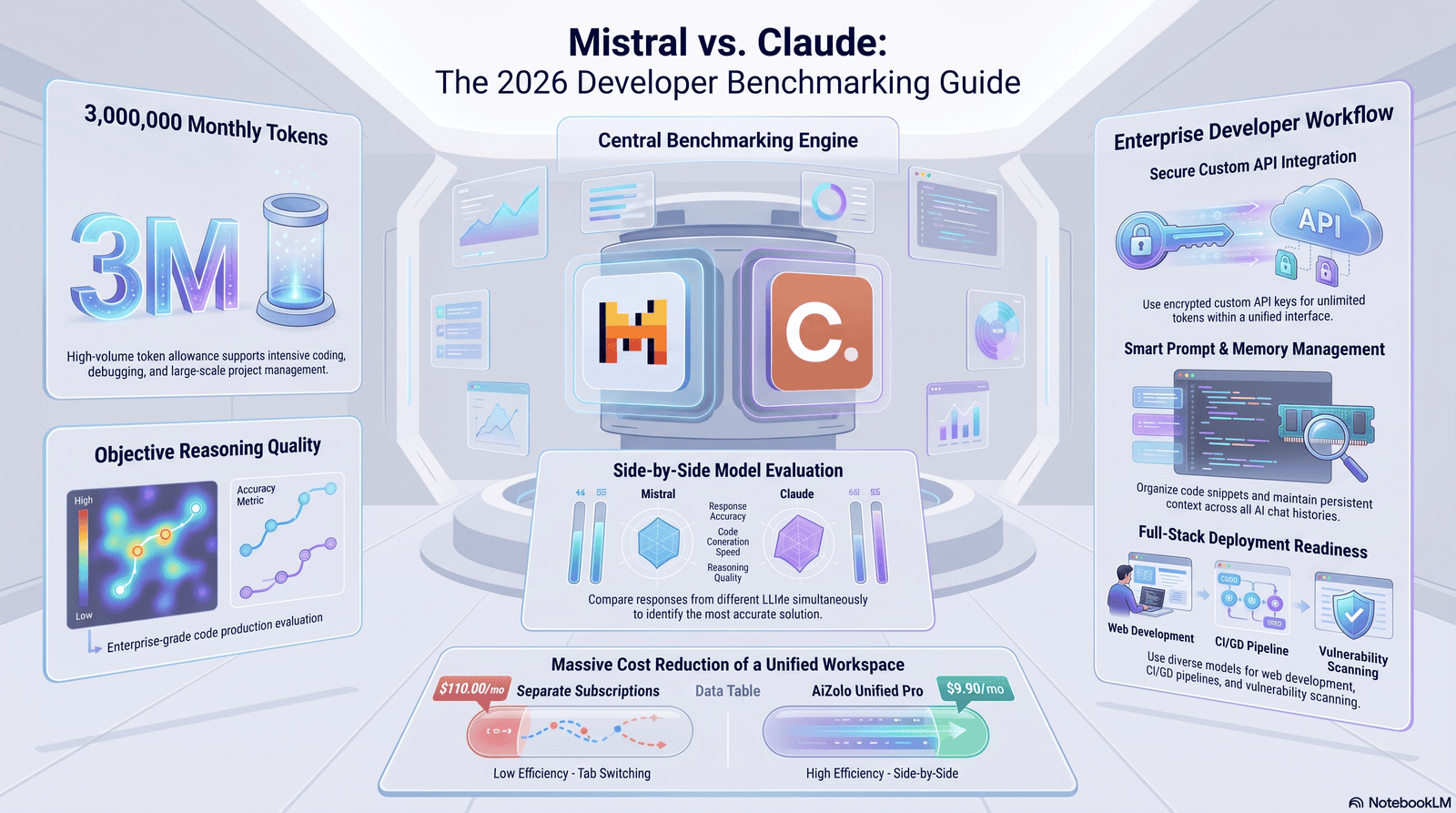
If you’re comparing Mistral vs Claude in 2026, you’re really choosing between two different philosophies of AI. Mistral AI, based in Paris, has built its reputation on open-weight models, aggressive pricing, and EU data sovereignty.
Anthropic’s Claude, based in San Francisco, has built its reputation on safety-first design, long-context reasoning, and being the model most developers reach for when code quality matters.
Neither company is standing still. Both have shipped multiple model generations in the last year alone, and pricing on both sides changes often enough that a screenshot from three months ago is already stale. This guide breaks the comparison down section by section — architecture, coding, pricing, privacy, and enterprise readiness — using currently available, verifiable information, and it flags anywhere a number should be double-checked against the official pricing pages before you build a budget around it.
Table of Contents
What Is Mistral AI?
Mistral AI is a French AI lab founded in 2023 by researchers formerly of DeepMind and Meta. It has grown quickly into Europe’s most prominent frontier AI company, valued in the multi-billion-dollar range, and it has positioned itself deliberately as the European alternative to US-based labs like OpenAI, Google, and Anthropic.
Strengths: open-weight availability, EU data residency, self-hosting flexibility, and consistently aggressive pricing, especially on output tokens.
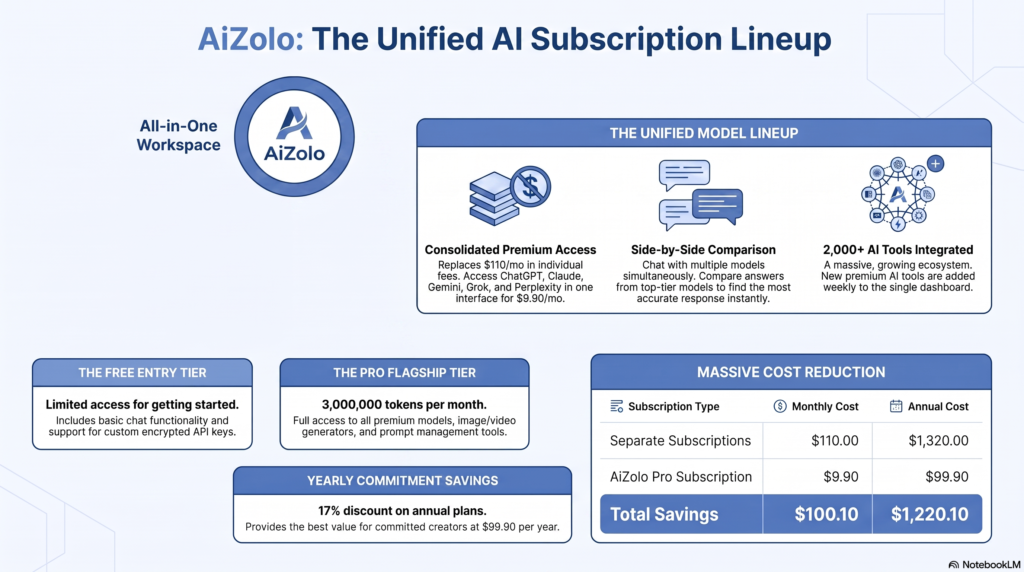
Weaknesses include a smaller context window than the current US frontier and a smaller third-party tooling ecosystem — see the Quick Comparison Table above for the exact numbers. For a full breakdown of how Mistral stacks up against OpenAI’s chatbot specifically, read our Mistral vs ChatGPT comparison. For users comparing these trade-offs across multiple AI models, Aizolo provides a convenient way to evaluate different models from a single platform before deciding which best fits their workflow.
Enterprise adoption has centered on European public sector, finance, and telecom customers who need data to stay on EU soil — a real differentiator that has little to do with raw model capability.
What Is Claude AI?
Claude is the model family built by Anthropic, an AI safety company founded in 2021 by former OpenAI researchers, including siblings Dario and Daniela Amodei. Claude is named after Claude Shannon, the founder of information theory, and it’s available through the consumer chat app at claude.ai, the developer API, and enterprise platforms including AWS Bedrock, Google Cloud Vertex AI, and Microsoft Foundry.
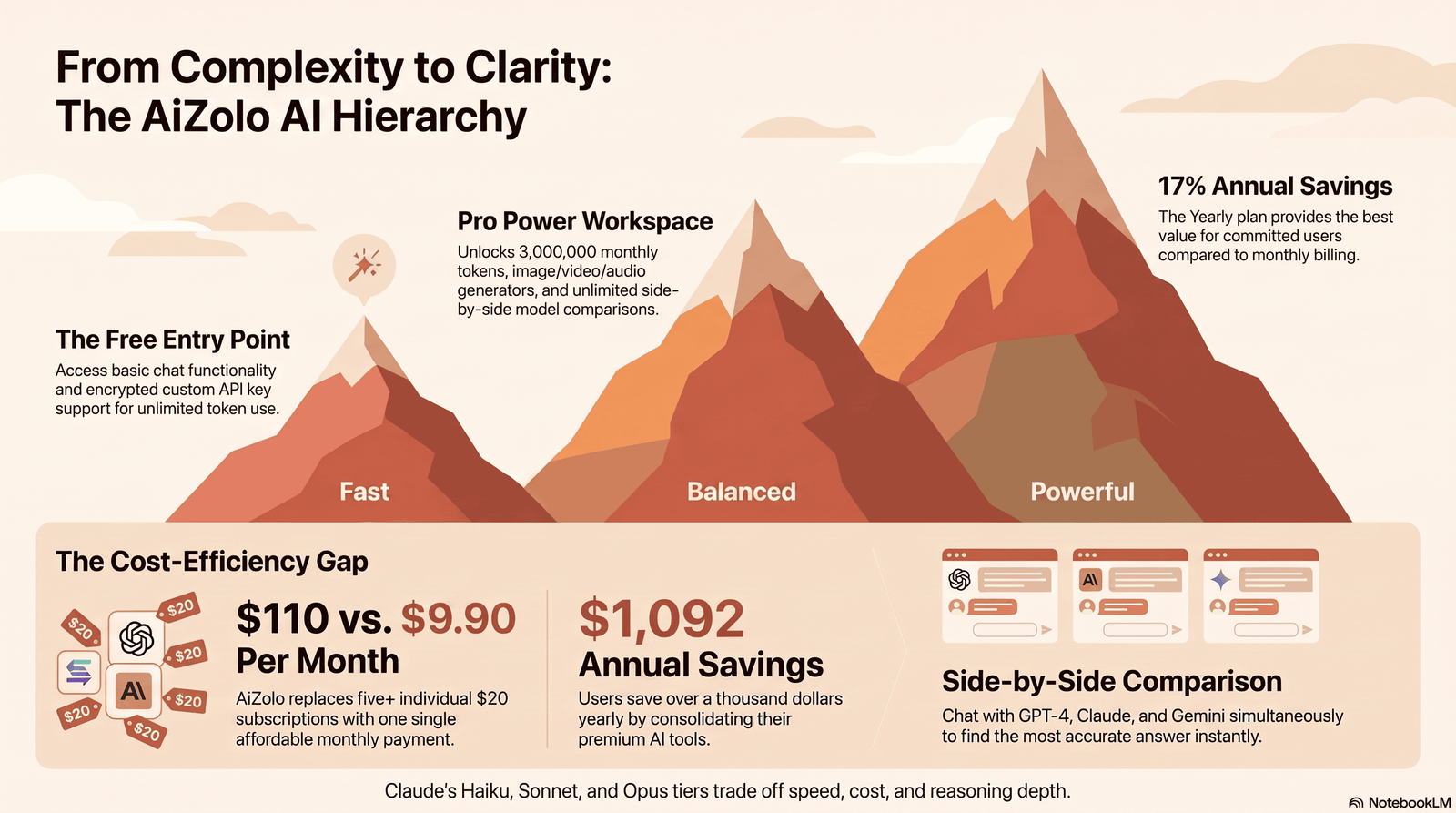
Claude‘s lineup uses a three-tier naming system: Haiku (fastest, cheapest), Sonnet (balanced, the default for most users), and Opus (Anthropic’s most capable general-availability tier). As of August 2026, the active lineup includes Claude Opus 5, Claude Sonnet 5, and Claude Haiku 4.5, alongside two newer Mythos-tier models — Claude Fable 5 and Claude Mythos 5 — that sit above Opus, with Mythos access currently limited to approved partners. The prior generation, Claude Opus 4.8, remains available at the same price point.
Anthropic built its brand around Constitutional AI, a training approach designed to make Claude’s behavior more predictable and aligned with an explicit set of principles, and around long-context reliability — Claude’s frontier models support context windows up to roughly 1 million tokens, which matters for large codebases and document-heavy work.
Strengths: strong coding reliability, long and consistent context handling, careful reasoning on ambiguous instructions, and a mature enterprise trust/compliance program.
Weaknesses: no open-weight option at all (Claude is fully closed), and per-token pricing that generally sits above Mistral’s, particularly on output tokens.
Mistral vs Claude: Quick Comparison Table
| Feature | Mistral AI | Claude (Anthropic) |
|---|---|---|
| Developer | Mistral AI (France) | Anthropic (USA) |
| Flagship model (2026) | Mistral Large 3 | Claude Opus 5 / Sonnet 5 |
| Context window | Up to ~256K tokens | Up to ~1M tokens (flagship tiers) |
| Open-weight option | Yes, several models | No |
| API availability | La Plateforme, major cloud resellers | Anthropic API, AWS Bedrock, Google Cloud, Microsoft Foundry |
| Coding focus | Codestral, Devstral | Strong general coding across all tiers, Claude Code |
| Vision support | Yes, on Large and Medium tiers | Yes, across current tiers |
| EU data residency | Native (Paris-based) | Available via regional deployment options |
| Licensing | Apache 2.0 / research license (select models) | Proprietary only |
| Free tier | Le Chat / Vibe free tier | Claude.ai free tier |
Pricing is intentionally excluded from this table — see the dedicated Pricing Comparison section, since both providers change rates frequently.
Architecture Differences
Both companies build transformer-based large language models, but their design priorities diverge in practice rather than in the underlying math.
Mistral has leaned on mixture-of-experts (MoE) architectures for its larger models, including the current Large generation. MoE designs activate only a subset of the model’s total parameters for any given request, which helps keep inference costs down — part of why Mistral can price output tokens so aggressively.
Anthropic has not published detailed architecture specifics for its current Claude generation, which is standard practice among frontier labs. What Anthropic does publish clearly is behavioral: training methodology built around Constitutional AI, and a strong emphasis on maintaining consistent behavior across very long context windows, which is where a lot of production coding and document-analysis workloads actually live.
The practical takeaway: Mistral’s architecture choices optimize for cost-efficient throughput, while Claude’s choices optimize for consistency at scale and over long context — and that distinction shows up directly in the coding and reasoning sections below.
Coding Performance
Coding is where most head-to-head “mistral vs claude” searches originate, so it’s worth separating the claim into its parts.
- Code generation from a clear spec: Both model families handle common languages (Python, JavaScript, TypeScript, Go, Java) competently. Mistral’s Codestral and Devstral models are purpose-built for this and are fast and cheap for routine completion tasks.
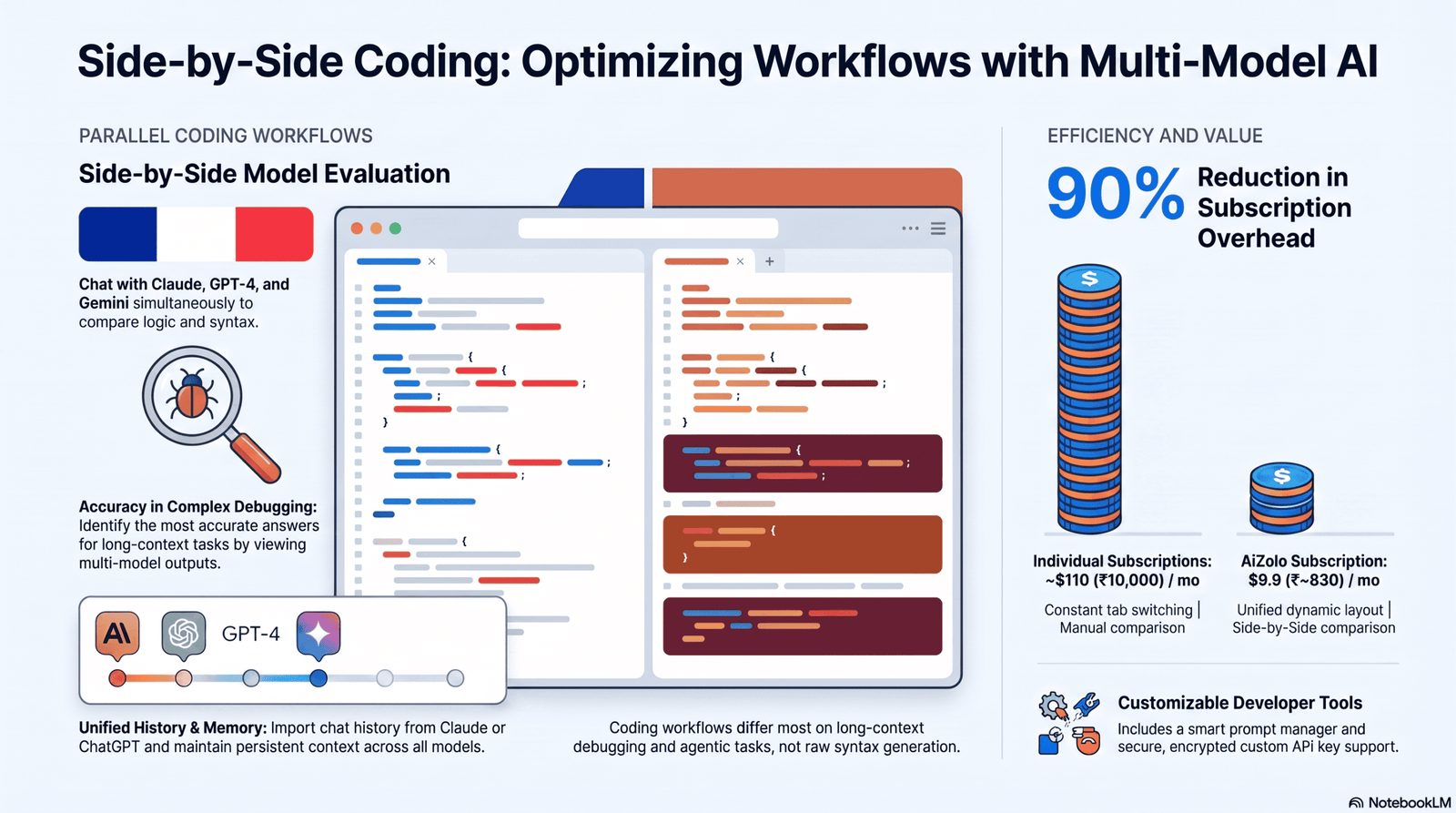
- Debugging and multi-file reasoning: This is where Claude has built its reputation. Claude’s larger context window means it can hold more of a real repository in memory at once, which reduces the “it forgot what the other file does” failure mode that shows up with smaller context windows.
- Agentic coding workflows: Anthropic ships Claude Code, a dedicated agentic coding tool, which gives Claude an edge in autonomous, multi-step coding tasks specifically. Mistral’s Devstral models are also positioned for coding agents but have a smaller surrounding tool ecosystem.
- Long-context repositories: With context windows up to roughly 1M tokens on Claude’s flagship tiers versus roughly 256K on Mistral’s, Claude has more headroom for genuinely large codebases without chunking.
Neither company publishes numbers suggesting one model is definitively “better at coding” across every language and task type — that claim shifts with every release, and you should verify current benchmark standings before treating either as a settled fact.
Writing Quality
For blogs, documentation, and long-form content, both models produce fluent, grammatically clean output. The differences are more about tone control than raw quality:
- Claude tends to produce writing with more consistent structure over long outputs and is generally considered strong at following detailed style instructions.
- Mistral’s models, particularly the Medium and Large tiers, produce competent business and technical writing and are well-suited to high-volume content pipelines where cost per word matters more than stylistic nuance.
If your use case is short-form marketing copy or internal documentation at scale, the cost difference (see Pricing Comparison) may matter more than any quality gap you’ll notice in a blind read-through.
Reasoning, Math & Logic
Both companies now ship dedicated reasoning-oriented models — Mistral’s Magistral line uses explicit chain-of-thought reasoning, while Claude’s higher tiers (Opus, and the newer Mythos-tier models) are built for extended, multi-step reasoning and planning tasks.
A practical note on reasoning models generally, true of both providers: chain-of-thought and extended-reasoning modes generate substantially more output tokens per response than a standard completion. If you’re budgeting API costs, plan for 2–5x the output token volume you’d expect from a non-reasoning model call, regardless of which provider you choose.
Neither company has published fabricated or cherry-picked benchmark claims — but independent benchmark leaderboards (see next section) are the more reliable place to check current reasoning standings, since they update continuously and both companies release new models often enough to shift the picture within weeks.
Benchmarks: What They Actually Tell You
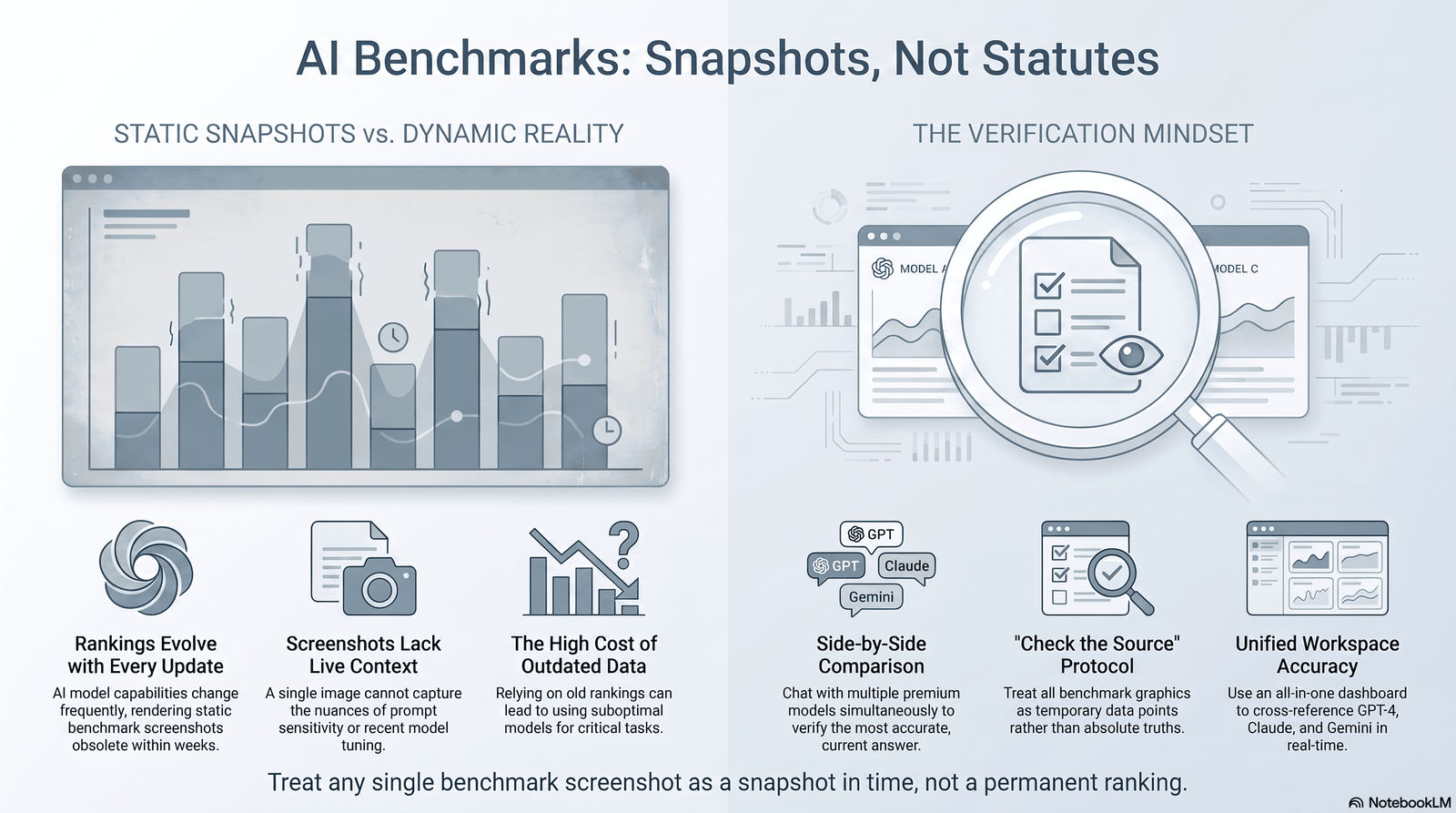
This guide deliberately does not print specific benchmark scores, because both Mistral and Claude ship new model versions frequently enough that any number quoted here would likely be outdated by the time you read it — and republishing stale numbers as current fact is exactly the kind of misleading comparison Google’s quality guidelines flag.
Instead, here’s how to read benchmarks correctly when comparing mistral vs claude:
- Check the model version, not just the brand. “Claude” and “Mistral” are families, not single models — a benchmark score for Claude Haiku tells you nothing about Claude Opus.
- Cross-reference at least two independent leaderboards (for example, LMSYS Chatbot Arena–style community rankings and provider-independent benchmark aggregators) rather than trusting a single source.
- Match the benchmark to your actual task. A model that leads on general chat benchmarks may not lead on code-specific or long-context benchmarks.
- Recheck before you commit budget. Both labs ship updates on a cadence of weeks to months, and rankings shift accordingly.
API Comparison
| Factor | Mistral API (La Plateforme) | Claude API (Anthropic) |
|---|---|---|
| Endpoint style | OpenAI-compatible /v1/chat/completions | Anthropic Messages API |
| Function/tool calling | Supported | Supported, including MCP (Model Context Protocol) |
| Streaming | Supported | Supported |
| Batch processing discount | Available on select models | 50% off via Batch API, all models |
| Prompt caching | Available | Available, cached reads billed around 10% of standard input rate |
| Documentation | La Plateforme docs | docs.claude.com |
| Cloud reseller availability | Azure, select partners | AWS Bedrock, Google Cloud Vertex AI, Microsoft Foundry |
Developer experience feedback tends to favor whichever API you learned first, since both are well-documented and both support the now-standard OpenAI-style chat completion pattern in some form. The more meaningful difference is Claude’s newer support for MCP (Model Context Protocol), an open standard for connecting models to external tools and data sources, which has seen faster ecosystem adoption than Mistral’s equivalent tooling as of mid-2026.
Pricing Comparison
Pricing is the single fastest-changing fact in this entire comparison. Both companies have cut prices on new model generations within the past year, and third-party trackers frequently disagree with each other by a factor of 2–4x depending on when they last synced with the official pricing page.
Treat every number below as directional, and verify against mistral.ai/pricing and claude.com/pricing before budgeting.
| Tier | Mistral (approximate, verify before use) | Claude (approximate, verify before use) |
|---|---|---|
| Entry/small model | ~$0.15 input / $0.60 output per million tokens (Small 4) | $1.00 input / $5.00 output per million tokens (Haiku 4.5) |
| Mid-tier model | ~$1.50 input / $7.50 output per million tokens (Medium 3.5) | $2.00 input / $10.00 output through Aug 31, 2026, then $3.00/$15.00 (Sonnet 5) |
| Flagship model | ~$0.50 input / $1.50 output per million tokens (Large 3) | $5.00 input / $25.00 output per million tokens (Opus 5, same as Opus 4.8) |
| Top/reasoning tier | Magistral Medium, ~$2.00 input / $5.00 output | $10.00 input / $50.00 output per million tokens (Fable 5 / Mythos 5) |
| Free consumer tier | Le Chat / Vibe free plan, soft usage caps | Claude.ai free plan, soft usage caps |
| Cheapest paid consumer plan | Le Chat Pro, ~$14.99/month | Claude Pro, $20/month |
| Batch discount | Available on supported models | 50% off input and output, stacks with prompt caching |
What’s consistent across sources: Mistral is meaningfully cheaper on a pure per-token basis, especially on output tokens, largely due to its mixture-of-experts architecture.
Claude’s higher price reflects its larger context window and, per independent reviewers, stronger performance consistency on long or complex tasks.
Whether that trade-off is worth it depends entirely on your workload — high-volume, short-context tasks favor Mistral’s economics; long-context, high-stakes tasks often justify Claude’s premium.
Enterprise Comparison
| Factor | Mistral AI | Claude (Anthropic) |
|---|---|---|
| Headquarters / primary jurisdiction | Paris, France (EU) | San Francisco, USA |
| Data residency | Native EU hosting (Sweden/Ireland primary, per Mistral’s published subprocessor list) | Regional deployment options through cloud partners |
| Compliance frameworks referenced | SOC 2 Type II, ISO 27001/27701 (per Mistral’s Trust Center) | SOC 2, enterprise compliance program documented via Anthropic’s Trust Center |
| Self-hosting / private deployment | Yes, for open-weight models | No — Claude is closed-weight only |
| EU AI Act positioning | Headquartered inside the EU; markets this as a structural advantage | Complies as a non-EU provider serving EU customers |
Mistral’s EU-native status is a genuine structural advantage for organizations whose primary blocker is data residency or US CLOUD Act exposure — this isn’t marketing spin, it’s a jurisdictional fact. Anthropic, meanwhile, has built out a more extensive enterprise compliance and admin-controls program overall, reflecting its longer track record serving large regulated US enterprises.
Always request the current SOC 2 report and DPA directly from either vendor’s trust center rather than relying on a blog post — certification status and subprocessor lists change.
Privacy & Security
Both companies state that API data submitted through their standard commercial API is not used to train models by default. Consumer-facing free tiers are where policies diverge more:
- Mistral’s free Vibe/Le Chat tier may use conversations to improve models unless the user opts out, per Mistral’s own documentation; paid tiers (Pro, Team, Enterprise) are excluded from training by default.
- Claude’s consumer terms similarly distinguish between free and paid tiers, with enterprise and API customers typically covered by stronger contractual data-use exclusions — check the current Claude.ai and API terms for the specifics that apply to your plan.
Retention periods, subprocessor lists, and regional data flows change on both sides often enough that this article won’t quote exact numbers — pull the current DPA from whichever vendor you’re evaluating before finalizing a security review.
Speed & Latency
Real-world latency depends heavily on model size, region, and current load rather than being a fixed brand trait. As a general pattern reported across independent monitoring services:
- Mistral’s smaller models (Small, Ministral) are optimized for low latency and are commonly used in real-time or edge scenarios.
- Claude’s Haiku tier plays the same role on Anthropic’s side — the fastest, cheapest tier built for latency-sensitive applications.
- Flagship models on both sides (Mistral Large, Claude Opus) trade speed for reasoning depth, and both offer a mid-tier (Mistral Medium, Claude Sonnet) as the practical default for most production apps.
If latency is your binding constraint, benchmark your actual prompt against both providers’ smallest capable model rather than assuming either brand is universally faster — third-party monitoring shows both providers’ latency shifting week to week with demand.
Multilingual Performance
Mistral markets multilingual capability heavily, unsurprising given its European base and the number of official EU languages its customers operate in — French, German, Spanish, Italian, and other European languages are a core focus area, alongside broader global language support on its larger models.
Claude also supports a wide range of languages across its model family and is commonly used for translation and localization workloads, particularly where long-document consistency (keeping terminology and tone consistent across a long translated document) matters more than raw language count.
Neither company has published a definitive, current multilingual benchmark that this article can cite without risking staleness — if multilingual accuracy is a deciding factor for your use case, run a small pilot in your specific target languages with your actual content type before committing.
Strengths & Weaknesses
Mistral AI
Pros
- Aggressive, transparent per-token pricing, especially on output
- Open-weight models available for self-hosting
- Native EU data residency and jurisdiction
- Fast, efficient smaller models for edge and high-volume use
Cons
- Smaller context window than Claude’s flagship tiers
- Smaller third-party integration and tooling ecosystem
- Frontier-tier reasoning consistency reported as more variable in independent reviews
Claude (Anthropic)
Pros
- Very large context window, strong for big codebases and long documents
- Strong, consistently reviewed coding and agentic performance, backed by Claude Code
- Mature enterprise compliance program and broad cloud-partner availability
- MCP tool-calling ecosystem growing quickly
Cons
- No open-weight or self-hosting option at any tier
- Generally higher per-token pricing, especially at the flagship tier
- US-based jurisdiction may be a blocker for strict EU-data-residency requirements
Which Model Is Better? (By Use Case)
- Developers: Claude for large repositories and agentic coding workflows via Claude Code; Mistral’s Codestral/Devstral for cheap, fast completion at scale.
- Businesses (general): Depends on data residency requirements — EU-bound businesses often default to Mistral; US enterprises often default to Claude.
- Researchers: Claude’s long context window suits document-heavy research synthesis; Mistral’s open weights suit researchers who need to fine-tune or inspect model internals.
- Students: Either free tier is workable; Mistral’s Le Chat free plan and lower Pro price point make it attractive on a budget.
- Content marketers and agencies: Mistral’s low output-token cost suits high-volume drafts; Claude’s writing consistency suits brand-sensitive, client-facing copy — a mixed approach is common in practice.
- Startups: Cost-sensitive, early-stage teams often start with Mistral’s cheaper tiers; teams building complex agentic products often start with Claude for reliability.
- Enterprise: Depends almost entirely on jurisdiction and existing cloud contracts more than raw model quality.
If you’re weighing Mistral against OpenAI rather than Claude for these same use cases, our OpenAI vs Mistral AI comparison walks through the same decision points in more depth.
Real Use Cases
- A European fintech using Mistral’s self-hosted open-weight models to keep customer financial data entirely on EU infrastructure for regulatory reasons.
- A software team using Claude Code to review and refactor a large, multi-service codebase where the ability to hold more of the repository in context reduces missed edge cases.
- A content agency using Mistral’s cheaper output pricing to generate first-draft blog volume, then using Claude for final client-facing polish where tone consistency matters more.
- A customer support team deploying a smaller, low-latency model from either provider (Mistral Small or Claude Haiku) for real-time chat triage, reserving the flagship tier for escalated, complex tickets.
Common Mistakes When Choosing
- Comparing brand to brand instead of model to model. “Claude” and “Mistral” each cover multiple tiers with very different pricing and capability — compare the specific model you’d actually deploy.
- Trusting a single benchmark screenshot. Scores shift with every release; cross-check at least two current sources.
- Ignoring context window needs until production. A 128K–256K window is plenty for most single-document tasks but can silently truncate large codebase or multi-document workflows.
- Skipping the DPA review. Data residency and training-use policies differ by plan tier (free vs. paid vs. enterprise) on both platforms — read your specific tier’s terms.
- Anchoring on old pricing. Both companies have cut prices significantly within the past year; a six-month-old cost comparison is not reliable for budgeting today.
Frequently Asked Questions
Is Mistral better than Claude? Neither is universally better — Mistral is generally cheaper and offers open-weight self-hosting, while Claude offers a larger context window and is more consistently reviewed for complex coding and long-document tasks. The right choice depends on your budget, data-residency needs, and task type.
What is Mistral AI? Mistral AI is a Paris-based AI lab that builds a family of large language models, including open-weight options, spanning edge-sized to flagship-scale models.
What is Claude AI? Claude is Anthropic’s family of AI models, available through claude.ai, the developer API, and major cloud platforms, built around a safety-focused training approach called Constitutional AI.
Which AI is best for coding? Both are strong. Claude’s larger context window and dedicated Claude Code tool make it a common choice for large, multi-file codebases and agentic workflows; Mistral’s Codestral and Devstral models are strong, low-cost options for routine code completion.
Which AI is cheaper? Mistral is generally cheaper on a per-token basis, particularly for output tokens, due to its mixture-of-experts architecture. Always verify current rates on each provider’s official pricing page, since both change often.
Does Mistral have a larger context window than Claude? No — as of mid-2026, Mistral’s flagship context window tops out around 256K tokens, while Claude’s flagship tiers support up to roughly 1 million tokens.
Is Mistral open source? Several Mistral models are released under open-weight licenses (Apache 2.0 or a research license), which is not the same as fully open source, but it does allow self-hosting. Mistral’s newest flagship models are not all open-weight.
Is Claude open source? No. Claude is fully closed-weight; it’s only available via API or hosted chat interface.
Which is better for EU businesses handling personal data? Mistral’s native EU headquarters and data residency give it a structural advantage for strict data-residency requirements, though Claude also offers regional deployment options through cloud partners — review both DPAs directly.
Can I self-host Claude like I can with Mistral? No. Claude has no self-hosted or on-premises deployment option; it is only accessible through Anthropic’s API or approved cloud marketplaces.
Which AI is faster? It depends on the specific model tier and current load rather than the brand — compare each provider’s smallest capable model for your task if latency is critical.
Do both companies offer a free plan? Yes. Mistral offers a free Le Chat/Vibe plan and Claude offers a free claude.ai plan, both with usage limits.
Which is better for multilingual content? Both support a wide range of languages. Mistral emphasizes European languages given its EU base; Claude is broadly used for translation and localization work as well. Pilot-test your specific target languages before committing.
How often do these models get updated? Both companies release new model versions frequently — often every few months — which means pricing, benchmarks, and context windows in this article should be reverified before major purchasing decisions.
Which model should a solo developer with a small budget choose? Mistral’s lower-cost tiers, including its free Le Chat plan and cheap Small/Ministral API models, are generally more budget-friendly for solo developers and hobby projects.
Final Verdict
There is no single winner in the mistral vs claude comparison — the honest answer is that they’re optimized for different constraints. Mistral wins on price, open-weight flexibility, and EU data residency. Claude wins on context window size, coding and agentic task consistency, and enterprise compliance maturity in the US market.
If your workload is cost-sensitive, high-volume, or requires self-hosting or strict EU jurisdiction, Mistral is the more defensible default. If your workload involves large codebases, complex agentic automation, or long-document reasoning where consistency matters more than per-token cost, Claude is the stronger fit. Many production teams end up using both — Mistral for volume and cost efficiency, Claude for the tasks where getting it right the first time is worth paying more for.
Before you commit budget or build a procurement case around any number in this article, reverify current pricing and benchmark standings on mistral.ai/pricing and claude.com/pricing, since both companies update these figures more often than most comparison content gets refreshed.
Author Bio
Jeevesh Tripathi — AI Researcher & Technical Content Writer 📧 jeevesh@aizolo.com
Jeevesh Tripathi researches and writes about frontier AI models, developer tooling, and enterprise AI adoption, with a focus on translating fast-changing model releases and pricing into practical, verifiable guidance for technical and business readers. His work centers on cutting through marketing claims to give developers and decision-makers a clear, sourced picture of what each AI platform actually offers today.

Pingback: What Is an All-in-One AI Subscription Service? 7 Powerful Benefits
Pingback: Does Claude Sonnet 4.5 Have a Limit? Full Guide
Pingback: Top 5 AI Models in the World 2026 (Honest Breakdown)
Pingback: The Best All in One AI Platform in 2026 | AiZolo
Pingback: how to use multiple ai at once: 7 smart & risky guide
Pingback: How to Chat with Multiple AI Models: Proven Guide 2026