

Coming up with the right title can take longer than writing the first chapter. An AI book title generator shortens that struggle by turning your genre, plot, and tone into dozens of usable options in seconds.
Titles matter more than most writers expect. A weak title can bury a great manuscript, while a sharp one can be the difference between a reader clicking “buy” or scrolling past. As self-publishing has grown more competitive, authors have started leaning on AI tools not to replace their judgment, but to speed up the brainstorming stage and surface angles they hadn’t considered.
This guide covers what an AI book title generator actually does, how the technology behind it works, the best tools available in 2026, and how to write prompts that produce titles worth keeping. You’ll also find genre-specific examples, common mistakes to avoid, and practical SEO guidance for both Amazon and Google discoverability.
Quick Answer: An AI book title generator is a tool — usually built on a large language model like GPT, Claude, or Gemini — that analyzes your book’s genre, plot, and tone to suggest multiple title options. The best ones (ChatGPT, Claude, Sudowrite, Grammarly) work well for brainstorming, but human judgment is still needed to pick a title that’s original, brand-appropriate, and legally safe to use.
Table of Contents
What is an AI Book Title Generator?
An AI book title generator is software that uses natural language processing to suggest book titles based on details you provide — genre, theme, main character, tone, or a short plot summary.
Instead of staring at a blank page, you type a sentence or two about your book, and the tool returns a list of possible titles. Some generators are standalone tools built specifically for this purpose. Others are general-purpose AI writing assistants like ChatGPT or Claude, used with a well-crafted prompt.
Examples of what you might get back:
- Input: “A fantasy novel about a thief who steals memories.”
- Output: The Memory Thief, Stolen Recollections, What the Mind Forgets, The Collector of Lost Memories
Key benefits:
- Speeds up brainstorming when you’re stuck
- Generates options across multiple tones (dark, playful, literary)
- Helps non-native English speakers phrase titles naturally
- Useful for series naming consistency
Who should use it:
- Self-published authors working without an editorial team
- Bloggers naming ebooks or lead magnets
- Fiction writers experimenting with tone
- Nonfiction authors testing clarity vs. curiosity
- Publishing teams doing early-stage brainstorming
It’s worth being clear about what these tools are not. An AI book title generator doesn’t understand your book the way you do, and it can’t guarantee originality. It’s a brainstorming partner, not a final decision-maker.
How Does an AI Book Title Generator Work?
Most modern title generators are powered by large language models (LLMs) — the same underlying technology behind tools like ChatGPT, Claude, and Gemini.
Here’s a simplified breakdown of the process:
- Prompt understanding — The model parses your input to identify genre, tone, subject matter, and any keywords you’ve included.
- Pattern recognition — LLMs are trained on enormous volumes of text, including published titles across genres, so they’ve learned the linguistic patterns readers associate with thrillers, romance, self-help, and so on.
- Genre analysis — The model adjusts word choice and structure based on genre conventions (e.g., short punchy titles for thrillers, evocative phrases for literary fiction).
- Creativity sampling — A setting called “temperature” controls how predictable or unusual the output is. Higher temperature settings produce more unexpected combinations.
- Output ranking — Some tools generate many candidates internally and surface only the ones that best match your prompt’s tone and constraints.
None of this means the AI “understands” your book emotionally. It’s pattern-matching at scale, informed by statistical relationships between words, genres, and reader expectations, rather than genuine comprehension of your story’s meaning.
Why Authors Use AI Book Title Generators
Brainstorming and creativity. Writer’s block doesn’t only hit during drafting — it hits hard when naming a manuscript you’ve lived with for months. AI tools offer a fast way to see fresh angles.
Speed. Where manual brainstorming might produce ten options in an hour, an AI generator can produce fifty in a minute, giving you more raw material to react to.
Overcoming attachment bias. Authors often get emotionally attached to a working title that doesn’t actually serve the book. Seeing external suggestions can help break that attachment.
Marketing and branding support. Some tools can suggest titles with built-in keyword relevance, useful for genre fiction sold heavily through Amazon search.
SEO consideration. For nonfiction and self-help authors, a title that mirrors how readers search (e.g., “habit” or “anxiety”) can meaningfully affect discoverability.
None of these benefits replace editorial judgment — they simply compress the time it takes to get to a shortlist worth debating.
Best AI Book Title Generator Tools (2026)
There’s no single “best” tool for everyone — the right choice depends on whether you want a dedicated title generator or a flexible AI writing assistant you can prompt creatively. Below is a balanced look at ten commonly used options.
| Tool | Strengths | Weaknesses | Best Use Case |
|---|---|---|---|
| ChatGPT | Strong creative range, easy to iterate with follow-up prompts | Can produce generic titles without a detailed prompt | General brainstorming across genres |
| Claude | Nuanced tone control, good at literary/character-driven titles | Fewer dedicated “title generator” templates | Literary fiction, nuanced tone |
| Gemini | Fast, integrates with Google Workspace docs | Title quality varies by prompt specificity | Authors already in the Google ecosystem |
| Sudowrite | Purpose-built for fiction writers, genre-aware | Subscription cost, fiction-focused only | Fiction authors wanting genre-tuned output |
| Grammarly | Built-in writing assistant, accessible for beginners | Title generation is a secondary feature, not core | Writers already using Grammarly for editing |
| Originality.ai | Strong at checking AI-content and originality scoring | Not primarily a creative generator | Verifying originality of AI-assisted titles |
| Jasper | Marketing-oriented templates, brand-voice settings | Geared more toward marketing copy than books | Nonfiction/business book authors |
| Copy.ai | Simple templates, fast output | Less genre nuance for fiction | Quick nonfiction or blog-to-book titles |
| Writesonic | Affordable, multiple content templates | Output can feel formulaic | Budget-conscious authors |
| Rytr | Low-cost, simple interface | Limited creative depth for complex genres | Beginners testing AI tools for the first time |
A balanced note: general-purpose assistants like ChatGPT and Claude tend to outperform dedicated “title generator” widgets once you invest a little effort into prompt writing, because they can hold more context about your book. Purpose-built tools like Sudowrite can be faster if you don’t want to write a prompt from scratch.
If you’re evaluating AI tools more broadly and want to compare pricing and access across multiple models in one place, it’s worth looking into a best all in one ai platform rather than paying for several separate subscriptions.
How to Generate Better Book Titles with AI
Getting good output starts with a well-built prompt. Vague prompts produce vague titles.
Step 1: Choose your genre. Genre shapes tone, length, and word choice. A thriller title reads differently from a cozy romance title even when covering similar themes.
Step 2: Define your audience. A children’s book title needs simplicity; a business book title often needs authority and clarity.
Step 3: Summarize your plot or premise in 1–2 sentences. The more specific the summary, the less generic the output.
Step 4: Add emotional tone. Words like “haunting,” “hopeful,” “witty,” or “gritty” steer the AI’s word choice meaningfully.
Step 5: Include target keywords (for nonfiction). If discoverability matters, mention the core problem your book solves.
Step 6: Ask for variations. Request multiple tonal directions — literal, metaphorical, and question-based titles — in the same prompt.
Step 7: Refine, don’t accept the first batch. Treat the first output as a rough draft. Ask the AI to combine elements from two titles you liked, or push it toward shorter or longer phrasing.
Prompt Examples by Genre
Use these as templates and swap in your own details.
Fantasy
- “Suggest 10 fantasy book titles for a story about a dragon-riding assassin seeking redemption.”
- “Give me epic, mythic-sounding titles for a trilogy about a fallen kingdom rebuilding itself.”
Romance 3. “Generate flirty, upbeat titles for a small-town enemies-to-lovers romance.” 4. “Suggest emotional, bittersweet titles for a second-chance romance set during wartime.”
Business 5. “Create authoritative, clear nonfiction titles for a book about leadership under pressure.” 6. “Suggest curiosity-driven titles for a book about negotiation tactics for startup founders.”
Thriller 7. “Give me short, punchy thriller titles for a story about a detective hunting a copycat killer.” 8. “Suggest psychological thriller titles involving an unreliable narrator and a missing child.”
Science Fiction 9. “Generate sci-fi titles for a story about the last human colony on a dying planet.” 10. “Suggest titles blending hard science and emotional stakes for a first-contact novel.”
Children’s 11. “Create simple, playful titles for a picture book about a shy monster who wants a friend.” 12. “Suggest rhyming or alliterative titles for a chapter book about a clumsy young wizard.”
Self-Help 13. “Generate motivating, clear titles for a book about building better morning habits.” 14. “Suggest empathetic titles for a book helping readers cope with burnout.”
Biography 15. “Suggest reflective, dignified titles for a memoir about immigrating and rebuilding a career.”
History 16. “Generate evocative titles for a nonfiction book about an overlooked event in WWII.”
Mystery 17. “Suggest atmospheric mystery titles for a story set in a snowed-in mountain lodge.”
Examples of AI-Generated Book Titles
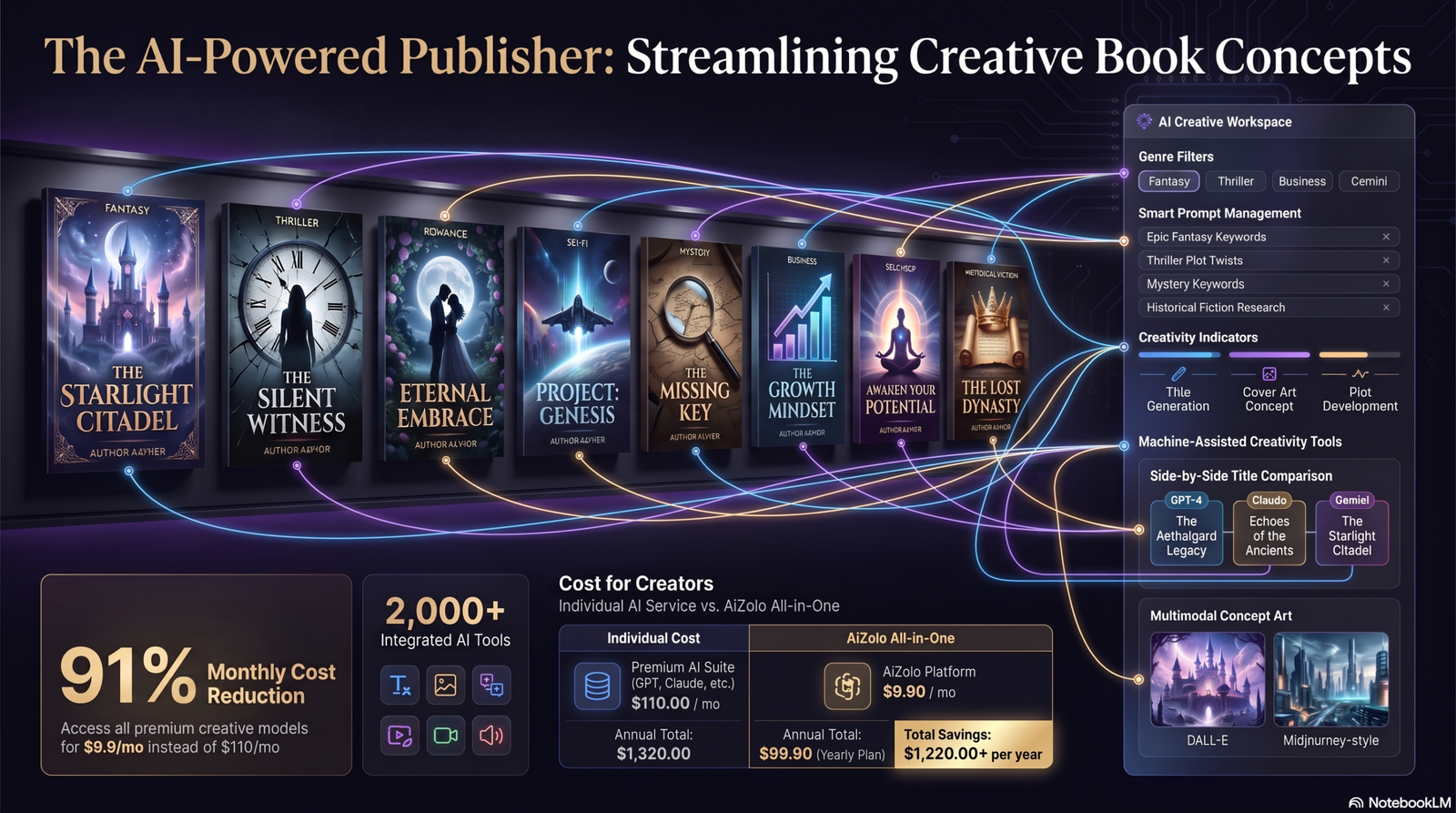
The following are illustrative, AI-generated example titles grouped by genre. Treat them as inspiration, not final answers — always check availability before committing to one.
Fantasy: The Ash Crown, Where Dragons Sleep, The Last Rune, Kingdom of Broken Stars, The Thief of Names, Bloodline of the Fallen, The Silent Throne, Wings of Ember
Romance: Falling for the Wrong Neighbor, Second Chances in Maple Grove, The Wedding I Almost Missed, Love, Interrupted, A Little Too Close, Under the Same Storm, Better the Second Time, The Truth About Us
Thriller/Mystery: The Last Confession, Nothing Was Ever True, The Quiet Suspect, Cabin Nine, What She Left Behind, The Copycat, Silent Witness Lane, All the Missing Hours
Science Fiction: The Final Colony, Echoes of Earth, The Last Signal, Beyond the Dying Star, Children of the Void, The Machine Remembers, Orbit of Silence, After the Last Sky
Self-Help/Nonfiction: The Focused Mind, Small Habits, Big Change, Rebuilding After Burnout, The Discipline of Rest, Your Best Ordinary Day, Clarity Over Chaos, The Confidence Ledger, Better by Design
Children’s: The Monster Who Wanted a Friend, Sammy and the Backwards Day, The Bravest Little Firefly, Milo’s Magic Umbrella, The Cloud Who Couldn’t Rain, Tilly and the Talking Tree, The Grumpy Little Dragon, Where Did My Shadow Go?
AI Book Title Generator vs. Manual Brainstorming
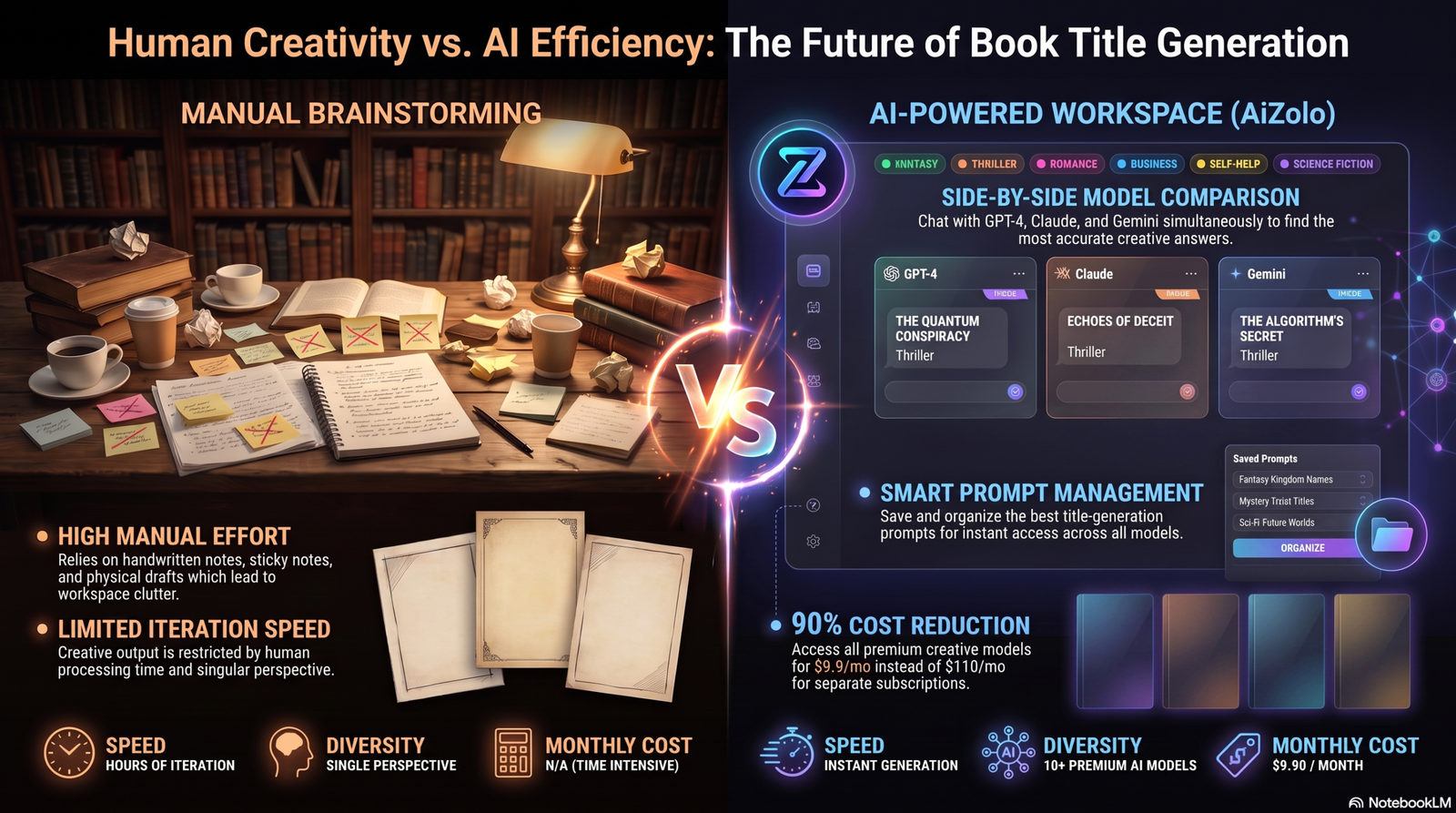
| Factor | AI Book Title Generator | Manual Brainstorming |
|---|---|---|
| Speed | Generates dozens of options in seconds | Slower, limited by personal energy and time |
| Creativity | Wide range, but can feel generic without a strong prompt | Deeply personal, tied to the author’s unique voice |
| Originality | Risk of overlap with existing titles | Fully original, shaped by lived experience |
| Editing effort | Requires filtering and refining | Often requires more iteration from scratch |
| Branding fit | May miss subtle brand nuances | Naturally aligned with the author’s established voice |
| Best for | Early-stage idea generation | Final decision-making and emotional resonance |
The most effective approach for most authors combines both: use AI to generate a wide pool of options quickly, then apply human judgment — informed by market research and personal voice — to narrow it down.
Best Practices for Choosing a Title
- Lead with an emotional hook. Titles that promise a feeling (fear, hope, curiosity) tend to outperform purely descriptive ones.
- Favor clarity over cleverness. A title that’s too abstract can confuse potential readers about the genre.
- Keep it simple to say and spell. Titles that are hard to pronounce are harder to recommend by word of mouth.
- Think about series branding. If this is book one of a series, consider a naming pattern you can repeat.
- Check Amazon discoverability. Search your working title on Amazon to see what already exists in that space.
- Test it out loud. Say the title in a sentence like “Have you read ___?” to hear how natural it sounds.
Common Mistakes to Avoid
- Generic titles. Overly broad titles (The Journey, New Beginnings) get lost among thousands of similar books.
- Copyright and trademark blind spots. Reusing a title too close to an existing bestseller can create legal and marketing confusion.
- Keyword stuffing. Cramming multiple keywords into a title makes it read like an ad, not a book.
- Titles that are too long. Long, wordy titles are harder to remember and display poorly on thumbnails.
- Difficult pronunciation. If readers can’t say it confidently, they’re less likely to recommend it verbally.
- Copying competitor titles. Near-identical titles to a known book can trigger reader confusion and even platform flags.
Can AI Generate Copyright-Free Book Titles?
Book titles themselves are generally not eligible for copyright protection in most jurisdictions, since copyright covers original creative works, not short phrases or names. However, that doesn’t mean anything goes.
Trademark risk exists. If a title matches a registered trademark — especially for a well-known series or brand — using it commercially can create legal exposure, separate from copyright law.
Originality still matters for branding. Even without a formal copyright claim, using a title extremely close to a bestselling book can mislead readers and invite takedown requests from retailers like Amazon.
AI doesn’t guarantee uniqueness. Because generators are trained on existing text, they can occasionally reproduce or closely resemble real, existing titles. Always run a manual search before finalizing.
Disclaimer: This section is for general informational purposes and is not legal advice. If you have concerns about a specific title, consult an intellectual property attorney.
SEO Tips for Book Titles
Amazon SEO: Amazon’s search algorithm weighs title relevance heavily for keyword matches, especially in nonfiction and genre fiction categories.
Google SEO: For authors also marketing through a website or blog, aligning your book title (or subtitle) with commonly searched phrases can improve organic visibility.
Keyword placement: Front-load important keywords when possible, especially in nonfiction subtitles (e.g., Atomic Habits: An Easy and Proven Way to Build Good Habits).
Branding vs. searchability trade-off: Highly brandable titles (short, evocative) sometimes sacrifice keyword match. A strong subtitle can bridge that gap.
Click-through rate: On retail and search platforms alike, titles that promise a specific, tangible outcome tend to earn higher click-through than vague, artistic ones — particularly in nonfiction.
Should You Subscribe to One AI Tool or Several?
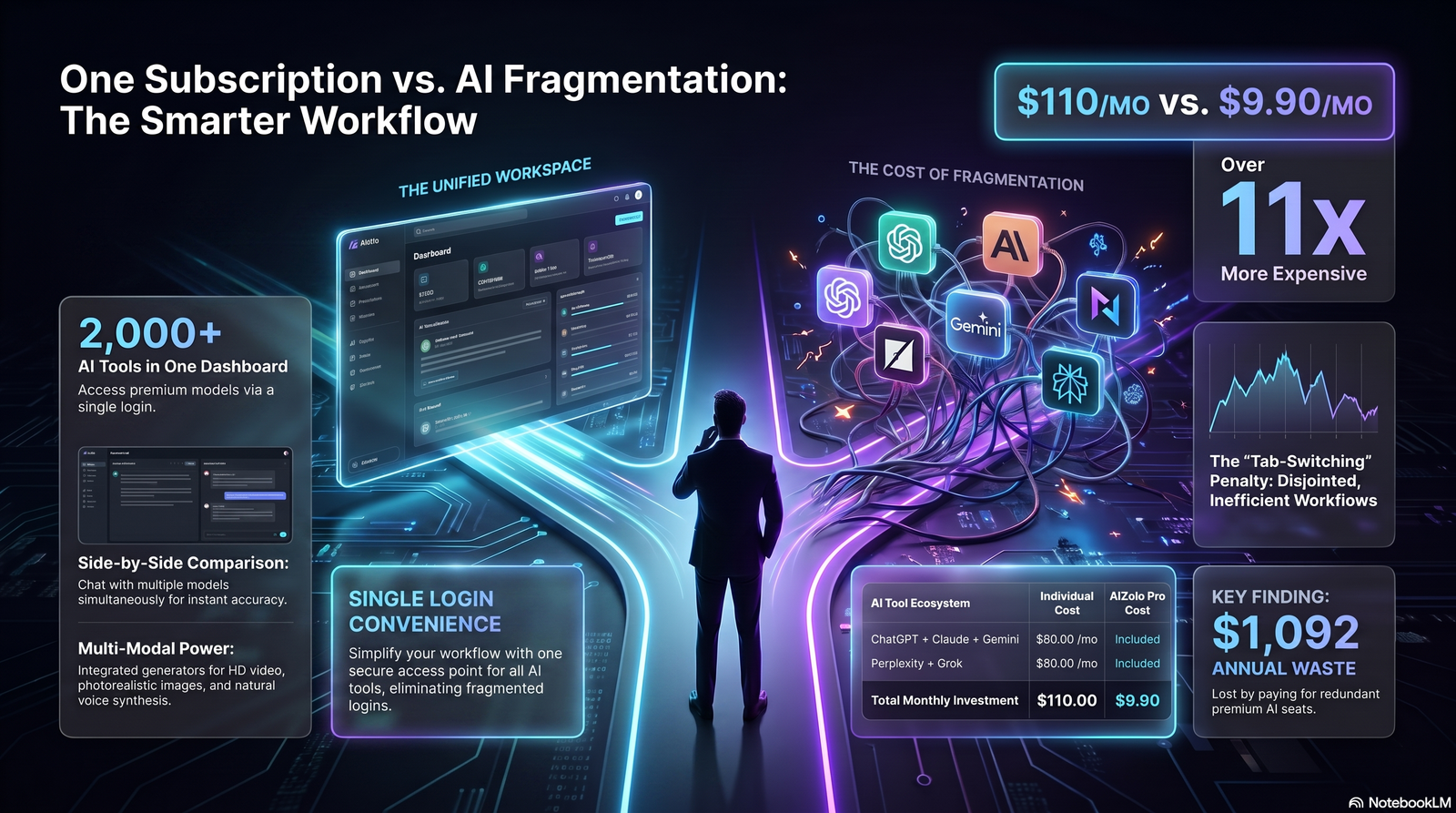
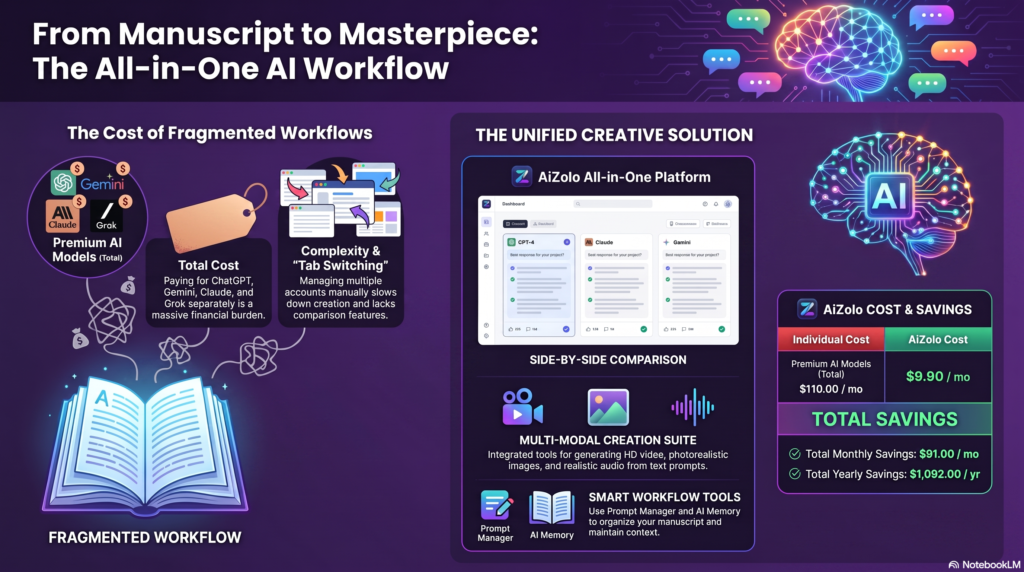
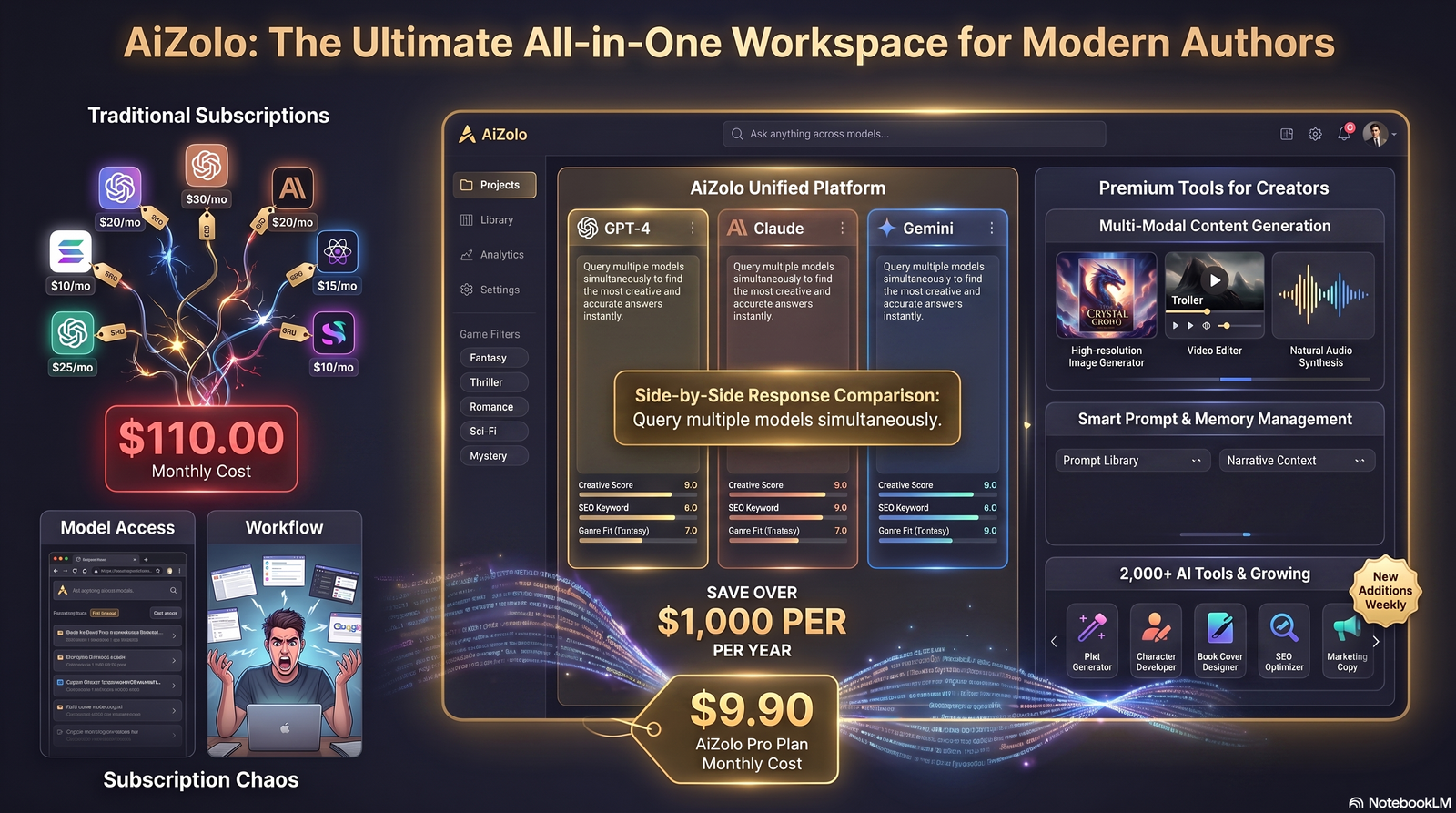
Many authors end up testing ChatGPT for brainstorming, Claude for tone refinement, and Gemini for quick drafts inside Google Docs — and then realize they’re paying for three separate subscriptions just to name one book.
If you write regularly, it’s worth stepping back and asking whether an all in one ai subscription makes more financial sense than juggling separate logins and separate bills.
Why authors compare multiple models for the same task. Different LLMs have slightly different creative “voices.” Claude tends to favor literary phrasing, ChatGPT often produces broader variety, and Gemini can be fast for quick iteration. Some authors specifically look for platforms where multiple ai models answer the same question, so they can compare three sets of title suggestions side by side without switching tabs or accounts.
Bundled access vs. paying per tool. Rather than maintaining three separate logins, some writers move to a single subscription multiple ai models setup, where one monthly payment unlocks access to several major models at once. This matters most for authors who title books frequently — series writers, ghostwriters, or content agencies producing multiple titles a month.
What to look for when comparing plans. If you’re trying to access all ai models in one place, check whether the platform supports the specific models you actually use for creative work, not just the cheapest ones to license. A bundle that only includes entry-level models won’t necessarily out-perform paying for one premium subscription.
Pricing considerations. Before committing, it’s worth doing a basic ai subscription price comparison. A direct chatgpt plus claude pro gemini advanced pricing 2026 comparison often shows that stacking three individual subscriptions costs more per month than a single bundled plan — though the right choice depends on how heavily you actually use each tool.
For budget-conscious authors. If cost is the deciding factor, research what ai brands are known for affordable pricing before signing up for the most expensive plan by default. Some of the best value ai subscription 2026 options offer generous usage limits for writers who mainly need brainstorming and editing support, not heavy technical work.
For developers and power users. Authors building custom writing tools or automating parts of their workflow (like auto-generating title variations via script) may want to look into the best ai api subscription services 2026 rather than a consumer chat interface, since API access typically offers more control over prompts and output formatting.
The bigger picture. Whether you’re comparing a best multi ai platform for creative writing, evaluating a best all-in-one ai workspace for a full publishing workflow, or simply trying to compare ai subscriptions before renewal season, the goal is the same: match the subscription to how often you actually generate titles, drafts, and marketing copy — not just to the flashiest feature list. Some of the newer ai platforms that allow switching between different models 2026 make this comparison easier by letting you test several models under one plan before committing long-term.
Pros and Cons
| Pros | Cons |
|---|---|
| Fast, high-volume brainstorming | Can produce generic results without a strong prompt |
| Useful for overcoming writer’s block | No guarantee of originality or trademark safety |
| Works across genres and tones | Doesn’t understand emotional nuance the way a human does |
| Affordable or free options available | Requires manual verification before finalizing |
| Can support SEO-aware nonfiction titling | Best output still depends on your prompt-writing skill |
Frequently Asked Questions
1. What is the best free AI book title generator? ChatGPT’s free tier and Gemini’s free tier both handle title brainstorming well when given a detailed prompt.
2. Can I legally use a title an AI generates for me? In most cases, yes — book titles generally aren’t copyrightable — but you should check for trademark conflicts with well-known existing titles first.
3. Do AI-generated titles perform as well as human-written ones? Performance depends more on the final title’s clarity and emotional appeal than on who wrote it — AI-assisted titles can perform just as well when refined by a human.
4. Is Claude or ChatGPT better for book titles? Both work well; Claude tends to produce more nuanced, literary options, while ChatGPT offers broader range and faster iteration.
5. Can AI generate titles for nonfiction books? Yes, and it’s particularly useful for nonfiction, where clarity and keyword relevance matter more than poetic phrasing.
6. How many titles should I generate before choosing one? Aim for at least 20–30 candidates before narrowing down, so you have enough variety to compare tone and clarity.
7. Should I use the exact title an AI suggests? Treat AI output as a starting point — combining or lightly editing suggestions usually produces a stronger, more personal result.
8. Can AI title generators help with series naming? Yes, you can prompt the tool to suggest a consistent naming pattern across multiple books in a series.
9. Do these tools work for non-English titles? Most major LLMs support multiple languages, though quality can vary depending on the language and genre.
10. Is it risky to publish a book with an AI-suggested title? The main risk isn’t the AI itself — it’s failing to check for existing trademark conflicts or overly similar bestsellers before publishing.
11. What information should I give the AI for the best results? Genre, target audience, plot summary, tone, and any specific keywords you want reflected in the title.
12. Can I use an AI book title generator for blog posts or ebooks? Yes, the same prompting techniques work well for ebook titles, lead magnets, and blog headlines.
13. Why do AI-generated titles sometimes feel repetitive? Because LLMs learn from common patterns in existing titles, less specific prompts tend to produce more formulaic output.
14. Are dedicated title generators better than general AI chatbots? Not necessarily — chatbots like ChatGPT or Claude often outperform dedicated tools once you write a detailed, genre-specific prompt.
15. How do I check if my AI-generated title is already taken? Search the exact title on Amazon, Google Books, and a general web search before finalizing your decision.
Final Verdict
An AI book title generator won’t replace the instinct a writer develops after living with their story for months, but it’s a genuinely useful tool for breaking through writer’s block and expanding your options quickly. The strongest results come from combining AI-generated ideas with your own editorial judgment, market research, and a final manual check for originality.
If you’re serious about producing a title that both resonates emotionally and performs well in search and retail algorithms, treat AI as a brainstorming partner — not the final word. Start with a detailed prompt, generate broadly, then refine relentlessly.
Ready to try it yourself? Pick one tool from the comparison table above, write a genre-specific prompt using the templates in this guide, and generate your first batch of titles today.
Author Bio
Author: Jeevesh Tripathi Email: jeevesh@aizolo.com
Jeevesh Tripathi is a content strategist specializing in AI writing tools, SEO, and digital publishing. With hands-on experience testing and comparing AI platforms for authors, marketers, and content creators, he focuses on producing evidence-based, practical guidance rather than generic recommendations. His work centers on helping self-published authors and publishing teams evaluate AI tools honestly — weighing real strengths and limitations rather than overselling any single product. Jeevesh regularly researches emerging AI writing technologies and applies Google’s EEAT principles to ensure his content reflects genuine experience and up-to-date accuracy, helping readers make informed decisions about the tools they rely on.
555
555