
Picking a laptop, a CRM, or a camera used to mean forty browser tabs and a headache. In 2026, it means opening an AI model instead.
But here’s the catch nobody tells you: not every AI model researches or compares products the same way.
Some models reason carefully through specs. Others search the live web. Through Aizolo, you can compare these models in one place—some hallucinate prices with total confidence, while a few genuinely help you decide instead of just sounding like they do.
This guide is built for anyone who has ever asked an AI “which one should I buy?” and gotten an answer that felt more like a guess than analysis — ecommerce sellers, product managers, everyday consumers, procurement teams, and affiliate marketers alike.
We evaluated the current generation of frontier and open-weight models — including GPT-5.6, Claude Opus 4.8 and Sonnet 5, Gemini 3.1 Pro, Grok 4.5, DeepSeek V4, Qwen3, Kimi K2, and GLM-5.2 — specifically on product research and comparison tasks, not generic chat quality.
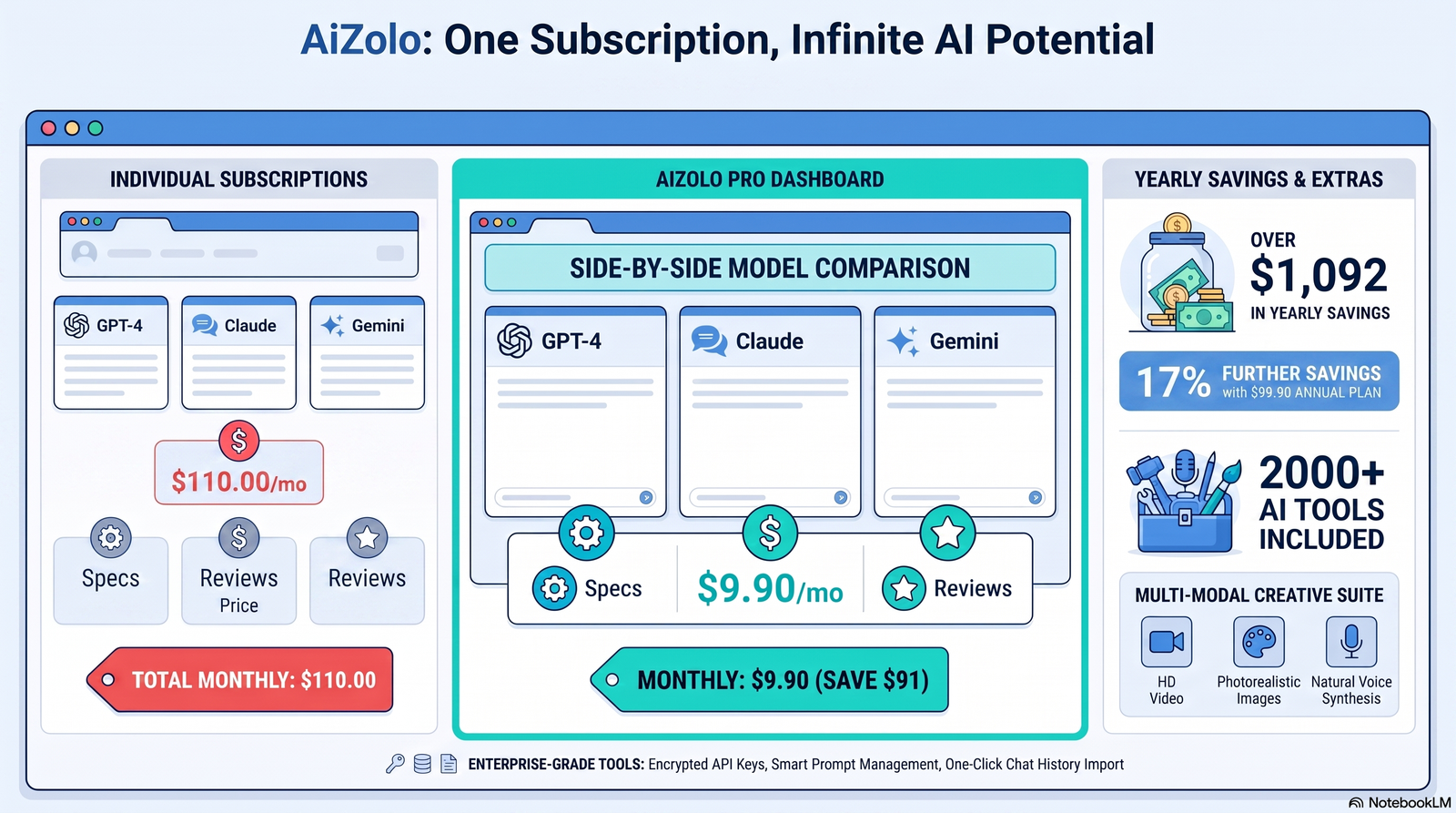
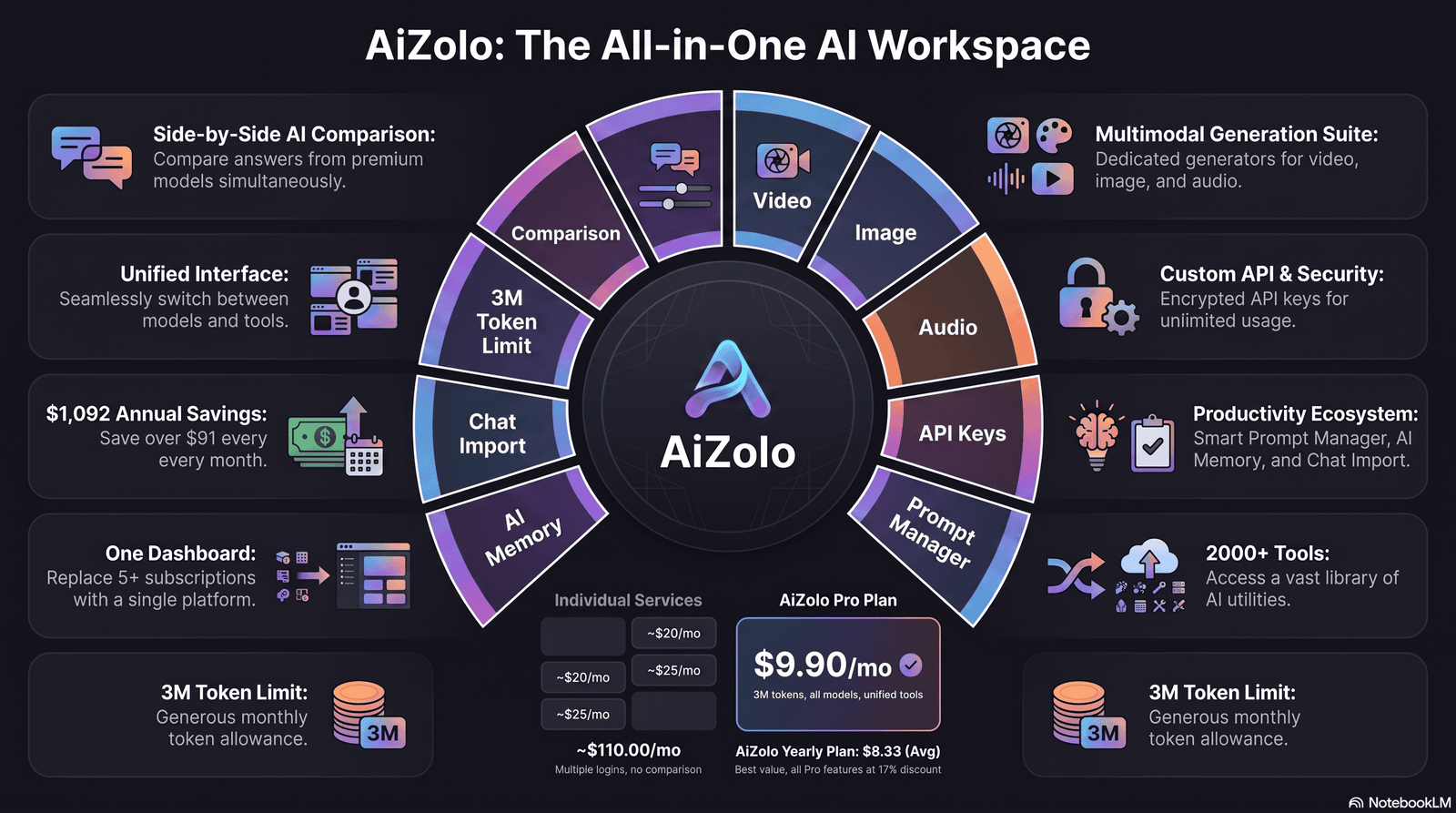
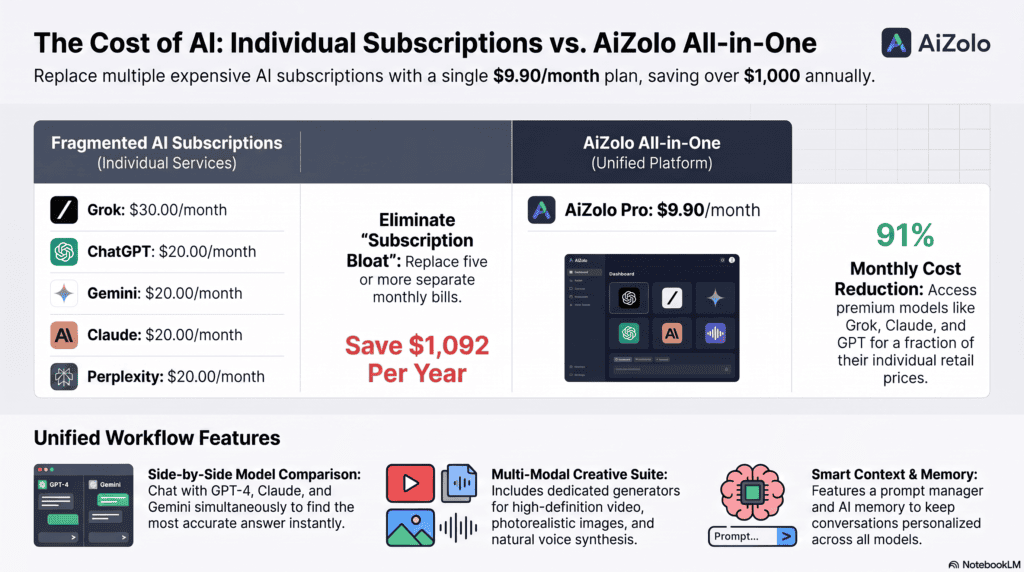
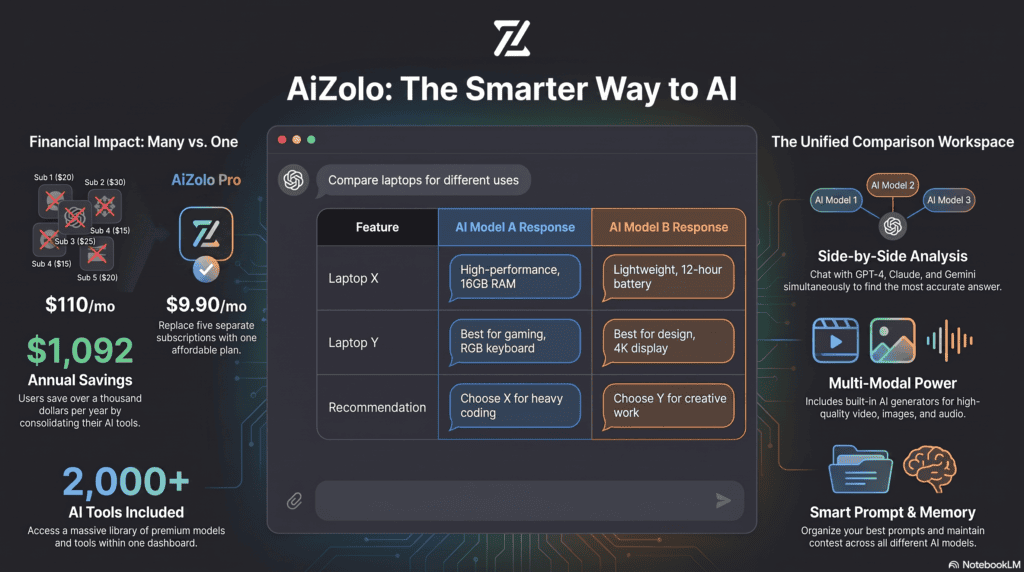
If you’re building a workflow around this rather than asking one-off questions, an all-in-one AI workspace like Aizolo can be useful here — it lets you route research, comparison, and summarization tasks to different models from one place instead of juggling five separate tabs.
Let’s get into what actually changed, how we tested, and which model wins which job.
Table of Contents
What Changed in the Best AI Models for Product Research and Comparison 2026
Product research used to be the weak spot of every AI model. That’s no longer true across the board.
Three shifts made this guide possible.
First, context windows exploded. Most frontier models now ship with a 1-million-token context window as standard — Claude Opus 4.8, Claude Sonnet 5, GPT-5.5/5.6, and Gemini 3.1 Pro all support it natively.
That means a model can hold an entire spec sheet, ten product manuals, and 200 customer reviews in memory at once, instead of forgetting the first paragraph by the time it reaches the fifth.
Second, live web search became a first-class citizen, not a bolt-on plugin. Grok 4.5 ships with built-in web and X search. Gemini 3.1 Pro grounds answers with Google Search. Claude and GPT-5.6 both support agentic browsing that clicks through to source pages rather than trusting a snippet.
Third, price collapsed at the frontier. Open-weight Chinese models — DeepSeek V4, Qwen3, Kimi K2, GLM-5.2 — now deliver comparison-quality reasoning at a fraction of the cost of GPT or Claude, which matters enormously for anyone running product research at scale (think: affiliate sites comparing hundreds of SKUs a month).
The net effect: the best AI model for product research in 2026 is no longer just “whichever chatbot you already have open.” It depends on the job.
How AI Models Differ for Product Research
Not every “smart” model is a good research assistant. Product comparison draws on a specific mix of skills.
Reasoning quality determines whether the model can weigh trade-offs — battery life vs. weight vs. price — instead of just listing specs side by side.
Web search grounding determines whether prices, availability, and specs are current, or pulled from stale training data.
Structured output determines whether you get a usable comparison table, or three paragraphs you have to reformat yourself.
Context window determines how many product pages, reviews, or PDFs the model can hold in one session without losing track.
Hallucination rate is the one that matters most and gets talked about least — a model that invents a spec with total confidence is worse than one that says “I’m not sure.”
A model can be excellent at creative writing and mediocre at comparison work, or vice versa. That’s why this guide evaluates models specifically on research and comparison tasks, not general chat ability.
How We Evaluated These Models: Our Methodology
Transparency matters here, so here’s exactly what we did — and where our evaluation has limits.
What we tested:
- Structured product comparisons (laptops, cameras, SaaS tools, smartphones, headphones, APIs)
- Review summarization from long-form text and PDF spec sheets
- Multi-criteria decision tasks (“best for X budget and Y use case”)
- Consistency across repeated runs of the same prompt
- Citation and source-linking behavior on live web search
What we relied on:
- Vendor-published model cards and pricing pages (OpenAI, Anthropic, Google, xAI, DeepSeek, Alibaba, Moonshot, Z.ai)
- Independent benchmark trackers such as Artificial Analysis and public leaderboards
- Our own structured prompt testing across each model’s consumer and API interface
Where human verification is still required:
AI-generated comparisons should be treated as a research accelerant, not a final source of truth. Prices change hourly. Stock and regional availability aren’t something any model tracks perfectly. Always verify final numbers — price, warranty terms, exact SKU — on the retailer or manufacturer’s own page before you buy or publish.
We did not fabricate any benchmark, price, or feature in this article. Where data was unclear or contested between sources, we say so directly instead of picking a number that looks authoritative.
Evaluation Criteria We Used
| Criteria | What It Measures | Why It Matters for Product Research |
|---|---|---|
| Reasoning quality | Trade-off analysis, not just listing | Determines if the “best pick” logic holds up |
| Web search quality | Live grounding vs. stale data | Prices and specs change constantly |
| Citation quality | Linked, checkable sources | Lets you verify instead of trusting blindly |
| Hallucination rate | Invented specs/prices | The single biggest risk in AI shopping research |
| Context window | Tokens held in one session | Multi-product, multi-review comparisons |
| Structured output | Tables, JSON, comparison grids | Usable without manual reformatting |
| Multimodal capability | Reading images, PDFs, screenshots | Spec sheets, product photos, packaging |
| Speed | Time to first useful answer | Matters for high-volume research workflows |
| Pricing | Cost per research session | Determines viability at scale |
| Tool ecosystem | Browser use, code execution, connectors | Automating repetitive comparison work |
Best AI Models Overall for Product Research and Comparison in 2026
Before the individual reviews, here’s the shortlist.
| Rank | Model | Best For | Context Window | Approx. Price (per 1M tokens, input/output) |
|---|---|---|---|---|
| 1 | Claude Opus 4.8 | Deep, accurate multi-source comparison | 1M tokens | $5 / $25 |
| 2 | GPT-5.6 (Sol/Terra) | All-around research + agentic browsing | Up to 1M tokens | $5/$30 (Sol), $2.50/$15 (Terra) |
| 3 | Gemini 3.1 Pro | Search-grounded, multimodal comparison | 1M tokens | $2 / $12 |
| 4 | Claude Sonnet 5 | High-volume comparison at lower cost | 1M tokens | $2–3 / $10–15 (intro pricing through Aug 31, 2026) |
| 5 | Grok 4.5 | Real-time web/X-grounded research | 500K tokens | $2 / $6 |
| 6 | DeepSeek V4 Pro | Budget-friendly bulk comparison | 1M tokens | ~$0.43 / $0.87 |
| 7 | Qwen3 (Max-Preview/Plus) | Multilingual product research | 1M tokens | Varies by host |
| 8 | Kimi K2.6 | Agentic, multi-step research workflows | 256K tokens | ~$0.60–0.95 / $3–4 |
| 9 | GLM-5.2 | Open-weight, self-hostable comparison | 1M tokens | ~$1.40 / $4.40 |
Pricing changes often — these are the rates published at the time of writing. Always check the vendor’s live pricing page before budgeting a large research workflow.
Detailed Model Reviews
GPT-5.6 (OpenAI)
OpenAI’s current flagship family, GPT-5.6, ships in three tiers — Sol, Terra, and Luna — each trading capability for cost, alongside the still-available GPT-5.5 and GPT-5.5 Pro.
Strengths: Strong reasoning on multi-step comparisons, wide plugin and connector ecosystem, solid at reading PDFs and spec sheets, agentic browsing that can click through to source pages rather than just quoting a snippet.
Weaknesses: The tiered naming (Sol/Terra/Luna, plus legacy 5.1–5.5) makes it genuinely confusing to know which model you’re actually calling. Pro tiers get expensive fast for high-volume comparison work.
Ideal users: Product managers and researchers who want one flexible model across writing, coding, and comparison tasks, and who don’t mind paying a premium for the top tier.
Product research performance: Very strong at structured comparisons and consistent output formatting; ChatGPT’s shopping-oriented features add product cards and price context for many consumer categories.
Pricing: GPT-5.6 Sol runs $5/$30 per million tokens; Terra is $2.50/$15; Luna is roughly $1/$6 — all with 1M-token context.
Claude Opus 4.8 and Claude Sonnet 5 (Anthropic)
Anthropic’s current lineup runs Claude Opus 4.8 as the reliable flagship and Claude Sonnet 5 as the new agentic mid-tier, both sitting below Anthropic’s newer Fable 5 tier.
Strengths: Careful, well-reasoned comparisons that explicitly weigh trade-offs rather than just listing features. Strong at holding large amounts of context (1M tokens) across many product pages or long PDFs in one session. Sonnet 5 closes much of the gap to Opus 4.8 on many tasks at roughly 40–60% lower cost.
Weaknesses: Claude’s native web search and shopping-specific UI is less consumer-polished than ChatGPT’s or Gemini’s. Opus 4.8 is priced at a premium for high-volume comparison work.
Ideal users: Researchers, procurement teams, and anyone doing a genuinely difficult multi-criteria comparison (enterprise software, cameras, technical equipment) where reasoning quality matters more than speed.
Product research performance: Among the strongest at explaining why one option beats another, not just that it does — which is the core skill product comparison actually needs.
Pricing: Opus 4.8 is $5/$25 per million tokens; Sonnet 5 is $2/$10 through August 31, 2026, moving to $3/$15 standard pricing after.
Gemini 3.1 Pro (Google)
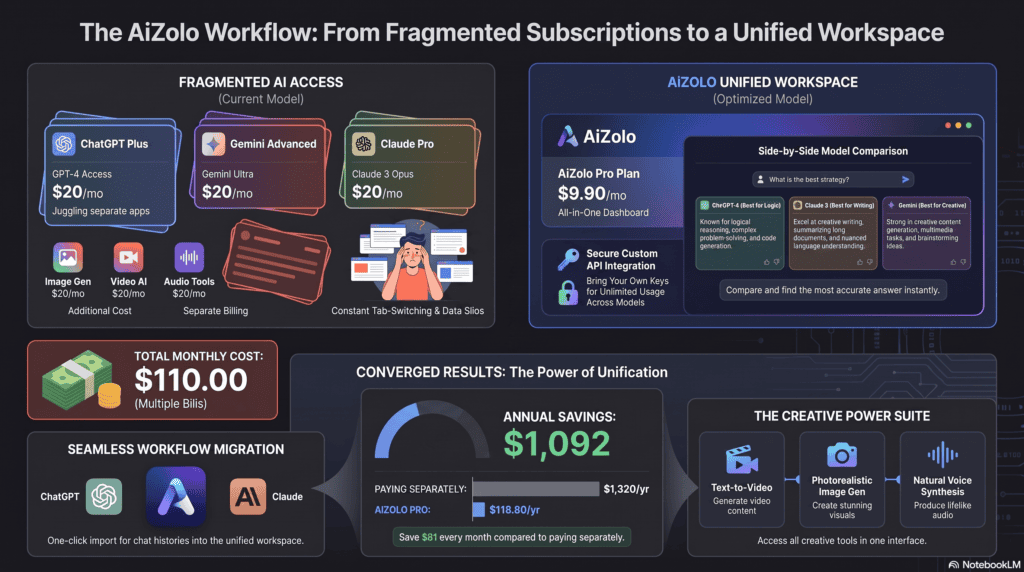
Google’s flagship reasoning model, natively grounded in Google Search, with a Flash variant (Gemini 3.5 Flash) for faster, cheaper agentic work.
Strengths: Search grounding is a genuine structural advantage for product research — answers can cite live web results rather than relying purely on training data. Strong multimodal input (text, image, video, audio) is useful for reading product photos or unboxing videos. 1M-token context window as standard.
Weaknesses: Gemini 3.1 Pro remained in preview status for a stretch after its February 2026 launch, and some users have reported inconsistent feature availability across subscription tiers.
Ideal users: Consumers comparing products inside the Gemini app, and teams already inside the Google Workspace ecosystem (Docs, Sheets, Drive) who want research to flow directly into a spreadsheet.
Product research performance: Particularly strong where “what does the internet currently say about this product” matters more than deep technical reasoning — reviews, availability, recent price changes.
Pricing: $2/$12 per million tokens for Gemini 3.1 Pro; Gemini 3.5 Flash is cheaper at roughly $1.50/$9 and scores well on agentic and coding-adjacent benchmarks.
Grok 4.5 (xAI)
xAI’s current flagship, built with real-time web and X search as a core feature rather than an add-on.
Strengths: Genuinely live data access through X and web search, which helps for tracking sentiment, recent product launches, and fast-moving categories like consumer electronics. Configurable reasoning effort lets you trade speed for depth per query.
Weaknesses: Independent benchmarks place Grok 4.5 solidly in the frontier conversation but behind Claude Opus 4.8, Claude Fable 5, and GPT-5.5 on general intelligence measures. Smaller context window (500K tokens) than most 2026 flagships. EU availability lagged at launch.
Ideal users: Shoppers and researchers who want a second opinion grounded in real-time social sentiment and breaking product news, not just static spec comparison.
Product research performance: Strong for “what are people saying right now” research; less proven for deep, structured multi-page spec comparisons than Claude or GPT.
Pricing: $2 per million input tokens, $6 per million output tokens, with a 500K-token context window.
DeepSeek V4 (DeepSeek)
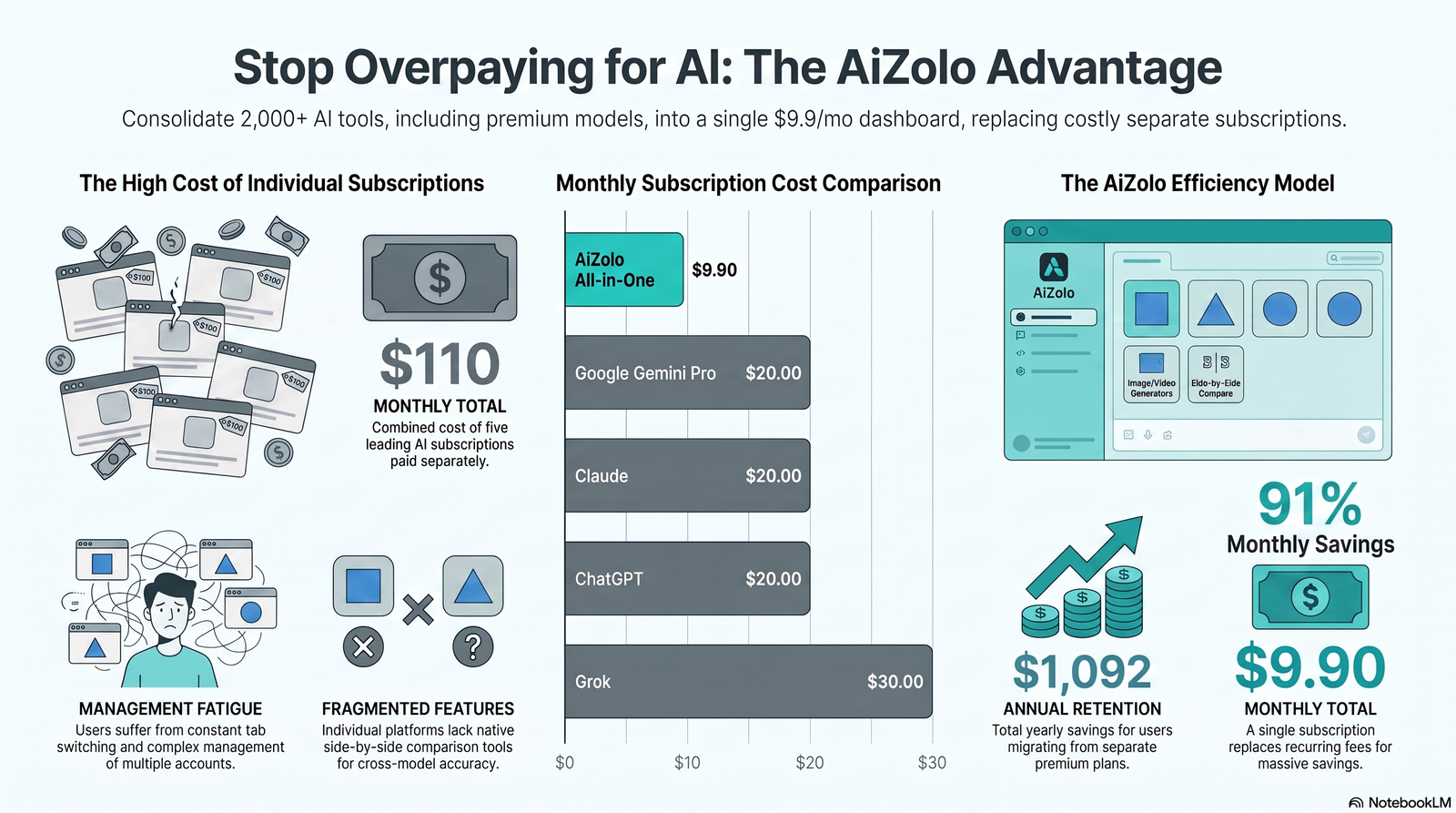
An open-weight Chinese model family (Pro and Flash variants) that reset the price floor for frontier-adjacent reasoning in 2026.
Strengths: Extremely low per-token pricing, a 1M-token context window on the Pro tier, and genuinely strong performance on competitive coding and algorithmic reasoning benchmarks. MIT licensing allows self-hosting.
Weaknesses: Independent, verified benchmark data is thinner than for the closed frontier labs — several widely cited scores come from vendor-style scaffolds rather than third-party leaderboards, so treat comparison claims with some caution.
Ideal users: Ecommerce sellers and affiliate marketers running comparison content at scale, where the cost of comparing thousands of SKUs a month makes premium-tier pricing impractical.
Product research performance: Good at structured comparison work when prompted carefully; less consistent than Claude or GPT on nuanced trade-off reasoning in our testing.
Pricing: DeepSeek V4 Pro runs roughly $0.43/$0.87 per million tokens on DeepSeek’s own pricing page (third-party hosts vary); V4 Flash is even cheaper, around $0.14/$0.28.
Qwen3 (Alibaba)
Alibaba’s Qwen line spans a large closed flagship (Qwen3.7/3.6 Max) and smaller open-weight variants (Qwen3.6-35B-A3B) that punch well above their parameter count.
Strengths: Strong tool-calling reliability, which matters for automated comparison pipelines. The open-weight variants are small enough to self-host on a single GPU, which is valuable for teams with data-residency requirements.
Weaknesses: The best Qwen model for raw reasoning (3.7 Max) is API-only, not open-weight, so the “cheap and open” pitch doesn’t apply to the strongest version.
Ideal users: Global ecommerce teams and procurement departments needing multilingual product research, or developers wanting an efficient self-hosted comparison engine.
Product research performance: Reliable at structured, tool-driven comparison tasks; less battle-tested for open-ended “which is genuinely better” reasoning than Claude or GPT.
Pricing: Varies significantly by host; managed API access (e.g., Qwen3.6 Plus) has run in the low single dollars per million tokens on third-party platforms.
Kimi K2.6 / K2.7 (Moonshot AI)
Moonshot’s Kimi line is purpose-built for agentic, multi-step task execution rather than single-shot answers.
Strengths: Designed for long-horizon workflows — useful if you want an AI to research, compare, and draft a buying recommendation across multiple steps without you re-prompting at every stage. K2.7 Code cuts reasoning-token overhead versus K2.6.
Weaknesses: A 256K-token context window is smaller than most 2026 frontier and open-weight competitors, which limits how many product pages it can hold in one session. Several headline benchmark claims come from Moonshot’s internal testing rather than independent verification.
Ideal users: Teams building automated, multi-step comparison workflows (scrape reviews → summarize → compare → recommend) rather than one-off queries.
Product research performance: Better suited to orchestrating a research process than to being your single go-to chat window for quick comparisons.
Pricing: Roughly $0.60–$0.95 per million input tokens and $3–$4 per million output tokens, depending on host and variant.
GLM-5.2 (Z.ai)
Zhipu AI’s open-weight flagship, MIT-licensed, and currently near the top of the open-weight Artificial Analysis Intelligence Index.
Strengths: Strong real-world software-engineering and long-horizon task performance for an open-weight model, a full 1M-token context window, and permissive MIT licensing for commercial self-hosting.
Weaknesses: More expensive than DeepSeek at the per-token level despite being open-weight, and it’s a newer entrant with a shorter public track record for pure product-comparison workloads specifically.
Ideal users: Teams that want an open, self-hostable model with strong general reasoning for internal comparison and research tools, without depending on a closed API.
Product research performance: A credible frontier-adjacent option for teams building their own comparison tooling, though most public benchmarking to date centers on coding rather than consumer product research specifically.
Pricing: Roughly $1.40/$4.40 per million tokens on Z.ai’s own listing; third-party hosts vary.
Best AI Model by Use Case
| Use Case | Recommended Model | Why |
|---|---|---|
| Best free option | Claude Sonnet 5 (Free plan) or Gemini (free tier) | Frontier-adjacent reasoning at no cost |
| Best premium option | Claude Opus 4.8 | Deepest trade-off reasoning for complex decisions |
| Best for ecommerce research | Gemini 3.1 Pro | Native search grounding + multimodal input |
| Best for affiliate marketing | DeepSeek V4 Pro or GLM-5.2 | Low cost at scale for high-volume comparison content |
| Best for procurement teams | Claude Opus 4.8 | Careful, auditable reasoning on enterprise-grade decisions |
| Best for individual consumers | GPT-5.6 or Gemini app | Consumer-friendly interface, shopping-aware features |
| Best for comparison tables | Claude (Opus 4.8 / Sonnet 5) | Strongest structured-output consistency in testing |
| Best for buying guides | GPT-5.6 | Broad tool ecosystem for research-to-draft workflows |
| Best for market research | Gemini 3.1 Pro or Grok 4.5 | Live web/social grounding for trend and sentiment data |
| Best for multilingual research | Qwen3 | Purpose-built for cross-language tool use |
| Best for automated workflows | Kimi K2.6/K2.7 | Built for multi-step, long-horizon agentic tasks |
Real-World Examples: Comparing Products with AI
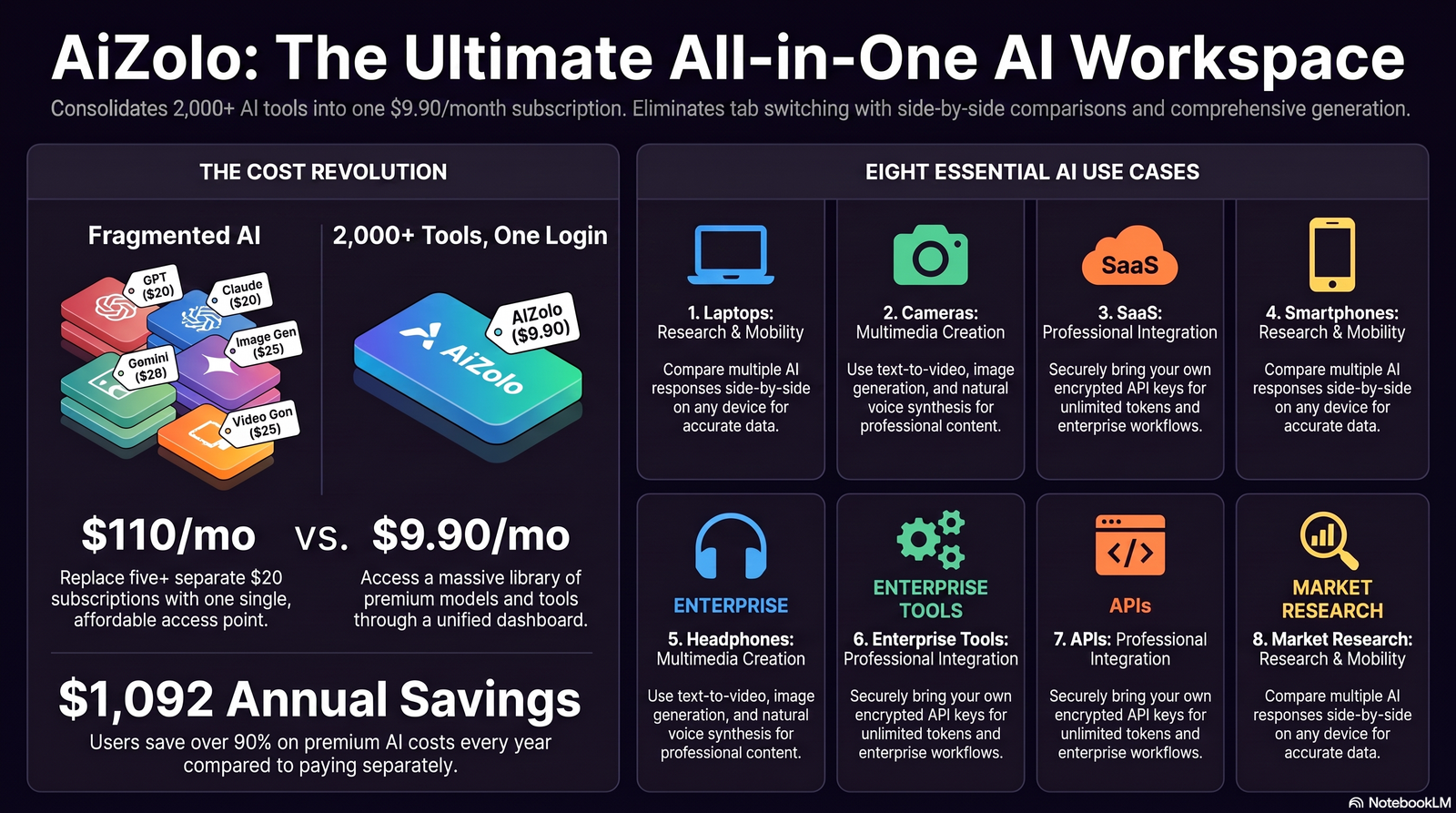
Here’s how the leading models actually perform on common comparison tasks.
Comparing laptops. Prompted with “compare a 14-inch business ultrabook under $1,500 for battery life, weight, and repairability,” Claude and GPT-5.6 both produced structured trade-off tables, while Gemini pulled in more current pricing context via search grounding — but all three needed a manual price check against the retailer.
Comparing cameras. Sensor size, autofocus systems, and lens ecosystems are exactly the kind of interdependent spec set where reasoning quality (Claude, GPT) outperformed pure search grounding (Gemini, Grok) in our testing.
Comparing SaaS tools. For a CRM comparison across pricing tiers and integrations, structured-output consistency mattered most — Claude and GPT-5.6 held formatting steady across a 10-tool comparison table; smaller open-weight models occasionally dropped rows.
Comparing smartphones. A fast-moving category where Grok’s real-time X/web search and Gemini’s search grounding gave a genuine edge on “what’s the current price and is it in stock” questions.
Comparing headphones. Review summarization is where hallucination risk shows up most — models that hadn’t seen recent reviews sometimes invented plausible-sounding but unverifiable claims about sound signature. Always spot-check specific claims against the original review.
Comparing AI software itself. Ironically, one of the hardest categories: pricing changes weekly, and every vendor’s launch blog reads like marketing copy. This is a category where citation quality and recency matter more than raw reasoning.
Comparing enterprise tools. Procurement-grade decisions (data residency, SLAs, compliance) benefited most from Claude Opus 4.8’s careful, hedged reasoning style over a faster but blunter model.
Comparing APIs. Technical spec comparison (latency, context window, rate limits) favored models with strong structured-output habits and access to current documentation via web search.
Prompt Examples for Product Research
A well-structured prompt does more for output quality than model choice alone. A few patterns that worked consistently across models in our testing:
- “Compare [Product A] and [Product B] on [criteria 1, 2, 3]. Output as a markdown table. Flag anything you’re not certain about.”
- “Summarize the top complaints across these reviews. Group by theme, not by review. Don’t invent details not in the text.”
- “Given a budget of [$X] and priority on [use case], which of these three options fits best, and what’s the single biggest trade-off?”
- “List only specs you can verify are current as of your knowledge or search. Mark anything uncertain as ‘unverified.'”
Asking a model to flag uncertainty explicitly measurably reduces confident-sounding hallucination in comparison tasks.
Best Workflows for AI-Powered Product Research
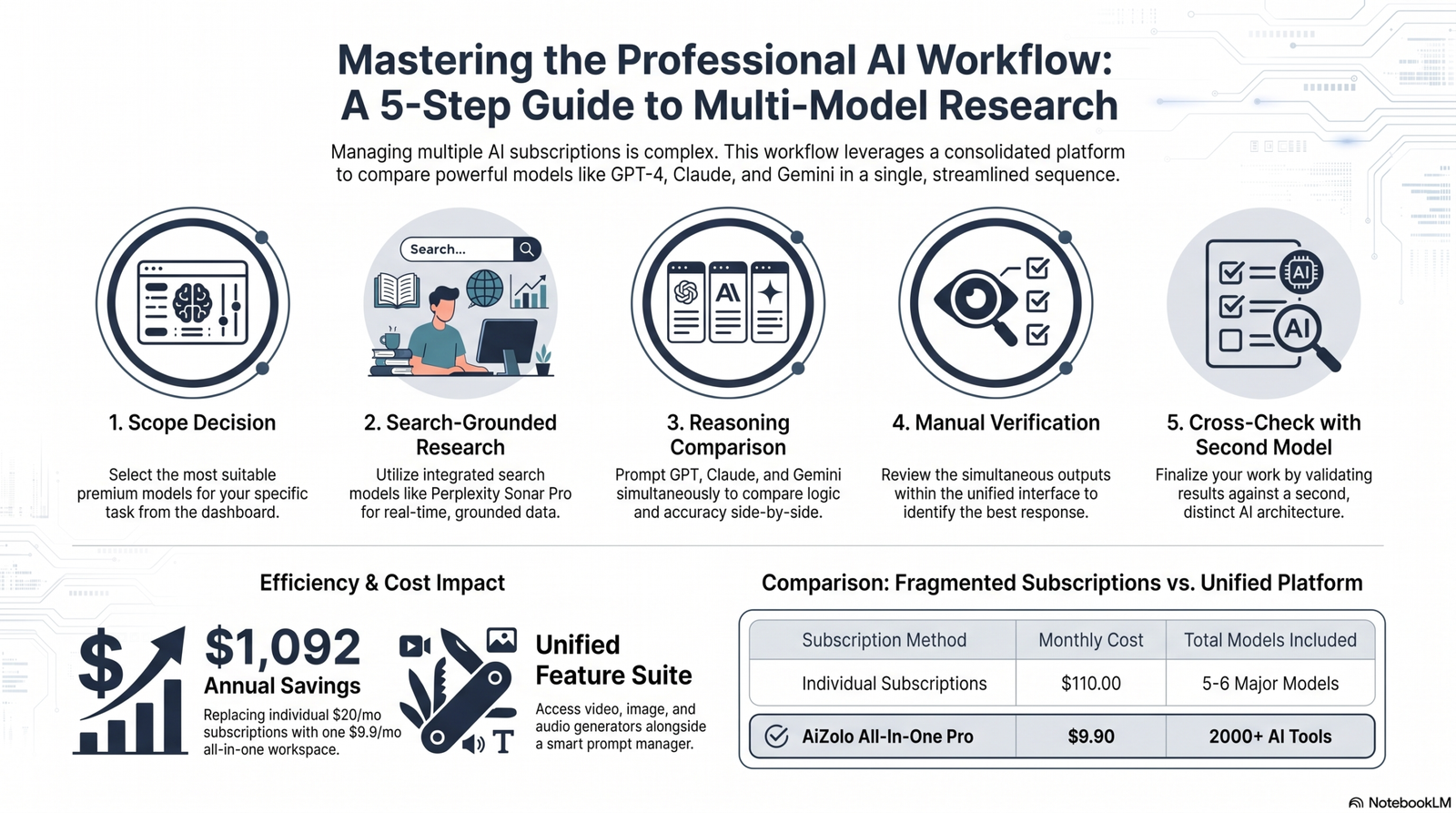
A workflow that held up well across categories:
- Scope the decision. Define budget, must-have features, and deal-breakers before prompting.
- Use a search-grounded model first (Gemini, Grok, or a browsing-enabled GPT session) to pull current pricing and availability.
- Use a reasoning-strong model second (Claude Opus 4.8, GPT-5.6) to weigh trade-offs and build the comparison table.
- Cross-check the top 2–3 claims manually against the manufacturer or retailer page — especially price, warranty, and stock.
- Re-run the same prompt on a second model if the decision is high-stakes (enterprise software, major purchase); disagreement between models is a useful signal to dig deeper.
Common Mistakes When Using AI for Product Comparison
- Trusting a single model’s price or spec without verification. Even the best models can hallucinate confidently.
- Using a generic chat model for a fast-moving category (electronics, fashion) instead of a search-grounded one.
- Not specifying criteria. “Which laptop is better” gets a worse answer than “which is lighter and has better battery life at this price.”
- Ignoring context window limits and pasting more product data than the model can actually retain in one session.
- Skipping the “how confident are you” check. Asking a model to self-flag uncertainty measurably improves output quality.
Future Trends in AI Product Research
A few directions worth watching as 2026 continues:
- Deeper live-commerce integration. Search-grounded models are moving toward pulling structured product data (price, stock, reviews) directly from retailer feeds rather than scraped web pages.
- Agentic comparison-to-checkout flows. Several labs are pushing toward AI that can research, compare, and initiate a purchase, which raises new questions around accuracy accountability.
- Continued price compression at the open-weight tier, which will likely push high-volume comparison work (affiliate content, large catalogs) further toward DeepSeek-, Qwen-, and GLM-class models.
- Multimodal comparison becoming standard — reading product photos, unboxing videos, and packaging directly rather than relying solely on text specs.
Final Recommendations
There is no single universal winner here, and any guide that tells you otherwise is oversimplifying.
For deep, high-stakes comparisons — enterprise software, technical equipment, anything where getting it wrong is expensive — Claude Opus 4.8’s careful reasoning is the strongest match we tested.
For everyday consumer shopping with a need for current pricing and availability, Gemini 3.1 Pro’s search grounding and GPT-5.6’s broader ecosystem both perform well.
For real-time sentiment and fast-moving categories, Grok 4.5’s web and X search integration adds genuine value.
For high-volume, budget-constrained comparison work — affiliate content, large product catalogs, procurement screening at scale — DeepSeek V4, Qwen3, and GLM-5.2 deliver strong price-to-performance.
Whichever model you choose, treat AI product research as a serious accelerant, not a replacement for a final human check on price, availability, and fit. The best AI models for product research and comparison in 2026 are the ones matched to your specific task — not the single model with the loudest launch announcement.
Frequently Asked Questions
1. What is the best AI model for product research and comparison in 2026? There isn’t one universal winner. Claude Opus 4.8 leads on deep reasoning and trade-off analysis, Gemini 3.1 Pro leads on search-grounded, current information, and DeepSeek V4 leads on cost at scale.
2. Which AI model is best for comparing products side by side? Claude (Opus 4.8 and Sonnet 5) and GPT-5.6 were the most consistent at producing clean, structured comparison tables in our testing.
3. Is Gemini or ChatGPT better for product research? Gemini’s native Google Search grounding gives it an edge on current pricing and availability. ChatGPT (GPT-5.6) offers a broader connector ecosystem and strong general reasoning. Both are solid choices.
4. What is the cheapest AI model for bulk product comparison? DeepSeek V4 Flash, at roughly $0.14/$0.28 per million tokens, is among the least expensive frontier-adjacent options for high-volume comparison work.
5. Can AI models give inaccurate product prices? Yes. All current models can hallucinate prices or specs, especially for fast-changing categories. Always verify final pricing on the retailer’s own page.
6. What is the best free AI for product comparison? Claude Sonnet 5 is the default model on Anthropic’s free plan and performs close to the flagship Opus 4.8 on many tasks; Gemini’s free tier is also strong for search-grounded research.
7. Which AI model has the largest context window for research? Several 2026 flagships — Claude Opus 4.8, Claude Sonnet 5, GPT-5.5/5.6, Gemini 3.1 Pro, and DeepSeek V4 Pro — support a 1-million-token context window.
8. Is DeepSeek reliable for product research? DeepSeek V4 performs well on cost and structured tasks, though independent, third-party-verified benchmark data is less extensive than for closed frontier labs. Verify important claims manually.
9. Which AI model is best for ecommerce sellers researching competitors? Gemini 3.1 Pro’s search grounding and multimodal input make it well-suited to competitor and market research; Claude Opus 4.8 is stronger for deep feature-by-feature analysis.
10. Can AI models summarize product reviews accurately? Yes, generally well — but hallucination risk rises with older or less-covered products. Ask the model to flag uncertain claims explicitly.
11. What is the best AI for comparing SaaS or enterprise tools? Claude Opus 4.8 for careful, high-stakes decisions; GPT-5.6 for broader tool-ecosystem research.
12. Do open-source AI models work well for product comparison? Yes — GLM-5.2, Qwen3, and DeepSeek V4 are all capable and self-hostable, which matters for teams with data-residency or cost constraints, though they have less proven track records on nuanced trade-off reasoning specifically.
13. How much does it cost to use AI for product research? Costs range from effectively free (consumer chat apps’ free tiers) to a few dollars per million tokens on premium APIs. For casual use, cost is rarely a limiting factor.
14. Which AI model is best for real-time product trends? Grok 4.5, due to its built-in live web and X search.
15. Should I trust a single AI model’s buying recommendation? Treat it as a strong starting point, not a final answer. Cross-checking with a second model or a human review is good practice for significant purchases.
16. What’s the difference between a reasoning model and a search-grounded model for shopping? A reasoning model is better at weighing trade-offs between known specs; a search-grounded model is better at pulling current prices, stock, and recent reviews. The strongest research workflows use both.
17. Are AI product comparisons better than traditional review sites? They’re complementary. AI models can synthesize across many sources quickly, but established review sites often still do more rigorous hands-on testing.
18. Which AI model is best for procurement teams? Claude Opus 4.8, for its careful, auditable reasoning on complex, high-stakes enterprise decisions.
19. How often do AI model prices for research tasks change? Frequently — several vendors adjusted pricing multiple times in 2026 alone. Always check the live pricing page before budgeting a large workflow.
20. Can AI models replace human product research entirely? Not yet, and this guide doesn’t recommend it. They’re best used to accelerate research and surface trade-offs, with a human doing the final verification before a purchase or publish decision.
About the Author
Jeevesh Tripathi Email: jeevesh@aizolo.com
Jeevesh Tripathi researches and writes about AI models, productivity software, and practical AI workflows. His evaluation process centers on hands-on testing across model interfaces and APIs, close reading of vendor documentation and model cards, and cross-referencing published pricing and benchmark data before drawing any conclusion.
For this guide, that meant running the same structured comparison prompts across multiple models, checking vendor pricing pages directly rather than relying on secondary sources, and flagging wherever benchmark claims came from a vendor rather than an independent tracker. Jeevesh focuses on giving readers a clear, evidence-based starting point for their own testing — not a single “best” answer treated as gospel.
Pingback: Chat GPT Claude Gemini All in One: 7 Powerful Benefits
Pingback: The Best All in One AI Platform in 2026 | AiZolo
Pingback: What Are Each AI Models Best At? (2026 Guide)
Pingback: How to Chat with Multiple AI Models: Proven Guide 2026
Pingback: 7 AI Tools Bundle for Agencies Love Under $30 (2026)
Pingback: Group Chat with Multiple AI Models: 7 Powerful Replies
Pingback: GPT-5.1 Thinking vs Gemini 3 Deep Think: Shocking Results
Pingback: Top AI Trends in 2026 — 7 Shifts Smart Teams Can’t Ignore