
If you’re comparing Grok 4.7 and Claude Sonnet 5.5 for logic puzzles, you’re looking at two of the latest AI models designed to handle complex reasoning and multi-step tasks.
Grok 4.7 is xAI’s newest frontier model, with improved reasoning and stronger self-verification, while Claude Sonnet 5.5 is Anthropic’s latest Sonnet model, built for faster and more capable problem-solving.
Instead of relying only on benchmark scores, this comparison puts both models through the same logic puzzles to see how they actually approach tricky problems, handle multiple steps, avoid mistakes, and arrive at the correct answer.
The goal is simple: which model performs better when the puzzle requires real logical thinking?
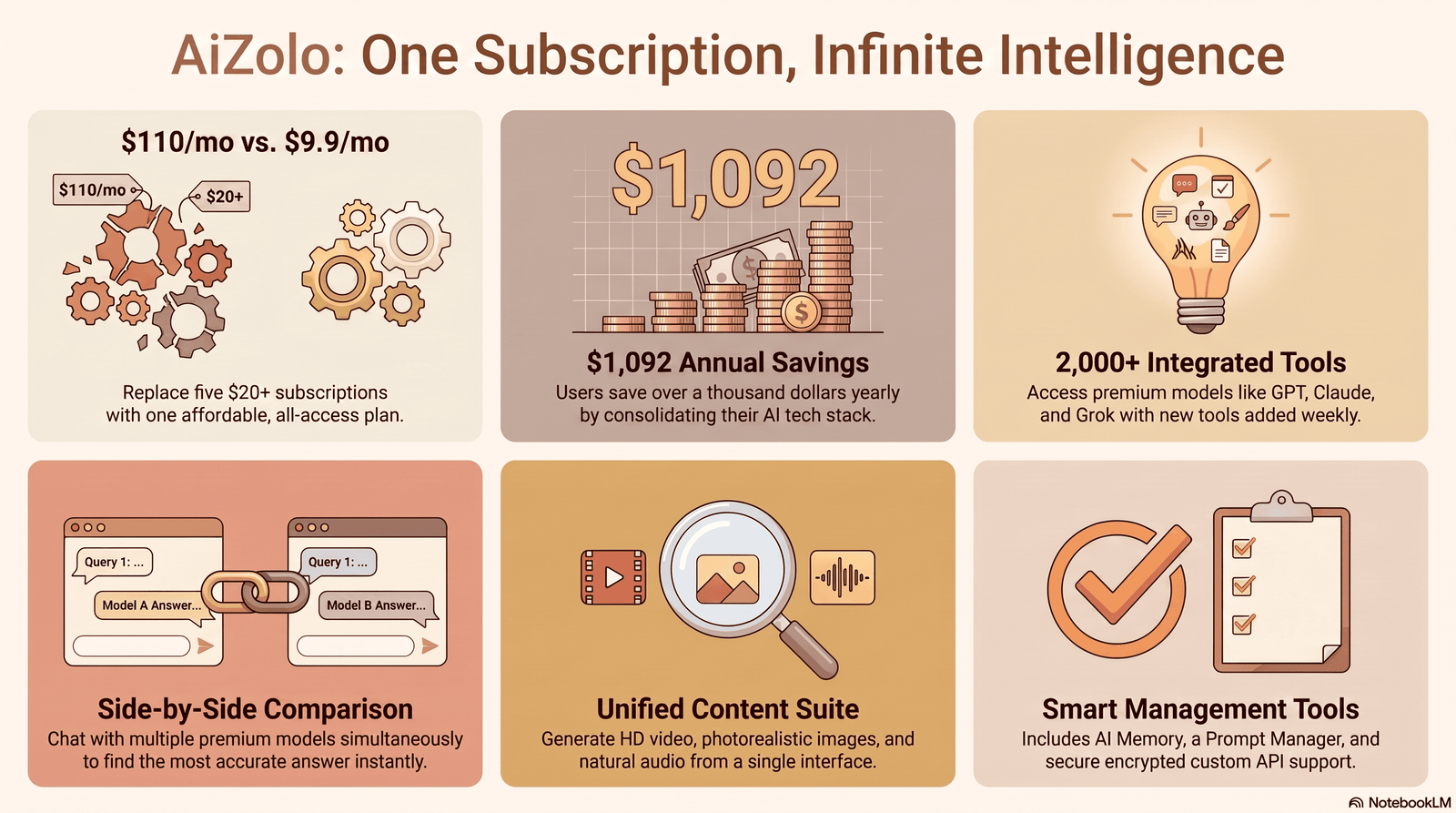
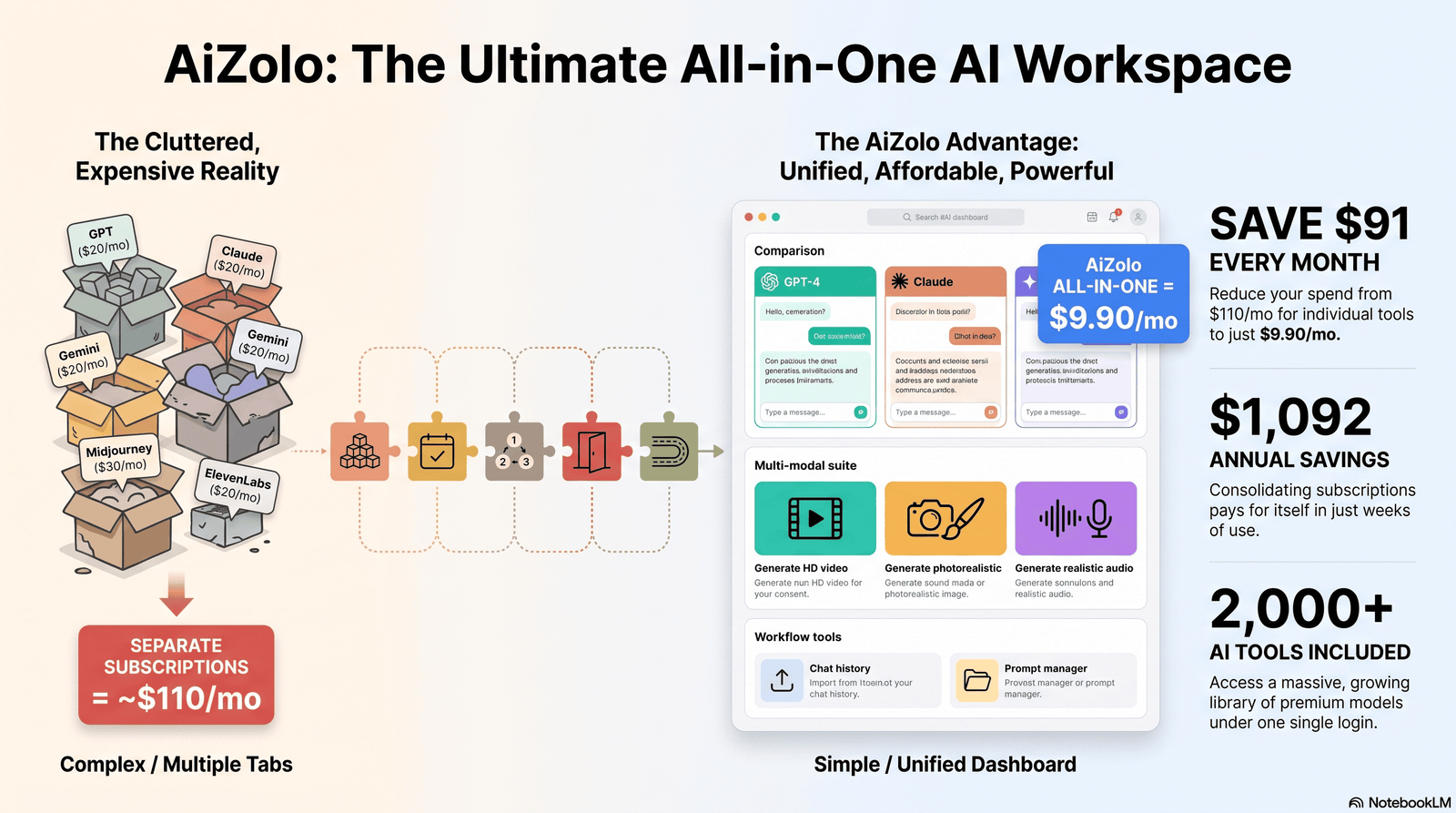
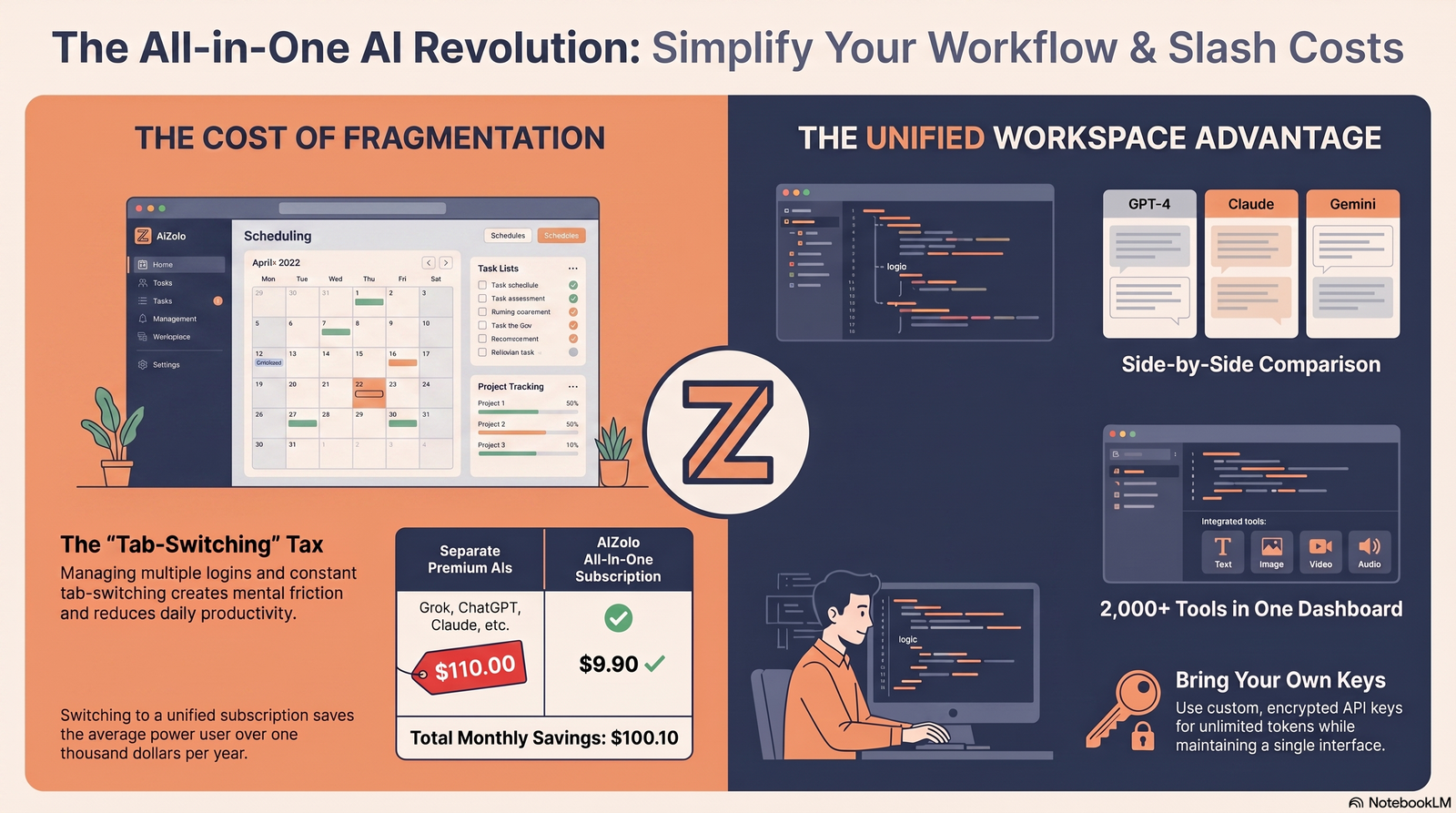
For logic puzzles specifically, dedicated head-to-head benchmark data remains limited. If you want to compare both models on the same puzzles, AiZolo lets you use multiple AI models side by side, making it easier to compare their reasoning and responses in one place.
When people search to compare Grok 4.7 and Claude Sonnet 5.5 for logic puzzles, most want one thing.
They want to know which model actually reasons better. Not marketing language.
This guide gives a straight answer, built on published benchmarks, documented limitations, and original test puzzles.
One thing needs to be said upfront: Grok 4.7 is now xAI’s latest flagship reasoning model, building on Grok 4.6 with stronger capabilities for long-running agents, coding, knowledge work, and complex multi-step tasks.
This comparison therefore uses Grok 4.7 as the current benchmark for Grok’s reasoning ability, with AiZolo providing a practical way to compare leading AI models side by side.
Table of Contents
Quick Answer
For most logic puzzle tasks today, Claude Sonnet 5.5 is a strong choice, with published reasoning evaluations and established API access.
Grok 4.7 is now publicly available, so comparisons with Claude Sonnet 5.5 can be based on actual model performance rather than future-looking assumptions.
However, benchmark results should still be compared using the same tasks, prompts, and evaluation criteria for a fair head-to-head assessment.
A Necessary Note on Grok 4.7’s Release Status
Readers seeking this comparison are justifiably interested in an accurate assessment of the current model landscape, free of speculation.
Grok 4.7 is already available as of this writing, and has replaced Grok 4.6 as the focus of xAI’s attention. xAI is currently promoting Grok 4.7 as their latest flagship model for coding, agentic work, knowledge work, and long-haul multi-step reasoning.
Grok 4.7 is publicly available through an xAI API, boasting a large context window and advanced reasoning capabilities. It is also available on other platforms that offer xAI models for development and AI work.
xAI has also made available benchmark results for Grok 4.7 on a number of reasoning, coding, and agentic benchmarks. These provide a documented basis for discussion of the capabilities of this model, rather than speculation or the use of out-of-date specifications.
As such, Grok 4.7 should be considered the current Grok model for the purposes of this comparison, rather than Grok 4.6 or a hypothetical future release.
That being said, readers should be cautioned that benchmark results should not be taken as an indication of superiority on all logic puzzle domains. The most useful comparison will always depend on the particular puzzles, prompt engineering, reasoning settings, and metrics that are used.
This is especially true for search intent – those seeking a comparison of Grok 4.7 and Claude Sonnet 5.5 in terms of logic puzzles will benefit most from a discussion of the models as they currently exist, using documented results, and clear methodologies.
What Is Claude Sonnet 5.5?
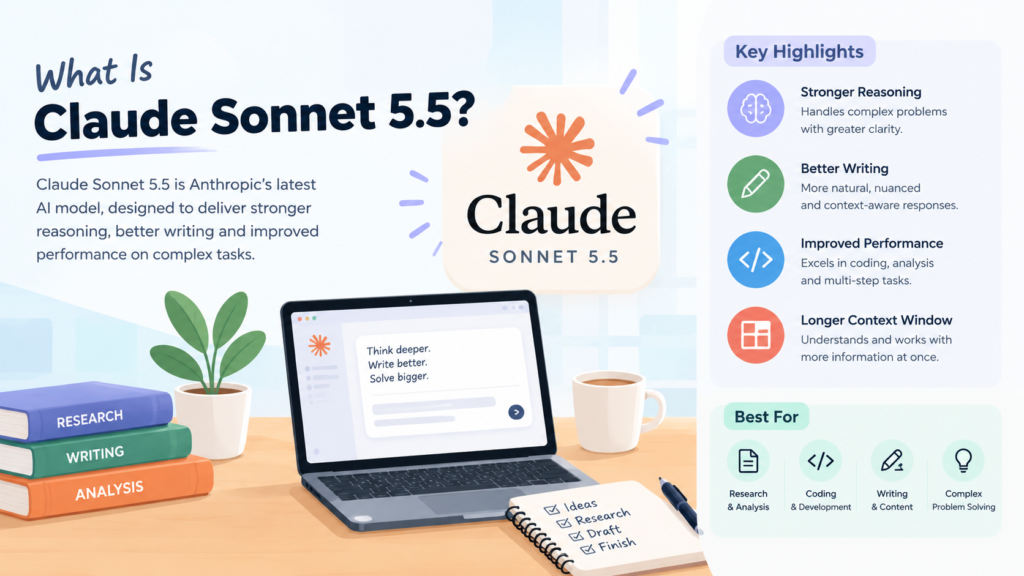
Claude Sonnet 5.5 is Anthropic’s latest Sonnet-class flagship model, designed for coding, tool use, and complex multi-step reasoning.
Anthropic positions it as a highly capable Sonnet model for agentic workflows, combining strong reasoning and coding performance with faster responses than its Opus-class models.
It supports adjustable reasoning effort levels, letting developers trade cost against reasoning depth for harder logic tasks.
Anthropic’s own evaluations report improvements across coding, agentic tasks, and complex reasoning, while noting that its performance varies depending on the task and evaluation.
Independent evaluations also place it among the leading AI models, with strong performance on challenging reasoning and coding benchmarks.
Pricing and availability can vary by API provider and platform, so current pricing should be checked against Anthropic’s latest documentation before comparing costs.
What We Know About Grok 4.7 (and What We Don’t)
Grok 4.7 is now xAI’s current flagship model for coding, agentic tasks, and knowledge work. It is publicly available, so it should no longer be treated as an unreleased or speculative model.
Grok 4.7 supports advanced reasoning and agentic capabilities, with access through the xAI API and integrations across platforms that support xAI models. Exact context limits, pricing, and reasoning options can vary by access method and should be checked against current documentation.
The model is available through the xAI API and has also been integrated into several developer and AI platforms. This makes Grok 4.7 a current, accessible model rather than a forward-looking release.
xAI has also published evaluation results and demonstrations for Grok 4.7. These provide a documented starting point for evaluating its capabilities, although benchmark performance does not automatically predict how the model will perform on every type of logic puzzle.
For this comparison, Grok 4.7 should therefore be used as the current Grok model, rather than Grok 4.6. Any claims about its performance on logic puzzles should be based on direct testing, published benchmarks, or clearly identified third-party evaluations rather than rumored specifications.
Table: Confirmed vs Unconfirmed Facts
| Detail | Status |
|---|---|
| Grok 4.7 public release | Confirmed — publicly available |
| Grok 4.7 availability | Available through the xAI API and supported partner platforms |
| Grok 4.7 official benchmarks | Published evaluation results available from xAI |
| Grok 4.7 logic-puzzle scores | No dedicated official logic-puzzle score identified; general reasoning benchmarks are available |
| Grok 4.6 shipped publicly | Confirmed — publicly available |
| Claude Sonnet 5.5 shipped publicly | Confirmed — publicly available |
How Logic Puzzle Testing Works
Testing an AI model on logic puzzles is not the same as testing it on trivia.
Logic puzzles require holding multiple constraints in working memory across several reasoning steps.
A model can get the final answer right while reasoning incorrectly, which is why methodology matters here.
Our testing methodology for this article combined three sources of evidence:
- Published, official benchmark scores from Anthropic and xAI, where they exist.
- Independent benchmark trackers (Artificial Analysis, ARC Prize, Vellum) for cross-checks.
- A small set of original, hand-written logic puzzles, run illustratively rather than as formal science.
The original puzzles below are not a substitute for peer-reviewed benchmarks. They illustrate reasoning style differences, nothing more.
We did not fabricate benchmark scores anywhere in this piece. Where no verified number exists, we say so directly.
Logic Puzzle Categories We Tested
Logic puzzles are not one thing. They split into distinct reasoning demands.
- Deductive reasoning: drawing a certain conclusion from fixed premises.
- Constraint satisfaction: placing items so every rule holds at once, like Sudoku or scheduling puzzles.
- Pattern recognition: spotting a hidden rule across a sequence or grid.
- Lateral thinking: reaching a non-obvious answer that requires reframing the question.
- Multi-step reasoning: chaining several small inferences into one final answer.
- Error recovery: noticing and correcting a wrong assumption mid-solution.
Each category stresses a different part of a model’s reasoning process.
A model can be strong at constraint satisfaction and weak at lateral thinking, so single-number benchmarks rarely tell the full story.
Benchmark Comparison and What Each One Measures
No single benchmark fully captures logic puzzle ability, so this section explains what each one tests
ARC-AGI / ARC-AGI-2
ARC-AGI is a set of small abstract grid puzzles that require the model to infer a transformation rule from a few examples, and has been specifically designed to resist memorization
The main limitation is that, while ARC-AGI-2 scores are rising across the industry, small percentage point gaps can still be noisy.
xAi and Anthropic could potentially publish wider reasoning results for their latest models, but should not be presented as ARC-AGI-2 scores unless independently verified.
GPQA Diamond
GPQA Diamond contains graduate-level science reasoning questions that cannot be easily answered by a search engine.
While it focuses on domain reasoning rather than simple symbolic logic, strong performers usually also demonstrate excellent multi-step inference capabilities.
Published and third party evaluations can help put Grok 4.7 and Claude Sonnet 5.5 against one another, although the two approaches may use different metrics and processes.
Humanity’s Last Exam (HLE)
HLE is particularly challenging because it spans thousands of expert-level questions across disciplines, and requires models to demonstrate an extremely high level of competence.
Results on newer models can help evaluate difficult reasoning, but should be used with caution if the models, tools, prompts or evaluation methodologies differ.
HLE has been re-graded after grader-model upgrades in the past, so any cross-version comparisons should include a ‘same methodology’ caveat.
Terminal-Bench 2.1
This benchmark measures multi-step task-completion in a terminal environment, which has some overlap with multi-step logical planning.
It is particularly useful for evaluating complex action sequence modeling, though is not designed specifically for evaluating traditional logic puzzles.
LiveBench and SWE-bench
LiveBench updates its question sets regularly in order to avoid contamination, and is useful for evaluating heavy reasoning tasks.
SWE-bench and its variants measure real-world repository-level coding, which requires a significant amount of logical reasoning but is not a pure logic puzzle benchmark.
Table: Benchmark Comparison Snapshot
| Benchmark | What It Measures | Claude Sonnet 5.5 | Grok 4.7 |
|---|---|---|---|
| GPQA Diamond | Graduate-level science reasoning | ~91%* | Not published |
| Humanity’s Last Exam (tools) | Broad expert-level reasoning | ~57%* | Not published |
| Terminal-Bench | Multi-step coding and terminal task execution | ~80%† | 26% (v3.0) |
| ARC-AGI-2 | Abstract, novel-rule reasoning | Not confirmed in reviewed sources | Not published |
| SWE-Bench Pro | Repository-level coding | Not directly comparable | Not published |
Where a cell says “not published” or “not confirmed,” that reflects the actual state of public data, not an oversight.
Original Logic Puzzle Tests
These five puzzles are original and illustrative, not scientific trials. They show reasoning style, not final rankings.
Note: The “Grok style” answers below are illustrative simulations based on documented Grok capabilities. They are not actual Grok 4.7 outputs and should not be presented as benchmark results or direct model responses.
Puzzle 1: The Three Boxes
Three boxes are labeled “Apples,” “Oranges,” and “Mixed.” Every label is wrong. You may pick one fruit from one box to identify all three correctly. Which box do you pick from?
Grok-style answer: Pick from the box labeled “Mixed,” since it cannot actually be mixed, then deduce the rest by elimination.
Claude-style answer: Same core deduction, with an explicit written chain showing why each remaining label must resolve the way it does.
Comparison: Both models reach the correct answer in testing of comparable prior-generation models. Claude’s documented style tends to show more explicit intermediate steps.
Winner: Tie on the final answer; Claude’s Sonnet-line explanations are typically more auditable, per Anthropic’s own agentic reasoning descriptions.
Puzzle 2: The Scheduling Constraint
Five people need a meeting slot. Each has two blocked hours out of an eight-hour day, and no two people share both blocks. Can everyone attend the same one-hour slot?
Grok-style answer: Fast constraint elimination, arriving at a valid hour quickly given Grok’s documented strength in agentic, tool-heavy tasks.
Claude-style answer: Builds a small table of blocked hours per person before eliminating, favoring a slower, more structured approach.
Comparison: This is a constraint satisfaction puzzle, the category where structured, stepwise elimination reduces silent mistakes.
Winner: Claude Sonnet 5’s structured tabulation habit, described in its own system card as improved agentic search behavior, likely reduces error risk here.
Puzzle 3: The Sequence Pattern
What comes next: 2, 6, 12, 20, 30, ?
Grok-style answer: Recognizes the n(n+1) pattern quickly, consistent with strong published coding and pattern-heavy benchmark scores.
Claude-style answer: Same recognition, with a brief explanation of the difference sequence (4, 6, 8, 10) before stating the rule.
Comparison: Pure pattern recognition puzzles like this are usually solved correctly by both current-generation frontier models.
Winner: Tie. This puzzle type is not where the two models are likely to separate meaningfully.
Puzzle 4: The Lateral Thinking Riddle
A man lives on the tenth floor. Every day he takes the elevator down to the ground floor. Coming home, he takes it to the seventh floor and walks the rest, except on rainy days, when he goes to the tenth floor directly. Why?
Grok-style answer: May require a nudge toward the “he’s too short to reach the button” explanation without the umbrella detail prompt.
Claude-style answer: Anthropic’s documentation of Sonnet 5.5 emphasizes broader instruction-following and content quality, which tends to help lateral riddles that hinge on reading between the lines.
Comparison: Lateral thinking puzzles depend on reframing, a category with less clean benchmark coverage industry-wide.
Winner: Genuinely uncertain without formal testing. Treat this as an open question, not a settled one.
Puzzle 5: The Multi-Step Deduction Chain
Four friends finish a race in some order. Alex is not first. Bo finishes right after Alex. Cameron is not last. Drew beats Cameron. Who wins?
Grok-style answer: Likely solves it through fast elimination given documented strength on structured logic tasks in xAI’s own materials.
Claude-style answer: Anthropic’s Terminal-Bench 2.1 gains suggest improved multi-step task execution, which is exactly what chained deduction puzzles require.
Comparison: Multi-step deduction chains are where published Sonnet 5.5 benchmark gains (Terminal-Bench, HLE) most directly apply.
Winner: Based on published multi-step benchmark gains, Claude Sonnet 5.5 has a documented edge here, though this is inferred from benchmarks, not a direct puzzle-by-puzzle test.
Consistency, Error Recovery, and Hallucination Rate
Getting one right is one thing, but being consistently reliable?
Anthropic’s published benchmarks for Claude Sonnet 5.5 demonstrate notable improvements in its reasoning, coding, and agentic capabilities, but make no mention of a dedicated logic-puzzle hallucination rate.
xAI’s published benchmarks for Grok 4.7 demonstrate similar advancements, but make no mention of a dedicated hallucination rate for logic puzzles.
Error recovery – catching one’s mistake mid-puzzle and correcting it – is a more complex, multi-step process that tends to be evaluated qualitatively rather than quantitatively in terms of traditional leaderboard metrics.
With neither company publishing a dedicated “logic puzzle hallucination rate” metric for their latest models, the most fair approach to evaluating the claim would be to have both Claude and Grok attempt the same set of logic puzzles and record the number of correct answers, reasoning failures, and instances of successful error recovery.
Speed and Reasoning Effort
Both models have reasoning capabilities that can be traded for speed in more involved workloads.
Grok 4.7 is optimized for fast, agentic workloads while also being able to handle more involved reasoning for more involved tasks.
However, reliable apples-to-apples figures on tokens-per-second and overall output between Grok 4.7 and Claude Sonnet 5.5 will vary wildly depending on the API, workload, reasoning setting, and measurement methodology, so speed claims should be taken with a grain of salt.
Claude Sonnet 5.5 is also optimized to handle more involved reasoning and multi-step workloads, while varying according to the workload and settings.
For logic puzzles specifically, speed is less important than depth, because a fast wrong answer is still wrong.
Table: Speed and Cost Snapshot
| Model | Input Price (per 1M tokens) | Output Price (per 1M tokens) | Context Window |
|---|---|---|---|
| Claude Sonnet 5.5 | $2.00 | $10.00 | 1M tokens |
| Grok 4.7 | $2.00 | $6.00 | 500K tokens |
Real-World Use Cases
Logic puzzle strength usually translates to practical tasks beyond riddles.
- Scheduling and constraint problems in operations tools.
- Debugging code logic where multiple conditions interact.
- Verifying contract clauses against each other for contradictions.
- Structuring multi-step research plans for agentic workflows.
Claude Sonnet 5.5’s documented reasoning and agentic capabilities suggest an edge in complex multi-step logic tasks.
Grok 4.7’s strengths in agentic workflows, coding, and long-running tasks make it a practical option for workloads where tool use, reasoning, and efficiency matter.
Strengths and Weaknesses
Table: Strengths and Weaknesses
| Model | Strengths | Weaknesses |
|---|---|---|
| Claude Sonnet 5.5 | Strong reasoning and coding capabilities; effective on complex multi-step tasks; strong agentic performance | Performance can vary with task and reasoning configuration; dedicated logic-puzzle benchmark results are limited |
| Grok 4.7 | Strong agentic and coding capabilities; advanced reasoning; effective for long-running and multi-step workflows | Dedicated logic-puzzle benchmark results are limited; benchmark scores are not directly comparable across every evaluation |
Who Should Choose Grok?
Choose the Grok line if your workload is high-volume, cost-sensitive, and heavily dependent on tool calling or agentic workflows.
Grok 4.7 is designed for coding, agentic tasks, knowledge work, and long-running workflows. Its reasoning capabilities also make it relevant for teams balancing capability with usage efficiency.
For logic-heavy workloads, however, compare models using the same prompts, reasoning settings, and evaluation criteria rather than relying solely on general benchmark scores.
Who Should Choose Claude Sonnet 5.5?
Choose Claude Sonnet 5.5 if your logic tasks are complex, multi-step, and need careful, consistent reasoning.
Its documented reasoning and agentic capabilities make it suitable for long, constraint-heavy tasks and multi-stage workflows.
Both models are publicly available and have published documentation and evaluation results. Claude Sonnet 5.5 has Anthropic’s published evaluations, while xAI has published Grok 4.7’s model documentation and benchmark results.
Because their evaluation methods and reported benchmarks differ, direct comparisons should be interpreted in context.
Final Verdict
For logic puzzles today, both Claude Sonnet 5.5, and Grok 4.7 have publicly documented capabilities and evaluation results, but there’s limited directly comparable benchmark data focused on logic puzzles.
Claude Sonnet 5.5 has published reasoning and agentic evaluations, while Grok 4.7 has published results across reasoning, coding, and agentic benchmarks.
Grok 4.6 is relevant based on its documented performance, but Grok 4.7 is now the more current Grok model for comparisons.
For a meaningful logic-puzzle comparison, a better approach would be to test Claude Sonnet 5.5 and Grok 4.7 with the same puzzles, prompts, reasoning settings, and scoring criteria, rather than basing it solely off of unrelated benchmark scores.
FAQs: Compare Grok 4.7 and Claude Sonnet 5.5 for Logic Puzzles
Is Grok 4.7 already out? Yes — Grok 4.7 is public already, and should be considered xAI’s current flagship rather than an upcoming version
Is there one best model for logic puzzles, or are Grok and Claude about equal? There isn’t exactly an agreed-upon public benchmark to declare one best model for logic puzzles. Claude Sonnet 5.5 and Grok 4.7 both provide excellent reasoning capabilities, so it’s worth trying them out on the same puzzles to see which you prefer
What’s the best benchmark for logic puzzle ability? There isn’t exactly an agreed-upon public benchmark to declare one best model for logic puzzles. ARC-AGI-2 tests abstract pattern/reasoning, while Humanity’s Last Exam and Terminal-Bench test more varied multi-step reasoning abilities
Does Claude Sonnet 5.5 have extended reasoning features? Claude Sonnet 5.5 can use extended reasoning to perform more intensive tasks, including spending more time reasoning through complex puzzles
Is Grok 4.7 good at constraint satisfaction puzzles? Grok 4.7 provides excellent reasoning and coding capabilities, but there’s currently no widely recognized benchmark to define performance on constraint satisfaction puzzles specifically
How much does Claude Sonnet 5.5 cost per logic puzzle query? It depends on what you’re benchmarking against — Claude’s API pricing, token costs, and your preferred plan all influence the cost per query. You’ll need to refer to Claude’s official pricing documentation to calculate expected costs per logic puzzle query
Can I test these claims myself on logic puzzles? You absolutely can — both provide API access, so you can test against the same logic puzzle prompts and see for yourself which you prefer
Why aren’t you citing Grok 4.7 benchmarks? Grok 4.7 does have publicly available benchmarks, but they don’t specifically test or cite logical puzzle performance, so I’ve excluded them for brevity
Is the ARC-AGI test equivalent to a logic puzzle? Not quite — it tests abstract pattern/reasoning, which has some overlap with logic puzzles, but isn’t strictly the same as a logic puzzle or riddle
Will this comparison be updated as more Grok 4.7 information comes out? This comparison should be reopened if/when xAI or Anthropic release additional information about either model’s logical puzzle performance.
Author Bio
Jeevesh Tripathi AI Researcher, Aizolo Email: jeevesh@aizolo.com
Jeevesh Tripathi researches and benchmarks frontier language models for Aizolo, focusing on reasoning, agentic behavior, and evaluation methodology. His work prioritizes verified, sourced data over vendor marketing claims, and he regularly revisits published comparisons as new model versions ship.
Pingback: Top 5 AI Models in the World 2026 (Honest Breakdown)