Featured Snippet Answer
GPT-5.6, released publicly on July 9, 2026, uses a warmer, more conversational tone than earlier GPT-5 models, which many users criticized as cold and robotic. The warmth comes from tone controls and phrasing changes, not a different reasoning engine—coding and factual benchmarks improved separately.
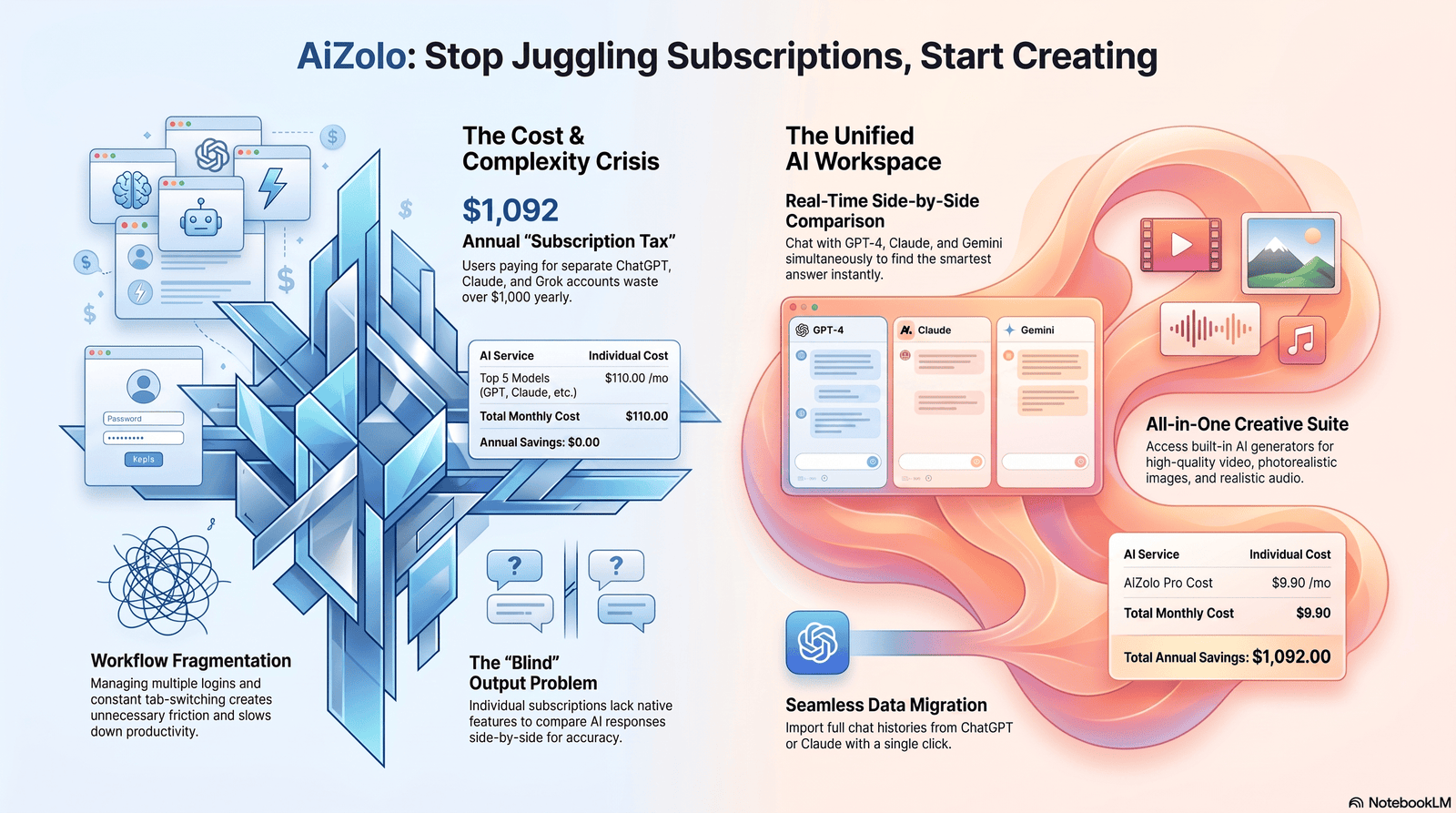
For users comparing these differences through platforms like Aizolo, the warmer tone is especially noticeable across writing and everyday conversations. It helps with writing, coaching, and customer-facing tasks, while plain, low-flattery responses are still better suited for legal, medical, or technical review work.
Table of Contents
Since GPT-5.6, OpenAI has also released GPT-6 Astra, bringing the latest generation of its models to users looking for more capable reasoning, coding, and complex task handling. If you want to see what has changed in the newest generation, our GPT-6 Astra review covers its key features, capabilities, and real-world performance in more detail.
Introduction
Ask ten ChatGPT users what changed between GPT-5 and GPT-5.6, and most won’t mention benchmarks first.
They’ll mention the tone.
When GPT-5 replaced GPT-4o in August 2025, the backlash was immediate. Many ChatGPT users took to Reddit and other platforms to voice frustration with OpenAI’s newest model. The complaint wasn’t accuracy. It was warmth.
Since then, OpenAI has spent almost a year walking that tone back — through GPT-5.1, 5.2, 5.5, and now GPT-5.6, which OpenAI made public on July 9, 2026.
This article compares GPT-5.6’s warmer tone against the older, more robotic style of earlier GPT-5 releases (and against “robotic AI” behavior in general).
We’ll look at what actually changed under the hood, where the warmth genuinely helps, where it doesn’t, and what the verified benchmarks say — not just what marketing pages claim.
compare gpt 5.6 warmer tone vs older robotic ai is really two separate questions: does it feel better, and does it perform better. We answer both.
Quick Answer
GPT-5.6’s tone is warmer because OpenAI deliberately tuned phrasing, acknowledgment patterns, and personalization controls across several releases — not because the underlying model became “nicer” by accident.
Independent coding benchmarks from Artificial Analysis show GPT-5.6’s top tier, Sol, leading agentic coding evaluations while its cheaper tiers, Terra and Luna, trade some capability for lower cost. Tone and capability are separate improvements that happened to arrive together.
Callout: Warmth is a UX layer. Reasoning quality is a separate layer. GPT-5.6 improved both, but they should be evaluated independently — a friendlier assistant is not automatically a smarter one.
What Changed in GPT-5.6?
GPT-5.6 is not a single model. It ships in three tiers named after celestial bodies: Sol, Terra, and Luna.
In this naming system, the number identifies a model’s generation, while Sol, Terra, and Luna identify durable capability tiers that can advance on their own release cadence.
Sol is the flagship reasoning tier. Terra and Luna sit below it on price and raw capability, aimed at higher-volume or cost-sensitive use.
GPT-5.6 arrived roughly two months after GPT-5.5, and its initial rollout wasn’t a simple global switch-on.
OpenAI began with a limited preview tied to coordination with the U.S. government before widening access, and it publicly released the Sol, Terra, and Luna models on July 9, 2026, after roughly two weeks of restricted access to a small group of trusted partners.
Alongside GPT-5.6, OpenAI also introduced new voice models under the GPT-Live name and a workplace-focused product called ChatGPT Work, aimed at document, spreadsheet, and presentation tasks for teams.
On tone specifically, coverage of the release describes GPT-5.6 as continuing the shift toward warmer, more conversational phrasing that began with GPT-5.1, without reverting to the rigid formality that defined the original GPT-5 launch.
Why Older AI Sounded Robotic
To understand GPT-5.6’s tone, it helps to understand what went wrong first.
When OpenAI launched GPT-5 in August 2025, it retired several older models at once, including the widely liked GPT-4o.
The backlash centered on OpenAI’s decision to replace GPT-4o — a model praised for its warmth and conversational style — with GPT-5, and the reaction on Reddit and X was swift enough that some users threatened to cancel their subscriptions.
Users described GPT-5’s responses as more filtered, less personal, and harder to use for creative work.
Reddit threads, tech reviews, and forums filled with frustration soon after launch.
Several concrete complaints came up repeatedly:
- Shorter, more clipped answers. Many users said the model gave shorter, more sanitized answers that made brainstorming feel limited.
- Loss of personality. One widely shared comment contrasted GPT-4o’s warmth with GPT-5’s sterile feel, saying the older model felt like it was actually listening.
- No model choice. Some users were upset that OpenAI removed access to multiple older models overnight, without warning.
This wasn’t purely a perception problem, either. Reporting suggested that tightened safety guardrails may have added caution that made responses feel more hesitant and less expressive.
OpenAI eventually acknowledged the misstep publicly. Sam Altman said the company had “screwed up” the rollout and called it a wake-up call about what it means to upgrade a product used by hundreds of millions of people in a single day.
That admission set the stage for everything that followed.
How GPT-5.6 Creates Warmer Conversations
The warmth didn’t arrive all at once. It was built in layers, release by release.
GPT-5.1 (November 2025): OpenAI released GPT-5.1 with two variants, GPT-5.1 Instant and GPT-5.1 Thinking, designed to offer different communication styles. The Instant variant was described as warmer, more conversational, and better at following instructions, while Thinking was pitched as an advanced reasoning model that was easier to understand.
This release also renamed existing personality presets — Robot became “Efficient,” Listener became “Friendly” — and added new personas called Professional, Candid, and Quirky.
GPT-5.2 (December 2025): OpenAI introduced granular personalization controls, letting users choose more, less, or default levels for traits like warmth, enthusiasm, header and list usage, and emoji frequency. This moved tone from a fixed setting to something closer to a dial.
The phrasing layer: OpenAI has said publicly that changes to GPT-5’s tone were meant to be subtle — small, genuine touches like “good question” or “great start” rather than flattery — and that internal testing showed no measurable increase in sycophancy compared to the previous personality.
GPT-5.6 (July 2026): Coverage of the release describes continued tuning toward a warmer, more conversational default, moving further away from the rigid formality that characterized the original GPT-5.
The pattern across all of these updates is important: OpenAI treated tone as a separate, tunable layer, distinct from reasoning or coding capability. That’s why a model can get warmer and more capable in the same release without one causing the other.
Callout: If a vendor claims warmth alone improved reasoning scores, treat that claim skeptically. Tone and capability are usually tuned independently, even when they ship together.
Writing Comparison
| Task | Older / Robotic Style | GPT-5.6 Warmer Style |
|---|---|---|
| Feedback on a draft | Lists errors bluntly, minimal framing | Notes what works first, then flags issues clearly |
| Explaining a rejection | Terse, procedural | Direct, but acknowledges effort before the “no” |
| Long-form drafting | Structured but flat | Structured with more natural transitions |
| Tone consistency | Very stable, sometimes stiff | Slightly more variable, more conversational |
Original example — same prompt, two eras of style:
Prompt: “Can you review this cover letter? I’m not confident about it.”
Older, robotic-style response: “The letter is functional. Paragraph two is too long. Remove the third sentence. Add a call to action in the final line.”
Newer, warmer-style response: “This is a solid starting point — the opening line does its job. Paragraph two runs long, though, and the third sentence repeats what you already said above. A short call to action at the end would tighten it up.”
Both responses give the same substantive feedback. The warmer version simply acknowledges the person before correcting the work — a small change with a real effect on how criticism lands.
Coding Comparison
Coding is where tone matters least and precision matters most — but it’s still worth checking whether “warmer” came at a cost.
According to Artificial Analysis, GPT-5.6 Sol running in high-effort mode inside OpenAI’s Codex harness leads every evaluation in the firm’s Coding Agent Index, which combines DeepSWE, Terminal-Bench v2, and SWE-Atlas-QnA, tying Grok 4.5 only on the SWE-Atlas-QnA component.
Its per-task cost in that configuration is reported as roughly 40% lower than Claude Fable 5 and about 10% lower than Claude Opus 4.8 in comparable agentic coding setups.
The lower-cost tiers trail slightly: GPT-5.6 Terra and Luna score 77 and 75 respectively on the Coding Agent Index, with per-task cost reductions of roughly 60% and 80% compared to Sol.
On a separate benchmark, SWE-bench Pro, an independent leaderboard from CodingFleet lists GPT-5.6 Sol, Terra, and Luna at 64.6%, 63.4%, and 62.7% respectively as of its July 10, 2026 update.
Takeaway: tone tuning didn’t come at the expense of coding performance in this release. The warmer conversational layer sits on top of a model family that independent benchmarks still rank competitively for agentic coding work.
Business Communication Comparison
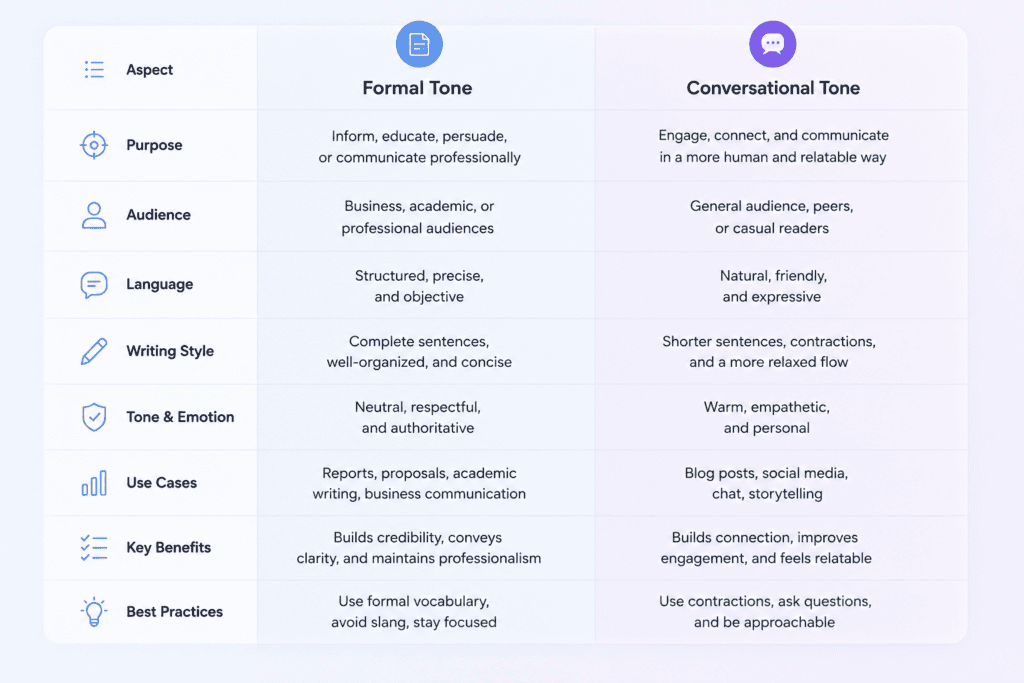
| Scenario | Robotic Default | Warmer Default | Which Is Preferable |
|---|---|---|---|
| Declining a vendor proposal | Blunt, minimal context | Brief acknowledgment + clear no | Warmer, in most cases |
| Compliance or legal drafting | Precise, no embellishment | Same precision, softer framing | Robotic — precision matters more |
| Internal status updates | Dry, bullet-heavy | Slightly more narrative | Depends on team culture |
| Customer support replies | Can feel dismissive | Feels more attentive | Warmer, generally |
Business writing isn’t one category. A warmer tone helps in customer-facing and interpersonal contexts. It’s largely irrelevant — sometimes even a liability — in contract language, compliance documentation, or anything that will be quoted verbatim later.
Creative Writing Comparison
Original example prompt: “Write one paragraph describing a character waiting for bad news.”
Older, robotic-style output: “She sat in the chair. The clock ticked. She checked her phone. No messages. She waited.”
Warmer, GPT-5.6-style output: “She’d read the same paragraph four times without absorbing a word of it, phone face-up on her knee in case it buzzed. It didn’t. The clock on the wall seemed louder than it had any right to be.”
The warmer output isn’t objectively “better” prose — that’s subjective — but it demonstrates more varied sentence rhythm and interiority, which many creative writers will find easier to build on.
Accuracy vs Tone

This is the section that matters most for anyone deciding whether to trust the warmer style.
Tone and accuracy are not the same axis, and conflating them is a common mistake.
A model can be:
- Warm and accurate
- Warm and wrong
- Robotic and accurate
- Robotic and wrong
OpenAI has specifically stated that its tone adjustments were tested to ensure no increase in sycophancy — the tendency to agree with a user regardless of correctness — compared to the prior personality.
That’s a meaningful distinction. Sycophancy is a genuine failure mode where warmth becomes flattery that reinforces mistakes. OpenAI’s public claim is that its warmth changes were designed specifically to avoid that trap.
Still, readers should verify factual claims independently, especially for high-stakes topics, regardless of how confident or friendly a response sounds. A pleasant tone can make an incorrect answer feel more trustworthy than it is — which is exactly why tone and accuracy need separate scrutiny.
Callout: Never let a warm, confident tone substitute for verification. Friendliness is a communication style, not a correctness signal.
Benchmarks
This section covers only benchmarks with a clearly identified, independent source. We do not include numbers we could not verify.
| Benchmark | What It Measures | GPT-5.6 Result | Source | Type |
|---|---|---|---|---|
| Artificial Analysis Coding Agent Index | Agentic coding across DeepSWE, Terminal-Bench v2, SWE-Atlas-QnA | Sol (max): 80; Terra (max): 77; Luna (max): 75 | Artificial Analysis | Independent |
| Terminal-Bench 2.1 | Terminal-based agentic task completion | Sol max-effort: 88.8%; Sol Ultra: 91.9% | Artificial Analysis coverage | Independent |
| SWE-bench Pro (Scale, standardized public set) | Real-world software issue resolution across 41 repos | Sol: 64.6%; Terra: 63.4%; Luna: 62.7% | CodingFleet leaderboard, July 10, 2026 | Independent aggregation of vendor and lab data |
| AA-Briefcase | Realistic knowledge-work tasks (presentations, documents) | Sol (max): second-highest overall; highest Presentation Elo of any tested model | Artificial Analysis | Independent |
Methodology notes and limitations:
- Coding Agent Index and AA-Briefcase scores come from Artificial Analysis, which pairs models with specific agent harnesses (for example, OpenAI’s Codex). Results can shift meaningfully with a different harness or scaffold.
- SWE-bench Pro scores vary by aggregator. CodingFleet’s figures reflect Scale’s standardized public set; other aggregators report different numbers depending on which subset (public vs. private) and which reasoning-effort setting they use.
- None of these benchmarks directly measure “warmth” or conversational tone. Tone quality is inherently more subjective and is typically assessed through human preference platforms like LMSYS Chatbot Arena, which we did not cite here because we could not verify a current, GPT-5.6-specific ranking at the time of writing.
- We deliberately excluded MMLU, AIME, HumanEval, and ARC-AGI figures for GPT-5.6 from this table because we could not confirm current, model-specific scores from a primary source. Readers evaluating those benchmarks should check OpenAI’s system card or the relevant benchmark’s official leaderboard directly for the latest numbers.
Real-World Examples
Example 1 — Customer support escalation (original scenario):
A user reports a billing error and is visibly frustrated in their message.
- Robotic-style handling: “Your refund request has been logged. Reference number 88213. Processing takes 5–7 business days.”
- Warmer-style handling: “That’s frustrating, and I’ve logged the refund under reference 88213 — it should land back in your account within 5 to 7 business days.”
Same information, same timeline. The warmer version simply acknowledges the emotional context before delivering the facts.
Example 2 — Debugging help (original scenario):
A developer pastes a stack trace with no other context.
- Robotic-style handling: “Null pointer exception at line 42. Check that
useris initialized before use.” - Warmer-style handling: “That null pointer is coming from line 42 — looks like
userisn’t initialized before it’s accessed there. Worth adding a check before that line.”
Here, the warmth adds almost nothing functionally. Developers debugging under time pressure often prefer the terser version. This is a clear case where robotic efficiency still wins.
Pros
- Warmer defaults reduce friction in customer-facing and educational conversations.
- Personalization controls (introduced in GPT-5.2 and continued into GPT-5.6) let users dial tone up or down instead of accepting one fixed style.
- Coding benchmarks from independent evaluators show the flagship Sol tier remaining competitive on agentic coding tasks alongside the tone changes.
- Public statements from OpenAI indicate the tone changes were tested against sycophancy specifically, not just shipped blind.
Cons
- Warmth is inherently harder to benchmark than accuracy, so claims of “improvement” rely more on qualitative reception than hard numbers.
- The rollout of GPT-5.6 itself was staggered due to government coordination, which limited who could evaluate the warmer tone firsthand in the first weeks.
- Warmer phrasing can, in some contexts, make an incorrect answer feel more credible than it is.
- Users who prefer terse, low-friction responses (many developers, for instance) may find the added phrasing mildly slower to read.
Who Should Upgrade
| User Type | Recommendation |
|---|---|
| Writers and content creators | Likely to prefer GPT-5.6’s tone for drafting and feedback |
| Customer support teams | Strong fit — warmth reduces perceived friction |
| Developers doing pure coding work | Upgrade for capability, tone is secondary |
| Legal, compliance, medical documentation | Evaluate on accuracy and precision, not tone |
| Students | Useful for feedback and explanation-style tasks |
| Enterprise buyers | Evaluate tiers (Sol vs. Terra vs. Luna) against cost and task type, not tone alone |
When Robotic AI Is Actually Better

Warmth is not universally an upgrade. A more clipped, literal response style is still preferable when:
- Precision must not be diluted. Legal, medical, and compliance text benefits from directness over rapport-building.
- Speed matters more than framing. Developers scanning a stack trace often want the fix, not the acknowledgment.
- The task is purely extractive. Pulling data points from a document doesn’t need conversational padding.
- Consistency across thousands of outputs matters more than individual warmth. Automated pipelines generating structured content benefit from predictable, unembellished formatting.
Robotic isn’t a synonym for bad. It’s a style suited to a narrower set of tasks — and GPT-5.6’s personalization controls actually let users dial back toward that style when it’s the better fit.
Future Outlook
OpenAI’s own leadership has acknowledged that the GPT-5 rollout was a misfire on tone, and said future models need to feel personal without exploiting users emotionally.
Given that trajectory, it’s reasonable to expect continued investment in tone customization rather than a single fixed personality — more granular controls, more persona presets, and likely continued separation between “how it sounds” and “how capable it is.”
The bigger open question is competitive: OpenAI’s coding benchmarks now sit close to Anthropic’s frontier models on several independent measures, and both companies are iterating on tone and personality features around the same time. Expect this comparison — warmth plus capability, not one or the other — to become the standard way frontier models are evaluated going forward.
Final Verdict
GPT-5.6’s warmer tone is a real, deliberate, multi-release engineering effort — not a marketing label slapped on an unchanged model.
It genuinely improves the experience for writing feedback, customer support, coaching-style conversations, and general brainstorming.
It does not meaningfully change — and, based on available benchmarks, does not appear to have hurt — coding or agentic task performance for the flagship tier.
It is not automatically the right choice for every task. Precision-critical, high-stakes, or purely extractive work often still benefits from a plainer, less embellished response style, which GPT-5.6’s personalization settings still allow.
Bottom line: upgrade for the tone if conversational quality matters to your workflow. Don’t expect the warmth itself to change factual reliability — verify important claims regardless of how the answer sounds.
FAQs
1. What is GPT-5.6? GPT-5.6 is OpenAI’s model family released publicly on July 9, 2026, available in three tiers — Sol, Terra, and Luna — covering different levels of capability, speed, and cost.
2. Why did older GPT-5 models feel robotic? Early GPT-5 responses were widely described as shorter, more filtered, and less personal than the previous GPT-4o model, contributing to significant user backlash after launch.
3. Is GPT-5.6’s warmer tone just marketing? No — the change was implemented across multiple releases (5.1, 5.2, 5.5, 5.6) through specific phrasing rules and adjustable personalization settings, not a single cosmetic update.
4. Does a warmer tone mean less accurate answers? Not based on available evidence. OpenAI has stated its tone changes were tested against increased sycophancy specifically, and coding benchmarks for GPT-5.6 Sol remain competitive with rival frontier models.
5. Can I turn off the warmer tone in GPT-5.6? Yes. Personalization controls introduced starting with GPT-5.2 let users adjust warmth, enthusiasm, and formatting preferences rather than being locked into one style.
6. How does GPT-5.6 compare to Claude on coding tasks? Independent evaluation from Artificial Analysis places GPT-5.6 Sol ahead on its Coding Agent Index in the Codex harness, with lower per-task cost than Claude Fable 5 and Opus 4.8 in comparable agentic setups — though results can vary with the harness used.
7. What are Sol, Terra, and Luna? They are GPT-5.6’s three capability tiers, named after the Sun, Earth, and Moon, allowing developers to choose intelligence, speed, and cost trade-offs within the same model generation.
8. Is GPT-5.6 available to everyone now? Yes. After an initial limited preview tied to government coordination, OpenAI publicly released all three GPT-5.6 tiers on July 9, 2026.
9. Should writers upgrade to GPT-5.6 for tone alone? If conversational warmth and natural phrasing matter to your workflow — feedback, coaching, customer content — yes, it’s a meaningful improvement over earlier robotic-feeling defaults.
10. Does GPT-5.6’s tone affect coding assistants like Codex? Tone changes are most noticeable in conversational contexts. Coding-focused benchmarks measure task success rather than phrasing, and GPT-5.6 Sol performs competitively there independent of tone.
11. What is the safest way to evaluate AI tone claims? Separate tone from accuracy explicitly. Read benchmark methodology, check the original source, and don’t treat a friendly-sounding answer as automatically more correct.
Conclusion
The shift from “robotic” GPT-5 to “warmer” GPT-5.6 wasn’t an accident or a single patch — it was a direct response to loud, specific user feedback, built gradually across four model releases.
That history matters. It’s the difference between a genuine product correction and a cosmetic rebrand.
For most conversational, writing, and support use cases, GPT-5.6’s warmer default is a real improvement. For precision-critical or purely extractive work, the option to dial tone back down still exists — and is often still the better call.
Whichever style you choose, keep tone and accuracy as separate questions. compare gpt 5.6 warmer tone vs older robotic ai on both axes, not just the one that’s easier to feel.
Author Bio
Author: Jeevesh Tripathi Email: jeevesh@aizolo.com
Jeevesh Tripathi researches and evaluates large language models, focusing on how conversational quality, benchmark performance, and real-world usability intersect. His work centers on independent, source-verified comparisons of frontier AI models — separating vendor marketing claims from what published benchmarks and documented user feedback actually show.
He writes technical, SEO-driven content for AI users, developers, and business teams who need practical, evidence-based guidance rather than hype. His analysis draws on official model documentation, independent benchmarking platforms, and firsthand testing to help readers make informed decisions about which AI tools fit their specific workflows.