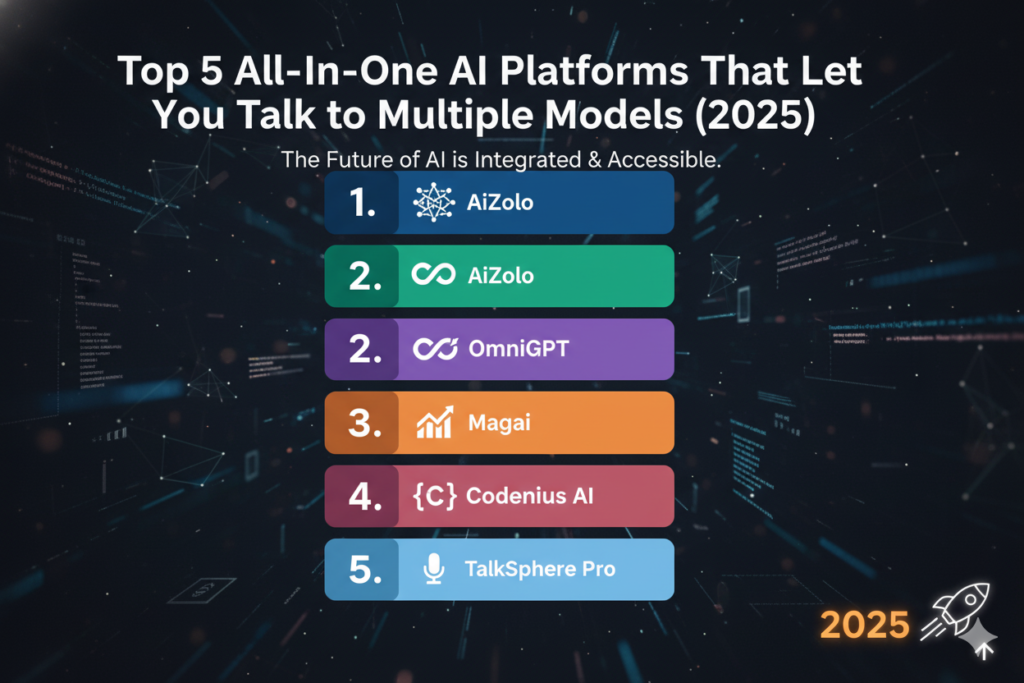
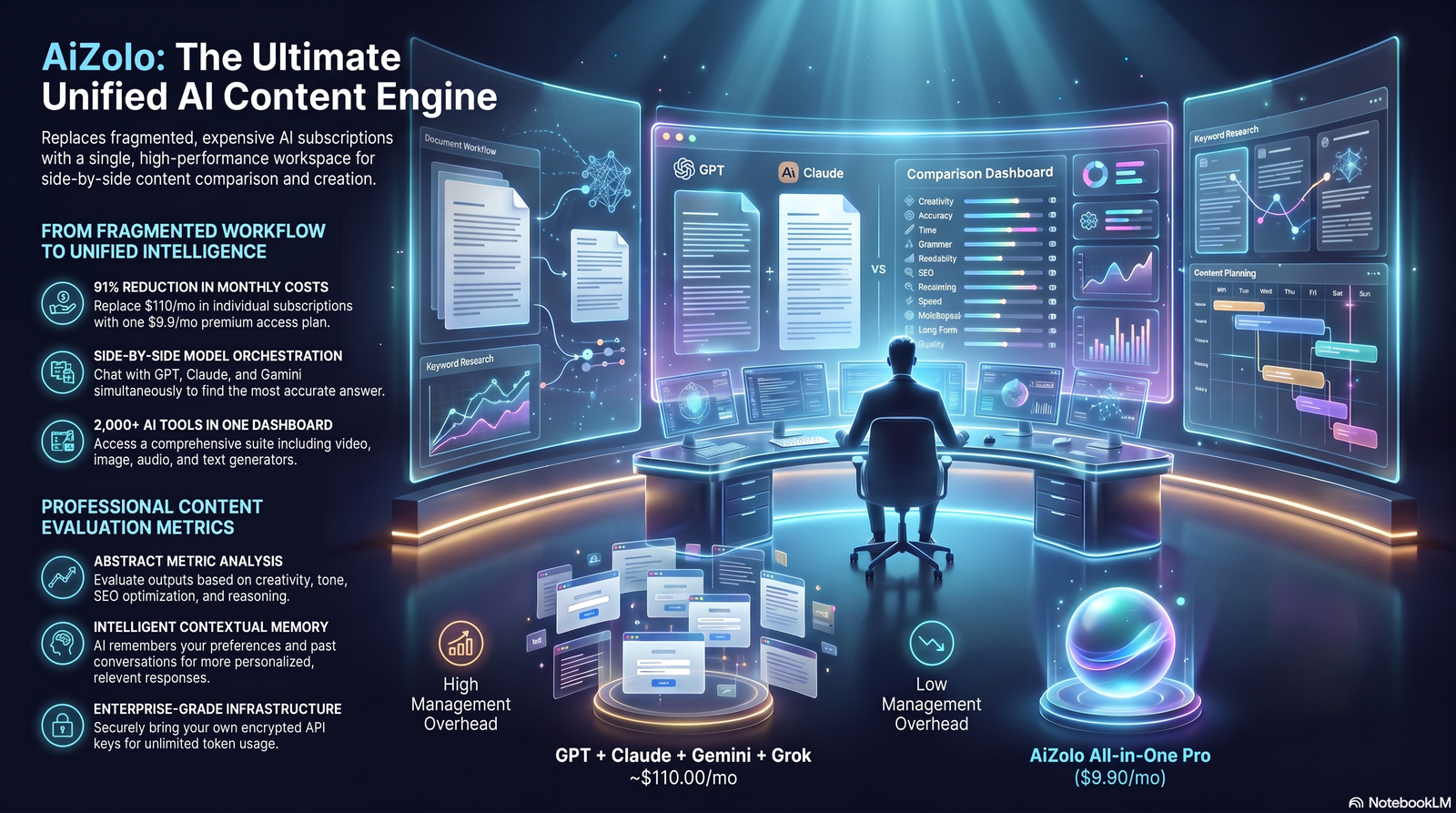
Choosing between ChatGPT, Grok, Gemini, Claude, and Perplexity can get confusing fast. AiZolo makes that comparison easier by bringing multiple leading AI models into one workspace.
You can test the same prompt, compare responses side by side, and discover which model fits your needs—without constantly switching between platforms.
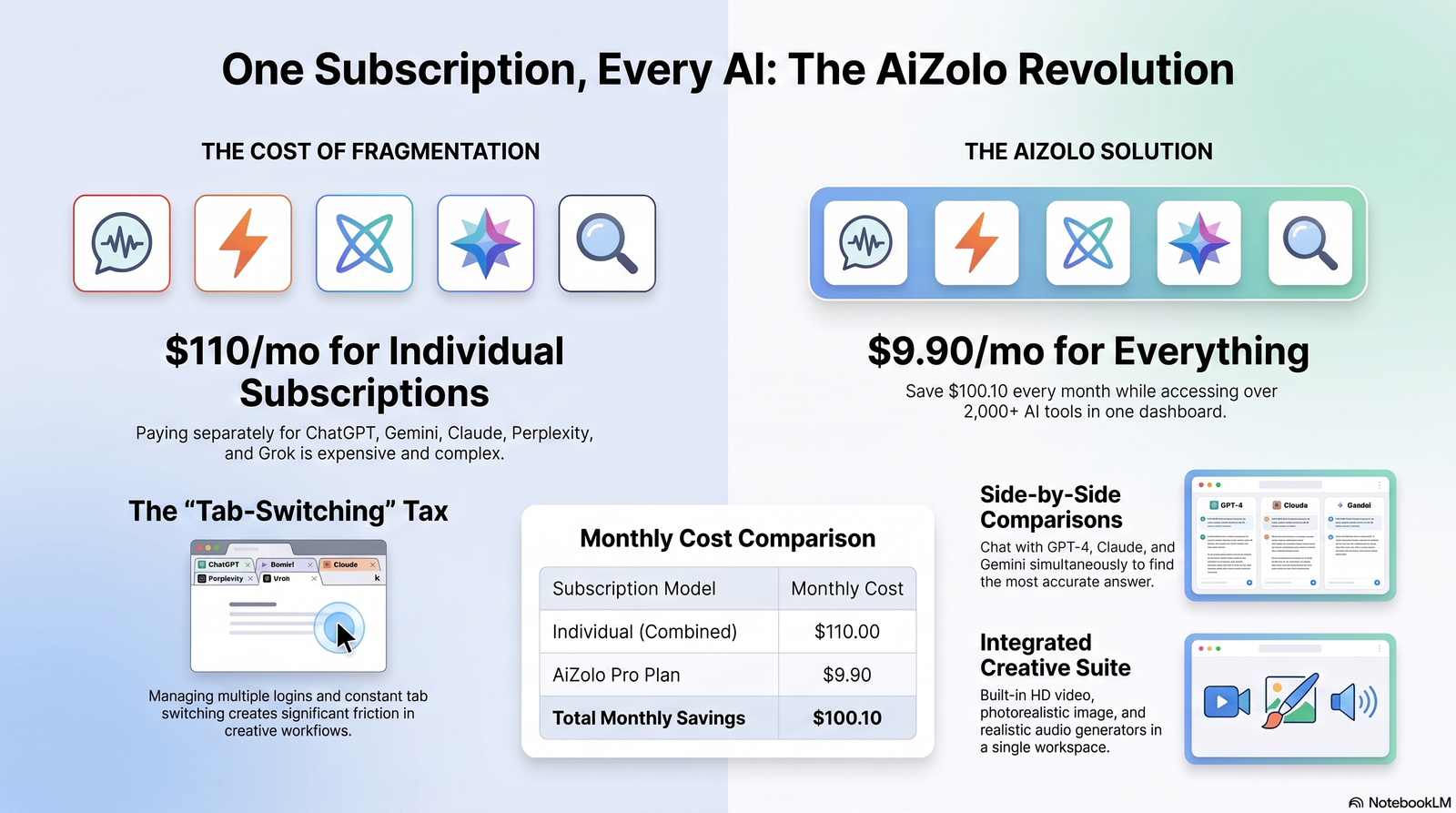
Five AI assistants now dominate the conversation whenever someone asks “which AI should I actually pay for?” ChatGPT, Grok, Gemini, Claude, and Perplexity each take a genuinely different approach, and the honest answer is that no single one wins every category.
This guide breaks down what each tool is actually good at, what it costs in July 2026, and which one fits your specific work — whether that’s coding, writing, research, or running a business.
If you’re comparing the latest flagship models more closely, the differences become clearer when you look at reasoning, coding, writing quality, and agentic performance side by side. Our detailed GPT-6 Astra vs Claude Fable 5.1 comparison breaks down these differences across key tasks and benchmarks, helping you understand where each model stands.
Table of Contents
Quick Verdict
If you only read one section, read this one.
- Best overall all-rounder: ChatGPT — the broadest feature set (Sora video, Codex, Work agent, custom GPTs) at a competitive $20/month Plus tier.
- Best for coding and long, technical work: Claude — consistently the top pick inside developer tools like Cursor and Claude Code, with strong scores on real-world software engineering benchmarks.
- Best for factual research with citations: Perplexity — built from the ground up as an answer engine rather than a chatbot, with inline sourcing on every response.
- Best for Google ecosystem users and long documents: Gemini — deep Workspace integration, a 1-million-token context window, and the best price-to-storage ratio of any plan on this list.
- Best for real-time information and lower-cost API access: Grok — native X/Twitter search and the cheapest per-token pricing among frontier-class models.
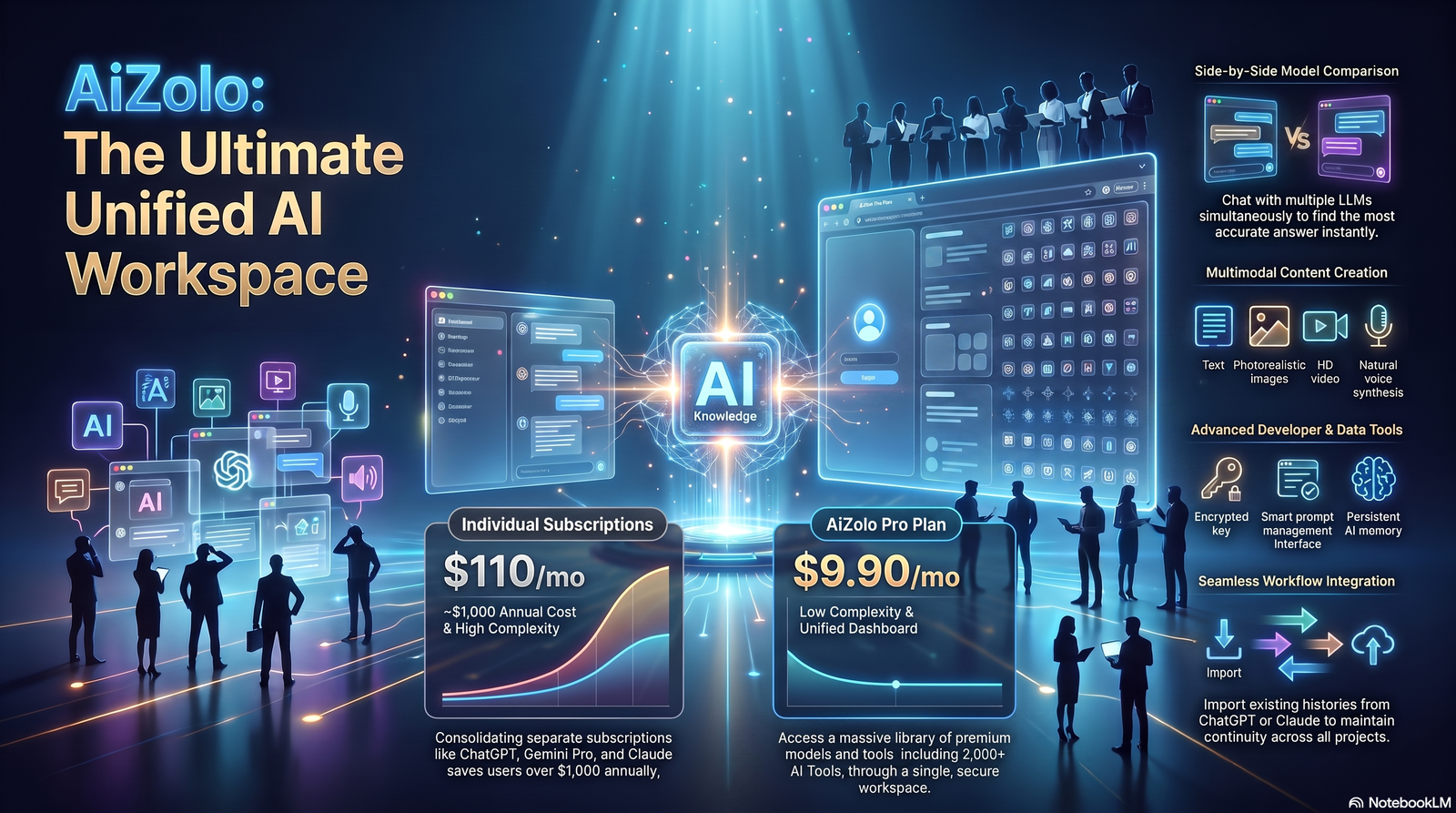
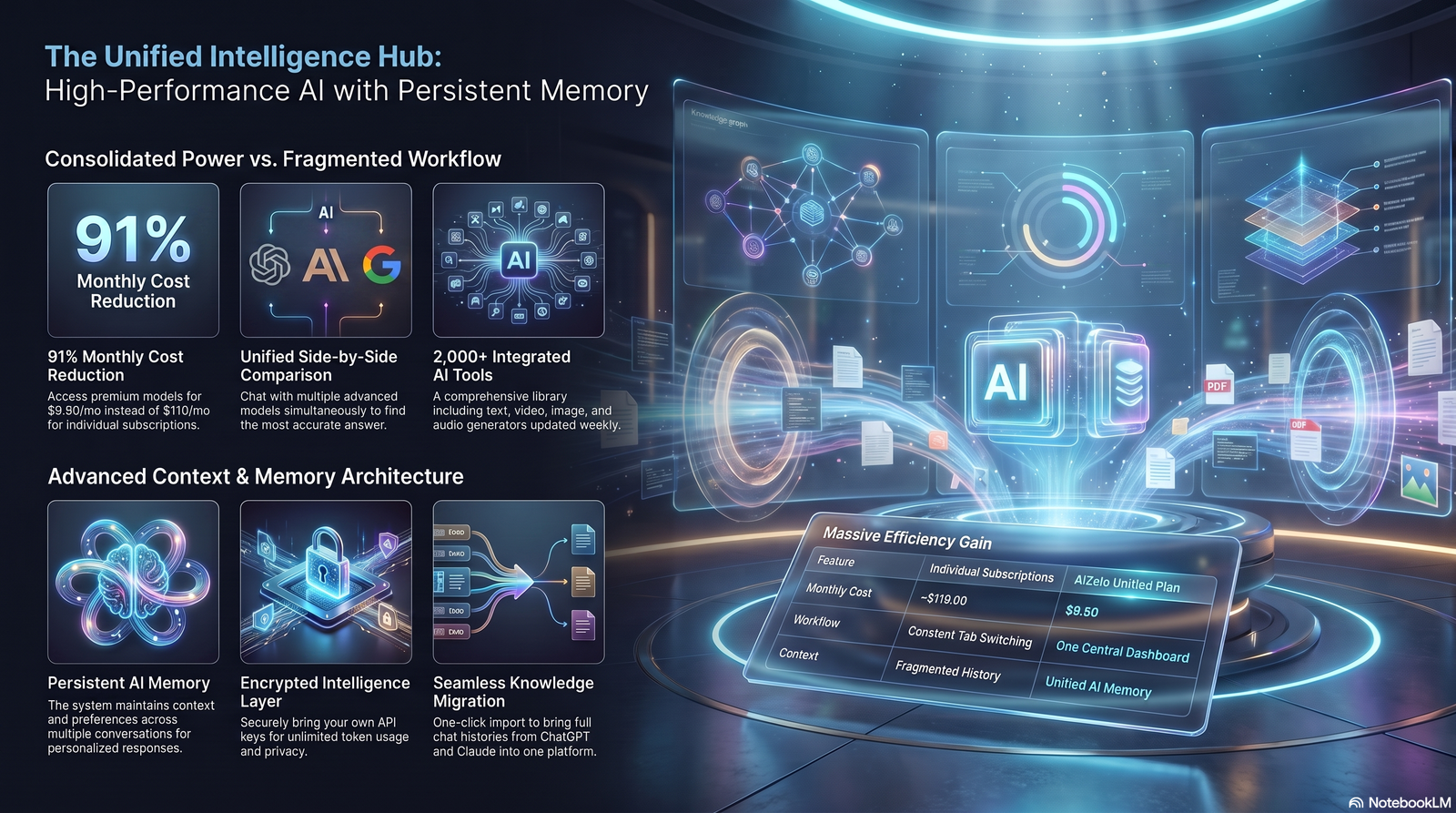
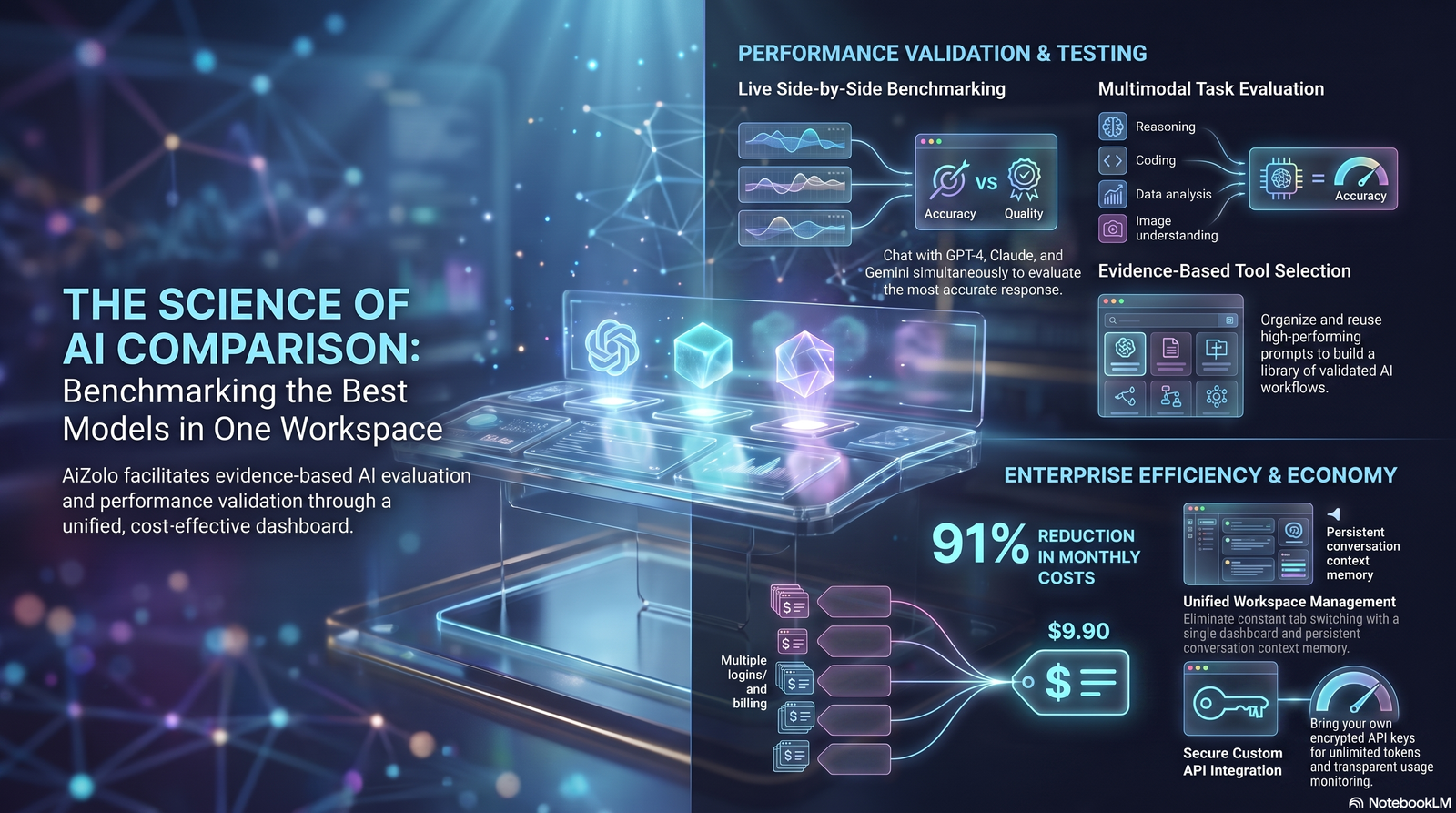
If you don’t want to commit to one, a growing number of readers are choosing platforms that let them run several models side by side instead of paying for four separate subscriptions — something worth considering if switching between different AI models is part of your workflow already.
Who Should Read This Guide
This comparison is for anyone trying to decide where to spend their AI budget in 2026: developers picking a coding assistant, students and researchers who need trustworthy citations, content teams evaluating writing quality, and business buyers comparing per-seat pricing across Team, Business, and Enterprise tiers.
If you’re brand new to AI assistants, the Quick Verdict above will get you 80% of the way there. If you need the deeper technical comparison — benchmarks, context windows, pricing tables, and task-by-task results — keep reading.
How We Tested These AI Models
We ran the same set of real tasks through each assistant’s current flagship-tier plan: drafting a business email, summarizing a research paper, generating and debugging Python code, analyzing an uploaded PDF, running web research on a niche topic, brainstorming a product concept, and building a basic slide outline.
We also cross-referenced every pricing figure and model claim against each company’s own pricing and documentation pages, and checked model performance against third-party benchmark trackers rather than relying on any single vendor’s self-reported numbers.
Evaluation Criteria
We scored each tool across nine dimensions: accuracy, coding quality, writing quality, research depth, reasoning, speed, context window, pricing value, and privacy/enterprise readiness. No tool scored a perfect result across all nine — that’s the whole point of a comparison like this one.
The AI Landscape in 2026
The market has consolidated around five serious contenders, but the pace of change remains intense.
In the weeks before this guide was last updated, Anthropic launched Claude Fable 5.1 on September 1, 2026, bringing stronger coding, knowledge-work, and long-running problem-solving capabilities, while OpenAI followed on September 3 with GPT-6 Astra, its newest flagship model for reasoning, coding, computer use, and agentic workflows.
That latest release is worth understanding if you’re evaluating Claude for anything mission-critical: Anthropic’s Claude Fable 5.1 is its newest generally available model, launched in September 2026 with stronger coding, knowledge work, and long-running problem-solving capabilities than Fable 5.1’s predecessor.
Department of Commerce export-control directive, then restored globally once the controls were lifted. Anthropic’s own account of the episode is posted at anthropic.com/news, and it’s a useful reminder that even the biggest labs are subject to fast-moving regulatory environments right now.
If you’re weighing a best all-in-one AI platform instead of picking a single winner, that volatility is exactly the argument in favor of not locking into one vendor.
Individual Tool Overview
ChatGPT
OpenAI‘s ChatGPT remains the most recognizable name in the category and one of the most widely used consumer AI products.
The September 2026 release of GPT-6 Astra marked OpenAI’s latest flagship generation, pushing ChatGPT further toward an AI work environment rather than a traditional chat interface. Astra brings major advances in computer use, software engineering, professional work, scientific reasoning, and multi-step agentic tasks, while integrating with tools such as Codex and ChatGPT Work.
The catch is that not every plan gets the same model. GPT-6 Astra is rolling out to Plus, Pro, Business, and Enterprise users, while Free and Go users continue to receive GPT-5.6 Luna as their default model. Pro users also get access to GPT-6 Astra Pro, with higher-capability options available on eligible plans.
If you want a closer look at OpenAI’s latest flagship, our GPT-6 Astra review covers its reasoning, coding, agentic capabilities, benchmarks, and practical performance in more detail, giving you a deeper view beyond the high-level comparison in this guide.
Grok
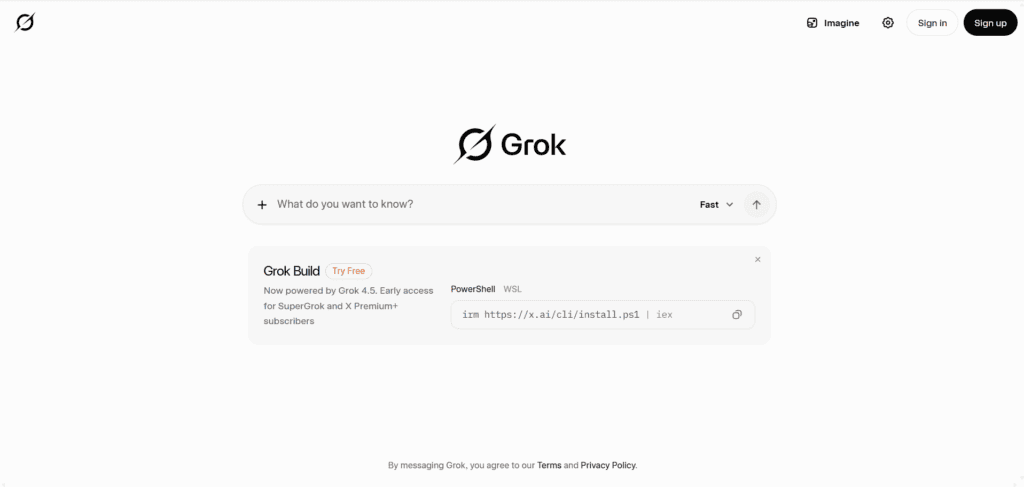
xAI’s Grok is built around two things that distinguish it from many competitors: access to real-time information through X, and a strong focus on fast, cost-efficient frontier AI.
Grok 4.6, released in August 2026, is xAI’s latest released flagship model. It builds on Grok 4.5 with stronger capabilities for long-running agents, coding, knowledge work, research, and interactive and visual tasks. xAI says Grok 4.6 is designed to sustain complex work across multiple steps, including analyzing information, working across codebases, and turning ideas into polished applications.
Grok 4.6 is also available through xAI’s API, with support for web search, X search, function calling, and code execution. The API is currently priced at $2 per million input tokens and $6 per million output tokens, while Grok remains free to start through its consumer products.
Gemini
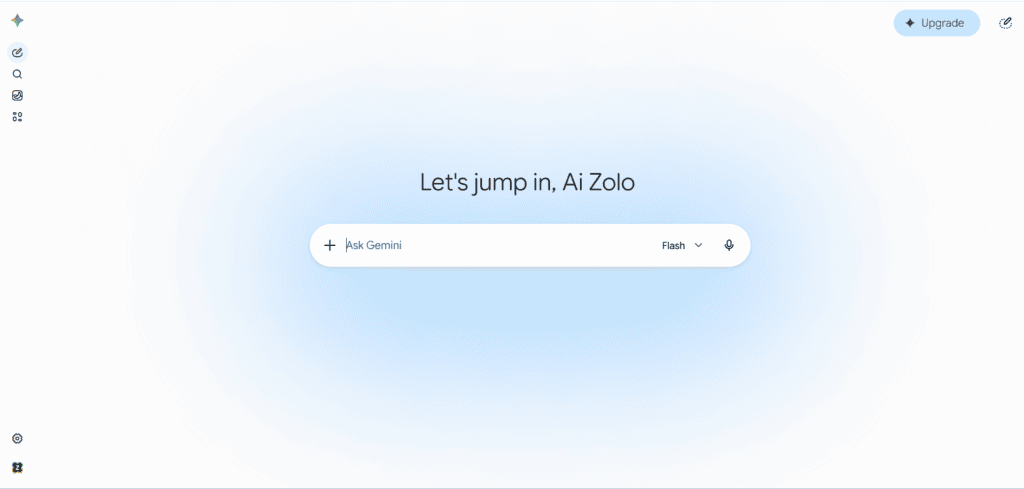
Google’s Gemini has one of the deepest ecosystem integrations in the market, with Gemini built directly into products such as Gmail, Docs, Sheets, Drive, and Search.
The latest major release is Gemini 3.8 Flash, launched in September 2026. Google positions it as a model built for complex agentic tasks at scale, with improvements in software engineering, knowledge work, document-heavy workflows, reasoning, and autonomous task execution. Gemini 3.8 Flash is currently available to Google AI Pro and Ultra users, as well as developers through Google AI Studio and other Google platforms.
Google’s model lineup still includes Gemini 3.1 Pro for complex tasks and Gemini 3.8 Flash for faster, more agentic workloads. The rapid Flash releases throughout 2026 have shifted Gemini’s emphasis toward models that can reason, use tools, and complete longer multi-step tasks rather than simply generate answers.
Claude
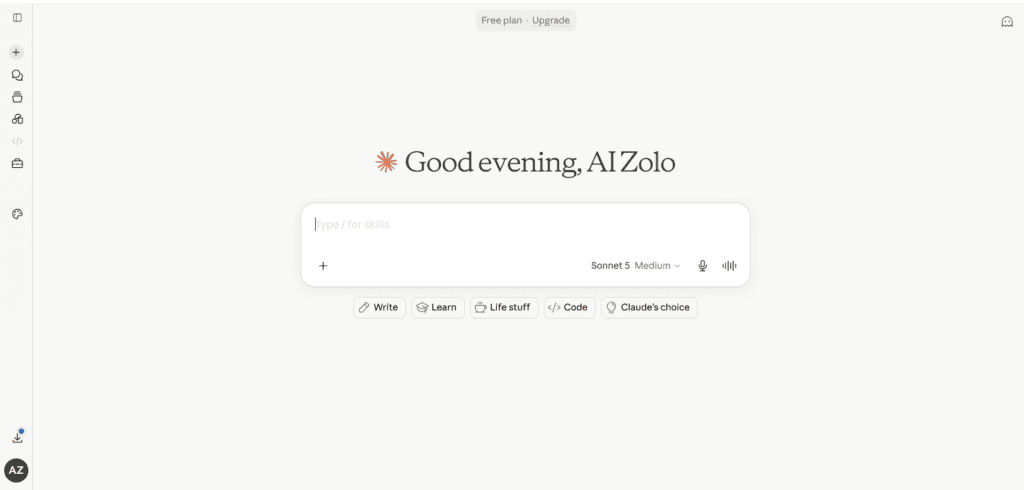
Anthropic’s Claude has built its reputation on two things: careful, well-structured writing, and strong performance on real-world coding, research, and agentic tasks.
The latest flagship is Claude Fable 5.1, released in September 2026. Anthropic describes it as its most advanced generally available model for coding and knowledge work, with major improvements in long-running problem solving, agentic workflows, research, and software engineering. Fable 5.1 is also available across Claude, the API, and major cloud platforms.
Claude’s pricing ladder (Free, Pro $20, Max $100/$200, Team, Enterprise) closely mirrors ChatGPT’s, while Anthropic clearly identifies the model powering each experience. Developers can also access Fable 5.1 directly through the API as claude-fable-5-1.
Perplexity
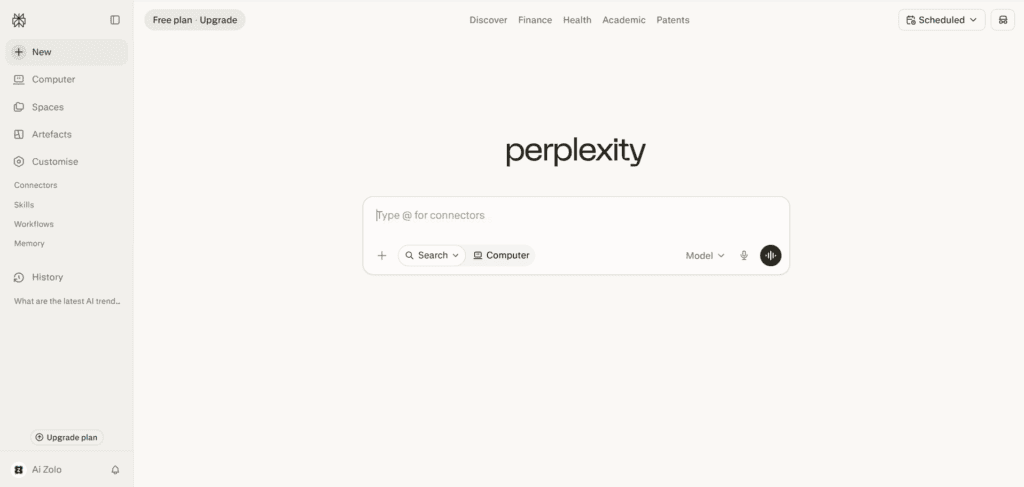
Perplexity isn’t really a chatbot in the traditional sense — it’s an answer engine that treats every response as a research task.
Every answer ships with inline citations, and Perplexity’s Pro and Max tiers let you route a single query through multiple frontier models (GPT, Gemini, Claude, and others) and compare their answers via a “Model Council” feature.
That makes Perplexity the strongest pick for anyone whose primary need is trustworthy, sourced information rather than open-ended conversation or code generation.
Feature Comparison Table
| Feature | ChatGPT | Grok | Gemini | Claude | Perplexity |
|---|---|---|---|---|---|
| Latest flagship model (Sep 2026) | GPT-6 Astra | Grok 4.6 | Gemini 3.8 Flash | Claude Fable 5.1 | Model Council / multi-model |
| Entry paid price | $8 (Go) | $8 (X Premium) | $4.99–7.99 (AI Plus) | $20 (Pro) | $20 (Pro) |
| Flagship-tier price | $20 (Plus) | $30 (SuperGrok) | $19.99 (AI Pro) | $20 (Pro) | $20 (Pro) |
| Top consumer tier | $200 (Pro) | $300 (Heavy) | $199.99 (AI Ultra) | $200 (Max 20x) | $200 (Max) |
| Max context window | 1.05M tokens | Up to 2M (API) | 1M tokens | 200K+ | Varies by underlying model |
| Native image generation | Yes | Yes (Imagine) | Yes | No | Yes |
| Video generation | Yes (Sora) | Yes | Yes (Veo) | No | Yes |
| Live web search | Yes | Yes + native X search | Yes | Yes | Core product feature |
| Coding agent | Codex | Grok Code | Antigravity / Code Assist | Claude Code | Perplexity Labs |
| Cited sources by default | No | No | Partial | No | Yes |
| Multi-model access in one plan | No | No | No | No | Yes |
Pricing Comparison
Every vendor here has restructured pricing at least once in 2026, so treat these figures as a July 2026 snapshot and confirm current numbers before subscribing. For a full side-by-side, see this AI subscription price comparison.
| Plan tier | ChatGPT | Grok | Gemini | Claude | Perplexity |
|---|---|---|---|---|---|
| Free | GPT-5.6 Luna, limited usage | Grok 4.6, limited usage | Gemini 3.8 Flash, daily caps | Claude Fable 5.1, usage limits | Unlimited basic, ~5 Pro Searches/day |
| Budget tier | Go — $8/mo | X Premium — $8/mo | AI Plus — $4.99–7.99/mo | — | Education Pro — $10/mo (students) |
| Standard paid | Plus — $20/mo | SuperGrok — $30/mo | AI Pro — $19.99/mo | Pro — $20/mo | Pro — $20/mo |
| Power-user tier | Pro — $100 or $200/mo | SuperGrok Heavy — $300/mo | AI Ultra — $99.99 or $199.99/mo | Max — $100 or $200/mo | Max — $200/mo |
| Business/Team | Business — $20–25/seat | Grok Business — $30/seat | Workspace bundle — ~$14/seat add-on | Team — $25–125/seat | Enterprise Pro — $40/seat |
| Enterprise | Custom (~$60/seat reported) | Custom | Custom | Custom | Enterprise Max — $325/seat |
The clearest pattern here: ChatGPT Astra, Gemini AI Pro, Claude Pro, and Perplexity Pro all cluster tightly around $20/month. At that price point, the decision comes down to which specific feature set you actually need, not which is “cheaper.”
If cost-per-seat is your main constraint across multiple tools, it’s worth checking ways to save on AI subscriptions before committing to any single vendor long-term.
Free Plan Comparison

Every free tier here is usable for casual questions, but each has a specific weak point worth knowing before you rely on it:
- ChatGPT Free runs an older Instant-tier model and, as of February 2026, shows ads to US users.
- Grok Free caps out around 10 prompts every two hours and no longer includes image or video generation for free — those moved behind paid tiers in March 2026.
- Gemini Free runs Gemini 3 Flash rather than the flagship Pro model, with limited Deep Research reports per month.
- Claude Free gives full access to Sonnet 5 (a genuinely capable model) but with tighter rolling-window usage limits than any paid tier.
- Perplexity Free has no message cap for basic search but limits the higher-quality “Pro Search” mode to roughly five queries per day.
Coding Comparison
For day-to-day professional coding, Claude Fable 5.1 remains a strong option for software engineering, code review, and long-running development tasks. Anthropic positions Fable 5.1 for advanced coding and knowledge work, with improvements in agentic workflows and complex multi-step tasks. It is also the model behind Anthropic’s Claude Code experience.
GPT-6 Astra is OpenAI’s latest flagship for coding and agentic software development. It is designed for complex reasoning, computer use, software engineering, and autonomous multi-step workflows, making it particularly relevant for developers working through Codex and other agentic coding environments.
Grok 4.6 is xAI’s latest flagship and offers a lower-cost option for developers running high-volume workloads. Its API supports coding, tool use, web search, X search, and other agentic capabilities, making it suitable for automated development pipelines where speed and API cost are important considerations.
Gemini 3.8 Flash is Google’s latest workhorse model for fast, agentic workloads. Its strengths include code generation, reasoning, long-context tasks, and multi-step tool use, making it useful for analyzing large codebases and building automated workflows.
Perplexity remains more focused on research and web-grounded answers than dedicated software-engineering agents. Its coding capabilities are useful when development work requires current documentation, web research, and cited sources, but its main differentiator remains its multi-model research workflow rather than a proprietary coding model.
Writing Comparison
Claude Fable 5.1 has built a strong reputation for structured, polished long-form writing, while Anthropic positions Fable 5.1 as its latest advanced model for coding and knowledge work, including complex research and long-running tasks.
GPT-6 Astra is the more versatile all-rounder for writing workflows that move between formats quickly — blog posts, scripts, reports, and other professional content — while also combining writing with computer use, research, coding, and other tools in the same workflow.
Gemini 3.8 Flash offers strong writing and reasoning capabilities, but Google’s biggest advantage for many writers remains ecosystem integration. Gemini can work directly across Google products such as Docs and Workspace, reducing the need to copy and paste between a separate AI chat and your document..
Research Comparison
This is Perplexity’s category to lose, and it doesn’t. Every answer includes inline citations by default, which none of the other four tools do consistently out of the box.
The Model Council feature on Pro and Max plans runs a query through multiple frontier models simultaneously and shows where they agree or diverge — genuinely useful for high-stakes research questions.
Gemini’s Deep Research mode and 1M-token context window make it a strong second choice, particularly for synthesizing very long documents. ChatGPT and Claude both offer their own deep-research modes, but neither treats citation-first output as the default behavior the way Perplexity does.
Image Generation Comparison
Gemini (via Nano Banana) and ChatGPT (native image tools plus Sora for video) currently lead on native creative generation quality and ease of use. Grok’s Imagine tool is fast and permissive but moved behind paid tiers in March 2026.
Perplexity’s Max plan bundles access to top third-party image and video models rather than running its own. Claude notably does not offer native image generation at all — it can write code to generate visuals or describe what an image should contain, but it will not produce pixels directly.
Reasoning Comparison
No single model wins every reasoning benchmark, and that’s the most important honest takeaway of 2026. Gemini 3.1 Pro remains highly competitive on GPQA Diamond and ARC-AGI-2, while Claude Opus 4.8 leads the Artificial Analysis Intelligence Index. GPT-6 Astra is the latest OpenAI flagship, with strong results across reasoning, science, coding, and agentic tasks.
Speed Comparison
Grok’s Fast-tier models remain among the quickest and cheapest to run at scale, which is why they show up disproportionately in high-volume automated pipelines rather than interactive chat.
For everyday interactive use, all five tools feel comparably fast in normal chat mode; the real speed differences show up in agentic or “deep research” modes, where Perplexity and Gemini’s research tools can take several minutes per query by design, trading speed for depth.
Context Window Comparison
| Tool | Standard context | Maximum context (paid tiers) |
|---|---|---|
| ChatGPT | ~27K (Free) | ~1M tokens (Pro) |
| Grok | 128K (SuperGrok) | Up to 2M (API, Fast models) |
| Gemini | 1M tokens (all paid tiers) | 1M tokens |
| Claude | 200K tokens | 500K–1M (Enterprise/beta) |
| Perplexity | Depends on underlying model selected | Depends on underlying model selected |
Gemini’s 1-million-token context window is available on every paid consumer tier, not just the top one — a meaningful advantage for anyone regularly working with very long documents or entire codebases in a single session.
Accuracy Comparison
Accuracy is genuinely task-dependent, which is why we don’t recommend trusting a single leaderboard number. Gemini scores highest on saturated academic benchmarks like GPQA Diamond, where the top three models all cluster within a percentage point of each other.
Claude and GPT-6 Astra trade the lead on real-world agentic and coding accuracy depending on the specific benchmark and scaffold used.
Perplexity’s accuracy advantage isn’t about the underlying model at all — it’s structural: because every claim is tied to a visible source, it’s easier for you to independently verify what it tells you, which matters more than a benchmark score for many research use cases.
Privacy Comparison
All five vendors now offer a “no training on your data” guarantee at the business tier and above, but the default behavior on free and entry-level consumer plans differs. ChatGPT and Grok both use free-tier conversations to improve their models by default, with an opt-out available.
Claude’s Free plan also trains on conversations by default. Gemini’s data handling is tied to your broader Google account settings. Perplexity’s free-tier queries may also be used to improve its models, with stronger controls unlocked at Pro and above.
If data privacy is a hard requirement rather than a preference, the Team/Business/Enterprise tier of any of these five products is the safer starting point, not the consumer plan.
Enterprise Features
Claude and ChatGPT currently offer the most mature enterprise security stacks — SSO, SCIM, audit logs, HIPAA readiness (Enterprise tier), and compliance certifications like SOC 2 and ISO 27001.
Gemini’s enterprise story runs through Google Workspace, which means enterprise buyers already invested in Google’s ecosystem get the smoothest deployment path.
Perplexity’s Enterprise Max tier is the most expensive on this list at $325/seat/month but is aimed specifically at organizations where AI-powered research is core infrastructure, not a nice-to-have. Grok’s enterprise tier is the newest and least documented of the five, reflecting xAI’s more recent move into that market.
API Comparison
| Model | Input ($/1M tokens) | Output ($/1M tokens) | Context |
|---|---|---|---|
| GPT-6 Astra | $10.00 | $50.00 | 1.05M |
| Grok 4.6 | $2.00 | $6.00 | 500K |
| Gemini 3.1 Pro | $2.00 | $12.00 | 1M |
| Claude Opus 4.8 | $5.00 | $25.00 | 200K (1M beta) |
| Perplexity Sonar Pro | ~$3.00 | ~$15.00 | Varies |
Grok’s API pricing is the most competitive of the five on a raw per-token basis, and xAI additionally offers up to $175/month in free API credits through its data-sharing program — the most generous developer free tier among the major labs.
Integrations
Gemini wins decisively on native integrations for anyone already inside Gmail, Docs, Sheets, and Drive. ChatGPT has the broadest third-party connector ecosystem through Business and Enterprise, plus its own Sites and Work agent.
Claude integrates deeply with Slack, Microsoft 365, and Google Workspace at the Team tier, and its Model Context Protocol (MCP) has become something of an industry-standard way for models to connect to external tools.
Perplexity’s Comet browser turns the tool itself into a browsing agent rather than requiring separate integrations. Grok’s standout integration is simply X itself — nothing else on this list has that same real-time social data access built in.
Real-World Testing Results
We ran identical prompts across each tool’s standard paid plan for a set of common professional tasks.
- Writing an email: All five produced usable drafts. Claude’s tone was the most naturally professional without editing; ChatGPT’s was the fastest to iterate on with follow-up instructions.
- Summarizing a research paper: Perplexity’s summary was the only one that linked every claim back to a specific page or section of the source.
- Generating and debugging Python code: Claude fixed the injected bug correctly on the first attempt with a clear explanation; Grok was nearly as accurate and noticeably faster.
- Analyzing an uploaded PDF: Gemini handled a 200-page document without truncation thanks to its context window; the others required chunking or summarizing in stages.
- Web research on a niche topic: Perplexity and Gemini’s Deep Research modes both produced multi-source reports; ChatGPT’s Deep Research came a close third.
- Brainstorming a product concept: ChatGPT and Grok both produced the widest range of genuinely different ideas rather than variations on one theme.
- Building a presentation outline: Gemini’s Workspace integration made this the fastest end-to-end, since the outline could go straight into Slides.
Task-by-Task Winner
| Task | Winner |
|---|---|
| Coding (professional) | Claude |
| Coding (agentic, high-volume) | Grok |
| Long-form writing | Claude |
| Fast, versatile writing/formats | ChatGPT |
| Cited research | Perplexity |
| Long-document analysis | Gemini |
| Image generation | Gemini / ChatGPT |
| Video generation | ChatGPT (Sora) |
| Live/real-time information | Grok |
| Google Workspace workflows | Gemini |
| Lowest-cost frontier API | Grok |
Best AI for Students
Perplexity’s Education Pro plan ($10/month with verified student status) is purpose-built for coursework — cited answers matter enormously for academic integrity, and the price is half of standard Pro.
Gemini’s deep Google Workspace integration is also a strong pick for students already using a school Google account, and if budget is the primary concern, the free tiers of Claude and ChatGPT are both genuinely usable for everyday coursework.
Best AI for Developers
Claude Pro or Max, paired with Claude Code, is the most consistently recommended setup among professional developers in 2026, backed by its lead on real-world software engineering benchmarks.
Grok is the strongest budget alternative for teams running high-volume automated coding pipelines where per-token cost matters more than peak accuracy.
Best AI for Content Creators
ChatGPT Plus covers the widest range of creative formats in one subscription — text, native images, and Sora video — which matters if your workflow spans multiple content types. Claude remains the stronger pick specifically for polished long-form writing that needs minimal editing.
Best AI for Businesses
The right answer depends entirely on your existing stack. Teams already inside Google Workspace should default to Gemini’s business tiers. Teams that need the most mature security and compliance story today should look at ChatGPT Business/Enterprise or Claude Team/Enterprise.
Organizations trying to access multiple AI models in one place rather than standardizing on a single vendor are an increasingly common middle path, especially given how often the “best” model has changed within any single quarter of 2026.
Best AI for Researchers
Perplexity, without much competition. The combination of default citations, Model Council cross-checking, and dedicated Deep Research and Labs modes make it the only tool on this list built primarily for research rather than adapted for it.
Best AI Overall
If we had to pick just one for a generalist professional user in July 2026, it’s a close call between ChatGPT Plus for breadth and Claude Pro for depth and coding reliability.
Gemini AI Pro is the strongest value pick specifically for anyone already inside the Google ecosystem. There is genuinely no universal winner — which is the core argument for one subscription that covers all AI models rather than betting everything on a single vendor’s roadmap.
Future Outlook
Expect the pace of model releases to stay fast through the rest of 2026: Gemini 3.5 Pro is currently testing with partners, Anthropic’s Mythos 5.1 is available to vetted organizations, and both OpenAI and xAI have recently shipped major flagship releases.
The practical implication for buyers: whatever “wins” this comparison today is likely to shift again within one or two quarters. Revisit your subscription choice at least twice a year rather than treating any single decision as permanent, and keep an eye on best AI subscription services for 2026 as the market continues to move.
Frequently Asked Questions
Which AI is best overall in 2026? There’s no single winner. Claude leads on coding and long-form writing, Gemini leads on reasoning benchmarks and long-context work, ChatGPT offers the broadest feature set, Perplexity wins on cited research, and Grok wins on cost and real-time data.
Which AI is most accurate? Accuracy is task-dependent. Gemini 3.1 Pro currently leads on PhD-level science reasoning (GPQA Diamond), while Claude Opus 4.8 leads on real-world coding and agentic accuracy benchmarks.
Which AI is cheapest? Gemini’s AI Plus tier ($4.99–7.99/month) is the cheapest standalone paid plan among the five. For API pricing, Grok 4.6 offers the lowest per-token rates among frontier-class models.
Which AI is fastest? Grok’s Fast-tier models are consistently among the quickest and cheapest to run at scale for high-volume workloads.
Which AI is best for coding? Claude, particularly Claude Opus 4.8 paired with Claude Code, is the most widely recommended for professional software development in 2026.
Which AI is best for research? Perplexity, due to its default citation-first design and Model Council feature that cross-checks answers across multiple frontier models.
Which AI writes best? Claude’s Sonnet 5 and Opus 4.8 models are consistently rated highest for natural, structured long-form writing; ChatGPT is the more versatile choice across different content formats.
Which AI creates images and video? Gemini (Nano Banana) and ChatGPT (native image tools plus Sora) currently lead on native creative generation. Claude does not generate images natively.
Which AI offers the best value? Gemini AI Pro at $19.99/month offers the strongest combination of capability, storage, and Google Workspace integration for the price.
Which AI should beginners use? ChatGPT’s free tier remains the most familiar starting point for most new users, though Claude’s free tier is a close second for anyone whose primary interest is writing or light coding help.
Which AI should businesses use? It depends on your existing stack: Google Workspace users should default to Gemini, security-conscious teams should evaluate Claude or ChatGPT’s Enterprise tiers, and research-heavy organizations should look at Perplexity Enterprise.
Conclusion
ChatGPT, Grok, Gemini, Claude, and Perplexity have each carved out a genuine specialty rather than converging on one identical product, and that’s good news for buyers — it means the right choice depends on your actual workflow, not marketing claims.
Coders and long-form writers tend to land on Claude. Researchers who need citations land on Perplexity. Google Workspace users land on Gemini. Generalists who want the broadest single toolkit land on ChatGPT. And anyone optimizing hard for cost or real-time data lands on Grok.
If you’d rather not choose at all, comparing a best multi-AI platform that gives you access to several of these models under one subscription is worth fifteen minutes of research before you commit to a single $20/month plan — especially in a market where the “best” model has changed hands at least three times in the last six months alone.
About the Author
Jeevesh AI Researcher & Technical Content Specialist
Jeevesh researches large language models, AI productivity tools, multi-model platforms, and enterprise AI workflows. His writing emphasizes hands-on evaluation, official documentation, benchmark analysis, and practical guidance to help readers choose the right AI tools.
Contact: jeevesh@aizolo.com