Table of Contents
Introduction
You’ve probably already tried one AI tool for writing fiction and walked away unimpressed.
Maybe the prose felt generic.
Maybe it forgot your character’s name by chapter three.
That’s not a sign that AI can’t help with creative writing. It’s a sign you were using the wrong tool for the job.
By 2026, the gap between a general chatbot and a purpose-built writing tool has widened considerably.
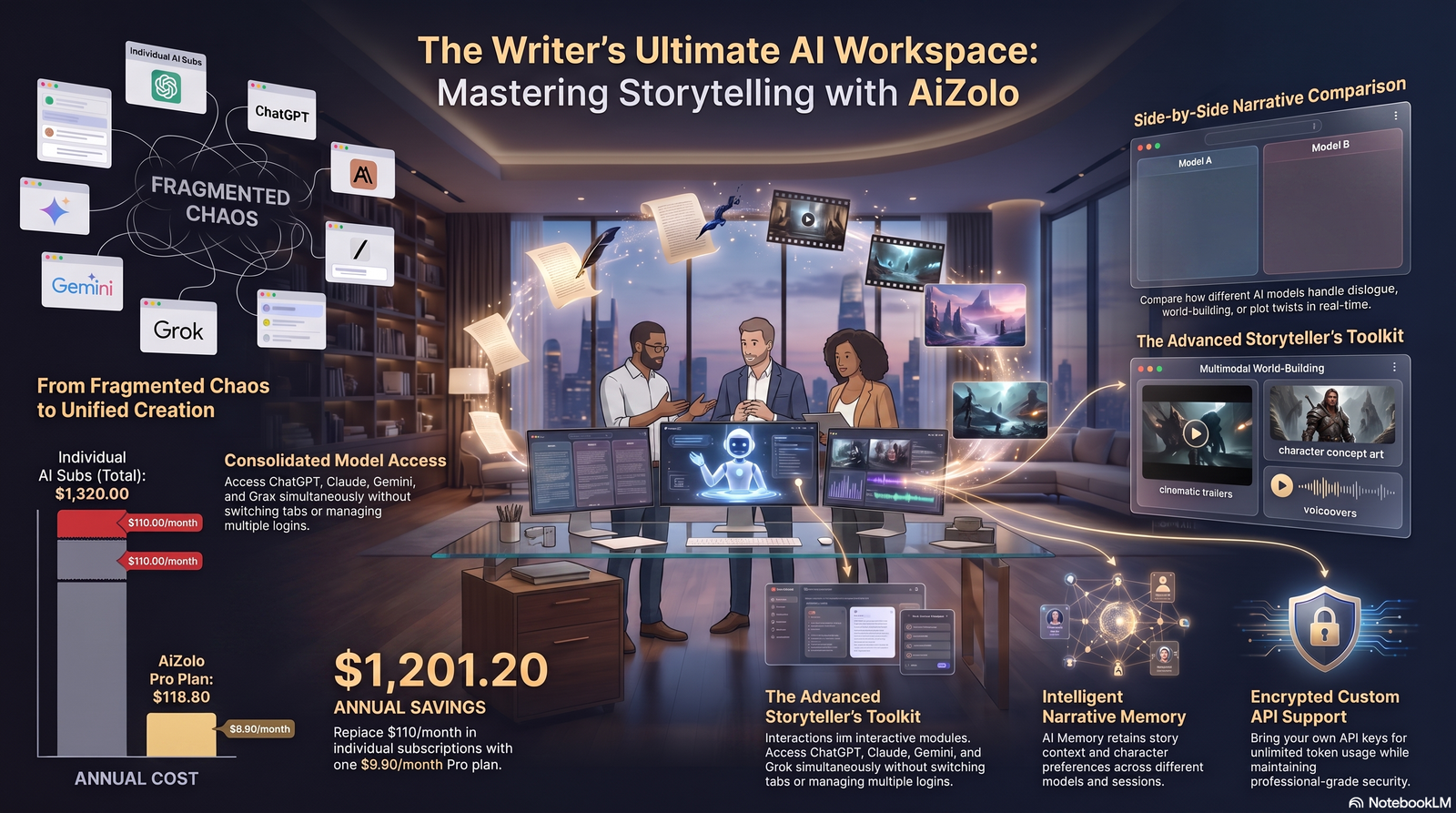
Some models now hold tens of thousands of words of context, which matters enormously if you’re drafting a novel and need the AI to remember a subplot from six chapters back—especially when using an all in one AI platform that lets you work across multiple models without losing context.
Others are tuned specifically for short-form marketing copy, and using them for a screenplay is like using a stapler to hang a picture frame — technically possible, badly suited.
This guide compares the tools people actually reach for in 2026 when they’re writing fiction, poetry, screenplays, or long-form narrative — not just marketing blurbs.
We’ll walk through how each one handles character consistency, long-context memory, dialogue, editing, and originality, along with honest pricing and who each tool is genuinely built for.
Nothing here is based on fabricated benchmark scores. Where we reference capabilities, we’re drawing on official product documentation, publicly available pricing, and how these tools are generally reviewed by working writers — and we say so.
By the end, you should know exactly which AI (or combination of AIs) fits your specific writing project, instead of guessing.
What Makes an AI Good at Creative Writing?
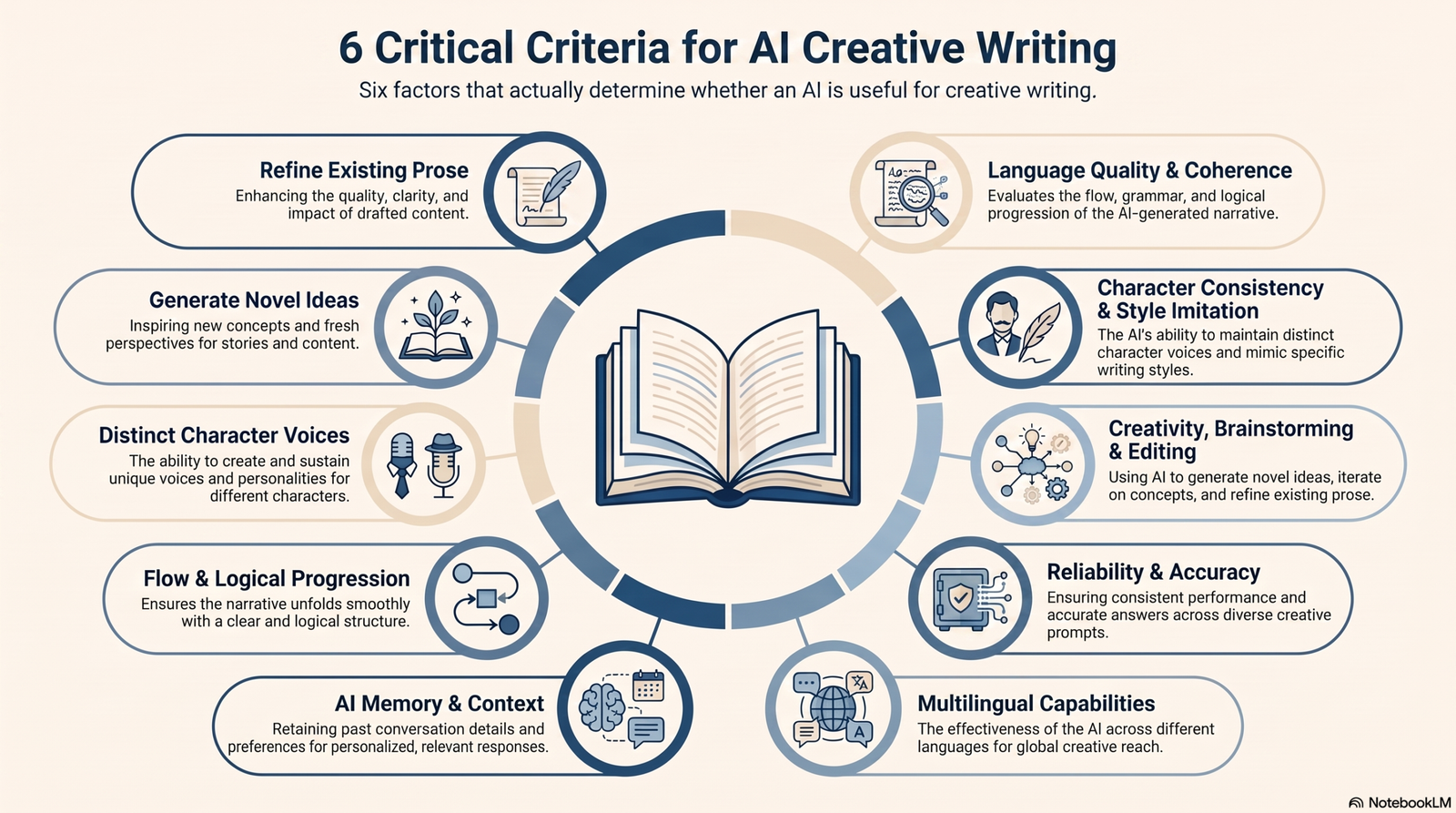
Before ranking tools, it helps to know what “good at creative writing” actually means in technical terms. It’s not one skill — it’s several, and most AI tools are strong at some and weak at others.
Language Quality
This is sentence-level craft: rhythm, word choice, and whether the prose sounds like it was written by someone with a voice, or like it was assembled from the statistically likely next word.
General-purpose chatbots have improved here, but they still default to a recognizable “AI voice” unless you push back hard with style instructions.
Narrative Coherence
Can the AI keep a plot logically consistent across dozens of pages? Does a plant in chapter two pay off later, or does the story wander?
This is where a lot of tools fall apart on longer projects.
Long-Context Memory
Context window size determines how much of your manuscript the AI can “see” at once.
A tool with a small context window will forget earlier chapters unless you constantly re-feed it summaries, which breaks the creative flow.
Character Consistency
Does the AI remember that your protagonist is left-handed, afraid of water, and speaks in short sentences — three chapters after you established it?
This is one of the biggest complaints writers have with generic AI tools.
Creativity and Originality
There’s a difference between an AI that generates competent-but-predictable prose and one that surprises you with a genuinely interesting turn of phrase or plot idea.
No tool is reliably “more creative” in a measurable sense — this is subjective and varies by prompt, genre, and how you use the tool.
Editing Ability
Some tools are better at generating first drafts. Others are better at line editing, tightening dialogue, or restructuring a scene you’ve already written.
Brainstorming
Worldbuilding, character backstories, plot twists — this is often where AI adds the most value, because it’s low-stakes and doesn’t require the final polished voice.
Style Imitation
Can the tool adapt to your established voice, or does it flatten everything into the same generic tone?
Factual Reliability
Even in fiction, AI can introduce factual errors — wrong historical details, inconsistent timelines, invented “facts” presented confidently. This matters more in historical fiction or research-heavy genres.
Multilingual Writing
If you write in more than one language, or need dialogue in a specific dialect, this becomes relevant.
Best AI for Creative Writing 2026 — Full Tool Breakdown
A note before we dive in: pricing and feature sets change frequently for AI products. What’s below reflects publicly listed plans as of mid-2026 — always confirm current pricing on the provider’s site before subscribing.
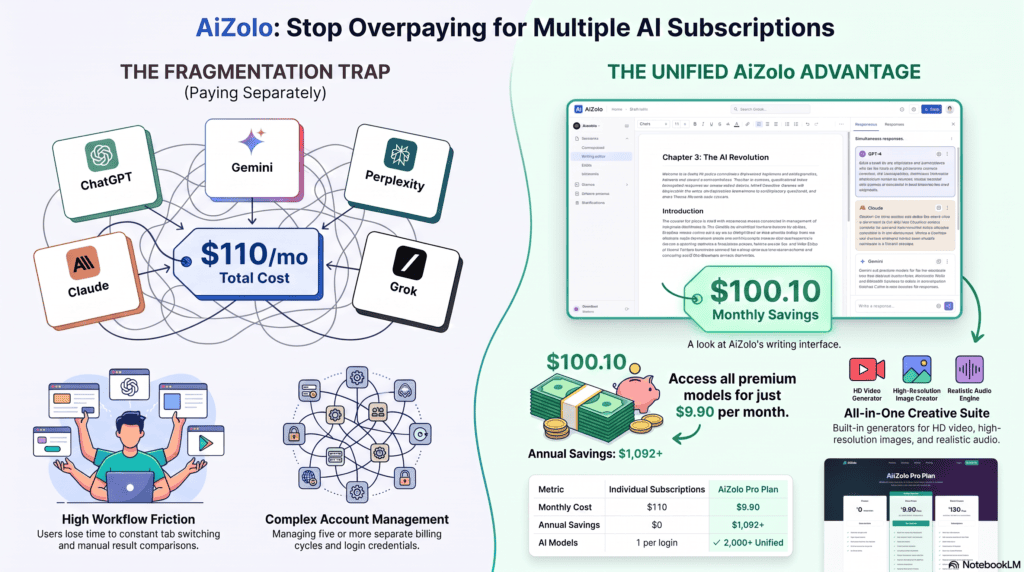
ChatGPT (OpenAI)
Overview
ChatGPT remains the most widely used general-purpose AI writing tool, and it’s a reasonable starting point for brainstorming, short fiction, and dialogue drafts. It’s not purpose-built for novel-length projects, but its versatility is hard to beat for a single subscription.
Pros
- Strong general prose quality and instruction-following
- Large plugin and custom-GPT ecosystem for tailoring workflows
- Good at brainstorming, outlining, and quick dialogue drafts
- Frequent capability updates
Cons
- Not purpose-built for long manuscripts; needs manual context management
- Can default to a recognizable, slightly generic “AI voice” without strong style prompting
- No native novel-organization features (chapters, character sheets, timelines)
Pricing: Free tier available; paid tiers unlock higher usage limits and more capable models. Check OpenAI‘s pricing page for current tiers.
Best for: Brainstorming, short stories, dialogue snippets, marketing copy alongside fiction work.
Writing Quality: Strong, flexible, but often needs explicit style direction to avoid generic phrasing.
Creativity Score: Solid for brainstorming; less consistent for sustained original voice across a full manuscript.
Context Handling: Depends on the specific model/plan selected; generally not built around persistent novel-length memory the way dedicated fiction tools are.
Long-Form Capability: Workable with manual chapter-by-chapter management, not seamless.
Brainstorming: A genuine strength — good at generating plot twists, character ideas, and “what if” scenarios quickly.
Dialogue Generation: Competent, sometimes needs a nudge to sound less “on the nose.”
Editing: Good at line edits and tightening; less specialized than dedicated editing tools.
Workflow Integration: Broad, thanks to third-party integrations and API access.
Claude (Anthropic)
Overview
Claude has built a strong reputation among fiction writers specifically for long-context handling and prose that tends to read as less mechanical than some competitors. It’s often the choice for writers working on longer manuscripts who need the AI to actually track earlier chapters.
Pros
- Long context windows well-suited to holding large chunks of a manuscript
- Prose style often described by writers as more natural and less repetitive
- Strong at following nuanced style and tone instructions
- Handles complex, multi-character scenes with reasonable consistency
Cons
- No dedicated “novel writing” interface — it’s a general assistant, not a specialized fiction app
- Manuscript organization (character sheets, timelines) must be handled manually or via external tools
- Usage limits vary by plan
Pricing: Free tier available with usage limits; paid plans unlock higher limits, longer context, and priority access. Confirm current tiers directly with Anthropic.
Best for: Novelists and long-form writers who need context retention across long documents, and writers who prioritize natural-sounding prose over flashy features.
Writing Quality: Frequently praised by users for prose that avoids some of the repetitive tics common in other models.
Creativity Score: Strong for extended scenes and nuanced character voice, particularly when given detailed style guidance.
Context Handling: A genuine strength — this is one of the more capable options for keeping track of long documents.
Long-Form Capability: One of the better general-purpose options for manuscript-length work, though still not a dedicated novel-writing app.
Brainstorming: Strong, especially for nuanced worldbuilding and character psychology.
Dialogue Generation: Generally well-regarded for natural-sounding dialogue.
Editing: Capable line editor; good at explaining why a change improves a passage, which helps writers learn.
Workflow Integration: Available via web, desktop, mobile, and API; can be paired with project/knowledge features to keep manuscript context organized.
Gemini (Google)
Overview
Gemini benefits from tight integration with Google Workspace, which makes it convenient for writers who already draft in Google Docs. Its creative writing strengths are solid but generally considered secondary to its productivity and research capabilities.
Pros
- Deep integration with Docs, Sheets, and Gmail for research-heavy projects
- Strong at fact-based research to support historical or technical fiction
- Multimodal capabilities (useful for moodboards, cover concept brainstorming)
Cons
- Creative prose can feel more utilitarian than some competitors
- Fewer fiction-specific community resources and prompt libraries compared to ChatGPT or Claude
- Long-form character consistency varies by model tier
Pricing: Free tier through Google account; premium tiers bundled with Google One AI plans.
Best for: Writers who want research and drafting in one ecosystem, especially nonfiction-adjacent or research-heavy fiction (historical, techno-thriller).
Writing Quality: Competent, sometimes less distinctive in voice compared to specialized fiction tools.
Creativity Score: Moderate; better suited to structured brainstorming than free-flowing prose generation.
Context Handling: Strong on higher tiers, particularly useful when cross-referencing research documents.
Long-Form Capability: Workable, especially when paired with Google Docs for manuscript organization.
Brainstorming: Good, particularly for research-backed worldbuilding.
Dialogue Generation: Adequate; less specialized than fiction-first tools.
Editing: Solid grammar and structural editing; less nuanced on voice-level edits.
Workflow Integration: Excellent if you already live in Google Workspace.
Sudowrite
Overview
Sudowrite is built specifically for fiction writers, with features like “Story Bible” for tracking characters and plot, and tools designed around scene expansion and rewriting rather than generic chat.
Pros
- Purpose-built fiction features: Story Bible, character tracking, scene-by-scene tools
- “Describe,” “Rewrite,” and “Brainstorm” tools tailored to fiction workflows
- Popular in genre fiction and self-publishing communities
Cons
- Narrower use case — not designed for non-fiction, marketing, or business writing
- Learning curve for using its specialized tools effectively
- Subscription cost adds up if you’re already paying for a general AI tool
Pricing: Tiered monthly subscriptions based on usage credits; no permanent free plan, though trial credits are typically offered.
Best for: Genre fiction writers (romance, fantasy, sci-fi) who want a dedicated novel-writing environment rather than a general chatbot.
Writing Quality: Tuned toward genre-fiction conventions; strong for commercial fiction pacing and tropes.
Creativity Score: High within genre conventions; less suited to literary experimentation.
Context Handling: Story Bible feature is specifically designed to maintain character and plot consistency across a full novel.
Long-Form Capability: One of the strongest options here specifically because it was built for novel-length projects from the ground up.
Brainstorming: A core strength — brainstorming tools are central to the product.
Dialogue Generation: Strong, tuned for commercial fiction dialogue patterns.
Editing: Scene-level rewriting tools are genuinely useful for revision passes.
Workflow Integration: Standalone app; limited integration outside its own ecosystem.
NovelCrafter
Overview
NovelCrafter positions itself as a novel-organization platform with AI assistance layered in, rather than an AI-first tool. It’s popular with writers who want structure — codex entries, timelines, scene tracking — with AI as a supporting feature.
Pros
- Strong manuscript-organization features (codex, timelines, POV tracking)
- Lets you bring your own AI model/API key in many configurations, giving flexibility
- Built by and for long-form fiction writers
Cons
- Less about raw generation quality and more about organization plus AI assistance
- Requires more manual setup than plug-and-play chat tools
- Smaller company/community compared to major AI labs
Pricing: Subscription-based, generally positioned as an affordable alternative to genre-specific competitors; confirm current tiers on their site.
Best for: Organized planners and series writers juggling multiple books, POVs, and timelines.
Writing Quality: Depends heavily on which underlying AI model you connect, since NovelCrafter is largely a structured interface layered over your chosen model.
Creativity Score: Variable, tied to the connected model.
Context Handling: Strong, because manuscript organization is the core feature, not an afterthought.
Long-Form Capability: Well suited to multi-book series specifically because of its structural tools.
Brainstorming: Supported, though less flashy than Sudowrite’s dedicated brainstorming tools.
Dialogue Generation: Depends on the connected model.
Editing: Organization-focused rather than line-editing focused.
Workflow Integration: Designed to be the central hub of a novel-writing workflow.
Jasper
Overview
Jasper is primarily a marketing-content platform that also supports creative writing use cases. It’s a strong option if your work spans both business copy and creative projects, but it’s not fiction-first.
Pros
- Strong brand-voice and template features useful for authors doing their own marketing
- Team collaboration features suited to publishing houses or content teams
- Reliable output for structured content types
Cons
- Creative fiction is a secondary use case, not the core product focus
- Higher price point aimed at business users, not individual novelists
- Less nuanced for long-form narrative voice
Pricing: Business-oriented subscription tiers, generally priced higher than consumer writing tools.
Best for: Authors who also manage their own marketing, newsletters, or promotional copy alongside creative work.
Writing Quality: Solid for structured, brand-consistent content; less distinctive for literary voice.
Creativity Score: Moderate; optimized for reliability over experimentation.
Context Handling: Adequate for shorter creative pieces, not built around novel-length memory.
Long-Form Capability: Limited compared to fiction-specific tools.
Brainstorming: Decent for campaign and content ideas; less tuned for plot/character brainstorming.
Dialogue Generation: Basic, not a specialty.
Editing: Grammar and brand-consistency checks are strong.
Workflow Integration: Strong for teams already using Jasper for marketing.
Writesonic
Overview
Writesonic is another marketing- and SEO-content-first platform with creative writing as a secondary feature set. It’s worth mentioning because many hobbyist writers start here due to its affordability and templates.
Pros
- Affordable entry-level pricing
- Templates cover a wide range of content types, including short-form creative pieces
- Simple interface, low learning curve
Cons
- Not designed for sustained fiction projects
- Prose quality is generally serviceable rather than distinctive
- Limited manuscript organization features
Pricing: Budget-friendly tiers with usage-based limits; free trial commonly available.
Best for: Hobbyist writers and bloggers who occasionally need short creative pieces alongside content marketing work.
Writing Quality: Adequate for short-form; not built for sustained novel voice.
Creativity Score: Moderate, template-driven.
Context Handling: Limited, best suited to shorter pieces.
Long-Form Capability: Weak compared to dedicated fiction tools.
Brainstorming: Template-based idea generation, useful but formulaic.
Dialogue Generation: Basic.
Editing: Standard grammar and readability checks.
Workflow Integration: Works well within its own content calendar and SEO tools.
Rytr
Overview
Rytr is a budget-focused AI writing tool aimed at short-form content, including some creative templates like poems and stories. It’s a reasonable low-cost starting point but not competitive for serious long-form fiction.
Pros
- Very affordable, including a usable free tier
- Simple template system for quick creative exercises
- Low learning curve
Cons
- Not suited to novel-length or professional fiction work
- Prose quality is basic compared to premium tools
- Minimal character/plot tracking features
Pricing: Free tier with limited monthly credits; low-cost paid tiers for higher usage.
Best for: Beginners experimenting with AI-assisted writing on a minimal budget.
Writing Quality: Basic to moderate.
Creativity Score: Limited, template-constrained.
Context Handling: Weak for anything beyond short pieces.
Long-Form Capability: Not a realistic option for novels.
Brainstorming: Simple idea prompts, useful for warm-ups.
Dialogue Generation: Basic.
Editing: Minimal.
Workflow Integration: Standalone, limited integrations.
Copy.ai
Overview
Like Jasper and Writesonic, Copy.ai is primarily a marketing-copy platform. It’s included here because many writers use it for promotional material (blurbs, back-cover copy, social posts) around their creative projects.
Pros
- Useful for book marketing copy: blurbs, taglines, social captions
- Workflow automation features for repetitive marketing tasks
- Reasonable free tier for light use
Cons
- Not built for fiction drafting
- Creative “story” templates are limited and generic
- Best viewed as a marketing companion tool, not a writing tool
Pricing: Free tier available; paid tiers scale with team size and automation needs.
Best for: Authors handling their own book marketing and promotional copy.
Writing Quality: Strong for short promotional copy; weak for narrative fiction.
Creativity Score: Low-to-moderate for fiction specifically.
Context Handling: Limited.
Long-Form Capability: Not applicable — not designed for this.
Brainstorming: Marketing-angle brainstorming, not story brainstorming.
Dialogue Generation: Not a focus.
Editing: Basic.
Workflow Integration: Strong marketing-automation integrations.
Notion AI
Overview
Notion AI is a feature layered inside the broader Notion workspace app. For writers who already organize their projects in Notion, it’s a convenient add-on for brainstorming and light editing rather than a dedicated writing tool.
Pros
- Convenient if you already plan novels/projects inside Notion
- Good for outlining, brainstorming, and organizing research notes
- Keeps writing and project management in one place
Cons
- Not a specialized creative writing engine
- Long-form generation is more limited than dedicated fiction tools
- Requires a Notion subscription/add-on cost
Pricing: Add-on pricing on top of a Notion workspace subscription.
Best for: Writers who want lightweight AI assistance inside an existing project-management and note-taking workflow.
Writing Quality: Adequate for notes, outlines, and short drafts.
Creativity Score: Moderate, more utilitarian.
Context Handling: Tied to your Notion workspace content, useful for pulling in research notes.
Long-Form Capability: Limited; better for planning than drafting full chapters.
Brainstorming: A genuine strength, especially for outlining and structuring projects.
Dialogue Generation: Basic.
Editing: Decent for tightening notes and short passages.
Workflow Integration: Excellent if Notion is already your planning hub.
Comparison Table
| Tool | Free Plan | Novel Writing | Story Writing | Poetry | Scripts | Long Context | Collaboration | Export Options | Best Users |
|---|---|---|---|---|---|---|---|---|---|
| ChatGPT | Yes (limited) | Manual | Good | Good | Fair | Model-dependent | Custom GPTs | Copy/paste, API | Generalists, brainstormers |
| Claude | Yes (limited) | Strong (manual org.) | Strong | Good | Good | Strong | Projects feature | Copy/paste, API | Novelists needing context retention |
| Gemini | Yes | Fair | Fair | Fair | Fair | Strong (higher tiers) | Docs integration | Google Docs native | Research-heavy fiction writers |
| Sudowrite | No (trial credits) | Strong (purpose-built) | Strong | Fair | Limited | Strong (Story Bible) | Limited | Export to doc | Genre fiction authors |
| NovelCrafter | No (trial) | Strong (organizational) | Strong | Fair | Fair | Strong | Limited | Export to doc | Series writers, planners |
| Jasper | No (trial) | Weak | Fair | Weak | Weak | Fair | Strong (teams) | Multiple formats | Author-marketers, teams |
| Writesonic | Yes (limited) | Weak | Fair | Fair | Weak | Weak | Fair | Multiple formats | Hobbyists, bloggers |
| Rytr | Yes | Weak | Fair | Fair | Weak | Weak | Limited | Copy/paste | Budget beginners |
| Copy.ai | Yes | Not applicable | Weak | Weak | Not applicable | Weak | Strong (automation) | Multiple formats | Book marketing copy |
| Notion AI | No (add-on) | Weak (planning only) | Fair | Fair | Fair | Fair (workspace-tied) | Strong (Notion) | Notion-native | Planners, outliners |
Ratings reflect general capability positioning based on publicly available product information, not internal lab testing. Confirm current features directly with each provider, as capabilities change frequently.
Which AI Is Best For
Different writers have different needs. Here’s a direct breakdown by reader type.
Novelists (full-length fiction): Claude or Sudowrite, depending on whether you want a flexible general assistant with strong context handling (Claude) or a purpose-built fiction environment with Story Bible features (Sudowrite).
Series writers juggling multiple books: NovelCrafter, for its organizational codex and timeline tracking, paired with any strong underlying model.
Screenplay writers: ChatGPT or Claude for dialogue and structure, since neither dedicated screenwriting-AI tools nor the genre-fiction tools above are specifically optimized for script formatting — you’ll likely still finish formatting in dedicated screenwriting software.
Poets: ChatGPT and Claude both handle poetic form reasonably well; neither is purpose-built for poetry, so expect to do meaningful editing regardless of tool.
Bloggers and content writers dabbling in fiction: Writesonic or Jasper, since you likely already use them for content and just want occasional short creative pieces.
Students: ChatGPT or Gemini, largely due to free-tier accessibility and broad utility beyond creative writing (research, study help).
Hobby writers on a budget: Rytr, for low-cost experimentation, with the understanding that it won’t scale to a full manuscript comfortably.
Editors and publishers evaluating manuscripts: Claude or Gemini for structural and line-editing support, given their handling of longer documents and research integration.
Author-marketers (self-published authors managing their own promo): Copy.ai or Jasper for blurbs, ad copy, and newsletters, kept separate from the fiction-drafting tool itself.
Building an AI Writing Workflow
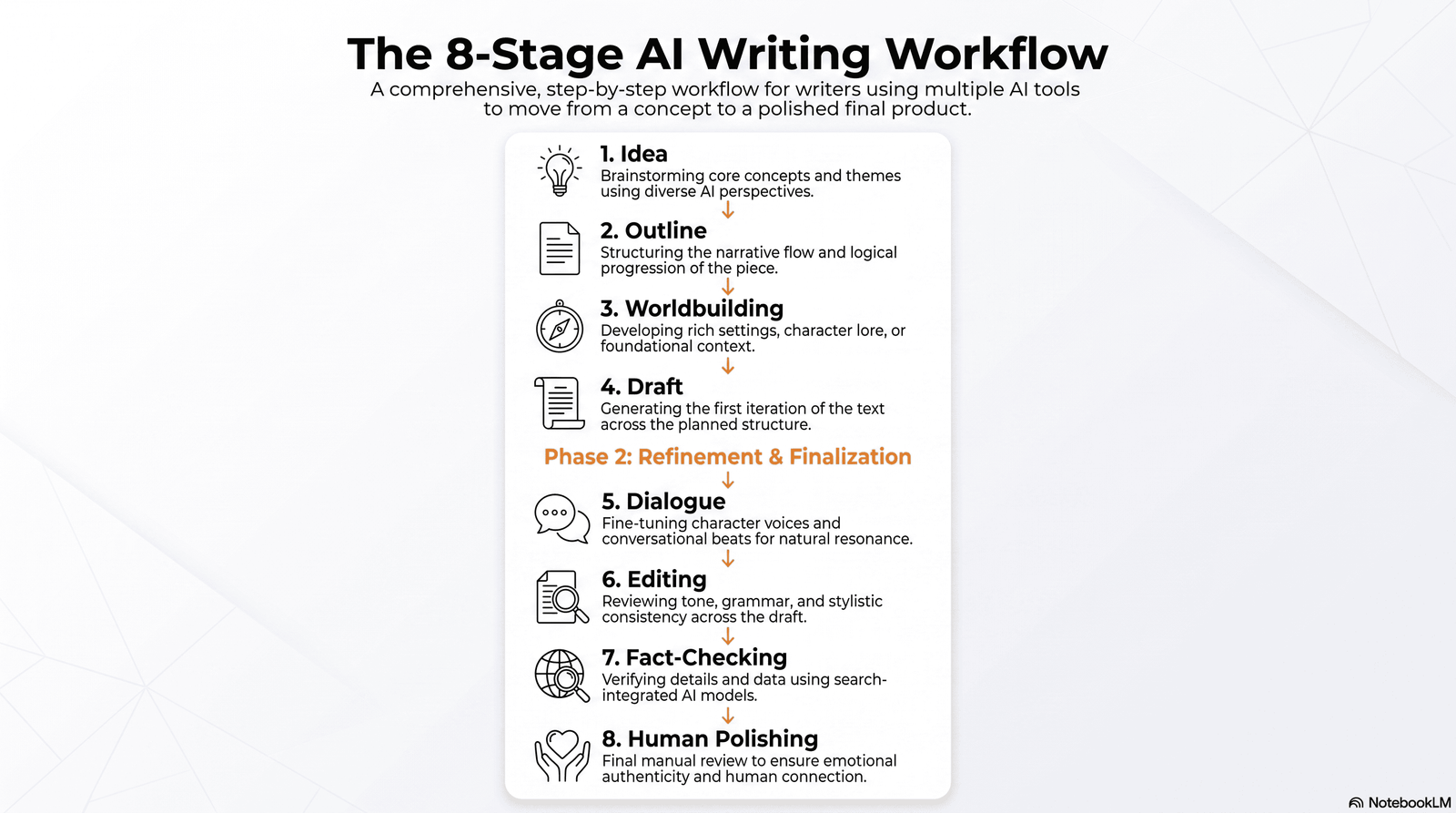
Most professional and serious hobbyist writers in 2026 aren’t using a single AI tool for everything — they’re combining tools at different stages.
A typical workflow looks like this:
Idea
Brainstorm concepts using a fast, conversational tool like ChatGPT or Claude.
↓
Outline
Structure the plot and chapter beats, often inside Notion AI or NovelCrafter for organizational clarity.
↓
Worldbuilding
Build out character sheets, settings, and lore using Sudowrite’s Story Bible or a similar structured feature.
↓
Draft
Generate and expand scenes using the tool with the strongest long-context handling for your project’s length — commonly Claude or Sudowrite.
↓
Dialogue
Refine dialogue passes with whichever tool produces the most natural voice for your genre; many writers switch tools specifically for this pass.
↓
Editing
Run structural and line edits, often using a different tool than the one used for drafting, to get a fresh “second opinion” on the prose.
↓
Fact-Checking
Use a research-capable tool like Gemini to verify historical, technical, or geographic details, especially in genres where accuracy matters.
↓
Human Polishing
This step isn’t optional. Every stage above should end with a human pass — for voice, for ethics, and because publishers and readers can often tell when this step is skipped.
The common thread across working writers using AI well: they treat these tools as collaborators for specific tasks, not as a single button that produces a finished book.
Can AI Replace Creative Writers?
This question deserves a direct, non-hyped answer: no, not in any complete sense, and there are concrete reasons why.
Originality
AI models generate text based on patterns learned from existing writing. They can recombine and extend ideas in genuinely useful ways, but the spark of a truly novel narrative concept — the thing that makes a book distinctive in a crowded market — still tends to originate from a human’s specific lived experience, obsessions, or perspective.
Copyright
Copyright offices in multiple jurisdictions have taken the position that works generated without meaningful human authorship may not qualify for copyright protection. This has direct implications for anyone planning to publish AI-assisted work commercially — the human’s creative contribution and editorial judgment matter, not just for quality, but for legal ownership.
Ethics
Questions around training data, consent, and compensation for the writers whose work shaped these models remain actively debated and unresolved in publishing communities. Reasonable people disagree here, and it’s worth writers forming their own view rather than assuming consensus exists.
Human Creativity
Readers consistently respond to authenticity — to the sense that a specific person made specific choices for specific reasons. AI can help execute those choices faster, but the choices themselves, especially thematic ones, still benefit from human judgment.
Publishing Realities
Many literary agents and publishers have adopted disclosure policies around AI-assisted submissions, and these policies vary and are still evolving. Writers pursuing traditional publication should check current submission guidelines rather than assume blanket acceptance or rejection.
AI Limitations
Beyond the philosophical questions, there are practical limits: hallucinated facts, repetitive phrasing patterns across long documents, and a tendency to smooth over the specific idiosyncrasies that make a voice distinctive unless a writer actively fights against that tendency.
The realistic framing for 2026: AI is a powerful collaborator for speed, brainstorming, and overcoming blank-page paralysis — not a replacement for the editorial judgment and lived perspective a human writer brings.
Buying Guide
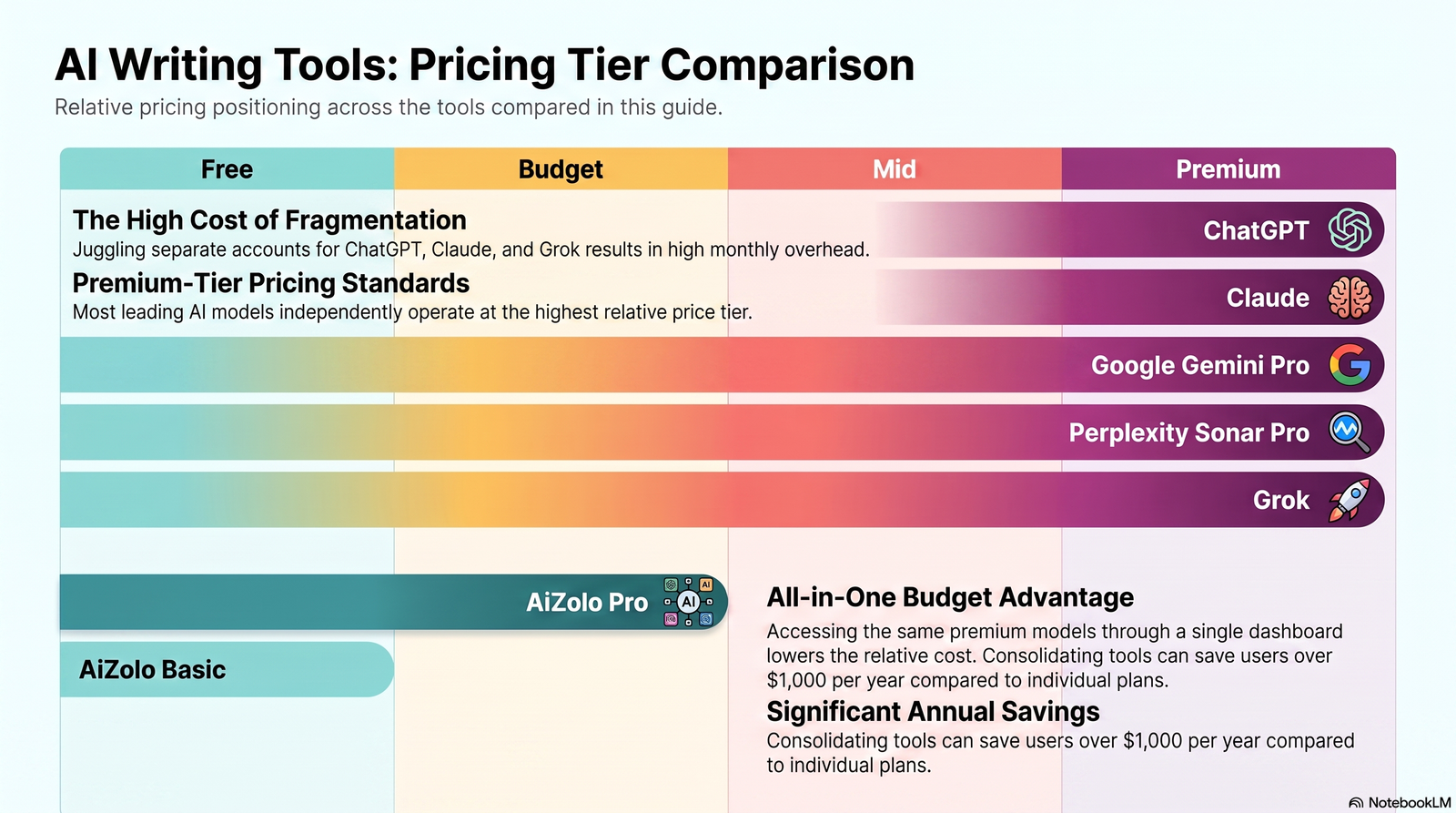
Pricing and Subscriptions
Most tools follow a freemium model: a limited free tier, then paid tiers unlocking higher usage limits, longer context, or priority processing. If you’re only experimenting, start on free tiers before committing to an annual plan.
Hidden Costs
Watch for usage-based credit systems (common in fiction-specific tools like Sudowrite) — heavy drafting sessions can burn through monthly credits faster than expected. Also check whether team/collaboration features require a separate, more expensive tier.
Context Limits
If you’re writing anything novel-length, context window size directly affects usability. Ask specifically: how much of my manuscript can this tool “remember” in a single session, and does that scale with my plan tier?
Integrations
Consider where you already work — Google Docs, Notion, Scrivener — and whether your chosen AI tool fits into that environment or forces you to change your process entirely.
Privacy
Check each provider’s data usage policy, particularly whether your manuscript content may be used for model training by default, and whether you can opt out. This matters more for unpublished, commercially sensitive work.
Copyright
As covered above, confirm how much human authorship your process involves, and keep records of your editorial contributions if you plan to pursue traditional publishing or want a clear position on protectability.
Export Options
Confirm the tool exports to formats you actually need — .docx, .epub, or plain text — before committing, especially if your downstream process involves formatting software like Vellum or Scrivener.
Reason: A dedicated explainer on AI writing tools and manuscript privacy would help writers concerned about unpublished work being used for training data.
Frequently Asked Questions
What is the best AI for creative writing in 2026?
There isn’t a single “best” tool for everyone — it depends on your project. Claude and Sudowrite are frequently favored for novel-length fiction, while ChatGPT and Gemini suit brainstorming and research-heavy projects.
Can AI write an entire novel by itself?
Technically it can generate a full-length document, but the result typically needs substantial human editing for coherence, voice, and originality before it’s publication-ready.
Is it legal to publish AI-assisted fiction?
Generally yes, though copyright protection for AI-generated portions may be limited depending on your jurisdiction. Check current guidance from your national copyright office and disclose per your publisher’s policy.
Which AI is best for novel writing specifically?
Tools with strong long-context handling and manuscript organization features — Claude, Sudowrite, and NovelCrafter are commonly used for this purpose.
What AI is best for screenwriting?
No mainstream tool is purpose-built exclusively for screenplay formatting. Writers typically use ChatGPT or Claude for dialogue and structure, then finalize formatting in dedicated screenwriting software.
Does using AI hurt my chances with literary agents?
Policies vary by agency and are evolving. Some require disclosure of AI use; others have specific restrictions. Always check current submission guidelines before querying.
Is there a free AI tool good enough for creative writing?
ChatGPT, Claude, and Gemini all offer usable free tiers suitable for brainstorming and short pieces, though usage limits apply.
What AI is best for poetry?
General-purpose tools like ChatGPT and Claude handle poetic form reasonably well, though no major tool specializes exclusively in poetry, and human editing remains important for genuine poetic voice.
How much does AI writing software typically cost?
Costs range from free (with limits) to roughly $20–30 per month for mid-tier plans, with fiction-specific tools sometimes using credit-based pricing instead of flat subscriptions.
Can AI keep track of a long, complex plot?
Tools with strong long-context windows and dedicated organizational features (Story Bible, codex systems) handle this considerably better than general chatbots left to rely on default memory alone.
Will AI-generated writing sound robotic?
It can, especially without strong style direction. Explicit voice instructions, sample passages, and active editing significantly reduce this.
Should I use one AI tool or several?
Many experienced users combine tools — one for brainstorming, one for drafting, one for editing — rather than relying on a single tool for the entire process.
Is AI good for worldbuilding?
Yes, this is one of the areas where AI assistance is most consistently useful, particularly for generating consistent naming conventions, cultures, and lore details quickly.
Can AI help with writer’s block?
Yes — this is one of the most commonly cited practical benefits, since low-stakes brainstorming can help overcome a blank page without committing to final prose.
Do AI writing tools store or train on my manuscript?
This varies by provider and plan; check each tool’s specific data usage and opt-out policies before drafting sensitive or unpublished work.
What’s the difference between Sudowrite and ChatGPT for fiction?
Sudowrite is purpose-built for fiction with features like Story Bible for character/plot tracking; ChatGPT is a general-purpose assistant that requires more manual setup for the same organizational functions.
Can AI write dialogue that sounds natural?
Quality varies by tool and genre; Claude and Sudowrite are frequently cited as producing more natural dialogue, though results depend heavily on prompting.
Is Gemini good for creative writing?
It’s solid, particularly for research-heavy fiction, but generally considered less specialized for narrative voice compared to Claude or Sudowrite.
How do I choose between all these tools?
Start by identifying your primary need — drafting, organizing, brainstorming, or editing — then match that need to the tool’s core strength rather than picking based on general popularity.
Author Bio
Jeevesh Tripathi AI Researcher & Content Strategist at Aizolo
Specializes in AI tools, productivity software, automation, and emerging artificial intelligence platforms. Focuses on in-depth product research, hands-on evaluation methodologies, and creating people-first content aligned with Google’s EEAT principles.
Email: jeevesh@aizolo.com