Table of Contents
Introduction
Staring at a blank page while your feelings feel too big for words? That’s exactly the moment an AI love letter generator is built for.
An Aizolo AI love letter generator turns a few details about your relationship — a name, a memory, an occasion — into a heartfelt draft in seconds. It doesn’t replace your voice. It removes the blank-page panic so you can find it faster.
People use these tools for anniversaries, Valentine’s Day, apologies, long-distance check-ins, proposals, and everyday “I was thinking of you” notes. Anyone who’s ever deleted and retyped the same sentence five times is the target audience.
In this guide, you’ll learn how these tools actually work, which ones are worth your time, how to prompt them well, where they fall short, and how to turn a generated draft into something that sounds unmistakably like you.
What Is an AI Love Letter Generator?
An AI love letter generator is a writing tool, usually powered by a large language model, that produces a personalized romantic message from a short set of inputs: recipient, relationship context, tone, occasion, and a memory or two.
Most tools ask for the same core details:
- Who you’re writing to (partner, spouse, crush, fiancé)
- The occasion (anniversary, apology, Valentine’s Day, good morning note)
- A tone (romantic, playful, poetic, sincere)
- One or two specific memories or traits
The output is a draft, not a finished product. Think of it as a very fast, very patient first-round editor who never runs out of ideas — you still hold the pen for the final version.
How Does an AI Love Letter Generator Work?
Under the hood, most tools use a language model trained on huge amounts of text, including romantic writing patterns, then apply your inputs as constraints on the output.
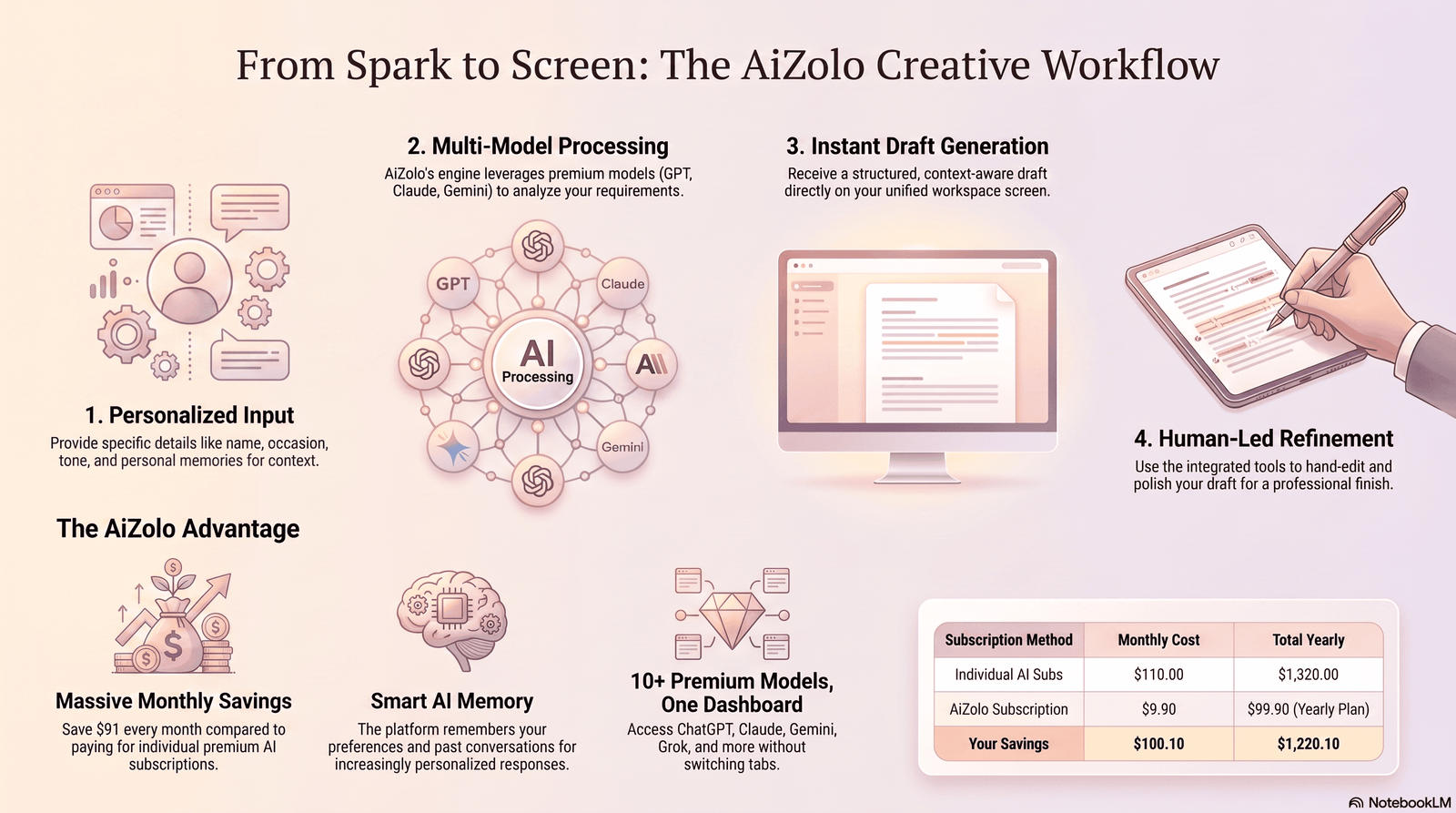
The general flow looks like this:
- You provide context — names, relationship length, tone, and key memories.
- The model generates a draft using your inputs plus patterns it has learned about romantic language, structure, and pacing.
- You review and edit — swapping generic phrases for specifics only you would know.
- You finalize and send it as a text, card insert, printed letter, or email.
A smaller number of tools — LogicBalls’ love letter writer is one example — add a clarifying-question step before generating anything, asking you two or three follow-up questions instead of guessing at details it doesn’t have. That extra step tends to reduce generic-sounding output, since the letter is built on specifics you actually confirmed rather than assumptions the AI filled in on its own.
Benefits of Using an AI Love Letter Generator
- Beats the blank page. You start editing instead of staring.
- Speed. A full draft in under a minute, versus an hour of false starts.
- Structure. Generators tend to nail opening, body, and closing pacing — something many people struggle with on their own.
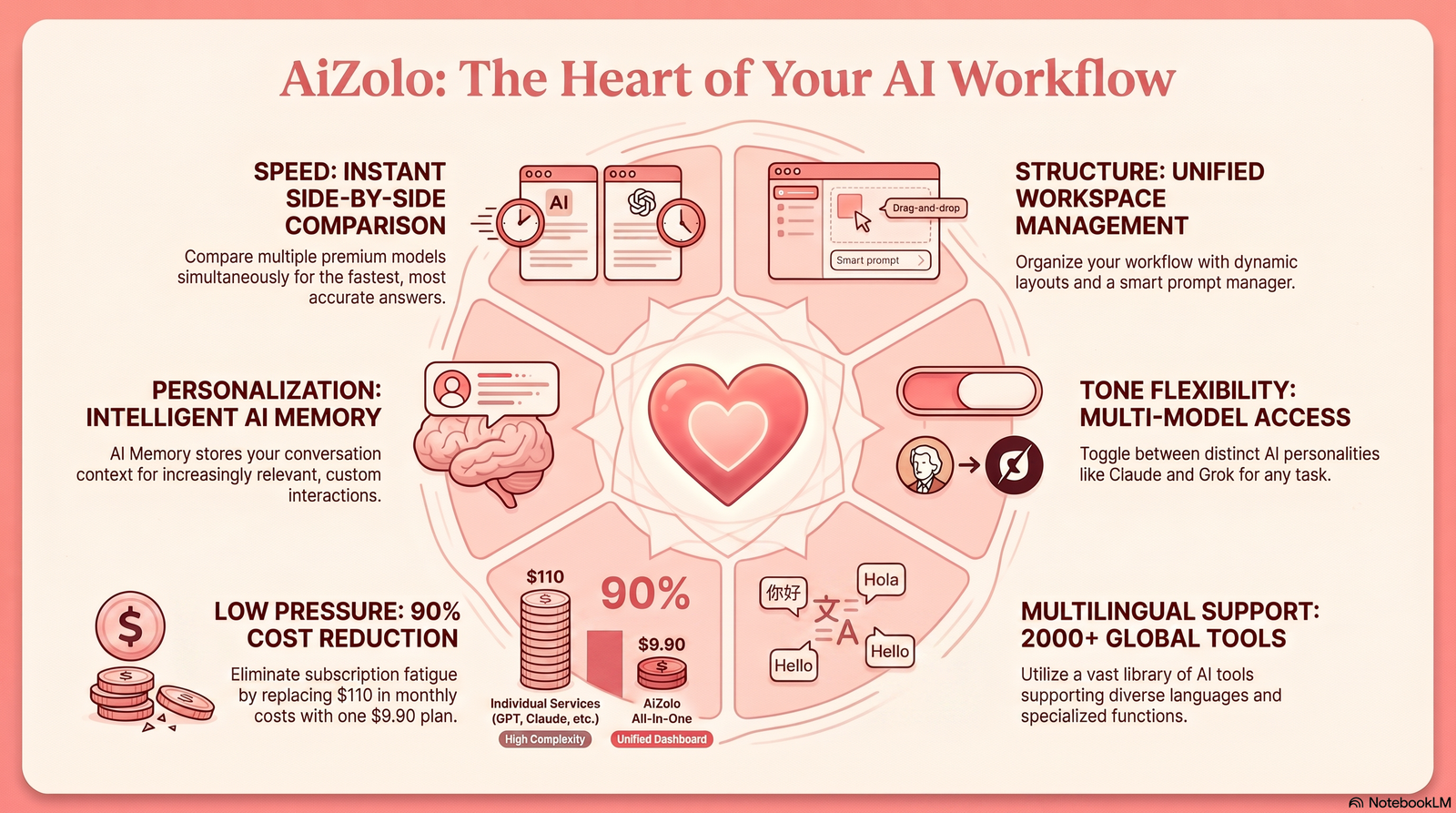
- Tone flexibility. Switch between playful, poetic, or sincere with one click instead of rewriting from scratch.
- Low pressure for non-writers. Not everyone is comfortable with romantic language, and that’s fine — the tool gives you raw material to personalize.
- Multilingual reach. Several tools, including AIFreeBox’s generator, support 30+ languages, which helps in international or long-distance relationships.
Types of Love Letters an AI Love Letter Generator Can Create
A good AI romance generator flexes across occasions, not just “generic romantic.” Here’s what it should handle:
| Occasion | What Makes It Different |
|---|---|
| Anniversary | References specific milestones, years together, shared growth |
| Valentine’s Day | Playful or classic tone, often shorter and punchier |
| Long-distance | Focuses on longing, reassurance, future plans together |
| Birthday | Blends celebration with affection |
| Proposal | High emotional stakes; needs a serious, sincere tone |
| Apology | Requires accountability language, not just sweetness |
| Good morning | Short, light, meant to be read in seconds |
| Good night | Calmer, more intimate pacing |
| Wedding vows | Formal structure, often read aloud, needs rhythm |
| Crush / confession | Vulnerable but not overwhelming; lower commitment language |
| Friendship turning romantic | Careful, ambiguous-to-clear tone shift |
An AI apology letter and an AI proposal letter need very different emotional registers — one requires humility and specificity about what went wrong, the other requires certainty and vision for the future. If a tool produces the same tone for both, that’s a sign its range is limited.
Best AI Love Letter Generator Tools (2026 Comparison)
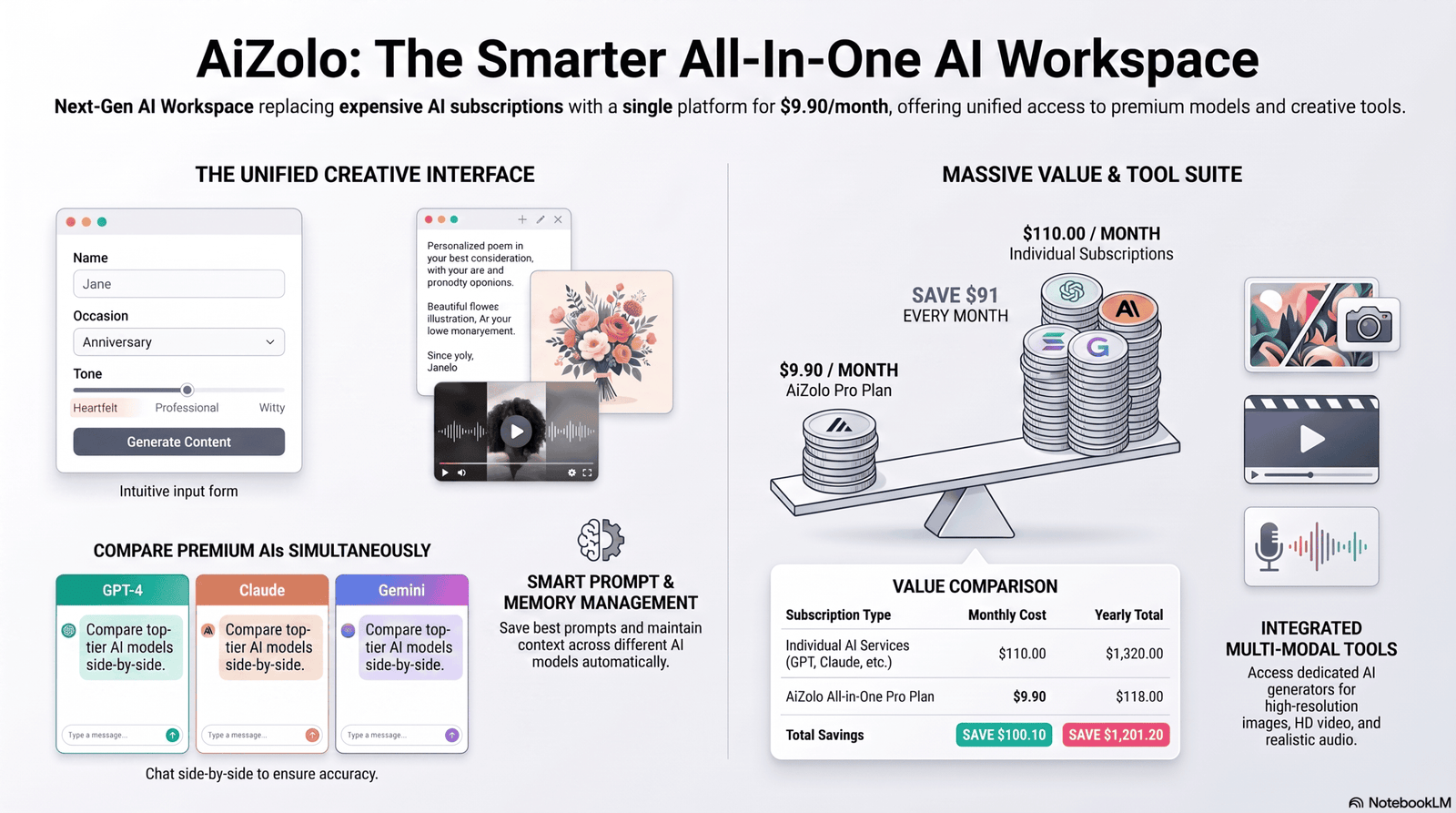
There are dozens of tools in this space, ranging from single-purpose generators to multi-model AI platforms. Below is a comparison based on publicly available information about each tool as of mid-2026. Features and pricing change frequently, so confirm current details on each site before committing.
| Tool | Key Features | Strengths | Weaknesses | Free Plan | Best For |
|---|---|---|---|---|---|
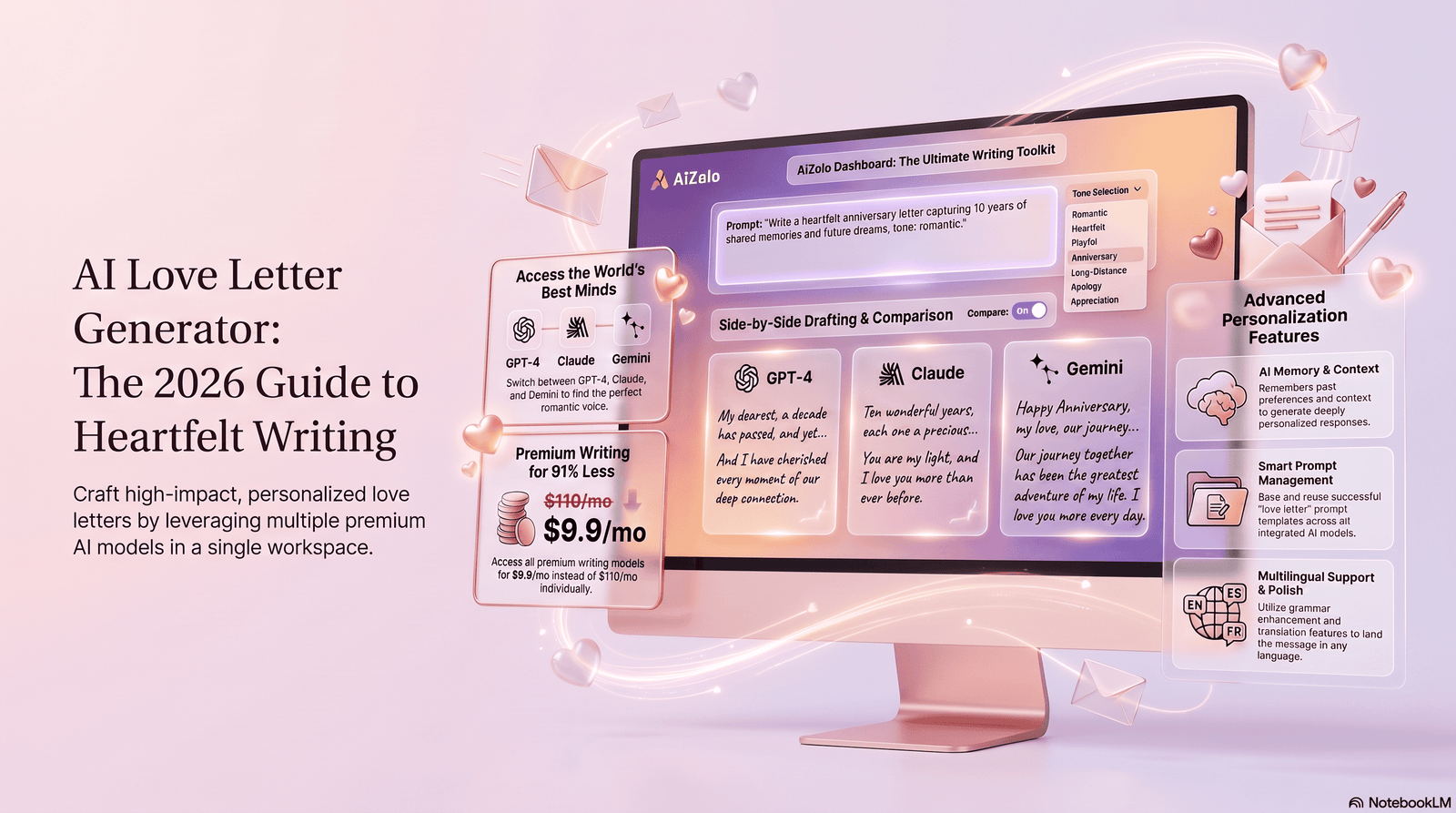
| AiZolo | Access to multiple AI models (ChatGPT, Claude, Gemini, Perplexity) in one dashboard for drafting and comparing letters | Lets you compare tone across models for the same prompt; useful beyond just love letters | Not a single-purpose tool, so the love letter feature sits inside a broader AI workspace | Yes, limited access | People who want to compare multiple AI “voices” before picking one |
| Easy-Peasy.AI | Template-based generator with guided fields for names, relationship, memories, hopes | Simple, guided input flow; good for first-time users | Template feel if inputs are left vague | Free template access | Quick, guided first drafts |
| AIFreeBox | ~20 tone styles, 33 supported languages, creativity slider | Strong multilingual support; no login required | Style variety can be overwhelming for first-time users | Fully free, no signup | International or long-distance couples |
| BasedLabs | Purpose selector, emotional style selector, step-by-step guided flow | Clear onboarding; explicitly designed to bridge long-distance gaps | Part of a broader creative-content platform, less love-letter-specific depth | Free to try | Long-distance couples wanting a guided flow |
| LogicBalls (Love Letter Writer) | Asks clarifying questions before drafting to avoid generic or invented details | Reduces generic “hallucinated” memories by confirming facts first | Extra questions add a step versus instant one-click tools | Limited free usage | Users who want more accuracy and less genericness |
| LoveTales.ai | Relationship-detail input, tone selection, add-on illustrated storybook | Can extend a letter into a keepsake storybook product | Storybook upsell is a paid product | Free letter generation | Couples wanting a letter plus a printable keepsake |
| Wrizzle.ai | Straightforward AI writing assistant for romantic letters | Simple, no-frills interface | Limited public detail on advanced features | Free tier available | Users who want a fast, no-frills draft |
How to Use an AI Love Letter Generator (Step-by-Step)
- Choose a tool based on the occasion — multilingual needs, storybook add-ons, or multi-model comparison all point to different tools above.
- Enter the recipient’s name and relationship context (partner, spouse, long-term crush).
- Select the occasion — anniversary, apology, Valentine’s, etc.
- Pick a tone — romantic, playful, poetic, sincere.
- Add one or two specific memories or traits. This single step does more for authenticity than anything else on this list.
- Generate the draft and read it end to end before touching it.
- Edit ruthlessly. Replace any phrase that could apply to literally anyone with something only your relationship would produce.
- Read it aloud before sending — awkward rhythm is easiest to catch by ear.
30+ Prompt Ideas for an AI Love Letter Generator
Organized by scenario so you can copy, adapt, and go.
Anniversary
- “Write a heartfelt anniversary letter for my partner of [X] years, mentioning our first apartment and how far we’ve come.”
- “Create a warm anniversary note celebrating [X] years, referencing our shared love of [hobby].”
- “Write a short anniversary message that’s playful, not overly sentimental.”
- “Draft an anniversary letter that reflects on how we’ve grown individually and together.”
- “Write an anniversary letter thanking my partner for their patience during [specific hard time].”
Valentine’s Day 6. “Write a Valentine’s Day letter that’s short, funny, and a little cheesy.” 7. “Draft a sincere Valentine’s letter for a new relationship, keeping it light and not overwhelming.” 8. “Write a Valentine’s note for a long-term partner referencing an inside joke about [detail].” 9. “Create a Valentine’s letter with a poetic, almost old-fashioned tone.” 10. “Write a playful Valentine’s letter that teases my partner about [quirky habit].”
Long-distance 11. “Write a long-distance love letter reassuring my partner during a hard week apart.” 12. “Draft a letter about counting down the days until our next visit.” 13. “Write a letter describing what I miss most about our daily routine together.” 14. “Create a long-distance letter that focuses on our future plans, not just the distance.” 15. “Write a short ‘thinking of you’ note for a partner in a different time zone.”
Apology 16. “Write a sincere apology letter for missing an important event, without making excuses.” 17. “Draft an apology letter that acknowledges a specific mistake and how I plan to do better.” 18. “Write a short, direct apology note for a small disagreement.” 19. “Create an apology letter that balances accountability with reassurance.”
Proposal 20. “Write a proposal letter reflecting on our history and why I’m certain about our future.” 21. “Draft a proposal letter that’s emotional but not overly formal.” 22. “Write a short proposal note to accompany a ring, referencing our first date.”
Everyday / Good Morning / Good Night 23. “Write a short good morning message that’s affectionate but casual.” 24. “Draft a good night note that’s calm and reassuring.” 25. “Write a quick ‘just because’ love note for no specific occasion.”
Birthday 26. “Write a birthday letter for my partner celebrating who they’ve become this year.” 27. “Draft a playful birthday note that includes an inside joke.”
Wedding 28. “Write wedding vows that are sincere, with one line of humor.” 29. “Draft a wedding toast-style letter for reading aloud.”
Crush / New Relationship 30. “Write a confession letter for a crush, keeping it low-pressure and not overwhelming.” 31. “Draft a letter for someone I’ve just started dating, focused on curiosity, not commitment.”
Friendship Turning Romantic 32. “Write a letter that gently signals romantic feelings to a close friend without overwhelming them.”
Tips for Writing Better AI Love Letters
- Give specific memories, not general traits. “The way you laughed at the airport when our flight got delayed” beats “you’re funny” every time.
- Edit for your natural vocabulary. If you’d never say “my darling,” cut it, no matter how nice it sounds in the draft.
- Keep one imperfect detail. A slightly clumsy, real memory reads as more genuine than a polished generic line.
- Match length to the occasion. A good morning text should be two sentences; an anniversary letter can run several paragraphs.
- Read it as the recipient, not the writer. Would this feel like it was written for anyone, or for them specifically?
Emotional authenticity in a generated letter almost always comes down to specificity. The AI provides structure and momentum; the details you add are what make it land.
Common Mistakes People Make With AI Love Letter Generators
- Sending the raw output. Unedited drafts often contain phrasing that sounds fine but generic — the giveaway is usually a lack of specific, checkable details.
- Overusing AI for every message. If every note you send was generated, the relationship starts to feel scripted. Save it for moments you’re genuinely stuck.
- Copying without editing. Beyond the authenticity problem, this is also where most tools’ terms of service expect personalization, not verbatim reuse.
- Ignoring privacy. Some generators store input data. Read the privacy policy before entering detailed personal information, especially names and specific locations.
- Unrealistic expectations. An AI love letter generator can’t know your relationship the way you do — it can only work with what you tell it.
AI Love Letter Generator vs. Writing It Yourself
| Factor | AI Love Letter Generator | Writing It Yourself |
|---|---|---|
| Speed | Draft in under a minute | Can take hours, especially with writer’s block |
| Structure | Consistently well-paced | Varies by writer’s skill and confidence |
| Personalization | Only as good as the input you provide | Naturally personal, but can ramble or under-develop |
| Emotional risk | Lower — easier to start, harder to feel fully “yours” without editing | Higher — but often feels more vulnerable and authentic |
| Best for | Overcoming blank-page paralysis, non-writers | People who want full creative control |
Pros and Cons
| Pros | Cons |
|---|---|
| Fast, removes blank-page pressure | Can sound generic without editing |
| Good structural foundation | Doesn’t know your relationship without detailed input |
| Useful for non-writers or non-native speakers | Risk of over-reliance for every message |
| Multiple tone/style options | Privacy considerations with personal data |
| Often free or low-cost | Requires editing to feel authentic |
Real-Life Use Cases
- Long-distance couples using a generator to write consistent, thoughtful check-ins despite time zone fatigue.
- Newlyweds drafting anniversary letters that reference their first year of shared living.
- Marriage proposals where someone wants help structuring an emotional, high-stakes letter to accompany a ring.
- Apology letters after a missed event or an argument, where finding the right tone under stress is hard.
- Anniversary surprises paired with a printed keepsake or storybook.
- Dating app matches looking for a stronger opening message than “hey.”
- Wedding vows that need rhythm and pacing for reading aloud.
- Military deployment relationships using letters to maintain closeness across long separations.
- Busy professionals who want to send something thoughtful but don’t have an hour to draft it from scratch.
Frequently Asked Questions
Is an AI love letter generator free to use? Many are. Tools like AIFreeBox and Easy-Peasy.AI offer free access with no signup, while others like AiZolo offer a limited free tier with paid upgrades for more advanced features.
Will my partner know I used AI? Only if the letter reads generically. Specific, personal details you add during editing are what make it feel authentic — that’s on you, not the tool.
Is it okay to use AI for something this personal? It’s a starting point, not a replacement for your voice. Most people use it to get past writer’s block, then personalize heavily before sending.
Can an AI love letter generator write in other languages? Yes — several tools, including AIFreeBox, support 30+ languages, which is useful for international or multilingual relationships.
What information should I avoid entering into these tools? Avoid entering sensitive personal identifiers you wouldn’t want stored — full addresses, financial details, or anything beyond what’s needed for the letter itself. Check each tool’s privacy policy first.
Can I use an AI love letter generator for a wedding speech or vows? Yes, several tools support this use case. Vows benefit from reading the draft aloud and adjusting for rhythm and timing.
How do I make a generated letter sound less robotic? Add one or two specific memories only you would know, and cut any phrase that could apply to any couple.
Are these tools good for apology letters? Some are better suited than others — apology letters need accountability language, not just sweetness, so check that the tool’s tone options include something more serious than “romantic.”
Can I edit the letter after it’s generated? Yes, and you should. Treat the output as a first draft, not a final version.
Do AI love letter generators store my data? It depends on the tool. Some explicitly state no data is stored (session-based), while others may retain input for account-based features. Always check the specific tool’s privacy policy.
What’s the difference between a single-purpose generator and a multi-model platform? Single-purpose tools like AIFreeBox are built specifically for love letters. Multi-model platforms like AiZolo let you generate the same prompt across different AI models and compare tone and style.
Can I use an AI love letter generator for a long-distance relationship? Yes — this is one of the most common use cases, since these tools help maintain consistent, thoughtful communication despite distance and fatigue.
Is it weird to use AI to write something for a crush? Not inherently — many people use it to get past the anxiety of a first message, then personalize it before sending.
What’s the biggest mistake people make with these tools? Sending the output without editing. The tool is a draft generator, not a finished product.
Can these tools help with wedding proposals specifically? Yes, and this is a high-stakes use case worth extra editing time, since the emotional accuracy of a proposal letter matters more than almost any other occasion.
Final Thoughts
An AI love letter generator won’t feel your feelings for you — but it will get you past the blank page faster than almost anything else. The tools above range from single-purpose generators to full multi-model platforms, and the right pick depends on whether you want speed, language range, or the ability to compare tones across different AI models.
Whichever one you choose, the real work still happens after generation: reading it aloud, cutting anything generic, and adding the one detail only you and your partner would understand. That’s the difference between a letter that sounds nice and one that sounds like you.
Ready to write something real? Pick a tool from the comparison table above, add a specific memory, and start editing.
About the Author
Jeevesh Tripathi AI Researcher & Content Strategist 📧 jeevesh@aizolo.com
Jeevesh Tripathi researches and writes about practical applications of AI tools, with a focus on writing assistants, productivity software, and SEO-driven content strategy. His work centers on evaluating tools against publicly available features and documentation rather than marketing claims, aiming to give readers a clear, accurate picture before they commit time or money to a product. He writes for Aizolo’s blog, covering AI tools across writing, productivity, and creative use cases.