Most marketing teams are still running “automation” that just triggers emails on a schedule. That’s not intelligence — it’s a glorified if-then rule. AI agents for marketing automation are a different animal: software that can plan a task, pull context from your CRM and analytics stack, make a judgment call, execute it, and learn from what happened.
The shift matters because marketing budgets keep shrinking while expectations for personalization keep growing. Teams that used to hire three people to run a campaign are now expected to run five campaigns with one. That gap is exactly what AI agents are built to close — not by replacing marketers, but by taking over the repetitive judgment calls that used to eat their week.
This guide breaks down what these agents actually are, how they work under the hood, where they deliver real ROI, which tools are worth evaluating, and what to watch out for before you hand over campaign execution to software that can act on its own.
Table of Contents
What Are AI Agents for Marketing Automation?
An AI marketing agent is a software system built on large language models that can pursue a goal with limited human input — not just respond to a single prompt.
Give it an objective like “improve email open rates for cold leads,” and it can research subject lines, draft variants, launch a test, read the results, and adjust the next send. A traditional workflow tool would need a human to do each of those steps manually.
The core distinction:
- Automation executes a fixed rule: if X happens, do Y.
- AI agents reason about a goal, choose from multiple possible actions, and adapt based on outcomes.
That reasoning loop — plan, act, observe, adjust — is what separates AI marketing agents from the marketing automation software most teams already use, like a drip-email sequence or a lead-scoring rule.
Expert insight: Teams that get the most value treat agents as a new headcount to manage, not a plugin to install. The ones that fail usually skipped defining what “good” looks like before turning the agent loose.
How AI Marketing Agents Work
Underneath the marketing language, most AI marketing agents share the same architecture. Understanding it helps you evaluate any tool you’re considering, not just the popular ones.
1. Planning The agent breaks a broad goal (“grow qualified pipeline from LinkedIn”) into a sequence of smaller tasks — audience research, content drafting, scheduling, follow-up.
2. Memory Agents keep short-term memory (the current task) and long-term memory (what worked in past campaigns, brand voice guidelines, customer segments) so decisions stay consistent over time.
3. Tool Use / Integrations This is where the agent stops being a chatbot. It connects to your CRM, ad platforms, email service, and analytics tools through APIs to actually take action — not just suggest one.
4. Execution The agent performs the task: sending the email, launching the ad set, updating the CRM record, publishing the post.
5. Optimization / Feedback Loop Results flow back in. The agent compares outcomes to the goal and adjusts its next action — a genuine feedback loop, not a one-time script.
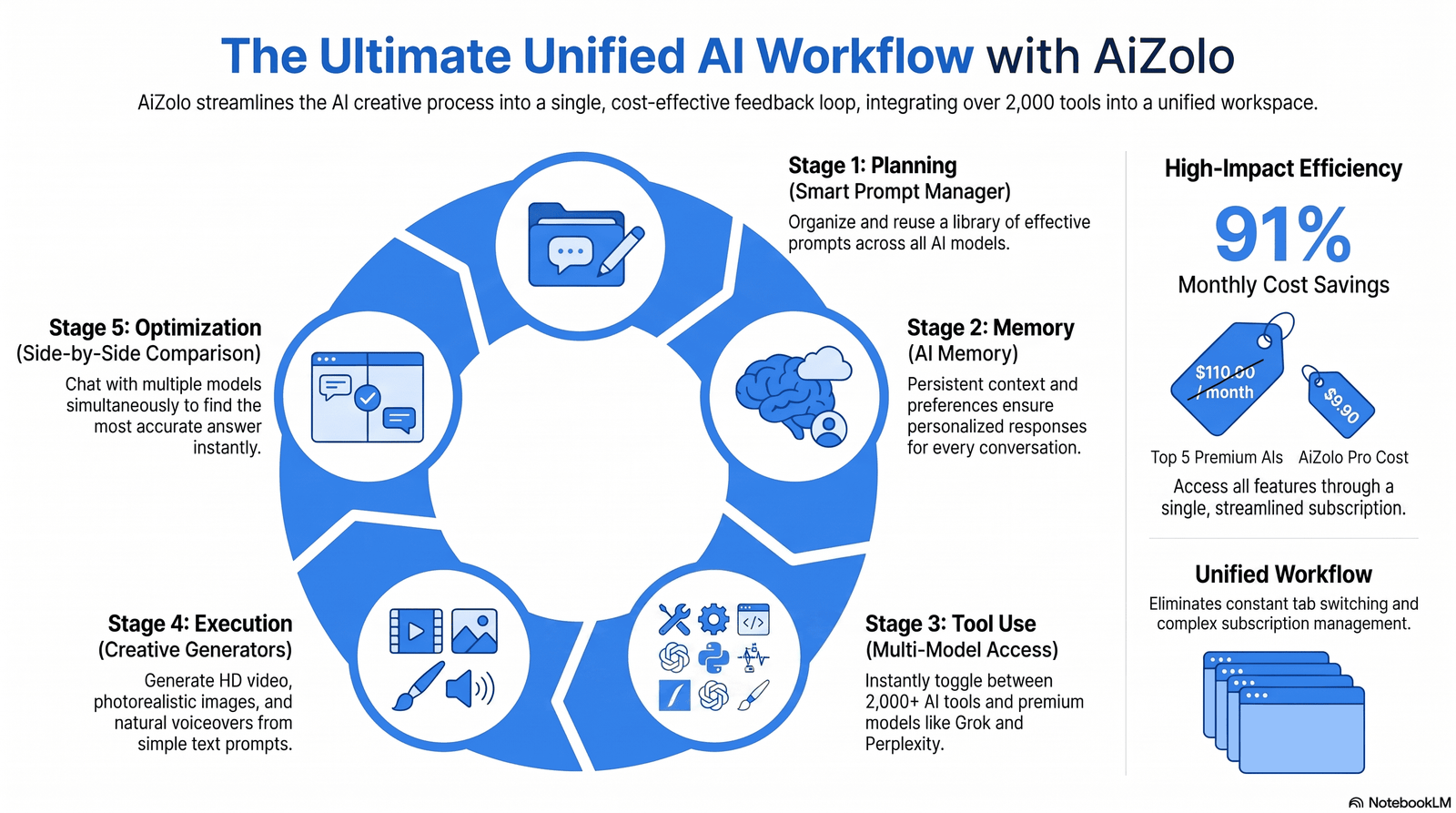
This loop is why AI agents are increasingly described as “digital employees” rather than software features. They don’t just automate a task; they own an outcome.
Traditional Marketing Automation vs. AI Agents
| Capability | Traditional Automation | AI Marketing Agents |
|---|---|---|
| Intelligence | Rule-based, static logic | Reasoning-based, adapts to context |
| Personalization | Segment-level (broad buckets) | Individual-level, dynamic |
| Workflow creation | Manually built by marketers | Can plan and adjust its own workflow |
| Learning | None — rules stay fixed | Learns from outcomes over time |
| Cost | Lower upfront, higher labor cost | Higher upfront, lower ongoing labor cost |
| Scalability | Scales linearly with more rules | Scales with more autonomous tasks |
| Analytics | Descriptive (what happened) | Predictive/prescriptive (what to do next) |
| Campaign optimization | Manual A/B testing | Continuous, agent-driven testing |
The honest takeaway: traditional automation isn’t obsolete. For simple, high-volume, predictable workflows (like a receipt email), a fixed rule is still cheaper and more reliable than an agent. AI agents earn their cost in judgment-heavy, high-variance work.
Benefits of AI Agents in Marketing
- Productivity — Agents absorb repetitive execution work (drafting, scheduling, reporting), freeing marketers for strategy.
- Cost reduction — Fewer hours spent on manual campaign management, especially at scale across many segments or regions.
- Personalization at scale — Individual-level messaging that would be impossible to hand-build for thousands of contacts.
- Better targeting — Agents can continuously re-segment audiences based on live behavior, not quarterly reviews.
- Lead nurturing — Automated, context-aware follow-up that adjusts tone and timing per lead.
- Campaign optimization — Ongoing testing and reallocation of budget toward what’s working, in near real time.
- Customer experience — Faster response times and more relevant content across touchpoints.
- ROI visibility — Better attribution because agents log every action and decision path they took.
Callout: ROI from AI agents tends to compound. The first month looks like time savings. By month three, teams typically see the bigger win: campaigns that would never have been attempted manually (deep personalization, rapid multivariate testing) become routine.
Real Marketing Use Cases
SEO
Agents can audit content gaps against competitors, draft outlines aligned to search intent, and monitor ranking shifts — flagging pages that need a refresh before traffic drops.
Email Marketing
Beyond scheduling, agents can generate subject-line variants, personalize send times per recipient, and re-engage cold segments automatically.
Content Marketing
Agents draft first passes of blog posts, social captions, and repurposed formats (turning one long article into five short posts), which a human then edits and approves.
Paid Advertising
Agents can shift budget between ad sets based on real-time performance, pause underperforming creatives, and generate new ad copy variants for testing.
Social Media
From caption generation to optimal posting-time selection and comment triage, agents handle the volume work social requires.
Lead Generation
Agents can qualify inbound leads by cross-referencing firmographic data, score them, and route hot leads to sales instantly.
CRM Management
Agents keep CRM records clean — updating stages, flagging stale deals, and drafting follow-up tasks for reps.
Customer Support (Marketing-Adjacent)
Pre-sales chat agents answer product questions and hand qualified conversations to sales, reducing drop-off.
Sales Outreach
Agents draft personalized outbound sequences based on a prospect’s public activity, then adjust follow-up cadence based on reply behavior.
Reporting & Analytics
Agents compile cross-channel performance into plain-language summaries, saving hours of manual dashboard-building each week.
Best AI Agents for Marketing Automation
Evaluate any tool against your actual workflow, not the demo. Categories and general positioning below (verify current pricing and features directly with each vendor before purchasing):
| Tool | Best For | Key Features | Pricing Model | Pros | Cons | Ideal Users |
|---|---|---|---|---|---|---|
| HubSpot AI Agents | All-in-one CRM + marketing teams | Native CRM integration, content agents, lead scoring | Tiered subscription | Deep CRM context, easy onboarding | Can get costly at scale | SMB to mid-market |
| Salesforce Agentforce | Enterprise sales + marketing alignment | Deep Salesforce data access, custom agent building | Enterprise/usage-based | Powerful data access, highly customizable | Steep learning curve, needs admin resources | Enterprise teams already on Salesforce |
| Zapier AI Agents (Zapier Agents) | Cross-app workflow automation | No-code agent builder, thousands of app integrations | Usage/tiered | Fast to set up, huge integration library | Less marketing-specific intelligence | Lean teams needing quick automation |
| Jasper / similar AI content platforms | Content generation at scale | Brand voice training, content agents, campaign briefs | Subscription | Strong content quality controls | Primarily content-focused, not full-funnel | Content and brand marketing teams |
| Custom-built agents (via Anthropic/OpenAI APIs) | Teams with engineering resources | Full control over logic, memory, and integrations | Usage-based API pricing | Maximum flexibility, no vendor lock-in | Requires engineering investment | Larger teams with in-house dev capacity |
Expert tip: Don’t buy based on the longest feature list. Buy based on which tool already integrates cleanly with the two or three systems your team lives in daily (usually your CRM and ad platforms). Integration friction is the #1 reason agent rollouts stall.
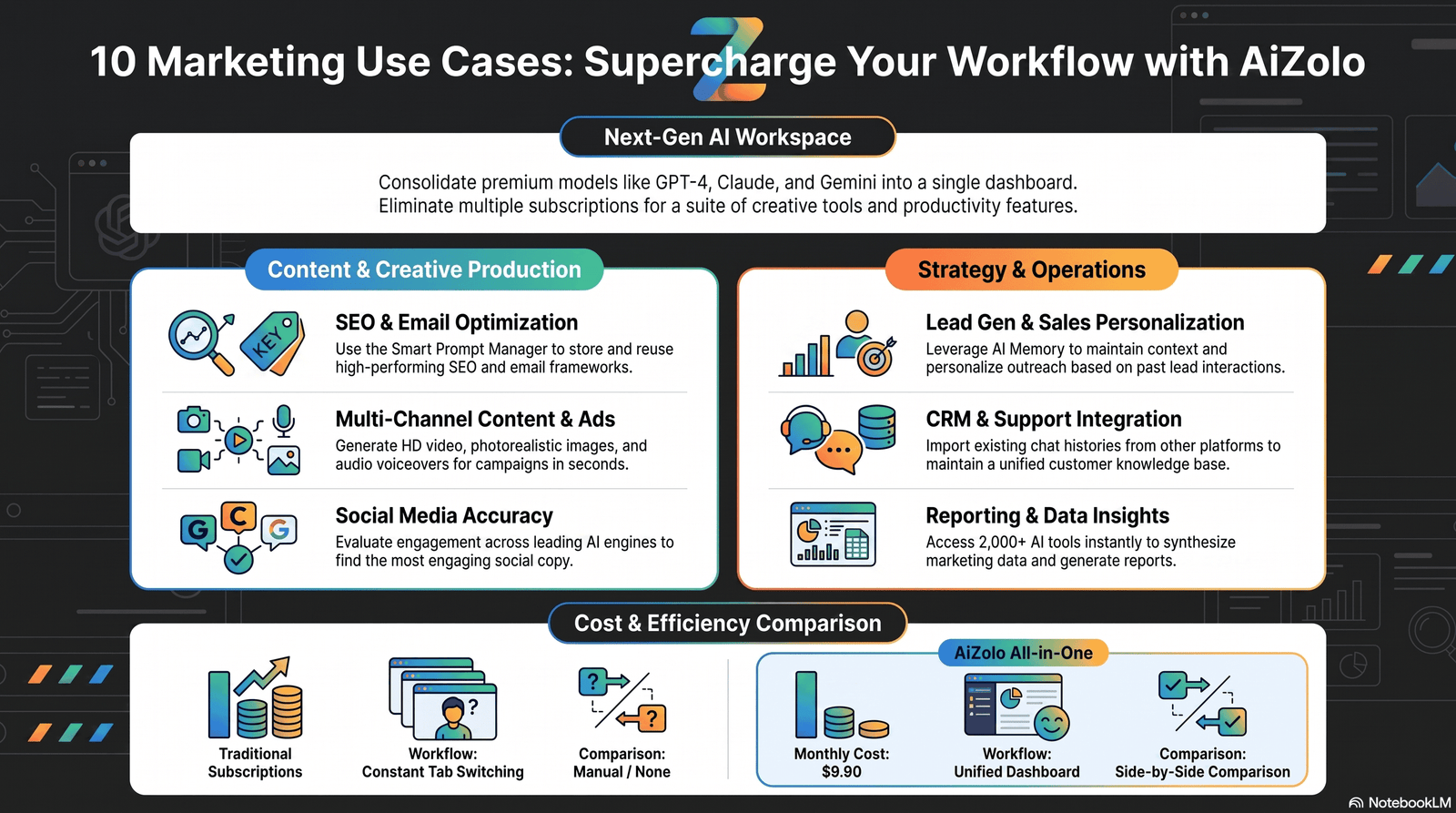
For teams that want more control than an off-the-shelf SaaS tool but don’t want to build agents from scratch on raw APIs, platforms like Sim sit in between — offering a visual way to design and deploy custom agent workflows.
How to Choose the Right AI Marketing Agent
Use this checklist before committing to a platform:
- [ ] Does it integrate natively with your CRM and ad platforms?
- [ ] Can you define guardrails (budget caps, approval steps) before it acts autonomously?
- [ ] Does it log its decisions for auditability?
- [ ] Is pricing predictable at your expected usage volume?
- [ ] Does it support your brand voice/style guidelines out of the box?
- [ ] Is there a human-in-the-loop approval mode for high-stakes actions (spend, sends)?
- [ ] What’s the vendor’s data privacy and security posture?
- [ ] Can you start with one narrow use case before expanding scope?
Start narrow. The teams that succeed pick one painful, well-defined workflow (like lead follow-up or ad budget reallocation) and prove ROI before expanding the agent’s authority.
Common Challenges
- Bias — Agents trained on historical data can replicate past targeting biases if not audited.
- Hallucinations — Generated content or claims can be factually wrong; human review before publishing is non-negotiable.
- Privacy — Agents touching customer data must comply with regulations like GDPR and CCPA.
- Compliance — Regulated industries (finance, healthcare) need extra guardrails on what agents can say or send.
- Integration complexity — Legacy systems without modern APIs make agent deployment harder than vendors imply.
- Cost creep — Usage-based pricing can scale unpredictably as agent activity increases.
- Human oversight — Removing humans entirely from approval loops is the most common cause of costly mistakes (wrong sends, overspending on ads).
Callout: The biggest failure mode isn’t the AI making a mistake — it’s a team that removed all human checkpoints before trusting the agent’s judgment on high-stakes actions like ad spend or customer-facing sends.
Best Practices
- Start with a single, well-scoped workflow before expanding agent authority.
- Keep a human-in-the-loop for anything customer-facing or budget-related, at least initially.
- Set explicit guardrails (spend caps, tone rules, escalation triggers) before launch.
- Audit agent decisions monthly for bias or drift.
- Document what “good performance” looks like so the agent — and your team — has a clear target.
- Treat agent outputs as a first draft, not a final answer, especially for public content.
- Revisit vendor contracts as usage scales; usage-based pricing can shift ROI quickly.
The Future of AI Marketing Agents (2026 and Beyond)
Expect three shifts over the next few years:
- Multi-agent teams — Instead of one agent doing everything, specialized agents (an SEO agent, an ad agent, a CRM agent) will coordinate with each other, similar to how a real marketing team divides labor.
- Deeper CRM-native reasoning — Agents will increasingly reason directly over first-party CRM and behavioral data rather than generic prompts, making personalization more precise.
- Regulation and standards — Expect clearer disclosure requirements for AI-generated marketing content and stricter data-handling rules as adoption grows.
Marketers who build fluency with agent orchestration now — defining goals, guardrails, and escalation rules — will be far better positioned than those waiting for a “final” version of the technology to arrive.
Final Verdict
AI agents for marketing automation aren’t a replacement for strategy — they’re a force multiplier for teams that already know what good marketing looks like. If your team has clear processes and just needs execution capacity, agents can meaningfully cut costs and speed up campaigns.
If your team is still figuring out strategy and messaging, an agent will just execute a bad plan faster. Fix the strategy first, then layer in agents to scale what already works.
Best fit: Marketing teams with defined processes, clean data, and at least one person who can own agent oversight. Not yet a fit: Teams without clean CRM data or without bandwidth to review agent output before it reaches customers.
FAQs
1. What are AI agents for marketing automation? Software systems that use AI reasoning to plan, execute, and optimize marketing tasks with minimal human input, going beyond simple rule-based automation.
2. How is an AI marketing agent different from marketing automation software? Automation software follows fixed rules. AI agents reason about goals, choose actions, and adapt based on results — closer to a digital team member than a script.
3. Do AI marketing agents replace marketers? No. They absorb repetitive execution work, letting marketers focus on strategy, brand, and judgment calls agents aren’t suited for.
4. Are AI marketing agents expensive? Costs vary by vendor and usage. Many use tiered or usage-based pricing, so costs can scale with the volume of tasks the agent performs.
5. Can AI agents run ad campaigns autonomously? Yes, many can adjust budgets and pause underperforming ads automatically, though most teams keep a spend-cap guardrail and human approval for major shifts.
6. Is my customer data safe with AI marketing agents? It depends on the vendor’s security practices. Review data handling, compliance certifications, and regional data storage before granting access to customer data.
7. What’s the best AI agent for small marketing teams? Tools with strong integrations and low setup overhead, like Zapier’s AI agents or HubSpot’s built-in agents, tend to suit lean teams best.
8. How long does it take to see ROI from AI marketing agents? Many teams see time-savings within the first month, with clearer ROI on output quality and campaign performance by month two or three.
9. Can AI agents write blog content and SEO copy? Yes, agents can draft outlines and first-pass content, but human editing remains essential for accuracy, brand voice, and originality.
10. What industries benefit most from AI marketing agents? SaaS, e-commerce, and B2B companies with high campaign volume and repetitive personalization needs tend to see the fastest returns.
11. Do AI agents hallucinate marketing content? Yes, like any LLM-based system, agents can generate plausible-sounding but incorrect claims, which is why human review before publishing matters.
12. What guardrails should I set before deploying an AI marketing agent? Spend caps, tone/brand rules, and mandatory human approval for customer-facing sends or major budget changes are the essential starting guardrails.
13. Can AI agents integrate with my existing CRM? Most major platforms (HubSpot, Salesforce) offer native integrations; custom-built agents can integrate with virtually any system with an API.
14. What’s the biggest risk of using AI marketing agents? Removing human oversight too early — letting agents make high-stakes, customer-facing decisions without review is the most common costly mistake.
15. Will AI marketing agents get more autonomous over time? Yes. Expect coordinated multi-agent systems handling entire workflows, though human strategy and approval will remain essential for brand and compliance reasons.
Author
Jeevesh Tripathi AI Researcher & Content Strategist 📧 jeevesh@aizolo.com
Jeevesh Tripathi is an AI researcher and content strategist who studies how marketing teams adopt agentic AI systems in production — not just in demos. His work focuses on the practical mechanics of AI tool evaluation, SaaS marketing automation, and search optimization grounded in Google’s E-E-A-T and Helpful Content frameworks. He writes from direct experience testing and implementing AI marketing platforms, translating technical agent architecture into decisions marketers can actually act on. His research spans emerging AI technologies, SaaS platform strategy, and SEO, with an emphasis on content that holds up to both algorithmic and human scrutiny.