Table of Contents
What Is ChatGPT in 2026?
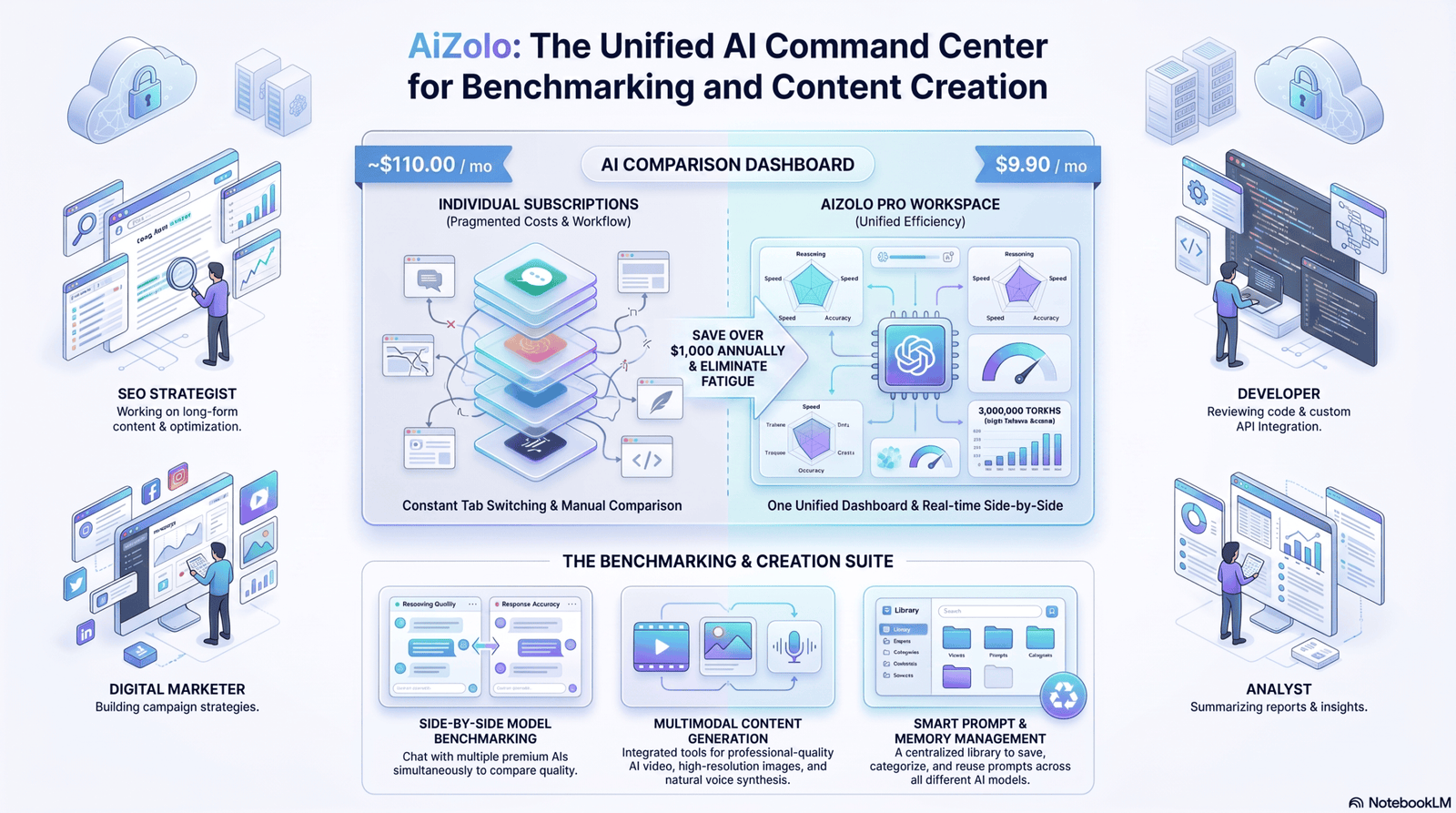
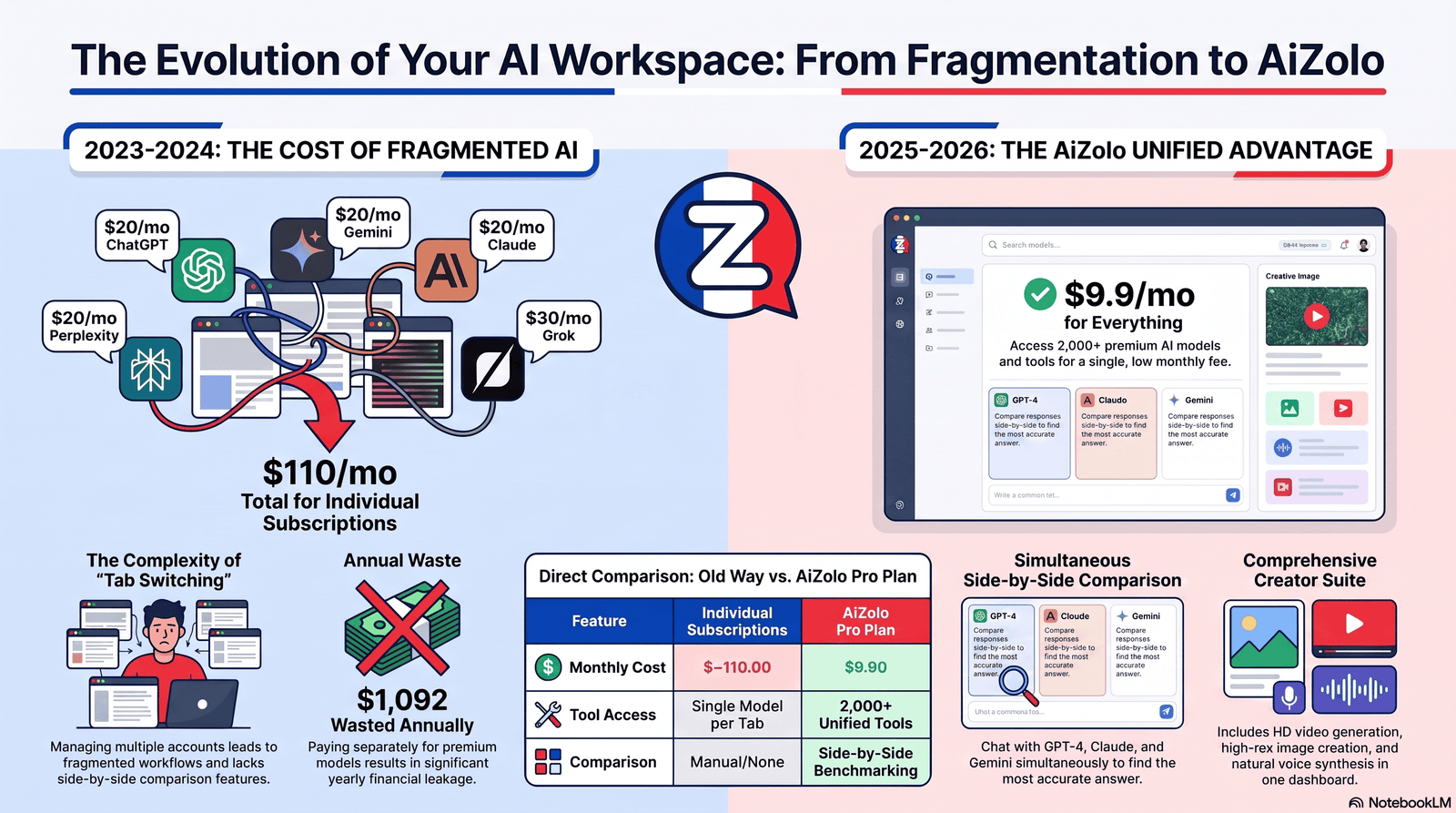
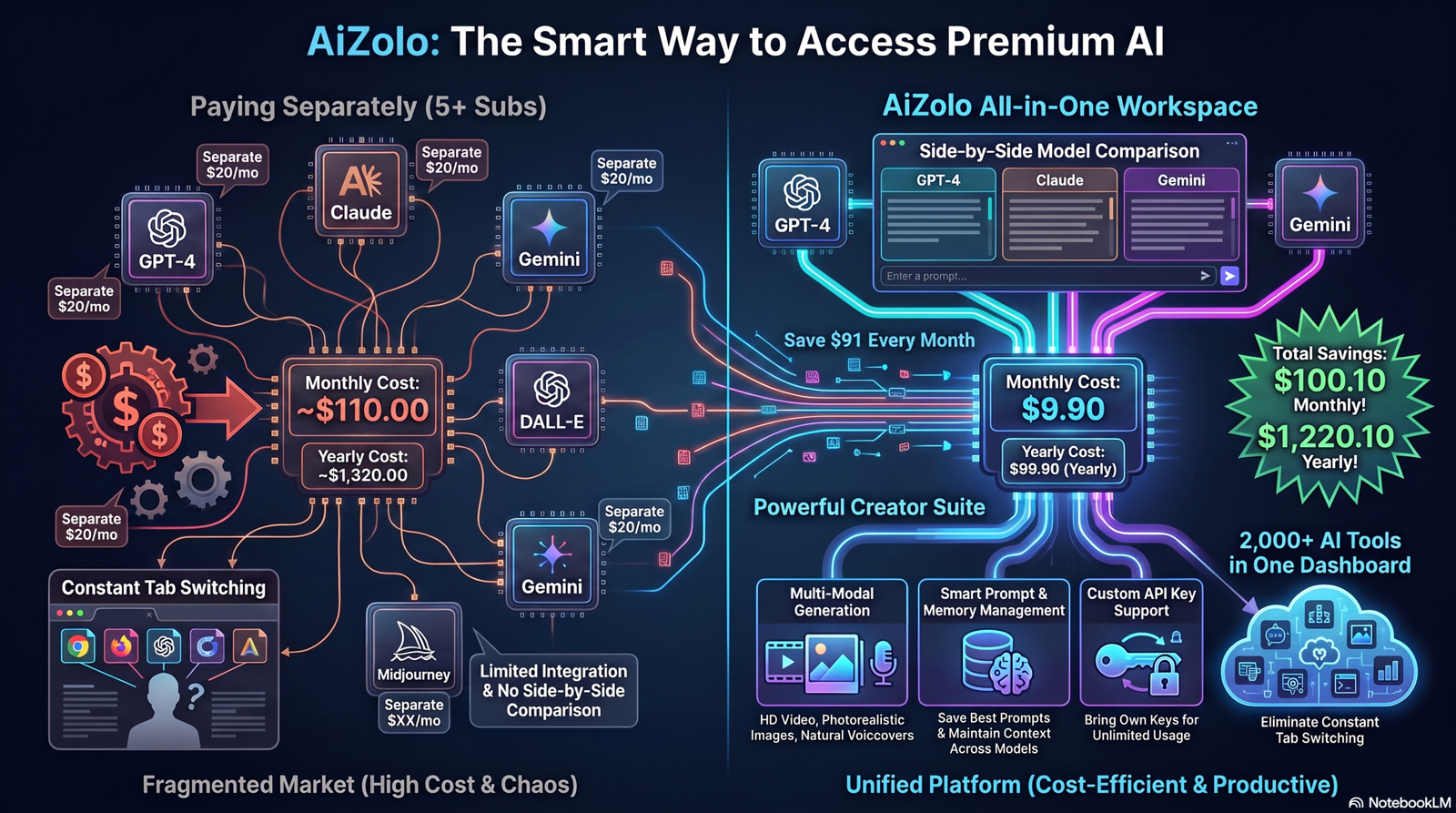
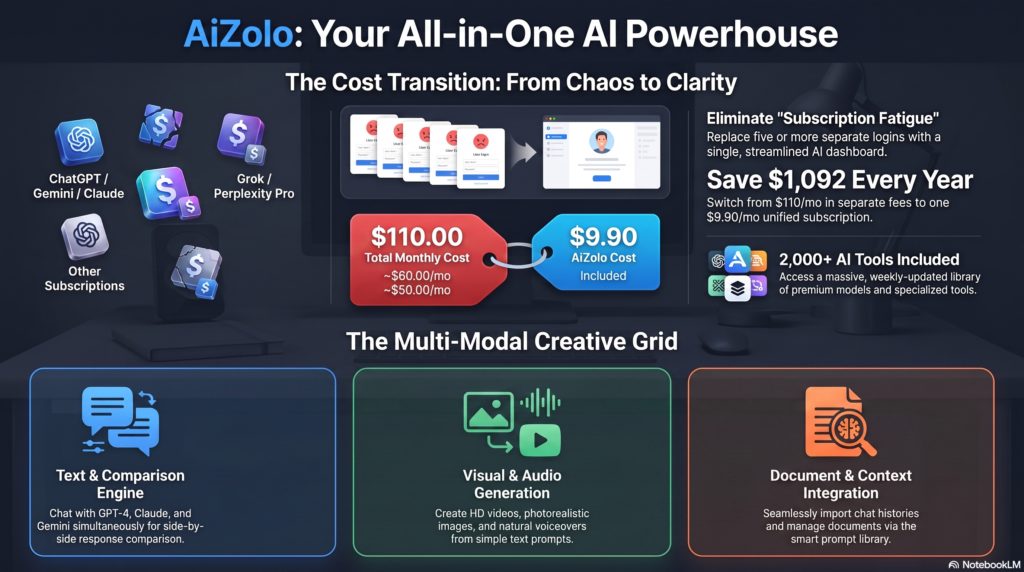
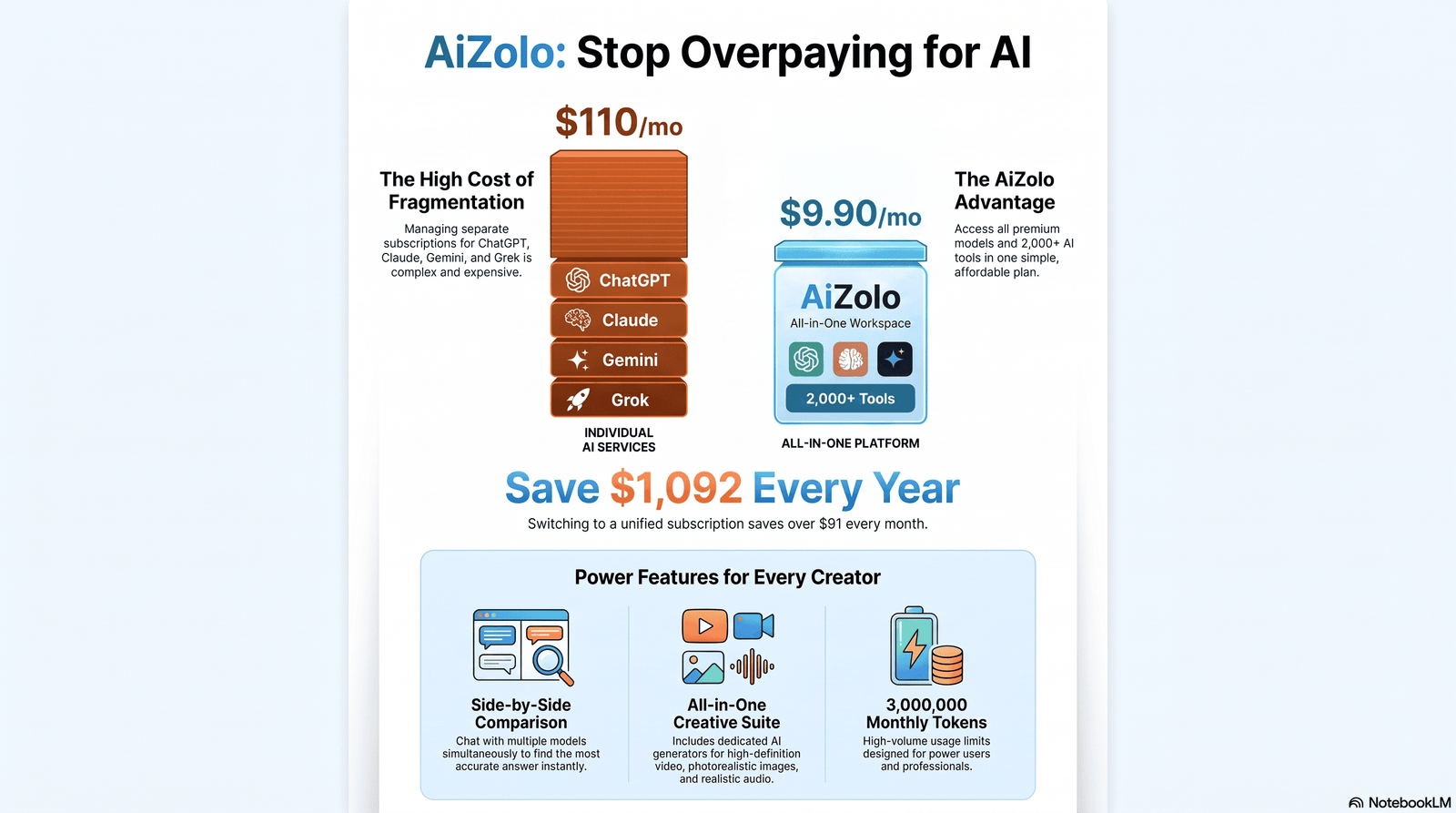
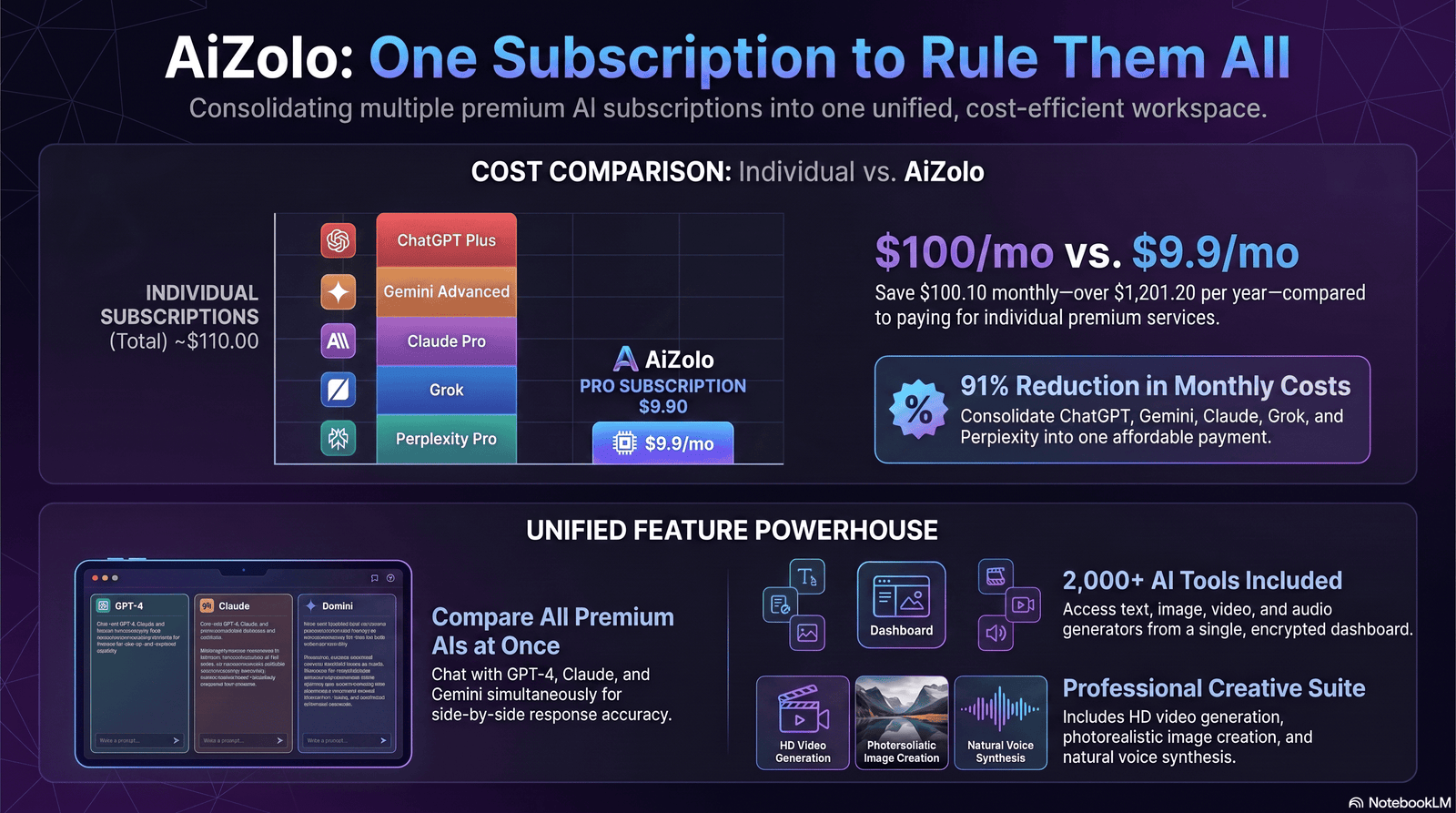
ChatGPT is OpenAI’s consumer and enterprise chatbot, now running on the GPT-5 family of models. The lineup has moved fast this year, from GPT-5.4 in March to GPT-5.5, and most recently GPT-5.6 — codenamed Sol, Terra, and Luna — which began reaching paid ChatGPT accounts on July 9, 2026. For teams comparing these models alongside other leading AI platforms, Aizolo provides a convenient way to evaluate multiple AI models in one place.
Sol is the flagship reasoning tier, Terra is the mid-weight option, and Luna handles fast, low-cost tasks. Free accounts stayed on GPT-5.5 when the new family shipped, so the exact model a person gets still depends on their plan.
Quick answer: ChatGPT in 2026 is a subscription-based, proprietary AI assistant built on the GPT-5.x model family, with six pricing tiers ranging from Free to a $200/month Pro plan.
What Is Mistral AI in 2026?
Mistral AI is a French AI lab founded in 2023 by former Google DeepMind and Meta researchers. Its defining trait is openness: many flagship models, including Mistral Large 3, ship under the Apache 2.0 license.
That means developers can download, modify, and self-host Mistral’s models without per-token API fees, something ChatGPT does not offer. Mistral’s consumer product, Le Chat, wraps these models in a subscription interface similar to ChatGPT’s.
Quick answer: Mistral AI in 2026 is a European AI lab offering both open-weight models (free to self-host) and a hosted API/chat product called Le Chat, positioned on cost efficiency and data sovereignty.
If you’re weighing Anthropic’s Claude instead of ChatGPT against Mistral, our Mistral vs Claude comparison covers coding, long-context reasoning, and enterprise fit in the same depth.
Quick Comparison Table
| Factor | ChatGPT (GPT-5.6 Sol) | Mistral (Large 3) |
|---|---|---|
| Licensing | Proprietary | Open-weight (Apache 2.0) |
| Context window | ~1.05M tokens | ~128K tokens |
| Self-hosting | Not available | Available |
| Flagship API price (per 1M tokens) | ~$5 input / $30 output (preview tier) | Roughly 85–95% cheaper on comparable workloads |
| Consumer app entry price | Free tier (limited) / $20 Plus | Free tier / $14.99 Pro |
| Best known for | Broad reasoning, agentic tools, ecosystem | Cost efficiency, EU data residency, open weights |
Pricing figures are illustrative snapshots as of publication and change frequently on both sides — always confirm current rates on each vendor’s official pricing page before budgeting.
Model Architecture
ChatGPT’s GPT-5.6 family unifies general-purpose and coding-focused model lines with configurable “reasoning effort” settings, while Mistral Large 3 is a sparse mixture-of-experts model that publishes its weights under Apache 2.0 for full inspection. For a deeper breakdown of both companies’ full model lineups, see our OpenAI vs Mistral AI comparison.
Reasoning Performance
On hard reasoning benchmarks, independent evaluators have generally placed proprietary frontier models — including GPT-5.x and comparable closed models — ahead of Mistral Large 3, which is a non-reasoning model by default.
Third-party testing (Artificial Analysis / Atlas-style evaluations) has put Mistral Large 3 around 40% on AIME 2025 and roughly 44% on GPQA Diamond, notably behind top proprietary reasoning models on the hardest problem sets.
Mistral’s answer to this gap isn’t Large 3 itself — it’s the smaller Ministral 14B reasoning variant, which independent testing shows scoring around 85% on AIME 2025, ahead of several similarly sized open models.
Caveat: benchmark numbers vary by evaluator, prompt format, and test date. Treat any single score as directional, not definitive.
Coding Performance
ChatGPT’s GPT-5.4 and successors have been positioned heavily around coding and “computer use” tasks, with vendor and third-party benchmarks citing strong SWE-bench-style scores and a dedicated Codex product inside ChatGPT Plus and Pro.
Mistral’s coding story runs through Codestral and the newer “Vibe” agent, which Mistral describes as an agentic coding and workflow assistant built on its flagship reasoning-tuned models, covering feature builds, bug fixes, and pull request generation.
Who should avoid which model here: teams needing the deepest agentic coding benchmarks and computer-use automation currently lean toward ChatGPT’s Codex tooling; teams wanting to self-host a coding model on their own infrastructure lean toward Mistral’s open-weight Codestral line.
Writing Quality
For long-form writing, marketing copy, and tone control, both models produce fluent, coherent output, and quality differences here come down more to prompt engineering than raw model capability.
Anecdotally, users report ChatGPT’s Thinking modes handle nuanced instructions (multi-constraint style guides, brand voice rules) slightly more reliably across long documents, though this is a soft, subjective distinction rather than a benchmarked one.
Mistral models tend to produce more concise default output, which some writing teams prefer for first drafts and others find requires more follow-up prompting to expand.
Accuracy and Hallucinations
Neither vendor publishes a single universally accepted “hallucination rate,” and third-party hallucination leaderboards vary by methodology, so any specific percentage claim should be treated cautiously.
What’s more useful is the practical pattern: reasoning-tier models (GPT-5.6 Sol, Ministral’s reasoning variant) tend to show fewer factual slips on multi-step questions than their faster, non-reasoning siblings (GPT-5.5 Instant, Mistral Large 3 in default mode).
Practical recommendation: for high-stakes factual work — legal, medical, financial — use the reasoning-enabled tier on either platform and verify outputs against primary sources regardless of which model you choose.
Multimodal Capabilities
ChatGPT supports image input and generation, voice modes, and (on Pro/Enterprise tiers) computer-use and video generation through Sora, making it the broader multimodal suite of the two as of mid-2026.
Mistral’s multimodal push has centered on Pixtral (vision), an OCR-focused model line, and Voxtral, its first audio/text-to-speech model, released March 2026 and built on a compact Ministral base.
Bullet summary:
- ChatGPT: text, image, voice, video (Sora), computer use
- Mistral: text, vision (Pixtral), OCR, audio/TTS (Voxtral)
Context Window Comparison
| Model | Context Window | Notes |
|---|---|---|
| GPT-5.6 Sol | ~1.05M tokens (input), 128K max output | Pricing tier increases past 272K input tokens |
| GPT-5.4 | ~1.05M tokens | Predecessor to 5.6 |
| Mistral Large | ~128K tokens | Extended from earlier, shorter windows in 2026 |
| Mistral Large 3 | Reported in the low hundreds of thousands (varies by source) | Confirm current spec on Mistral’s docs before relying on it |
Quick answer: GPT-5.6 Sol supports roughly 1.05M tokens versus Mistral Large’s ~128K–256K, a gap that matters most for long documents, codebases, or multi-file analysis. See the full context-window and feature matrix for every tier on both sides.
API Comparison
Both vendors expose OpenAI-compatible-style REST APIs, and Mistral’s format closely mirrors OpenAI’s, which is why developers report low switching costs between the two. For the full SDK, rate-limit, and pricing-tier breakdown, see our OpenAI vs Mistral AI developer comparison.
OpenAI’s GPT-5.6 preview pricing (as reported publicly) was structured around three tiers — Sol, Terra, Luna — each with different input/output rates, while GPT-5.4 remains generally available at lower, established rates.
Mistral’s API pricing is published per model size, with its smaller models priced for high-volume, low-complexity workloads and its flagship Large tier priced higher but still well below GPT-5.6’s published rates.
Pricing Comparison
For the full per-token API pricing breakdown across every OpenAI and Mistral tier, see our dedicated OpenAI vs Mistral AI comparison.
| Plan Tier | ChatGPT | Mistral (Le Chat) |
|---|---|---|
| Free | Yes, limited model access | Yes, roughly 25 messages/day cap reported |
| Entry paid | Plus, $20/month | Pro, $14.99/month |
| Mid tier | Pro, $100/month | Team, ~$24.99/user/month |
| Top consumer tier | Pro, $200/month | — |
| Enterprise | Custom pricing | Custom pricing |
Comparison box: On sticker price alone, Mistral’s entry paid tier undercuts ChatGPT Plus by roughly $5/month, and its published API rates are consistently reported as a fraction of OpenAI’s flagship rates — but ChatGPT’s higher tiers bundle more product surface area (Sora video, Codex, Operator/agent tooling) that Mistral doesn’t yet match feature-for-feature.
Caveat: both companies have changed pricing multiple times in 2026 alone. Treat every number above as a snapshot, not a permanent rate card.
Privacy and Security
Mistral’s EU headquarters and “No Telemetry Mode” give it a structural privacy edge for GDPR-focused teams, while OpenAI’s enterprise controls generally require higher-cost tiers to match. We cover the CLOUD Act, GDPR, and EU AI Act implications in full in our OpenAI vs Mistral AI security comparison.
Decision box: if EU data residency and training-data exclusion are non-negotiable on a budget, Mistral’s Pro tier is the more direct path; if you need enterprise compliance logging and SCIM provisioning inside an existing OpenAI relationship, ChatGPT Enterprise is the more mature option.
Open Source vs Proprietary
Mistral ships several flagship models, including Large 3, under Apache 2.0 for self-hosting and fine-tuning; ChatGPT’s GPT-5.x models are fully closed-weight. For deployment options — on-premise, hybrid, and air-gapped — see our OpenAI vs Mistral AI deployment breakdown.
Enterprise Use Cases
Enterprise buyers typically weigh compliance posture, existing vendor relationships, and cost at scale. Mistral’s Forge platform offers software-licensed custom training; ChatGPT Enterprise has a longer track record and broader integration ecosystem. See our full enterprise use-case breakdown for scenario-by-scenario recommendations.
Small Business Use Cases
For small teams, the calculus is simpler: Mistral’s $14.99 Pro tier and aggressive API pricing make it attractive for cost-sensitive workflows like customer support drafting, summarization, and internal documentation.
ChatGPT’s $20 Plus tier costs more but bundles a wider product set — image generation, Deep Research runs, and agent tooling — which can replace multiple smaller tools for a small business willing to pay slightly more.
Practical recommendation: if your primary use case is text generation and summarization at high volume, price out Mistral’s API first. If you need a single tool that also handles visuals, research, and light automation, ChatGPT Plus is the more complete starting point.
Developer Experience
Mistral’s OpenAI-compatible request format lowers the switching cost between providers, and its open-weight ecosystem tends to get community GGUF quantizations within days of release. Full SDK coverage, rate limits, and playground comparisons are in our OpenAI vs Mistral AI developer experience section.
Speed and Latency
Independent latency trackers have reported GPT-5.4-class models running at roughly 100+ tokens per second with sub-second time-to-first-token in typical conditions, though this varies by provider load and request size.
Mistral Large 3’s larger total parameter count (675B, sparse activation) has been reported by some independent trackers as comparatively slower in raw output speed for its model class, a common trade-off for larger MoE architectures.
Caveat: latency benchmarks are provider- and load-dependent and can shift week to week; treat any single measurement as a snapshot rather than a guarantee.
Benchmark Results
| Benchmark | Mistral Large 3 (independent eval) | Notes |
|---|---|---|
| MMLU-Pro | ~73.1% | Strong general knowledge performance |
| MATH-500 | ~93.6% | Strong on structured math problems |
| AIME 2025 | ~40% | Below top reasoning-tier models |
| GPQA Diamond | ~44% | Below top reasoning-tier models |
| Benchmark | GPT-5.4 (independent eval) | Notes |
|---|---|---|
| Aggregate “Intelligence” index | ~76th percentile among tracked models | Composite third-party score |
| GPQA | ~74.8% | Notably ahead of Mistral Large 3 on this benchmark |
Caveat: benchmark suites, scoring methodology, and prompt formats differ across evaluators (Artificial Analysis, LMSYS-style arenas, vendor-reported figures). Cross-check any number here against the original source before citing it elsewhere.
Pros and Cons
ChatGPT — Pros
- Larger context window (~1.05M tokens on flagship tier)
- Broader multimodal suite (image, voice, video, computer use)
- More mature enterprise ecosystem and integrations
ChatGPT — Cons
- Closed-weight; no self-hosting option
- Higher API and subscription pricing at comparable tiers
- Rapid model naming/version changes can complicate procurement decisions
Mistral — Pros
- Open-weight flagship models under Apache 2.0
- Significantly lower published API pricing
- Strong EU data residency and telemetry-off privacy option
Mistral — Cons
- Smaller context window than ChatGPT’s flagship
- Trails top proprietary models on the hardest reasoning benchmarks
- Smaller ecosystem of third-party integrations and community tooling
Real-World Testing Scenarios
Scenario 1 — Long contract review: A model with a 1M-token context window can ingest an entire contract set in one pass; a 128K-window model may require chunking, adding engineering overhead. This favors ChatGPT’s current flagship for this specific task.
Scenario 2 — High-volume customer support summarization: Cost per token matters more than peak reasoning ability here. Mistral’s lower published API rates make it the more budget-friendly default for this workload.
Scenario 3 — Regulated on-premises deployment: Only Mistral’s open-weight models offer a self-hosting path; this scenario structurally rules out ChatGPT regardless of benchmark scores.
Which AI Is Better for Different Users?
Decision tree (quick answer block):
- Need the largest context window and broadest multimodal tools? → ChatGPT
- Need the lowest cost per token at scale? → Mistral
- Need to self-host or fine-tune on your own infrastructure? → Mistral
- Need mature enterprise integrations and a large partner ecosystem? → ChatGPT
- Need strict EU data residency on a budget? → Mistral
- Need the strongest available reasoning-benchmark scores today? → ChatGPT’s reasoning-tier models, based on current independent evaluations
Expert Analysis
This section synthesizes public documentation, independent benchmark trackers (such as Artificial Analysis-style evaluations), and vendor pricing pages rather than first-hand, controlled testing by this publication.
Observed fact: both companies shipped multiple major model versions within the first seven months of 2026 alone, and published pricing has changed repeatedly across that window.
Informed interpretation: the pace of releases suggests neither platform’s current advantage — ChatGPT’s context window and multimodal breadth, or Mistral’s pricing and openness — is likely to be a permanent gap. Teams making a long-term platform bet should weight architectural flexibility (open weights, API compatibility) as heavily as this month’s benchmark leaderboard position.
Caveat: we did not run controlled, head-to-head benchmark tests for this article. All performance figures above are drawn from cited third-party evaluations and vendor documentation, and readers making high-stakes decisions should re-verify current numbers before committing budget.
Weighing a third option? See how Mistral stacks up against Claude for coding-heavy and long-context workloads.
Final Verdict
Neither model is objectively “better” across every dimension, and any comparison claiming otherwise is oversimplifying a genuinely multi-factor decision.
ChatGPT currently leads on raw context window size, multimodal breadth, and ecosystem maturity — better suited to teams that want one comprehensive, fully-hosted product.
Mistral leads on cost efficiency, deployment flexibility, and EU-centric privacy guarantees — better suited to teams prioritizing control, compliance, or budget over having every feature bundled into one subscription.
Bottom line: evaluate based on your specific workload (context length needs, self-hosting requirements, regulatory environment, and budget) rather than a single benchmark score or headline price.
FAQ
1. Is Mistral better than ChatGPT in 2026? Neither is universally better. ChatGPT currently leads on context window size and multimodal features, while Mistral leads on price and open-weight flexibility. The right choice depends on your specific use case.
2. Is Mistral cheaper than ChatGPT? Yes, based on published pricing as of mid-2026, Mistral’s entry-level Le Chat Pro plan and its API rates are both reported as meaningfully lower than ChatGPT’s comparable tiers.
3. Can I self-host Mistral models? Yes. Many Mistral flagship models, including Large 3, are released under the Apache 2.0 license, allowing self-hosting and fine-tuning. ChatGPT’s GPT-5.x models are closed-weight and cannot be self-hosted.
4. What is GPT-5.6 in ChatGPT? GPT-5.6 is OpenAI’s newest model family, made up of Sol (flagship), Terra (mid-tier), and Luna (fast/cheap), which began reaching paid ChatGPT accounts on July 9, 2026 after a limited preview in late June.
5. Which AI is better for coding? ChatGPT’s Codex tooling has been benchmarked strongly on agentic coding tasks, while Mistral offers Codestral and its Vibe coding agent as an open-friendly alternative. Teams needing self-hosted coding models tend to prefer Mistral.
6. Does Mistral have a free plan? Yes, Le Chat offers a free tier with a reported daily message cap around 25 messages on mid-tier models, alongside paid Pro, Team, and Enterprise plans.
7. What is ChatGPT’s context window in 2026? ChatGPT’s current flagship, GPT-5.6 Sol, supports approximately 1.05 million tokens of context, significantly larger than Mistral Large’s roughly 128,000-token window.
8. Is Mistral good for enterprise use? Mistral offers enterprise-focused products including Forge for custom model training and strong EU data residency options, though its enterprise ecosystem is smaller than OpenAI’s.
9. Which model hallucinates less, Mistral or ChatGPT? There is no single agreed-upon hallucination benchmark for either platform. Reasoning-enabled tiers on both platforms tend to perform better on multi-step factual tasks than their faster, non-reasoning counterparts.
10. Is Mistral open source? Many of Mistral’s flagship models are open-weight under Apache 2.0, meaning the trained model weights are freely available, though this differs from fully open training data and code in some cases.
11. How much does ChatGPT Plus cost in 2026? ChatGPT Plus is priced at $20/month as of mid-2026, sitting below the Pro tiers at $100 and $200/month.
12. Can I use Mistral’s API the same way as OpenAI’s? Largely yes — Mistral’s API format closely mirrors OpenAI’s, which developers frequently cite as making it easier to test or switch between the two providers.
13. Which is better for privacy, Mistral or ChatGPT? Mistral’s No Telemetry Mode and EU hosting give it a clearer, lower-cost privacy guarantee for GDPR-focused teams; ChatGPT offers comparable enterprise data controls but typically at higher-tier pricing.
14. Does Mistral support multimodal input like ChatGPT? Partially. Mistral offers vision (Pixtral), OCR, and audio/TTS (Voxtral) models, but ChatGPT’s bundled suite — image generation, voice, video via Sora, and computer use — is currently broader.
15. What’s the best AI model in 2026 overall? There isn’t a single “best” model for every task in 2026; the strongest choice depends on whether you’re optimizing for context length and features (ChatGPT) or cost and deployment flexibility (Mistral).
Do not fabricate URLs when publishing — link directly to the current, live pages on each domain above.
Author Bio
Author: Jeevesh Tripathi Email: jeevesh@aizolo.com
Bio: Jeevesh Tripathi researches and writes about AI model evaluation, enterprise AI adoption, and large language model tooling, with a focus on translating vendor documentation and independent benchmark data into practical buying guidance. His work prioritizes verifiable, sourced comparisons over vendor marketing claims, in line with EEAT best practices for AI and technology content.