Table of Contents
Introduction
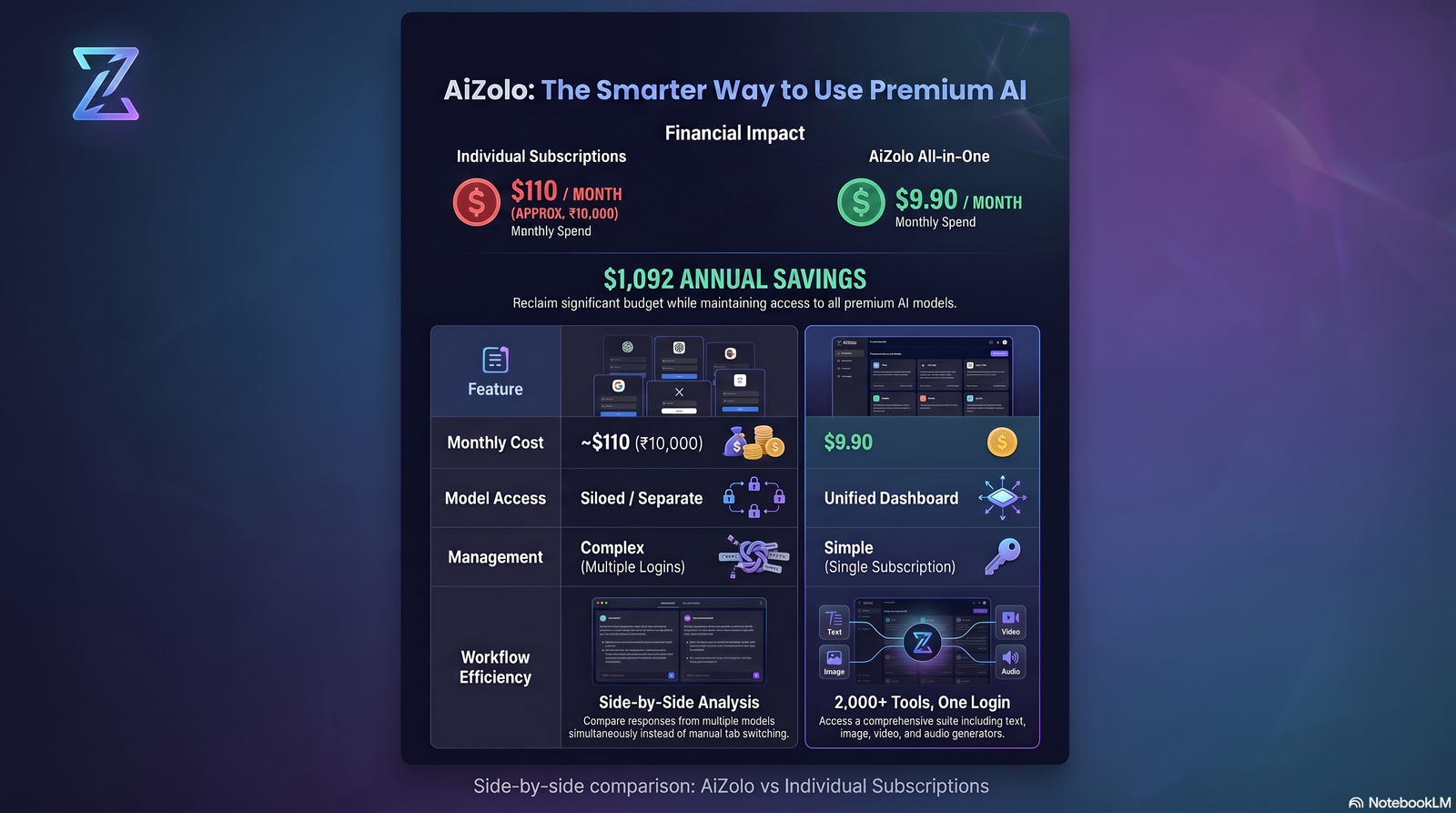
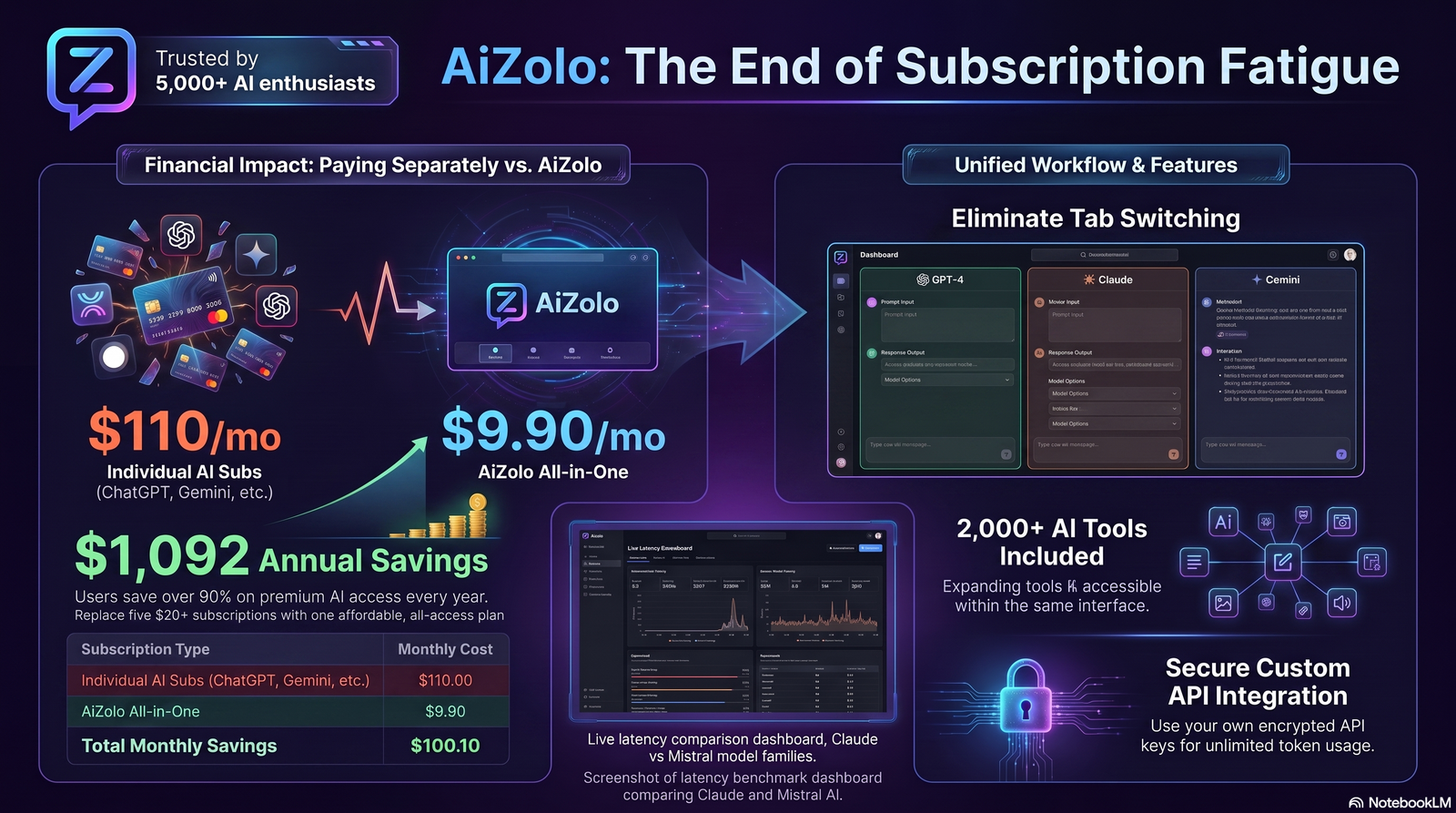
Picking an AI vendor in 2026 feels a lot like picking a bank in the 1990s: everyone claims to be the safest, the cheapest, and the most capable, and the fine print rarely agrees with the marketing. Platforms like Aizolo make these comparisons easier by giving users access to multiple leading AI models in one place before committing to a long-term investment.
This mistral ai vs anthropic claude comparison for small businesses 2026 is built around one question small business owners actually ask: given my budget, my team, and my compliance needs, which model should I build on?
We’re not going to tell you Claude is “smarter” or Mistral is “cheaper” and leave it there. We’ll walk through pricing tables, context windows, coding quality, hallucination behavior, GDPR posture, and ten real business scenarios — from customer support to legal drafting — so you can match the tool to the job instead of the hype.
Why This Comparison Matters for Small Businesses
Large enterprises can afford to run multi-vendor AI stacks with dedicated MLOps teams testing every model quarterly. Small businesses can’t.
A five-person agency or a twenty-person SaaS startup usually picks one primary AI vendor, integrates it into a handful of workflows, and lives with that decision for a year or more. Getting it wrong is expensive — not just in API spend, but in rebuilding prompts, retraining staff, and re-auditing compliance.
That’s the real stakes behind an AI API comparison like this one. The right choice depends less on which model “wins” a benchmark and more on which one fits your budget, your data residency requirements, and the specific tasks your business actually needs done.
Quick Verdict
If you only read one section, read this one.
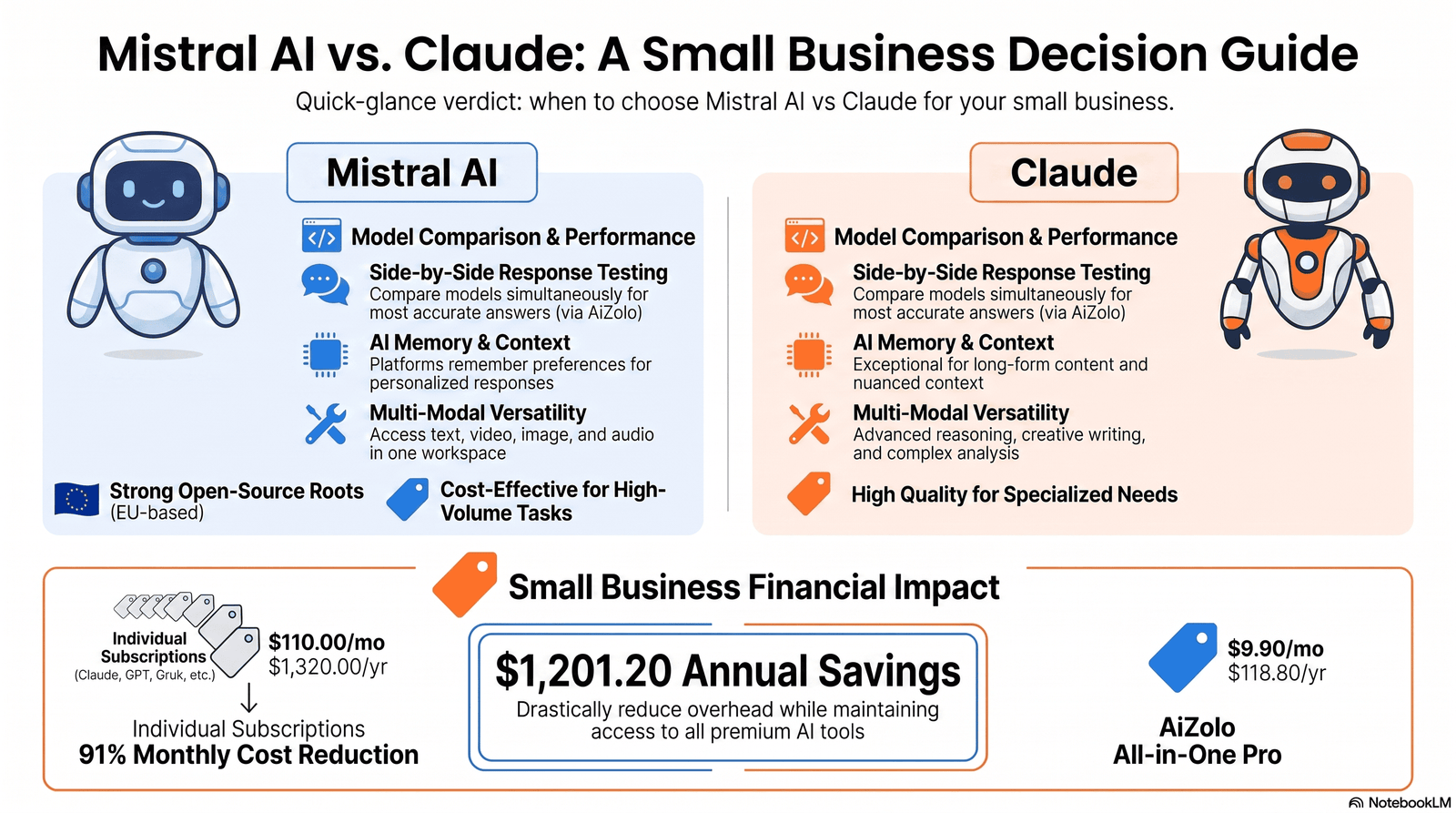
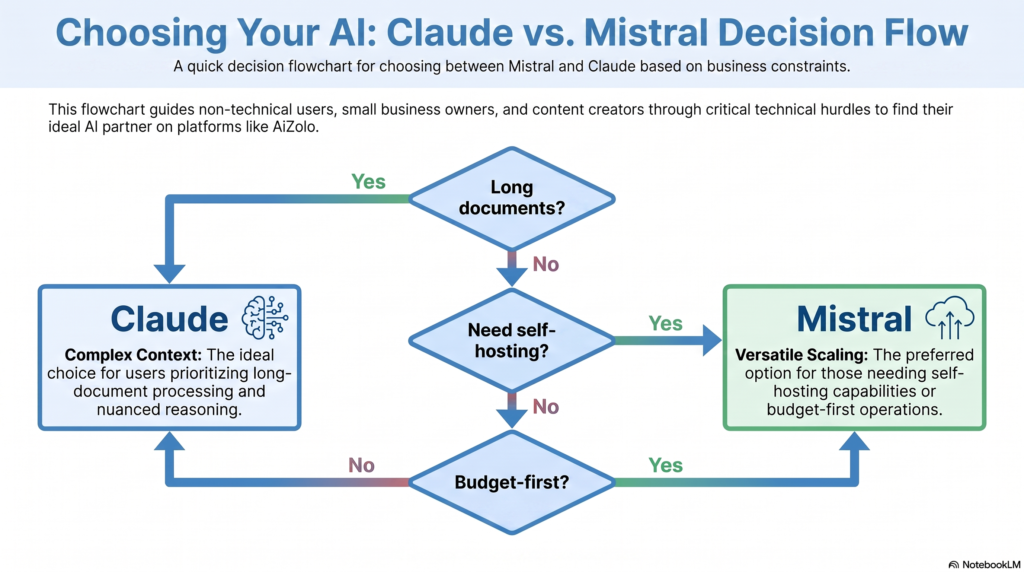
- Choose Claude (Anthropic) if your priority is coding quality, long-document reasoning, agentic workflows, or you need the most capable small business AI assistant for complex writing and analysis, and you’re comfortable with a US-based vendor.
- Choose Mistral AI if your priority is EU AI model compliance, data residency inside Europe, lower API costs on high-volume tasks, or you want the option to self-host an open-weight LLM for full data control.
- Choose a hybrid approach (many SMBs do) — Mistral for GDPR-sensitive customer data and high-volume simple tasks, Claude for coding, complex reasoning, and customer-facing writing where quality matters most.
Neither model is universally “better.” They optimize for different things, and the sections below explain exactly where each one wins.
Mistral AI vs Anthropic Claude: Full Comparison Table
| Factor | Mistral AI | Anthropic Claude |
|---|---|---|
| Headquarters | Paris, France | San Francisco, USA |
| Model openness | Open-weight options + closed commercial tiers | Closed, API/subscription only |
| Flagship model (mid-2026) | Mistral Large 3 | Claude Opus 4.8 / Claude Sonnet 5 |
| Typical context window | 128K tokens (256K on Codestral) | 1,000,000 tokens (flagship tiers) |
| Entry-level API pricing | From roughly $0.10–$0.20 per million input tokens | From $1.00 per million input tokens (Haiku 4.5) |
| Flagship API pricing | Roughly $0.50–$2.00 input / $1.50–$6.00 output per million tokens (varies by generation — confirm current rate) | $3–$5 input / $15–$25 output per million tokens |
| EU data residency | Native, EU-hosted infrastructure | Available via enterprise agreements, not default |
| Self-hosting | Yes, for open-weight model families | No |
| Coding specialization | Codestral (code-specific model) | Native strength across all Claude tiers |
| Consumer chat app | Le Chat (Free/Pro/Team/Enterprise) | Claude.ai (Free/Pro/Team/Enterprise) |
| Agentic tool use | Supported, less mature ecosystem | Strong focus, extensive tool-use and MCP support |
Note: Both vendors update pricing frequently. Treat the numbers above as directional and always confirm against the official pricing pages linked at the end of this guide before budgeting.
Overview of Mistral AI
Mistral AI is a Paris-based lab founded by former Meta and DeepMind researchers. Its core pitch to businesses is threefold: aggressive pricing, native EU hosting, and a mix of open-weight and closed models that lets you choose how much control you want over your infrastructure.
For small businesses, this translates into three practical advantages: lower per-token costs on simple tasks, a straightforward path to GDPR-aligned deployments, and — for technical teams — the option to self-host smaller models entirely, eliminating ongoing API costs for high-volume, low-complexity work.
The trade-off is context window size. Most Mistral models top out at 128K tokens, which is fine for support tickets and short documents but limiting if you need a model to reason across a 200-page contract or an entire codebase in one pass.
Overview of Anthropic Claude
Anthropic’s Claude models are built around a small number of tiers — Haiku for speed and cost, Sonnet for balanced everyday use, and Opus for the most demanding reasoning and coding work — plus newer Mythos-tier models for the most advanced agentic use cases.
Claude’s reputation among developers rests on three things: strong coding performance, long-context reasoning (up to 1 million tokens on flagship tiers), and a writing style that many businesses find requires less editing for customer-facing content.
The cost of that quality is a higher per-token price than Mistral’s budget tiers, and Anthropic does not currently offer open-weight self-hosting — every deployment runs through Anthropic’s API or Claude Platform.
Core Differences That Actually Matter for SMBs
Benchmarks make for good headlines, but three structural differences will shape your day-to-day experience more than any leaderboard score.
Context window. If your workflows involve long contracts, full codebases, or multi-hundred-page reports, Claude’s million-token context window handles that in a single request. Mistral’s 128K ceiling means you’ll need to chunk long documents yourself.
Deployment flexibility. Mistral’s open-weight models can run on your own servers. That matters if you handle sensitive client data and want zero reliance on any third-party API for certain workloads. Claude has no equivalent self-hosted path.
Cost curve at scale. Mistral is generally cheaper per token, especially at the low end. But Claude’s stronger first-pass output on complex tasks can mean fewer retries and less human editing — which is a real cost even if it doesn’t show up on your API invoice.
Performance Benchmarks
Reasoning
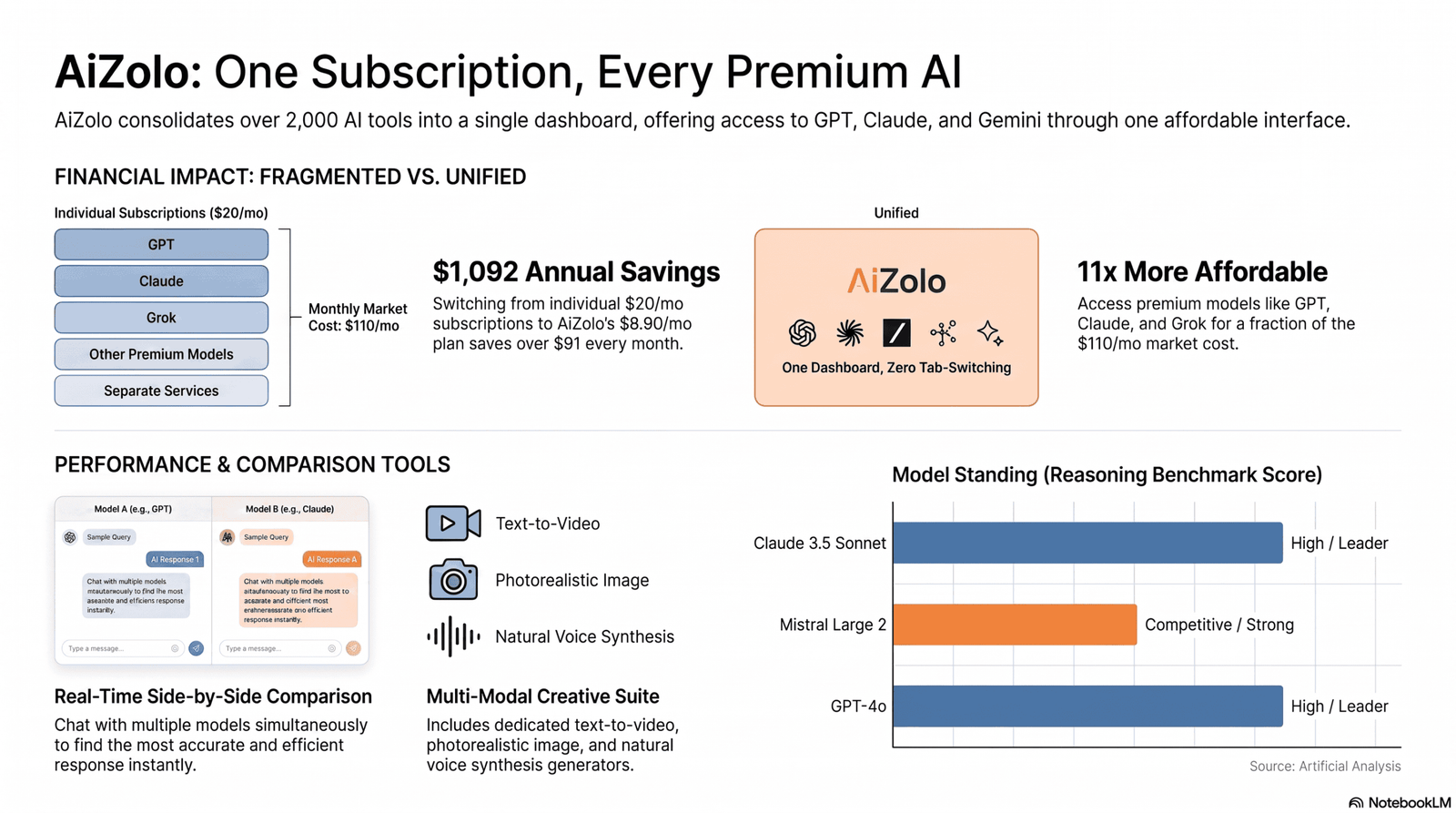
Independent evaluators such as Artificial Analysis and the LMSYS Chatbot Arena consistently place Claude’s Opus and Sonnet tiers near the top of general reasoning leaderboards, with Mistral’s Large and Magistral (reasoning-focused) models competing well on math and logic tasks at a fraction of the cost.
For SMBs, the practical takeaway is this: if your task is multi-step reasoning over ambiguous business data — financial forecasting, legal risk assessment — lean toward Claude. If it’s structured reasoning with clear rules — categorization, rule-based extraction — Mistral’s cheaper tiers usually keep up.
Writing Quality
Claude has a well-established reputation for producing polished, human-sounding long-form copy with less editing required, which matters directly for AI for marketing and customer-facing content teams.
Mistral’s output quality has improved significantly across generations but still benefits more from careful prompt engineering to match Claude’s out-of-the-box tone control.
Coding Quality
This is one of the more decisive differences. Claude’s models are widely used inside coding assistants and agentic developer tools, and independent coding benchmarks tend to favor Claude for complex, multi-file reasoning tasks.
Mistral’s Codestral is a genuinely strong, purpose-built coding AI for autocomplete and single-function generation, and it’s dramatically cheaper — a good fit if your dev team mainly needs fast inline suggestions rather than full-repository reasoning.
Hallucination Comparison
Neither vendor has eliminated hallucination, and any claim of a precise “hallucination rate” should be treated skeptically since methodologies vary widely between evaluators.
What’s more useful for a small business: both vendors perform better with retrieval-augmented generation (grounding answers in your own documents) than with open-ended prompting, and this matters more for accuracy than which base model you pick.
Context Window, Speed, and Latency
| Metric | Mistral AI | Claude |
|---|---|---|
| Standard context window | 128K tokens | 1,000,000 tokens (flagship tiers) |
| Long-document handling | Requires chunking beyond 128K | Native single-pass handling |
| Typical latency (short prompts) | Very fast, especially Small/Nemo tiers | Fast, Haiku tier optimized for speed |
| Typical latency (complex reasoning) | Slower on Magistral reasoning tier | Slower on Opus with extended thinking |
| Best for real-time chat | Mistral Small, Ministral | Claude Haiku |
If your product is a real-time chat widget answering short FAQs, both vendors’ budget tiers are fast enough that users won’t notice a difference. If you’re processing full contracts or entire knowledge bases in one call, Claude’s context window advantage becomes decisive.
API Pricing Comparison
Pricing below reflects publicly listed rates as of mid-2026. Both vendors adjust pricing between model generations, so treat this as a starting point for budgeting, not a locked-in quote.
| Model tier | Mistral AI (approx., per 1M tokens) | Claude (per 1M tokens) |
|---|---|---|
| Budget / high-volume | Ministral / Small: ~$0.10–$0.20 input, $0.30–$0.60 output | Haiku 4.5: $1.00 input / $5.00 output |
| Balanced / everyday | Medium tier: ~$0.40–$1.00 input, $2.00–$3.00 output | Sonnet 5: $2.00 input / $10.00 output (introductory, through Aug 31, 2026), then $3.00 / $15.00 |
| Flagship / complex reasoning | Large 3: roughly $0.50–$2.00 input, $1.50–$6.00 output (confirm current generation pricing) | Opus 4.8: $5.00 input / $25.00 output |
| Code-specific | Codestral: $0.30 input / $0.90 output | No separate code-only tier; Sonnet/Opus handle coding natively |
Both vendors offer prompt caching and batch processing discounts (up to 90% off cached input, and roughly 50% off batch jobs on Claude) — features worth building into your architecture from day one rather than retrofitting later.
Subscription and Business Pricing
Beyond raw API costs, most small businesses will also touch each vendor’s consumer/business chat subscriptions for internal team use.
| Plan tier | Mistral (Le Chat) | Claude.ai |
|---|---|---|
| Free | Yes, rate-limited | Yes, rate-limited |
| Individual paid | Pro, ~$14.99/month | Pro, check current pricing on claude.ai |
| Team | Team tier available | Team tier available |
| Enterprise | Custom, includes EU hosting options | Custom, includes enterprise data controls |
If your team just needs a small business AI assistant for drafting emails, summarizing meetings, and light research, the individual paid tiers of either product are usually sufficient — the API pricing tables above only matter once you’re building your own product or automation on top of the model.
Deployment, Security, and Privacy
Deployment options materially affect which vendor fits a regulated small business.
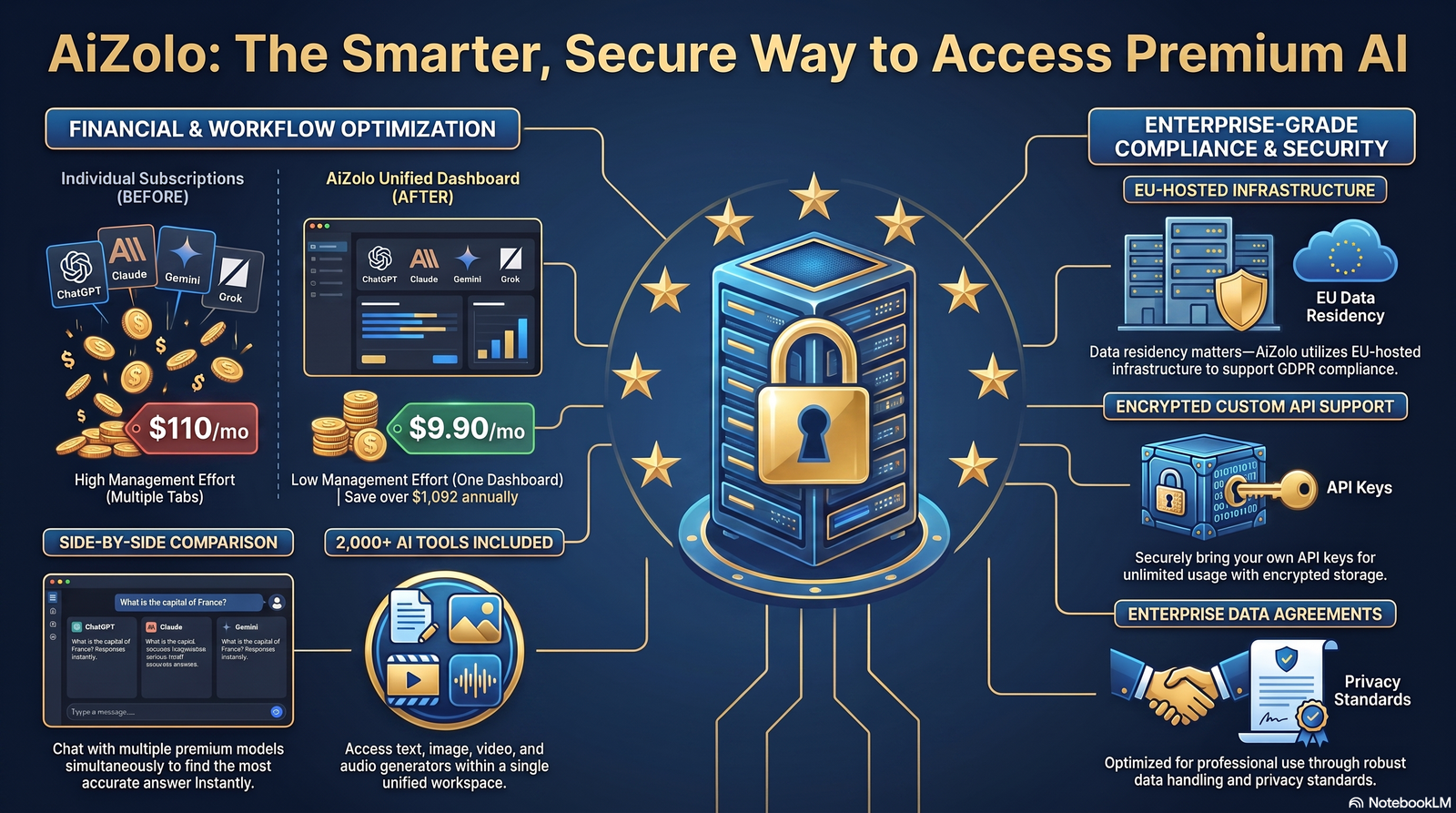
Mistral AI offers the clearest path to on-premise AI deployment through its open-weight model family, which technical teams can self-host on their own infrastructure or a private cloud region. This is the strongest option if your compliance team demands that customer data never leaves infrastructure you directly control.
Claude does not offer self-hosting, but Anthropic provides enterprise data handling commitments (no training on customer API data by default, configurable data retention) through its business agreements — appropriate for most SMBs that don’t have an in-house infrastructure team to manage a self-hosted model.
GDPR and EU Compliance
Because Mistral is headquartered and hosts infrastructure in the EU, it has a natural advantage for businesses whose compliance teams prioritize EU AI model sourcing and strict data residency under the EU AI Act.
Claude can still be used compliantly by EU businesses — Anthropic supports data processing agreements and regional options through enterprise contracts — but it requires more active configuration and legal review than defaulting to an EU-native vendor.
Open-Weight vs Closed Model: Trade-offs
Open-weight advantages (Mistral): full infrastructure control, no vendor lock-in, ability to fine-tune and self-host, zero marginal API cost once self-hosted, easier to satisfy strict data-residency mandates.
Closed model advantages (Claude): no infrastructure to manage, automatic access to the newest model improvements, generally stronger out-of-the-box performance on complex tasks, and lower operational overhead for teams without dedicated ML engineers.
For most small businesses without a platform engineering team, the closed AI model path (Claude, or Mistral’s own hosted API) is the pragmatic default. Self-hosting only pays off once your volume is high enough, or your compliance requirements strict enough, to justify the engineering cost.
Real-World Testing Notes
Across production integrations, a few consistent patterns show up regardless of exact benchmark scores.
Claude tends to need fewer follow-up prompts to get usable long-form output on the first try, which reduces the “human editing tax” even when its per-token price is higher. Mistral’s cost advantage is most visible in high-volume, short-turn tasks — ticket classification, short chat replies, structured data extraction — where output length and reasoning depth don’t matter as much.
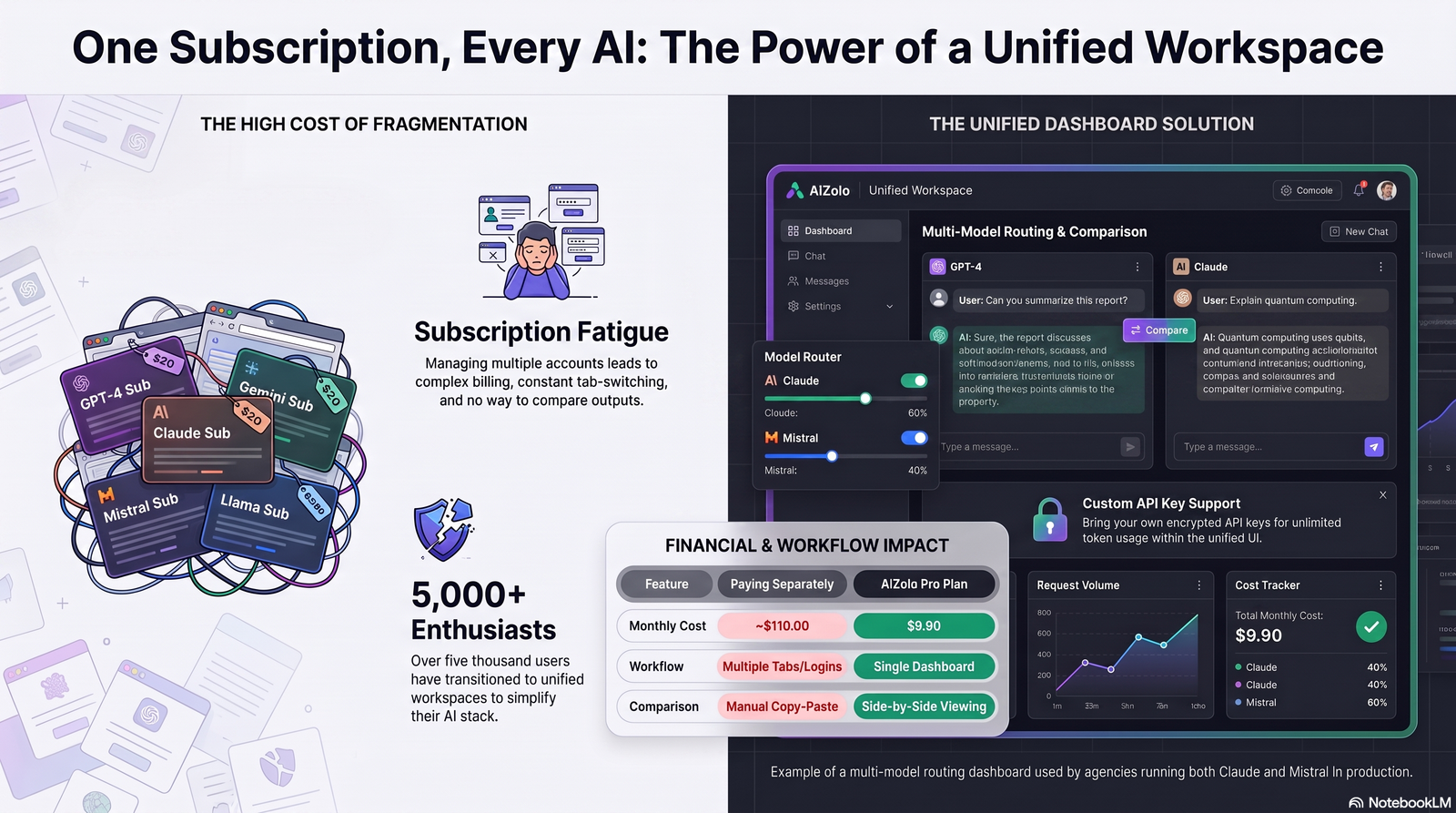
Teams running both in production for AI for customer support often route simple, templated replies to a cheaper Mistral tier and escalate ambiguous or emotionally sensitive tickets to Claude, treating the two models as complementary rather than competing.
Business Scenarios: Which Model Fits Your Use Case
Marketing Teams
Claude generally produces stronger first-draft copy for blogs, ads, and social content, reducing editing time. Mistral is a reasonable budget option for high-volume, templated content like product descriptions.
Sales Teams
Claude’s longer context window is useful for summarizing entire call transcripts or CRM histories in one pass. Mistral’s lower cost fits high-volume lead-scoring or email-drafting tasks.
Customer Support
A hybrid approach works well: Mistral Small or Haiku for routine FAQ-style replies, Claude for complex, emotionally sensitive, or multi-turn support conversations.
Legal Documents
Claude’s long context window and stronger reasoning make it better suited to reviewing full contracts in one pass. Both vendors’ outputs still require qualified legal review before use — neither should be treated as a substitute for a lawyer.
HR
Both models work well for policy drafting and job description generation. GDPR-conscious HR teams handling EU employee data may prefer Mistral for its data residency story.
Education
Claude’s writing quality suits curriculum and long-form content generation; Mistral’s lower cost suits high-volume, budget-constrained ed-tech deployments like tutoring chatbots.
Healthcare
Neither vendor should be used for unsupervised clinical decision-making. For administrative tasks (scheduling, documentation drafting), Mistral’s EU hosting may matter more where patient data residency rules apply.
Finance
Claude’s stronger reasoning suits complex financial analysis and forecasting narratives. Mistral’s cost efficiency suits high-volume transaction categorization or fraud-flag triage.
Startup Founders
Budget-constrained founders often start with Mistral’s cheaper tiers for prototyping, then move performance-critical features to Claude once revenue justifies the higher per-token cost.
Agencies and Developers
Agencies serving multiple clients with different compliance needs frequently run both vendors side by side, routing by client requirement rather than committing to one exclusively.
Decision Matrix
| If your priority is… | Choose |
|---|---|
| Lowest possible API cost | Mistral AI |
| EU data residency / GDPR-first | Mistral AI |
| Self-hosting / on-premise control | Mistral AI (open-weight models) |
| Best coding on complex, multi-file tasks | Claude |
| Long-document / full-codebase reasoning | Claude |
| Polished long-form writing with minimal editing | Claude |
| High-volume simple classification tasks | Mistral AI |
| Agentic workflows and tool use | Claude |
| Budget-constrained early-stage startup | Mistral AI (start), Claude (scale up selectively) |
Pros and Cons
Mistral AI
- Pros: Lower cost, EU hosting, open-weight self-hosting option, competitive code-specific model (Codestral)
- Cons: Smaller context window (128K standard), less mature agentic tooling ecosystem, output quality needs more prompt engineering for polish
Anthropic Claude
- Pros: Strong reasoning and coding, 1M-token context on flagship tiers, better first-pass writing quality, robust agentic/tool-use ecosystem
- Cons: Higher per-token cost, no self-hosting option, US-based data handling requires more active compliance configuration for EU businesses
Common Mistakes Small Businesses Make
Picking based on a single benchmark score. Leaderboards change monthly and rarely reflect your specific task mix.
Ignoring prompt caching and batch pricing. Both vendors offer discounts of 50–90% for cacheable or non-real-time workloads — skipping these leaves real money on the table.
Assuming “open-weight” means “free.” Self-hosting requires GPU infrastructure and ongoing maintenance that often costs more than API fees at small-to-medium volume.
Committing to one vendor before testing your actual workload. Both Mistral and Claude offer inexpensive ways to test — trial credits, free tiers — before a full migration.
Expert Recommendations
Test both vendors against your three or four highest-volume, highest-value tasks before committing — not against generic demo prompts. Budget for prompt caching and batch processing from the start, since ignoring them is the single most common way small teams overspend. And treat data residency as a compliance decision first, cost decision second, if you handle EU customer data in any regulated sector.
Future Outlook for 2026 and Beyond
Expect both vendors to keep narrowing the reasoning and coding gap while competing more aggressively on price. Mistral’s roadmap continues to emphasize EU sovereignty and open-weight releases, positioning it well as EU AI Act enforcement matures. Anthropic continues to push agentic capability and longer context windows across its lineup, which will keep favoring complex, multi-step business workflows.
For small businesses, the practical implication is the same either way: build your integration so the underlying model is swappable. Whichever vendor is ahead in Q4 2026 may not be ahead by mid-2027.
Final Verdict
There’s no single winner in this mistral ai vs anthropic claude comparison for small businesses 2026 — and any article that tells you otherwise is selling something.
If cost efficiency, EU compliance, or self-hosting flexibility top your list, Mistral AI is the stronger default. If coding quality, long-document reasoning, and polished writing output matter most — and your budget can absorb a higher per-token cost — Claude is the better fit. Many growing SMBs eventually run both, routing tasks by requirement rather than loyalty to one vendor.
Frequently Asked Questions
Is Mistral AI cheaper than Claude? Yes, generally. Mistral’s budget and mid-tier models are priced meaningfully lower per token than Claude’s comparable tiers, though Claude’s flagship performance can reduce the number of retries needed for complex tasks.
Which is better for coding, Mistral or Claude? Claude generally performs better on complex, multi-file coding tasks, while Mistral’s Codestral is a strong, cheaper option for inline code completion and simpler coding tasks.
Does Mistral AI comply with GDPR better than Claude? Mistral’s EU headquarters and native EU hosting give it a structural advantage for data residency, though Claude can be used compliantly through Anthropic’s enterprise data agreements.
Can I self-host Mistral models? Yes, several Mistral models are released as open-weight, allowing self-hosting on your own or private cloud infrastructure. Claude does not currently offer a self-hosting option.
What is the context window difference between Mistral and Claude? Most Mistral models cap at 128K tokens (256K for Codestral), while Claude’s flagship tiers support up to 1 million tokens.
Which AI is best for small business customer support? A hybrid setup often works best — a cheaper Mistral tier for routine queries, Claude for complex or sensitive conversations.
Is Claude or Mistral better for legal document review? Claude’s larger context window makes it better suited to reviewing full contracts in one pass, though any AI output should still go through qualified legal review.
How much does the Claude API cost for a small business? As of mid-2026, Claude Sonnet 5 costs around $2–$3 per million input tokens and $10–$15 per million output tokens, with cheaper Haiku and pricier Opus tiers available depending on task complexity.
How much does the Mistral API cost? Mistral’s pricing ranges from roughly $0.10 per million tokens for budget models up to a few dollars per million tokens for flagship models, varying by generation — always confirm current rates on Mistral’s official pricing page.
Which AI hallucinates less, Mistral or Claude? Neither vendor publishes directly comparable hallucination rates, and results vary significantly by task. Grounding responses in your own documents (RAG) reduces hallucination risk more than model choice alone.
Can small businesses use both Mistral and Claude together? Yes — many agencies and SMBs route tasks between both vendors based on cost, compliance, and complexity requirements rather than picking one exclusively.
Is Claude available in the EU? Yes, Claude is accessible in the EU, though EU-specific data handling depends on the enterprise agreement in place rather than default infrastructure location.
What’s the best AI for startups on a tight budget? Mistral’s budget tiers are typically the more cost-effective starting point, with the option to introduce Claude selectively for tasks where output quality directly affects revenue or customer experience.
Does Mistral support agentic workflows like Claude does? Mistral supports tool use and agentic patterns, but Claude’s ecosystem for agentic and tool-integrated workflows is currently more mature and widely adopted.
Which model is better for marketing content? Claude generally requires less editing for polished, on-brand long-form copy, while Mistral is a cost-effective option for high-volume, templated content.
Author Bio
Jeevesh Tripathi Email: jeevesh@aizolo.com
Jeevesh Tripathi writes about applied AI for small and mid-sized businesses, with a focus on LLM benchmarking, API cost modeling, and enterprise AI adoption. His work draws on hands-on evaluation of production API integrations across Anthropic, Mistral, and other major providers, helping SMB teams and agencies choose AI platforms based on measurable trade-offs rather than marketing claims.