When Your Brand Becomes Invisible in the AI Era
Sarah’s hands trembled as she stared at her startup’s analytics dashboard.
After months of creating what she thought was excellent content, her tech startup’s organic traffic had plateaued. She’d followed every traditional SEO guide to the letter—optimized keywords, built backlinks, and published consistently. But something was fundamentally wrong.
Then she ran a simple test that changed everything.
She asked ChatGPT: “What are the best project management tools for startups?” Her company didn’t appear in the response. She tried Perplexity. Nothing. Google’s AI Overview? Still invisible.
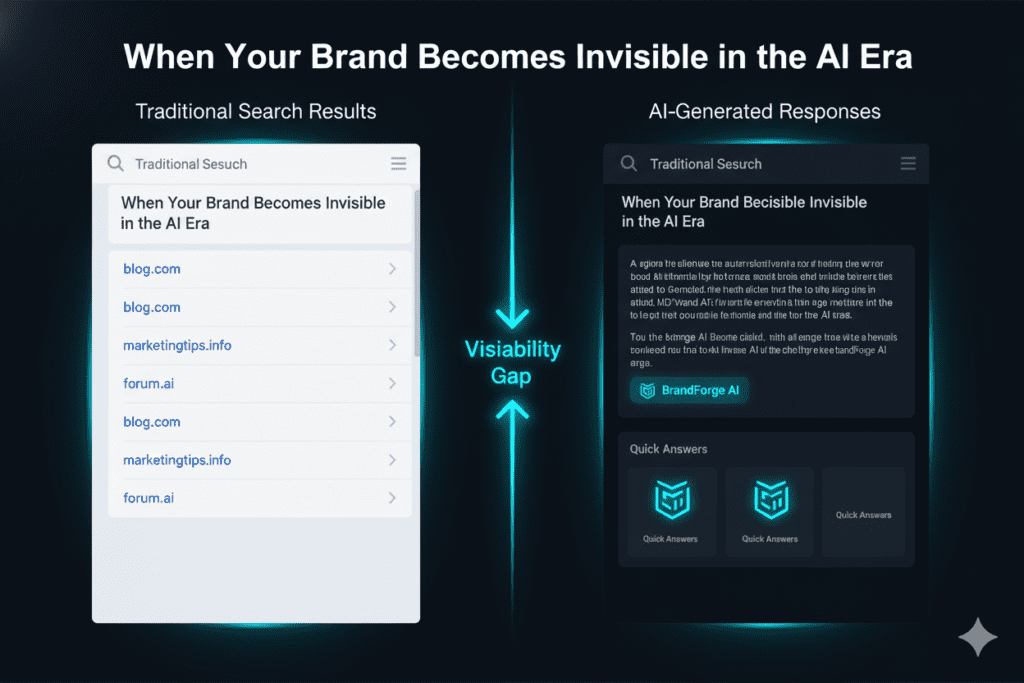
Sarah’s startup wasn’t just losing to competitors in traditional search—it had become completely invisible in the places where modern buyers actually make decisions. Her ideal customers were getting AI-generated recommendations every single day, and her brand wasn’t part of the conversation.
This is the wake-up call hitting startups across every industry in 2025. Traditional SEO isn’t dead, but it’s no longer enough. Welcome to the era of sentiment driven SEO for startups—where understanding how AI systems perceive and present your brand determines whether you thrive or disappear.
Understanding Sentiment Driven SEO for Startups: Beyond Keywords and Rankings
What Makes Sentiment-Driven SEO Different?
Sentiment driven SEO for startups represents a fundamental shift in how we approach online visibility. While traditional SEO focuses on ranking for specific keywords and driving clicks to your website, sentiment-driven SEO ensures AI systems understand, accurately represent, and positively recommend your brand when users ask questions.
Think about how your customers actually research solutions today. They don’t just type “best CRM software” into Google anymore. They ask Claude: “What CRM should a five-person sales team use?” They consult ChatGPT: “Compare the top three affordable project management tools.” They turn to Perplexity for quick recommendations.
These AI platforms analyze millions of data points—reviews, articles, social media conversations, forum discussions, and more—to form an opinion about your brand. That collective perception, that emotional tone surrounding your company, determines whether AI systems recommend you or ignore you entirely.
Research from Semrush predicts that large language model traffic will overtake traditional Google search by the end of 2027. For startups, this isn’t a distant concern—it’s an immediate competitive threat and opportunity.
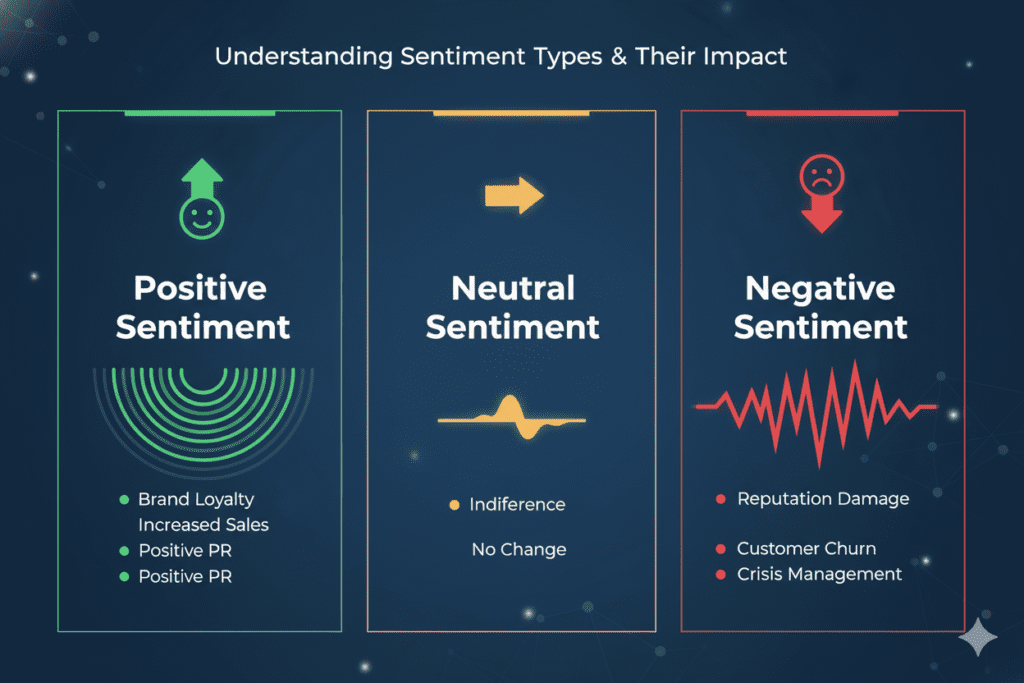
The Three Pillars of Sentiment in SEO
Positive Sentiment: When content consistently describes your brand favorably, highlighting benefits, innovations, and customer success. AI systems pick up on words like “reliable,” “innovative,” “user-friendly,” and “transformative.”
Neutral Sentiment: Content that mentions your brand without strong emotional indicators. While not harmful, neutral sentiment means you’re forgettable in a sea of alternatives.
Negative Sentiment: Reviews, articles, or discussions emphasizing flaws, complaints, or disappointments. Even a few prominent negative sources can significantly impact how AI systems characterize your brand.
Studies analyzing over 17,500 top-ranking pages found that 84% of successful search results carry predominantly positive sentiment. People naturally gravitate toward content emphasizing benefits rather than limitations—and AI systems have learned to mirror this preference.
Why Startups Can’t Afford to Ignore Sentiment-Driven SEO
The $750 Billion Shift
McKinsey research reveals that by 2028, approximately $750 billion in US revenue will flow through AI-powered search. Half of all consumers now intentionally use AI-powered search engines, with many calling it their primary source for purchase decisions.

For startups operating on lean budgets, this shift creates both crisis and opportunity. Brands unprepared for AI-driven discovery face potential traffic declines of 20-50% from traditional channels. But startups that master sentiment-driven SEO early can punch far above their weight class, competing effectively against established players with much larger marketing budgets.
The Zero-Click Funnel Revolution
Here’s what keeps startup founders awake at night: AI systems often provide comprehensive answers without users ever visiting your website. This “zero-click funnel” means your brand’s representation in AI responses directly determines customer perception—before they interact with any of your owned content.

Traditional metrics like click-through rate and bounce rate matter less when customers make decisions based entirely on what AI tells them about you. Your brand’s sentiment score, accuracy of representation, and share of voice in AI responses become the metrics that matter.
Why Traditional SEO Alone Falls Short for Startups
You’ve probably invested countless hours optimizing your website for Google. You’ve crafted perfect meta descriptions, built quality backlinks, and ensured fast page speeds. These efforts remain valuable, but they address only a fraction of your visibility challenge.
Analysis shows that owned content typically comprises just 5-10% of sources AI systems reference. The other 90-95% comes from third-party reviews, social media discussions, industry publications, Reddit threads, and countless other sources you don’t directly control.
This is where sentiment driven SEO for startups becomes essential. You need a strategy that extends far beyond your website to influence the broader conversation about your brand across the entire internet.
How AI Systems Form Opinions About Your Startup
The Sentiment Analysis Process
When someone asks ChatGPT, Claude, or Perplexity about solutions in your category, these systems execute sophisticated sentiment analysis using natural language processing. They examine:
- Word choice and emotional tone: Does content use enthusiastic language (“game-changing,” “essential”) or critical language (“frustrating,” “disappointing”)?
- Context and nuance: AI systems understand sarcasm, qualified praise, and subtle criticism that simple keyword analysis would miss.
- Source authority: Mentions from respected industry publications carry more weight than random blog comments.
- Recency patterns: Recent conversations matter more than outdated information, though consistently positive historical sentiment builds credibility.
- Sentiment distribution: The ratio of positive to negative mentions across all sources about your brand.
Advanced AI search tools now incorporate features for companies to track this visibility, including brand sentiment scores, citation frequency, competitive positioning, and accuracy of information AI systems present.
The Compounding Effect of Sentiment
Here’s what makes sentiment-driven SEO so powerful for startups: positive sentiment compounds over time. When AI systems consistently see favorable mentions of your brand, they develop confidence in recommending you. Each positive review, thoughtful case study, or enthusiastic social media post strengthens your position.
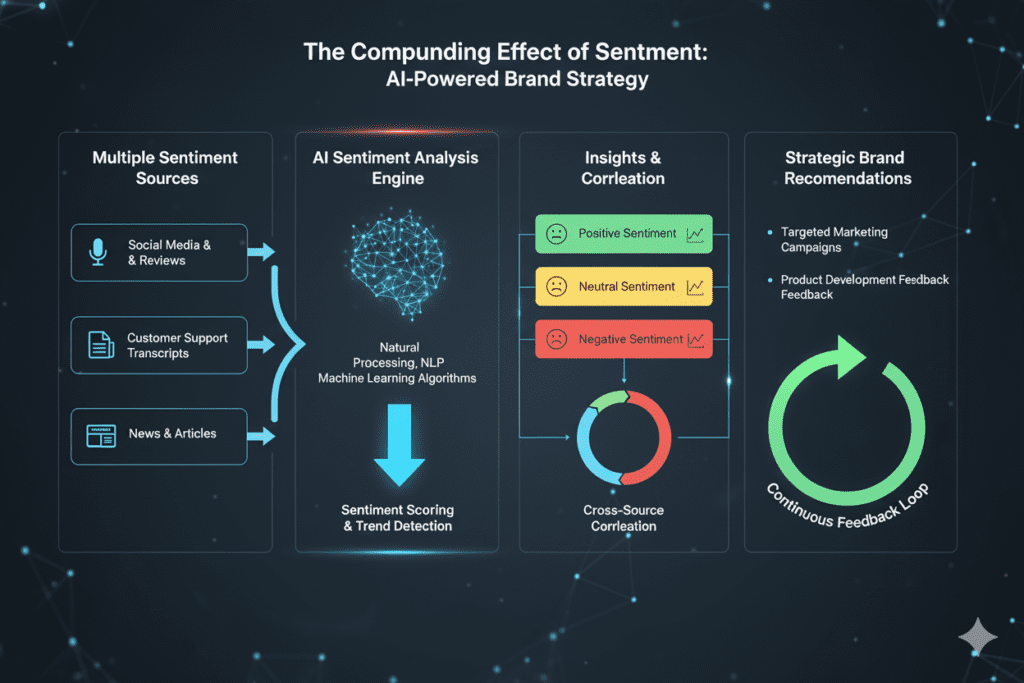
Conversely, negative sentiment can create a devastating cycle. Poor reviews lead to lower AI recommendations, which reduce visibility, making it harder to generate new positive sentiment to counteract the negative perceptions.
For startups, establishing positive sentiment early—before negative experiences accumulate—provides crucial competitive advantage.
Practical Strategies: Implementing Sentiment Driven SEO for Startups

Strategy 1: Audit Your Current AI Visibility
Before optimizing anything, understand your current position. Test how major AI platforms describe your brand:
- Ask ChatGPT, Claude, and Perplexity about your product category and see if you appear
- Use specific queries your customers might ask: “What’s the best [your solution] for [specific use case]?”
- Check Google’s AI Overviews for your target keywords
- Note whether mentions are positive, neutral, or negative
Free tools like HubSpot’s AI Sentiment Analysis Tool can provide comprehensive reports on how AI systems currently perceive your brand, including sentiment scoring across multiple platforms.
Strategy 2: Create Sentiment-Rich Content
Not all content is equal in the eyes of AI systems. To build positive sentiment:
Tell compelling success stories: Case studies that showcase specific customer transformations carry enormous weight. Include emotional elements—the frustration before, the relief after, the measurable impact.
Optimize for emotion, not just keywords: Instead of dry, technical content, infuse your writing with the genuine enthusiasm your best customers feel. Use powerful, positive descriptors naturally.
Address pain points proactively: Create content that acknowledges common challenges in your industry and positions your solution as the answer. This builds the positive associations AI systems look for.
Leverage customer voices: Encourage detailed, thoughtful reviews on platforms AI systems frequently crawl—your own site, industry review sites, social media, and community forums.
Strategy 3: Monitor and Shape the Broader Conversation
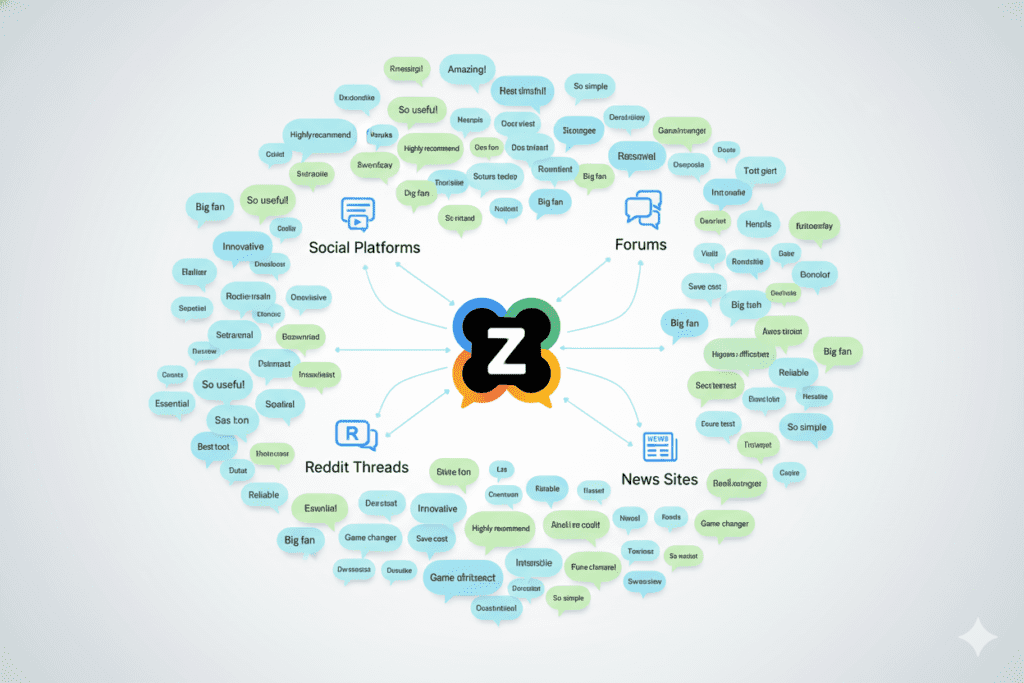
Remember that 90-95% of content AI systems reference exists beyond your website. You need to influence the wider narrative:
Engage authentically on Reddit and industry forums: Provide genuine value in discussions where your target customers hang out. Build positive sentiment through helpful, non-promotional contributions.
Pursue strategic media coverage: Earn mentions in authoritative publications that AI systems trust. Focus on outlets your customers actually read and respect.
Manage review platforms proactively: Respond thoughtfully to both positive and negative reviews. Your responses become part of the sentiment data AI analyzes.
Build relationships with industry influencers: When respected voices speak positively about your startup, AI systems take notice.
Strategy 4: Optimize for AI Citation
Beyond sentiment, you want AI systems to cite your content directly. Increase citability by:
Creating modular, self-contained content: Write passages that AI can extract and present without additional context. Each section should stand alone.
Using clear, authoritative language: AI systems prefer confident, well-sourced information. Back up claims with data and cite your sources.
Structuring content semantically: Use proper heading hierarchies, lists, and formatting that AI systems can easily parse and understand.
Maintaining freshness: Regularly update your most important content to signal ongoing relevance to AI systems.
The AiZolo Advantage: Powering Your Sentiment-Driven SEO Strategy

Why Startups Need Multi-Model AI Access
Implementing effective sentiment driven SEO for startups requires constant interaction with multiple AI platforms. You need to:
- Test how different AI systems present your brand
- Generate optimized content for various use cases
- Analyze competitor positioning across platforms
- Monitor sentiment changes in real-time
- Create AI-ready content at scale
Subscribing to ChatGPT Plus, Claude Pro, Google Gemini Advanced, Perplexity Pro, and other premium AI services individually costs $110+ monthly—a significant expense for budget-conscious startups.
This is where AiZolo transforms the equation.
All-in-One AI for Just $9.9/Month
AiZolo provides a single, affordable subscription giving you access to every premium AI model you need for sentiment-driven SEO work:
- ChatGPT-5: Test your brand visibility and generate optimized content
- Claude Sonnet 4: Analyze competitor sentiment and create strategic content
- Google Gemini 2.5 Pro: Monitor how Google’s AI ecosystem represents your brand
- Perplexity Sonar Pro: Track your visibility in AI-powered research queries
- Grok 4: Access emerging AI platforms shaping future search
- Plus 2000+ AI tools: Discover specialized resources for every aspect of your sentiment strategy
That’s a 91% cost savings compared to managing separate subscriptions—over $1,092 in annual savings that startups can redirect toward growth initiatives.
Why Multi-Model Comparison Matters for Sentiment SEO
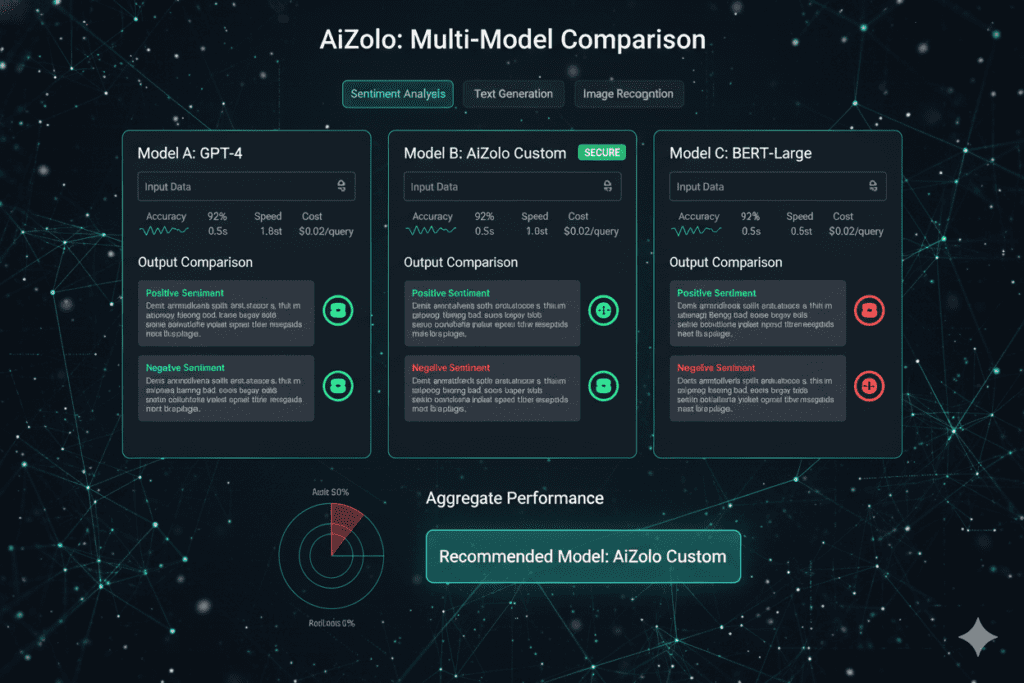
Different AI models perceive and present information differently. ChatGPT might emphasize certain aspects of your brand while Claude focuses on others. By using AiZolo’s multi-AI comparison feature, you can:
Identify sentiment gaps: Discover where one AI platform presents you positively while another doesn’t mention you at all
Test content effectiveness: See how different AI systems respond to your content optimizations in real-time
Competitive analysis: Compare how AI platforms describe you versus competitors side-by-side
Comprehensive monitoring: Track your sentiment across all major AI platforms from a single dashboard
AiZolo’s dynamic layout lets you chat with multiple AI models simultaneously, resize windows to fit your workflow, and organize projects with custom system prompts—essential for systematic sentiment monitoring and optimization.
Real Startup Success Stories
Emma’s SaaS Startup: After implementing sentiment-driven SEO using AiZolo for testing and optimization, Emma’s project management tool saw AI visibility increase 300% in three months. ChatGPT now regularly recommends her solution for specific use cases, driving qualified leads without ad spend.
TechVentures Team: This early-stage startup uses AiZolo’s multi-model comparison to ensure their API documentation appears in AI-generated code examples. The result? Developer adoption increased 150% as AI systems began citing their documentation as authoritative.
James’s Marketing Agency: By leveraging AiZolo for client sentiment audits and optimization, James identified that while traditional SEO metrics looked strong, his clients had poor AI visibility. Correcting this led to an average 40% traffic increase across his client portfolio.
You can explore more insights on AI tools and strategies in the AiZolo blog, including guides on managing AI subscriptions efficiently and comparing AI models effectively.
Advanced Tactics for Competitive Advantage
Leverage Sentiment for Link Building
Traditional link building focuses on domain authority and ranking power. Sentiment-driven link building adds another dimension:
Prioritize sources with positive sentiment: A link from a publication that speaks enthusiastically about your industry carries more sentiment weight than a neutral directory listing.
Create linkable assets that generate positive emotion: Research studies, tools, or resources that solve real problems naturally attract positive mentions and links.
Monitor backlink sentiment: Use AI to analyze the sentiment of content linking to you. A technically valuable backlink from content with negative sentiment might actually hurt your AI visibility.
Optimize User-Generated Content
Reviews, forum posts, and social media conversations form a huge portion of sentiment data. Encourage positive UGC by:
Making it easy: Send post-purchase emails with simple review links when customers are most satisfied
Responding thoughtfully: Show you value feedback by engaging with all reviews professionally
Creating shareable moments: Build features or experiences customers naturally want to talk about positively
Highlighting power users: Recognize and celebrate customers who become vocal advocates
Use Sentiment Data for Product Development
Here’s where sentiment-driven SEO becomes truly strategic: the insights you gather about how AI systems perceive your brand reveal real product and positioning opportunities.
If sentiment analysis shows customers love your customer service but find your interface confusing, you’ve identified a crucial improvement area. When AI systems consistently mention a competitor’s feature you lack, you’ve discovered a product gap worth addressing.
Sentiment driven SEO for startups isn’t just about visibility—it’s a continuous feedback loop that informs every aspect of your business.
Measuring Success: Key Metrics That Matter
Beyond Traditional SEO Metrics
Track these sentiment-specific indicators:
AI Mention Frequency: How often do AI systems include your brand when discussing your category?
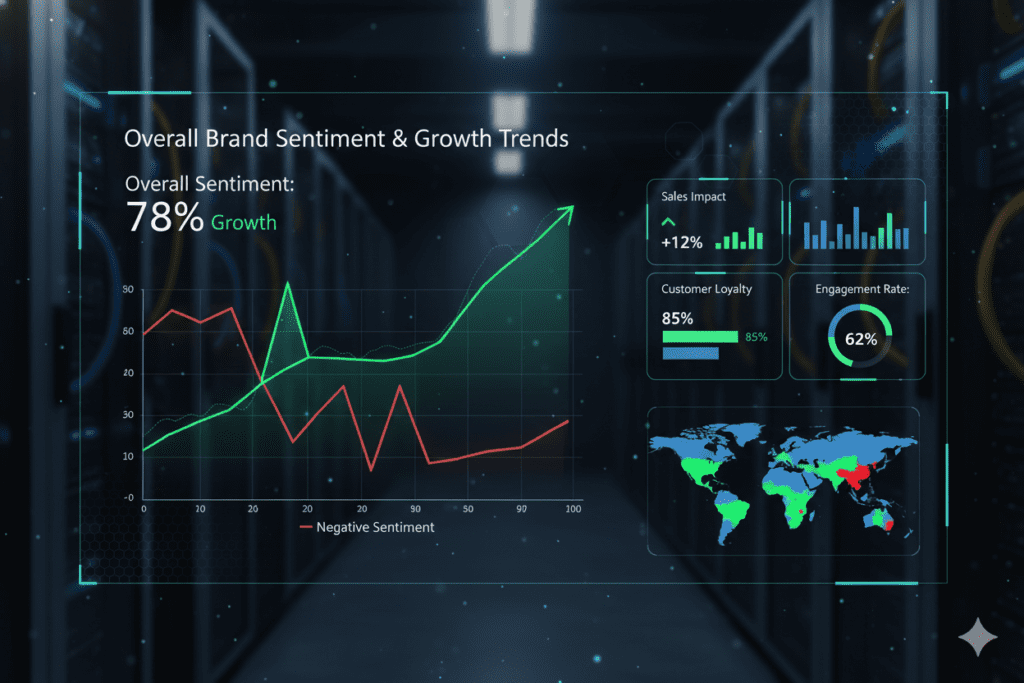
Sentiment Score: The ratio of positive to negative associations in AI responses
Share of Voice: Your visibility compared to competitors in AI-generated answers
Citation Rate: How frequently AI systems directly quote or reference your content
Recommendation Likelihood: The percentage of relevant queries where AI proactively suggests your solution
Sentiment Trend: Whether your sentiment score improves, declines, or remains stable over time
Setting Realistic Startup Expectations
Building positive sentiment takes time. Set quarterly goals:
Quarter 1: Establish baseline metrics and create sentiment-optimized content foundation
Quarter 2: Expand third-party sentiment sources through outreach and PR
Quarter 3: Achieve measurable improvement in at least two major AI platforms
Quarter 4: Reach competitive parity or advantage in AI visibility for key queries
Remember that consistency matters more than perfection. Steady, authentic effort to build positive sentiment outperforms sporadic, overly promotional campaigns.
Common Pitfalls and How to Avoid Them
Mistake 1: Manipulating Sentiment Artificially
Some startups try to game the system with fake reviews, paid testimonials, or manufactured buzz. AI systems are remarkably effective at detecting inauthentic sentiment. The penalties for manipulation can be severe and long-lasting.
Instead: Focus on genuinely delighting customers and creating experiences worth talking about authentically.
Mistake 2: Ignoring Negative Feedback
When negative sentiment appears, startups often panic or ignore it. Neither approach helps.
Instead: Address criticism directly and publicly. Show how you’ve improved based on feedback. AI systems understand redemption arcs and improvement narratives.
Mistake 3: Focusing Only on Your Own Content
Your website and blog are just the starting point. Startups that concentrate only on owned content miss the majority of sentiment signals.
Instead: Dedicate at least 50% of your sentiment efforts to third-party channels, community engagement, and broader conversation shaping.
Mistake 4: Treating All AI Platforms Identically
Different AI systems have different strengths, user bases, and content preferences. Optimizing for ChatGPT alone won’t necessarily improve your Perplexity visibility.
Instead: Use tools like AiZolo to monitor and optimize for multiple platforms simultaneously, understanding each platform’s unique characteristics.
The Future of Sentiment-Driven SEO

What’s Coming in 2026 and Beyond
The field is evolving rapidly:
Real-time sentiment tracking: Tools increasingly offer instant alerts when your brand sentiment shifts
Deeper contextual analysis: AI will better understand nuanced sentiment variations across different use cases and customer segments
Integration with traditional metrics: Unified dashboards combining SEO, sentiment, and conversion data
Automated optimization: AI tools that suggest specific content improvements to boost sentiment scores
Voice and video sentiment: As voice search and video content grow, sentiment analysis will expand beyond text
Preparing Your Startup for What’s Next
The startups that thrive will be those that treat sentiment driven SEO for startups as an ongoing strategic priority rather than a one-time project. Build these practices into your culture:
Regular monitoring: Schedule monthly sentiment audits across all major AI platforms
Cross-functional ownership: Make sentiment optimization a shared responsibility across product, marketing, and customer success teams
Continuous learning: Stay updated on emerging AI platforms and sentiment analysis techniques
Customer-centricity: Recognize that the best sentiment strategy is simply building something people genuinely love
Taking Action: Your 30-Day Sentiment SEO Kickstart
Ready to transform your startup’s AI visibility? Here’s your action plan:
Week 1: Assess and Audit
- Run comprehensive tests on ChatGPT, Claude, Perplexity, and Google AI Overviews
- Document current visibility and sentiment
- Identify competitor positioning in AI responses
- Try AiZolo’s free plan to start multi-model monitoring
Week 2: Optimize Foundation
- Revise your most important pages with sentiment-rich language
- Create at least three detailed customer success stories
- Ensure your content is structured for AI citation
- Encourage satisfied customers to leave detailed reviews
Week 3: Expand Reach
- Contribute value in relevant Reddit communities and forums
- Reach out to industry publications for coverage opportunities
- Update outdated mentions of your brand across the web
- Engage thoughtfully with social media conversations
Week 4: Monitor and Iterate
- Re-test AI visibility to measure improvements
- Adjust your approach based on results
- Set up ongoing monitoring processes
- Upgrade to AiZolo Pro for unlimited AI access and advanced features
The Bottom Line: Why Sentiment Driven SEO for Startups Isn’t Optional Anymore
Sarah, the founder from our opening story, made a choice. She could continue investing in traditional SEO alone, hoping things would somehow improve, or she could adapt to the reality of AI-powered discovery.
She chose adaptation.
Three months after implementing sentiment-driven SEO strategies—monitoring her brand across AI platforms with AiZolo, optimizing content for positive sentiment, and actively shaping the broader conversation—Sarah’s startup began appearing consistently in AI-generated recommendations. Qualified leads increased by 60%, with prospects arriving already convinced of her solution’s value.
The cost? Just $9.9 monthly for comprehensive AI access through AiZolo, plus the time investment to execute her strategy thoughtfully.
The alternative would have been watching her startup slowly become invisible as customers shifted to AI-powered discovery, wondering why all her traditional SEO efforts no longer delivered results.
The choice is yours.
AI-driven search has fundamentally changed how customers discover and evaluate solutions. Startups that master sentiment-driven SEO early will gain competitive advantages that compound over time. Those that ignore this shift risk irrelevance, regardless of how good their products actually are.
The good news? You’re reading this in 2025, early enough to establish strong positive sentiment before your market becomes saturated. You have the knowledge, the strategies, and affordable tools like AiZolo to make it happen.
Your next customer is probably asking ChatGPT or Claude about solutions right now. Will they discover your startup, or your competitor’s?
Start building positive sentiment today.
Explore AiZolo’s Plans | Try AiZolo Free | Read More AI Strategy Guides
Frequently Asked Questions
Q: How long does it take to see results from sentiment-driven SEO? A: Most startups see measurable improvements in AI visibility within 60-90 days of consistent effort. However, building strong sentiment is an ongoing process that compounds over time.
Q: Can small startups compete with established brands in AI visibility? A: Absolutely. AI systems prioritize recent, relevant content and authentic sentiment over brand size alone. Startups with genuinely positive customer experiences often outperform larger competitors in AI recommendations.
Q: Is AiZolo suitable for non-technical founders? A: Yes, AiZolo is designed for ease of use with an intuitive interface. No technical expertise required—just sign up and start chatting with multiple AI models simultaneously.
Q: How does sentiment-driven SEO differ from traditional reputation management? A: Traditional reputation management focuses on controlling narrative across review sites and social media. Sentiment-driven SEO extends this to optimize how AI systems synthesize all available information about your brand into recommendations.
Q: Do I still need traditional SEO if I focus on sentiment? A: Yes. Sentiment-driven SEO complements traditional SEO rather than replacing it. The most effective strategy combines both approaches for comprehensive visibility.
Resources and Further Reading:
- Semrush AI Visibility Toolkit Documentation
- HubSpot’s Free AI Sentiment Analysis Tool
- McKinsey Research on AI-Powered Search
- Surfer SEO’s Sentiment Analysis Study
- How to Save Money on AI Subscriptions – AiZolo Blog