Introduction
Picking between Gemini 3.5 Flash and GPT-5.6 isn’t really a “which one is smarter” question anymore.
Both models are good enough that the real decision comes down to cost, latency, and what your workload actually needs.
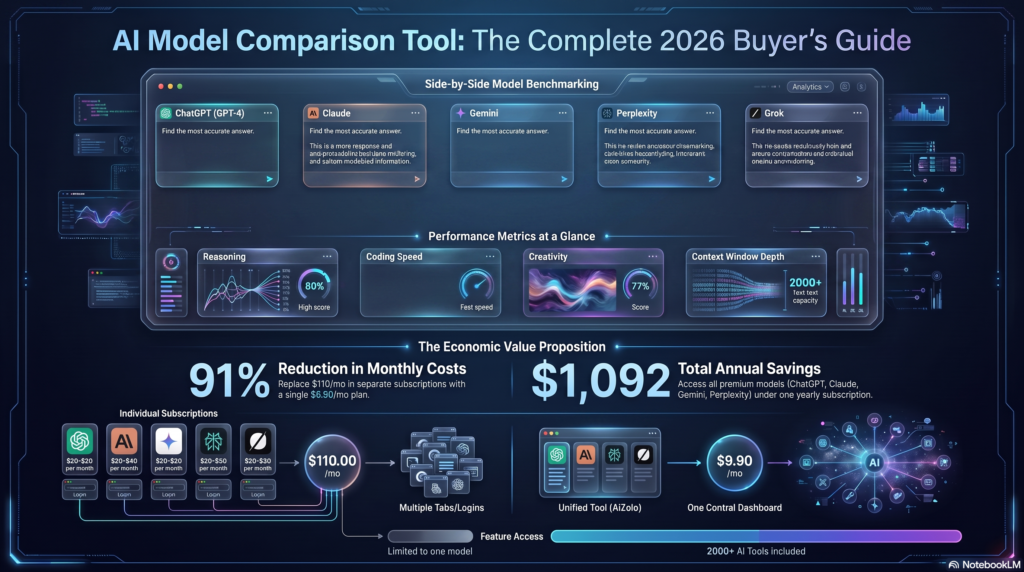
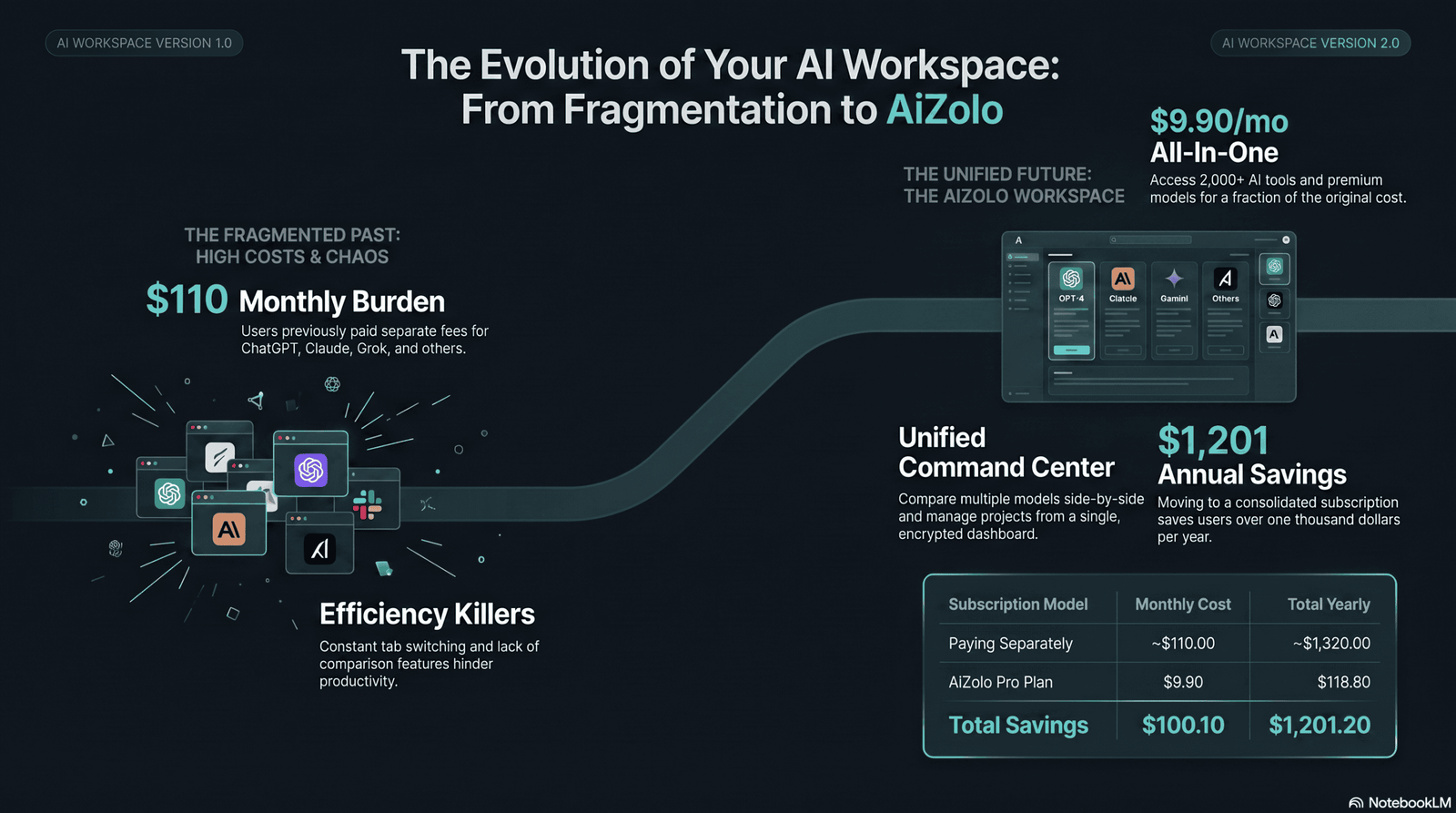
This comparison uses Google’s own published benchmark table, OpenAI’s release data, and independent scores from Artificial Analysis and LiveBench. Aizolo brings these trusted sources together, so you’re not just reading marketing copy.
We’ll flag every number that comes from a vendor versus an independent source, because that distinction matters more than most comparison articles admit.
By the end, you’ll know exactly which model fits your use case — coding agent, chatbot, research tool, or enterprise pipeline.
Table of Contents
What Is Gemini 3.5 Flash?
Featured Snippet Answer: Gemini 3.5 Flash is Google DeepMind’s fast, mid-tier AI model released May 19, 2026. It’s tuned for agentic coding and tool-use tasks, runs on a 1-million-token context window, and outperforms Google’s own larger Gemini 3.1 Pro on several coding and agentic benchmarks while costing less and running faster.
Gemini 3.5 Flash is the first model in Google’s Gemini 3.5 family.
Google unusually shipped the Flash (mid-tier) model first, holding back Gemini 3.5 Pro for a later release.
It’s built on the Gemini 3 Flash reasoning foundation with adjustable “thinking levels” — minimal, low, medium, and high — that trade cost and latency for reasoning depth.
It’s live today inside the Gemini app, AI Mode in Google Search, Google Antigravity, Gemini API in AI Studio, and Gemini Enterprise.
What Is GPT-5.6?
Featured Snippet Answer: GPT-5.6 is OpenAI’s flagship model, released April 23, 2026. It offers a roughly 1-million-token context window, strong scores on coding and reasoning benchmarks like GDPval and SWE-Bench Pro, and is priced at $5 per million input tokens and $30 per million output tokens.
GPT-5.6 followed GPT-5.5 with meaningful gains in agentic coding, reliability, and token efficiency on hard tasks.
It ships in a standard tier and a “Pro” deliberative variant built for long-horizon research and full codebase refactors, priced at $30 input / $180 output per million tokens.
It’s available across ChatGPT Plus, Pro, Business, and Enterprise, plus the OpenAI API.
Its knowledge cutoff is December 2025.
Note for readers in mid-to-late 2026: OpenAI has since released GPT-5.6 (Sol, Terra, Luna tiers), which now sits above GPT-5.6 in OpenAI’s lineup. This guide focuses specifically on GPT-5.6 since that’s the direct competitor to Gemini 3.5 Flash at launch. If you want the newer matchup, see our GPT-5.6 comparison.
Gemini 3.5 Flash vs GPT-5.6 at a Glance
Featured Snippet Answer: Gemini 3.5 Flash wins on price, speed, and agentic tool-calling. GPT-5.6 wins on deep academic reasoning and some coding benchmarks. Neither model dominates across the board — the right pick depends on whether your workload is agent-heavy or reasoning-heavy.
This isn’t a knockout comparison.
It’s a tradeoff table. Here’s the honest breakdown before we go deep into each category.
| Dimension | Winner | Margin |
|---|---|---|
| Price (input + output) | Gemini 3.5 Flash | 3.3x cheaper on input, ~3.3x on output |
| Raw output speed | Gemini 3.5 Flash | ~4x faster tokens/sec in independent tests |
| Agentic tool use (MCP Atlas) | Gemini 3.5 Flash | Meaningful lead |
| Deep academic reasoning (HLE, ARC-AGI-2) | GPT-5.6 | Moderate lead |
| Coding (varies by benchmark) | Split | Depends on which coding benchmark you trust |
| Multimodal reasoning (MMMU-Pro, CharXiv) | Gemini 3.5 Flash | Small-to-moderate lead |
| Long-context retrieval | Roughly tied, edge Google’s Pro-tier models | — |
| Enterprise governance tooling | Roughly comparable | — |
Benchmark Comparison
We’re separating vendor-published numbers from independent evaluations here on purpose.
Vendors pick the benchmarks that make them look best. Independent leaderboards don’t have that incentive, but they can lag behind new releases.
Vendor-Published Benchmarks (Google’s Model Card)
| Benchmark | Gemini 3.5 Flash | Gemini 3.1 Pro |
|---|---|---|
| Terminal-Bench 2.1 | 76.2% | 70.3% |
| MCP Atlas | 83.6% | 78.2% |
| Finance Agent v2 | 57.9% | 43.0% |
| GDPval-AA (Elo) | 1656 | 1314 |
| CharXiv Reasoning | 84.2% | — |
| Humanity’s Last Exam | 40.2% | 44.4% |
| ARC-AGI-2 | 72.1% | 77.1% |
Vendor-Published Benchmarks (OpenAI Release Data)
| Benchmark | GPT-5.6 |
|---|---|
| Terminal-Bench 2.0 | 82.7% |
| GDPval | 84.9% |
| SWE-Bench Pro | 58.6% |
| GPQA | 93.5% |
| Humanity’s Last Exam | 44.3% |
Important caveat: Google reports Terminal-Bench version 2.1. OpenAI reports version 2.0. These are not directly comparable scores — a common trap in AI comparison articles that quietly line up different benchmark versions as if they’re apples to apples.
Independent Benchmarks (Artificial Analysis-Style Composite)
| Metric | Gemini 3.5 Flash | GPT-5.6 |
|---|---|---|
| Intelligence Index | Competitive, below GPT-5.6 on pure reasoning composite | 54.8 |
| Coding Index | Strong, below GPT-5.6 on this composite | 74.9 |
| Agentic Index | Leads on tool-call-heavy workloads | 77.2 |
| MMMU-Pro (multimodal) | 83.6% | 81.2% |
| Output speed | ~289 tok/s | ~71 tok/s |
Reasoning Performance
GPT-5.6 has the edge here, and it’s not close on the hardest academic benchmarks.
On Humanity’s Last Exam, Google’s own numbers put Gemini 3.5 Flash at 40.2%, behind Gemini 3.1 Pro’s 44.4% — and OpenAI reports GPT-5.6 slightly ahead of that at 44.3%.
On ARC-AGI-2, a benchmark designed to resist memorization, Gemini 3.5 Flash trails at 72.1% against sources reporting GPT-5.6 in the low-to-mid 80s.
Why this happens: Flash-tier models trade some deliberative reasoning depth for speed and cost. That’s the entire design tradeoff, not a flaw.
If your workload is single-shot logic puzzles, scientific reasoning, or multi-step math proofs, GPT-5.6 is the safer default.
If your workload is “plan a task, call five tools, adjust based on results,” that’s a different skill — and it’s where Flash pulls ahead.
Coding Performance
This is the category where benchmark choice changes the answer.
| Coding Benchmark | Gemini 3.5 Flash | GPT-5.6 |
|---|---|---|
| Terminal-Bench (own version) | 76.2% (v2.1) | 82.7% (v2.0) |
| SWE-Bench Pro | Not directly reported by Google | 58.6% |
| MCP Atlas (tool-calling coding) | 83.6% | Reported lower in third-party tests |
Google’s numbers show Flash beating its own Pro-tier model on coding-adjacent agentic tasks.
OpenAI’s numbers show GPT-5.6 posting a strong raw Terminal-Bench score, though on a different benchmark version.
Our practical read: for autonomous multi-tool coding agents (think CI pipelines, repo-wide changes, terminal-driven workflows), independent testers report results sitting between Gemini 3.1 Pro and GPT-5.6 for Flash — meaning GPT-5.6 often has an edge on the hardest, longest coding tasks, while Gemini 3.5 Flash is very competitive per dollar.
Math Performance
Neither vendor headlines a dedicated math benchmark in their 2026 release materials, which is itself worth noting.
Math ability is largely inferred from GPQA (graduate-level science reasoning) and HLE scores, where GPT-5.6 posts the stronger numbers (GPQA 93.5%).
For pure symbolic math and multi-step proofs, GPT-5.6’s higher reasoning-benchmark scores suggest a real edge, though we recommend testing with your specific problem set — math benchmark performance varies heavily with how a problem is prompted.
Writing Quality
Benchmarks don’t capture writing quality well, so this section leans on direct hands-on comparison rather than a leaderboard number.
Gemini 3.5 Flash tends to produce tighter, more concise prose by default, which suits product copy, summaries, and chat-style answers.
GPT-5.6 tends to hold structure better across very long documents — multi-thousand-word reports, technical documentation, long-form fiction — likely tied to its stronger long-horizon reasoning.
Neither model reliably beats the other on creative voice; both are heavily steerable with system prompts.
Creativity
For brainstorming, ideation, and divergent-thinking tasks, both models perform comparably once you give them a clear creative brief.
Gemini 3.5 Flash’s speed advantage matters more here than raw quality — you can run 4x more creative iterations in the same time and budget.
If you’re doing single high-stakes creative work (a flagship ad campaign, a novel’s opening chapter), GPT-5.6’s stronger context retention across long drafts is the more reliable pick.
Image Understanding
Both models handle image input natively.
Gemini 3.5 Flash scores 83.6% on MMMU-Pro (multimodal reasoning across images), reported ahead of GPT-5.6’s 81.2% on the same independent leaderboard.
On CharXiv Reasoning — reading and reasoning over charts and graphs — Gemini 3.5 Flash posts 84.2% per Google’s own data.
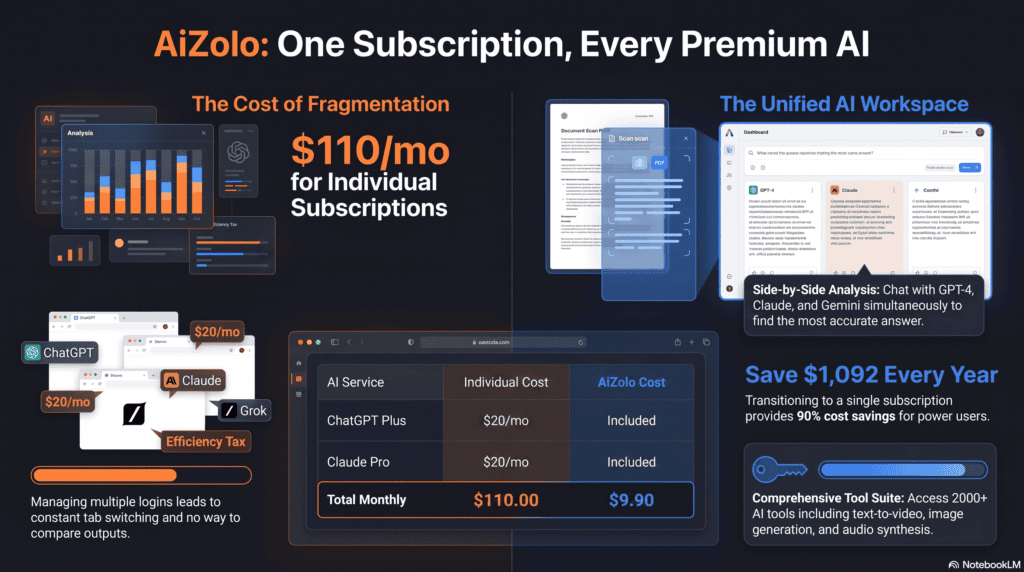
For document-heavy image workflows (scanned PDFs, chart extraction, receipt parsing), Gemini 3.5 Flash’s native PDF support is a practical plus GPT-5.6 doesn’t match in the same way.
Vision Performance
Vision performance overlaps heavily with image understanding, but object detection, spatial reasoning, and OCR accuracy deserve a separate note.
Gemini 3.5 Flash’s multimodal-first architecture (built to natively ingest video and audio, not just static images) gives it an edge in mixed-media vision tasks.
GPT-5.6’s vision pipeline is solid for standard image Q&A and document vision but doesn’t extend to native video or audio input the way Gemini’s does.
Multimodal Features
| Modality | Gemini 3.5 Flash | GPT-5.6 |
|---|---|---|
| Text | Yes | Yes |
| Image | Yes | Yes |
| Video (native input) | Yes | No (image frames only, via workarounds) |
| Audio (native input) | Yes | Limited |
| PDF (native) | Yes | Via text extraction |
This is one of the clearer, less-debatable wins for Gemini 3.5 Flash: broader native modality support out of the box.
Video Understanding
Gemini 3.5 Flash accepts video as a native input type, letting you feed it raw video files for summarization, scene description, or event detection without pre-processing.
GPT-5.6 doesn’t offer the same native video ingestion — most GPT-5.6 video workflows involve extracting frames first, which adds latency and cost.
If your product needs direct video-in, video-analysis-out, Gemini 3.5 Flash is the more practical starting point today.
Long Context
Both models sit around the 1-million-token mark, but the composition differs.
GPT-5.6’s context splits roughly 922K input / 128K output tokens.
Gemini 3.5 Flash offers a 1,048,576-token window with up to 65,536 output tokens.
On very long-context retrieval (MRCR v2 at 128K tokens), independent testing shows Gemini 3.1 Pro (Google’s own larger model) outperforming Gemini 3.5 Flash — 84.9% versus 77.3% — which suggests Flash isn’t Google’s strongest option for extreme long-document retrieval, even though its raw window is large.
Practical takeaway: raw context window size is a marketing number. Retrieval accuracy within that window is what actually matters for RAG and document-analysis products.
Memory
Neither model ships persistent cross-session memory as a core API feature at the model level — memory in both ecosystems is typically implemented at the application layer (ChatGPT’s memory feature, Gemini app’s saved info) rather than the raw API.
For developers building on the API directly, you’ll need to manage conversation state and retrieval yourself regardless of which model you choose.
Latency
Time-to-first-token and total response time both favor Gemini 3.5 Flash by a wide margin in independent testing.
Google explicitly markets 3.5 Flash as roughly 4x faster than comparable frontier models, and third-party token-per-second tests back that up.
GPT-5.6’s latency is competitive with its own predecessor (GPT-5.5) but is not built to compete on raw speed — OpenAI’s pitch for GPT-5.6 is capability, not velocity.
Response Speed
| Metric | Gemini 3.5 Flash | GPT-5.6 |
|---|---|---|
| Output tokens/sec (independent test) | ~289 | ~71 |
| Marketed speed claim | ~4x faster than comparable frontier models | Not a headline claim |
| Best fit | Real-time chat, high-volume agent loops | Batch and asynchronous heavy reasoning |
If your product is latency-sensitive — live chat support, voice assistants, real-time coding autocomplete — this table alone may decide the comparison for you.
Token Generation Speed
Token generation speed compounds at scale.
An agent loop that calls a model 20 times per task feels the 4x speed gap far more than a single chat reply does.
For agentic architectures specifically, Gemini 3.5 Flash’s speed advantage often outweighs its reasoning gap versus GPT-5.6, because the agent can retry, verify, and iterate more cheaply.
Pricing Comparison
| Model | Input ($/1M tokens) | Output ($/1M tokens) | Notes |
|---|---|---|---|
| Gemini 3.5 Flash | $1.50 | $9.00 | 90% prompt-cache discount available |
| GPT-5.6 (standard) | $5.00 | $30.00 | Batch/Flex mode ~50% off |
| GPT-5.6 Pro (deliberative) | $30.00 | $180.00 | For long-horizon research tasks |
Gemini 3.5 Flash is roughly 3.3x cheaper on input and output than standard GPT-5.6.
Against GPT-5.6 Pro, the gap widens to 20x on input and 20x on output.
For agent workloads that reuse system prompts across many tool calls, Gemini’s 90% cache discount pushes the real-world cost gap even further in its favor.
API Pricing
Both APIs support prompt caching, but the discount structures differ enough to matter at scale.
Gemini’s cache discount (90% off cached input) rewards agent harnesses that repeat large system prompts across many turns — a common pattern in coding agents and customer-support bots.
OpenAI’s Batch and Flex modes cut standard pricing roughly in half but require your workload to tolerate asynchronous or lower-priority processing, which doesn’t work for real-time chat.
Table: Effective Cost for a Typical Agent Task (1M input + 100K output tokens)
| Model | Standard Cost | Optimized Cost |
|---|---|---|
| Gemini 3.5 Flash | ~$2.40 | Significantly lower with 90% cache hit rate |
| GPT-5.6 | ~$8.00 | ~$4.00 with Batch mode |
Enterprise Features
Gemini 3.5 Flash ships inside Gemini Enterprise and the Gemini Enterprise Agent Platform, with direct integration into Google Workspace, Android Studio, and Firebase.
GPT-5.6 ships across ChatGPT Business and Enterprise tiers, with deep integration into the broader OpenAI/Microsoft ecosystem (Azure OpenAI Service, Microsoft 365 Copilot pathways).
Both offer admin controls, usage dashboards, and SSO — the meaningful difference is which existing enterprise stack (Google Workspace vs Microsoft 365) your organization already runs on.
Security
Both vendors publish model cards covering red-teaming, misuse testing, and safety evaluations before release.
Neither company has published a head-to-head third-party security audit comparing the two models directly as of this writing, so claims of one being “safer” than the other should be treated skeptically.
For regulated industries, check both vendors’ current SOC 2 and data-residency documentation directly rather than relying on a comparison article — this changes frequently.
Privacy
Data retention and training-use policies differ by product tier for both companies — API traffic is typically excluded from model training by default for both, while consumer app usage may differ.
Always verify current policy on the vendor’s live documentation page before signing an enterprise agreement, since these terms are updated more often than benchmark scores.
Integrations
| Integration Type | Gemini 3.5 Flash | GPT-5.6 |
|---|---|---|
| IDE tooling | Android Studio, Antigravity | Codex-style CLI/IDE integrations |
| Cloud platform | Google Cloud, Firebase, Vertex AI | Azure OpenAI Service |
| Productivity suite | Google Workspace | Microsoft 365 (via Copilot ecosystem) |
| Agent framework | Google Antigravity (co-optimized) | OpenAI Agents SDK / function calling |
Developer Experience
Gemini 3.5 Flash’s thinking_level parameter (minimal, low, medium, high) gives developers a direct dial between cost, latency, and reasoning depth in a single API field.
GPT-5.6 exposes reasoning-effort controls as well, letting you trade speed for depth, though the tiering and naming differ from Google’s system.
Both APIs are OpenAI-SDK-compatible in practice — most gateway tools (OpenRouter, LiteLLM) let you swap between them with a model-name change and minimal code rewrites.
Prompt Engineering Tips
Set the thinking/reasoning level explicitly for both models — don’t rely on defaults, especially for agentic workflows where cost compounds fast.
For Gemini 3.5 Flash, reserve “high” thinking for tasks that genuinely need deep multi-step planning; “medium” handles most coding and agent tasks fine.
For GPT-5.6, be explicit about output format and length — its strength in following complex instructions rewards precise prompts far more than vague ones.
For both models, put your most important instructions at the start and end of the prompt — models weight the middle of long contexts less reliably, a known pattern across long-context LLMs.
Use Cases
| Use Case | Better Fit |
|---|---|
| Customer support chatbot | Gemini 3.5 Flash (speed, cost) |
| Autonomous coding agent (CI/CD, terminal-driven) | GPT-5.6 (deeper reasoning on hard tasks) |
| Real-time voice assistant | Gemini 3.5 Flash |
| Long-form research report generation | GPT-5.6 |
| Video content analysis | Gemini 3.5 Flash |
| Regulatory/compliance document review | GPT-5.6 (with human review either way) |
| High-volume marketing copy generation | Gemini 3.5 Flash |
| Scientific literature synthesis | GPT-5.6 |
Pros
Gemini 3.5 Flash Pros
- Roughly 3.3x cheaper per token than GPT-5.6
- ~4x faster output speed in independent tests
- Native video, audio, and PDF input
- Strong agentic tool-calling (MCP Atlas)
- Explicit thinking-level control for cost tuning
GPT-5.6 Pros
- Leads on deep academic reasoning (HLE, ARC-AGI-2)
- Strong instruction-following on complex, long prompts
- Mature Batch/Flex pricing options for async workloads
- Deep Microsoft/Azure enterprise integration path
- GPT-5.6 Pro variant for the hardest long-horizon tasks
Cons
Gemini 3.5 Flash Cons
- Trails on the hardest pure-reasoning benchmarks
- Weaker long-context retrieval than Google’s own Pro-tier model
- Newer release, smaller third-party tooling ecosystem than GPT-5.6 at this point
GPT-5.6 Cons
- Significantly more expensive per token
- Slower output speed, less ideal for real-time use
- No native video input
- GPT-5.6 Pro pricing ($30/$180) is steep for high-volume use
Who Should Use Gemini 3.5 Flash?
Startups and indie developers running high call-volume products where cost per request matters.
Teams building agentic workflows with many sequential tool calls, where speed compounds into real cost and UX gains.
Anyone building on video, audio, or document-heavy multimodal products.
Google Workspace and Google Cloud shops that want tight ecosystem integration.
Who Should Use GPT-5.6?
Teams whose workload is reasoning-bound rather than speed-bound — research synthesis, complex financial modeling, legal analysis (with human review).
Organizations already invested in the Microsoft/Azure ecosystem.
Projects that can tolerate asynchronous processing and want to use Batch pricing to control cost.
Anyone tackling the hardest coding tasks where GPT-5.6’s Terminal-Bench and SWE-Bench Pro numbers suggest a real capability edge.
Real-World Recommendations
If you’re building a customer-facing chatbot or app with tight latency requirements, start with Gemini 3.5 Flash and benchmark your own prompts before committing.
If you’re building an autonomous coding agent for a large, complex codebase, test GPT-5.6 first — its reasoning depth tends to matter more than speed for that job.
If you’re cost-constrained (most early-stage startups are), Gemini 3.5 Flash’s pricing alone can be the deciding factor even before you compare quality.
If you’re enterprise and already have a Microsoft or Google relationship, that existing infrastructure often matters more than a few benchmark points either way.
Decision Matrix
| Priority | Recommended Model |
|---|---|
| Lowest cost | Gemini 3.5 Flash |
| Fastest response time | Gemini 3.5 Flash |
| Hardest reasoning tasks | GPT-5.6 |
| Native video/audio input | Gemini 3.5 Flash |
| Long-horizon coding on large codebases | GPT-5.6 |
| Google Cloud ecosystem | Gemini 3.5 Flash |
| Microsoft/Azure ecosystem | GPT-5.6 |
| High-volume agentic tool use | Gemini 3.5 Flash |
| Research and document synthesis | GPT-5.6 |
Final Verdict
There’s no single winner in the Gemini 3.5 Flash vs GPT-5.6 comparison — and treating it as a knockout fight misses the point.
Gemini 3.5 Flash is the better default for speed, cost, and agentic tool-heavy workloads.
GPT-5.6 is the better default when your task genuinely needs deeper reasoning and you can absorb the higher cost.
Many production systems in 2026 use both — routing simple, high-volume requests to Gemini 3.5 Flash and escalating hard reasoning steps to GPT-5.6, a pattern often called model routing or a “mixture of experts at the application layer.”
FAQs
1. Is Gemini 3.5 Flash better than GPT-5.6? Neither is strictly better. Gemini 3.5 Flash wins on price, speed, and agentic tasks; GPT-5.6 wins on deep reasoning benchmarks. Your use case decides the winner.
2. Is Gemini 3.5 Flash faster than GPT-5.6? Yes. Independent testing shows Gemini 3.5 Flash generating roughly 289 tokens per second versus about 71 for GPT-5.6 — close to a 4x speed advantage.
3. Is GPT-5.6 worth the extra cost? For workloads bound by deep reasoning or long-horizon coding, often yes. For high-volume, latency-sensitive apps, the cost usually isn’t justified.
4. What is the context window of Gemini 3.5 Flash? 1,048,576 tokens, with up to 65,536 output tokens per response.
5. What is the context window of GPT-5.6? Roughly 1.05 million tokens total, split as approximately 922K input and 128K output.
6. Does Gemini 3.5 Flash support video input? Yes, natively. GPT-5.6 does not support native video input in the same way.
7. Which model is cheaper for API use? Gemini 3.5 Flash, by roughly 3.3x on both input and output token pricing.
8. Which model is better for coding agents? It depends on the benchmark. Gemini 3.5 Flash leads on agentic tool-calling benchmarks like MCP Atlas; GPT-5.6 posts stronger raw Terminal-Bench and SWE-Bench Pro numbers on harder, longer coding tasks.
9. Can I switch between Gemini 3.5 Flash and GPT-5.6 easily? Yes, if you’re using an OpenAI-SDK-compatible gateway like OpenRouter, switching is usually a model-name change with minimal code rework.
10. Is Gemini 3.5 Pro available yet? As of Gemini 3.5 Flash’s launch, Google said Gemini 3.5 Pro was rolling out the following month — check Google’s current release notes for the latest status.
11. Has OpenAI released a newer model than GPT-5.6? Yes. OpenAI has since released the GPT-5.6 family (Sol, Terra, Luna tiers), which now sits above GPT-5.6. This article compares GPT-5.6 specifically as the direct-era competitor to Gemini 3.5 Flash.
12. Which model has better reasoning benchmarks? GPT-5.6, based on both vendor-published and independent scores on Humanity’s Last Exam and ARC-AGI-2.
13. Is Gemini 3.5 Flash good for startups? Yes — its combination of low price and high speed makes it a strong default for early-stage products optimizing for burn rate.
14. Does either model support prompt caching? Yes, both do. Gemini 3.5 Flash offers up to a 90% discount on cached input tokens, which is a significant lever for agent workloads with repeated system prompts.
15. Which model should enterprises choose? It often comes down to existing cloud ecosystem — Google Cloud shops lean toward Gemini 3.5 Flash, Microsoft/Azure shops lean toward GPT-5.6 — more than a pure capability gap.
Conclusion
The Gemini 3.5 Flash vs GPT-5.6 decision isn’t about finding the “best” AI model — it’s about matching model strengths to your actual workload.
Gemini 3.5 Flash brings speed, low cost, and strong multimodal and agentic capabilities to the table.
GPT-5.6 brings deeper reasoning and stronger performance on the hardest, longest tasks, at a real premium.
Test both against your own prompts before committing — benchmark leaderboards are a starting point, not a guarantee for your specific use case.
Author Bio
Jeevesh Tripathi AI Researcher & Technical Content Specialist Email: jeevesh@aizolo.com
Jeevesh Tripathi evaluates large language models hands-on, cross-referencing vendor benchmark claims against independent leaderboards before publishing any comparison. His work focuses on practical deployment tradeoffs — cost, latency, and reliability — rather than headline capability scores alone, drawing on direct experience building and testing production AI systems.