Table of Contents
The 3 AM Sales Call That Changed Everything
Marcus had been in SaaS sales for seven years, but nothing prepared him for that call.
It was a Tuesday evening when his biggest prospect of the quarter—a $250K annual contract—sent an urgent Slack message: “Quick call tomorrow morning? Our board is pushing us toward [Competitor X]. Need to understand why we should stick with you.”
Marcus spent the entire night scrambling. He dug through old PDFs, checked competitor websites that hadn’t been updated in his internal docs for months, and frantically messaged colleagues in different time zones. By 3 AM, he had cobbled together something resembling competitive intelligence.
The call didn’t go well.
The prospect mentioned a new pricing tier their competitor had launched three weeks ago—something Marcus knew nothing about. They asked about a feature comparison that his six-month-old battle card got completely wrong. By the time Marcus stammered through outdated objection responses, he could feel the deal slipping away.
Two days later, the prospect chose the competitor.
Marcus isn’t alone. According to recent competitive intelligence research, sales teams using outdated battlecards can see win rates drop significantly, while those updating cards monthly experience up to 59% improvements. The problem? Traditional battle cards become obsolete the moment they’re created, leaving sales teams fighting with one hand tied behind their backs.
This is where automated competitor battle cards enter the picture—and why they’re revolutionizing how modern sales teams compete and win.
What Are Automated Competitor Battle Cards? (And Why Static PDFs Are Killing Your Win Rate)
The Old Way: Static Battle Cards That Gather Digital Dust
For years, competitive battle cards have been the Swiss Army knife of sales enablement. These resources help sales teams compete effectively when facing specific competitors, traditionally created as static documents by marketing teams.
The traditional process looked something like this:
- Product marketing spends 16+ hours researching a single competitor
- They create a beautiful PDF with pricing comparisons, feature matrices, and objection handling
- The document gets uploaded to a shared drive
- Sales reps download it… and then it sits unused for months
The problem? Your competitors aren’t static. They’re launching features, changing pricing, updating messaging, and shifting strategies—sometimes weekly. Meanwhile, your sales team is armed with intelligence from Q2 when it’s already Q4.
The New Reality: Automated Competitor Battle Cards
Automated competitor battle cards leverage artificial intelligence and real-time data monitoring to create living, breathing competitive intelligence resources that update automatically.
Instead of quarterly refreshes, these modern battlecards:
- Monitor competitor activities 24/7 across websites, social media, press releases, and review sites
- Automatically update when competitors change pricing, launch features, or shift messaging
- Integrate with your workflow via CRM, Slack, or sales tools you already use
- Deliver contextual intelligence specific to each deal, buyer persona, or sales stage
Modern AI-powered competitive intelligence systems have helped companies achieve remarkable results, including 65% reductions in time spent researching competitors.
Think of it as the difference between a paper map from last year and a GPS with real-time traffic updates. Both might get you there, but one gives you a massive advantage.
Why Sales Teams Are Abandoning Traditional Battle Cards for Automation
Problem #1: The Information Decay Crisis
Competitive landscapes change faster than ever. Even when intelligence from a year ago remains relevant, teams need verification that it’s still accurate today—a task requiring immense manual effort.
Consider these scenarios:
- Your competitor drops their pricing by 20% to capture market share
- They announce a new integration that directly addresses your key differentiator
- A major product update makes your comparison chart completely inaccurate
- They change their positioning to target your exact customer base
With static battle cards, you might not discover these changes until you’re already in a competitive deal—and losing.
Problem #2: The Sales Rep Adoption Gap
Here’s an uncomfortable truth: most battlecards aren’t used because sales reps can’t find them when they need them, or the information is already outdated.
Sales reps are juggling dozens of tools, hundreds of prospects, and countless pieces of information. When they need competitive intel, they need it now—not buried in a PDF from six months ago that requires 15 minutes to find and read.
Automated competitor battle cards solve this by:
- Surfacing intelligence where reps work (inside Salesforce, during Zoom calls, within Slack)
- Providing just-in-time insights exactly when needed during sales conversations
- Offering search functionality to instantly find specific competitor information
- Delivering bite-sized, scannable formats instead of dense documents
Problem #3: The Resource Drain
Creating comprehensive battle cards manually is expensive. A baseline battlecard typically requires about 16 hours of work (10 hours research plus 6 hours of subject matter expert input), with quarterly updates taking an additional 2-4 hours.
Multiply that by 5-10 major competitors, and you’re looking at hundreds of hours annually—time your product marketing team could spend on strategic initiatives instead of data collection.
How Automated Competitor Battle Cards Actually Work: The AI-Powered Intelligence Engine
Step 1: Continuous Competitor Monitoring
Effective automation combines event-driven triggers (like when competitors are mentioned on call transcripts) with scheduled jobs that regularly check for competitor changes.
Modern systems monitor:
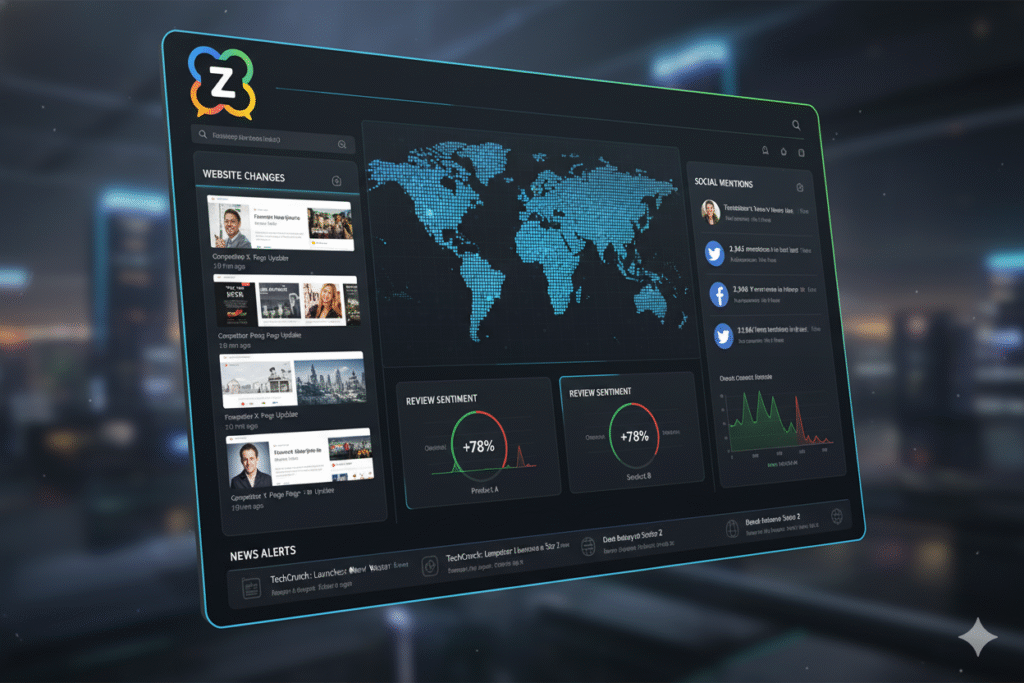
- Competitor websites for pricing, messaging, and feature changes
- Review sites like G2, Capterra, and TrustRadius for sentiment analysis
- Social media for announcements and customer feedback
- Press releases for product launches and company news
- Job postings that hint at strategic directions
- Financial reports for public companies
Step 2: AI-Powered Analysis and Synthesis
Raw data isn’t useful—insights are. AI tools can ingest large amounts of data quickly, scanning entire online presences, tracking pricing and promotional materials, and identifying trends from thousands of customer reviews.
The AI layer:
- Identifies significant changes vs. noise
- Extracts key themes from customer reviews
- Compares feature sets automatically
- Generates talking points based on differentiation
- Suggests objection responses based on competitor weaknesses
Step 3: Dynamic Content Generation
Instead of static PDFs, automated systems create dynamic, personalized battle cards that adapt to:
- Specific competitors in your current deal
- Sales stage (discovery, demo, negotiation)
- Buyer persona (technical decision-maker vs. executive)
- Your company’s strengths that matter most to this prospect
Step 4: Intelligent Distribution
The best battlecard is one that reps actually use, which requires seamless integration with the tools sales teams work in daily.
Automated systems deliver intelligence through:
- CRM integrations (Salesforce, HubSpot)
- Communication platforms (Slack, Microsoft Teams)
- Sales enablement tools (Highspot, Seismic)
- During live calls (with conversation intelligence tools)
The AiZolo Advantage: Your AI-Powered Competitive Intelligence Command Center
Why Multiple AI Models Matter for Battle Card Creation
Here’s where most battle card solutions fall short: they rely on a single AI model with inherent biases and limitations.
Creating truly effective automated competitor battle cards requires comparing multiple AI perspectives—and that’s exactly what AiZolo was built to solve.
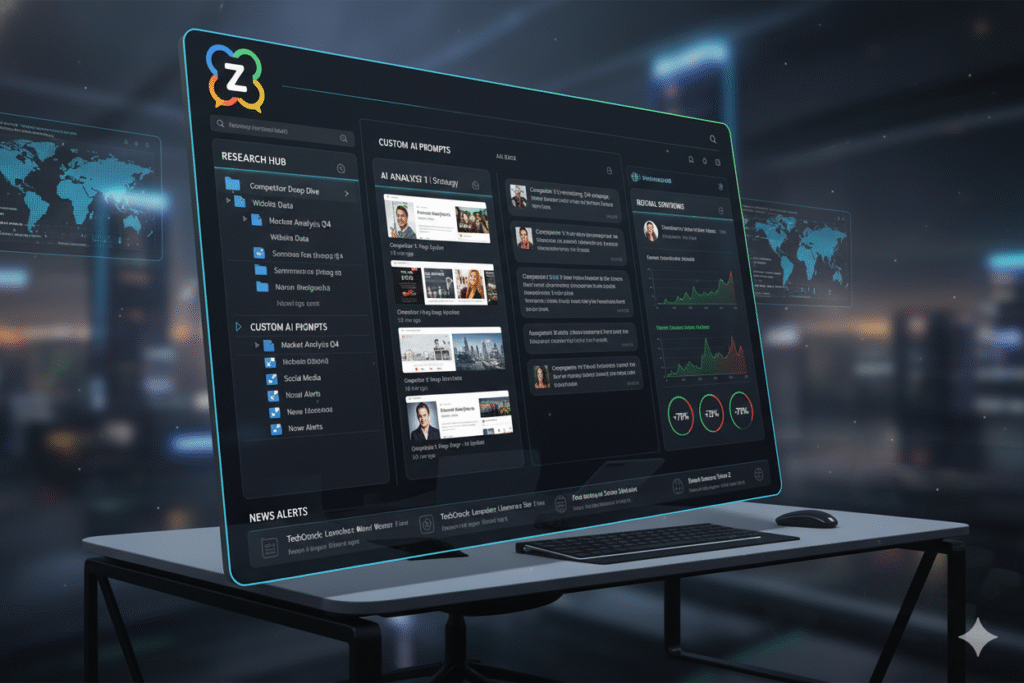
AiZolo is an all-in-one AI platform that gives you access to every major AI model in a single dashboard—ChatGPT, Claude, Gemini, and 2000+ AI tools—for one affordable subscription instead of paying hundreds monthly for separate tools.
How AiZolo Transforms Battle Card Creation
1. Multi-Model Competitive Research
Instead of relying on one AI’s interpretation, AiZolo lets you:
- Ask ChatGPT to analyze competitor messaging
- Use Claude to draft objection responses
- Compare Gemini’s feature analysis with other models
- Get multiple perspectives on competitive positioning
Why does this matter? Different AI models excel at different tasks. ChatGPT might be better at creative positioning, while Claude excels at nuanced analysis. With AiZolo, you get the best of all worlds without juggling subscriptions.
2. Side-by-Side AI Comparison for Better Insights
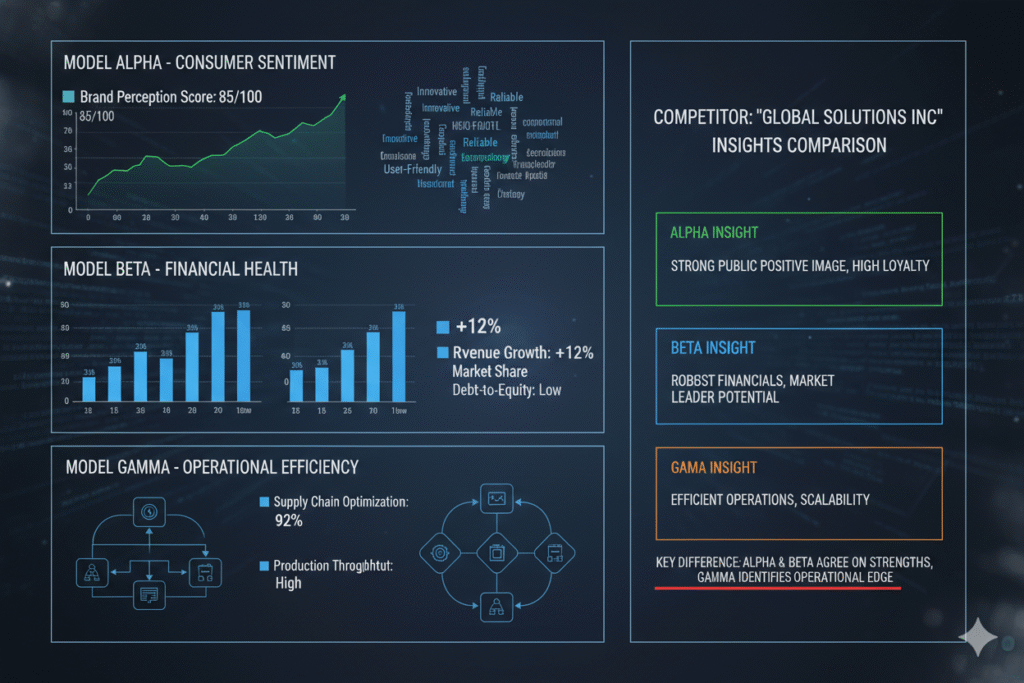
AiZolo’s unique side-by-side comparison feature lets you:
- Ask the same competitive research question to multiple AIs simultaneously
- Compare their answers in real-time
- Identify the most comprehensive insights
- Create more balanced, well-researched battle cards
For example, ask all AI models: “What are the top 3 weaknesses of [Competitor X] based on recent G2 reviews?” Then compare their analyses to build a more complete picture.
3. Custom API Integration for Real-Time Updates
AiZolo allows you to use your own API keys (encrypted for security), giving you:
- Access to the latest AI model versions
- Unlimited usage without platform restrictions
- Ability to automate competitor monitoring workflows
- Integration with your existing competitive intelligence stack
4. Organized Competitive Intelligence Workspace
Create dedicated projects in AiZolo for each major competitor:
- Project: “Competitor X Intelligence” with custom prompts for consistent analysis
- System prompts that automatically frame all queries with your competitive context
- Conversation history that builds institutional knowledge over time
- Customizable layouts that organize multiple AI windows for efficient research
Real-World Example: Building Automated Competitor Battle Cards with AiZolo
Let’s walk through how a product marketing manager might use AiZolo to create and maintain automated competitor battle cards:
Morning Routine (15 minutes):
- Open AiZolo and navigate to “Competitor Intelligence” project
- Use custom system prompt: “You are a competitive intelligence analyst for [Your Company]. Analyze information about our competitors through the lens of our unique value proposition: [Your UVP].”
- Ask multiple AIs simultaneously: “What changed on [Competitor X]’s website in the past week?”
- Review side-by-side responses, noting pricing updates Claude caught and messaging changes ChatGPT identified
Deep Dive Research (30 minutes weekly):
- Use Gemini for broad market analysis: “What are the emerging trends in [Your Market] that competitors are responding to?”
- Switch to ChatGPT for customer sentiment: “Summarize the last 20 reviews of [Competitor Y] on G2, focusing on complaints.”
- Ask Claude for strategic analysis: “Based on [Competitor Z]’s recent product announcements and job postings, what is their likely 6-month strategy?”
- Compile insights into your battle card template
Real-Time Deal Support: When a sales rep faces a competitive situation:
- They ping you via Slack: “In a deal against [Competitor X], prospect asking about their new enterprise features”
- You quickly open AiZolo, ask all models about those specific features
- Within 2 minutes, you have comparison analysis from multiple AI perspectives
- You send the rep a concise summary with differentiation talking points
The Cost Savings Are Staggering
Traditional approach costs:
- ChatGPT Plus: $20/month
- Claude Pro: $20/month
- Gemini Advanced: $20/month
- Competitive intelligence tool: $500-15,000/month
- Total: $560-15,060/month
AiZolo approach:
- All AI models in one platform: $19/month (starting)
- Plus your choice of specialized CI tools: Variable
- Savings: $541-15,041 monthly
More importantly, AiZolo saves countless hours by eliminating the need to:
- Switch between multiple AI platforms
- Copy-paste context between different tools
- Maintain separate conversation histories
- Manage multiple subscriptions and logins
Want to see how AiZolo can transform your competitive intelligence workflow? Explore AiZolo’s plans and start your free trial today.
Building Your Automated Battle Card System: A Step-by-Step Framework
Phase 1: Foundation (Week 1-2)
Define Your Competitive Landscape
- Identify your top 5-10 competitors
- Categorize them (direct, indirect, emerging threats)
- Determine which competitors appear most frequently in deals
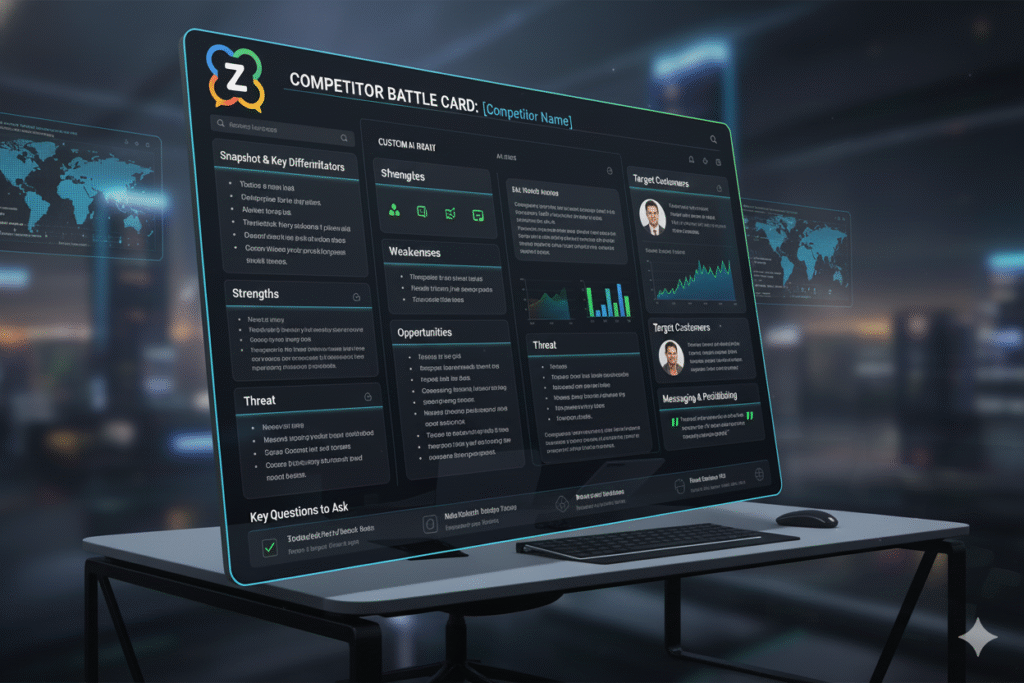
Establish Your Battle Card Structure Key elements for effective automated competitor battle cards:
- Competitor Overview: Quick snapshot (company size, funding, market position)
- Product Comparison: Feature-by-feature analysis with “so what?” context
- Pricing Intelligence: Current tiers, packaging, and typical discounting
- Strengths & Weaknesses: Honest assessment from customer reviews
- Win/Loss Reasons: Why you win or lose against this competitor
- Talk Tracks: Specific language for positioning and objection handling
- Proof Points: Case studies, testimonials, data that support your differentiation
- Trap Questions: Strategic questions that expose competitor weaknesses
Set Up Your Intelligence Sources
- Review site monitoring (G2, Capterra, TrustRadius)
- Competitor website change detection
- Social media tracking (LinkedIn, Twitter, industry forums)
- News and press release aggregation
- Internal win/loss data collection
Phase 2: Automation (Week 3-4)
Implement AI-Powered Research
Using AiZolo’s multi-model approach:
- Create Research Agents with Custom Prompts:
System Prompt for Competitor Analysis: "You are a competitive intelligence researcher for [Company]. Our key differentiators are [X, Y, Z]. When analyzing competitors, always frame insights through these lenses: - How does this information affect our competitive position? - What objections might prospects raise based on this? - What questions can we ask to highlight our strengths? - What proof points do we need to counter this?" - Set Up Automated Monitoring Workflows:
- Schedule weekly competitor website scans
- Create alerts for pricing page changes
- Monitor competitor social channels for announcements
- Track review site sentiment trends
- Build Your AI Research Routine:
- Monday: Weekly competitor roundup across all models
- Wednesday: Deep dive on one specific competitor
- Friday: Win/loss analysis integration
- As-needed: Deal-specific competitive research
Phase 3: Integration (Week 5-6)
Make Battle Cards Accessible Where Reps Work
The most sophisticated automated competitor battle cards are worthless if sales reps can’t access them during live conversations.
Integration strategies:
- CRM Embedding: Add battle card links to Salesforce opportunity pages
- Slack Bot: Create commands like
/battlecard [competitor]for instant access - Knowledge Base: Centralize in your sales enablement platform
- Mobile Access: Ensure battle cards are readable on phones during travel
Train Your Sales Team
Even automated systems require human adoption:
- Conduct interactive training on when to use different battle cards
- Role-play competitive scenarios using the talk tracks
- Share win stories that credit battle card usage
- Create a feedback loop for reps to suggest improvements
Phase 4: Optimization (Ongoing)
Measure What Matters
Track these metrics to prove battle card impact:
- Usage rates: How often are battle cards accessed?
- Win rates by competitor: Are you closing more competitive deals?
- Sales cycle length: Do battle cards accelerate deals?
- Rep confidence scores: Do sellers feel prepared for competitive situations?
- Content effectiveness: Which sections get used most?
Continuous Improvement Loop
Reps should have simple ways to flag gaps, like a dedicated Slack channel for feedback such as “this feature changed last month” or “this proof point needs more context”.
Monthly optimization activities:
- Review rep feedback and update battle cards accordingly
- Analyze recent losses to identify intelligence gaps
- Refresh win/loss reasons based on latest data
- Add new competitors that are appearing in deals
- Archive or consolidate battle cards for defunct competitors
Advanced Strategies: Taking Your Automated Competitor Battle Cards to the Next Level
Strategy #1: Persona-Specific Battle Cards
Not all buyers care about the same competitive factors. Create battle card variants for:
Technical Buyers:
- Deep feature comparisons
- Integration capabilities
- Security and compliance details
- Technical architecture differences
Economic Buyers:
- ROI calculations and TCO analysis
- Risk mitigation factors
- Implementation timeline comparisons
- Contract flexibility and terms
Executive Buyers:
- Strategic positioning and market leadership
- Customer success stories from similar companies
- Innovation and product roadmap
- Vendor stability and partnership value
Strategy #2: Sales Stage-Optimized Intelligence
Battlecards show their true value when used intentionally at key moments—they’re practical tools designed to help reps handle specific stages with confidence.
Discovery Stage:
- Focus on trap-setting questions that uncover competitor weaknesses early
- Positioning frameworks that shape the buying criteria in your favor
- Pain point amplification where competitors fall short
Demo/Evaluation Stage:
- Feature-by-feature comparison with live demonstrations
- Objection pre-emption before prospects raise concerns
- Differentiation proof points with customer evidence
Negotiation Stage:
- Pricing comparison with total cost of ownership analysis
- Risk factors of choosing competitors
- Customer success stories from competitive wins
- Terms and conditions advantages
Strategy #3: Multi-Competitor Situations
Multi-competitor battle cards let sales teams quickly understand how and why their product differs from multiple competitors at the feature level, enabling customized recommendations based on specific opportunity dynamics.
When prospects evaluate 3-4 vendors simultaneously:
- Create comparison matrices showing you vs. all competitors
- Highlight where you’re uniquely strong (vs. where you’re simply better)
- Identify which competitor is the main threat and focus resources accordingly
- Prepare for “What if we combine Competitor A’s X with Competitor B’s Y?” questions
Real-World Success Stories: Companies Winning With Automated Competitor Battle Cards
Case Study #1: SaaS Startup Increases Win Rate by 34%
The Challenge: A B2B SaaS company with 15 sales reps was losing deals to a well-funded competitor who was rapidly evolving their product. Their static battle cards were perpetually outdated.
The Solution: They implemented automated competitor monitoring and used AiZolo to analyze competitor changes weekly across multiple AI models. They created dynamic battle cards that updated based on:
- Competitor website changes detected weekly
- G2 review sentiment analysis refreshed monthly
- Win/loss insights captured after every closed deal
The Results:
- Win rate in competitive deals increased from 42% to 76% in six months
- Average time spent on competitive research dropped from 8 hours to 2 hours weekly
- Sales rep confidence scores improved by 41%
- 12 new differentiators identified through AI-assisted analysis
Case Study #2: Enterprise Sales Team Cuts Research Time by 65%
The Challenge: An enterprise software company’s competitive intelligence team of 3 people struggled to keep battle cards current for 8 major competitors across multiple product lines.
The Solution: They built an automated system that:
- Monitored competitor activities 24/7 using specialized CI tools
- Used AiZolo’s multi-model AI comparison to analyze changes and generate updated content
- Integrated battle cards directly into their Salesforce CRM
- Created role-specific variants (AE, SE, CSM) automatically
The Results:
- Competitive research time reduced from 35 hours to 12 hours weekly
- Battle card update frequency increased from quarterly to weekly
- Sales rep adoption rate jumped from 34% to 87%
- Shortened sales cycles by an average of 11 days
Common Pitfalls (And How to Avoid Them)
Pitfall #1: Over-Automation Without Human Insight
The Mistake: Letting AI generate battle cards entirely without human review and context.
The Fix: AI should be treated as a starting point for information, helping gather details while human checks keep information credible. Use automated competitor battle cards as a foundation, but add:
- Sales team war stories and real conversation insights
- Product team perspective on roadmap and capabilities
- Customer success input on implementation and support differences
- Your unique positioning that only humans can craft
Pitfall #2: Information Overload
The Mistake: Including every possible data point because you can automatically collect it.
The Fix: Competitive battlecards should be concise—sales reps have neither the time nor patience to read paragraphs, so give them exactly what they need to beat that competitor, no more, no less.
Focus on the vital few insights:
- The 3-5 key differentiators that matter most
- The top 2-3 objections reps actually encounter
- 1-2 trap questions that naturally lead to your strengths
- Current pricing (not historical analysis)
- Recent customer feedback themes (not every review)
Pitfall #3: Creating Battle Cards in a Vacuum
The Mistake: Building automated competitor battle cards without talking to sales reps about what they actually need.
The Fix: Before automation, conduct “needs analysis” interviews:
- Why do we win against Competitor X?
- Why do we lose against Competitor X?
- What questions do prospects ask about this competitor?
- What information do you wish you had during competitive calls?
- Which sections of current battle cards do you actually use?
Pitfall #4: Set It and Forget It
The Mistake: Assuming automation means zero ongoing effort.
The Fix: While automated competitor battle cards dramatically reduce manual work, they still require:
- Weekly review of AI-generated insights for accuracy
- Monthly sales team feedback sessions
- Quarterly deep dives with product and marketing alignment
- Continuous refinement of automation rules and triggers
The Future of Automated Competitor Battle Cards: What’s Coming Next
AI Agents as Competitive Intelligence Assistants
The next evolution is already emerging: AI agents can monitor competitor websites and social media 24/7, analyze competitor pricing changes and feature updates, and generate competitive insights from unstructured data sources.
Imagine an AI agent that:
- Joins your sales calls and suggests relevant battle card sections in real-time
- Automatically drafts competitive email responses for sales reps to review
- Predicts which competitors are most likely in your current deals based on prospect signals
- Generates custom battle cards for unique competitive situations on-the-fly
Predictive Competitive Intelligence
AI analysis can identify trends, track pricing data, and alert teams to new developments like product launches or messaging shifts—but the future will predict these moves before they happen.
Advanced systems will:
- Analyze competitor job postings to predict product roadmap
- Monitor patent filings for upcoming innovations
- Track social sentiment shifts that precede repositioning
- Identify acquisition targets that might change competitive dynamics
Conversational Battle Card Interfaces
Instead of static documents, future automated competitor battle cards will be conversational:
Sales Rep: “I’m in a deal with Competitor X. The prospect is concerned about implementation time.”
AI Battle Card Assistant: “Based on 47 recent implementations, Competitor X’s average is 8.2 months vs. our 3.1 months. Here’s a customer story from [Similar Company] who switched from Competitor X specifically because of this. I’ve also prepared a TCO calculator showing the cost of delayed time-to-value. Would you like me to draft an email addressing this concern?”
This isn’t science fiction—platforms like AiZolo are already enabling these workflows by giving teams access to multiple AI models that can be customized and orchestrated for specific use cases.
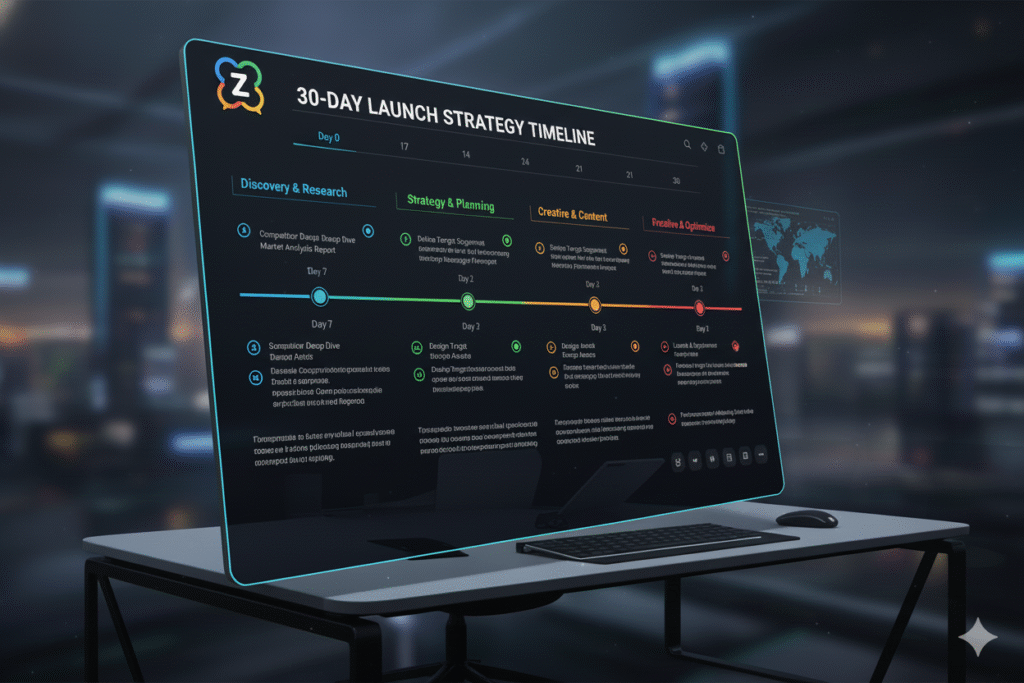
Getting Started: Your 30-Day Automated Battle Card Implementation Plan
Week 1: Assessment & Planning
- Day 1-2: Audit existing battle cards and competitive intelligence
- Day 3-4: Interview 5-10 sales reps about their competitive intelligence needs
- Day 5-7: Define your top competitors and battle card structure
Week 2: Tool Setup & Automation
- Day 8-10: Sign up for AiZolo and set up your competitive intelligence workspace
- Day 11-12: Configure competitor monitoring for websites, reviews, and social media
- Day 13-14: Create custom AI prompts for competitive analysis in AiZolo
Week 3: Content Creation
- Day 15-17: Use AiZolo’s multi-model comparison to research Competitor #1
- Day 18-20: Draft and refine your first automated battle card with sales team input
- Day 21: Repeat process for Competitors #2 and #3
Week 4: Deployment & Training
- Day 22-24: Integrate battle cards into your CRM and sales tools
- Day 25-26: Conduct sales team training on using automated competitor battle cards
- Day 27-28: Set up feedback mechanisms (Slack channel, surveys)
- Day 29-30: Monitor usage and gather initial feedback for iteration
Conclusion: The Competitive Advantage Is Yours to Seize
Remember Marcus from the beginning of this post? Six months after his painful loss, his company implemented automated competitor battle cards using AiZolo’s multi-AI approach.
Now when prospects mention competitors, Marcus opens his laptop and within 30 seconds has:
- Current pricing comparisons verified that morning
- The latest customer sentiment from review sites
- Specific talk tracks for this competitor’s weaknesses
- Proof points from recent wins against them
Last quarter, Marcus closed $780K in deals—three of them in direct competition with the same competitor who beat him before. He doesn’t stay up until 3 AM anymore. Instead, he focuses on building relationships while his automated battle cards handle the competitive intelligence.
The sales landscape has changed. Buyers are more informed, competitors are more aggressive, and the pace of change is accelerating. Static PDFs and quarterly updates don’t cut it anymore.
Automated competitor battle cards aren’t just a nice-to-have—they’re becoming table stakes for sales teams that want to win consistently.
The question isn’t whether you should automate your competitive intelligence. The question is: Can you afford not to?
Your Next Steps
- Audit your current battle cards: When were they last updated? What critical information is missing?
- Try AiZolo free: Experience how multi-model AI comparison transforms competitive research in minutes, not hours.
- Start with one competitor: Build your first automated battle card this week using the framework in this guide.
- Measure and iterate: Track win rates, usage, and feedback—then continuously improve.
- Scale systematically: Once you’ve mastered one competitor, expand to your full competitive set.
The tools, frameworks, and strategies are all here. The only thing missing is your decision to act.
Your competitors are already automating their intelligence gathering. The question is: Will you lead the charge, or play catch-up?
Try AiZolo today and transform how your team competes. Because in modern sales, the best intelligence wins—and automated competitor battle cards ensure your team is always armed with the best.
Recommended Resources
Internal Resources (AiZolo Blog)
External Resources
- Crayon’s Sales Battlecards 101 Guide – Comprehensive overview of battle card best practices
- Klue’s Competitive Intelligence Blog – Regular insights on CI strategy and tactics
- G2’s Competitive Intelligence Category – Compare CI tool options and read reviews
About the Author This guide was created to help sales and marketing teams leverage AI for competitive advantage. For questions about implementing automated competitor battle cards or to share your success stories, connect with us at AiZolo.