Author: Jeevesh Tripathi, AI Researcher & Content Strategist at AiZolo | Last updated: August 2026
Quick Summary (TL;DR)
Looking for the best affordable AI writing software without reading the whole guide? Here’s the short version.
Most standalone AI writing tools — Jasper, Copy.ai, Writesonic — charge $30-$49/month and lock you into one underlying model. Grammarly’s AI tier adds another $12-$30/month on top of that.
If you only need long-form drafting, ChatGPT Plus or Claude Pro at $20/month are solid, focused choices. If you want writing, editing, SEO structuring, and multiple AI models in one place, bundled platforms like AiZolo start at $9.90/month and are usually the cheapest way to cover more than one writing task.
This guide breaks down real pricing, what “affordable” actually means for writing software specifically, and how to pick a plan that matches how you actually write — not how a sales page describes it.
Finding the best affordable AI writing software in 2026 isn’t about finding the lowest number on a pricing page. It’s about matching a tool’s actual capabilities to how much writing you produce every month.
Table of Contents
What Counts as AI Writing Software?
AI writing software covers any tool that generates, edits, or restructures written content using a language model. That includes chatbot-style assistants, dedicated copywriting apps, and grammar or SEO-editing layers — and it’s the category most people actually mean when they search for affordable AI writing software.
It’s a broader category than a general AI subscription. A general chatbot like ChatGPT can write, but it isn’t purpose-built for blog outlines, ad variations, or brand-voice consistency the way dedicated writing software is.
If you’re still comparing AI subscriptions in general rather than writing specifically, our cheapest AI subscription comparison covers the broader pricing landscape across all major providers.
Understanding this distinction matters because most “best AI writing software” lists mix chatbots, copywriting apps, and grammar tools together as if they solve the same problem. They don’t, and pricing them the same way is how buyers end up overpaying.
The best affordable AI writing software for a novelist drafting chapters is rarely the same tool a marketer uses for ad variations. Category first, price second — that order avoids most of the regret that comes with a rushed subscription decision.
Why Writing-Software Costs Are Different
General AI subscriptions charge per model access. Writing software often adds a second layer of cost: word limits, plagiarism checks, and SEO scoring, each sometimes gated behind a higher tier.
A $29/month “unlimited” writing plan can still cap plagiarism checks at 10 per month or restrict brand-voice training to a business tier. That’s a cost most buyers only discover after signing up.
This is also why stacking a chatbot subscription with a separate grammar tool and a separate SEO tool adds up faster for writers than for general AI users. Our breakdown on the hidden cost of running multiple AI subscriptions walks through this pattern in more detail.
Freelance writers, in particular, feel this. A typical stack — one chatbot for drafting, Grammarly for polish, and a keyword tool for SEO — can quietly reach $60-$90 a month before a single client invoice covers it.
That’s exactly the gap the best affordable AI writing software is meant to close: covering drafting, editing, and structuring in one predictable monthly cost instead of three separate ones.
It’s also why “affordable” needs its own definition for writing tools specifically, rather than borrowing the general AI-subscription definition wholesale. A writer’s monthly cost isn’t just the subscription — it’s the subscription plus every add-on needed to actually publish.
What “Affordable” Actually Means for Writing Tools
Cheap and affordable aren’t the same thing when it comes to writing software. A $9/month plan that can’t hold your brand voice across a 12-part blog series isn’t actually saving you money — it’s costing you editing time.
Here’s what genuinely affordable AI writing software should include, regardless of price point.
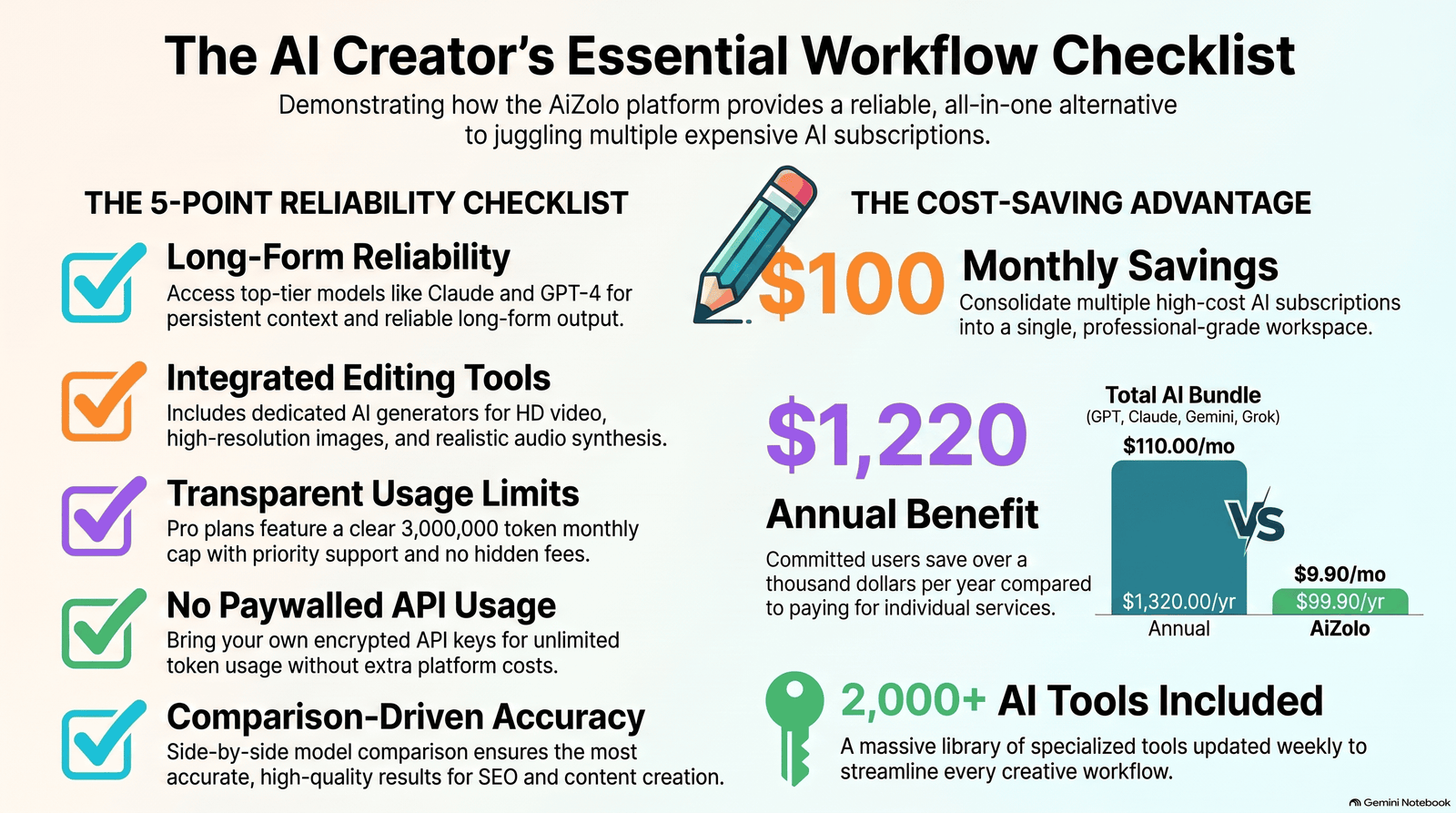
Reliable long-form output. The tool should hold coherent structure across 1,500+ word articles, not just short-form snippets.
Editing and rewriting, not just generation. Drafting is half the job — tone adjustment, expansion, and condensing matter just as much.
Transparent word or token limits. You should know your monthly ceiling before you hit it mid-project.
No paywall on core editing features. Grammar and clarity checks shouldn’t be an upsell if the plan already claims to be a “writing” tool.
Some SEO or research awareness. Even basic keyword or outline support saves a separate subscription for content writers.
Measured against this checklist, a lot of tools marketed as “the best affordable AI writing software” turn out to be affordable on paper only, once you factor in the paywalled editing features and the separate SEO subscription most people end up adding anyway.
The tools that hold up best under this framework tend to be the ones that treat editing as a core feature rather than a premium add-on, regardless of whether they’re a $9 plan or a $40 one.
Pricing Comparison: Popular AI Writing Tools
Prices below reflect publicly listed rates as of mid-2026. Always confirm current pricing on the provider’s own page before subscribing, since AI pricing shifts often.
This table is the fastest way to see how the best affordable AI writing software 2026 options actually compare once word limits and editing features are factored in, not just the headline monthly price.
| Tool | Starting Price | Model(s) | Word/Token Limit | Grammar & Editing | Multi-Model Access |
|---|---|---|---|---|---|
| ChatGPT Plus | $20/mo | GPT-4o/5 | High usage cap | Basic | No |
| Claude Pro | $20/mo | Claude | High usage cap | Basic | No |
| Jasper AI | $49/mo | Proprietary + partner models | Plan-based | Limited | No |
| Copy.ai | $36/mo | Proprietary + partner models | Word-capped | Limited | No |
| Writesonic | $39/mo | Proprietary + partner models | Word-capped | Limited | No |
| Rytr | $29/mo (unlimited tier) | Proprietary | Unlimited on top tier | Basic | No |
| Grammarly (AI tier) | $12-$30/mo | Proprietary | N/A (editing only) | Advanced | No |
| AiZolo Pro | $9.90/mo | GPT, Claude, Gemini, Grok, Perplexity + more | 3M tokens/mo shared | Via connected models | Yes |
A few patterns stand out here. Dedicated copywriting apps like Jasper and Writesonic charge a premium for templates, but the underlying writing quality still depends on the AI model behind the interface.
Judged purely on price-to-model-access ratio, AiZolo currently sits at the low end of affordable AI writing software pricing while still offering flagship-level models rather than a proprietary, lower-tier one.
Grammarly remains the strongest standalone editing layer, but it isn’t a drafting tool on its own — most people pair it with something else, which is exactly the stacking problem this guide is addressing.
For a deeper look at how bundled pricing compares to buying each provider separately, see our AI subscription savings comparison against individual SaaS tools.
Real Cost Scenarios: What Writers Actually Pay
Numbers are easier to compare with real personas than with abstract pricing tables. Here’s what three common writing workflows actually cost across a year.
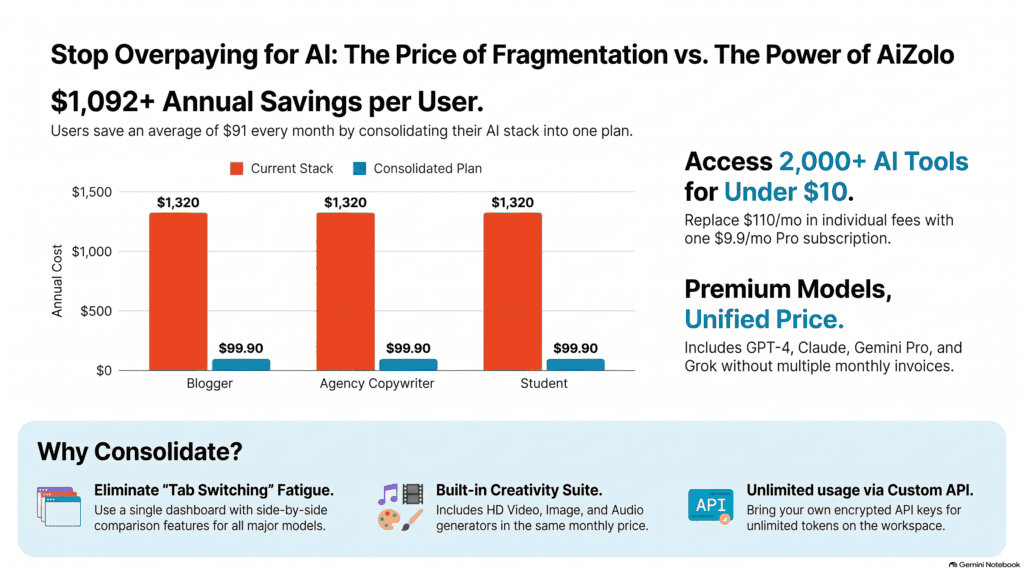
Scenario 1: Solo freelance blogger. Currently running ChatGPT Plus ($20) plus Grammarly Premium ($12) equals $32/month, or $384/year. Switching the drafting half to a bundled plan like AiZolo at $9.90/month while keeping Grammarly brings the total to roughly $21.90/month, a meaningful drop without losing the editing layer.
Scenario 2: Marketing agency copywriter. Jasper’s Creator plan at $49/month covers templates but not multi-model comparison. Testing shows most of that budget goes toward a feature set — brand voice templates — that a $9.90/month bundled plan with a saved prompt library can approximate for a fraction of the cost, though template depth still favors Jasper for high-volume ad work.
Scenario 3: Graduate student writing a thesis. A student stacking ChatGPT Plus and Grammarly Premium spends roughly $32/month, or $384 across an academic year — a meaningful expense on a student budget. The best affordable AI writing software for this scenario is usually whichever single plan covers both drafting and grammar checking without a second subscription.
None of these numbers are meant to declare one tool universally “best.” They’re meant to show that the actual savings from choosing affordable AI writing software depend heavily on which features you’d otherwise pay for separately.
AI Writing Software by Category
Not every writer needs the same tool. Here’s how the affordable options break down by what you’re actually producing.
Blog and Long-Form Content
ChatGPT Plus, Claude Pro, and AiZolo all handle long-form drafting well. Claude in particular tends to hold structure better across longer pieces, which matters for full articles rather than short snippets.
For bloggers specifically, this category is usually the deciding factor in which affordable AI writing software is worth paying for, since long-form consistency is harder to fake with a lightweight model.
Ad Copy and Short-Form Marketing
Jasper and Copy.ai were built specifically around short, punchy variations — headlines, ad copy, product descriptions. Their templates save setup time even though the base cost is higher.
Grammar, Clarity, and Tone Editing
Grammarly remains the category leader here. If your main pain point is polish rather than drafting, it’s worth pairing with a cheaper drafting tool instead of an all-in-one plan.
SEO-Aware Content Writing
Writesonic and Rytr both bundle basic keyword and SEO scoring into their higher tiers. Dedicated SEO suites go further but usually cost extra on top of the writing tool itself.
Multi-Model Comparison Writing
This is where bundled platforms differ structurally. Instead of one model’s writing style, you can run the same brief through several models and pick the strongest draft — a workflow covered in more depth in our guide comparing which AI companies offer the best value for money.
For writers who don’t yet know which model suits their voice, this category is arguably where the best affordable AI writing software conversation is heading in 2026 — fewer single-model commitments, more comparison-driven workflows.
The Hidden Costs of Cheap AI Writing Tools
The advertised price rarely tells the full story. Before committing, check for these common gaps in budget writing plans that even otherwise-solid affordable AI writing software 2026 listings tend to gloss over.
Word or generation caps that reset weekly, not monthly. Some low-cost plans quietly use rolling windows that are easy to exceed during a busy content sprint.
Plagiarism and originality checks locked to top tiers. If publishing original content matters for your work, confirm this is included before you sign up.
No brand-voice memory across sessions. Cheaper plans often can’t retain your tone guidelines between separate writing sessions, forcing repeated prompt setup.
Older or lighter models on entry tiers. A “writing assistant” running on a lightweight model produces noticeably flatter prose than one running a flagship model.
No export or integration options. Copy-pasting from a web app into your CMS repeatedly adds up in time, even if the subscription itself is cheap.
Google’s own guidance on evaluating AI-generated content is worth a read here too — content quality and originality checks matter for search visibility, not just internal editing standards.
None of these gaps make a cheap plan a bad choice automatically. They just mean the true monthly cost of “affordable AI writing software” sometimes only becomes clear after the first billing cycle, once you’ve hit a limit the pricing page didn’t spell out clearly.
How to Choose Affordable AI Writing Software
Use this short framework instead of comparing marketing pages side by side.
Step 1 — Identify your primary output. Blog posts, ad copy, emails, or a mix? This narrows the category fast.
Step 2 — Set a real monthly volume estimate. Count how many pieces you actually produce, not how many you’d like to produce.
Step 3 — Check the editing depth, not just the generation speed. A tool that drafts fast but needs heavy manual editing isn’t actually saving time.
Step 4 — Confirm commercial usage rights. Freelancers and agencies specifically need this in writing before using outputs for client work.
Step 5 — Test before committing annually. Run the same brief through the free tier or trial before locking into a yearly plan.
If you’re brand-new to AI subscriptions generally, our AI tool subscription guide for beginners covers the broader decision-making process step by step.
Running through these five steps typically takes less than an hour, and it’s the fastest way to separate genuinely affordable AI writing software from a plan that just looks cheap on the homepage.
Best Affordable AI Writing Software by Use Case
Matching a plan to your actual role tends to be more useful than any single “best overall” ranking, since writing needs vary so widely by profession.
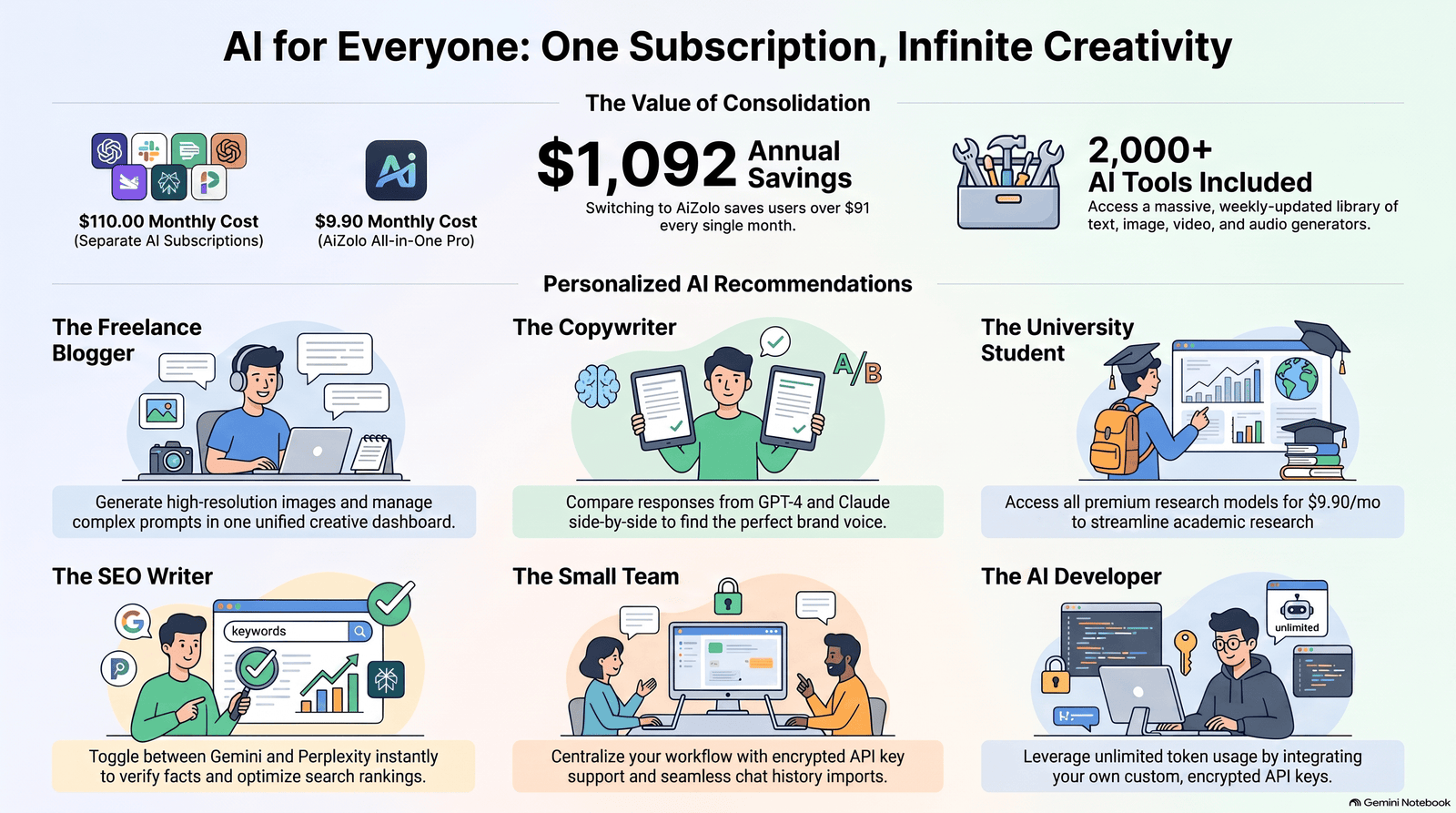
Freelance bloggers. A multi-model plan like AiZolo tends to work well here, since blog topics vary widely and no single model is best at every subject.
Copywriters and agencies. Jasper or Copy.ai’s templates save setup time for repetitive ad variations, despite the higher monthly cost.
Students and researchers. Budget matters most here — a bundled plan under $10/month or a discounted single-model plan covers most academic writing needs without overspending.
Small content teams. Shared workspaces matter more than raw model quality at this stage. Compare seat pricing carefully, since per-seat costs on dedicated writing apps scale quickly.
Solo SEO content writers. Look specifically for built-in keyword and outline support rather than paying for a separate SEO suite on top of your writing tool.
E-commerce product writers. High-volume, short-form output (descriptions, titles, variations) tends to favor template-driven apps over general chatbots, even at a slightly higher monthly cost.
Across all five profiles, the pattern holds: the best affordable AI writing software is the one that matches your actual output type, not the one with the most features listed on its pricing page.
Where AiZolo Fits Into This Picture
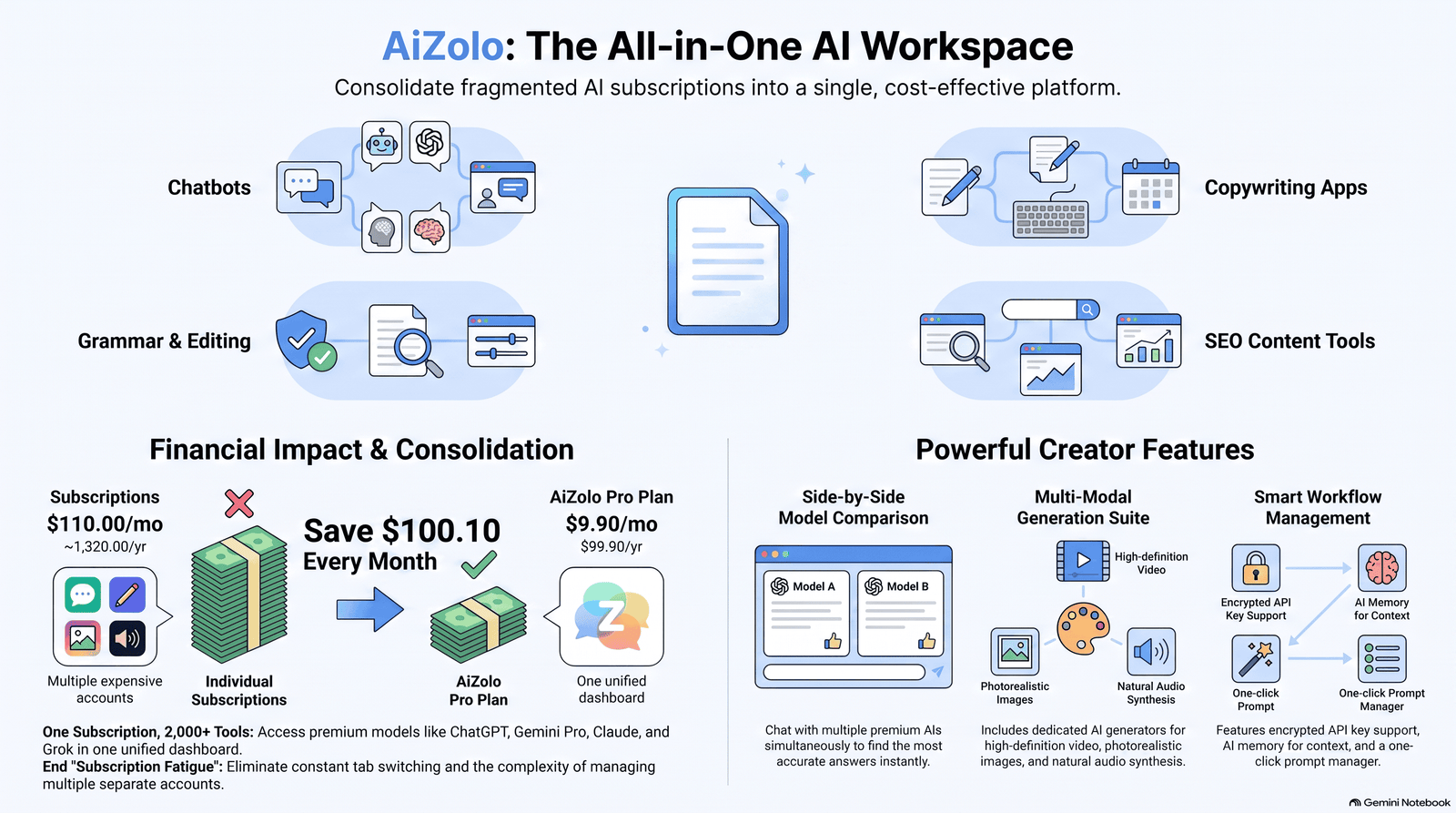
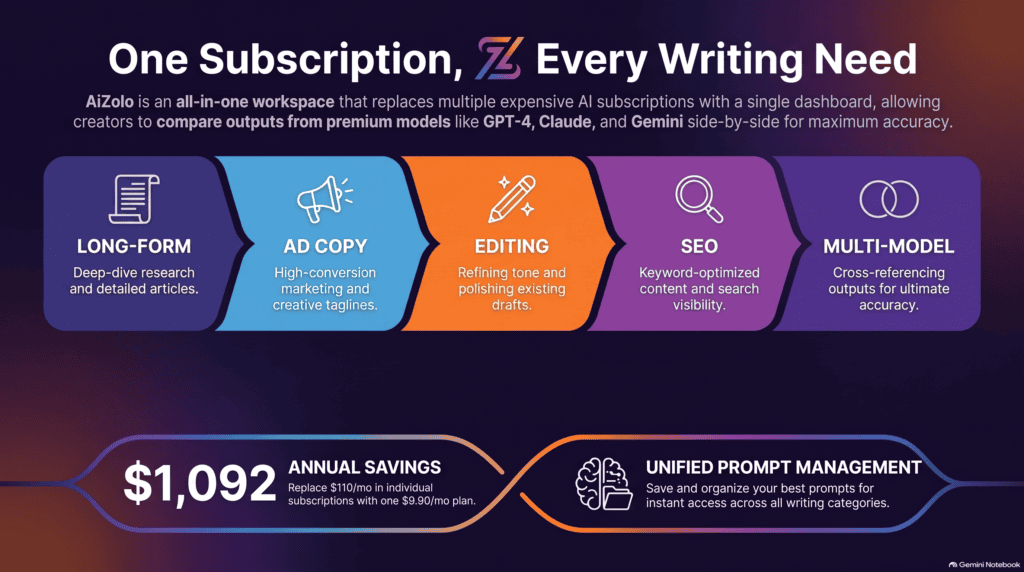
AiZolo isn’t a dedicated copywriting app with templates the way Jasper is. It’s a workspace that gives you access to several leading AI models — including the same models powering ChatGPT and Claude — for drafting, editing, and comparing writing side by side.
For $9.90/month, that means you can draft a blog post in one model, run the same brief through a second model for a different angle, and pick whichever draft needs the least editing.
That comparison workflow is the main practical difference from a single-model writing subscription. Instead of committing to one model’s writing style for every project, you’re choosing per piece.
It also supports bringing your own API keys if you already have credits with a provider, which is covered in our guide on multiple AI models in one subscription.
AiZolo isn’t the right fit for every writer — if you specifically need Jasper’s ad-copy templates or Grammarly’s dedicated editing engine, those tools still do that narrower job better. It’s worth weighing against alternatives; our AiZolo vs. WritingMate comparison looks at a writing-focused alternative directly, and our AiZolo vs. ChatGPT Plus breakdown compares it against the single-model option most writers already know.
Where AiZolo tends to earn its place among affordable AI writing software options is for writers who don’t want to lock into one model’s tone permanently — a real constraint for anyone writing across multiple clients or formats in the same week.
Getting Started in Under 15 Minutes
Getting started with any affordable AI writing software shouldn’t take more than a coffee break — here’s a straightforward path.
Step 1: Sign up for a free plan. Most tools on this list, including AiZolo, let you test core features before paying anything.
Step 2: Run one real piece of content through it. Not a test prompt — an actual article, email, or ad set you’d normally write.
Step 3: Time your editing pass. Compare how much manual cleanup the draft needed against your current tool.
Step 4: Check the cost at your real volume. Multiply your typical monthly output against the plan’s limits before upgrading.
Step 5: Cancel anything redundant. If a bundled plan covers what two separate subscriptions used to, that’s the point where the switch pays for itself.
FAQs
Is free AI writing software good enough for professional use? Free tiers work for occasional or personal writing, but usage caps and older models typically make them impractical for consistent professional output.
What’s the actual cheapest AI writing software available right now? Among single-purpose tools, ChatGPT and Claude’s free tiers are cheapest at $0, though heavily capped. Among paid multi-model options offering genuinely affordable AI writing software, AiZolo starts at $9.90/month.
What makes AiZolo different from other affordable AI writing software options? Instead of one proprietary or single-partner model, it gives access to several flagship models in one workspace, so you can compare writing styles per project rather than committing to one voice permanently.
Do I need a dedicated writing app, or is a general AI chatbot enough? For most solo writers, a general chatbot with strong editing prompts covers 80% of needs. Dedicated apps earn their price mainly through templates and team collaboration features.
Does cheaper AI writing software mean lower-quality output? Not necessarily — quality depends more on which underlying model powers the tool than on the subscription price itself.
Can I use AI-written content for client work? Check the specific plan’s terms first. Most paid tiers include commercial usage rights, but some free and entry tiers restrict it.
How much should a freelance writer budget for AI tools monthly? Most solo freelancers can cover drafting, editing, and light SEO support for $10-$25/month using either a single flagship subscription or a bundled multi-model plan — a realistic budget range for affordable AI writing software in 2026.
Is there a single best affordable AI writing software for every writer? No. The best affordable AI writing software for a template-heavy ad agency differs from the best pick for a solo blogger, which is why matching category to use case matters more than chasing the lowest sticker price.
Is Grammarly considered AI writing software? Grammarly’s newer AI tier generates and rewrites text, not just corrects it, so it fits the category, though it’s still primarily positioned as an editing tool rather than a drafting one.
What should I check before switching from my current writing tool? Compare actual monthly output against usage limits, confirm commercial rights, and test the new tool on a real piece of content before canceling anything.
Final Recommendation
There isn’t one single best affordable AI writing software for every writer — the right pick depends on whether you need templates, dedicated editing, or flexibility across multiple models.
If your work is narrow and consistent — mostly ad copy, or mostly grammar polish — a dedicated tool built for that exact task is worth its higher price.
If your writing spans multiple formats and you’d rather compare outputs than commit to one model’s style, a bundled plan like AiZolo is likely to cost less than stacking two or three separate subscriptions.
Either way, test before you commit annually, check the real usage limits, and weigh editing depth as heavily as drafting speed when you compare options.
The best affordable AI writing software in 2026 isn’t a single named winner — it’s whichever plan on this page matches your actual writing volume without forcing you to pay for features you’ll never touch.
Author Bio
Jeevesh Tripathi — AI Researcher & Content Strategist at AiZolo
Jeevesh Tripathi researches AI writing platforms, AI subscription pricing, and content-production tools, with a focus on hands-on testing rather than marketing claims. His work helps freelancers, agencies, and content teams choose writing software that fits their actual output volume and budget.
Contact: jeevesh@aizolo.com
This article follows Google’s guidance on helpful, people-first content and is reviewed for accuracy against publicly listed provider pricing at the time of publication.