
Comparing Grok and Perplexity can help you understand which AI fits different research needs.
If you want to compare multiple leading AI models without switching between platforms, AiZolo brings them together in one workspace, making it easier to test the same prompts, compare responses, and choose the right model.
Table of Contents
Introduction
Breaking news moves faster than any model’s training data. That’s the real question hiding inside “Grok vs Perplexity real-time search” — not which chatbot sounds smarter, but which tool finds trustworthy information first and shows you where it came from.
Grok 4.6 is now the latest flagship Grok model from SpaceXAI, building on Grok 4.5 with stronger capabilities for long-running agentic tasks, coding, knowledge work, and interactive projects.
Perplexity, by contrast, was built around web search, source citations, and information retrieval, making it a fundamentally different type of AI assistant. Understanding these design goals is essential before deciding which platform performs better for real-time news, research, or live web search.
Perplexity, by contrast, has spent 2026 turning itself into a full research and browsing platform built around citations. Comparing them fairly means comparing two different philosophies of “search,” not just two chatbots.
That makes a current Grok vs Perplexity comparison less about asking which AI is universally better and more about how each platform handles real-time information, source discovery, research, and AI-assisted workflows.
The Core Difference People Get Wrong

The biggest difference between Grok and Perplexity is not simply that one is an AI assistant and the other is a search engine. Both products have expanded into research, tool use, and agentic workflows. The more useful distinction is how each product approaches information and task completion.
Grok 4.6: A General-Purpose AI Model With Search and Tools
Grok 4.6 is xAI’s current flagship model, positioned for coding, agentic tasks, and knowledge work. It supports a 500,000-token context window, configurable reasoning, and agentic tool calling. Its available tools include Web Search, X Search, code execution, and custom function calling.
That means Grok 4.6 can operate as more than a conversational chatbot. With the appropriate tools enabled, it can search the live web, retrieve information from X, execute code, and work through multi-step tasks. xAI’s documentation is explicit that Grok does not have knowledge of current events beyond its training data without search tools; Web Search and X Search are the mechanisms used to incorporate real-time information.
This makes Grok 4.6 particularly relevant for workflows involving coding, reasoning, automation, research, and tool-driven tasks. Its configurable reasoning levels also allow developers to adjust how much reasoning effort the model uses for a request.
Perplexity: Search-First AI With Multiple Models and Agents
Perplexity takes a different starting point. Its fundamental mode of operation is searching the open web and returning answers with citations. Perplexity also allows queries to be distributed across several frontier AI models, letting the product use multiple models for a query, rather than being limited to one model per task.
Its capabilities go far beyond simple search, though: Deep Research is meant for multi-step research tasks, and can utilize information from various sources, while Perplexity’s broader set of tools can perform agentic research, analysis, coding, and more.
Perplexity has also expanded into browser-based and autonomous workflows through Comet. Comet can perform tasks like browsing across web domains, working within multiple tabs, researching, and performing tasks on behalf of the user, while its newer assistant features are meant for more involved, multi-step tasks.
So the practical distinction is this: Grok 4.6 is centered on a powerful general-purpose model that can use search and other tools, while Perplexity is centered on web-grounded answers and research and has expanded that foundation into multi-model and agentic workflows.
Neither description means that one product is limited to a single category. Grok can search and perform research, while Perplexity can use multiple models and carry out increasingly complex tasks.
The difference is primarily in their product architecture and starting point: Grok starts with the model; Perplexity starts with search, sources, and information retrieval.
How Each System Actually Finds Real-Time Information
When comparing Grok vs Perplexity real-time search, the important distinction is not simply which one can access the latest information. Both can utilize updated web information; however, the approaches are different.
Grok 4.6 uses a general-purpose AI model and adds search and other tools when real-time information or an external action is needed.
Perplexity is built around web search, source retrieval, citations, and increasingly agentic research workflows. Understanding the difference is much more enlightening than asking yourself which one has better real-time search.
How Grok 4.6 Handles Real-Time Information
Grok 4.6 does not automatically have live knowledge of events just because it is a current model. xAI’s documentation on Grok doesn’t have access to real-time events outside of its training data without search tools. To incorporate current information, Grok can use tools such as Web Search and X Search.
Web Search allows Grok to search the live web, browse webpages, and extract relevant information for an answer. It can also be configured with domain restrictions and image-search capabilities, making it useful for finding current information from specific websites or across the broader web.
X Search provides a different real-time layer. It allows Grok to search posts, users, and threads on X, including keyword and semantic search. This can be particularly useful when the information you need is being discussed by people on X rather than published immediately through traditional websites. xAI also supports date-range filtering for X searches.
This gives Grok access to two complementary sources of current information:
- Web Search: current webpages, articles, documentation, and other online sources
- X Search: search for recent content, conversations, users, and threads on X
- Source retrieval: citations and URLs from information gathered through its tools
- Agentic research: multiple tools can be used together during a task
- Tool-driven workflows: Web Search, X Search, code execution, and custom functions can be combined for more complex tasks
The result is a search experience closely connected to the model’s reasoning and tool-calling capabilities.
How Perplexity Handles Real-Time Information
Perplexity approaches real-time information from a more search-first foundation. Its product is designed around researching the open web, retrieving information, synthesizing sources, and presenting answers with citations. Perplexity currently describes its platform as a web-first agentic AI system with multi-model orchestration rather than a single-model search product.
When asking Perplexity a current question, the system can search the web for relevant information, analyze it, and cite the source of its results. The system’s architecture has been expanded to include not only conventional search but also deep research and computer-based processes.
Deep Research is intended for more involved questions, which may require extensive research. Perplexity states that with Deep Research, it lays out a research plan and searches multiple sources, comparing and contrasting results and providing a report, along with citations.
Its newer Computer-based Deep Research can also work with user files and live web information to create deliverables such as reports, presentations, spreadsheets, and dashboards.
Perplexity’s current ecosystem therefore includes several layers:
- Web search: Real-time information retrieval from the open web
- Citations: Source-backed answers with the ability to drill into supporting information
- Multi-model orchestration: Queries can be routed to multiple frontier models
- Deep Research: Multi-step research and synthesis from sources
- Computer: Research, analysis, coding, and multi-step tasks
- Comet: Browser-based extension that can navigate and act within a workflow
- Agentic workflows: Moving from simply finding information to actually performing tasks
This means Perplexity’s real-time search experience is increasingly more than a traditional search-and-answer system. Its current direction combines search, citations, multiple AI models, research agents, and computer-based task execution.
Grok vs Perplexity Real-Time Search: What Is Actually Different?
The difference is best understood as model-first versus search-first.
Grok 4.6 is a general-purpose reasoning model that can incorporate current information through Web Search and X Search. Its advantage in this architecture is the ability to combine search with reasoning, code execution, and other tools inside an agentic workflow.
Perplexity starts from the opposite direction. Search and source retrieval are central to the product, and its platform increasingly layers multiple models, Deep Research, Computer, and Comet on top of that search foundation.
So the practical choice depends on the task. If you want an AI model that can search the web or X and then combine that information with reasoning and other tools, Grok 4.6 provides that workflow. If your priority is web research, source synthesis, citations, and increasingly autonomous research workflows, Perplexity is designed around that experience.
Neither should be described simply as “the real-time AI” while the other is “just a chatbot.” Both now combine AI reasoning with live information retrieval; the major difference is how search is integrated into the overall product and workflow.
Grok vs Perplexity: Comparison Table
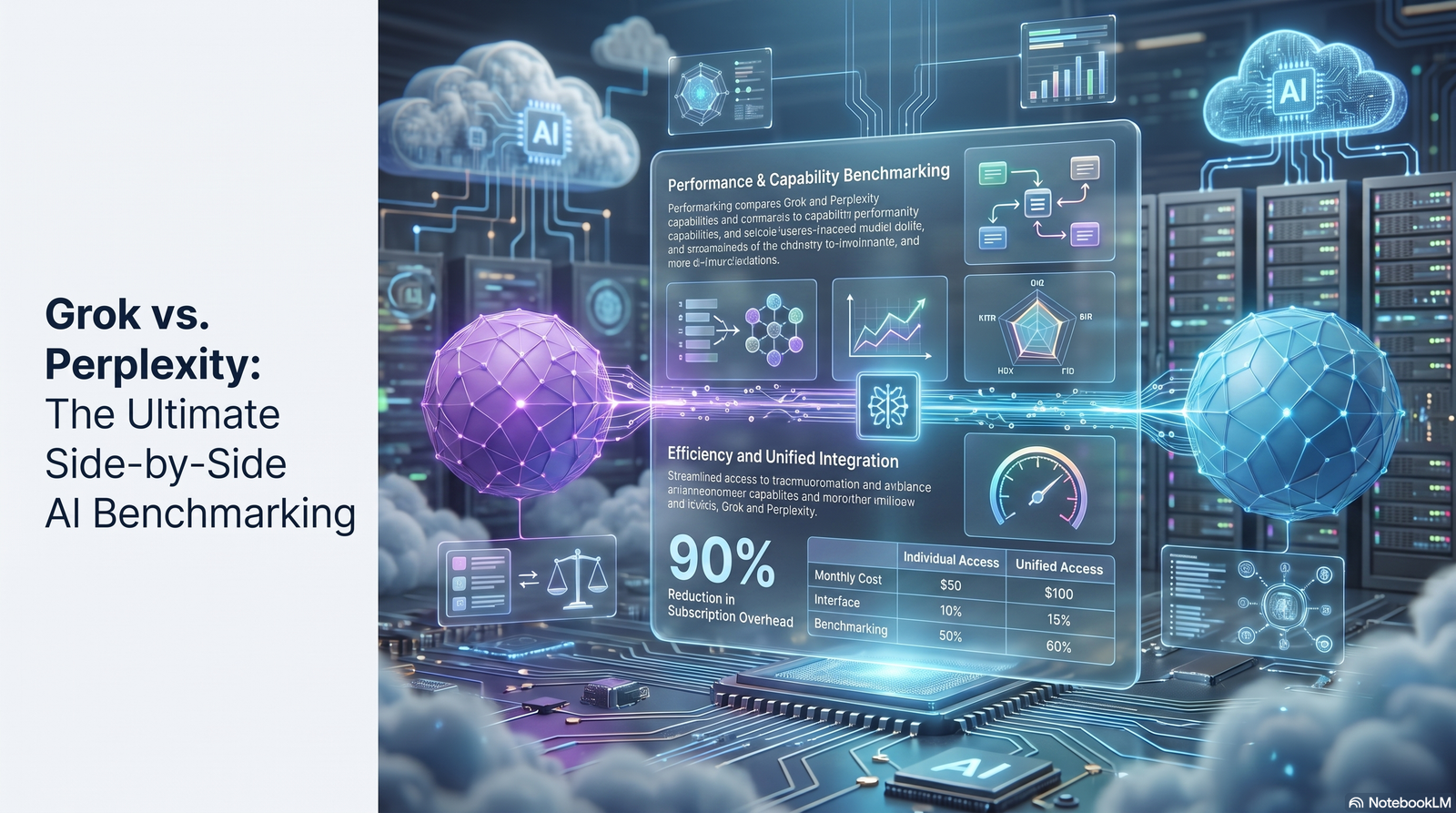
| Category | Grok 4.6 | Perplexity |
|---|---|---|
| Primary focus | Coding, reasoning, agents and knowledge work | AI-powered search and research |
| Real-time information | Web Search + X Search | Web search and sourced answers |
| Social information | X Search integration | Web-based sources |
| Citations | Available when search tools provide sources | Central part of search experience |
| Research | Agentic research/search workflows | Deep Research |
| Context | 500K tokens in current xAI documentation | Depends on underlying model/workflow |
| AI models | Grok family | Multi-model platform |
| Browser | Grok ecosystem | Comet |
| Agent capabilities | Strong focus on long-running agents | Search, Computer and agentic workflows |
| API | xAI API | Perplexity API / Agent API |
| Current model status | Latest flagship Grok model | Multi-model search platform |
Citation Accuracy: What We Can and Cannot Conclude
Accuracy is an important part of any grok vs perplexity real time search comparison, but historical benchmark results need to be interpreted carefully.
Older work on citation accuracy may be helpful, especially if it involved earlier iterations, of Grok, Perplexity, or the search systems on which they were based.
With that said, those results should not be cited as support for Grok 4.6 or today’s Perplexity experience. Over time, models, search systems, retrieval methods, and product offerings can evolve considerably.
Grok 4.6 currently offers Web Search and X Search to surface the latest information and xAI provides citation data about the sources retrieved through their search experience. xAI also states that Grok has no access to real-time events without search tools enabled.
Perplexity likewise uses web retrieval and citations as a core part of its answer experience, with newer research and agentic capabilities extending beyond its earlier search-only framing.
The key point is that there is no single standardized “real-time news accuracy” score that definitively settles Grok 4.6 vs. current Perplexity. A result from an older citation benchmark should therefore be treated as historical evidence rather than a current head-to-head measurement.
For critical claims, especially those relating to breaking news, financial data, science, and other fields where information changes quickly, the best way to verify information is to open the sources and check them against an authoritative or primary source.
Claims made in citations can make an answer more verifiable, but having citations does not ensure that all claims are correct.
Pricing Compared
Pricing and plans change frequently, so check the official pricing pages before purchasing or budgeting.
Grok: Grok currently has a free tier with limited access and real-time web and X search. SuperGrok costs $30/month and includes access to Grok 4.6, Grok Bot, connectors, higher rate limits, and image/video generation.
SuperGrok Plus costs $100/month and adds significantly higher usage, 1080p video creation, and priority access. xAI also offers API access separately, with Grok 4.6 priced at $2 per million input tokens and $6 per million output tokens for prompts below 200K tokens; long-context pricing is higher.
Perplexity: Perplexity offers Standard (Free), Pro, Max, and Education Pro for individual users, alongside Enterprise plans and a separate API Platform. The free plan provides practically unlimited basic searches but only a limited amount of Pro Search.
Pro provides access to advanced models, increased research and file capabilities, while Max costs $200/month or $2,000/year and provides the highest consumer usage limits. Education Pro is available to verified students and educators at $10/month.
For Grok vs Perplexity real time search, subscription pricing is only part of the comparison. Both products now offer live search and increasingly agentic features, but API access and limits are handled separately by each company.
Which Is Better for Breaking News?

When Grok 4.6 may be useful
If breaking news means following developing conversations on X, Grok 4.6 can be useful for monitoring X Search alongside Web Search, combining social signals with information from the wider web, and using agentic tools to investigate a developing story. However, social posts can be incomplete, speculative, or incorrect, so they should not automatically be treated as confirmed facts.
When Perplexity may be useful
If breaking news means finding and checking information from multiple web sources, Perplexity can be useful for source-backed research, comparing coverage, and quickly checking where a particular claim came from. Its citations can make it easier to trace information back to the underlying sources.
For Grok vs Perplexity real time search, the practical difference is therefore more about workflow than a fixed winner. Grok can help surface developing discussions and social signals, while Perplexity can help locate and synthesize web sources.
For breaking-news research, the strongest workflow may involve checking multiple sources rather than relying on either AI system alone. Open the cited sources, compare independent reporting, and verify important claims before treating them as confirmed.
Which Is Better for Research?
Perplexity is designed around web retrieval, citations and research workflows, while Grok 4.6 combines reasoning and agentic capabilities with access to web and X search tools. For citation-heavy work, users should examine the underlying sources rather than treating either model’s answer as automatically verified.
Limitations
Grok 4.6
- Real-time information requires search tools.
- X content should be verified against primary sources.
- 500K-token context does not guarantee accuracy.
- Features and access vary by plan and API environment.
Perplexity
- Results depend on the quality of retrieved sources.
- Citations should be verified for important claims.
- Features and limits vary by plan.
- It is now a multi-model, increasingly agentic platform.
- Comet and Computer extend its capabilities beyond traditional search.
Who Should Choose Which
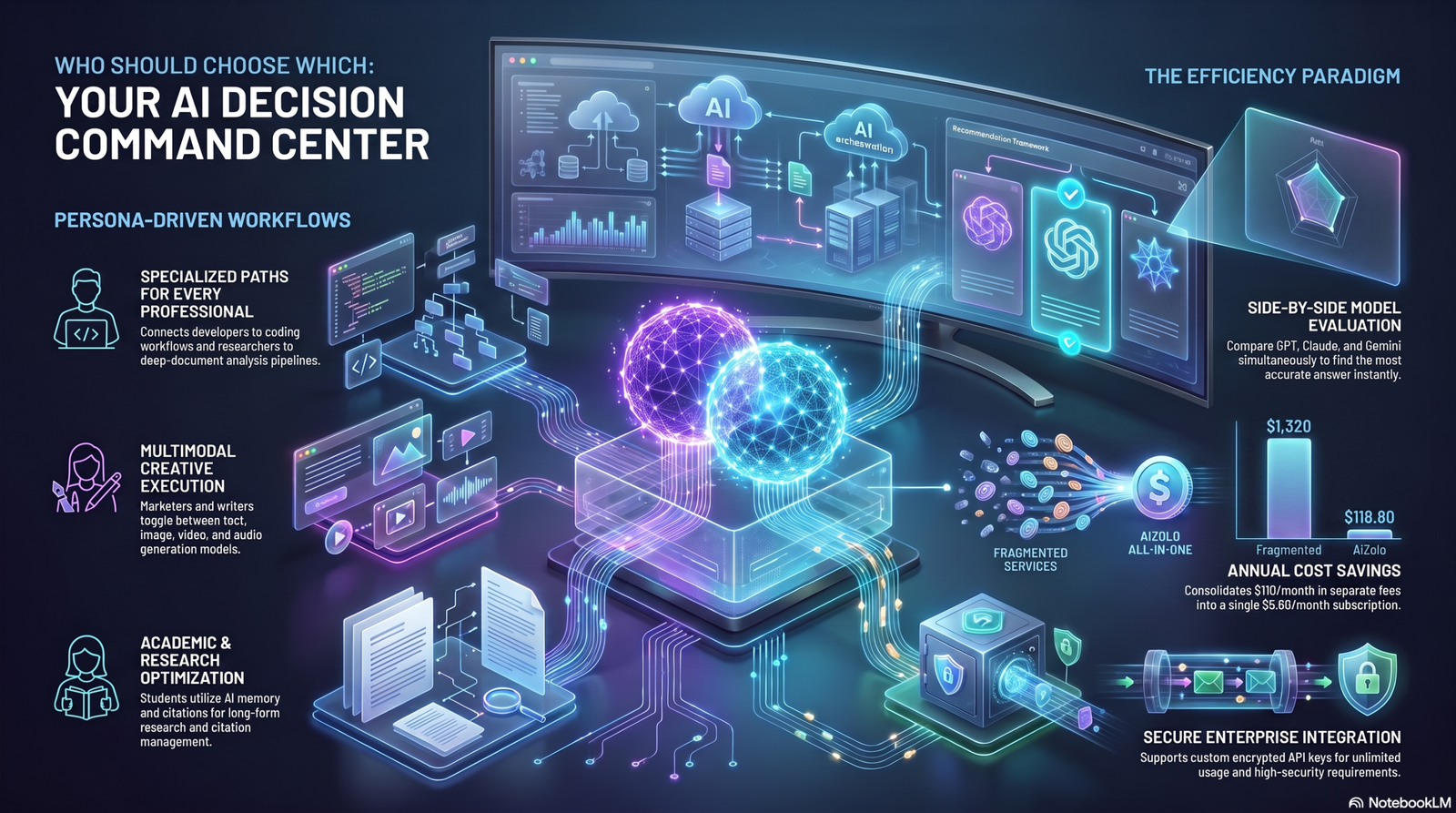
12. Who Should Choose Which
| If your priority is… | Consider |
|---|---|
| X/social discussion monitoring | Grok |
| Coding and agentic development | Grok 4.6 |
| Web-source discovery | Perplexity |
| Citation-heavy research | Perplexity |
| Multi-source research | Perplexity |
| Long-running agentic work | Grok 4.6 |
| Browser-based AI assistance | Perplexity Comet |
| Comparing multiple AI models | Perplexity |
| Combining multiple AI models in one workspace | AiZolo |
The choice depends on the workflow rather than a single overall winner. Grok 4.6 can suit workflows involving coding, agents, and X-based information, while Perplexity can suit source-focused research, multi-source search, and browser-based assistance.
AiZolo gives users a single workspace for comparing multiple AI models instead of forcing them to switch between separate AI platforms. For a research workflow, users can compare responses from different models, test the same prompt across models, and evaluate differences side by side.
Final Verdict
Grok and Perplexity represent different approaches to real time research and both are worth exploring. Grok 4.6 offers powerful reasoning and agentic capabilities along with web and X search functionality, while Perplexity focuses more on web search, citations and research, and is growing more agentic over time.
For now, when it comes to researching breaking stories, the choice between Grok and Perplexity is less about finding an undisputed best and more about understanding the differences in their approaches and determining which is a better fit for your specific line of research.
Grok can be a great tool for engaging with the developing discussion around a story, combining social insights with web searching to follow conversations as they unfold, while Perplexity focuses on finding and citing relevant web sources for research.
For deep research, being able to interrogate sources is always going to be key, regardless of which AI assistant you’re using. Checking referenced websites, and comparing information across multiple sources will always be critical in understanding a topic fully and accurately.
FAQ
Is Grok 4.6 built for real-time news? Not specifically — it’s a general-purpose model focused on coding, reasoning, and agentic work. Its real-time search comes through tools such as Web Search and X Search.
Which AI has lower hallucination rates? On the Columbia Journalism Review citation test, Perplexity Sonar Pro scored far lower (better) than Grok 3, though this measures citation accuracy specifically, not general factual correctness.
Can Grok replace Perplexity? Not for citation-heavy research. Grok’s strength is speed and X access; Perplexity’s strength is sourced, traceable answers.
Is Perplexity still better for research in 2026? Yes, based on independent citation-accuracy data and its Deep Research and Comet browser tooling.
Which is cheaper? Perplexity Pro ($20/month) undercuts standalone SuperGrok ($30/month) at the entry paid tier; both have free tiers with usage limits.
Does Perplexity have a free plan? Yes — unlimited standard search plus a limited daily allowance of Pro Search and Deep Research.
What is Grok’s DeepSearch? An agentic research mode that splits a query into sub-queries and runs iterative parallel searches across the web and X.
What is Perplexity Comet? A free, Chromium-based AI browser from Perplexity with an embedded assistant, cross-tab summarization, and a multi-model “Council” feature for Max subscribers.
Is Grok good for coding? Yes — Grok 4.6 was purpose-built for coding and agentic developer workflows, trained partly on real Cursor session data.
Which is better for students? Perplexity, largely due to its citation transparency and a discounted Education Pro tier.
Does Grok cite sources? Yes, when search tools are engaged, but independent testing shows a notably higher citation-hallucination rate than Perplexity.
What’s the API pricing difference? Grok 4.6’s API pricing varies by context length, while Perplexity now offers its Agent API alongside other API options, so current rates should be checked on the official pricing pages.
Is there a benchmark for real-time news accuracy specifically? No standardized public benchmark currently measures this directly for either tool — most available data covers citation hallucination or general knowledge tests.
Which is better for X/social sentiment monitoring? Grok, due to its native, unmatched access to the X data stream.
You really make it seem so easy with your presentation but I find this matter to be actually
something that I think I would never understand. It seems too complex and extremely broad
for me. I’m looking forward for your next post, I’ll try to get the hang of it!
555