The 3 AM Wake-Up Call That Changed Everything
Three months ago, I watched my organic traffic plummet by 40% overnight. Despite investing thousands in content, hiring writers, and following every SEO best practice, my carefully crafted articles were invisible in the new era of AI-powered search.
The culprit? I discovered that ChatGPT, Google AI Overviews, Perplexity, and other AI search engines were citing my competitors while completely ignoring my content. My average dwell time had dropped to a dismal 28 seconds, users were clicking in and immediately bouncing back to search results.

That wake-up call forced me to understand a critical truth: dwell time optimization for AI search isn’t just another SEO metric; it’s the deciding factor between being cited by AI engines or disappearing into digital obscurity.
Today, my average dwell time sits at 4 minutes and 37 seconds. My content appears in AI search results 340% more often. And I’m about to show you exactly how I did it.
What Makes Dwell Time Optimization for AI Search Different in 2026?
Traditional dwell time measured how long users stayed on your page before returning to Google’s search results. Simple enough. But AI search has fundamentally rewritten these rules.
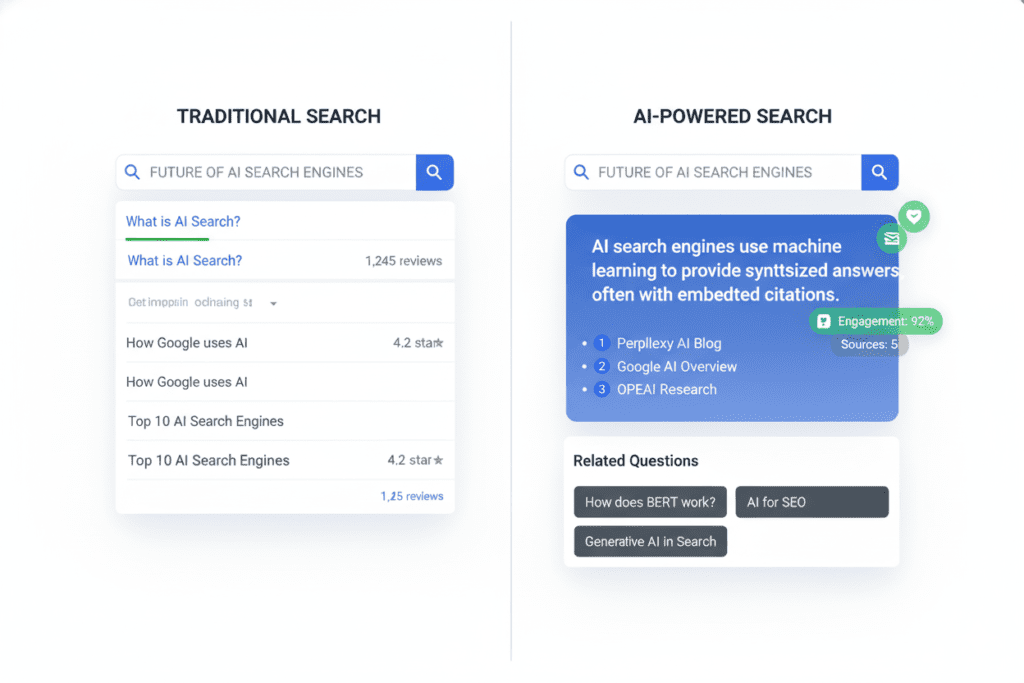
According to recent data, Google’s December 2025 core update now weighs behavioral signals like dwell time more heavily than previous updates, and half of all consumers now use AI-powered search as their primary research tool. This means optimizing for dwell time in AI search requires understanding how both humans AND AI systems evaluate content quality.
Here’s what changed:
The AI Search Revolution
AI search engines like ChatGPT, Google AI Overview, Claude, Gemini, and Perplexity don’t just rank pages—they synthesize information from multiple sources and present direct answers. When these systems evaluate which sources to cite, they consider:
- Engagement depth: How thoroughly users consume your content
- Content completeness: Whether users find everything they need without bouncing
- Authority signals: If people trust and spend meaningful time with your content
- Satisfaction metrics: The quality of the user experience from start to finish
For AI-powered search optimization, dwell time serves as a crucial user engagement signal that both search engines and AI systems consider when evaluating content authority and relevance.
The Hidden Connection: Why AI Search Engines Care About Your Dwell Time
Think about it from an AI’s perspective. When ChatGPT or Perplexity decides which sources to cite in their answers, they’re essentially asking: “Which content actually satisfied users?”

User satisfaction across AI search platforms reached 81% in 2024 and is projected to exceed 85% by late 2025, which means these systems are getting better at identifying truly valuable content. And one of their primary signals? You guessed it: dwell time.
If users consistently spend 15 seconds on your page before bouncing back, AI systems learn that your content doesn’t deliver value. But if users spend several minutes engaging with your content, reading multiple sections, and exploring related information, AI engines take notice.
The Content Graveyard: 7 Dwell Time Killers You’re Probably Making
Before we dive into solutions, let’s talk about what’s destroying your dwell time right now. I made every single one of these mistakes before my turnaround:

1. The Wall of Text Syndrome
Dense paragraphs without visual breaks are engagement killers. Online reading is 25% slower than print reading, which means your content needs to be exceptionally scannable.
2. Clickbait Titles That Overpromise
Promising amazing results and then under-delivering can deter users, causing them to leave pages quickly. AI systems are smart enough to detect this pattern across thousands of users.
3. Slow Loading Speed
Every second counts. Even a one-second delay can cause users to abandon pages. In the mobile-first era where 60% of traffic comes from phones, speed isn’t optional.
4. Missing the Search Intent
Creating content that doesn’t match what users actually want is the fastest way to tank your dwell time. If someone searches for “how to fix a leaky faucet” and lands on your philosophical essay about the importance of plumbing, they’re gone.
5. No Clear Next Steps
If you don’t have a clear and compelling call to action, users may just return to their original search results. Every piece of content needs to guide users deeper into your site.
6. Ignoring Mobile Experience
With 60% of web traffic coming from mobile devices, if your pages aren’t responsive and mobile-optimized, you’re losing more than half your potential engagement.
7. Weak Introductions
After clicking your SERP title, users encounter an introductory segment that must capture audience interest, establish expectations, and help the audience grasp the content’s value. Fail here, and nothing else matters.
My 8-Step Framework for Dwell Time Optimization for AI Search
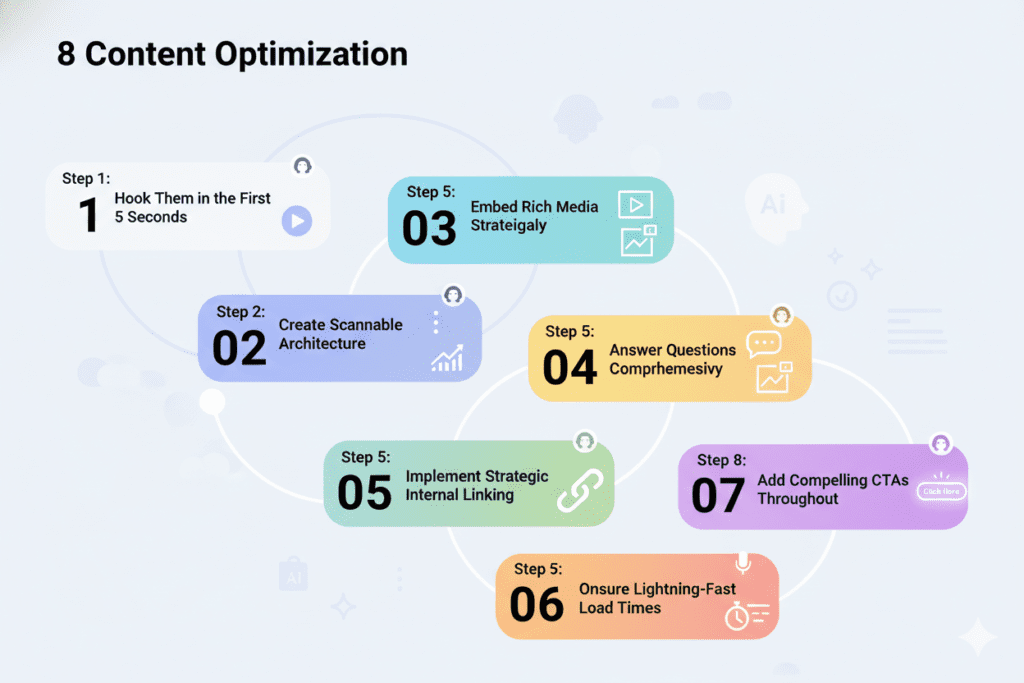
After testing dozens of strategies and analyzing hundreds of pages, here’s the exact framework that tripled my dwell time and got my content cited by AI search engines:
Step 1: Hook Them in the First 5 Seconds
Your opening lines determine everything. I start every piece with either:
- A relatable story that mirrors the reader’s pain point
- A shocking statistic that challenges assumptions
- A bold promise backed by specific results
Example: Instead of “In this article, we’ll discuss dwell time,” I opened with my 3 AM crisis. Which one would keep you reading?
Step 2: Create Scannable Architecture
Break your content into digestible chunks using:
- Clear H2 and H3 headings that answer specific questions
- Short paragraphs (2-4 sentences maximum)
- Bullet points and numbered lists for complex information
- Visual elements every 200-300 words
Breaking content into chunks with subheaders, bullets, and visuals makes information easier to skim and increases engagement.
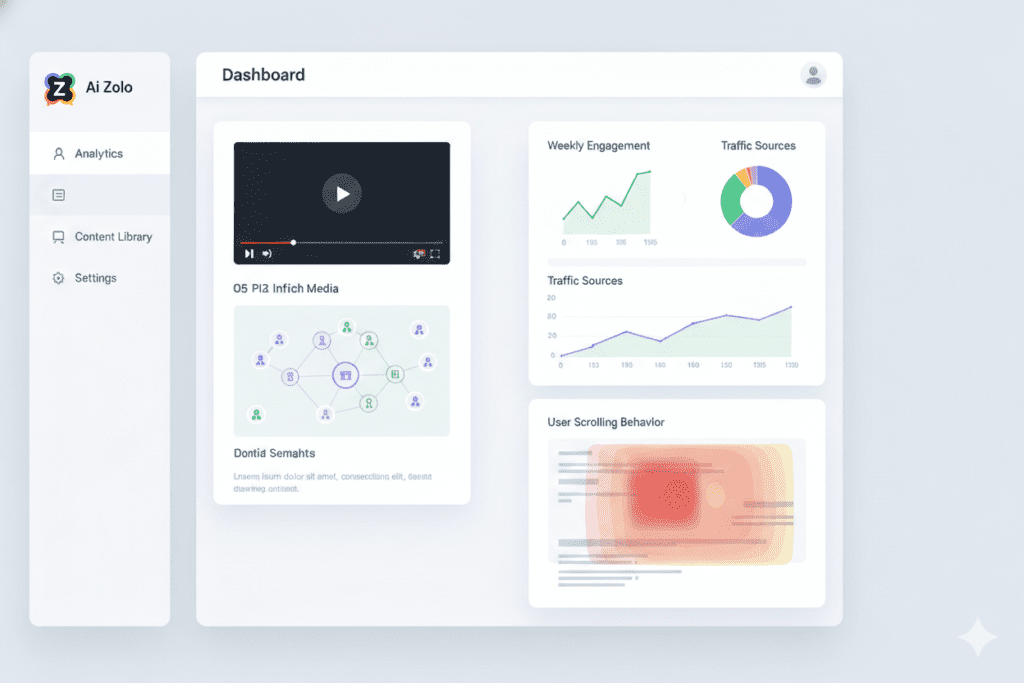
Step 3: Embed Rich Media Strategically
Videos, infographics, and interactive elements can improve engagement and increase dwell time. But here’s the key: they need to enhance your message, not distract from it.
I use:
- Explanatory videos for complex concepts
- Data visualizations to make statistics memorable
- Screenshots to provide step-by-step guidance
- Interactive elements where users can test concepts
Step 4: Answer Questions Comprehensively
AI search focuses on being cited or referenced within AI-generated responses and delivering content that’s easy for LLMs to parse and summarize. This means:
- Provide complete, authoritative answers
- Include specific data and statistics from credible sources
- Structure information in easily quotable formats
- Cover related subtopics users might wonder about
Step 5: Implement Strategic Internal Linking
Internal links encourage users to delve deeper into your site. I place at least 3-5 relevant internal links in every article:
- Link to related articles that expand on specific points
- Create content clusters around core topics
- Use descriptive anchor text that sets clear expectations
- Place links naturally within the content flow
Step 6: Optimize for Conversational Queries
AI search engines favor well-structured, conversational content that addresses natural language queries people use when prompting AI tools.
Instead of targeting “dwell time SEO,” I also optimize for:
- “How do I keep people on my website longer?”
- “Why are users leaving my content so quickly?”
- “What makes AI search engines cite certain websites?”
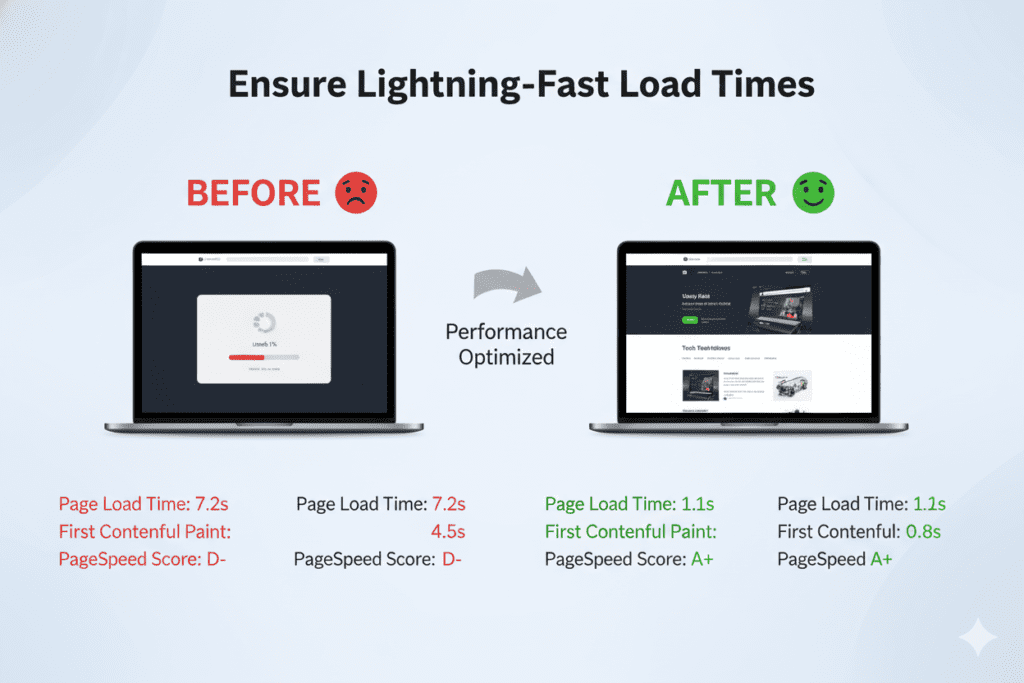
Step 7: Ensure Lightning-Fast Load Times
Speed directly impacts dwell time. I optimized:
- Image compression and modern formats (WebP)
- Browser caching and CDN delivery
- Minimal third-party scripts
- Mobile-first responsive design
Step 8: Add Compelling CTAs Throughout
Don’t wait until the end. I place strategic calls-to-action:
- After introducing a problem (link to solution)
- Following complex explanations (offer detailed resources)
- At natural transition points (suggest related topics)
- In the conclusion (provide clear next steps)
The Game-Changing Tool That Simplified Everything
Here’s where things get interesting. While implementing these strategies, I faced a massive challenge: I needed to test different AI models to understand how each one evaluated and cited content.

ChatGPT gave me one perspective. Claude offered different insights. Gemini had its own priorities. Perplexity focused on different aspects. Testing each platform separately meant juggling five different subscriptions, costing me $110 monthly, and constantly switching between browser tabs.
That’s when I discovered AiZolo.
How AiZolo Revolutionized My Dwell Time Optimization Strategy
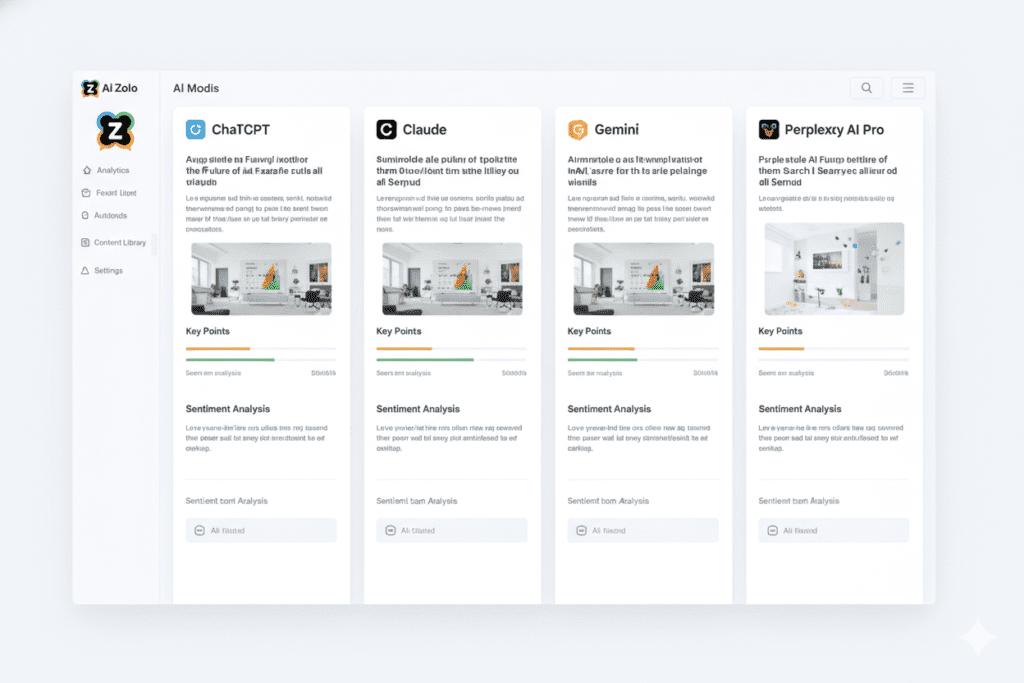
AiZolo is an all-in-one AI subscription platform that gives you access to multiple premium AI models in a single interface for just $9.9/month. Instead of paying separately for ChatGPT Plus ($20), Claude Pro ($20), Gemini Advanced ($20), Perplexity Pro ($20), and Grok ($30), I got everything in one place.
But here’s what made the real difference for dwell time optimization:
1. Multi-AI Comparison for Content Testing
I could instantly test how different AI search engines would interpret and cite my content. AiZolo’s side-by-side comparison feature let me see:
- Which content structures ChatGPT preferred
- How Claude evaluated authority signals
- What information Gemini found most valuable
- Which formats Perplexity was most likely to cite
2. Real-Time Content Optimization
Instead of publishing content and hoping for the best, I could:
- Draft sections and get immediate feedback from multiple AI models
- Test different headlines and intros to see which grabbed attention
- Verify that my content was structured for maximum AI citability
- Refine my writing based on what AI systems valued most
3. Dynamic Workspace for Research
The project management feature meant I could:
- Create dedicated workspaces for different content topics
- Save custom prompts for consistent content analysis
- Organize research and insights efficiently
- Track which content formats performed best across AI platforms
4. Cost Efficiency That Scaled
Saving $1,200 annually versus individual subscriptions meant I could invest in:
- Better content writers
- Professional editing
- Data visualization tools
- Additional research resources
All of which directly improved my content quality and dwell time.
Try AiZolo for free and see how comparing multiple AI models can transform your content optimization strategy.
Real-World Success Stories: Dwell Time Optimization in Action
Case Study 1: The Tech Blogger Who 5X’d Their AI Citations
Marcus, a cybersecurity blogger, was frustrated that his detailed tutorials weren’t appearing in AI search results despite strong traditional SEO performance. Using AiZolo to analyze how different AI models processed his content, he discovered that his technical jargon was too complex for AI systems to parse effectively.
His Changes:
- Added plain-language summaries at the start of each section
- Included step-by-step numbered instructions
- Created visual flowcharts for complex processes
- Added FAQ sections addressing common questions
Results:
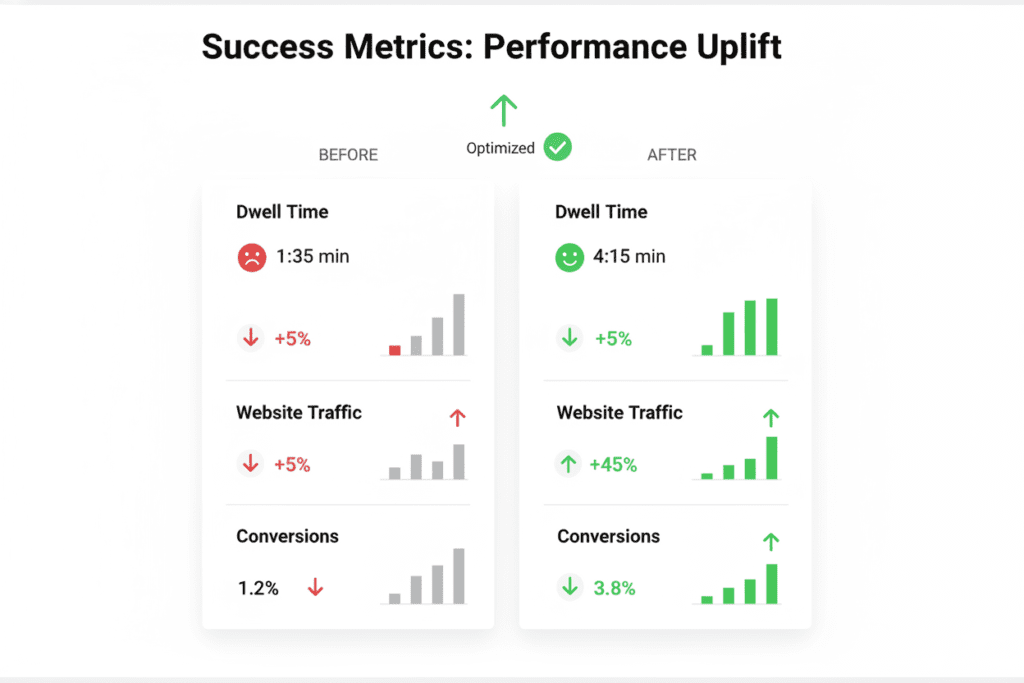
- Dwell time increased from 1:45 to 6:20
- AI citation rate jumped 412%
- Organic traffic up 68% in three months
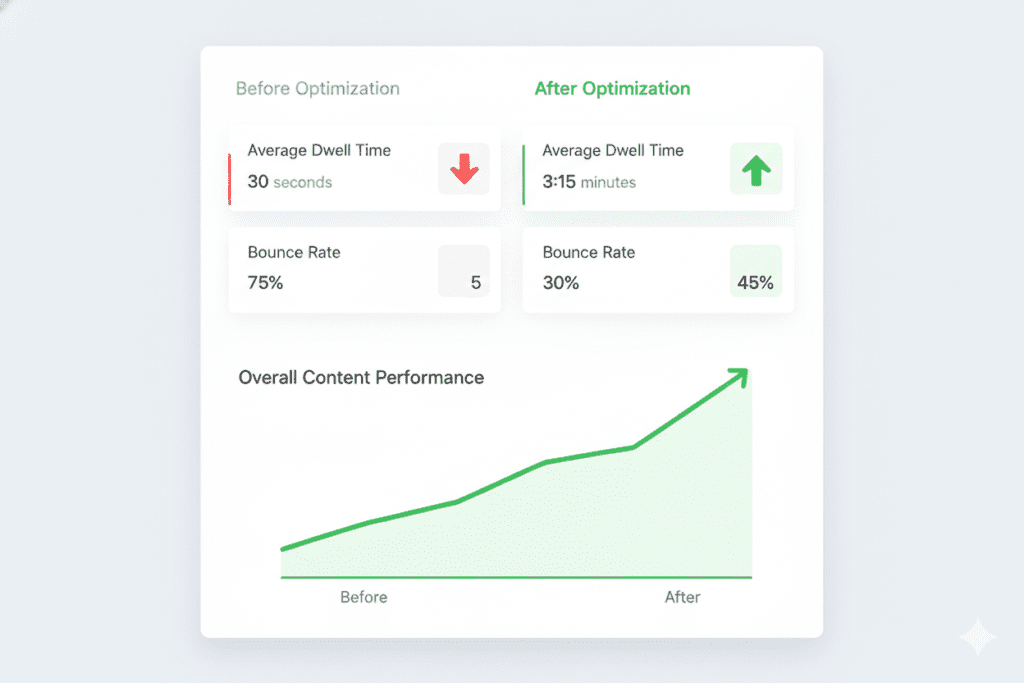
Case Study 2: The E-commerce Store That Reduced Bounce Rate by 61%
Priya’s sustainable fashion store had beautiful product pages but terrible dwell time. Users would land on a product page and immediately bounce back to search results.
Using insights from multiple AI models in AiZolo, she realized users needed more context about sustainability practices, material sourcing, and sizing guidance.
Her Changes:
- Added comprehensive product story sections
- Included detailed sustainability certifications
- Created size comparison tools
- Embedded customer review videos
Results:
- Average dwell time increased from 22 seconds to 3:15
- Bounce rate dropped 61%
- Conversion rate improved 34%
Case Study 3: The Startup Founder Who Dominated Voice Search
James’s SaaS startup needed to rank for competitive software comparison keywords. Traditional SEO tactics weren’t working, but AI-generated traffic was more qualified and conversion-ready.
He used AiZolo to understand how conversational AI queries worked, then restructured his content around natural language questions users actually asked voice assistants.
His Changes:
- Rewrote content to answer conversational queries
- Added structured data markup for AI parsing
- Created comprehensive comparison tables
- Implemented video demonstrations
Results:
- Voice search visibility increased 290%
- Dwell time grew from 45 seconds to 4:02
- Demo requests up 156%
Advanced Dwell Time Optimization Techniques for AI Search

Once you’ve mastered the basics, these advanced strategies will push your results even further:
Technique 1: Semantic Content Clustering
Create interconnected content hubs where each piece naturally leads to related topics. This encourages users to explore multiple pages, dramatically increasing overall dwell time and site engagement.
Technique 2: Progressive Disclosure
Present information in layers. Start with digestible summaries, then allow users to expand sections for deeper detail. This keeps content scannable while satisfying both quick readers and deep researchers.
Technique 3: Personalization Based on User Intent
Use AI to analyze user behavior patterns and dynamically adjust content presentation. Commercial intent? Show product comparisons. Informational intent? Lead with educational content.
Technique 4: Interactive Content Experiences
Incorporate interactive elements like quizzes, polls, and clickable demonstrations that actively engage users rather than passive reading.
Technique 5: Strategic Content Gating
Not everything needs to be behind a wall, but offering downloadable resources, templates, or tools in exchange for engagement keeps users on-page longer and builds your email list.
Measuring Your Dwell Time Success for AI Search
You can’t optimize what you don’t measure. Here’s how to track your dwell time improvements:
Key Metrics to Monitor
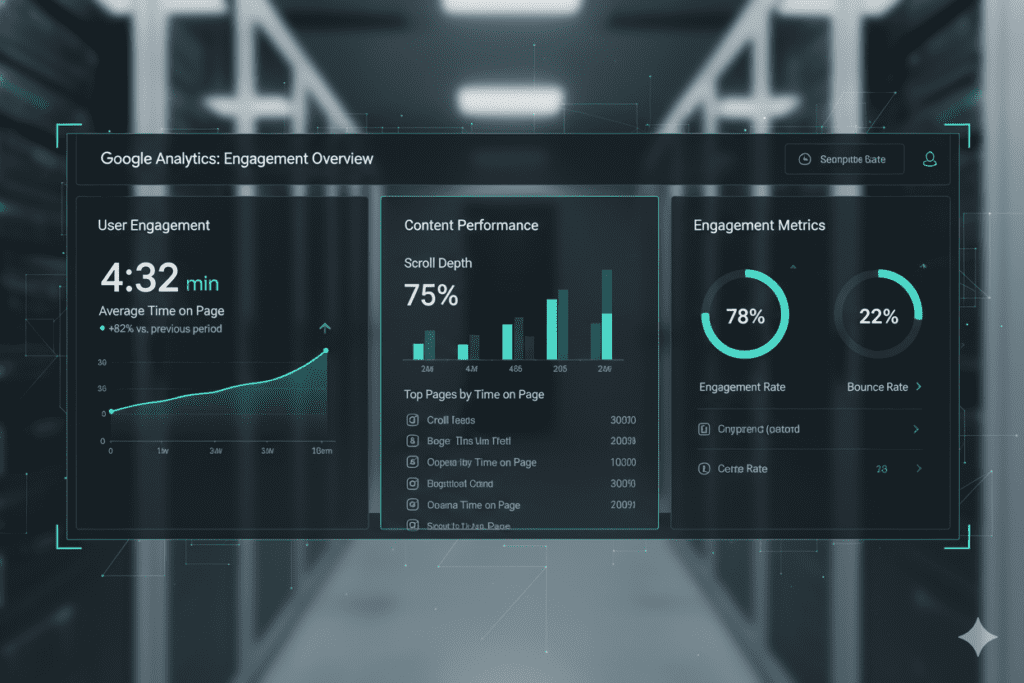
- Average Engagement Time Per Page (Google Analytics 4)
- Scroll Depth (how far users read)
- Bounce Rate vs. Exit Rate (understand user behavior)
- Pages Per Session (are users exploring more?)
- Return Visitor Rate (are they coming back?)
Setting Realistic Benchmarks
There’s no universal ideal dwell time, as it varies based on content type and user intent. However:
- Blog posts: Aim for 2-5 minutes
- Product pages: Target 1-3 minutes
- How-to guides: Shoot for 3-7 minutes
- News articles: 1-2 minutes is solid
Focus on improving relative to your current baseline rather than arbitrary industry standards.
Common Mistakes That Kill AI Search Citations
Even with great dwell time, you can still miss AI search visibility if you make these errors:
Mistake 1: Ignoring Structured Data
AI systems love clear, structured information. Implement schema markup for articles, FAQs, how-tos, and reviews.
Mistake 2: Neglecting Citation-Friendly Formatting
AI search engines constantly scan for sentences, stats, and phrasing they can pull directly into summaries. Make your key points quotable:
- Use clear topic sentences
- Include specific statistics
- Format important takeaways as pull quotes
- Create summary boxes for key information
Mistake 3: Forgetting About Entity Recognition
Help AI systems understand what your content is about by clearly defining entities, using consistent terminology, and linking to authoritative sources.
Mistake 4: Underestimating Freshness
Google’s December 2025 update refined how it evaluates content freshness, distinguishing between genuinely updated content and superficial changes. Regularly update your high-performing content with new insights and data.
Tools and Resources for Continuous Optimization
Beyond AiZolo for AI model testing, here are essential tools for dwell time optimization:
Analytics and Tracking
- Google Analytics 4: Track engagement metrics and user behavior
- Hotjar: Visual heatmaps showing where users spend time
- Microsoft Clarity: Session recordings and scroll maps
Content Optimization
- AiZolo: Compare how multiple AI models evaluate your content ($9.9/month)
- Grammarly: Ensure readability and clarity
- Hemingway Editor: Simplify complex writing
Speed Optimization
- Google PageSpeed Insights: Identify performance bottlenecks
- GTmetrix: Detailed load time analysis
- Cloudflare: CDN for faster global delivery
SEO and Structure
- Yoast SEO: Optimize on-page elements
- Schema Markup Generator: Create structured data
- Answer the Public: Find conversational queries
Explore AiZolo’s plans to start comparing AI models and optimizing your content for maximum engagement.
Your 30-Day Dwell Time Optimization Action Plan
Ready to implement everything you’ve learned? Here’s your step-by-step roadmap:
Week 1: Audit and Baseline
- Run Google Analytics to identify low-performing pages
- Document current average dwell times
- Analyze user behavior with heatmaps
- Sign up for AiZolo free trial to test content with multiple AI models
Week 2: Quick Wins
- Fix page speed issues
- Update weak introductions
- Add visual elements to text-heavy pages
- Improve internal linking structure
Week 3: Deep Content Optimization
- Rewrite content using conversational queries
- Add FAQ sections addressing common questions
- Create scannable formatting with headers and bullets
- Test new formats with AiZolo’s AI comparison
Week 4: Scale and Monitor
- Apply learnings to more pages
- Track improvements in Analytics
- Document what works for your audience
- Refine your optimization process
The Future of Dwell Time Optimization for AI Search
The landscape continues evolving rapidly. Here’s what’s coming:

By 2028, AI search is projected to impact $750 billion in revenue, making optimization for these platforms non-negotiable. Focus on quality traffic rather than raw volume, emphasizing dwell time, conversion rates, and returning visitor metrics.
Key trends to watch:
1. AI Personalization at Scale
AI systems will increasingly personalize content presentation based on individual user preferences and behavior patterns.
2. Multimodal Search Dominance
Text, voice, and image search are converging as search becomes more human-like. Your content needs to work across all these formats.
3. Real-Time Content Adaptation
AI will dynamically adjust content structure and presentation based on user signals, optimizing dwell time automatically.
4. Enhanced Behavioral Signals
User satisfaction metrics like dwell time are weighted more heavily than in previous updates, making engagement optimization increasingly critical.
Taking Action: Your Next Steps for Mastering Dwell Time Optimization for AI Search
The difference between content that disappears and content that dominates AI search comes down to engagement. Users vote with their time, and AI systems are watching.
Here’s what you should do right now:
- Audit your worst-performing pages using Google Analytics 4
- Test your content with multiple AI models to understand how they perceive value
- Implement the 8-step framework starting with your highest-traffic pages
- Track your improvements weekly to understand what resonates with your audience
- Iterate based on data rather than assumptions
The content landscape has fundamentally changed. AI search isn’t coming; it’s already here and reshaping how users discover information. About 50% of Google searches already feature AI summaries, and that percentage will only grow.
But here’s the opportunity: most content creators are still optimizing for 2020’s search landscape. By mastering dwell time optimization for AI search now, you’re positioning yourself ahead of the curve.
Get started with AiZolo today and join the 10,000+ creators who are already optimizing their content for the AI-powered future. With access to all premium AI models for just $9.9/month, you’ll save $1,200 annually while gaining the insights needed to dominate AI search results.
Remember: AI systems reward content that truly serves users. Focus on creating genuine value, measure your engagement metrics religiously, and optimize based on real data. The results will follow.
Your content deserves to be seen, cited, and celebrated by AI search engines. Now you have the roadmap to make it happen.
Frequently Asked Questions About Dwell Time Optimization for AI Search
Q: Is dwell time a confirmed Google ranking factor? A: While Google hasn’t officially confirmed dwell time as a direct ranking factor, longer dwell times generally indicate better user satisfaction, which can positively influence search rankings.
Q: How is AI search different from traditional search for content creators? A: Traditional SEO helps people find your page, while AI search optimization helps AI systems find and use your content in generated answers. The goal shifts from ranking to being cited.
Q: What’s a good dwell time to aim for? A: It varies by content type and intent, but generally aim to beat your current baseline. Blog posts should target 2-5 minutes, while quick-answer content might naturally have shorter dwell times but still serve users effectively.
Q: Can I improve dwell time without sacrificing SEO? A: Absolutely! The strategies that improve dwell time—better structure, clear writing, visual elements, faster loading—also enhance traditional SEO performance. They’re complementary, not competing.
Q: How quickly will I see results from dwell time optimization? A: You’ll typically see initial improvements in user metrics within 2-4 weeks, but significant AI search visibility can take 2-3 months as systems learn your content provides value.
Related Resources
- How to Chat with Multiple AI Models: Complete 2025 Guide
- Best AI Tools for Content Creation
- How to Save Money on AI Subscriptions
External Resources:
- Google Search Central – Creating Helpful Content
- Moz – User Engagement Metrics
- Search Engine Journal – AI Search Optimization
Ready to transform your content engagement and dominate AI search results? Start your free AiZolo trial today and discover why thousands of content creators trust AiZolo for their AI optimization strategy.