Creating high-converting product descriptions is one of the most challenging parts of running a drop shipping store. Writing unique, persuasive, and SEO-friendly descriptions for hundreds of products manually is time-consuming, inconsistent, and error-prone.
In this ultimate 2026 guide, we’ll show you how to use Product Description AI for Dropshipping Stores effectively. You’ll learn to select the right AI tools, generate SEO-friendly content, automate bulk uploads, customize descriptions, track performance, and increase conversions—all step by step.
By the end, even beginners will create professional descriptions that boost sales, improve SEO, and save hundreds of hours per month.
Why Product Descriptions Are Critical in Drop shipping
High-quality product descriptions are crucial because they:
- Increase conversion rates
- Improve SEO rankings
- Build customer trust and reduce returns
- Maintain a consistent brand voice
Common Problems With Manual Product Descriptions:
- Inconsistent tone and style
- Duplicate content issues
- Low readability and engagement
- Missing SEO optimization
How AI Transforms Product Description Writing
AI-powered tools allow drop shipping store owners to generate hundreds of unique descriptions quickly. Benefits include:
- Fast bulk content generation
- SEO optimization suggestions
- Multiple variations for A/B testing
- Translation for global markets
- Customizable brand tone
AI Tasks Include:
- Writing product titles and descriptions
- Creating feature and benefit highlights
- Suggesting keywords and long-tail phrases
- Generating FAQs and call-to-actions
Alt Text:
Step 1: Choosing the Right Product Description AI Tool
Selecting the right AI tool is essential. Look for:
- Customizable templates
- SEO keyword integration
- Bulk content generation
- Marketplace integration (Shopify, WooCommerce, Amazon)
- Multi-language support
Top Recommended AI Tools:
- ChatGPT / GPT-5.1 – Creative content, flexible tone
- Writesonic / Jasper AI – Optimized for e-commerce SEO
- Copysmith / Copy.ai – Bulk description generation
- Rytr – Fast and cost-effective
Step 2: Preparing Your Product Data
AI works best with clear and detailed information:
- Product name, category, and specifications
- Key features and benefits
- Target audience and preferred tone
- Competitor references and examples
- Common competitor
- FAQs
Step 3: Generating SEO-Friendly Product Descriptions
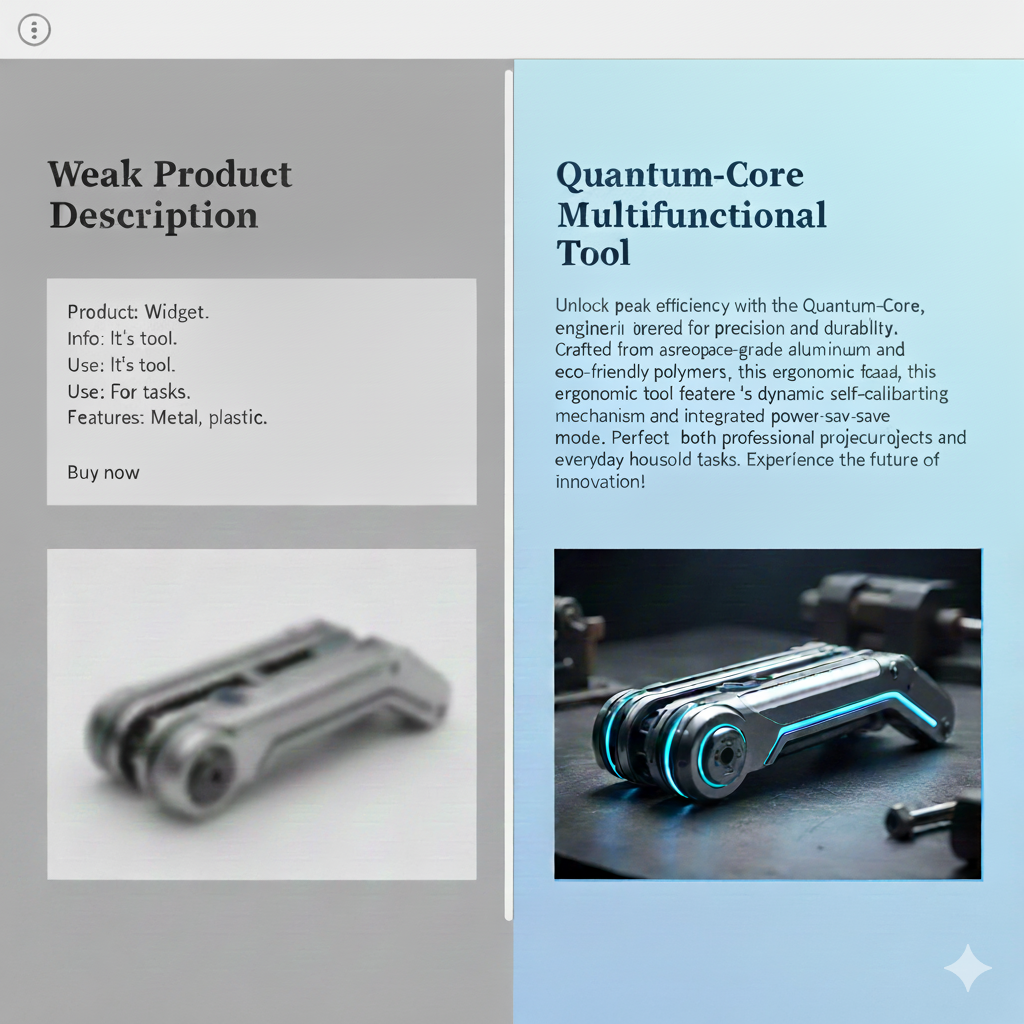
AI can create multiple high-quality variations for testing.
SEO Optimization Tips:
- Place keywords naturally
- Focus on benefits, not just features
- Use bullet points for readability
- Include calls-to-action like “Buy Now”
- Maintain brand voice consistency
Step 4: Editing & Customizing AI Content
Even the best AI-generated content requires review:
- Ensure brand voice consistency
- Verify accuracy of product specifications
- Correct grammar, spelling, and punctuation
Editing Checklist:
- ✅ Tone matches target audience
- ✅ Keywords integrated naturally
- ✅ Unique selling points highlighted
- ✅ Accurate and clear product information
Step 5: Bulk Upload & Automation
For stores with hundreds of products:
- Use CSV imports for Shopify/WooCommerce
- Schedule seasonal or promotional updates
- Combine AI output with bulk editors
- Maintain SEO and content consistency

Step 6: Marketplace Optimization
Each marketplace has unique SEO and formatting requirements:
- Amazon: bullet points, titles under 200 characters
- Etsy: storytelling, SEO-friendly titles
- eBay: concise, feature-focused
- Shopify: branded and persuasive
Step 7: Tracking Performance
Monitor AI-generated descriptions using analytics:
Key Metrics:
- Click-through rate (CTR)
- Conversion rate per product
- Bounce rate and average time on page
- Keyword rankings
Step 8: Continuous Improvement
Update descriptions regularly:
- Based on performance metrics
- Competitor trends
- Customer feedback
- New product features or promotions
Step 9: Advanced AI Techniques
- Generate FAQ sections automatically
- Translate and localize content for global audiences
- Test multiple tones for different demographics
- Optimize meta titles and descriptions with AI

Step 10: Case Studies & Real-World Examples
Case Study 1: Small Store (50 products)
- Manual descriptions: 3 hours per product
- AI-generated: 10 minutes per product
- Conversion increase: 35%
Case Study 2: Mid-Sized Store (500 products)
- AI bulk generation saved 600+ hours
- SEO improved for 50+ keywords
- Sales increased 30%
Case Study 3: Large Store (1,000+ products)
- Multiple variations tested for CTR
- Automated seasonal updates
- Revenue growth: 40% in 6 months
Step 11: FAQs
Q1: Can AI replace human writers completely?
A: AI accelerates content creation, but manual review ensures accuracy and brand voice.
Q2: How do I ensure SEO compliance?
A: Combine AI keyword suggestions with manual optimization and performance tracking.
Q3: Can AI output be used for all marketplaces?
A: Yes, but tailor the content for each platform’s rules.
Step 12: Pro Tips for Beginners
- Provide detailed product data to AI
- Combine AI output with manual editing
- Test multiple variations for performance
- Monitor metrics regularly
- Refresh descriptions seasonally
Alt Text: Pro tips for AI-generated dropshipping descriptions
Step 13: Integrating AI With Marketing Automation
- Schedule content updates automatically
- Sync AI descriptions with email marketing campaigns
- Use AI to create promotional content and product highlights
Step 14: Avoiding Common Mistakes
- Blindly trusting AI without review
- Ignoring SEO best practices
- Overstuffing keywords
- Neglecting marketplace-specific formatting
Step 15: Future of AI in Dropshipping Content
- Increased automation and personalization
- AI-generated videos and images for products
- Voice search optimized descriptions
- AI predicting customer buying behavior
Conclusion
Using Product Description AI for Dropshipping Stores allows beginners and experts to save time, improve SEO, and increase sales.