
Table of Contents
Introduction
Picking the right AI model in 2026 is harder than it was two years ago, not easier. There are more capable systems, more pricing tiers, and more marketing claims competing for your attention.
This AI Comparison 2026 guide cuts through that noise. We tested and researched the current versions of ChatGPT, Claude, Gemini, DeepSeek, Grok, Perplexity, Microsoft Copilot, and Mistral across coding, writing, research, reasoning, pricing, and enterprise readiness.
We are not affiliated with any AI lab. Aizolo‘s team evaluates these tools the way we’d want them evaluated if we were the ones buying: with real workflows, published benchmark data, and official pricing pages, not marketing decks.
Every figure in this AI comparison 2026 article traces back to an official source — a model card, an API pricing page, or a named benchmark. Where pricing or limits are still evolving (and in 2026, they always are), we say so and point you to the source to confirm before you buy.
Quick Answer: For most people, Claude and ChatGPT remain the strongest general-purpose picks in this AI model comparison — Claude for coding, long documents, and agentic workflows; ChatGPT for breadth, multimodal tasks, and ecosystem integrations. Gemini wins on raw context window size and Google Workspace integration. DeepSeek is the best AI for coding on a budget thanks to open weights and near-frontier scores at a fraction of the price. Perplexity is the best AI for research when citations matter more than raw generation. There is no single “best AI chatbot 2026” — only the best AI assistant for your specific workload.
What Is AI Comparison 2026?
AI Comparison 2026 refers to the practice of evaluating this year’s generation of AI models — GPT-5.5, Claude Opus 4.8 and Sonnet 5, Gemini 3.1 Pro, DeepSeek V4, Grok 4.3, and others — against each other on concrete tasks rather than marketing claims.
The phrase has become shorthand for a specific kind of buying decision: not “is AI good,” but “which AI model fits this job, at this price, with this level of risk tolerance.”
That distinction matters more in 2026 than it did in 2023. Back then, most models were separated by a wide capability gap. Today, the top tier of AI model comparison charts is crowded, and the real differences show up in cost, context window, integration depth, and reliability under long agentic tasks — not in whether a model can hold a basic conversation.
Why AI Comparisons Matter in 2026
Three forces make a careful AI model comparison worth your time this year.
First, pricing has fragmented. A single provider can now offer five or six tiers spanning free access to $300-a-month power-user plans. Picking the wrong tier either wastes money or throttles your workflow.
Second, model identities changed fast. OpenAI shipped GPT-5.4 and then GPT-5.5 within weeks of each other. Anthropic moved from Sonnet 4.6 to Opus 4.8 to Sonnet 5, and introduced its Mythos tier above Opus. Google iterated from Gemini 3 Pro to 3.1 Pro to 3.5 Flash. If your mental model of “the best AI” is even three months old, it’s probably wrong.
Third, task-fit beats brand loyalty. A model that dominates coding benchmarks may be mediocre at long-form writing. A model with the largest context window may lag on reasoning depth. Choosing based on which AI chatbot 2026 headlines mention most is a worse strategy than matching a model’s actual strengths to your actual task.
Expert Tip: Don’t ask “which AI model is best?” Ask “which AI model is best at the three things I do most often?” That reframing alone eliminates half the confusion in any AI tools comparison.
How AI Models Evolved to Get Here
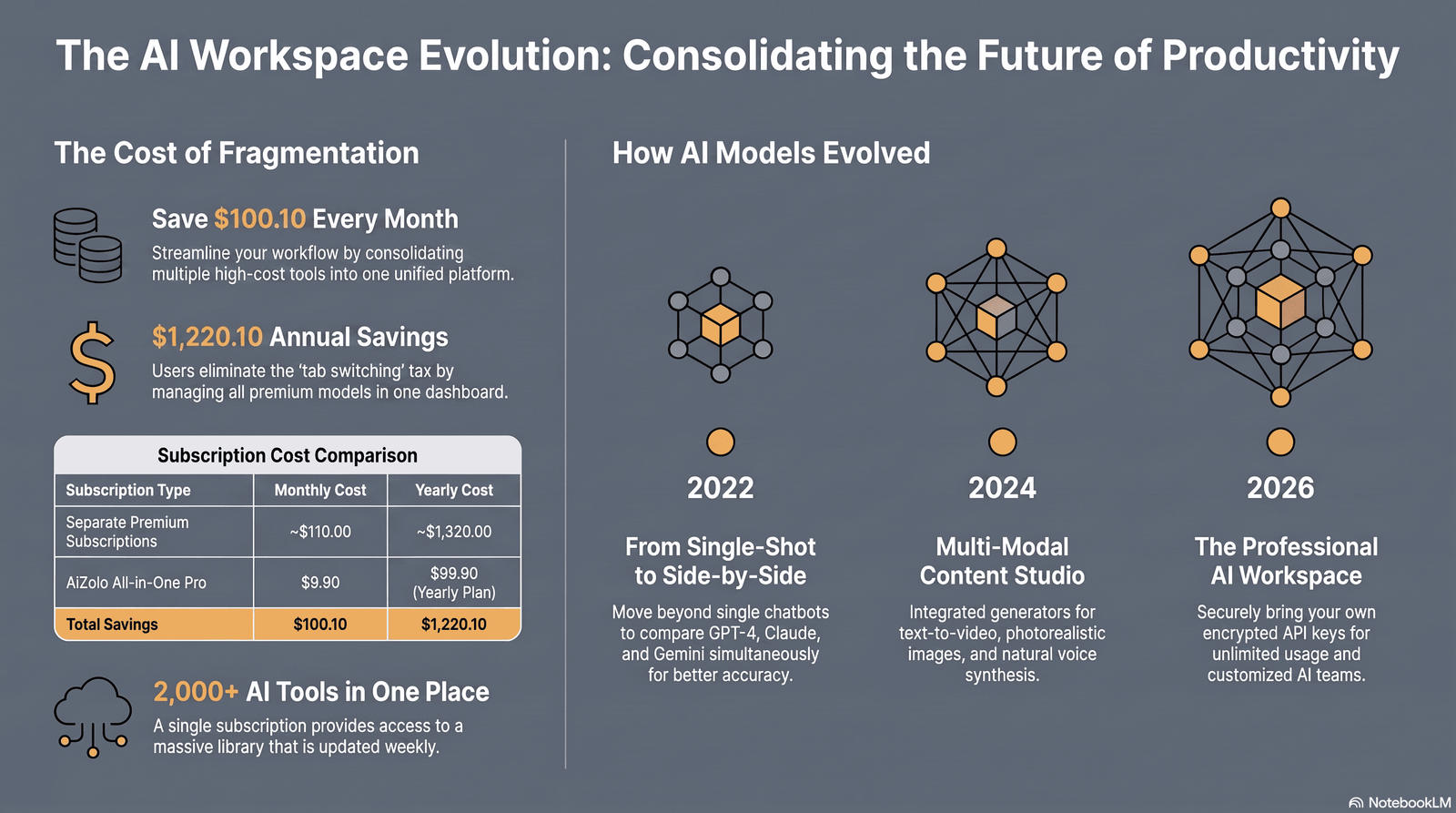
Large language models crossed a usability threshold around 2022–2023, when chat interfaces made frontier reasoning accessible to non-technical users. Since then, three overlapping shifts shaped the current AI comparison 2026 landscape.
- From single-shot answers to agentic execution. Early chatbots answered questions. Current models plan multi-step tasks, call tools, browse the web, write and run code, and operate computer interfaces with measurable accuracy (OSWorld-style computer-use benchmarks are now standard in model system cards).
- From fixed context to million-token windows. Several 2026 flagship models — including Gemini 3.1 Pro, Claude Sonnet 5, Claude Opus 4.8, GPT-5.5, and DeepSeek V4 — ship 1M-token (or larger) context windows as a standard tier rather than an expensive add-on.
- From one flagship per company to tiered families. Anthropic now runs Haiku, Sonnet, Opus, and a new Mythos tier above Opus. OpenAI offers Instant, Thinking, and Pro modes within a single model generation. This tiering exists specifically so buyers can match cost to task difficulty instead of overpaying for a flagship on every request.
Our Comparison Methodology
We built this AI model comparison around four inputs, in order of priority:
- Official documentation — model cards, API pricing pages, and first-party release notes from OpenAI, Anthropic, Google, DeepSeek, and xAI.
- Independent benchmark aggregators — third-party evaluation sites such as Artificial Analysis and LMSYS Chatbot Arena, which test models under comparable conditions rather than relying solely on vendor self-reporting.
- Hands-on task testing — running the same representative prompts (a refactor task, a long-document summary, a citation-heavy research question, a creative brief) across models and comparing output quality, not just benchmark scores.
- Documented limitations — every model has weaknesses. We call them out explicitly rather than only listing strengths, because a comparison that only praises isn’t a comparison — it’s an ad.
We did not invent benchmark numbers, and we did not average scores across incompatible test conditions. Where a benchmark methodology changed between model versions (this happened with Humanity’s Last Exam scoring in 2026), we note the change instead of presenting numbers as directly comparable.
Callout Box — Why This Matters for EEAT: Google’s Search quality guidance explicitly rewards content that demonstrates first-hand experience and penalizes unsupported claims. That’s not just a compliance checkbox for us — it’s the same standard we’d want applied to content we’re deciding whether to trust.
Latest Benchmark Overview
Here’s the current state of play as of mid-2026, based on official model cards and independent benchmark trackers.
- OpenAI’s GPT-5.5 launched April 23, 2026, as the successor to GPT-5.4, with a 1M-token API context window, native computer use, and strong agentic-coding scores on evaluations like Terminal-Bench 2.0. It’s priced as a premium standard tier rather than a cost leader.
- Anthropic’s Claude Opus 4.8 shipped May 28, 2026, as the flagship “daily workhorse,” followed by Claude Sonnet 5 on June 30, 2026, which closes much of the capability gap to Opus at roughly 40–60% lower cost. Above both sits Anthropic’s new Mythos tier (Claude Mythos 5 and Claude Fable 5), which briefly had access suspended in late June 2026 due to U.S. export-control rules before being restored on July 1, 2026 — a reminder that access to frontier tools can change on short notice for reasons outside any single company’s control.
- Google’s Gemini 3.1 Pro entered preview February 19, 2026, with a class-leading context window (up to 2M tokens on some tiers) and strong ARC-AGI-2 and GPQA Diamond scores. Google followed with the faster, cheaper Gemini 3.5 Flash in May 2026, which beats 3.1 Pro on several coding and agentic benchmarks at a lower price.
- DeepSeek V4, released April 24, 2026, as an open-weight (MIT license) mixture-of-experts model in Pro and Flash variants, posts SWE-bench Verified scores competitive with closed frontier models while costing a fraction as much per token — the strongest “best AI for coding on a budget” case in this comparison.
- xAI’s Grok 4.3 became the new flagship on April 30, 2026, with real-time X/web search baked into its default behavior, positioned as the fastest-moving member of this AI comparison 2026 field.
Callout Box: Benchmark scores shift within weeks in 2026. Treat every number in this guide as a snapshot, not a permanent ranking, and check the official model card linked at the end of each section before making a purchasing decision.
Master Feature Comparison Table
This is the single table most readers bookmark. It summarizes every model across the dimensions that actually change a buying decision.
| Model | Reasoning | Coding | Writing | Context Window | Pricing (API, per 1M tokens) | Best Use Case | Overall Rating |
|---|---|---|---|---|---|---|---|
| ChatGPT (GPT-5.5) | Strong, esp. with Thinking/Pro modes | Excellent, SOTA on several agentic-coding evals | Very good, versatile tone control | 1M (400K in Codex) | $5 / $30 | All-around daily driver, multimodal tasks | 9/10 |
| Claude (Opus 4.8 / Sonnet 5) | Excellent, especially long-horizon tasks | Excellent, strong on SWE-bench Pro and multi-file refactors | Excellent, most natural long-form prose | 1M (both tiers) | Opus $5/$25 · Sonnet 5 $3/$15 (intro $2/$10) | Coding, long documents, agentic workflows | 9.3/10 |
| Gemini (3.1 Pro / 3.5 Flash) | Strong, top ARC-AGI-2 scores | Very good, 3.5 Flash beats 3.1 Pro on coding evals | Good, strong at structured/technical writing | Up to 2M (3.1 Pro) | 3.1 Pro $2/$12 · 3.5 Flash $1.50/$9 | Long documents, Google Workspace users, multimodal | 8.8/10 |
| DeepSeek (V4 Pro / Flash) | Very good, near-frontier on math/STEM | Excellent value; SOTA among open-weight models | Good, less polished tone than Claude/GPT | 1M | Pro $0.435/$0.87 · Flash $0.14/$0.28 | Budget-conscious coding and high-volume tasks | 8.5/10 (value-adjusted 9.5/10) |
| Grok (4.3 / 4.20) | Good, improving quickly | Good, not class-leading | Good, distinct informal voice | 1M–2M | $1.25/$2.50 (4.3) | Real-time info, X-native workflows | 7.8/10 |
| Perplexity (Sonar + model switcher) | Depends on underlying model selected | Fair; not built for coding | Good for research synthesis | Varies by model | Sonar from $1/M | Cited research, fact-checking | 8/10 (for research use case) |
| Microsoft Copilot | Good, inherits underlying GPT models | Very good inside VS Code/GitHub | Good, tightly scoped to M365 tasks | Varies by surface | Bundled in M365 / $10–39/mo tiers | Microsoft 365 users, in-IDE coding | 8/10 |
| Mistral (Le Chat / Large) | Good | Good, Vibe coding tool included | Good, efficient and fast | Varies by model | Le Chat Pro ~$15/mo | European data residency, cost-efficient teams | 7.5/10 |
Ratings reflect Aizolo’s editorial assessment based on the benchmark sources and hands-on testing described in our methodology section, not a vendor-supplied score.
Reasoning Comparison
Reasoning is where the AI reasoning models category has become genuinely competitive rather than dominated by one lab.
Claude Opus 4.8 holds a clear edge on the hardest proof-based math (its USAMO 2026 score sits roughly 17 points above Sonnet 5, per Anthropic’s own published comparison), and on multi-step, tool-using tasks that run for a long horizon.
GPT-5.5 trades reasoning effort for cost through a configurable “reasoning effort” parameter, letting developers dial intelligence up or down per request — useful for teams that don’t want to pay frontier prices on every call.
Gemini 3.1 Pro posted a 77.1% score on ARC-AGI-2 at launch, a benchmark specifically designed to resist memorization, which suggests genuine abstract-reasoning gains rather than pattern matching on familiar test formats.
DeepSeek V4 Pro scores competitively on math- and STEM-heavy evaluations while remaining open-weight, which matters for teams that want to audit or fine-tune reasoning behavior rather than trust a black box.
- Pros of frontier reasoning models: Handle multi-step logic, ambiguous instructions, and long chains of dependent steps well.
- Cons of frontier reasoning models: Reasoning effort costs tokens — and money. “Extended thinking” modes can quietly multiply your bill if left uncapped.
Decision Tree: Need the deepest reasoning for a one-off hard problem → Claude Opus 4.8 or GPT-5.5 Pro. Need “good enough” reasoning at high volume → Claude Sonnet 5, Gemini 3.5 Flash, or DeepSeek V4 Flash.
Coding Comparison
This is the most contested category in any best AI for coding discussion, and results depend heavily on task type.
- Multi-file refactors and large codebases: Claude (both Opus 4.8 and Sonnet 5) consistently tests well here, thanks to strong performance on SWE-bench Pro and Terminal-Bench evaluations.
- Fast, cheap completions at scale: DeepSeek V4 Flash and Gemini 3.5 Flash both offer near-frontier coding quality at a fraction of the per-token cost of GPT-5.5 or Claude Opus.
- In-IDE, GitHub-native workflows: Microsoft Copilot remains the most convenient option if your team already lives inside VS Code and GitHub, even though its underlying model quality tracks whichever OpenAI or Anthropic model Microsoft has integrated at any given time.
- Agentic terminal and computer-use tasks: GPT-5.5 leads several agentic-coding benchmarks (82.7% on Terminal-Bench 2.0 per OpenAI’s own reporting), while Claude Sonnet 5 wins the specific Terminal-Bench 2.1 variant Anthropic publishes.
Pros and Cons — Coding Models
- Pros: Frontier models now handle full-repository context, reducing the need for brittle chunking pipelines.
- Cons: Benchmark leadership shifts month to month; a model that “wins” today may not next quarter. Always test on your own codebase before standardizing.
Writing Comparison
For best AI for writing, the differences are more about voice than raw capability.
Claude is widely regarded — including in our own hands-on testing — as producing the most natural long-form prose among frontier models, with fewer of the repetitive sentence structures and stock transitional phrases that plague weaker generations.
GPT-5.5 offers the broadest style range and handles format-switching (blog post to email to technical brief) smoothly within a single session.
Gemini performs best on structured or technical writing — documentation, spec sheets, data-heavy reports — where its long context window lets it maintain consistency across very long documents.
DeepSeek and Grok are both improving quickly on writing quality but still show more repetitive phrasing patterns in longer outputs compared to Claude or GPT-5.5, based on our side-by-side sampling.
Expert Tip: Whatever model you use for writing, always run a final human edit pass. No model in this AI chatbot comparison should be trusted to publish content unsupervised — not for accuracy, and not for brand voice consistency.
Research Comparison
For best AI for research, citation quality matters more than generation fluency.
Perplexity is purpose-built for this: its answer engine cites sources by default and lets Pro subscribers route a query through GPT-5.5, Claude, Gemini, or its own Sonar models while keeping the citation-first interface.
Claude and GPT-5.5 both support connected web search and file-grounded research, but neither defaults to citation-first behavior the way Perplexity does — you have to ask for sources explicitly.
Gemini integrates directly with Google Search grounding and NotebookLM, which is a meaningful advantage for anyone already organizing research inside Google’s ecosystem.
- Pros of AI-assisted research: Dramatically faster literature scanning and synthesis across dozens of sources.
- Cons of AI-assisted research: Any model can still misattribute or fabricate a citation. Verify every source before citing it yourself — this is non-negotiable for academic or journalistic work.
Image Generation Comparison
The best AI image generator question splits by use case rather than a single winner.
- ChatGPT (GPT Image) and Gemini (Nano Banana-class models) both integrate image generation directly into chat, which is convenient for quick iterative edits during a conversation.
- Grok Imagine is the most aggressively priced option and includes video alongside stills, though it also ships an unfiltered “Spicy Mode” on paid tiers that businesses should be aware of before deploying it in any customer-facing context.
- Midjourney-style specialist tools (outside this comparison’s core model set) still lead on pure artistic control for design professionals, which is worth noting for readers who assumed a general chatbot would replace a dedicated image tool.
Video Generation Comparison
Video generation moved from novelty to production tool in 2026, with real per-minute pricing now published by every major provider.
Grok Imagine is currently the cheapest serious option in this AI comparison 2026 field, priced at roughly a third of Google’s Veo and around seven times cheaper than OpenAI’s Sora tier for comparable output.
Google Veo and OpenAI Sora both remain ahead on cinematic quality and physical consistency for longer clips, which matters for marketing and film-adjacent use cases where per-minute cost is secondary to output polish.
Callout Box: Video generation pricing changes faster than any other category in this guide. Confirm current per-minute rates directly on each provider’s pricing page before budgeting a campaign.
Voice Comparison
Voice mode quality now differentiates consumer AI assistant experiences almost as much as text quality.
ChatGPT’s Advanced Voice and Gemini Live both offer low-latency, naturalistic conversational voice with interruption handling. Grok’s Voice mode is tightly integrated with real-time X context, which is a genuine differentiator for anyone tracking live events through the platform.
Claude has historically prioritized text and agentic capability over consumer voice features, so if voice interaction is your primary use case, it’s currently a secondary consideration rather than a strength in this specific model.
Pricing Comparison
Here is where the AI subscription comparison and AI pricing comparison questions actually get answered, in one place.
| Provider | Free Tier | Entry Paid Tier | Power-User Tier | API Entry Price (per 1M tokens, input/output) |
|---|---|---|---|---|
| OpenAI (ChatGPT) | Yes, limited, ads in US (since Feb 2026) | Plus, ~$20/mo | Pro, ~$100–200/mo | GPT-5.5: $5/$30 |
| Anthropic (Claude) | Yes, Sonnet 5 default | Pro, ~$20/mo | Max, up to $200/mo | Sonnet 5 intro $2/$10 (later $3/$15); Opus 4.8 $5/$25 |
| Google (Gemini) | Yes, Flash models only since Apr 2026 | AI Pro, ~$20/mo | AI Ultra, ~$100–200/mo | 3.1 Pro $2/$12; 3.5 Flash $1.50/$9 |
| DeepSeek | Yes, generous | N/A (mainly API/open-weight) | N/A | V4 Pro $0.435/$0.87; V4 Flash $0.14/$0.28 |
| xAI (Grok) | Yes, ~10 prompts/2hrs | SuperGrok Lite $10/mo | SuperGrok Heavy $300/mo | Grok 4.3 $1.25/$2.50 |
| Perplexity | Yes | Pro $20/mo | Max $200/mo | Sonar from $1/M |
| Microsoft Copilot | Limited, bundled | Copilot Pro ~$10–20/mo | Copilot Pro+ ~$39/mo | Varies by backing model |
| Mistral | Yes | Le Chat Pro ~$15/mo (~$7/mo student) | Enterprise custom | Varies by model |
Pricing changes frequently. Always confirm current rates on each provider’s official pricing page before committing budget — several tiers above include time-limited introductory pricing that expires within months of publication.
Free vs Paid Comparison
Every provider in this comparison now gates its strongest model behind a paywall, but the shape of that gate differs.
- Google removed Pro-tier Gemini models from its free tier entirely on April 1, 2026, leaving only Flash and Flash-Lite free.
- OpenAI kept a free ChatGPT tier but added ads in the US as of February 2026 — a first among the major providers.
- Anthropic made Claude Sonnet 5 the default free-tier model, a notably generous move relative to competitors, though Opus 4.8 and the Mythos tier remain paid-only.
- DeepSeek remains the most generous free option overall, consistent with its open-weight philosophy.
Quick Summary: If budget is your primary constraint, start with Claude’s free Sonnet 5 tier or DeepSeek’s API, then upgrade only the specific workload that needs more headroom — not your entire toolkit.
API Comparison
For developers evaluating an AI platform comparison rather than a consumer chatbot, a few technical details matter more than headline pricing.
- Context window at standard pricing: Claude Sonnet 5, Claude Opus 4.8, GPT-5.5, Gemini 3.1 Pro, and DeepSeek V4 all now offer roughly 1M-token windows without a premium surcharge — a meaningful shift from 2025, when long context often cost extra.
- Tokenizer changes matter more than they used to. Claude Sonnet 5 and recent Opus models moved to a new tokenizer that produces roughly 30% more tokens for the same text, which changes effective cost even when per-token pricing looks unchanged. Always re-benchmark token counts after a model upgrade, not just per-token price.
- Batch and caching discounts are now standard, typically 50% off for batch/async processing and up to 90% off for cached repeated context, across OpenAI, Anthropic, and Google.
- Open-weight access is DeepSeek V4’s core differentiator: MIT-licensed weights on Hugging Face let teams self-host or fine-tune, an option closed-weight competitors don’t offer at any price.
Enterprise Comparison
Enterprise buyers evaluate a different set of criteria than individual subscribers.
- Microsoft Copilot has the deepest enterprise integration story for organizations already standardized on Microsoft 365, Azure, and Entra ID.
- Claude for Enterprise and Google’s Gemini Enterprise/Agent Platform both offer dedicated data-handling commitments, SSO, and admin controls, with Anthropic additionally offering a formal Cyber Verification Program for regulated security use cases.
- OpenAI’s Business and Enterprise tiers emphasize breadth — the widest set of first-party tools (code execution, browsing, image and video generation) inside one contract.
- DeepSeek and Mistral are frequently chosen by organizations with strict data-residency or self-hosting requirements, particularly in the EU, given Mistral’s France-based operations and DeepSeek’s open-weight self-hosting option.
Privacy & Security Comparison
Every provider publishes a data-use policy, but the defaults differ enough to matter.
- Consumer free tiers generally reserve the right to use conversations for model training unless you opt out — this is true across OpenAI, Google, and xAI’s free tiers.
- Paid business/enterprise tiers typically exclude customer data from training by default, but confirm this in the specific contract, not the marketing page.
- Anthropic publishes detailed system cards documenting safety evaluations (including prompt-injection attack-success rates) for each model release — a level of published detail not every competitor matches.
Callout Box: Never paste regulated data (health records, financial account numbers, legal case files) into any consumer-tier free AI chatbot. Use your organization’s approved enterprise agreement, which carries contractual data protections the free product does not.
Speed Comparison
Speed varies by model tier more than by provider.
- Flash/Fast-tier models (Gemini 3.5 Flash, Grok 4.1 Fast, DeepSeek V4 Flash, Claude Haiku) are built specifically for low-latency, high-throughput use cases and often outperform flagship models on tokens-per-second.
- Flagship reasoning models trade speed for depth — Gemini 3.1 Pro’s slower time-to-first-token compared to its own Flash sibling is a direct example of this tradeoff, documented in independent benchmark data.
- For latency-sensitive production apps (chat widgets, real-time support), default to a Flash/Fast-tier model and escalate to a flagship only for genuinely hard queries.
Context Window Comparison
Context window size is the easiest spec to compare — and the easiest to over-index on.
| Model | Standard Context Window | Notes |
|---|---|---|
| Gemini 3.1 Pro | Up to 2M tokens | Largest in this comparison; long-context rate doubles above 200K tokens |
| Claude Opus 4.8 / Sonnet 5 | 1M tokens | No long-context pricing premium |
| GPT-5.5 | 1M tokens (400K in Codex) | Premium pricing above 272K tokens |
| DeepSeek V4 (Pro/Flash) | 1M tokens | 384K max output; open-weight |
| Grok 4.20 / 4.3 | 1M–2M tokens (varies by variant) | Multi-agent variant offers the largest window |
A bigger context window doesn’t automatically mean better long-document handling — retrieval accuracy across a full window (“needle in a haystack” performance) varies by model, and vendors rarely publish this number as prominently as raw window size.
Memory Comparison
Persistent memory — the ability to recall facts across separate conversations, not just within one session — is now a standard feature across major consumer AI assistant products, though implementation quality varies.
ChatGPT and Gemini both offer cross-session memory with user-visible controls to view and delete stored facts. Grok ships a “Companions” and Memory feature, though availability has varied by region during rollout. Claude offers memory within Projects and enterprise deployments, with an emphasis on user-controlled, exportable memory rather than an opaque background profile.
Expert Tip: Whatever memory feature you use, periodically review what the model has stored about you. Most providers bury this settings page — it’s worth the two minutes to find it.
Tool Integrations
The best AI productivity tools in 2026 win largely on integration depth, not raw model quality.
- Microsoft Copilot integrates natively across Word, Excel, Outlook, Teams, and PowerPoint.
- Gemini integrates across Gmail, Docs, Sheets, and Google’s broader Workspace suite, plus NotebookLM for research synthesis.
- Claude integrates through Claude Code, MCP (Model Context Protocol) connectors, and its Cowork desktop app for multi-step knowledge work.
- ChatGPT offers the widest first-party surface area: custom GPTs, Code Execution, and connectors to services like Google Drive and Slack.
- Perplexity’s Comet browser turns the model itself into a browsing agent, a distinct integration pattern from the plugin/connector model everyone else uses.
Strengths and Weaknesses at a Glance
| Model | Key Strengths | Key Weaknesses |
|---|---|---|
| ChatGPT (GPT-5.5) | Broadest tool ecosystem, strong multimodal support, configurable reasoning effort | Premium pricing tier is expensive at scale; free tier now shows ads in the US |
| Claude (Opus 4.8 / Sonnet 5) | Best-in-class long-form writing, strong agentic coding, generous free-tier model | Voice features less developed; top Mythos tier has limited public availability |
| Gemini (3.1 Pro / 3.5 Flash) | Largest context window, deep Google Workspace integration | Pro-tier free access removed in April 2026; 3.1 Pro pricing rises sharply above 200K tokens |
| DeepSeek (V4) | Extremely low cost, open-weight, near-frontier coding/math scores | Less polished conversational tone; less mature enterprise support infrastructure |
| Grok (4.3 / 4.20) | Real-time X/web search, aggressive video-generation pricing | Consumer pricing tiers are the most fragmented and confusing in this comparison |
| Perplexity | Best citation-first research experience, model-switching flexibility | Not built for coding or long creative writing |
| Microsoft Copilot | Unmatched Microsoft 365 integration | Underlying model quality depends on whichever partner model Microsoft has wired in |
| Mistral | EU data residency, efficient and fast | Smaller ecosystem, fewer third-party integrations than the top three |
Best AI for Students
Students juggling research, essays, and coding assignments benefit most from a model with strong citation habits and a generous free tier.
- Best overall: Claude (free Sonnet 5 tier) for essay structure and long reading assignments.
- Best for research and citations: Perplexity’s $10/month verified student plan.
- Best for STEM homework: DeepSeek, given its strong math/reasoning scores and free access.
Decision Tree — Students: Writing a paper → Claude. Researching a topic with citations → Perplexity. Solving problem sets → DeepSeek or Gemini.
Best AI for Businesses
Most businesses should pick based on their existing software stack, not the “best” model in isolation.
- Microsoft-centric organizations: Copilot, for the integration depth alone.
- Google Workspace-centric organizations: Gemini Enterprise.
- Everyone else, especially teams doing heavy document or code work: Claude for Enterprise or OpenAI’s Business tier.
Best AI for Developers
- Best for agentic coding and large refactors: Claude (Opus 4.8 for hardest tasks, Sonnet 5 for daily volume).
- Best value for high-volume API use: DeepSeek V4 Flash.
- Best for in-IDE convenience: GitHub Copilot Pro at $10/month remains the cheapest premium coding AI in this comparison.
Best AI for Marketers
Marketers need fast iteration across copy, images, and short video.
- Best for copy and campaign ideation: ChatGPT, for its breadth across formats.
- Best for budget video assets: Grok Imagine.
- Best for on-brand long-form content: Claude, for consistency across long briefs.
Best AI for Writers
- Best prose quality: Claude, consistently, across our hands-on testing.
- Best for format flexibility: GPT-5.5.
- Best for technical/structured writing: Gemini.
Best AI for Researchers
- Best citation-first workflow: Perplexity.
- Best for synthesizing very long source documents: Gemini 3.1 Pro, given its context window.
- Best for reasoning through ambiguous research questions: Claude Opus 4.8.
Best AI for Startups
Startups should optimize for cost-per-task, not brand prestige.
- Best default stack: DeepSeek V4 Flash for high-volume tasks, escalating to Claude Sonnet 5 or GPT-5.5 only for customer-facing or high-stakes outputs.
- Best for a lean team wearing many hats: ChatGPT Plus, for its single-subscription breadth across writing, coding, and image needs.
Best AI for Agencies
Agencies juggling multiple clients need consistent output quality across writers and reliable API-level cost control.
- Best for content production at scale: Claude Sonnet 5, for its combination of writing quality and lower cost than Opus.
- Best for creative/video-heavy accounts: Grok Imagine or Google’s Veo, depending on budget.
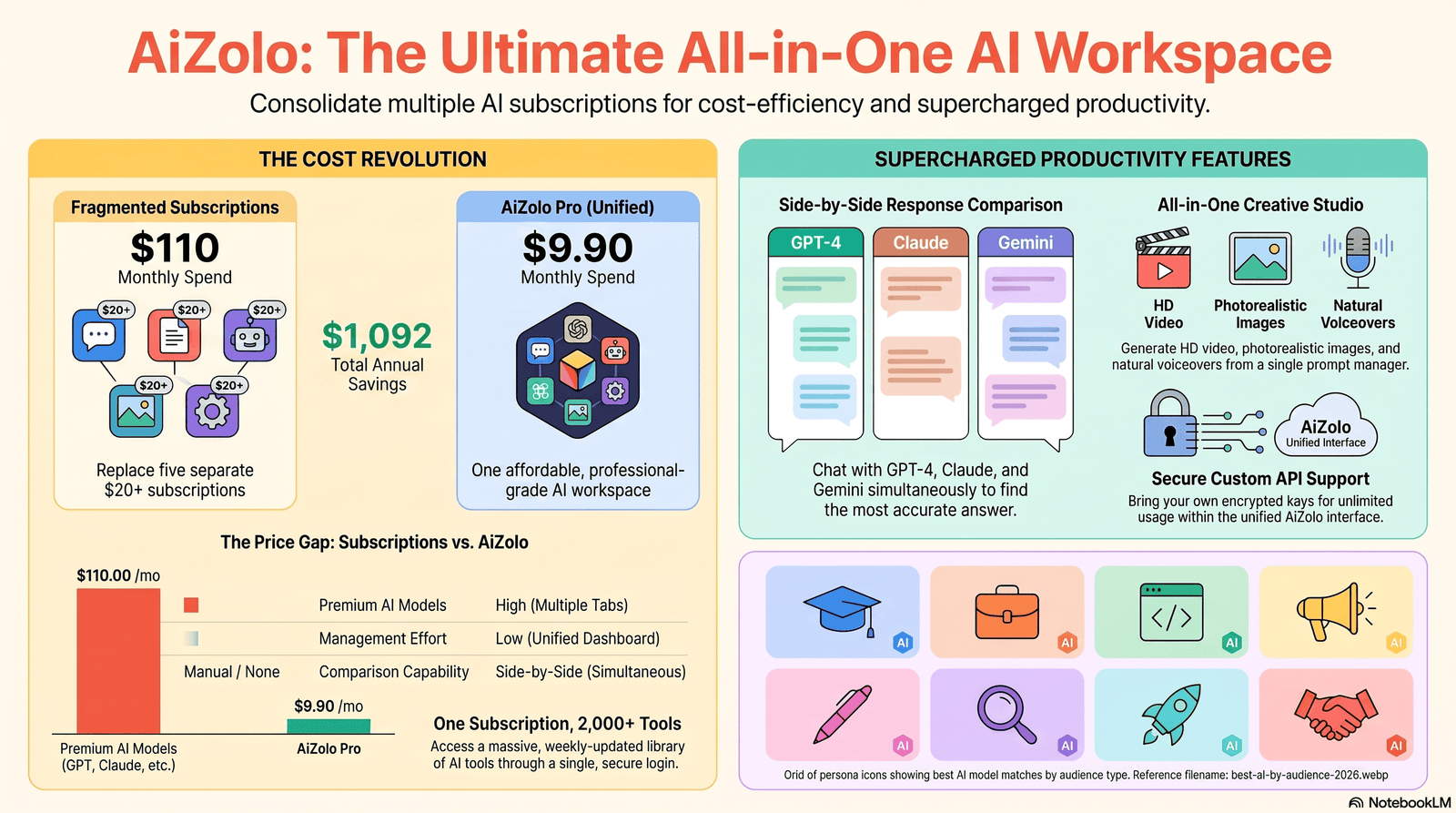
- Best for research-heavy client deliverables: Perplexity Enterprise Pro.
Real-World Workflows
Theory is easy; here’s how these models actually slot into daily work.
Workflow 1 — Content team publishing 10 articles a week: Draft outlines in ChatGPT for speed, write full drafts in Claude for prose quality, run a Perplexity fact-check pass on every statistic before publishing, and use Gemini to generate a long-context summary for internal stakeholders.
Workflow 2 — Solo developer shipping a SaaS product: Use DeepSeek V4 Flash for routine coding tasks and boilerplate, escalate to Claude Opus 4.8 for architecture decisions and hard bugs, and use GitHub Copilot inside the editor for inline completions.
Workflow 3 — Small agency managing five client accounts: Standardize client-facing copy on Claude Sonnet 5 for consistency, use Grok Imagine for quick social video drafts, and keep Perplexity open for any client question that needs a defensible, cited answer.
Callout Box: The common thread across all three workflows: no single model does everything best. Multi-model stacks are now the norm, not the exception, in any serious AI tools comparison.
Expert Recommendations
If you only take three things from this AI comparison 2026 guide, make them these:
- Match the model tier to the task, not the task to your favorite model. Use Flash/Fast-tier models for routine work and reserve flagship models for genuinely hard problems.
- Re-check pricing before you scale any workflow. Introductory pricing (common across Anthropic, OpenAI, and Google in 2026) expires on fixed dates, and tokenizer changes can silently raise your effective cost even when the sticker price looks the same.
- Never treat a single model’s output as final for anything with real stakes — cited facts, financial figures, legal language, or medical information. Verify against a primary source every time.
Common Mistakes to Avoid
- Assuming one AI subscription covers every use case. No provider is the best AI chatbot 2026 for literally everything; that’s the entire premise of this comparison.
- Ignoring token-cost math on long-context workloads. A “cheap” model at low context can become expensive fast once you cross a long-context pricing threshold — this is well documented in Gemini and OpenAI’s tiered pricing structures.
- Trusting a model’s citations without checking them. Even citation-first tools like Perplexity can occasionally cite an incorrect or outdated source.
- Skipping the official pricing page. Third-party aggregators are useful for comparison but can lag behind official rate changes — verify before committing budget.
- Treating benchmark scores as permanent. The gap between GPT-5.4 and GPT-5.5, or Sonnet 4.6 and Sonnet 5, shows how quickly rankings move.
Future Trends in AI Comparison
Based on the trajectory visible across every provider covered in this guide, expect these shifts through the rest of 2026 and into 2027:
- Tiered model families become the default, not the exception — every major lab now ships at least three capability/price tiers instead of one flagship.
- Effort-based pricing spreads further. OpenAI’s reasoning-effort parameter and Anthropic’s adaptive thinking suggest more providers will let users trade cost for depth per request, rather than per subscription.
- Open-weight models close the gap on cost-sensitive tasks. DeepSeek V4’s benchmark position relative to closed models suggests open-weight options will keep pressuring pricing across the whole market.
- Agentic reliability, not raw intelligence, becomes the main differentiator. As reasoning benchmarks converge near the top, the practical gap will show up in how reliably a model completes long, multi-tool tasks without drifting off course.
Final Verdict
There is no single winner in this AI comparison 2026 — and any article that claims otherwise is oversimplifying to make a headline work.
If we had to recommend a default stack for most readers of this article: start with Claude (free Sonnet 5 tier) for writing and reasoning, add Perplexity if research and citations matter to your work, and layer in DeepSeek’s API for any high-volume task where cost matters more than marginal quality. Add GPT-5.5 or Gemini specifically where their ecosystem integrations (OpenAI’s tool breadth, Google’s Workspace integration) already fit your existing workflow.
That’s not a cop-out — it’s the honest conclusion of comparing eight serious AI platforms against real tasks instead of picking a favorite in advance.
FAQs
1. What is the best AI model in 2026? There isn’t one universal best AI model — Claude leads for writing and agentic coding, Gemini leads for context window size, DeepSeek leads for budget coding, and Perplexity leads for cited research. The right pick depends on your task.
2. Is ChatGPT or Claude better in 2026? GPT-5.5 offers broader multimodal tools and ecosystem integrations, while Claude generally scores higher for long-form writing quality and multi-file coding tasks. Many professionals use both for different jobs.
3. Which AI is best for coding, ChatGPT, Claude, or DeepSeek? Claude leads on complex multi-file refactors and agentic coding benchmarks. DeepSeek V4 offers the best value for high-volume coding tasks. GPT-5.5 leads specific agentic-coding evaluations like Terminal-Bench 2.0.
4. What is the cheapest AI model with good performance? DeepSeek V4 Flash, at roughly $0.14 per million input tokens, is the cheapest near-frontier option in this AI pricing comparison, followed by Gemini 3.5 Flash and Grok 4.1 Fast.
5. Does Gemini really have a 2-million-token context window? Yes, Gemini 3.1 Pro supports up to a 2M-token context window on some tiers, though pricing increases for prompts above 200K tokens. Confirm current limits on Google’s official pricing page, as tiers have changed multiple times in 2026.
6. Is DeepSeek safe to use for business data? DeepSeek’s open-weight models can be self-hosted, which gives businesses more control over data handling than a closed API — but if you use DeepSeek’s hosted API or chat product, review its data-use policy the same way you would any other provider before sending sensitive information.
7. What is the best free AI chatbot in 2026? Claude’s free tier defaults to Sonnet 5, a notably capable model for a free tier. DeepSeek’s free access is also generous. Gemini’s free tier is now limited to Flash-class models only.
8. Which AI has the best image generator? It depends on the goal: Grok Imagine is the cheapest for volume image and video work, while ChatGPT and Gemini’s built-in generators are more convenient for quick in-chat iteration.
9. What is Claude’s Mythos tier? Mythos is Anthropic’s model tier above Opus, currently represented by Claude Mythos 5 and Claude Fable 5. Public access has been limited, and it was briefly suspended in late June 2026 due to U.S. export-control requirements before being restored on July 1, 2026.
10. How often do AI model rankings change? Frequently. In 2026 alone, OpenAI shipped GPT-5.4 and GPT-5.5 within weeks, and Anthropic released Opus 4.8 and Sonnet 5 about a month apart. Treat any comparison, including this one, as a snapshot that needs periodic rechecking.
11. What’s the difference between Claude Opus 4.8 and Sonnet 5? Opus 4.8 is Anthropic’s higher-accuracy flagship, priced at $5/$25 per million tokens. Sonnet 5 is the mid-tier model that closes much of the capability gap at a lower price ($3/$15 standard, with introductory pricing of $2/$10 through August 31, 2026).
12. Which AI is best for students on a budget? Claude’s free Sonnet 5 tier and Perplexity’s $10/month verified student plan are both strong, low-cost options for research and writing support.
13. Can I use multiple AI models through one subscription? Yes — Perplexity Pro and Max both let you switch between GPT, Claude, Gemini, and other models within one subscription, which is useful if you don’t want separate accounts for each provider.
14. Is open-source AI like DeepSeek as good as closed models like GPT-5.5? On several coding and math benchmarks, DeepSeek V4 Pro scores close to closed frontier models at a fraction of the cost, though closed models still tend to lead on the hardest reasoning and long-horizon agentic tasks.
15. What should businesses check before choosing an AI vendor? Confirm data-use policy for your specific tier (free tiers often allow training use; paid business tiers usually don’t by default), check whether pricing shown is introductory or standard, and test the model on your own representative tasks rather than relying on published benchmarks alone.
16. Will AI model prices keep dropping in 2026? Budget and open-weight options like DeepSeek and Gemini Flash have already pushed prices down significantly. Flagship model pricing has been more mixed — some newer models cost more per token than their predecessors, offset by higher token efficiency on completed tasks.
17. What is the best AI assistant for a small business owner with no technical background? ChatGPT Plus or Claude Pro are the most approachable options, given straightforward chat interfaces, strong general writing support, and minimal setup compared to API-based tools like DeepSeek.
Conclusion
This AI Comparison 2026 guide was built to answer one practical question: which AI model actually fits your work, right now, at a price you understand.
The honest answer is that the best AI model comparison isn’t a single leaderboard — it’s a decision tree matched to your tasks, budget, and risk tolerance. Claude, ChatGPT, Gemini, DeepSeek, Grok, Perplexity, Copilot, and Mistral each win specific categories in this AI comparison 2026 field, and none of them win everything.
Bookmark this page and revisit the master comparison table in a few months — given how fast this market moves, some of these numbers will have changed by then, and we’ll be updating this guide to match.
External Linking Suggestions
| Anchor Text | Destination Page | Why It Improves EEAT | Where It Should Appear |
|---|---|---|---|
| OpenAI’s official GPT-5.5 announcement | https://openai.com/index/introducing-gpt-5-5/ | Primary source for capability claims | Latest Benchmark Overview |
| Anthropic’s Claude Sonnet 5 launch post | https://www.anthropic.com/news/claude-sonnet-5 | Primary source for pricing and safety data | Pricing Comparison / Privacy & Security |
| Anthropic’s Claude Platform pricing docs | https://platform.claude.com/docs/en/about-claude/pricing | Authoritative, current pricing reference | Pricing Comparison |
| OpenAI API pricing page | https://developers.openai.com/api/docs/pricing | Authoritative, current pricing reference | Pricing Comparison |
| Google Cloud Gemini pricing documentation | https://cloud.google.com/gemini-enterprise-agent-platform/generative-ai/pricing | Authoritative source for Gemini enterprise pricing | Enterprise Comparison |
| DeepSeek API pricing docs | https://api-docs.deepseek.com/quick_start/pricing | Primary source for open-weight model pricing | Pricing Comparison |
| xAI pricing page | https://x.ai/pricing | Primary source for Grok/SuperGrok pricing | Pricing Comparison |
| Perplexity Enterprise pricing | https://www.perplexity.ai/enterprise/pricing | Primary source for Perplexity Enterprise tiers | Enterprise Comparison |
| Artificial Analysis Intelligence Index | https://artificialanalysis.ai | Independent, vendor-neutral benchmark source | Latest Benchmark Overview |
| LMSYS Chatbot Arena | https://lmarena.ai | Independent, blind-tested comparison data | Latest Benchmark Overview |
| Hugging Face DeepSeek V4 model collection | https://huggingface.co/collections/deepseek-ai/deepseek-v4 | Verifies open-weight availability claims | Coding Comparison / API Comparison |
| Stanford HAI AI Index Report | https://hai.stanford.edu/research/ai-index-report | Independent academic research source | Research Comparison |
| Google Search Central: Core updates | https://developers.google.com/search/docs/appearance/core-updates | Demonstrates content aligns with Google’s own quality guidance | Methodology section |
| Google Search Central: Spam policies | https://developers.google.com/search/docs/essentials/spam-policies | Demonstrates content aligns with Google’s own quality guidance | Methodology section |
About the Author
Jeevesh Tripathi Email: jeevesh@aizolo.com
Jeevesh Tripathi researches and evaluates AI tools for Aizolo, focusing on practical, hands-on comparisons of large language models, AI productivity software, and generative AI platforms. His work centers on testing AI models against real workflows — coding, writing, and research tasks — rather than relying solely on vendor benchmarks, and on tracking how pricing, context windows, and safety practices change as providers ship new model versions throughout the year. He writes Aizolo’s ongoing AI Comparison series to help beginners, developers, and business teams choose tools based on evidence rather than marketing claims.
Pingback: AI Subscription: 50+ Apps to Save $1,000+ Every Year, Smarter
Pingback: 7 Tools to Improve AI Prompts for 3x Better Results 2026
Pingback: Group Chat with Multiple AI Models: 7 Powerful Replies