Table of Contents
Introduction
ChatGPT changed how people write, research, and code. But it is no longer the only serious option.
In 2026, several AI platforms like Chat GPT now compete on reasoning, pricing, and specialized features. Some are better at coding. Others are better at research or long documents.
This guide compares the top AI platforms like Chat GPT available today. You will see real pricing, honest pros and cons, and clear use-case recommendations.
Everything here is based on current product pages, independent pricing trackers, and hands-on reporting current as of mid-2026. Where opinions appear, we say so directly.
What Are AI Platforms Like Chat GPT?
AI platforms like Chat GPT are chatbot-style tools built on large language models. They understand natural language and generate text, code, images, or research summaries.
Most of them share a similar core: a chat window, a model behind it, and add-on tools like web search, file upload, and memory. What differs is model quality, pricing, and specialty.
Some, like Claude AI, focus on careful reasoning and long documents. Others, like Perplexity AI, focus on cited web search. Gemini AI leans into Google’s ecosystem.
Definition snippet: An AI platform like ChatGPT is a generative AI tool that uses a large language model to hold conversations, answer questions, write content, generate images, or write code, usually through a paid or freemium subscription.
Why People Look Beyond ChatGPT
ChatGPT is excellent, but it is not perfect for every task. That is why people search for AI chatbot platforms beyond it.
Cost. Running several specialized tools can sometimes cost more than one strong all-in-one plan.
Context window limits. Some competitors, like Claude, offer larger context windows for long documents.
Research needs. Perplexity AI gives cited, real-time answers, which ChatGPT’s base mode does not always prioritize.
Ecosystem fit. Microsoft Copilot fits naturally into Word, Excel, and Outlook. Gemini AI fits naturally into Gmail and Docs.
Privacy concerns. Some users prefer open-weight models like DeepSeek that can be self-hosted.
If any of these apply to you, comparing AI platforms like Chat GPT is worth the time.
Best AI Platforms Like Chat GPT (Detailed Reviews)
We tested feature sets, pricing pages, and independent benchmark data for each platform below. Subjective calls (like “best for writing”) are labeled as opinion.
1. Claude AI (Anthropic)
Overview: Claude AI is Anthropic’s flagship assistant, known for careful reasoning, long-document handling, and strong coding performance.
Key Features: Up to 1-million-token context on higher tiers, Claude Code for developers, Projects for organizing work, and a Cowork agentic workspace.
Pros: Strong long-context accuracy, careful and less “over-eager” writing style, competitive coding benchmark scores.
Cons: No native image generation, smaller plugin ecosystem than ChatGPT, and Max-tier pricing can climb quickly for heavy coding use.
Pricing: Free tier available. Pro runs $20/month. Max tiers run $100 or $200/month depending on usage limits.
Free Plan: Yes, with daily message limits and access to smaller models.
Best For: Long documents, research writing, and software engineering.
Unique Strength: Long context window paired with strong real-world coding benchmark results.
Weakness: Limited multimedia generation compared to ChatGPT or Gemini.
Performance: Independent benchmark trackers place Claude’s top model near the front of the pack on real-world coding tasks, though rankings shift often as new models ship.
2. Google Gemini
Overview: Gemini AI is Google’s multimodal model family, tightly integrated into Search, Gmail, Docs, and Android.
Key Features: Deep Research mode, huge context windows on Pro-tier models, native Google Workspace integration, and video generation through Veo.
Pros: Excellent Google ecosystem integration, generous storage bundled with paid plans, strong performance on long-context tasks.
Cons: Plan naming and pricing tiers have changed often, which confuses buyers. Some advanced features are region-limited.
Pricing: Free tier available. Paid consumer plans run roughly $8 to $20 per month for entry tiers, with an Ultra tier priced around $100 to $250 per month depending on the current offer.
Free Plan: Yes, with daily limits and access to a lighter Flash-tier model.
Best For: Users already living inside Gmail, Docs, and Android.
Unique Strength: Deep integration across everyday Google products most people already use.
Weakness: Frequent plan renaming makes it hard to know exactly what you are paying for.
3. Perplexity AI
Overview: Perplexity AI is often called an “answer engine.” It searches the live web and returns cited, sourced answers instead of just generated text.
Key Features: Pro Search, Deep Research reports, source citations on every answer, and a browser-style interface.
Pros: Strong for fact-checking and current-events questions, transparent citations, useful for academic and market research.
Cons: Weaker at long-form creative writing, and Deep Research quotas have been reduced significantly compared to earlier limits.
Pricing: Free tier with limited daily searches. Pro runs about $20/month. Max runs about $200/month for higher usage.
Free Plan: Yes, unlimited basic search with capped advanced features.
Best For: Research, fact-checking, and source-backed answers.
Unique Strength: Every answer comes with citations you can verify.
Weakness: Not built for long creative writing or open-ended brainstorming.
4. Microsoft Copilot
Overview: Microsoft Copilot brings AI assistance directly into Word, Excel, PowerPoint, Outlook, and Windows.
Key Features: In-app drafting and editing, Excel formula help, meeting summaries in Teams, and a Copilot CLI for developers.
Pros: Best-in-class for Microsoft 365 workflows, strong enterprise security controls, useful coding companion through GitHub Copilot.
Cons: Full value requires a Microsoft 365 subscription, and the free version is more limited than paid competitors.
Pricing: Free tier with basic access. The individual paid tier is typically bundled with a Microsoft 365 Personal subscription at roughly $20/month. Enterprise seat pricing is separate.
Free Plan: Yes, with reduced capability.
Best For: Businesses already running on Microsoft 365.
Unique Strength: Native presence inside the documents and spreadsheets people already use daily.
Weakness: Less compelling as a standalone chatbot outside the Microsoft ecosystem.
5. DeepSeek
Overview: DeepSeek is an open-weight AI model family from a Chinese AI lab, known for very low-cost API pricing and strong technical benchmarks relative to cost.
Key Features: Open-weight models available for self-hosting, a free web chat interface, and aggressive per-token API pricing.
Pros: Extremely cost-effective for developers, self-hosting option supports data-privacy needs, competitive coding and reasoning scores for the price.
Cons: Less polished consumer app experience, and self-hosting requires technical setup. Data handling practices have drawn scrutiny from some governments and enterprises.
Pricing: Free web chat. API pricing is usage-based and among the cheapest available, often a fraction of comparable Western model pricing.
Free Plan: Yes, with no subscription required for basic chat.
Best For: Developers and cost-conscious technical teams.
Unique Strength: Frontier-competitive performance at a dramatically lower API cost.
Weakness: Privacy and data-residency questions matter more here than with most competitors, so enterprises should review terms carefully.
6. Grok (xAI)
Overview: Grok is xAI’s assistant, tightly integrated with the X (formerly Twitter) platform, built for fast, conversational answers.
Key Features: Real-time X data access, a “Heavy” high-compute tier for complex tasks, and a more casual conversational tone by design.
Pros: Fast responses, real-time social context, distinct personality that some users prefer for casual use.
Cons: Pricing runs higher than most competitors at the entry paid tier, and usage caps on lower tiers are tighter than rivals.
Pricing: Limited free tier. SuperGrok runs around $30/month. A high-compute “Heavy” tier runs around $300/month.
Free Plan: Yes, with tight daily message caps.
Best For: X/Twitter power users who want AI woven into that platform.
Unique Strength: Access to real-time social data most competitors do not have.
Weakness: Highest entry price among mainstream chat-only competitors.
7. Meta AI
Overview: Meta AI is built into WhatsApp, Instagram, Facebook, and Messenger, aimed at casual, everyday use rather than professional workflows.
Key Features: In-app chat across Meta’s social platforms, image generation, and voice interaction on supported devices.
Pros: Free and already embedded where billions of people already spend time, easy to use without creating a new account.
Cons: Fewer professional features like Deep Research or large-document analysis, and enterprise use cases are limited.
Pricing: Free to use across Meta’s apps.
Free Plan: Yes, fully free at the time of writing.
Best For: Casual chat, quick questions, and social-app-native image generation.
Unique Strength: Zero-friction access inside apps people already use every day.
Weakness: Not built for serious research, coding, or enterprise workflows.
Comparison Table: Features
| Platform | Context Window | Image Generation | Reasoning | Coding | Research | Voice | File Upload | Memory | API | Enterprise |
|---|---|---|---|---|---|---|---|---|---|---|
| ChatGPT | Up to ~1M (Pro) | Yes | Strong | Strong | Moderate | Yes | Yes | Yes | Yes | Yes |
| Claude AI | Up to 1M | No | Strong | Strong | Moderate | Limited | Yes | Yes | Yes | Yes |
| Gemini AI | Up to 1M | Yes | Strong | Moderate | Strong | Yes | Yes | Yes | Yes | Yes |
| Perplexity AI | Moderate | Limited | Moderate | Limited | Very Strong | Yes | Yes | Limited | Yes | Yes |
| Microsoft Copilot | Moderate | Yes | Moderate | Strong (dev tools) | Moderate | Yes | Yes | Limited | Yes | Yes |
| DeepSeek | Large | Limited | Strong | Strong | Limited | No | Yes | Limited | Yes | Limited |
| Grok | Moderate | Yes | Moderate | Moderate | Moderate (via X) | Yes | Yes | Limited | Yes | Limited |
| Meta AI | Moderate | Yes | Moderate | Limited | Limited | Yes | Limited | Limited | Limited | Limited |
Note: Ratings are relative and based on published benchmarks and hands-on use as of mid-2026. Model capabilities update frequently.
Pricing Comparison Table
| Platform | Free Plan | Entry Paid Tier | Top Consumer Tier |
|---|---|---|---|
| ChatGPT | Yes | Go $8/mo, Plus $20/mo | Pro $100–$200/mo |
| Claude AI | Yes | Pro $20/mo | Max $100–$200/mo |
| Gemini AI | Yes | ~$8–$20/mo | Ultra ~$100–$250/mo |
| Perplexity AI | Yes | Pro $20/mo | Max $200/mo |
| Microsoft Copilot | Yes | ~$20/mo (bundled with M365) | Enterprise (custom) |
| DeepSeek | Yes | Pay-per-token API | Self-hosted (infrastructure cost only) |
| Grok | Yes (limited) | SuperGrok $30/mo | Heavy $300/mo |
| Meta AI | Yes | Free | Free |
Prices change often. Always confirm current pricing on each provider’s official page before subscribing.
Performance Comparison
Benchmark leaderboards like SWE-bench and LM Arena shift every few weeks as labs release new models. Treat any single number as a snapshot, not a permanent ranking.
As of mid-2026, Claude’s top models and OpenAI’s top models trade the lead on coding benchmarks depending on the specific test. Gemini’s Pro-tier model performs strongly on long-context tasks.
DeepSeek’s open-weight models score close to frontier commercial models on many technical benchmarks, at a fraction of the API cost. That gap has narrowed steadily since 2025.
Perplexity does not compete on raw model benchmarks. Its strength is retrieval accuracy and citation quality, which general leaderboards do not measure well.
Expert insight: If your primary need is coding, compare Claude and ChatGPT’s latest models directly on your own codebase before committing to a subscription. Benchmarks rarely match your exact workload.
Use Cases by Audience
For Business
Microsoft Copilot fits naturally if your company already runs Microsoft 365. Claude and ChatGPT Business/Team tiers work well for cross-functional teams that write, plan, and analyze data daily.
For Students
Free tiers of ChatGPT, Claude, and Gemini cover most schoolwork. Perplexity’s citation-based answers are useful for research papers that require sourcing.
For Developers
Claude Code and GitHub Copilot lead for in-editor coding assistance. DeepSeek’s API is the most budget-friendly option for teams running high-volume automated coding tasks.
For Researchers
Perplexity AI and Gemini’s Deep Research mode both suit literature reviews and current-events research. Claude’s long context window helps when analyzing lengthy PDFs or reports.
For Marketers
ChatGPT and Gemini both handle campaign brainstorming, ad copy, and content calendars well. Meta AI is useful for quick, in-app content ideas on Instagram and Facebook.
For Content Creators
ChatGPT and Gemini currently lead on integrated image and video generation. Claude is a stronger pick for long-form editorial writing that needs a careful, less “salesy” tone.
Privacy and Security
Data handling varies significantly across these platforms, and this is a genuinely important factor, not a minor detail.
OpenAI, Anthropic, and Google all publish data-retention and opt-out policies for consumer plans, and offer stricter no-training guarantees on business and enterprise tiers.
DeepSeek, being based outside the US/EU regulatory sphere, has drawn additional scrutiny from some governments and corporate IT departments regarding data residency.
Expert insight: For regulated industries (healthcare, finance, legal), always confirm SOC 2, ISO 27001, HIPAA, or GDPR compliance status directly on the provider’s trust page before deployment. Marketing pages sometimes lag behind actual certifications.
Limitations of AI Platforms Like Chat GPT
No platform on this list is perfect. Being upfront about weaknesses is part of giving honest advice.
All large language models can still produce confident but incorrect answers, sometimes called hallucinations. Always verify high-stakes facts independently.
Context windows, while large, are not infinite memory. Very long ongoing projects can still lose earlier detail depending on the platform.
Pricing structures change frequently, sometimes month to month, as providers experiment with new tiers. What is accurate today may shift within weeks.
Future Trends in AI Platforms (2026 and Beyond)
Three trends stand out heading into the second half of 2026.
Agentic AI is expanding. Multiple platforms now offer “agent” modes that complete multi-step tasks, not just answer single questions.
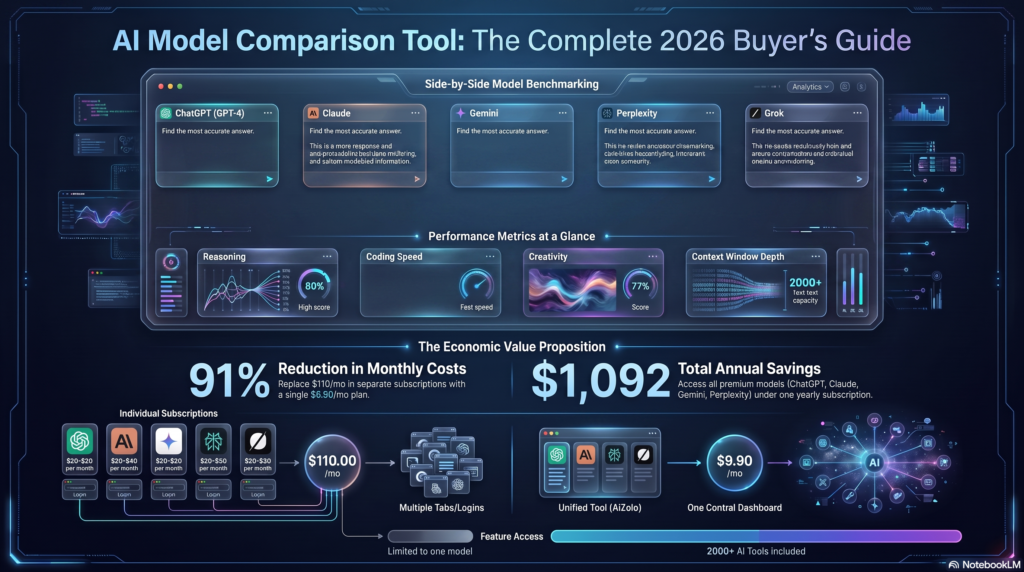
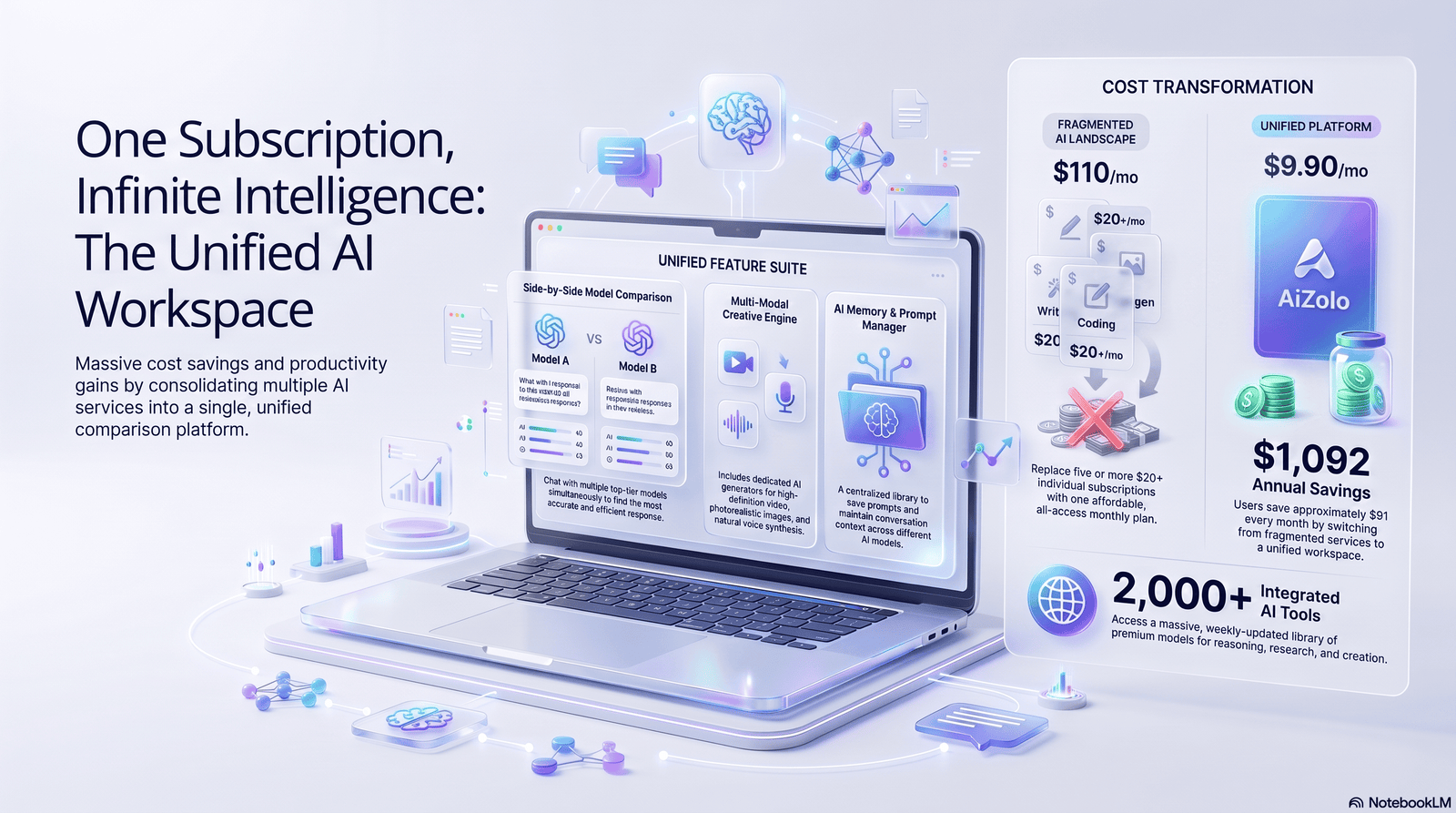
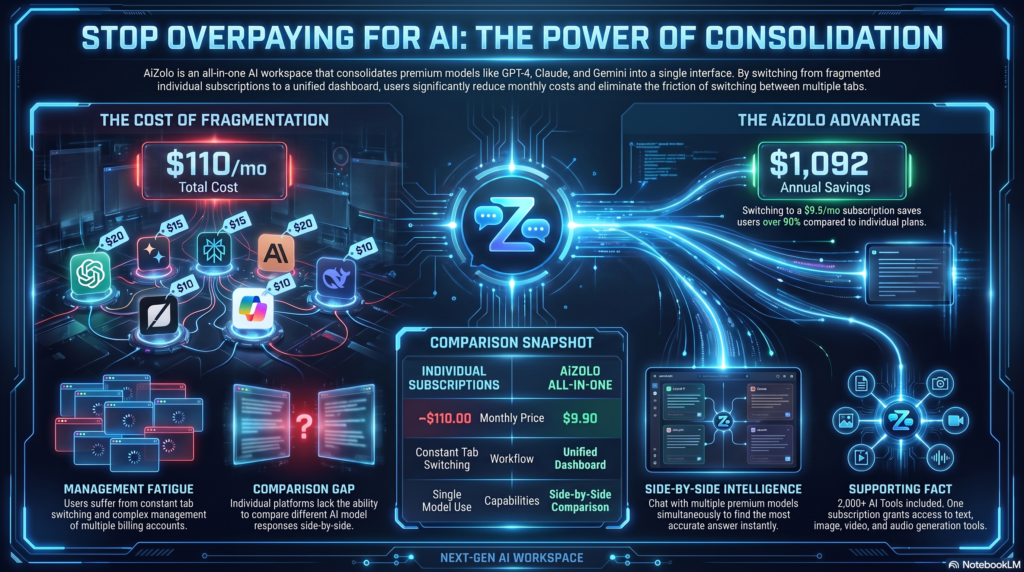
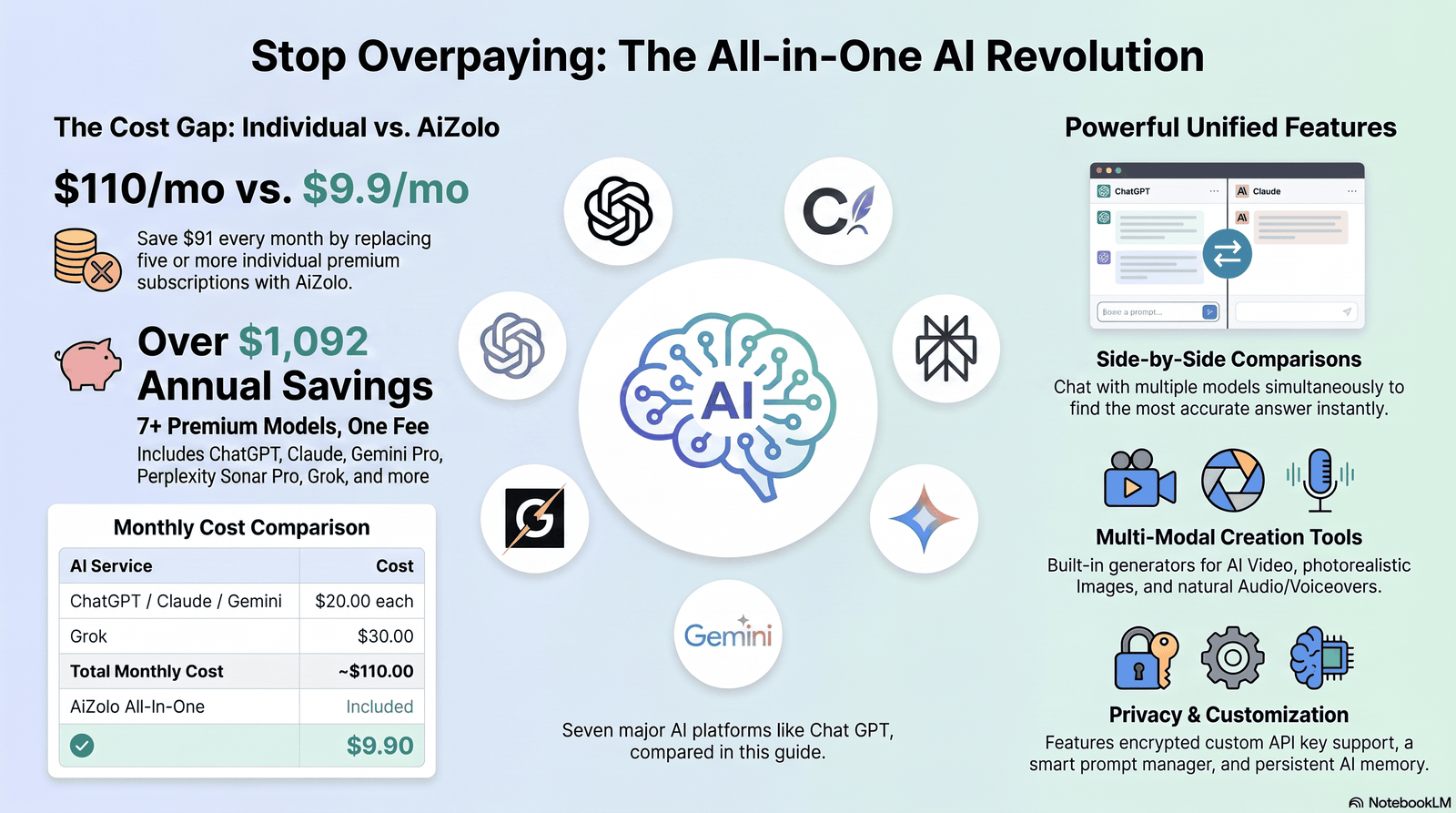
Multi-model access is growing. More users want to compare answers from several models without juggling separate subscriptions.
Pricing tiers keep multiplying. Providers are adding more tiers (like $8 and $100 plans) instead of the old simple free-vs-$20 model, making comparison shopping more important than ever.
How to Choose the Right AI Platform
Start with your primary task, not the platform’s marketing page. A research-heavy job points toward Perplexity or Gemini’s Deep Research. A coding-heavy job points toward Claude or Copilot.
Next, check your budget against actual usage. Casual users rarely need a $100+ tier; heavy daily professional use often justifies it.
Finally, consider whether you want one best-in-class tool or a multi-model subscription that lets you switch between several.
How-to snippet:
- List your top three use cases (writing, coding, research, etc.).
- Test the free tier of two or three platforms on those exact tasks.
- Compare pricing against your actual usage, not the highest tier.
- Check privacy and compliance requirements if using this for work.
- Pick one primary tool, and add a second only if you have a clear gap.
Final Verdict
There is no single “best” AI platform like Chat GPT for everyone. The right choice depends on your task, budget, and existing tools.
For general-purpose use and the widest feature set, ChatGPT remains a strong default. For long documents and coding, Claude AI is a serious contender.
For research with sources, Perplexity AI stands out. For Microsoft-based teams, Copilot is the practical choice. For budget-conscious developers, DeepSeek is hard to beat on price.
This is our assessment based on current public data, and reasonable people may weigh these trade-offs differently based on their own workflow.
Frequently Asked Questions
1. What are AI platforms like Chat GPT? They are chatbot-style tools built on large language models that generate text, code, or images through a conversational interface, similar to ChatGPT.
2. Which AI platform is best overall in 2026? It depends on your task. ChatGPT is the most versatile all-rounder, Claude leads on long documents and coding, and Perplexity leads on cited research.
3. Are there free alternatives to ChatGPT? Yes. Claude, Gemini, Perplexity, DeepSeek, and Meta AI all offer usable free tiers with daily limits.
4. Which AI platform is best for coding? Claude and Microsoft Copilot (through GitHub Copilot) are commonly rated highest for real-world coding tasks, with DeepSeek offering the best value for high-volume API use.
5. Which AI platform is best for research? Perplexity AI is built specifically for cited, sourced research answers, making it the strongest pick for that use case.
6. Which AI platform is best for business use? Microsoft Copilot suits Microsoft 365-based companies. Claude and ChatGPT’s business tiers work well for general cross-team use.
7. Is Claude cheaper than ChatGPT? Their entry paid tiers are priced the same at $20/month. Costs diverge at higher tiers depending on usage limits and API pricing.
8. What is the most affordable AI subscription in 2026? DeepSeek’s pay-per-token API is generally the cheapest for developers, while Meta AI remains completely free for casual chat.
9. Can I use multiple AI models in one subscription? Yes. Several aggregator platforms now let you access ChatGPT, Claude, Gemini, and DeepSeek-class models under one subscription instead of paying for each separately.
10. Are AI platforms like Chat GPT safe for sensitive data? Business and enterprise tiers generally offer stronger data protections than free consumer tiers. Always review a provider’s privacy policy before uploading sensitive documents.
11. Which AI platform has the largest context window? Claude, Gemini, and ChatGPT’s top-tier plans all currently offer context windows up to roughly 1 million tokens, though real-world accuracy can drop at extreme lengths.
12. Do these AI platforms generate images? ChatGPT, Gemini, Copilot, Grok, and Meta AI all support image generation. Claude and Perplexity do not offer native image generation as of mid-2026.
13. Which AI platform is best for students? Free tiers of ChatGPT, Claude, and Gemini cover most homework and study tasks; Perplexity is useful when citations are required.
14. What is the cheapest way to access multiple AI models? Multi-model aggregator subscriptions are often cheaper than paying for several individual platform subscriptions separately.
15. Will AI subscription prices keep changing in 2026? Yes. Every major provider has adjusted pricing tiers multiple times in 2026 already. Always check the official pricing page before subscribing.
Conclusion
Choosing among AI platforms like Chat GPT comes down to matching the tool to your actual workflow, not chasing the newest headline model.
Test two or three free tiers on your real tasks before paying for anything. Revisit your choice every few months, since pricing and model quality both shift quickly in this space.
Whichever platform you choose, treat it as a capable assistant, not an infallible source. Verify important facts, especially for professional or academic work.
Call to Action: Ready to compare pricing side by side? Check our full [INTERNAL LINK: Anchor Text: ai subscription comparison 2026 | Target URL Slug: ai subscription comparison 2026 | Reason: Closing CTA directing readers to a dedicated pricing comparison page] before you subscribe.
Author Bio
Jeevesh Tripathi Email: jeevesh@aizolo.com
Jeevesh Tripathi is an AI tools researcher and technology writer specializing in generative AI platforms, SaaS software evaluation, and AI-driven productivity workflows. His work focuses on independent, hands-on comparisons of AI chatbot platforms, helping readers separate genuine capability from marketing claims. He regularly reviews pricing changes, model updates, and enterprise AI adoption trends across the industry.